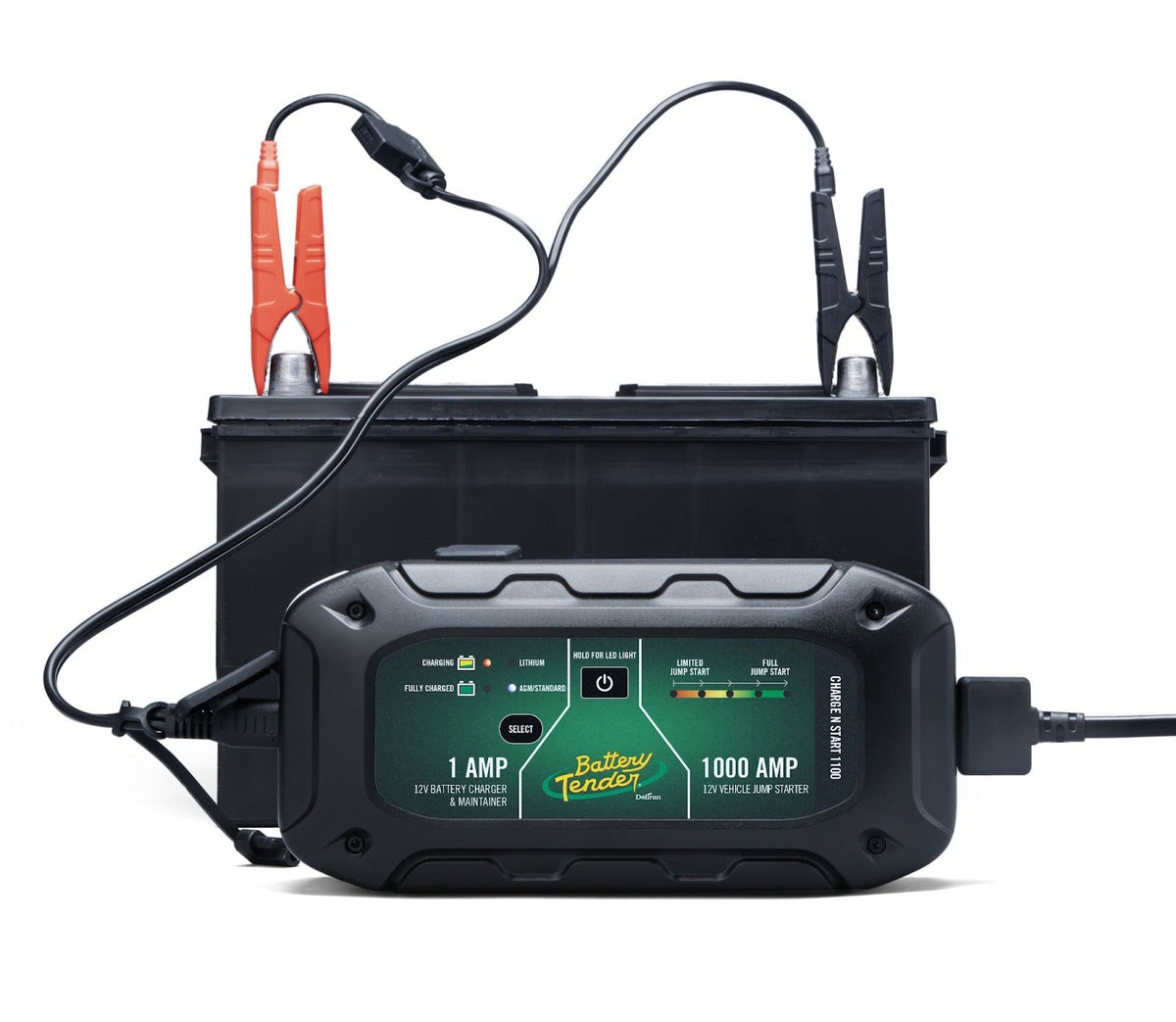




Truck Battery Charger Sizing Guide: Match Amps to Your Battery (2026)
The right truck battery charger delivers roughly 10% to 20% of the battery's amp-hour rating as charging current, so most pickups need 8 to 10 amps for recovery and 2 amps or less for storage. Battery Tender® chargers use Infinite Sequential Monitoring (ISM), a four-stage process that lets them stay connected for months without overcharging.
Most truck owners shop by price and ignore the number that matters: amp-hours. A group 65 starting battery holds roughly 75 to 90Ah, and a pair of diesel batteries can hold 200Ah or more. Each setup needs a different charging current. An undersized unit leaves a battery partly charged for days, while a constant-current unit left connected will cook it. This guide covers sizing, charge-time math, and connection steps.
Key Takeaways
- Size recovery charging at 10% to 20% of battery amp-hours: 8 to 16 amps for an 80Ah truck battery.
- Charging time is (Ah × depth of discharge) ÷ charger amps, plus about 20% for the absorption stage.
- Dual-battery diesel trucks (about 200Ah combined) need a 10A to 26A charger, not a 1A unit.
- ISM charging adapts through four stages, while constant-current trickle charging overcharges a full battery.
- Pair a maintainer with a portable jump starter so a dead battery never strands the truck.
Last updated: May 2026
What Size Truck Battery Charger Do You Need?
A truck battery charger should supply 10% to 20% of the battery's amp-hour capacity for recovery charging. For maintenance-only duty, 1 to 4 amps is enough. Truck batteries run larger than car batteries, so charger amperage that suits a compact sedan will leave a diesel pickup bank charging for days.
Check the battery label first. Gas pickups typically carry one group 24F, 27, 65, or 78 battery rated about 50 to 100Ah. Diesel pickups usually carry two 12V batteries wired in parallel, often 90 to 110Ah each. The table below matches common setups to charging current.
| Truck Setup | Approx. Capacity | Recovery Current | Storage / Maintenance Current |
|---|---|---|---|
| Compact or older gas truck, single group 24/27 | 50–70Ah | 5–10A | 1.25–2A |
| Full-size gas pickup, single group 65/78 | 75–100Ah | 8–10A | 2A |
| Diesel pickup, dual 12V batteries | 180–220Ah | 10–26A | 2–4A |
| Work truck with winch, plow, or upfit loads | 200Ah+ | 15–26A | 2–4A |
Single-Battery Gas Trucks
A single 75 to 90Ah battery recovers well at 8 to 10 amps and holds comfortably on a 2A maintenance rate. The Battery Tender Plus covers batteries from 14 to 80Ah, so it suits smaller or older trucks. Full-size pickups sit at the top of that range and benefit from a higher-output Battery Tender Power Tender model.
Dual-Battery Diesel Trucks
Two batteries in parallel behave as one 200Ah bank. A 2A charger needs at least 50 hours to recover half of that capacity. Heavy-duty owners should read the diesel truck battery maintenance and heavy-duty charging guide for bank-specific practices.
Electric Trucks
Electric pickups still carry a 12V auxiliary battery that runs locks, computers, and contactors. It is small and needs only a low-current maintainer. The Ford F-150 Lightning battery maintenance guide explains that setup.
How Do You Calculate Charging Time for a Truck Battery?
Divide the amp-hours you need to replace by the charger's amps, then add about 20% for the absorption stage. The formula is (Ah × depth of discharge) ÷ charger amps. Depth of discharge comes from resting voltage, measured after the truck sits at least four hours.
Resting voltage estimates charge level in a 12V lead-acid battery: 12.6V to 12.8V is full, about 12.4V is 75%, about 12.2V is 50%, and about 12.0V is 25%. Sulfation accelerates when a battery sits below roughly 12.4V, so a truck parked for weeks drifts into damage territory.
Worked examples at 50% discharge:
- 80Ah single battery on a 10A charger: 40Ah ÷ 10A = 4 hours, about 5 hours with absorption.
- 80Ah single battery on a 2A charger: 40Ah ÷ 2A = 20 hours, about 24 hours total.
- 200Ah dual-battery bank on a 10A charger: 100Ah ÷ 10A = 10 hours, about 12 hours total.
- 200Ah dual-battery bank on a 26A charger: 100Ah ÷ 26A ≈ 3.8 hours, about 4.6 hours total.
The math exposes why low-amp units fail on trucks. A 1.25A maintainer needs about 32 hours to recover 40Ah from an 80Ah battery, assuming no parasitic draw. Modern trucks pull 30 to 80 milliamps with the ignition off, which drains 0.7 to 1.9Ah per day.
Why a Smart Truck Battery Charger Beats Constant-Current Trickle Charging
A smart truck battery charger monitors the battery and changes its output as the battery fills. A conventional trickle charger delivers constant current regardless of battery state, which risks overcharge, gassing, and water loss. Battery Tender ISM technology avoids that by moving through four stages:
- Initialization: tests the battery and applies gentle current to judge its condition.
- Bulk Charge: delivers full rated current until the battery reaches about 80% state of charge.
- Absorption: holds voltage constant while current tapers, which helps dissolve sulfate crystals.
- Float Maintenance: sends charge pulses only when voltage drops, so the charger is safe to leave connected indefinitely.
Float-only chargers hold constant voltage with no absorption stage, so they recover a depleted truck battery slowly. ISM combines fast recovery with long-term safety. Consistent maintenance of this kind can extend typical battery life from 2 to 3 years to 5 years or more, because sulfation never gets a foothold.
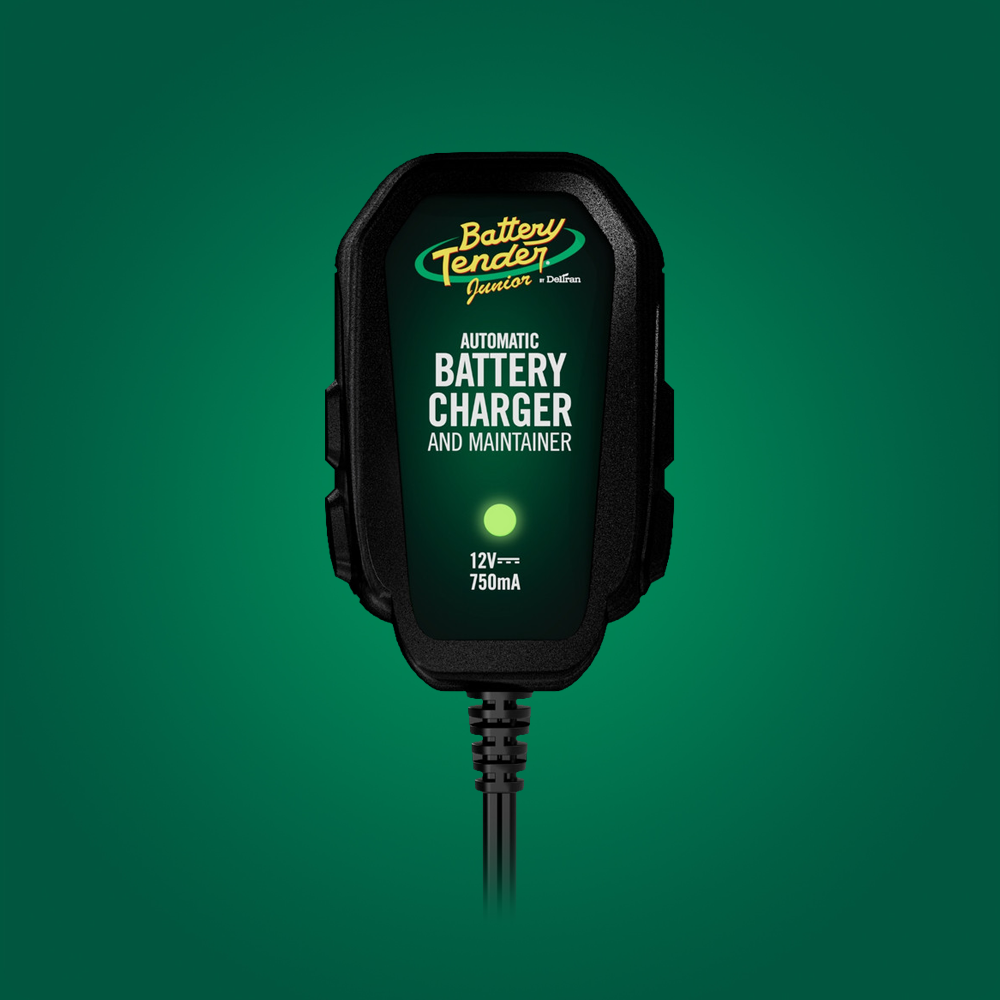
Temperature matters in an unheated garage. Nearly all Battery Tender chargers include temperature compensation, which adjusts charge voltage as ambient temperature changes. The Battery Tender Junior is designed for powersports batteries from 2 to 30Ah, so it is too small for truck batteries anyway.
Which Truck Battery Charger Fits Your Truck?
The best truck battery charger depends on bank size and how the truck is used. The four options below cover most pickups, work trucks, and diesel rigs, with accessories to make the setup practical.
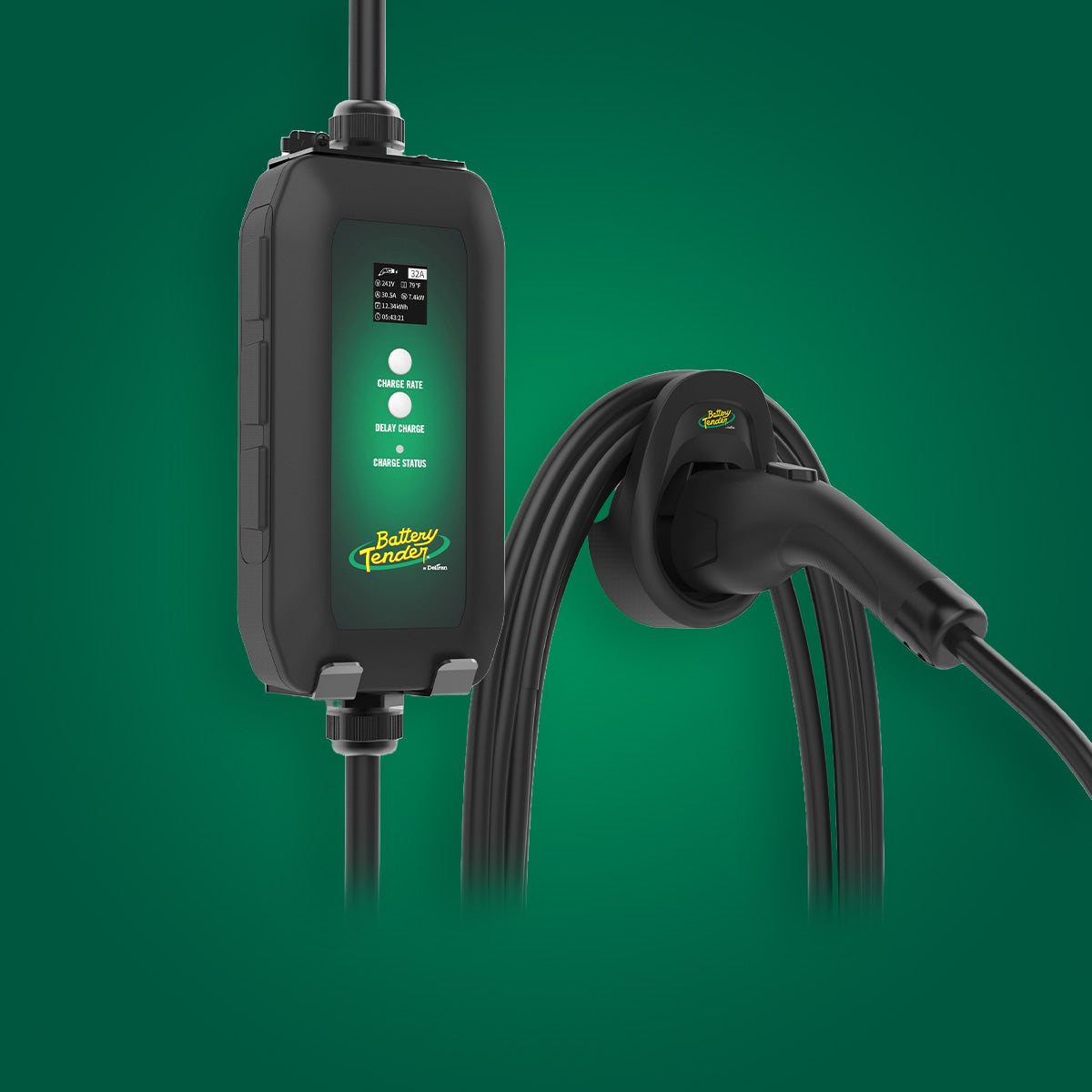
Battery Tender Power Tender 10 Amp for Full-Size Pickups
A multi-chemistry 12V unit at 10 amps recovers an 80Ah truck battery from 50% in about 5 hours. It also recovers a dual-battery diesel bank in about 12 hours. Selectable chemistry modes suit trucks running AGM batteries for start-stop systems or heavy accessory loads. This is the most versatile single choice for owners who park trucks for weeks at a time.
Battery Tender Power Tender 10 Amp Multi-Chemistry 12V Battery Charger and Maintainer
Battery Tender Power Tender 8A/2A for Dual-Rate Flexibility
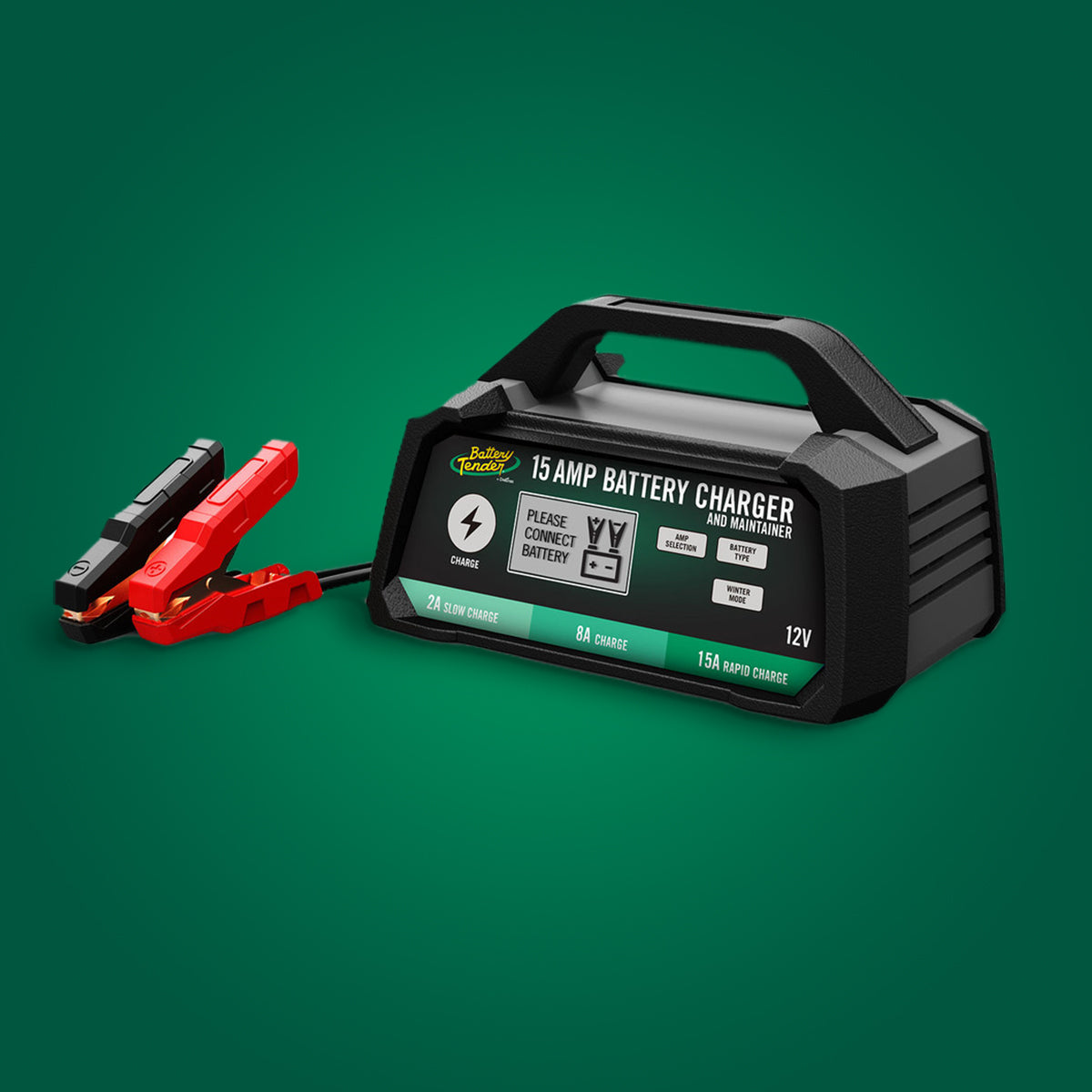
The Battery Tender Power Tender 8A/2A offers a selectable rate. Use 8 amps to recover a half-discharged 75 to 90Ah battery in about 6 to 7 hours, then switch to 2 amps for winter storage. It suits owners with a single gas pickup who want recovery and storage in one unit.
Battery Tender Power Tender 8 Amp/2 Amp 12V Battery Charger and Maintainer
Battery Tender PowerPlus 12V 26 Amp for Dual Batteries and Work Trucks
Dual diesel batteries, winches, and plow motors leave banks of 200Ah or more. The 26A rating recovers that bank from 50% in under 5 hours. Its IP68 rating also suits dusty shops and wet job sites, so it fits fleet yards and farm trucks.
Battery Tender PowerPlus 12V 26 Amp Battery Charger and Maintainer
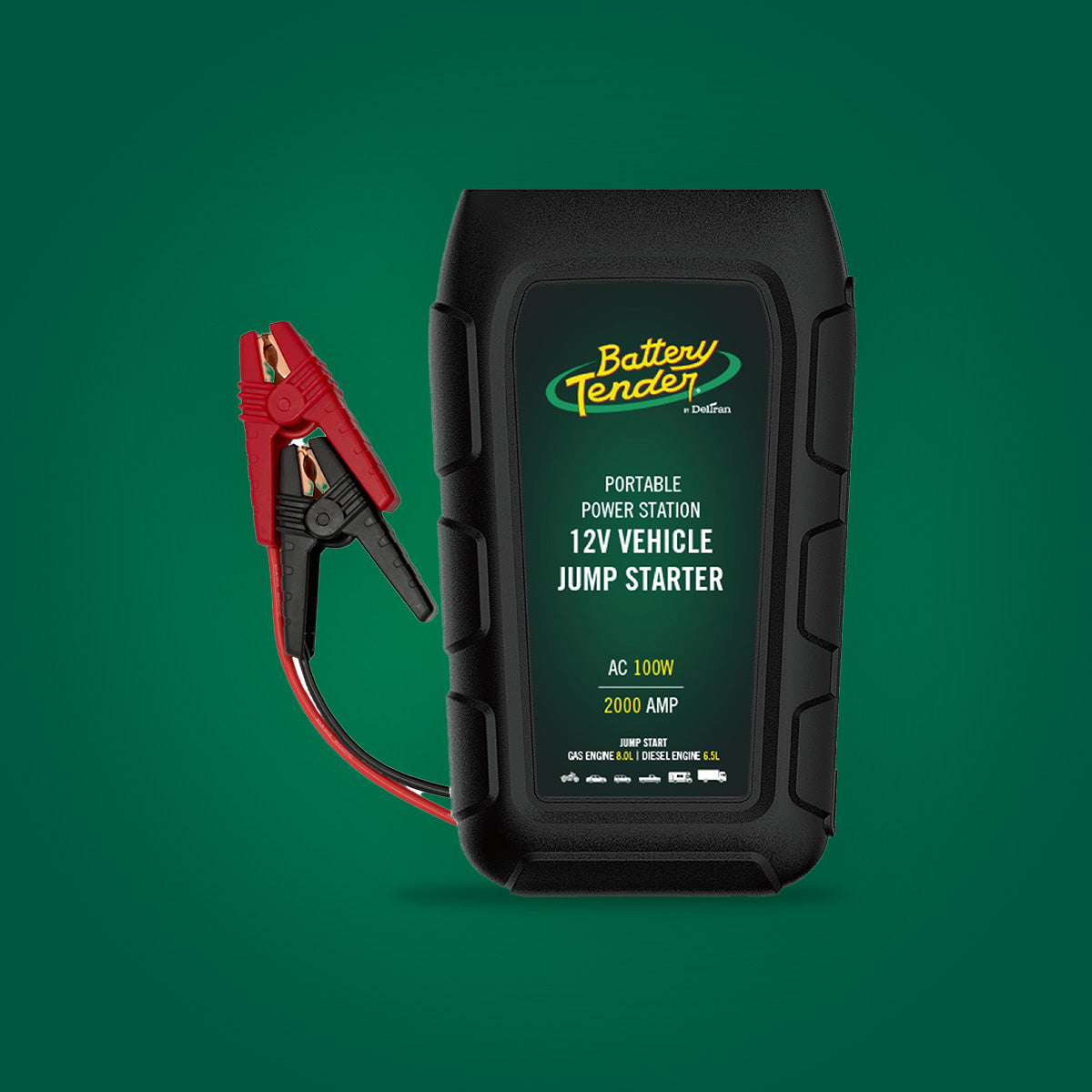
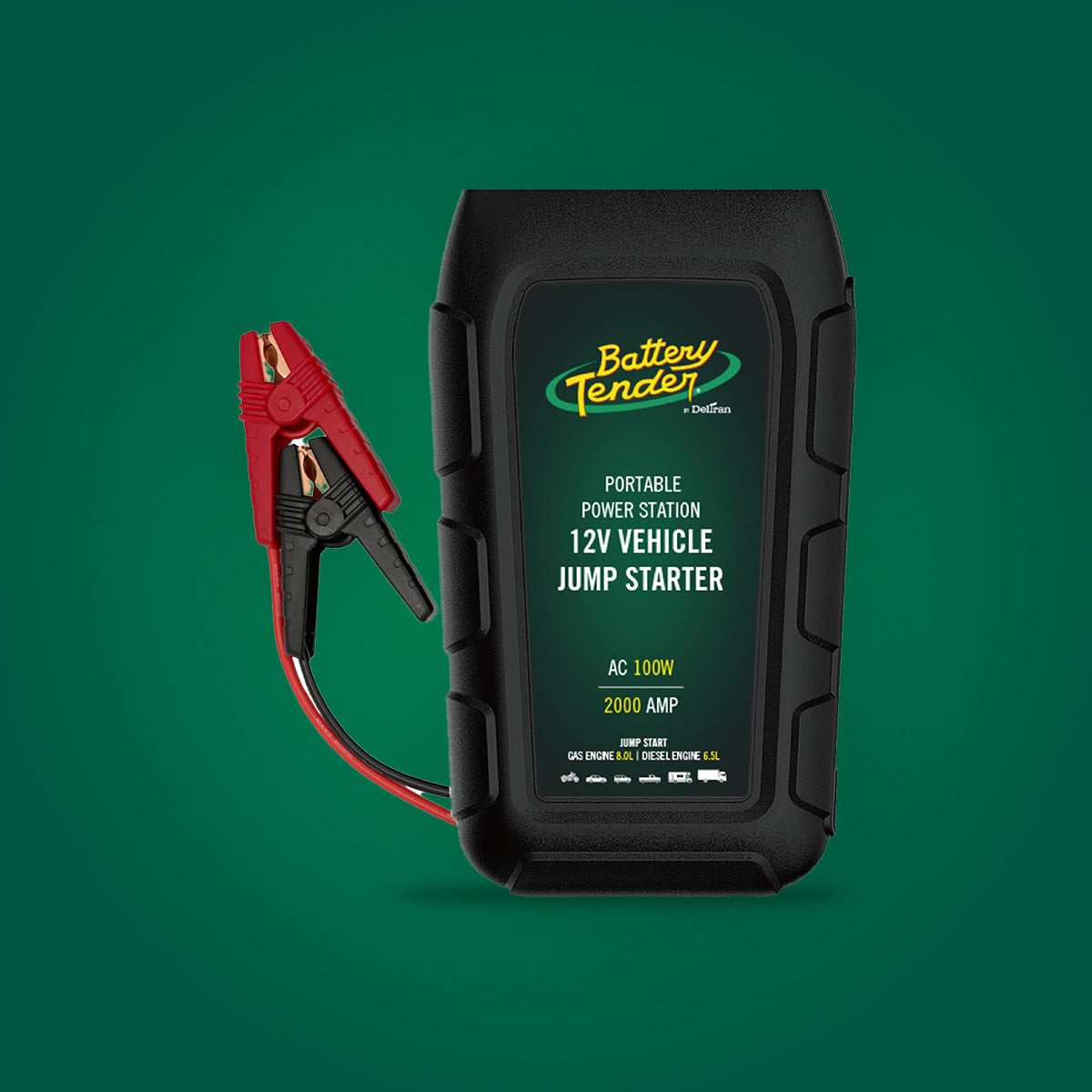
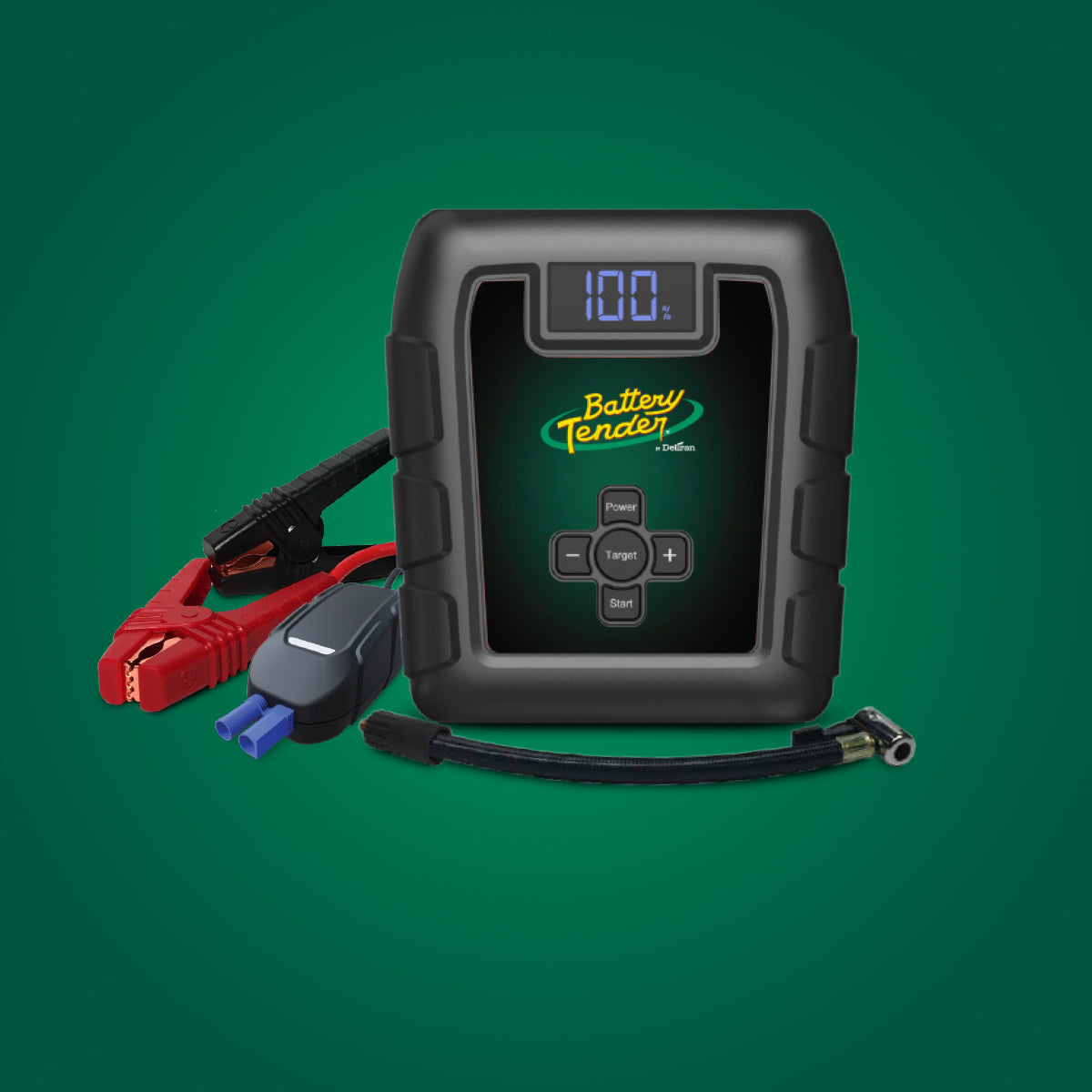
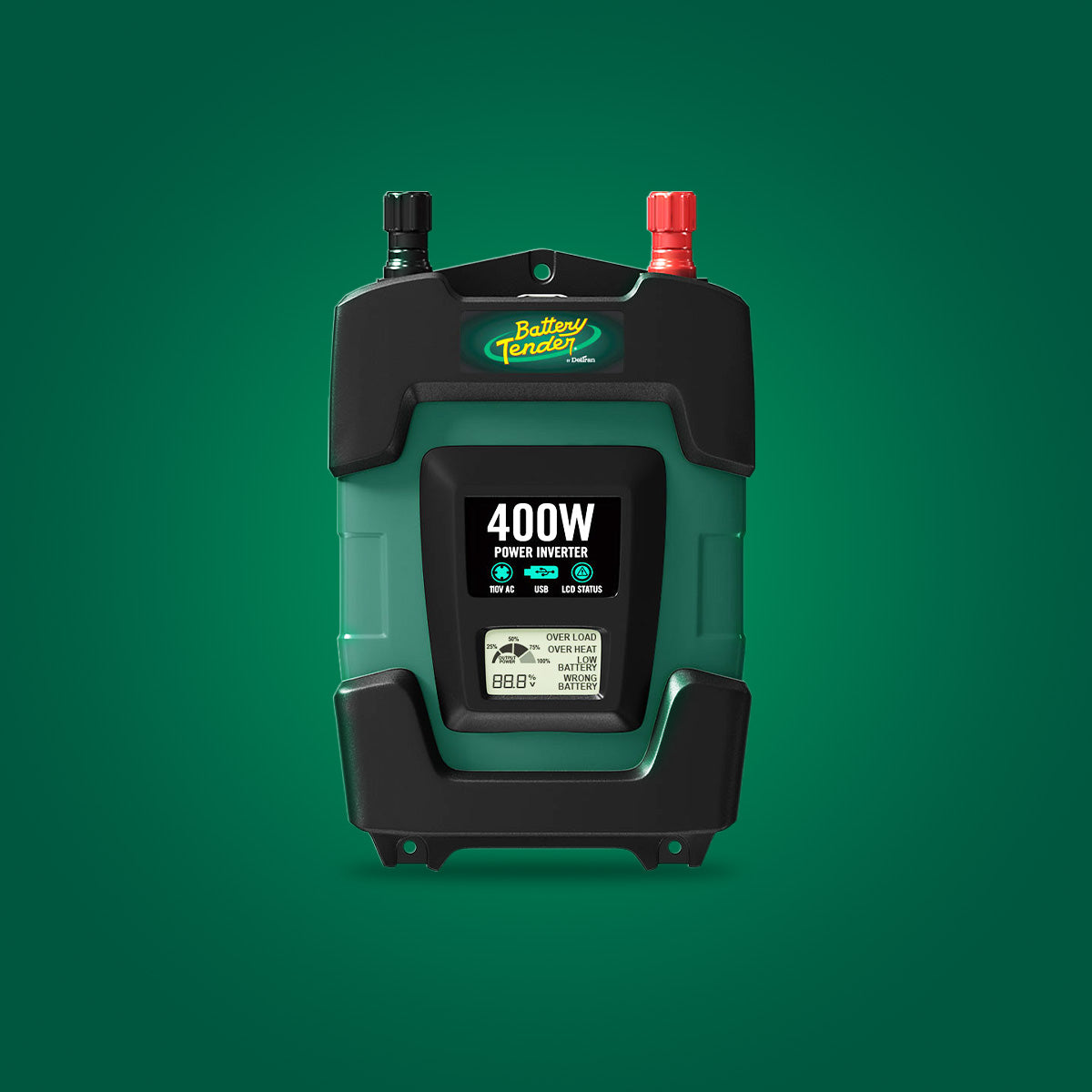
Battery Tender Jump N Start 2000 Amp Power Station for Emergency Starts
No maintainer prevents every failure, such as a bad alternator or a parasitic draw found mid-trip. The 2000A unit is sized for large gas and diesel engines, which covers most heavy-duty pickups. Its 100W inverter powers small tools and phones in the field.
Battery Tender Jump N Start 2000 Amp Power Station with 100W Inverter
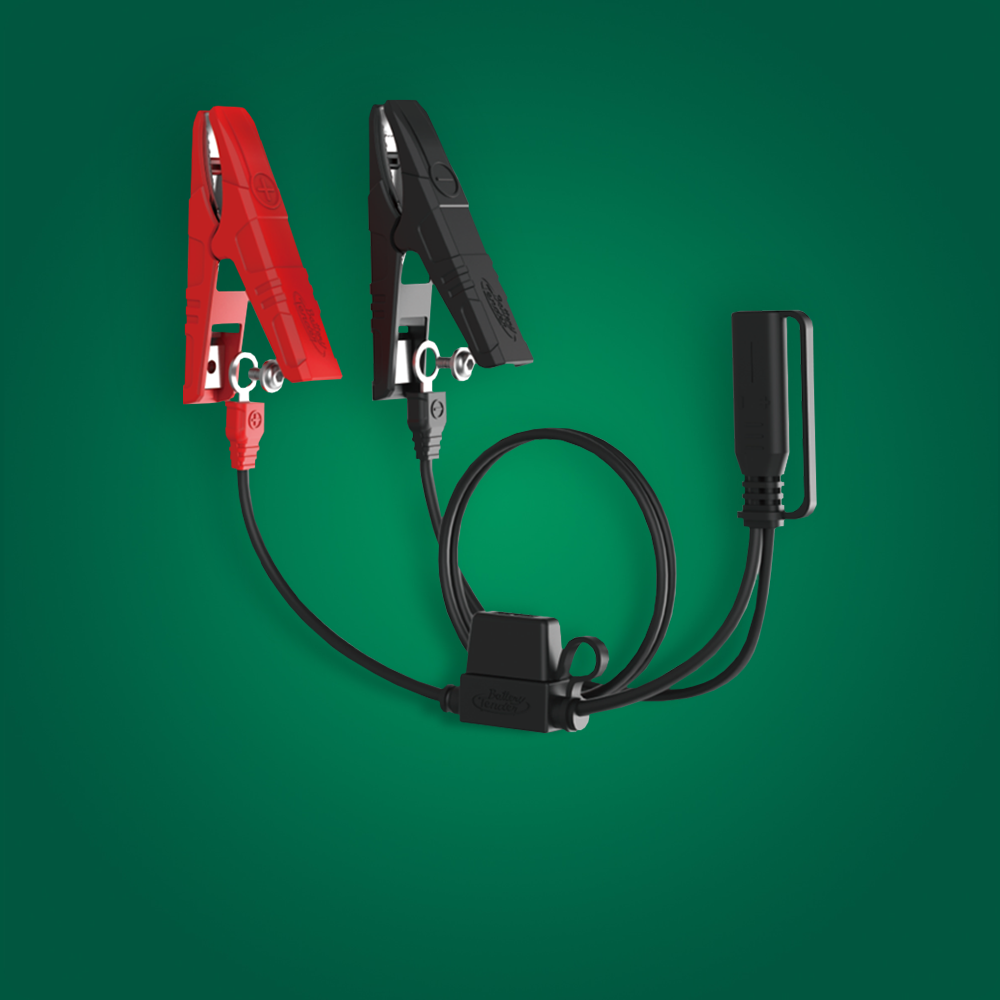
Battery Tender 12ft SAE Quick Disconnect Extension Cable 4-Pack
Truck batteries sit under the hood, often 10 or more feet from a garage outlet. Leave one SAE pigtail on the battery, route a 12ft extension to the grille, and connect in seconds. The four-pack covers multiple trucks or a fleet.
Battery Tender 12ft SAE Quick Disconnect Extension Cable 4-Pack
How to Connect a Truck Battery Charger Step by Step
Connect the charger with AC power unplugged, clamps on in the correct order, and the area ventilated. Batteries release hydrogen gas while charging, so sparks near the terminals are a real hazard.
- Park the truck, turn off the ignition and all accessories, and ventilate the area.
- Inspect the battery for cracks, swelling, or leaking electrolyte. Do not charge a damaged battery.
- Measure resting voltage with a multimeter to estimate discharge depth.
- Confirm the charger is unplugged from the wall, then attach the red clamp to the positive terminal.
- Attach the black clamp to the negative terminal, or to an unpainted chassis ground away from the battery.
- Plug in the charger and select the rate or chemistry mode if the model offers one.
- Check status after the first hour, then leave the charger connected. ISM Float Maintenance holds the battery at full charge.
For dual-battery trucks, charge the pair through the main positive and negative posts of the bank, not each battery separately, unless the batteries have been disconnected from each other.
Frequently Asked Questions
What amp truck battery charger do I need?
Most pickups need 8 to 10 amps for recovery and 2 amps or less for storage. Take 10% to 20% of the battery's amp-hour rating: an 80Ah battery calls for 8 to 16 amps. Dual-battery diesel trucks of about 200Ah are best served by 10 to 26 amps.
Can I leave a truck battery charger connected all winter?
Yes, if it is a smart charger with Float Maintenance. Battery Tender chargers with ISM send pulses only when voltage drops, so they never overcharge. Constant-current trickle chargers should not stay connected, because they keep pushing current into a full battery and cause gassing and heat.
How long does it take to charge a dead truck battery?
Divide the amp-hours to replace by charger amps, then add about 20%. An 80Ah battery at 50% discharge needs 40Ah, so a 10A charger takes roughly 5 hours and a 2A charger roughly 24. A fully dead battery takes proportionally longer and may not recover if it sat discharged for weeks.
Is a 2 amp charger enough for a truck battery?
A 2A charger works for maintenance and slow recovery of a single battery, but it needs about a day to restore half of an 80Ah battery. It cannot recover dual diesel batteries in a reasonable time. For trucks that see real discharge, choose a unit offering 8 amps or more.
Conclusion
Choosing a truck battery charger comes down to three numbers: battery amp-hours, discharge depth, and how long the truck sits. Match recovery current to 10% to 20% of capacity, choose ISM Float Maintenance for storage, and keep a portable jump starter in the cab as a backup. Next step: read the label on your truck battery, note the Ah rating, and run the charge-time formula to select your unit. Browse the full Battery Tender battery charger collection to compare options.