



Battery Trickle Charger vs. ISM Smart Charging Guide (2026)
A battery trickle charger sends a fixed, unregulated current into a battery no matter how full it is, so it can overcharge a battery that stays connected for weeks. Battery Tender® smart chargers use Infinite Sequential Monitoring (ISM) to measure the battery and stop pushing current when it is full.
Battery Tender pioneered the consumer smart battery charger category in 1989, specifically to replace the constant-current design. This guide explains how a conventional battery trickle charger works, where it fails, and how to size and install an ISM charger for cars, trucks, motorcycles, RVs, and other 12V equipment.
Key Takeaways
- A conventional battery trickle charger supplies constant current with no voltage feedback, so it cannot tell a full battery from an empty one.
- Overcharging causes gassing, water loss, heat, and grid corrosion. Undercharging causes sulfation. A fixed-current design risks both.
- ISM is a four-stage process (Initialization, Bulk, Absorption, Float Maintenance) that makes the charger safe to leave connected indefinitely.
- Charging time is (battery Ah × depth of discharge) ÷ charger amps. Use this formula to pick the right amperage.
- Nearly all Battery Tender chargers include temperature compensation.
What Is a Battery Trickle Charger and How Does It Work?
A battery trickle charger is a simple charger that outputs a low, fixed current, typically 0.5A to 1.5A, whether the battery is at 30% or 100% state of charge. It has no stage logic and no decision-making. It pushes current until someone unplugs it.
Early trickle charger designs were a transformer and a rectifier. They were cheap and worked acceptably when a driver watched the clock and disconnected after a day or two. Problems start when the unit is left connected for a winter.
Float chargers are a step up but still limited. A float charger holds constant voltage only. It has no Absorption stage that tapers current and works the battery to full, so it recovers a discharged battery slowly. Both designs differ from ISM, which adapts through four stages.
Common Traits of a Conventional Battery Trickle Charger
- Constant current: output does not change as battery voltage rises.
- No temperature compensation: output ignores hot garages and freezing sheds.
- No chemistry profiles: the same output goes to flooded, AGM, GEL, and lithium batteries.
- No fault detection: a failed or shorted cell is not flagged.
Why a Battery Trickle Charger Can Overcharge Your Battery
A battery trickle charger overcharges because charge acceptance falls as the battery fills, while the charger's output stays the same. A fully charged 12V lead-acid battery rests around 12.6V to 12.8V. Continued fixed current pushes terminal voltage into the gassing range, roughly above 14.4V to 14.8V, and the surplus energy turns into heat and hydrogen gas.
The damage is cumulative. Flooded batteries lose water and expose plates. AGM and GEL batteries vent through their valves and cannot be refilled, so dry-out is permanent. Positive grids corrode faster under constant overcharge, which shortens life even when the battery appears fine.
Warning Signs of Overcharge Damage
- A hot battery case after hours on the charger.
- A rotten-egg smell near the battery.
- A swollen or bulging case.
- Falling electrolyte levels in flooded batteries.
- A battery that tests low after a winter on the charger.
The same logic applies to motorcycles. The related article Motorcycle Battery Trickle Charger vs. Smart Charger covers small-battery cases in more detail.
How ISM Replaces the Battery Trickle Charger Approach
ISM replaces a fixed current with a monitored four-stage process. Infinite Sequential Monitoring reads battery voltage continuously and changes what it delivers based on what the battery needs at that moment. A conventional battery trickle charger skips every one of these decisions.
- Initialization: tests the battery and applies a gentle current to determine its condition.
- Bulk (constant current): delivers full rated current until the battery reaches about 80% state of charge.
- Absorption (constant voltage): holds voltage steady and tapers current, which helps dissolve sulfate crystals.
- Float Maintenance: sends charge pulses only when voltage drops, so the battery stays full without overcharging.
| Feature | Conventional Battery Trickle Charger | Battery Tender ISM Charger |
|---|---|---|
| Output behavior | Constant current at all times | Four stages that adapt to battery state |
| Overcharge protection | None | Stops delivering current when battery is full |
| Sulfation prevention | No Absorption stage | Absorption and demand-based maintenance |
| Safe indefinite connection | No | Yes |
| Temperature compensation | No | Yes |
Preventing sulfation is where service life changes. Lead sulfate crystals harden on plates when a battery sits partly discharged, and conventional batteries often last 2 to 3 years in seasonal use. With ISM keeping the battery full and limiting sulfate buildup, a substantially longer service life is a realistic expectation.
Temperature compensation adjusts charge voltage for ambient heat or cold, which matters in a freezing shed or a hot garage. Battery Tender chargers such as the Battery Tender Plus include it.
Which Charger Size Replaces Your Battery Trickle Charger?
Match charger amps to battery capacity and the recovery time you want. The formula is (battery Ah × depth of discharge) ÷ charger amps, which gives approximate minimum hours. Add 15% to 25% for charging losses and the tapering Absorption stage.
| Battery Application | Typical Capacity | Suggested Charger | Hours from 50% Discharged (minimum) |
|---|---|---|---|
| Motorcycle, ATV, lawn tractor | 15 Ah | Battery Tender Junior 1A | 7.5 (15 × 0.5 ÷ 1) |
| Sedan or compact car | 50 Ah | Battery Tender Power Tender 15/8/2 at 8A | 3.1 (25 ÷ 8) |
| Truck or SUV | 80 Ah | Battery Tender Power Tender 15/8/2 at 8A | 5.0 (40 ÷ 8) |
| RV house or large deep-cycle | 100 Ah | Battery Tender Power Tender 15/8/2 at 15A | 3.3 (50 ÷ 15) |
Cars, Trucks, and Larger Batteries
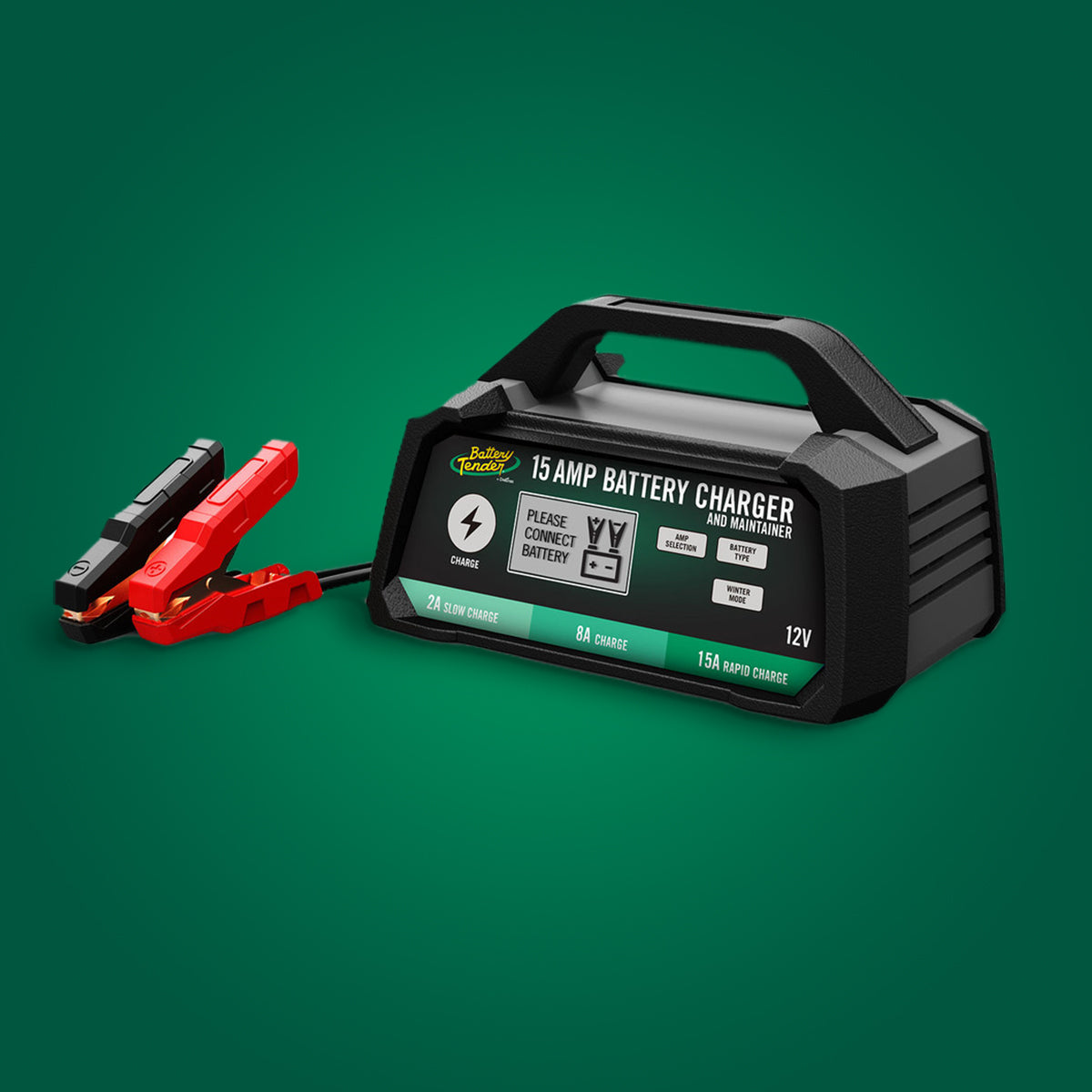
A 50Ah to 100Ah battery on a 1A unit takes more than a day to recover. A selectable charger solves this: use 15A or 8A for recovery, then drop to 2A for long-term maintenance. Selectable output also handles different battery sizes in the same household. Chemistry options include lead-acid and lithium, so check the charger label against your battery before connecting.
Battery Tender Power Tender 15/8/2 Amp 12V Battery Charger and Maintainer
Motorcycles, ATVs, and Small Batteries
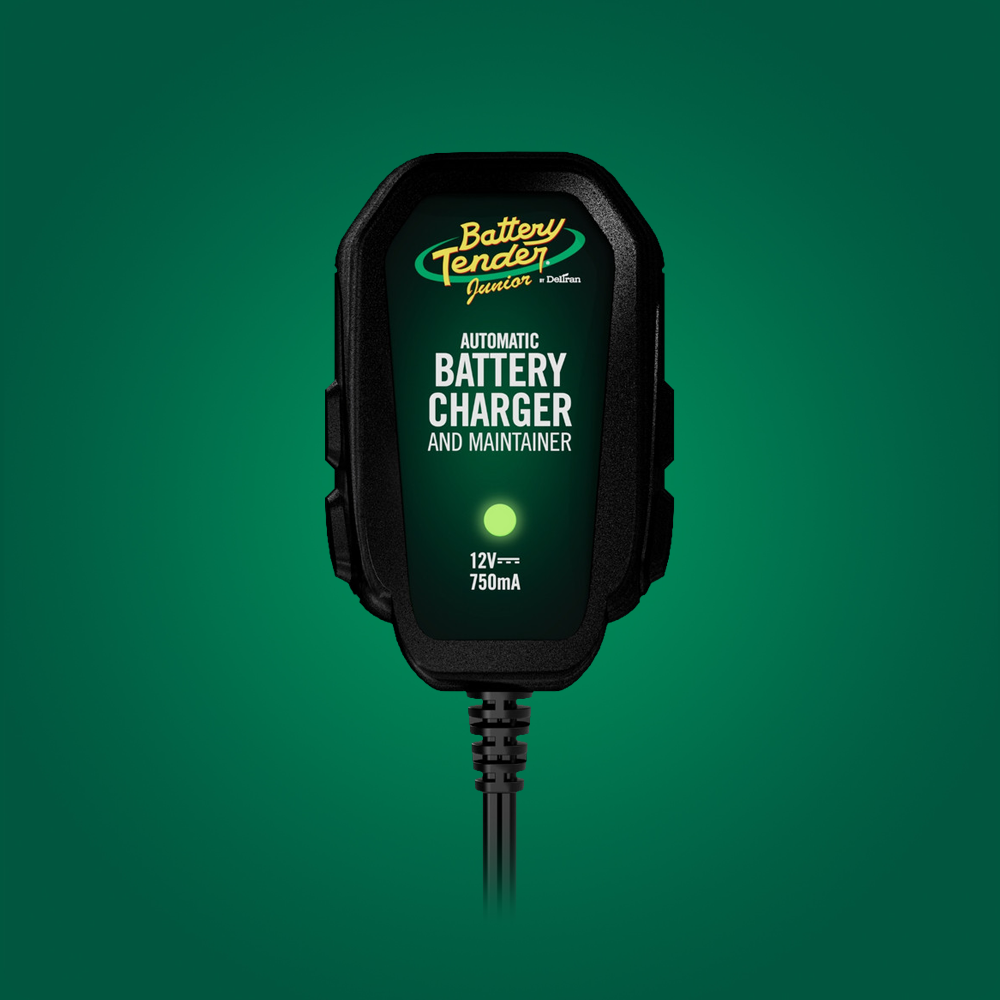
For batteries from 2Ah to 30Ah, a 1A ISM charger delivers enough current for recovery without overpowering a small battery. The Battery Tender Junior 1A suits seasonal bikes, ATVs, and mowers. Keep the battery in a space that stays out of extreme heat and hard freezes.
Battery Tender Junior 12V 1 Amp Battery Charger
Unheated Garages, Sheds, and Outdoor Storage
Damp storage is another place a battery trickle charger fails early, since it has no moisture protection or fault logic. A weather-resistant 1A unit suits boat trailers, open carports, and sheds where condensation and humidity are routine.
Battery Tender Weather Resistant 1 Amp 12V Battery Charger
How to Replace a Battery Trickle Charger With an ISM Charger
Switching takes about ten minutes. Follow these steps in order, and always charge in a ventilated area away from sparks and open flame. Never charge a battery with a cracked case or one that is frozen solid.
- Unplug the old unit from the wall, then disconnect its clamps from the battery.
- Inspect the battery: look for bulging, leaks, corroded terminals, and low electrolyte in flooded types. Replace damaged batteries.
- Check voltage: a resting reading near 12.6V means full. Below 12.0V means deeply discharged.
- Confirm chemistry and voltage on the new charger match the battery (lead-acid, AGM, GEL, or lithium).
- Connect the charger to the battery first (positive, then negative or chassis ground), then plug it into the wall.
- Watch the indicator lights through Initialization and Bulk, then leave the charger connected for the season.
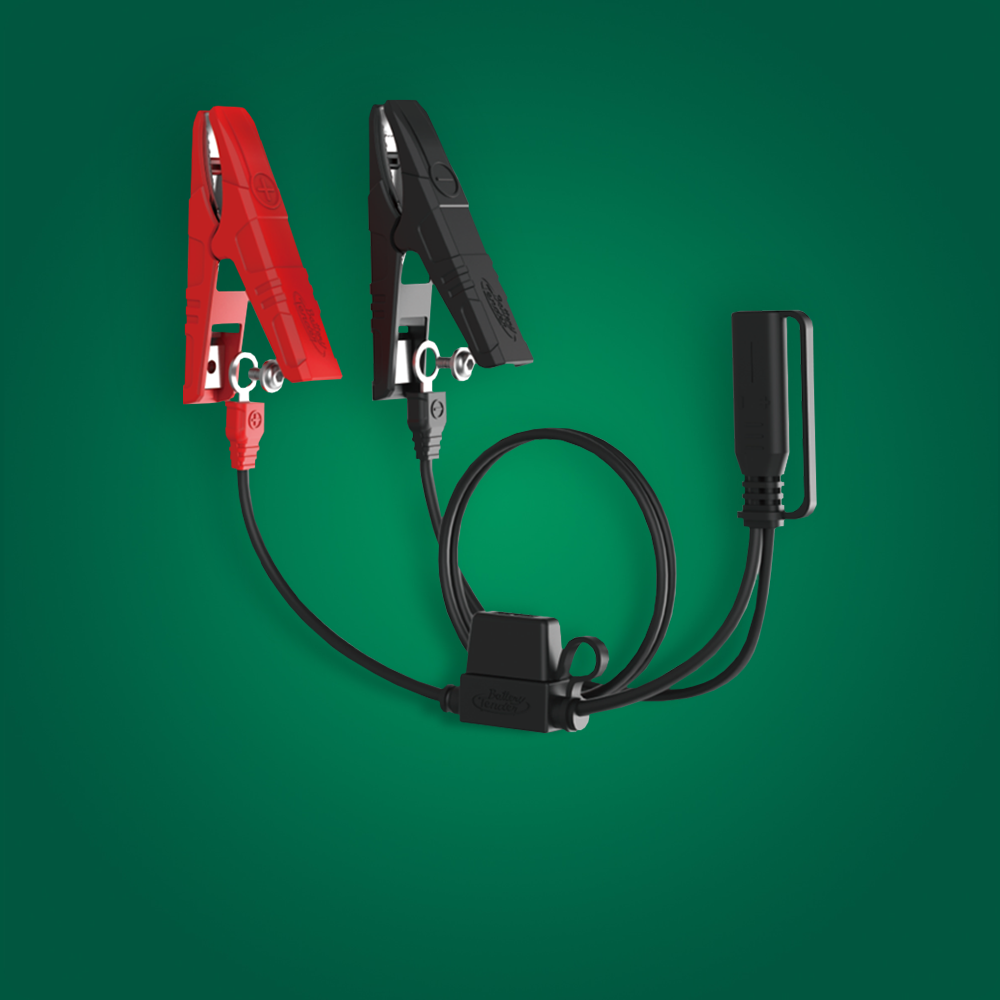
For permanent installs, fit a quick-disconnect lead to the battery so the charger plugs in without clamps. Where the vehicle has a reliably live 12V outlet, a cigarette-style adapter offers another connection option. Confirm that the outlet stays powered with the ignition off before relying on it.
Battery Tender Female Cigarette Adapter with Quick Disconnect
Stationary equipment benefits from the same approach. See the Generac generator battery maintenance guide for a permanent installation example.
Add a Jump Starter for Emergencies
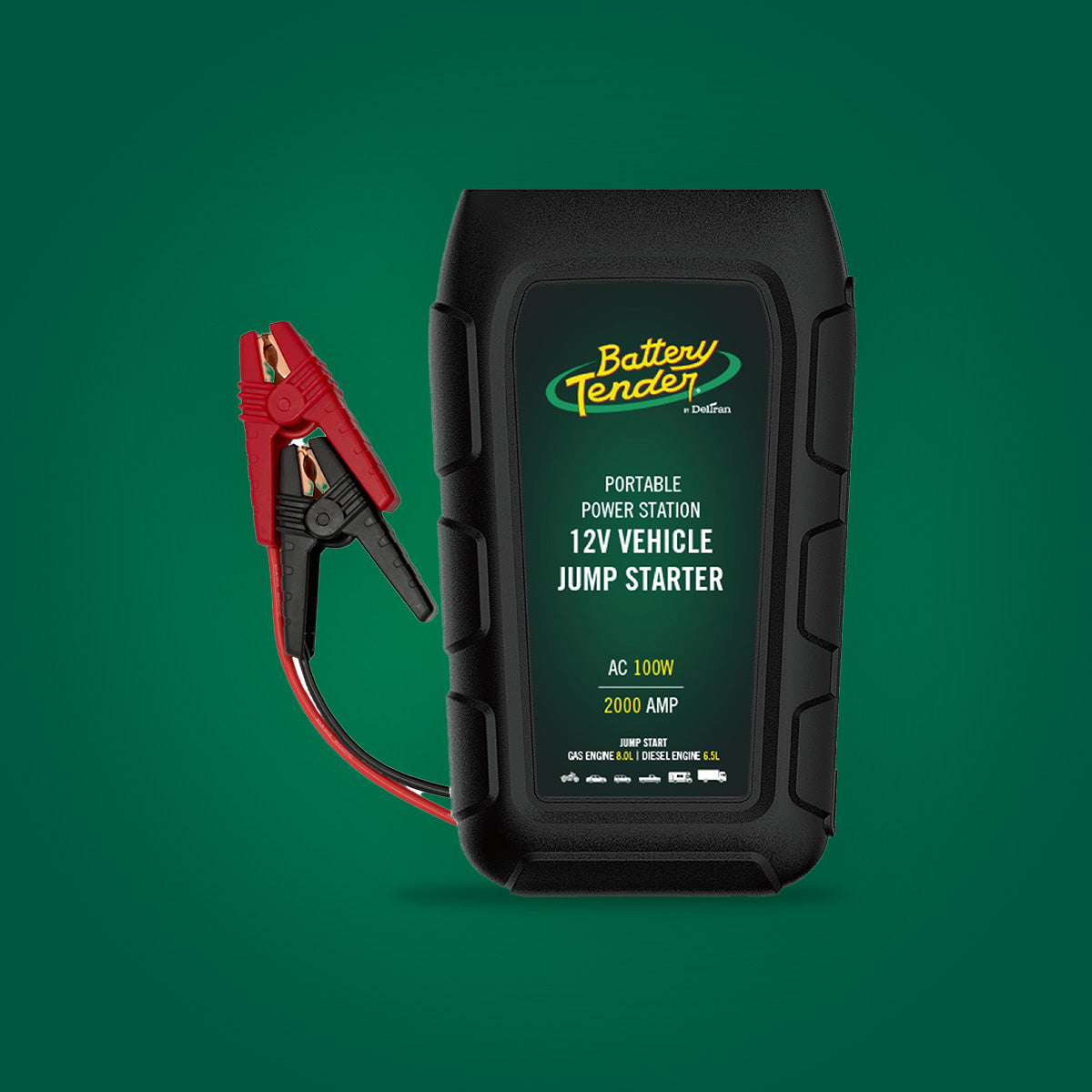
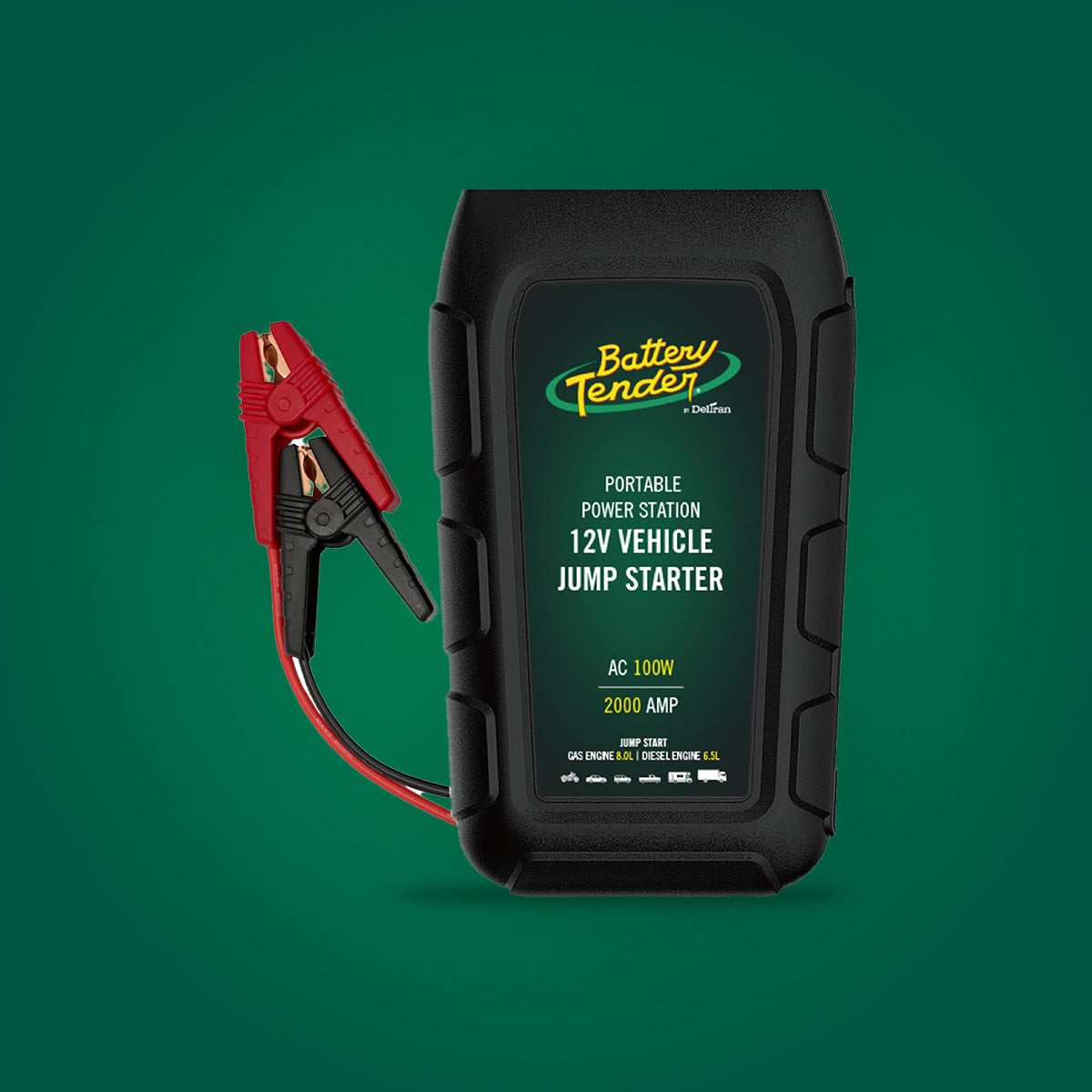
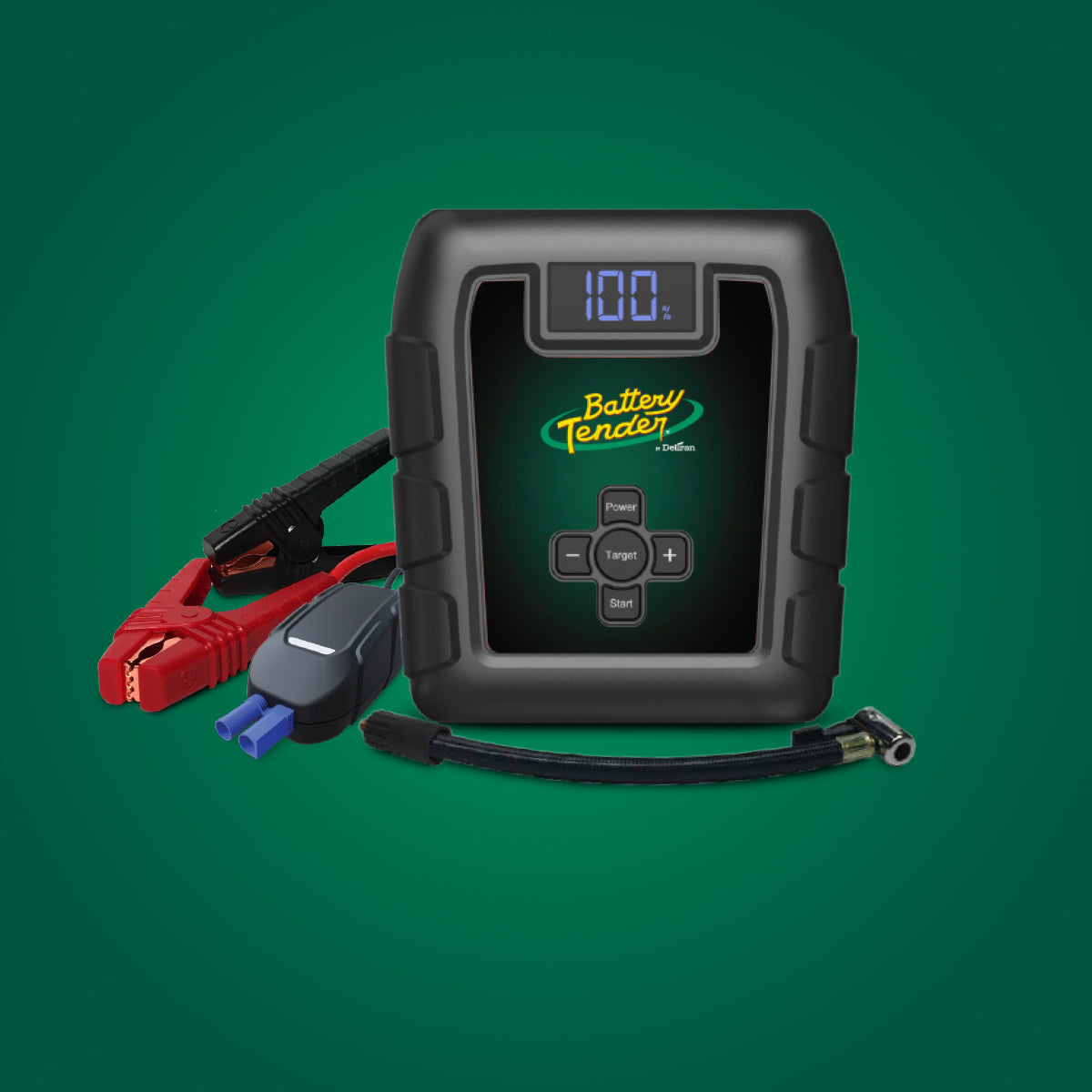
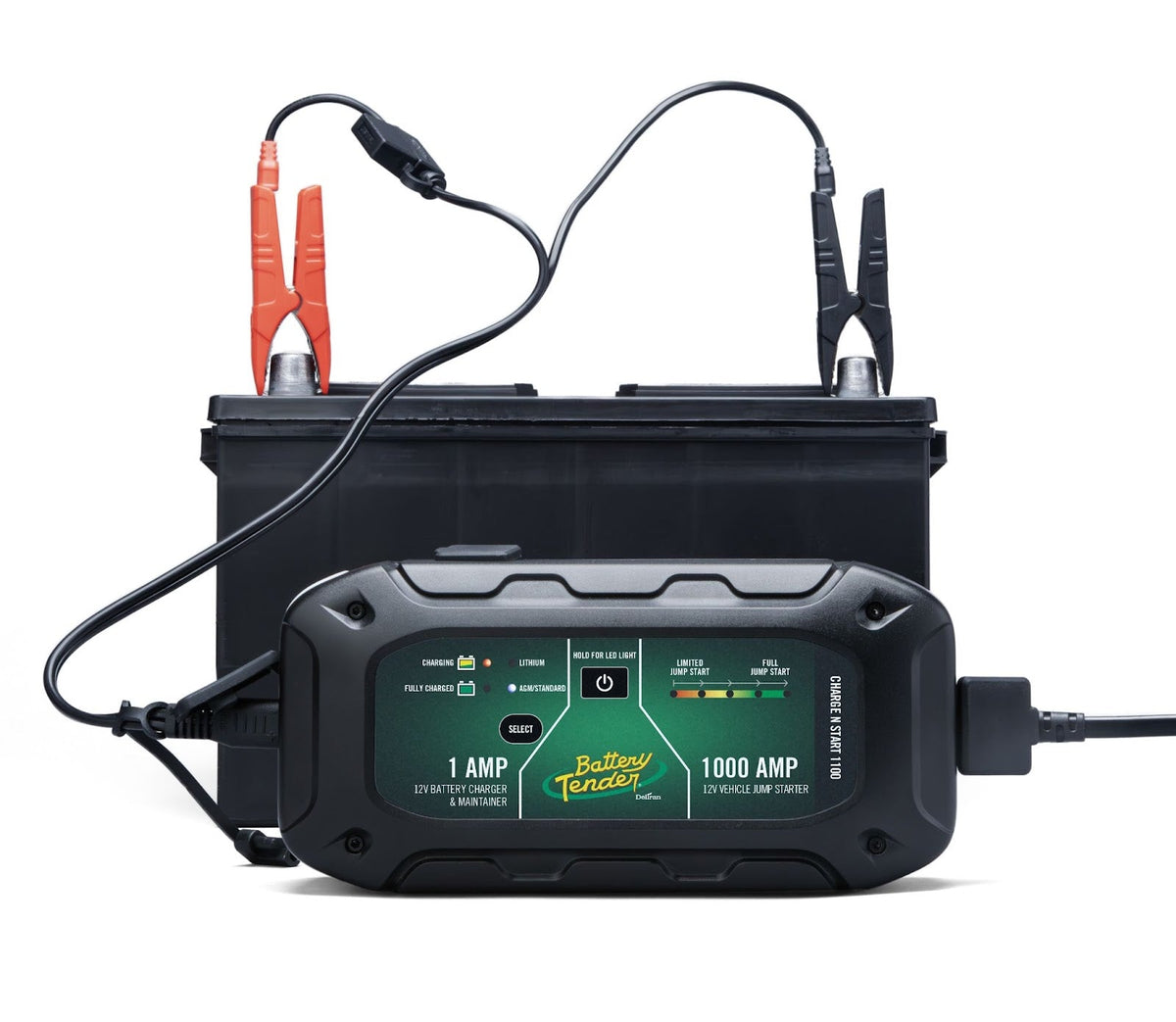
A maintainer prevents dead batteries, but a battery can still fail from age. The Battery Tender Charge N Start 1100 combines a 1A charger with a 1,000A lithium-ion jump starter in one unit. It suits motorcycles, ATVs, and compact cars. The bundle adds a ring terminal cable for a permanent battery connection.
Frequently Asked Questions
Is a battery trickle charger safe to leave connected all winter?
Usually not. A conventional battery trickle charger pushes constant current regardless of battery state, so a full battery keeps absorbing energy as heat and gas. For storage longer than a few days, use a smart charger designed for indefinite connection, such as a Battery Tender charger with ISM technology, which stops charging when the battery is full.
What is the difference between a trickle charger and a battery maintainer?
A trickle charger delivers constant current whether or not the battery needs it. A battery maintainer monitors voltage and delivers current only when voltage drops. Battery Tender chargers are smart maintainers: they run Initialization, Bulk, Absorption, and Float Maintenance stages, so they can recover a discharged battery and then hold it full safely.
How many amps do I need to replace a battery trickle charger?
Use the formula (battery Ah × depth of discharge) ÷ charger amps. A 50Ah battery at 50% discharge needs 25Ah, so a 1A charger takes about 25 hours and an 8A charger about 3 hours. ISM tapers current and switches to Float Maintenance, so overcharge is not a concern, but still match amperage to battery size: 1A for small powersports batteries, higher output for car, truck, and deep-cycle batteries.
Can a trickle charger revive a dead battery?
Rarely, and slowly. A 1A battery trickle charger needs more than a day to recover a discharged 50Ah battery and cannot test the battery first. A badly sulfated or shorted battery may not recover at all. ISM starts with an Initialization test so the charger can assess battery condition before applying full current.
Conclusion
A battery trickle charger was a reasonable tool in its era, but constant current with no feedback cannot protect a battery left connected for weeks or months. ISM monitors voltage, tapers current, and only maintains charge when needed, which protects against both overcharge and sulfation.
Next step: measure your battery's Ah rating, run the charging-time formula, and choose the amperage that fits. Browse the full range of Battery Tender battery chargers to find the right ISM charger for your vehicle.