


Ford F-150 Lightning Battery Maintenance: 12V Auxiliary Care and Level 2 Home Charging
The Ford F-150 Lightning didn't just enter the EV truck segment — it redefined it. Built on America's best-selling vehicle platform, the Lightning carries genuine working truck credentials: serious towing capacity, high payload ratings, and the Pro Power Onboard system that turns your truck into a mobile generator. But beneath all that capability lives a two-battery architecture that demands disciplined maintenance. Understanding ford f-150 lightning battery maintenance — both the 12V auxiliary system and the high-voltage traction pack charging routine — separates Lightning owners who get years of reliable service from those who face unexpected roadside situations. Battery Tender® has spent more than six decades engineering charging solutions that protect batteries across every chemistry and application, and that expertise translates directly into practical products for Lightning owners.
Understanding the F-150 Lightning's Two-Battery Architecture
Every F-150 Lightning runs on two completely separate battery systems serving entirely different functions. The high-voltage traction battery — available in 98 kWh standard range or 131 kWh extended range configurations — powers the dual electric motors and provides energy for the Pro Power Onboard outlets. This is the battery you charge at home overnight or top up at a DC fast charger on long trips.
The second battery is a conventional 12V unit — typically an AGM (Absorbent Glass Mat) type in Lightning applications — that powers the body control module, exterior lighting, trailer brake controller, power windows, door locks, and critically, the high-voltage contactors that must close before the traction battery can deliver power at all. If the 12V auxiliary battery fails or drops below operational voltage, the Lightning won't start regardless of how much charge remains in the traction pack. Most Lightnings on the road today rely on a conventional 12V AGM battery that benefits significantly from periodic maintenance charging.
Why the F-150 Lightning's 12V Battery Needs Special Attention
The 12V auxiliary battery in a Lightning faces stresses that typical automotive batteries don't encounter. Several factors accelerate discharge and degrade battery health over time:
- Pro Power Onboard operation: When running power tools, a job site compressor, or camping equipment through the truck's 120V or 240V outlets, the 12V auxiliary system handles significant ancillary loads even while the traction battery supplies the main AC power. Extended Pro Power sessions with the truck in standby mode are particularly taxing on the auxiliary battery.
- Cold weather parking: Like all lead-acid and AGM batteries, the Lightning's 12V unit loses cranking capacity in freezing temperatures. EVs parked outdoors in winter without regular maintenance charging are prone to auxiliary battery discharge.
- Extended storage: Lightnings parked for weeks — during travel, seasonal storage, or simply low-use periods — experience parasitic drain from the body control module and telematics systems. Without maintenance charging, the auxiliary battery can discharge to the point of sulfation, permanently reducing capacity.
- BMS behavior: The Lightning's battery management system can draw on the 12V auxiliary during system wake-ups, over-the-air update installations, and remote climate preconditioning sessions initiated through the FordPass app.
The practical solution is connecting a smart maintenance charger to the 12V auxiliary battery whenever the truck sits for extended periods, after heavy Pro Power Onboard use, or as a regular seasonal routine.
Choosing the Right 12V Maintenance Charger for Your Lightning
Not every charger is appropriate for AGM batteries. AGM chemistry requires controlled charging voltages and automatic shutoff when the battery reaches full charge — overcharging an AGM battery causes internal damage that cannot be reversed. Battery Tender's smart chargers deliver precisely regulated charging cycles that adapt to battery state and chemistry, making them the correct tool for Lightning auxiliary battery maintenance.
For owners who use Pro Power Onboard regularly or who park their Lightning outdoors in cold climates, a higher-output charger is the right starting point:
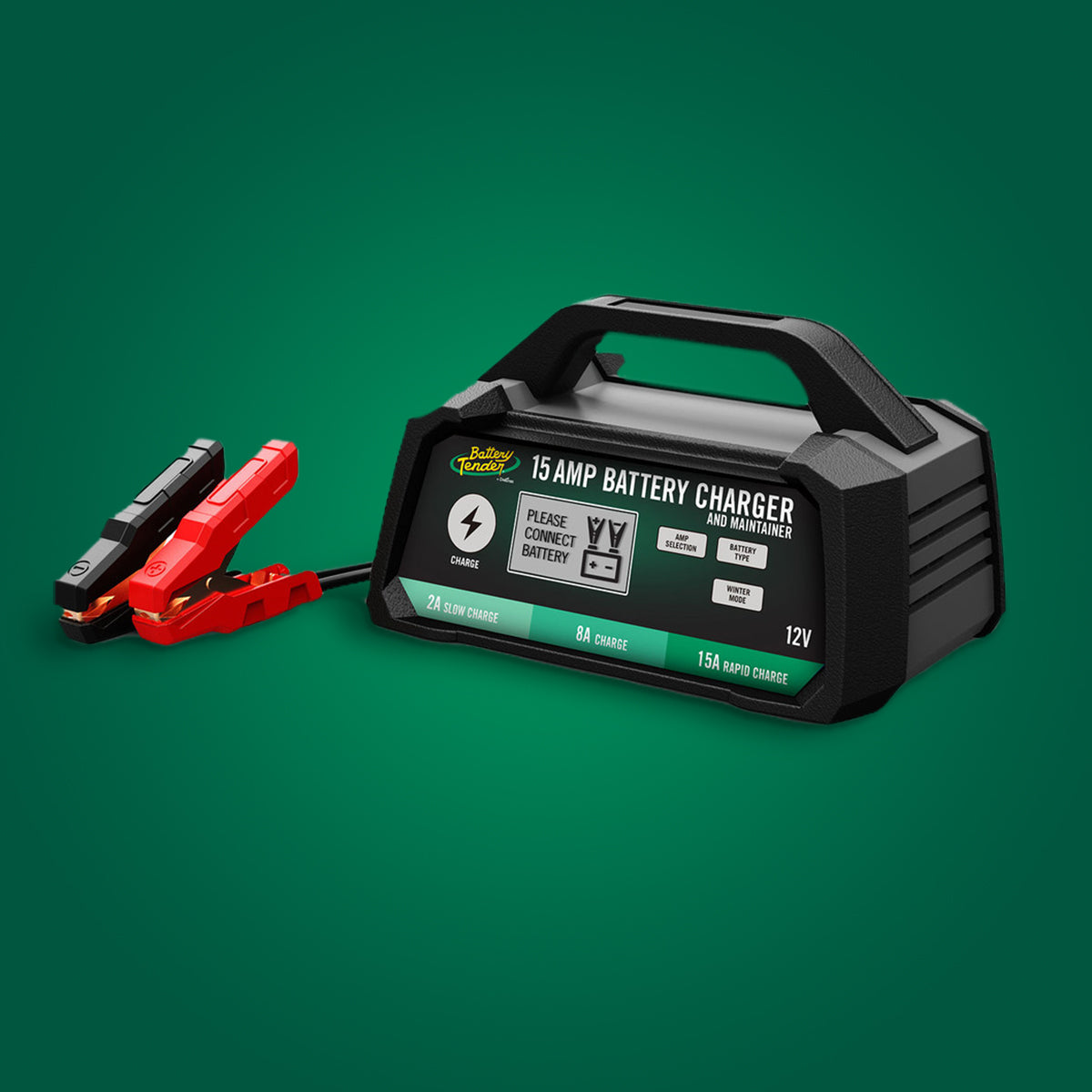
Battery Tender 8A/2A Battery Charger and Maintainer (SKU 022-1005-DL-WH) — This dual-output charger operates at 8 amps during bulk charging to recover a partially discharged auxiliary battery quickly, then automatically steps down to a 2-amp float maintenance mode to hold the battery at full charge indefinitely without risk of overcharge. The selectable AGM mode ensures proper voltage parameters for the Lightning's auxiliary battery chemistry. Connect it during extended Pro Power Onboard sessions, during overnight parking in extreme cold, or any time the truck will sit unused for more than a week.
For owners focused on long-term storage maintenance — winter storage, extended travel, or seasonal use patterns — a lower-output trickle maintenance charger is ideal:
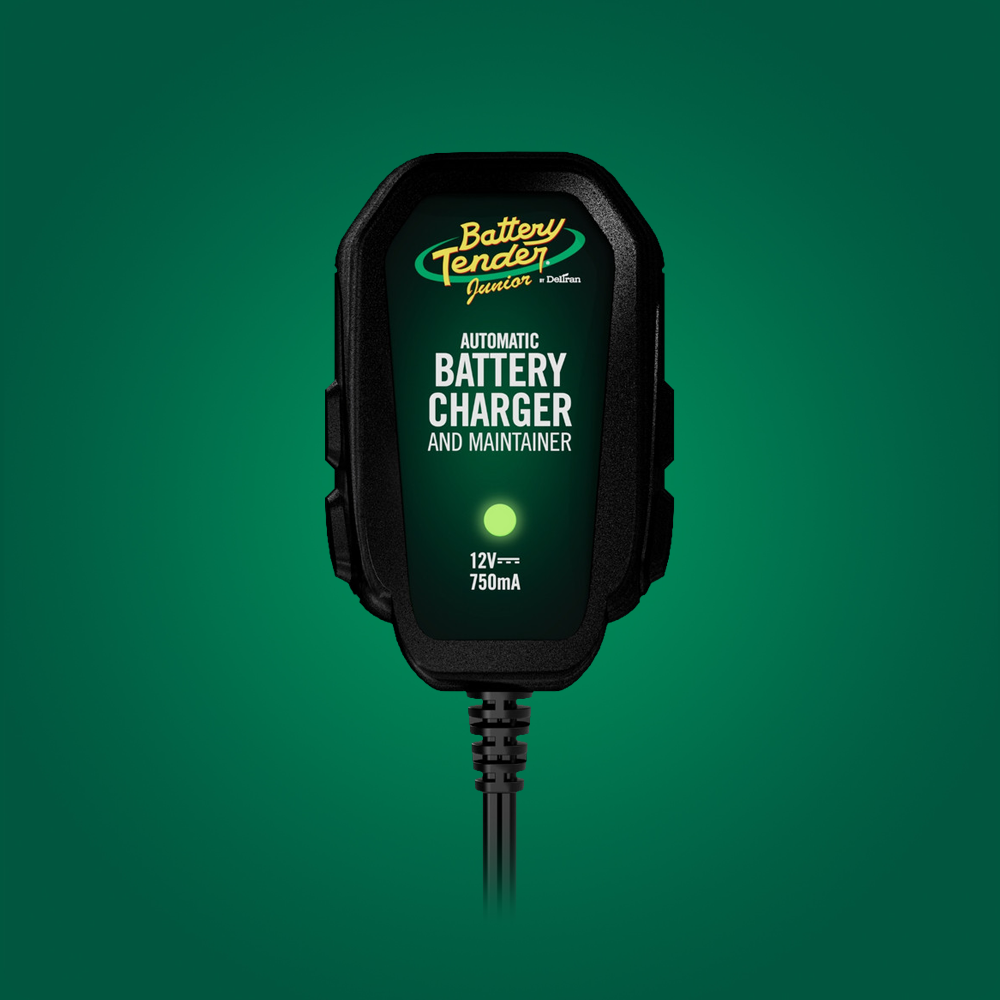
Battery Tender Plus 12V 1.25A Battery Charger and Maintainer — The original smart maintenance charger that established Battery Tender's reputation. The 1.25-amp output is precisely matched for long-term float maintenance of AGM batteries. Once connected, it monitors battery voltage continuously and applies a maintenance charge only when needed — the battery equivalent of a drip irrigation system. For a Lightning stored over winter or parked for months at a time, the Plus keeps the auxiliary battery fully conditioned and ready to enable the traction system the moment you return.
Level 2 Home Charging for the F-150 Lightning Traction Battery
The F-150 Lightning accepts Level 2 AC charging at up to 19.2 kW, requiring an 80-amp dedicated circuit for maximum speed. The 131 kWh extended range battery charges from 15% to 100% in approximately 8 hours at full 19.2 kW throughput — a complete overnight recovery from any realistic daily driving pattern. The standard range 98 kWh battery charges proportionally faster under the same conditions.
Installing a dedicated Level 2 EVSE (Electric Vehicle Supply Equipment) at home is the single most impactful upgrade a Lightning owner can make. Relying on a 120V Level 1 connection adds roughly 3–4 miles of range per hour — completely inadequate for a truck that may carry 300+ miles of range and requires recovery after long hauls, towing trips, or heavy Pro Power use days.
Battery Tender Level 2 EV Chargers for the F-150 Lightning
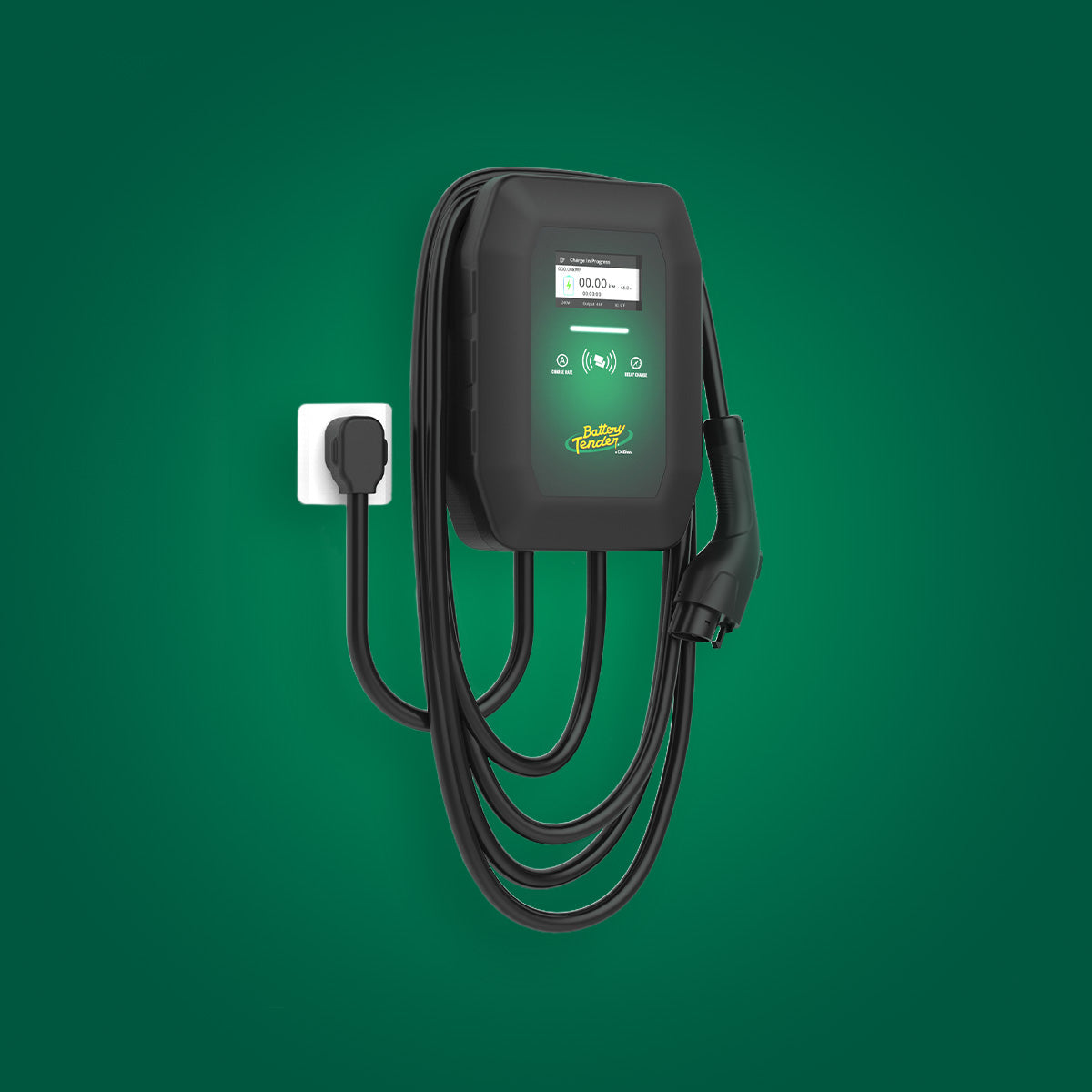
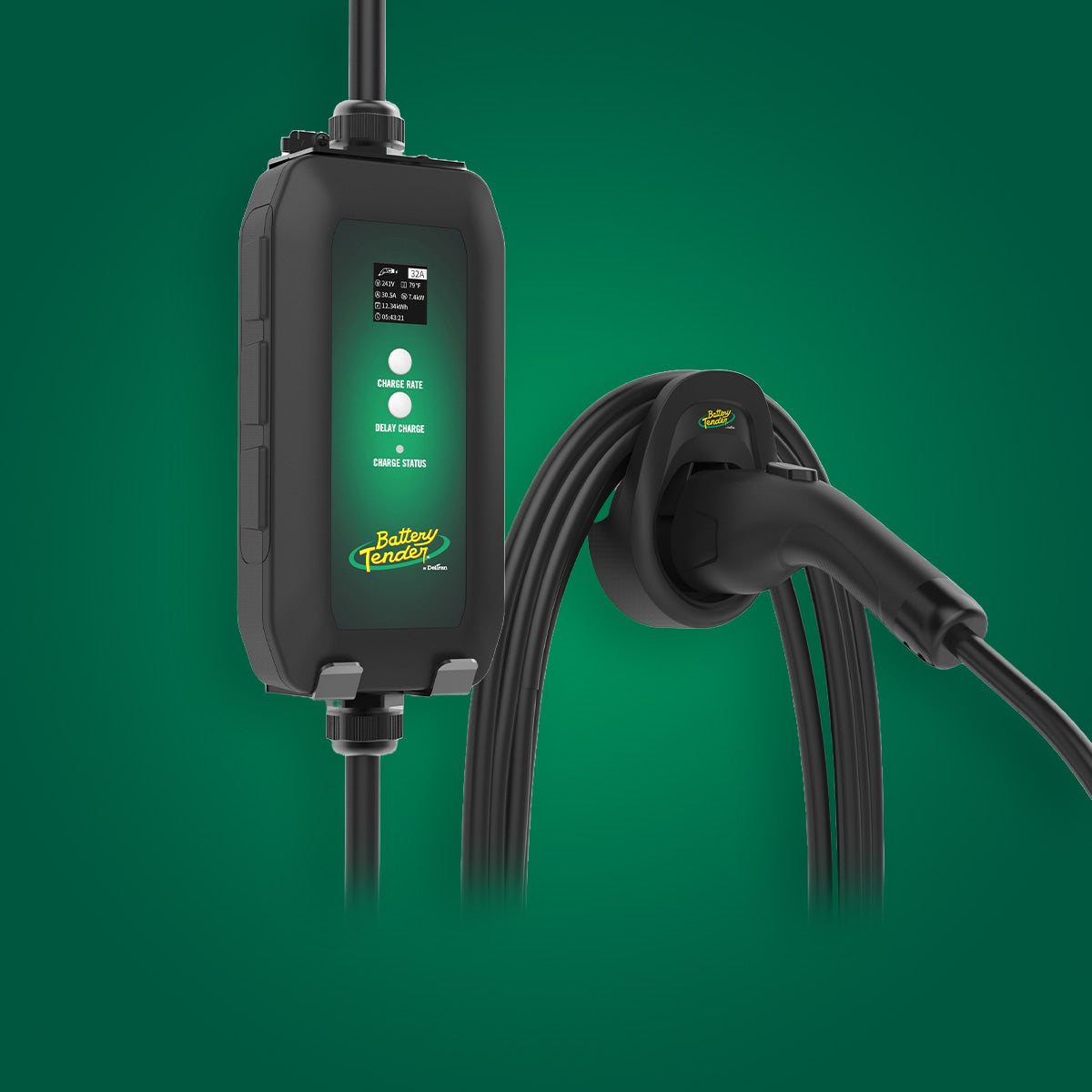
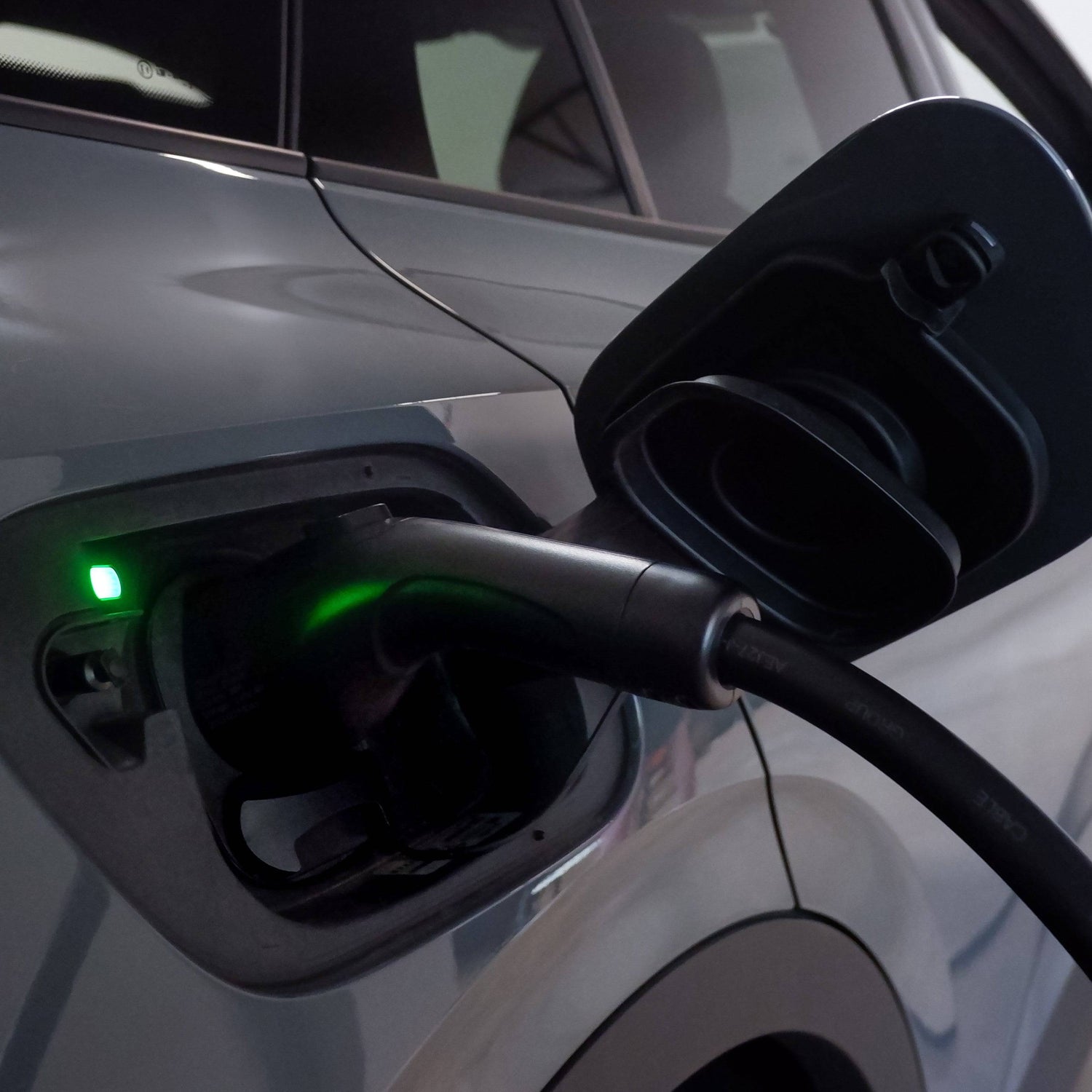
Battery Tender's Level 2 EV charger lineup provides purpose-built home charging solutions engineered for trucks and larger EVs. Both chargers feature weatherproof construction, 25-foot charging cables that comfortably reach across a standard garage stall or driveway, and UL listing for hardwired or plug-in installation.
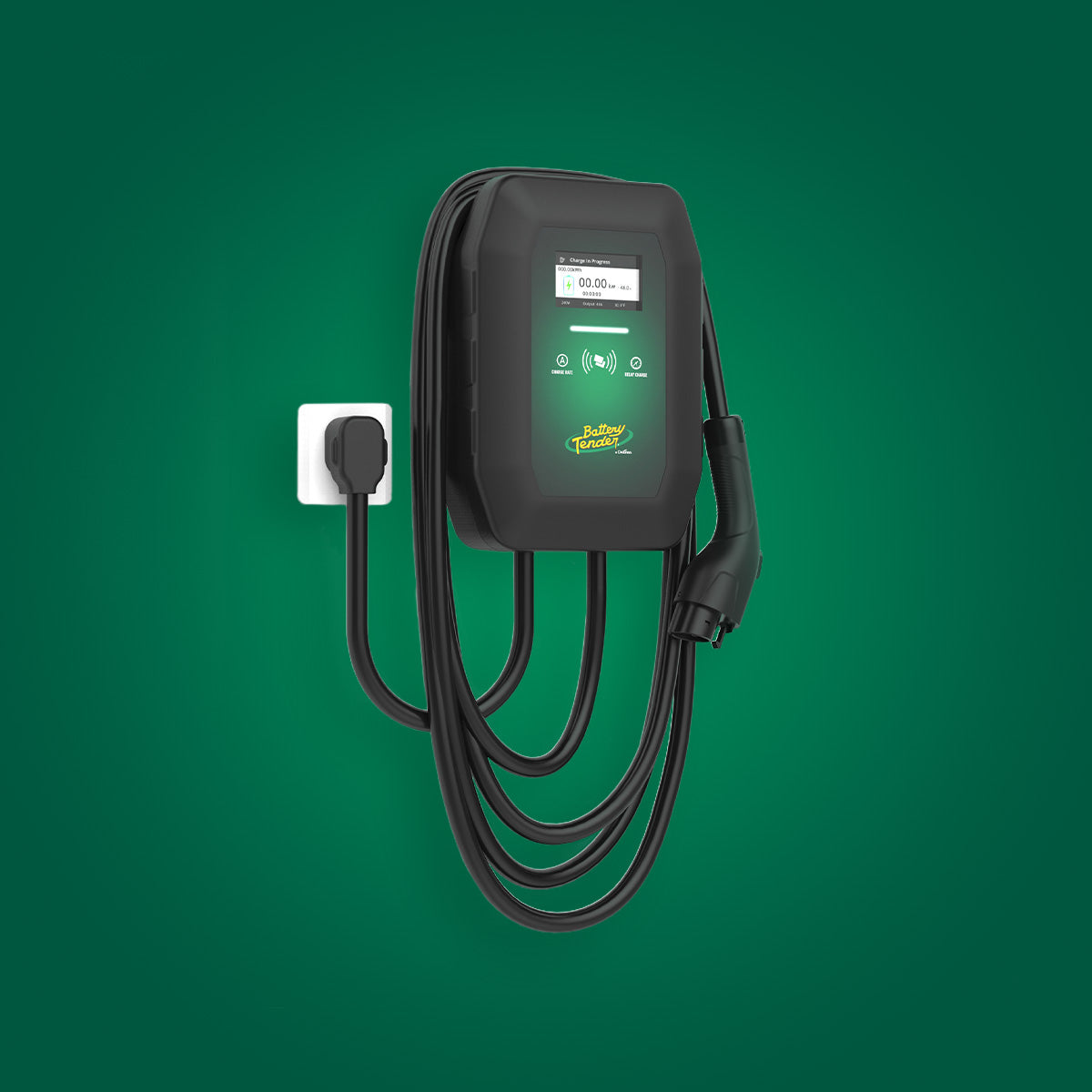
Battery Tender eCharge 48 AMP Level 2 Mountable EV Charger — Delivering 11.5 kW on a standard 60-amp circuit, the 48-amp charger provides practical overnight charging for both Lightning battery configurations. For extended range Lightning owners, this charger recovers roughly 75–80 miles of EPA-rated range per hour of charging — enough to fully replenish from a typical daily driving deficit in 4–5 hours and complete a full charge overnight with capacity to spare. The 48-amp output is the practical performance ceiling for most residential electrical panels without major service upgrades, making this the recommended choice for Lightning owners who want maximum home charging speed within a reasonable installation budget.
Battery Tender eCharge 40 AMP Level 2 Mountable EV Charger — Operating at 9.6 kW on a 50-amp circuit, the 40-amp charger is ideally suited to standard range Lightning owners or households where a 60-amp dedicated circuit isn't feasible without panel upgrades. At 9.6 kW, the standard 98 kWh Lightning charges from near-empty to full in approximately 10–11 hours — comfortably overnight. Both eCharge models feature the same 25-foot J1772 cable, hardwired installation compatibility, and weatherproof housing rated for outdoor mounting in any climate. Also available at Costco.com.
Planning Your Lightning Home Charging Installation
Selecting the right Level 2 charger for your Lightning involves assessing your electrical panel's available capacity, your daily driving patterns, and whether you'll regularly use the truck's maximum towing or Pro Power capabilities — both of which can significantly increase daily energy consumption and therefore charging demand.
For most Lightning owners in typical daily driver use — commuting, errands, weekend driving — the 40-amp eCharge on a 50-amp circuit provides complete overnight recovery with straightforward electrical installation. Owners who frequently tow heavy loads, use the truck as a primary work vehicle with heavy Pro Power Onboard demands, or regularly drive near the truck's range limits benefit from the additional throughput of the 48-amp eCharge on a 60-amp circuit.
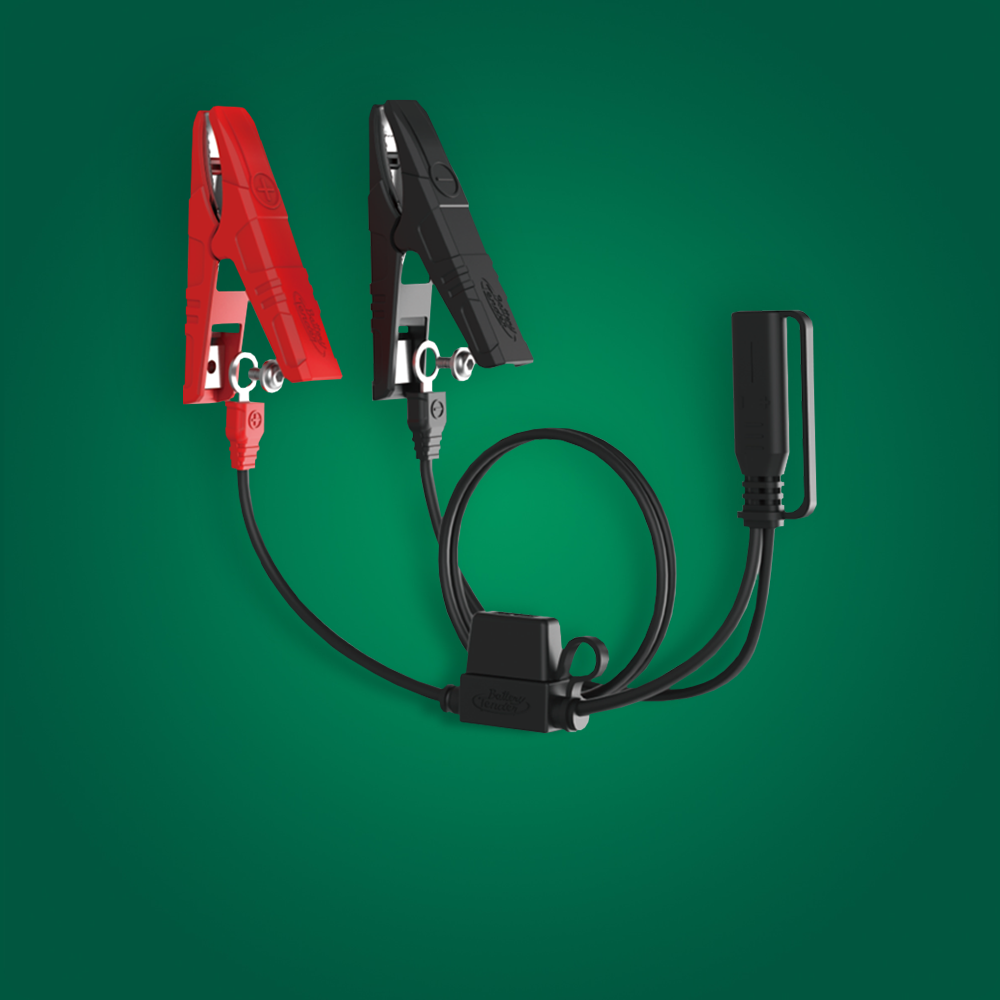
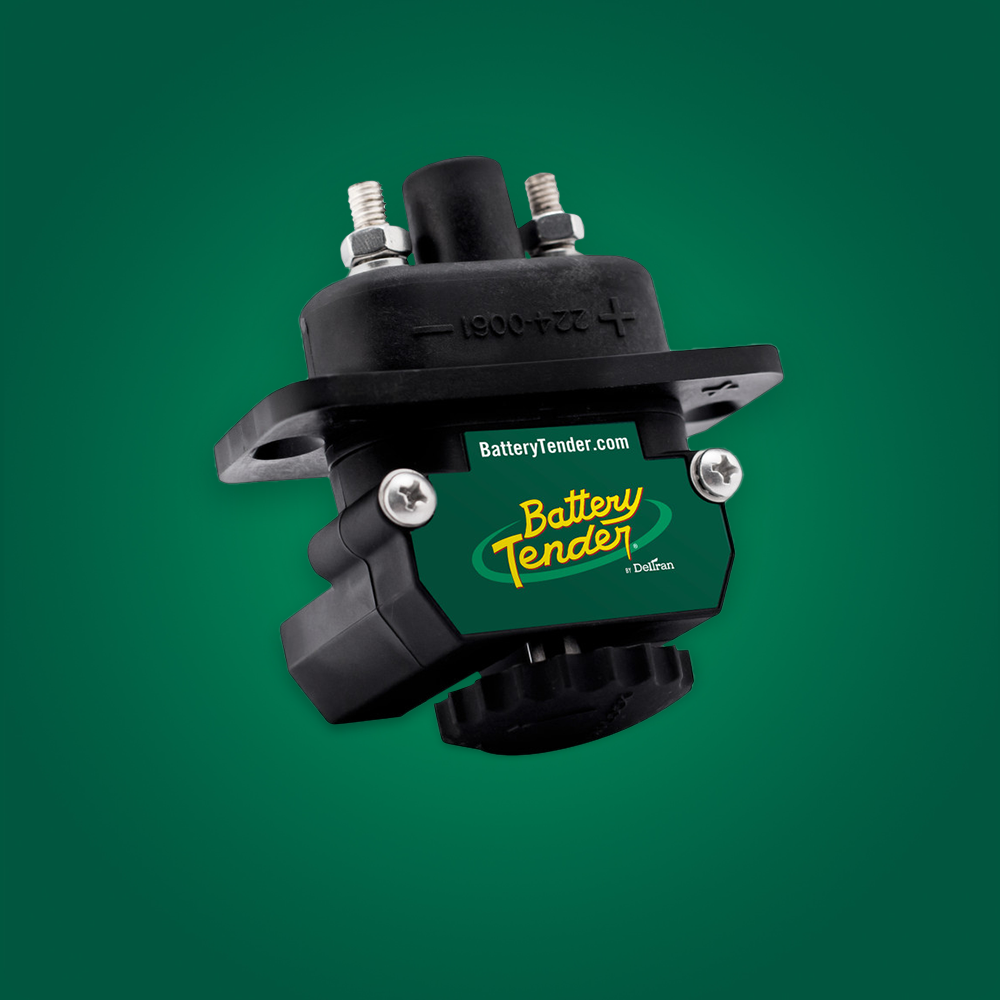
Lightning owners should also consider installing both a Level 2 charger and a 12V maintenance charger simultaneously — running a dedicated outlet near the front of the garage where the maintenance charger connects to the auxiliary battery via the hood-mounted charge port ring terminal while the Level 2 cable connects to the charge port. This dual-connection setup is the most comprehensive ford f-150 lightning battery maintenance routine available for home use.
Seasonal and Long-Term Storage Considerations
For Lightning owners who store the truck seasonally — particularly in northern climates where winter driving is limited — a structured storage protocol protects both battery systems:
- Charge the traction battery to 50–80% before storage, following Ford's recommendation to avoid long-term storage at 100% state of charge, which can accelerate traction battery degradation over time.
- Connect the Battery Tender Plus 12V 1.25A to the auxiliary battery via the underhood charge access point and leave it connected throughout the storage period.
- Keep the truck plugged into the Level 2 charger if possible — the Battery Management System will use traction battery power to maintain cabin temperature and system readiness, but having the Level 2 connected prevents the traction battery from being drawn down below Ford's recommended storage range.
- Enable FordPass app monitoring to check traction battery state of charge remotely during extended storage periods.
Frequently Asked Questions: F-150 Lightning Battery Maintenance
What is the best way to maintain the F-150 Lightning's 12V auxiliary battery?
The best way to maintain the Lightning's 12V auxiliary battery is connecting a smart AGM-compatible maintenance charger whenever the truck sits unused for more than a week, during cold weather parking, or after extended Pro Power Onboard sessions. Battery Tender's 8A/2A Charger and Maintainer handles active recovery, while the Battery Tender Plus 12V 1.25A is ideal for long-term float maintenance during seasonal storage. Both automatically prevent overcharge damage.
Why does the F-150 Lightning's 12V battery drain even when the truck is off?
The Lightning's body control module, telematics system, and FordPass connectivity draw continuous low-level current even when the truck is parked and off. Over-the-air update installations, remote climate preconditioning requests from the FordPass app, and system wake-up cycles also pull from the 12V auxiliary battery. Without a maintenance charger compensating for this parasitic drain, extended parking — particularly in cold weather — can deplete the auxiliary battery below the threshold required to enable the high-voltage traction system.
How long does it take to charge an F-150 Lightning with a Level 2 home charger?
Charge time depends on charger output and battery size. The Battery Tender eCharge 48 AMP charger delivers 11.5 kW, recovering the 131 kWh extended range Lightning from 15% to 100% in approximately 10–11 hours. The 40 AMP charger at 9.6 kW charges the standard 98 kWh Lightning from near-empty overnight in 10–11 hours as well. Both scenarios fit within a standard overnight window, ensuring a fully charged truck every morning.
What type of 12V battery does the F-150 Lightning use?
Most current-production F-150 Lightnings use a 12V AGM (Absorbent Glass Mat) battery. AGM batteries require smart chargers with AGM-specific voltage profiles — standard flooded-battery chargers can permanently damage AGM cells through overcharging. Battery Tender chargers include selectable AGM-compatible charging modes that deliver precisely regulated voltage and automatic float maintenance, making them the correct choice for Lightning auxiliary battery care.
When should I connect a maintenance charger to my F-150 Lightning?
Connect a 12V maintenance charger any time the Lightning will sit unused for more than seven days, during cold weather storage, immediately after extended Pro Power Onboard sessions, or during seasonal storage. Proactive maintenance charging prevents sulfation — a form of permanent capacity loss — and ensures the auxiliary battery always has sufficient voltage to close the high-voltage contactors and enable the traction system when you need the truck.
Which Battery Tender Level 2 charger is right for my F-150 Lightning?
Choose the eCharge 48 AMP if you own an extended range Lightning, frequently tow, or want maximum overnight charging speed on a 60-amp circuit. Choose the eCharge 40 AMP if you own a standard range Lightning or your electrical panel supports only a 50-amp dedicated circuit. Both chargers deliver complete overnight recovery and feature weatherproof housing with a 25-foot J1772 cable.
Conclusion: Complete Battery Maintenance for the F-150 Lightning
Comprehensive ford f-150 lightning battery maintenance means protecting both battery systems — the high-voltage traction pack through proper Level 2 home charging and the 12V auxiliary battery through regular smart maintenance charging. Neglecting either system creates real vulnerability: a depleted 12V auxiliary battery prevents the truck from starting regardless of traction pack state of charge, while inadequate Level 2 charging leaves you starting each day with less range than the truck is capable of delivering.
Battery Tender's product lineup addresses the complete Lightning maintenance picture: the 8A/2A Battery Charger and Maintainer for active auxiliary battery recovery, the Battery Tender Plus 12V 1.25A for long-term storage maintenance, the eCharge 48 AMP Level 2 Charger for maximum home charging throughput, and the eCharge 40 AMP Level 2 Charger for owners seeking efficient overnight charging on a standard 50-amp circuit. Together, these products form a complete home charging and maintenance ecosystem purpose-built for the demands of America's most capable electric truck.
Related guides: Ford F-150 Lightning Home Charging Setup: Complete Guide · EV 12V Auxiliary Battery Maintenance · More EV charging guides