


RV Battery Health Check: Test, Charge and Maintain (2026)
An RV battery stays healthy when you keep it above 50% state of charge, check its resting voltage monthly, and hold it on a smart maintainer between trips. A 12V lead-acid RV battery that rests at 12.7V is full, and one at 12.0V is already at about 25%.
Most RV battery failures are slow, silent discharge problems, not sudden defects. Parked rigs carry small constant loads that drain a house bank for weeks until sulfation sets in. This guide covers testing, parasitic drain math, charging and maintenance with Battery Tender® products matched to bank size. Use the voltage chart and monthly routine below to catch problems before a trip is ruined.
Key Takeaways
- Measure resting voltage (rested 4+ hours) monthly; 12.4V on a lead-acid RV battery means recharge soon, and 12.2V means recharge now.
- Parasitic loads of 50-100 mA can pull 36-72 Ah from a 200Ah bank in 30 days.
- Plug-in maintenance or a solar panel sized to the drain keeps a parked RV battery topped off.
- Chassis, house and generator-start batteries each need their own charge path.
- Lithium batteries have a flat voltage curve, so use a battery monitor instead of the voltage chart.
How Does an RV Battery System Work?
Most RVs carry two separate battery systems: a chassis (starting) battery for the engine and a house bank for lights, pump, fridge control board and electronics. The two serve different jobs and fail in different ways.
Chassis, House and Generator Batteries
The chassis battery delivers a short burst of high current and is recharged by the alternator. The house bank delivers steady low current for hours and is recharged by the alternator, converter (on shore power), or solar. Many motorhomes also have a dedicated generator-start battery that is rarely charged by anything while parked.
12V Banks and 6V Pairs
Typical house banks are 100-400Ah. A single 12V battery gives you its rated Ah. Two 6V golf-cart-style batteries wired in series produce 12V at the Ah rating of one battery, so two 6V 232Ah units equal one 12V 232Ah bank. Wiring two 12V batteries in parallel keeps 12V and adds the Ah ratings together.
How Do You Test an RV Battery Without Guessing?
Test with a digital multimeter after the battery has rested at least four hours with no charging and no loads. Surface charge from driving or shore power inflates the reading and hides a weak battery.
Resting Voltage Chart for Lead-Acid and AGM
| Resting Voltage (12V) | Approx. State of Charge | Action |
|---|---|---|
| 12.7V or higher | 100% | None; maintain |
| 12.4V | 75% | Recharge soon |
| 12.2V | 50% | Recharge now |
| 12.0V | 25% | Recharge immediately; sulfation risk |
| 11.8V or lower | Near empty | Slow recharge, then load test |
For a 6V pair, measure across the full 12V string, not each battery. Use the same chart.
Load Testing and Lithium Exceptions
Voltage alone cannot confirm capacity. After a full charge, run a known load, such as a 10A inverter or lighting load, for 30 minutes and watch the voltage sag. A healthy 12V battery stays above about 12.2V under a modest load. If it collapses below 11.5V, the battery has lost capacity.
Lithium iron phosphate (LiFePO4) batteries hold a nearly flat voltage across most of their range, so the chart above does not apply. Use a shunt-based battery monitor that counts amp-hours in and out.
What Drains an RV Battery When It Is Parked?
Parasitic loads drain a parked RV battery: propane and carbon monoxide detectors, stereo and thermostat memory, control boards, and inverter standby. Combined, they commonly draw 30-100 mA with the converter off, and more if a monitor panel or satellite equipment stays powered.
Run the numbers for your rig. A 50 mA drain uses 1.2 Ah per day, or 36 Ah in 30 days. At 100 mA, the loss is 2.4 Ah per day, or 72 Ah per month. On a 200Ah lead-acid bank, that is 36% of capacity gone in a month before self-discharge, which runs roughly 4-6% a month for flooded batteries at room temperature and faster in heat.
Three fixes cut the drain:
- Flip the battery disconnect switch for storage, if your rig has one.
- Turn off the inverter completely, not just the loads.
- Replace the lost energy with a plug-in maintainer or solar, covered below.
Cold storage adds a safety angle. A deeply discharged lead-acid battery can freeze near 20°F, while a full battery tolerates far lower temperatures. Keeping the bank charged also protects against cracked cases in winter. The heavy-duty charging guide for fifth wheels and expedition vehicles covers larger rigs with multiple banks.
How Should You Charge an RV Battery Between Trips?
Use a Battery Tender smart charger with Infinite Sequential Monitoring (ISM), a four-stage automatic process: Initialization, Bulk Charge, Absorption and Float Maintenance. Initialization tests the battery. Bulk Charge delivers full rated current to about 80% state of charge. Absorption holds voltage and tapers current. Float Maintenance monitors the battery and charges only when voltage drops. That is why a charger with ISM can stay connected indefinitely, unlike conventional trickle chargers that push constant current.
Charging Time Math
Formula: (battery Ah × depth of discharge) ÷ charger amps = approximate hours, plus 10-20% for absorption losses.
| House Bank | Ah to Replace (50% discharged) | At 3A | At 10A | At 20A |
|---|---|---|---|---|
| 100Ah | 50Ah | about 17 hours | 5 hours | 2.5 hours |
| 200Ah | 100Ah | about 33 hours | 10 hours | 5 hours |
| 400Ah | 200Ah | about 67 hours | 20 hours | 10 hours |
The table shows the trade-off. Low-amp maintainers keep a bank full but are slow at recovering a deeply discharged one. For recovery, use shore power through the RV converter or an inverter-charger, then let a maintainer hold the bank afterward.
Plug-In Maintenance for Multiple Batteries
Rigs with a house bank, chassis battery and generator battery need three independent charge paths. The Battery Tender WaveCharge 3-Bank is a 12V, 9A onboard charger (3A per bank) with an IP67 waterproof rating. Each bank runs its own ISM profile, so a full chassis battery does not stop the house bank from charging. The Battery Tender WaveCharge charger also includes temperature compensation, which adjusts voltage as the compartment heats and cools. Its 3A per bank suits maintenance and top-offs of 100-200Ah banks rather than rapid recovery.
Battery Tender WaveCharge 3-Bank 12V 9 Amp Battery Charger and Maintainer
Solar Maintenance When There Is No Outlet
RVs stored in a lot, driveway or farm field often have no outlet. A 17-watt panel produces roughly 1A in full sun, or about 3-4 Ah on a typical day, which exceeds the 1.2-2.4 Ah daily drain calculated earlier. The Battery Tender 17 Watt Mountable Solar charger includes a solar controller and suits a 100-200Ah bank stored outdoors with a modest parasitic load.
17 Watt Mountable Solar 12V Battery Charger with Solar Controller
For a single chassis battery, the Battery Tender 5 Watt Solar charger mounts inside the windshield and offsets a drain of about 50 mA, roughly 1.2 Ah per day, in good sun. It works best on a motorhome parked with the windshield facing south.
5 Watt Solar 12V Battery Charger with Windshield Mount
If you already own a larger panel or are adding one to the roof, the Battery Tender Solar Charge Controller regulates panel output so the bank is charged at safe voltage. Confirm panel wattage against the controller rating on the product page before buying. The off-grid RV solar charging guide covers full roof arrays.
Battery Tender Solar Charge Controller
Monthly RV Battery Maintenance Routine
A 15-minute monthly routine prevents most RV battery problems. Follow these steps in order:
- Rest the battery. Disconnect charging and loads for at least four hours.
- Measure voltage. Record the resting voltage at the terminals and compare it to the chart.
- Inspect terminals. Look for white or green corrosion and clean it with a baking soda and water solution.
- Check water levels on flooded batteries. Top up with distilled water only, after charging.
- Tighten connections. Loose lugs cause voltage drop and heat.
- Confirm the maintainer is working. The charger should show maintenance mode or the panel should be producing in sunlight.
- Log the numbers. A voltage that falls month over month signals a failing battery or a growing drain.
Safety note: lead-acid batteries release hydrogen while charging, so ventilate the compartment and keep sparks away. Wear eye protection and remove metal jewelry when working near terminals.
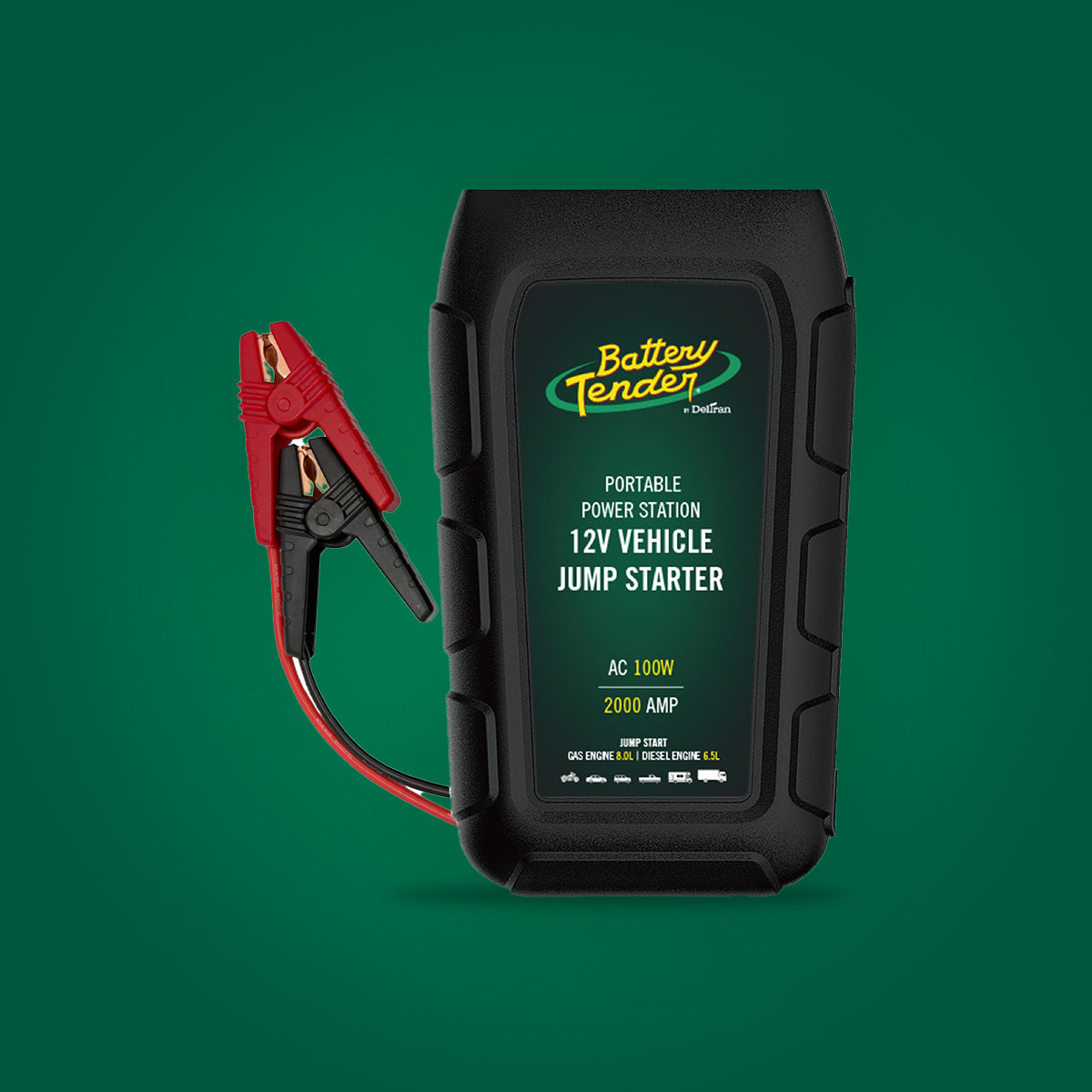
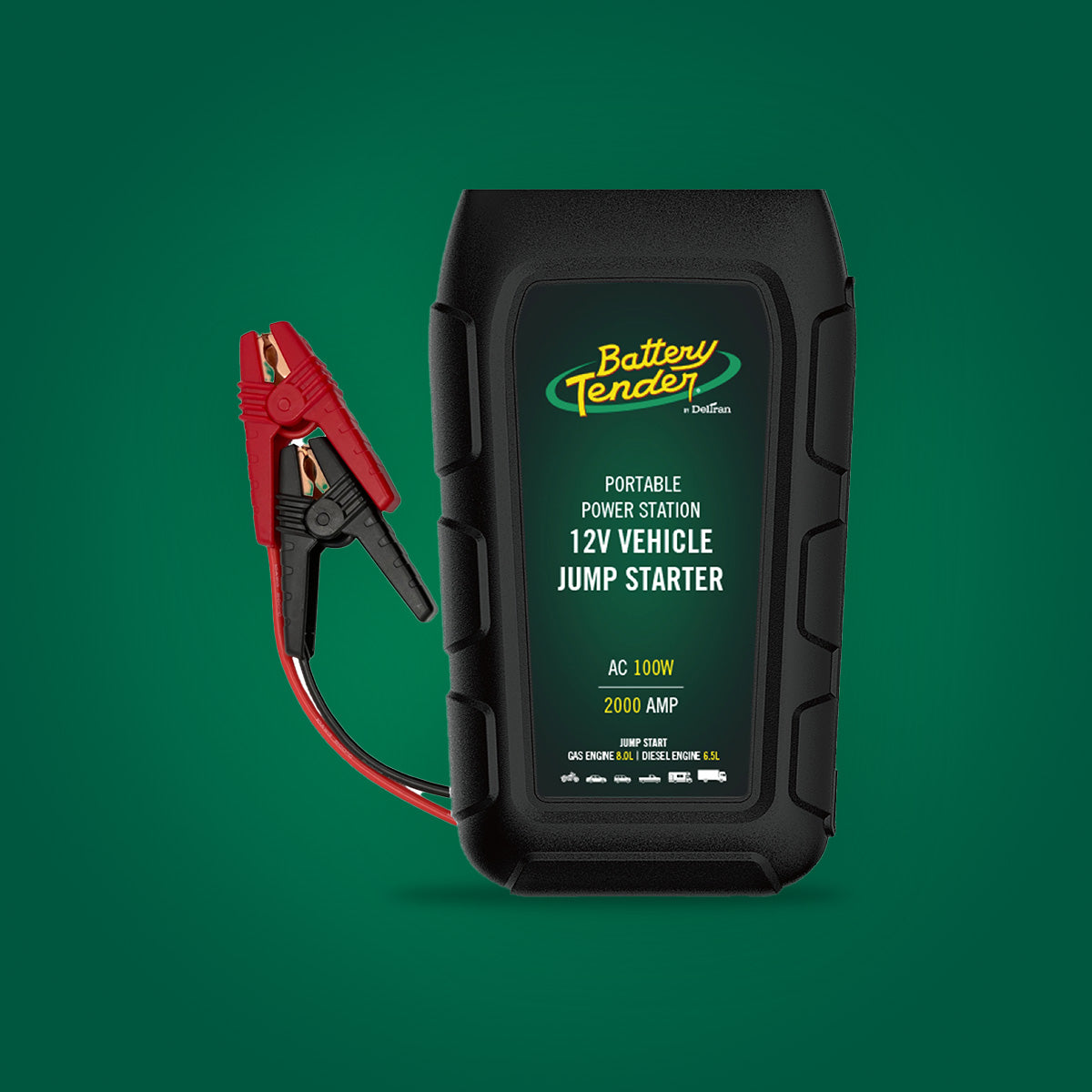
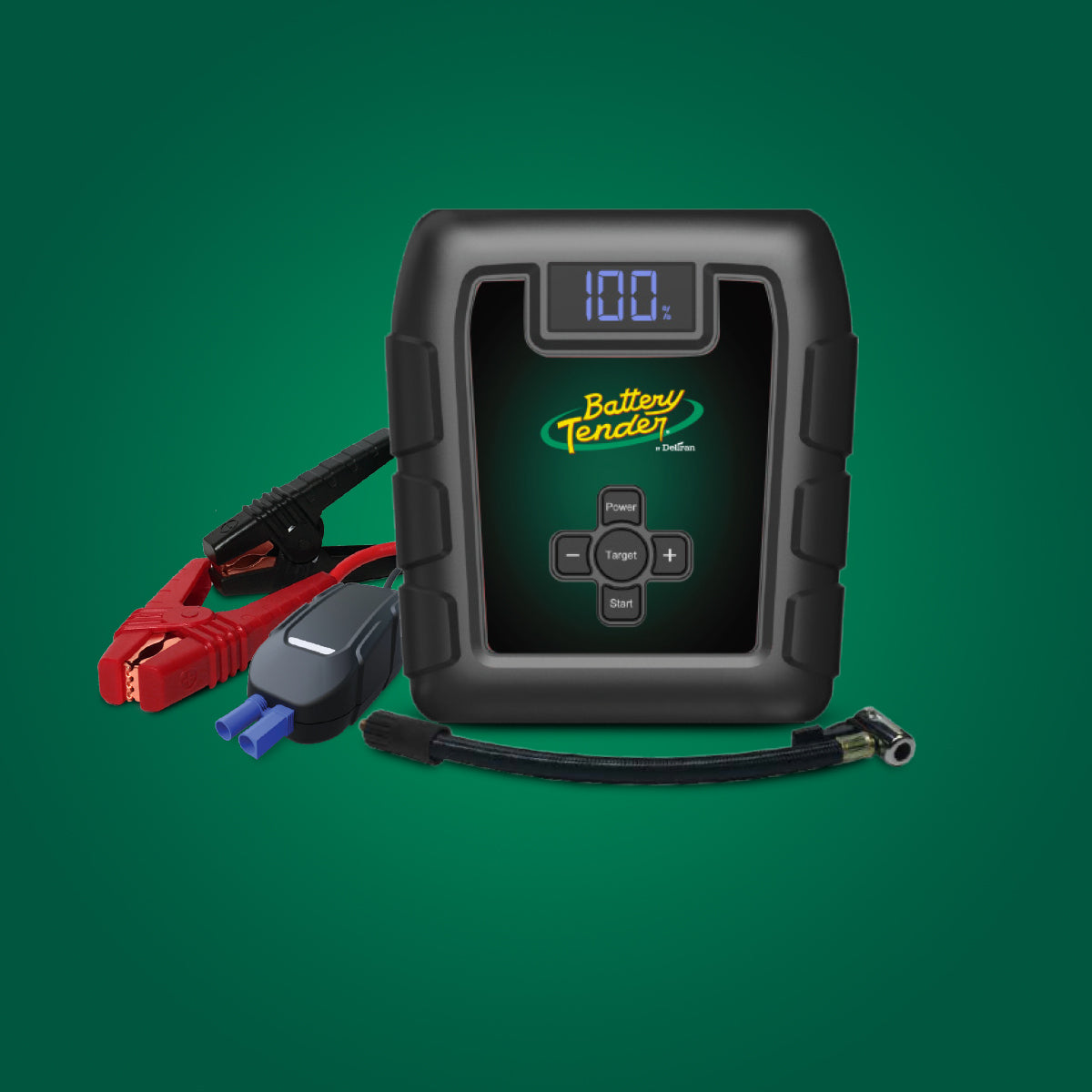
A dead RV battery also strands the engine. Pair the maintenance routine with a backup. The Battery Tender Jump N Start 2000 Amp Power Station with 100W Inverter jump-starts large gas and diesel engines, and its inverter powers small devices when the house bank is down.
Battery Tender Jump N Start 2000 Amp Power Station with 100W Inverter
Frequently Asked Questions
How often should I check my RV battery voltage?
Check resting voltage once a month during storage and before every trip. Let the battery rest at least four hours with no charger or loads connected. A reading of 12.4V on a lead-acid battery means recharge soon, 12.2V means recharge now, and a month-over-month decline signals a growing drain or a failing battery.
Can I leave an RV battery connected to a charger all the time?
Yes, if the charger uses a smart multi-stage process such as Battery Tender ISM technology. The Float Maintenance stage charges only when voltage drops, so the battery stays full without overcharging. Avoid leaving conventional trickle chargers connected for months, because constant current can overcharge a battery and shorten its life.
How long does an RV battery last?
A well-maintained lead-acid RV battery typically lasts three to five years, and AGM often lasts longer. Frequent discharges below 50%, long periods below 12.4V and heat all shorten life. Keeping the bank charged between trips is the single biggest factor in reaching the upper end of that range.
What size charger do I need for a 200Ah RV battery?
For maintenance, 1-3A per battery is enough. For recovery, divide the amp-hours to replace by charger amps: a 100Ah deficit takes about 33 hours at 3A or 10 hours at 10A, plus 10-20% for absorption. Use shore power or an inverter-charger for recovery, then a maintainer to hold the bank.
Does solar charging work for an RV battery in storage?
Yes, if the panel exceeds the parasitic drain. A 17-watt panel yields roughly 3-4 Ah on a sunny day, while typical standby loads use 1.2-2.4 Ah per day. Use a solar controller to regulate output, mount the panel where it gets direct sun, and verify battery voltage monthly.
Conclusion
A healthy RV battery comes down to three habits: test resting voltage monthly, cut or replace the parasitic drain, and use a smart maintainer or solar panel matched to bank size. Start today by measuring your RV battery after a four-hour rest and comparing it to the voltage chart above. Then choose the right charger for your rig from the Battery Tender charger collection.