



How to Test Your Car Battery at Home: 5-Step Multimeter Guide (2026)
To test your car battery at home, measure resting voltage with a multimeter after the car has sat for 12 hours, then check voltage during cranking and with the engine running. A healthy 12V battery reads 12.6V or higher at rest, holds above 9.6V while cranking, and shows 13.7V to 14.7V with the engine running.
Many no-start problems trace back to a discharged battery rather than a dead one, and a few quick checks show which one you have. This guide covers five checks with exact pass/fail numbers, then explains how to restore a weak battery with Battery Tender® chargers sized to your battery's amp-hours. The method works on cars, trucks, SUVs, and most 12V batteries (AGM and lithium starting batteries read differently from flooded batteries, as noted below).
Key Takeaways
- Resting voltage of 12.6V or higher means a full charge; 12.2V is about 50%; 12.0V or lower is deeply discharged.
- Remove surface charge first, or a freshly driven battery will read falsely high.
- Cranking voltage below 9.6V on a fully charged battery means the battery is failing.
- Running voltage under 13.5V or over 15.0V points to the charging system, not the battery.
- A parasitic draw above 50 mA can drain a healthy battery in a few weeks.
Tools Required: How to Test Your Car Battery at Home Safely
You need a digital multimeter, eye protection, and about 20 minutes. Lead-acid batteries release hydrogen gas, so work in a ventilated space with no sparks or open flame nearby.
- Digital multimeter: DC volts range of 20V, plus a 10A DC current setting for the draw test.
- Safety glasses and gloves: Battery acid and shorted terminals cause injuries fast.
- Wire brush or terminal cleaner: Corrosion adds resistance and creates false low readings.
- Helper: One person cranks the engine while the other watches the meter.
- Optional: A hydrometer for flooded batteries, or a dedicated load tester.
Remove rings and watches before starting. A metal tool bridging the positive terminal and the car body can weld in an instant. Clean both terminals until the lead is bright, then tighten the clamps so they do not rotate by hand.
Steps 1 and 2: Remove Surface Charge, Then Read Resting Voltage
Resting voltage is the most useful single number, and it only counts after surface charge is gone. Surface charge is a temporary voltage bump from recent driving or charging that can hide a weak battery.
Remove surface charge
- Turn the engine off and shut all accessories off.
- Switch the headlights on for 2 minutes with the engine off.
- Turn the headlights off and wait 5 to 10 minutes. An overnight rest of 12 hours is better.
Take the reading
- Set the multimeter to 20V DC.
- Touch the red probe to the positive terminal and the black probe to the negative terminal.
- Read the display and compare it to the table below.
| Resting Voltage (12V Flooded) | Approx. State of Charge | Action |
|---|---|---|
| 12.6V or higher | 100% | Healthy; proceed to cranking test |
| 12.4V | 75% | Acceptable; top off with a charger |
| 12.2V | 50% | Recharge before further testing |
| 12.0V | 25% | Sulfation risk; recharge immediately |
| 11.9V or lower | Discharged | Full recharge, then retest |
AGM batteries rest slightly higher, typically 12.8V to 13.0V when full. Lithium (LiFePO4) starting batteries rest higher still, around 13.2V to 13.4V, so use the battery manufacturer's chart. Cold batteries read a little lower, so test in a garage rather than on a 15°F driveway when possible.
Step 3: How to Test Your Car Battery at Home Under Cranking Load
A battery can show 12.6V at rest and still collapse under load, which is why the cranking test matters. Voltage under load reveals internal resistance that a resting reading cannot.
- Confirm the battery is at least 12.4V at rest. Recharge first if it is not, or the test only proves it was discharged.
- Connect the multimeter to the terminals as before.
- Have your helper crank the engine for 5 to 10 seconds. Disable ignition or fuel if you want to avoid starting the engine.
- Note the lowest voltage displayed during cranking.
At about 70°F, a good battery stays above 9.6V. A reading of 9.0V to 9.6V signals a weak battery, and anything under 9.0V on a fully charged battery means replacement. Cranking slows noticeably in cold weather, so the same battery can pass in July and fail in January.
Using a dedicated load tester
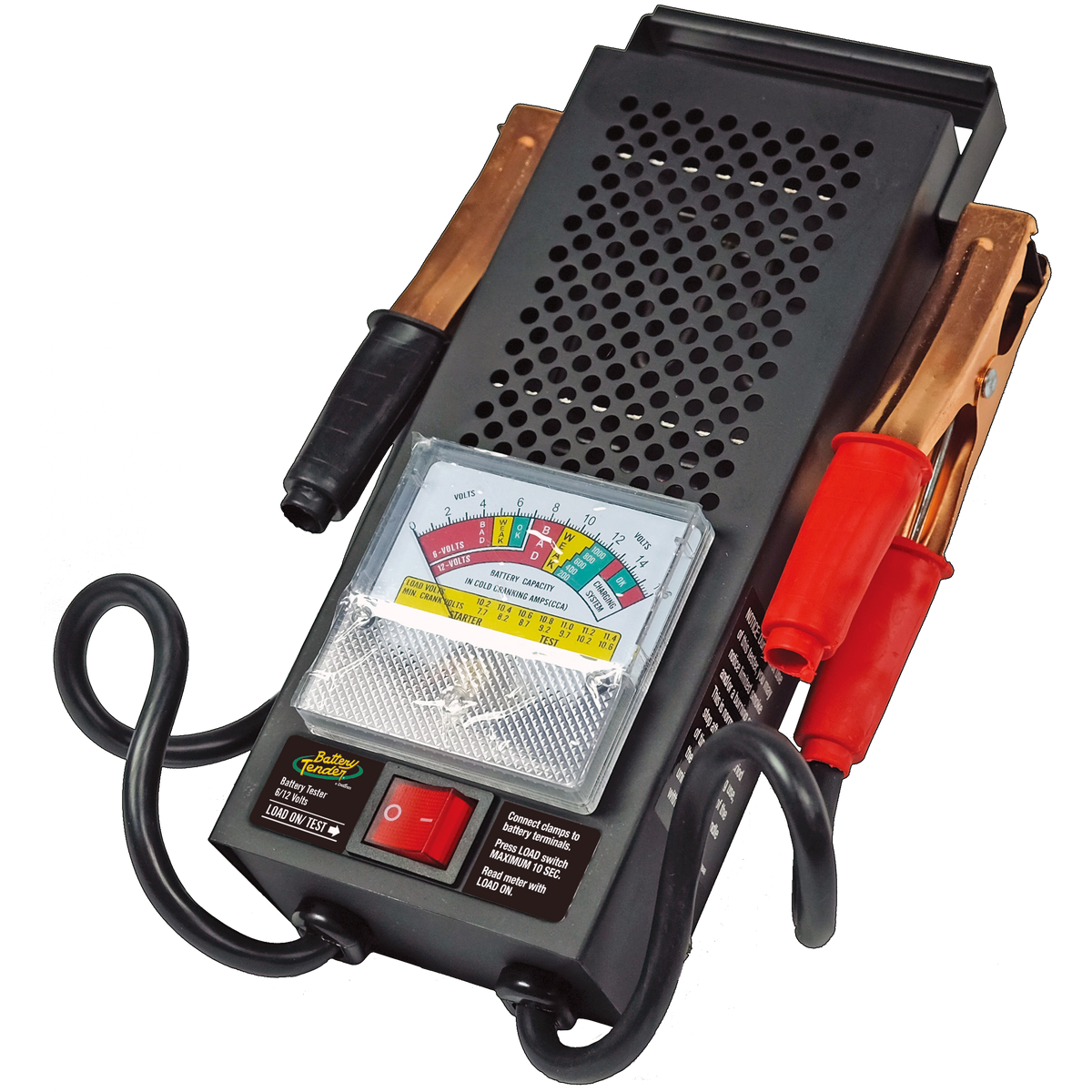
A load tester applies a controlled current and shows whether voltage holds. The Battery Tender 12V / 6V Battery Tester suits this job, with a 100 amp rating on 12V batteries and 50 amp on 6V batteries. It also covers classic 6V systems that most multimeter guides ignore. For full-size car batteries, the multimeter cranking test above stays more representative of a real start.
Battery Tender 12V / 6V Battery Tester
Steps 4 and 5: Test the Charging System and Parasitic Draw
Replacing a battery without checking these two items often means replacing it twice. A weak alternator or a hidden electrical drain will kill the new battery as well.
Check running voltage
- Start the engine and hold it near 2,000 rpm.
- Measure across the battery terminals with the lights and blower on.
- Look for 13.7V to 14.7V.
Below 13.5V suggests a weak alternator or loose belt. Above 15.0V suggests a failing voltage regulator that can cook a battery. Both readings point away from the battery itself.
Measure parasitic draw
- Turn everything off, close the doors, and let the car sleep for 20 to 45 minutes so modules shut down.
- Disconnect the negative cable.
- Set the multimeter to 10A DC and connect it in series between the negative post and the cable end.
- Read the current. Normal draw is 25 to 50 mA; anything over 50 mA deserves investigation.
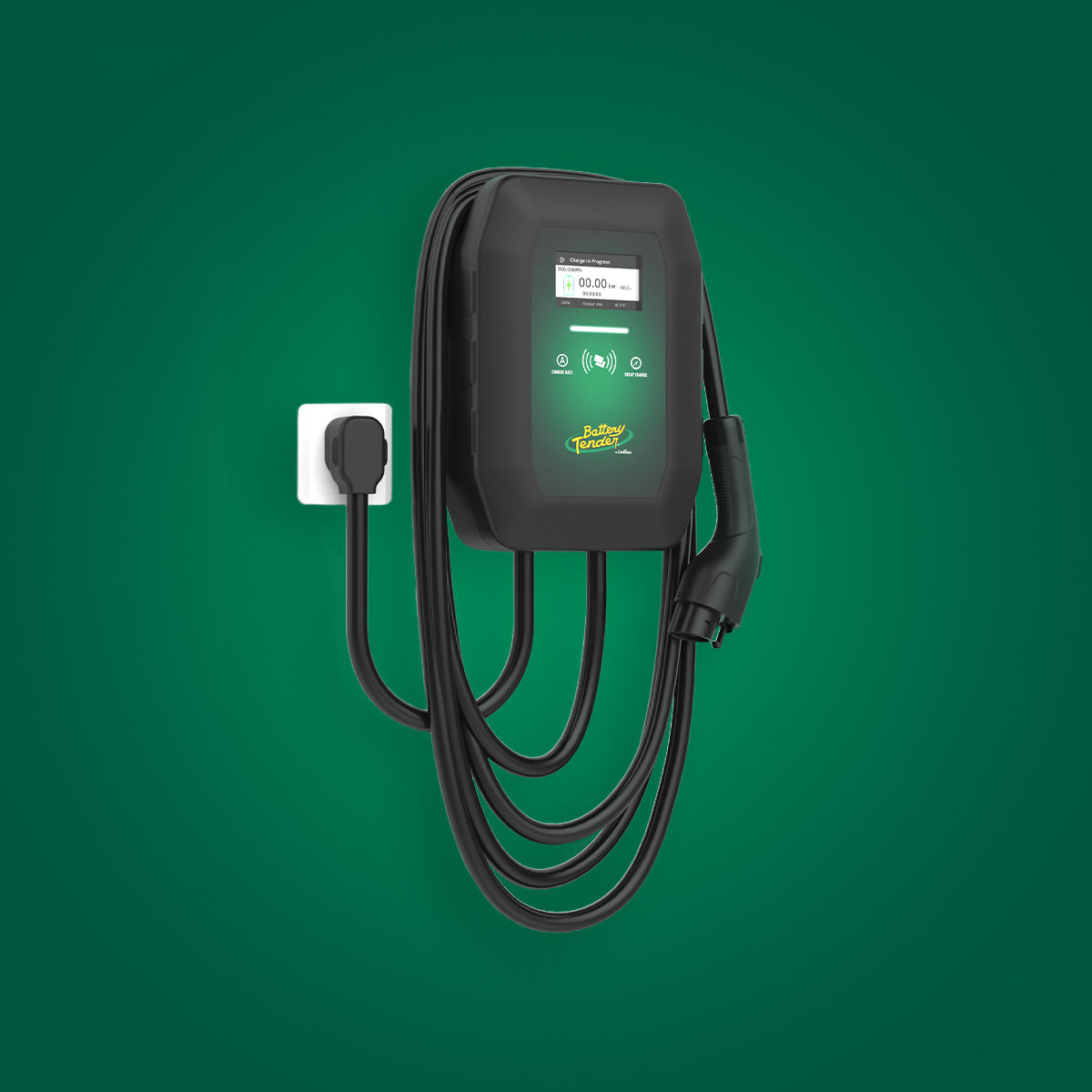
Never crank the engine with the meter in series, because the starter current will blow the meter fuse. To locate a draw, pull fuses one at a time and watch for the reading to drop. The same checks apply to a standby generator starting battery, covered in the generator battery maintenance guide. Electric vehicles also carry a 12V auxiliary battery that fails the same ways, and owners comparing home charging options can start with the home EV charger amperage guide.
What Do the Results Mean, and Which Charger Fixes It?
Low voltage with a normal cranking test after recharge means maintenance, while a battery that will not hold 12.4V or fails the load test needs replacement. Retest after a full charge and a 12-hour rest to separate the two cases.
- Passes everything: Keep it topped up, especially if the car sits.
- Low resting voltage, passes after charging: Discharged only; add a maintainer.
- Fails after full charge: Replace the battery. Batteries more than 4 to 5 years old commonly end here.
- Low running voltage: Repair the charging system.
- High parasitic draw: Trace the circuit before charging again.
Charge time follows a simple formula: (battery Ah × depth of discharge) ÷ charger amps. Real-world times run 10% to 25% longer from charging losses.
| Battery | Test Result | Charger Amps | Approx. Hours |
|---|---|---|---|
| 45Ah sedan | 12.2V (50% discharged) | 3A | (45 × 0.5) ÷ 3 = 7.5 |
| 70Ah truck | 12.2V (50% discharged) | 8A | (70 × 0.5) ÷ 8 = 4.4 |
| 100Ah RV or diesel | 12.0V (75% discharged) | 15A | (100 × 0.75) ÷ 15 = 5.0 |
| 45Ah sedan, stored | 12.4V (25% discharged) | 1.25A | (45 × 0.25) ÷ 1.25 = 9.0 |
How Infinite Sequential Monitoring (ISM) protects the battery you just tested
Battery Tender chargers use ISM, a four-stage automatic process: Stage 1 Initialization, Stage 2 Bulk Charge, Stage 3 Absorption, and Stage 4 Float Maintenance. Initialization checks the battery. Bulk Charge delivers full current to about 80% charge. Absorption holds voltage constant while current tapers. Float Maintenance monitors voltage and charges only as needed. Conventional trickle chargers deliver constant current regardless of battery state, which risks overcharging. A Battery Tender charger with ISM can stay connected indefinitely, and keeping a battery out of the low-voltage zone that causes sulfation can help extend battery life from the typical 2 to 3 years to 5 years or more.
Nearly all Battery Tender chargers include temperature compensation, which adjusts charge voltage for hot and cold garages.
Match the charger to the test result
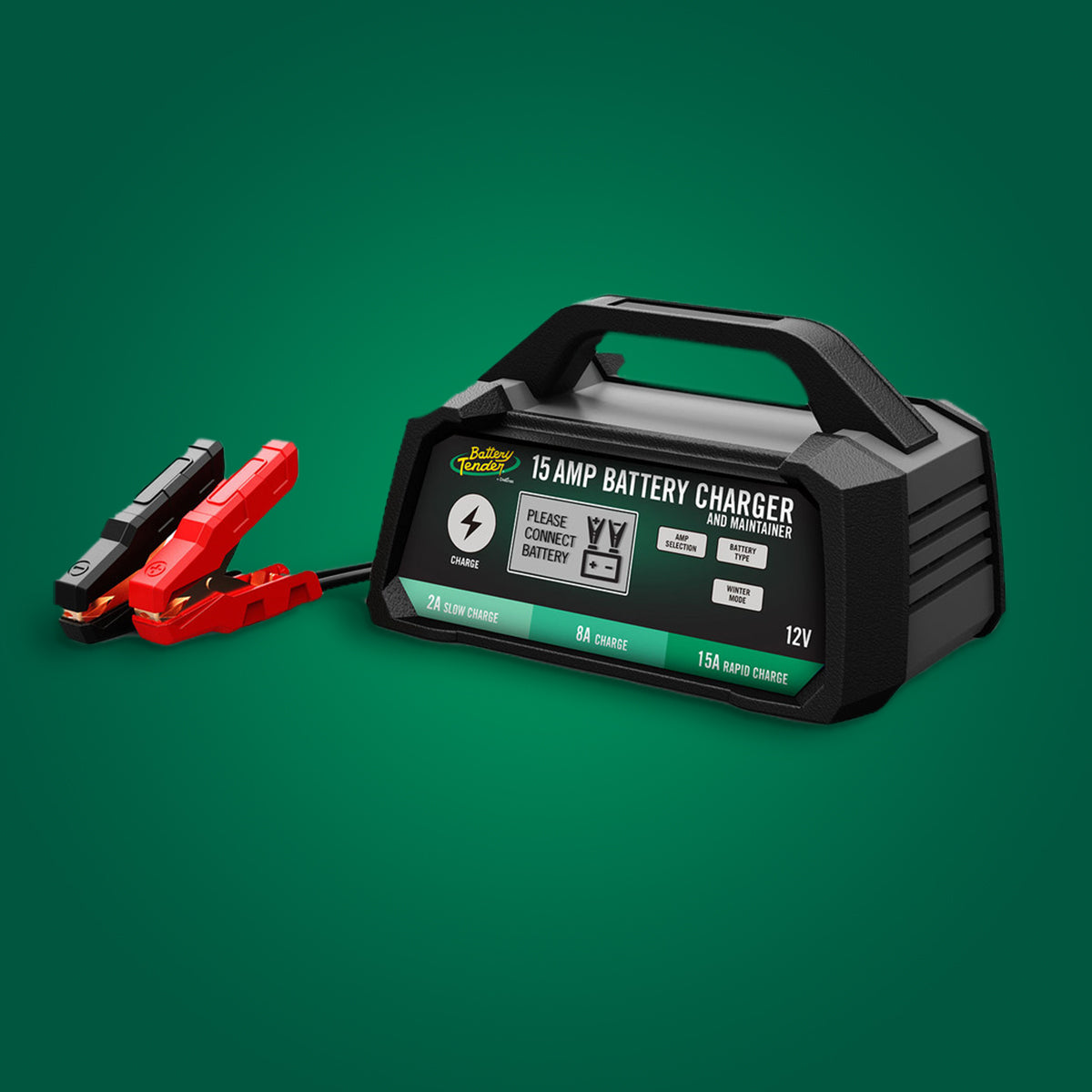
For a heavily discharged battery above 70Ah, such as a truck, SUV, or RV starting battery, the Battery Tender Power Tender 15/8/2 Amp charger delivers selectable 15A, 8A, or 2A output. The 15A mode recovers a 100Ah battery in roughly 5 to 6 hours, and the 2A mode handles long-term maintenance afterward.
Battery Tender Power Tender 15/8/2 Amp 12V Battery Charger and Maintainer
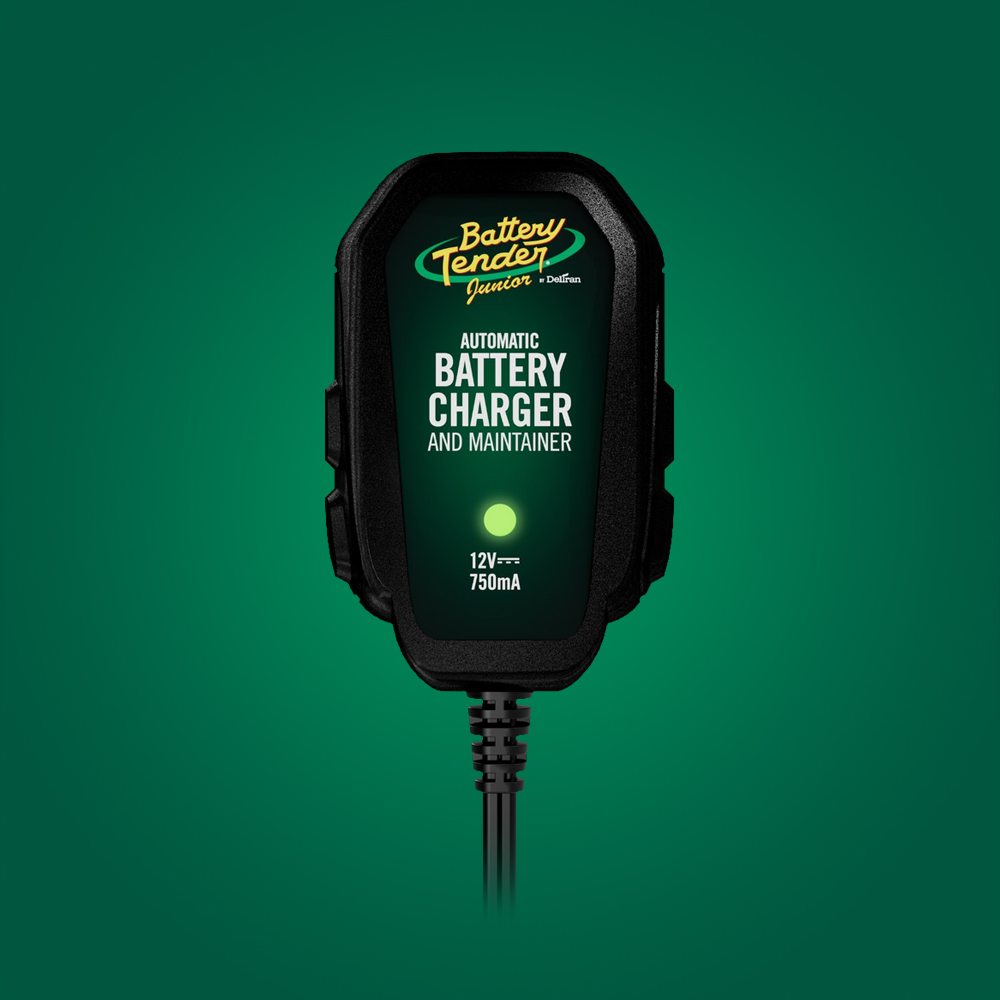
For a typical 45Ah to 60Ah car battery that tested at 12.2V, the Battery Tender Power Tender 3 Amp charger supports 12V and 6V systems. It suits daily drivers and classic cars on 6V electrical systems, and it can recover the battery overnight.
Battery Tender Power Tender 3 Amp 12V/6V Battery Charger and Maintainer
A household with several vehicles that sit between uses, such as a spare car, a motorcycle, and a lawn tractor, benefits from independent banks. The Battery Tender 4-Bank 12V 1.25 Amp charger maintains four 12V batteries at once, so a single test day leads to one connected setup instead of four separate chargers.
Battery Tender 4-Bank 12V 1.25 Amp Battery Charger and Maintainer
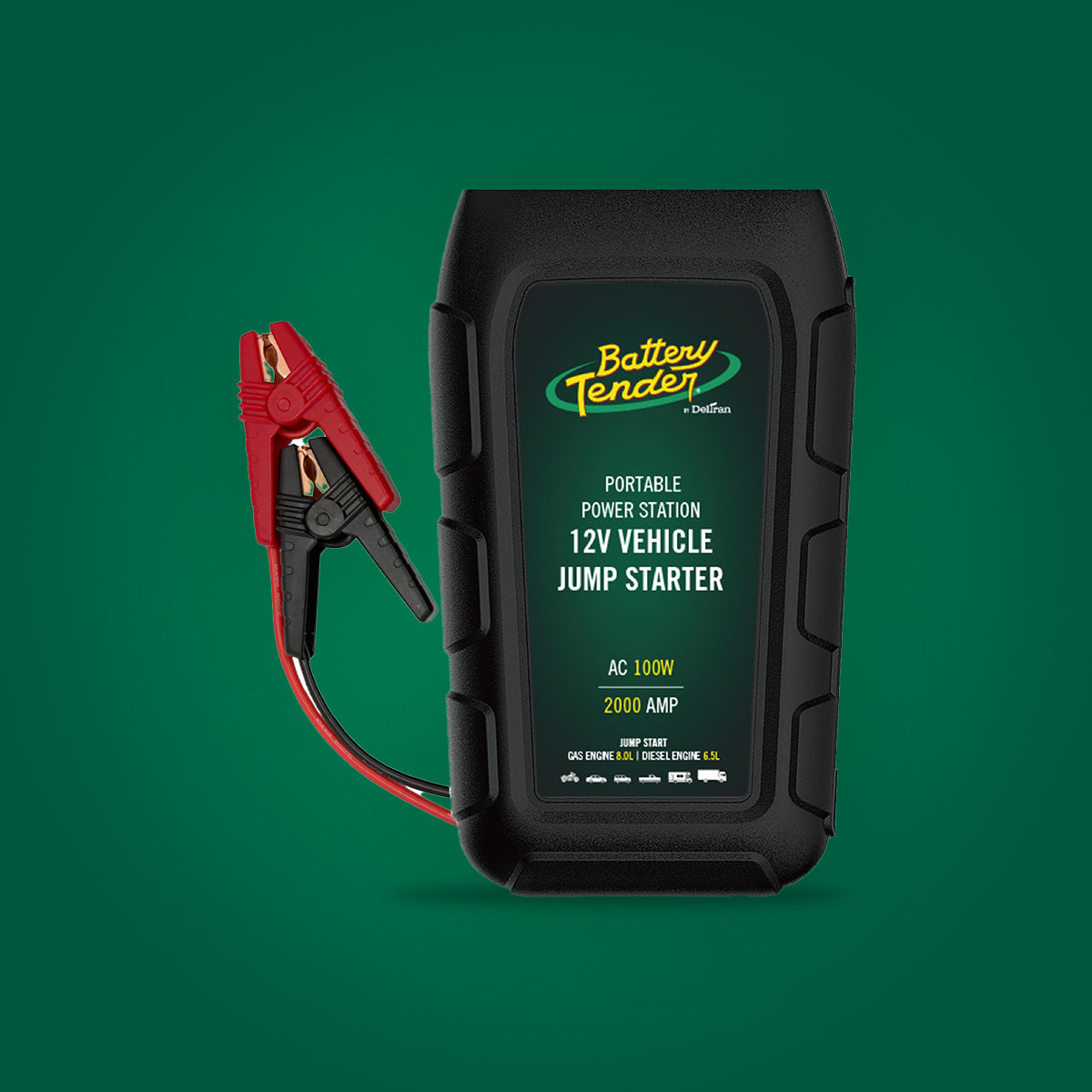
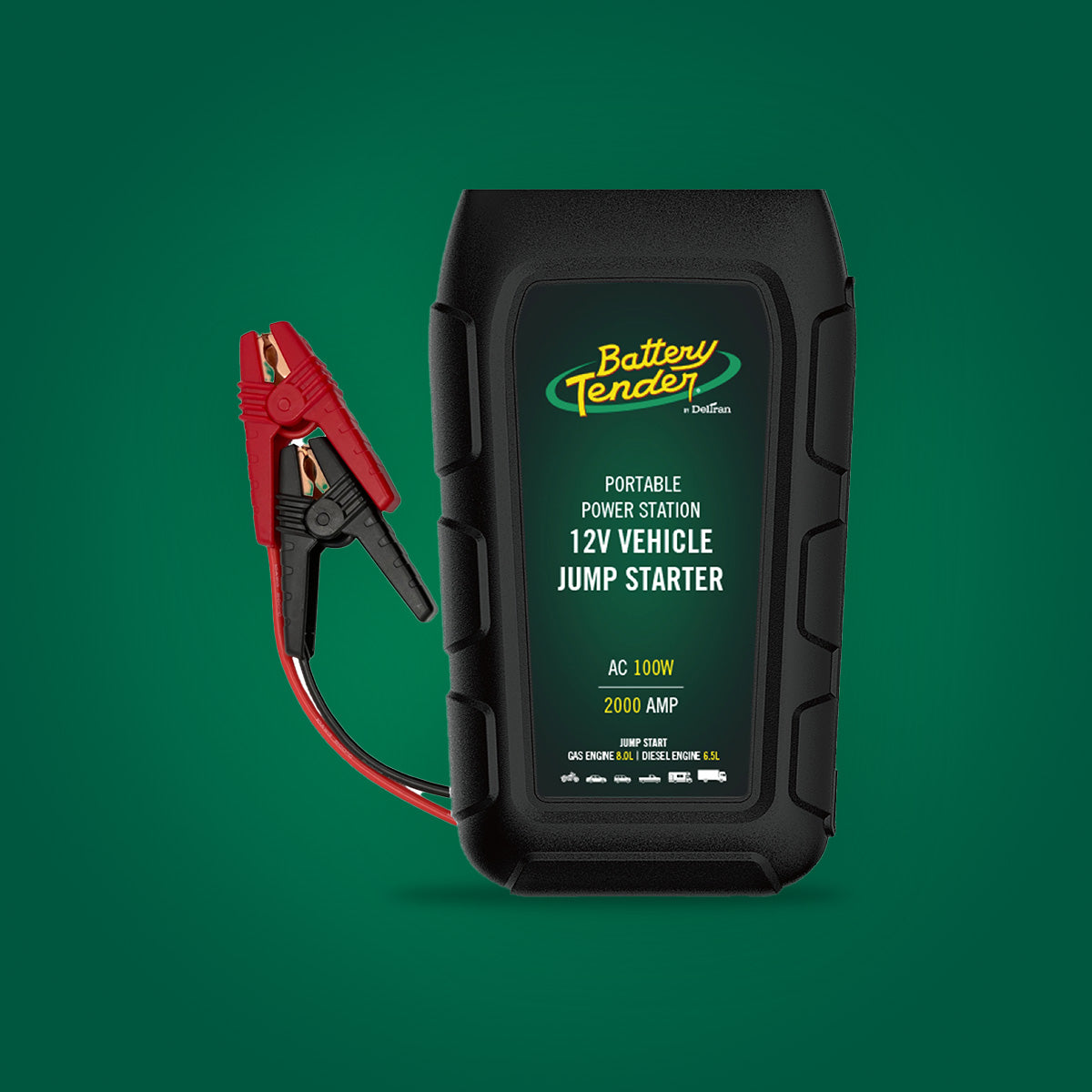
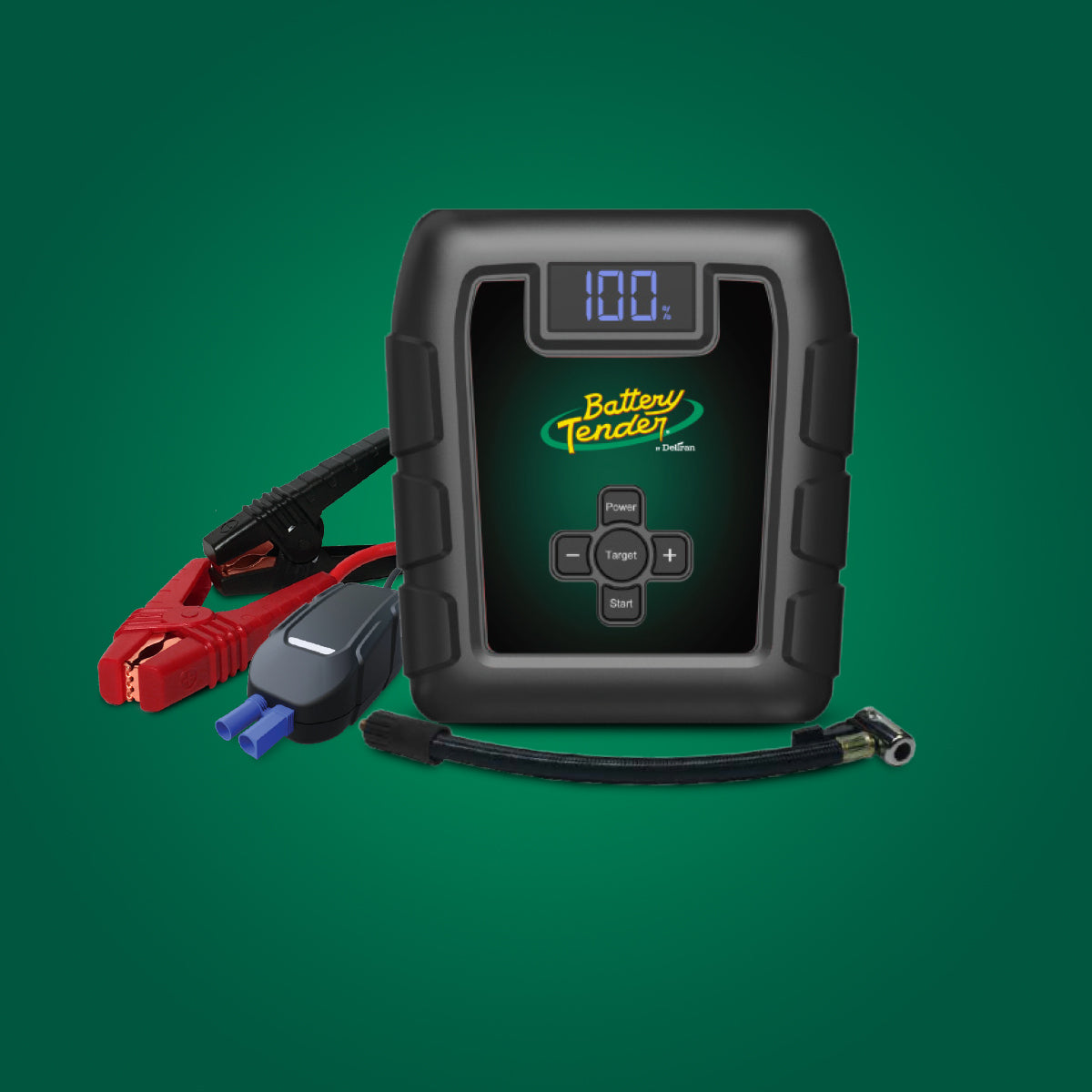
A battery that tests below 10.5V is deeply discharged. If you need the vehicle running before a full recharge is possible, a jump starter gets you moving. The Battery Tender Jump N Start 800 Amp Jump Starter and Tire Inflator handles cars and small trucks, and the built-in inflator covers a flat tire on the same roadside stop.
Battery Tender Jump N Start 800 Amp Jump Starter and Tire Inflator
Frequently Asked Questions
What voltage means a car battery is bad?
A resting reading below 12.0V means the battery is discharged. A battery that cannot climb above 12.4V after a full charge and a 12-hour rest is failing. A cranking drop below 9.6V on a charged battery confirms weakness. Running voltage under 13.5V points to the alternator rather than the battery.
Can I test a car battery without a multimeter?
Yes, though with less precision. Dimming headlights and slow cranking suggest weakness. A dedicated load tester gives a pass/fail verdict, and a hydrometer measures specific gravity in flooded batteries, where 1.265 indicates a full charge. A parts store can also run a professional load test on a battery you bring in.
How often should I test my car battery?
Test twice a year, once before winter and once before summer heat. After the battery reaches 3 years old, test every 6 months. Vehicles that sit for weeks deserve a monthly resting-voltage check, since a battery below 12.4V begins sulfating and loses capacity.
Should I test the battery while it is connected to the car?
Yes. Resting voltage, cranking, and running tests all use the installed battery. Clean the terminals first, because corrosion creates false low readings. Disconnect the negative cable only for the parasitic draw test, and never disconnect a battery while the engine is running.
How do I charge a battery that fails the voltage test?
Use a smart charger, such as a Battery Tender charger, sized to the battery. Divide amp-hours times depth of discharge by charger amps for the time estimate. A 50Ah battery at 50% discharge needs about 9 to 10 hours on 3A, including charging losses. Retest after a 12-hour rest. If it still reads under 12.4V, replace it.
Conclusion
Knowing how to test your car battery at home takes four tools and five checks: resting voltage, cranking voltage, running voltage, parasitic draw, and a retest after charging. Those numbers separate a discharged battery from a failing one and a bad battery from a bad alternator. Next step: run the resting-voltage test tonight, then match the result to the right charger in the Battery Tender charger collection.