

Fifth Wheel Expedition and Emergency Vehicle Power Systems: The Complete Battery Tender® Guide
Large vehicles with complex electrical demands share a problem that standard automotive chargers cannot solve: sheer battery capacity. A fifth wheel RV may carry 400–800 Ah of house bank capacity spread across four to eight deep-cycle batteries. An expedition vehicle built on a military or commercial truck chassis combines a heavy-duty starting battery with a multi-purpose house bank and auxiliary power for communications, lighting, and recovery equipment. Emergency vehicles — ambulances, fire apparatus, and police cruisers — run power-hungry systems continuously while sitting idle for hours between calls. Managing fifth wheel expedition and emergency vehicle power systems requires purpose-built charging infrastructure, not automotive hand-me-downs. Battery Tender® PowerPlus high-output chargers, multi-bank systems, and Intelligent Surface Mount (ISM) technology deliver exactly that infrastructure.
Why Standard Chargers Fail Large-Vehicle Battery Systems
The fundamental mismatch between conventional chargers and large-vehicle applications comes down to three factors: output amperage, charge algorithm sophistication, and multi-battery compatibility.
A standard 5–10A charger connected to a 400 Ah house bank at 50% depth of discharge would require 40 or more hours to complete a full charge cycle — an impractical timeframe that leaves crews, travelers, and fleet operators dependent on shore power or generator runtime far longer than necessary. Beyond amperage, conventional chargers often lack the multi-stage algorithms required to bring large, deeply discharged battery banks through proper bulk, absorption, and float phases without overcharging individual cells or leaving capacity on the table.
The third factor — multi-battery compatibility — separates fleet-ready solutions from consumer-grade products. A fire station may park three or four apparatus simultaneously. An expedition outfitter may prep a fleet of overlanding rigs between tours. Addressing these scenarios requires chargers designed from the ground up for professional, high-volume, high-capacity battery management.
Fifth Wheel RV Power Systems: House Bank Charging Done Right
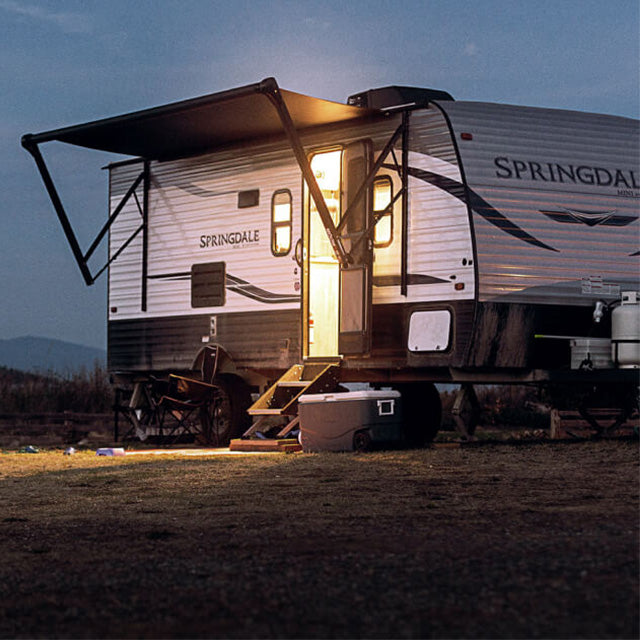
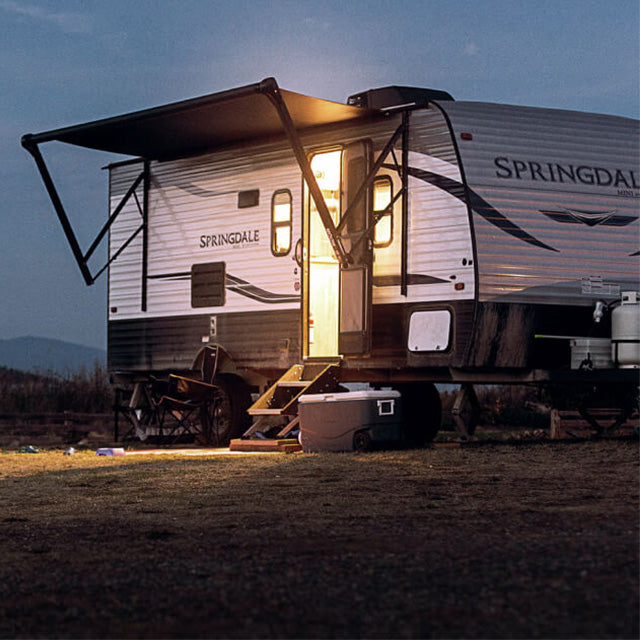
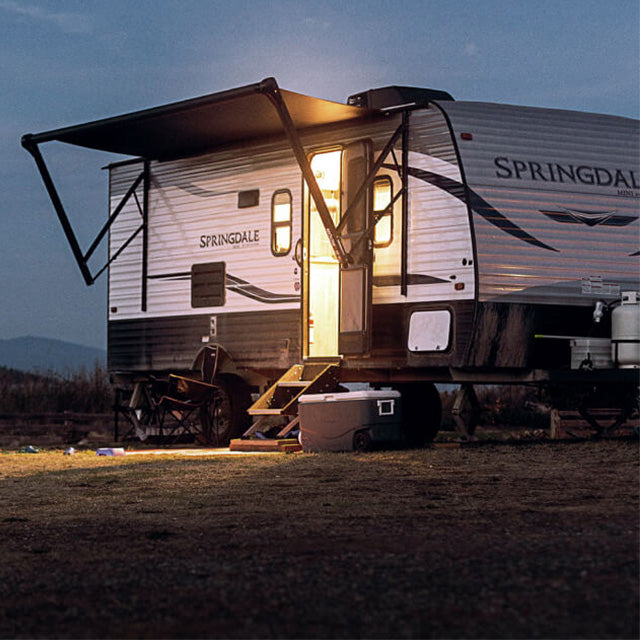
Fifth wheel RVs are among the most electrically demanding recreational vehicles on the road. Unlike travel trailers, a fifth wheel's house bank operates completely independently from the tow vehicle's starting battery. That house bank — typically two to four Group 27 or Group 31 AGM or flooded deep-cycle batteries wired in parallel — delivers the 12V power that runs slide-out motors, roof air conditioning, water pumps, residential refrigerators, entertainment systems, and USB charging stations simultaneously.
Boondocking and dry camping push fifth wheel house banks to 50% depth of discharge or lower by morning. Shore power hookups in campgrounds provide an opportunity to recover that capacity quickly — but only if the charger on hand can move enough amperage to complete the cycle before the next evening's demand begins.
The Battery Tender PowerPlus 12V 26 AMP Battery Charger and Maintainer is the purpose-built solution for fifth wheel house bank charging. Its 26A output can recover a 200 Ah bank from 50% depth of discharge in approximately four hours — a meaningful improvement over lower-output alternatives that stretch that recovery window well into the following day. For larger 400 Ah banks, the same charger completes recovery overnight, ensuring the house bank enters each morning at full capacity regardless of how hard it was cycled the previous day.
The ISM four-stage charge process built into the PowerPlus 26A ensures that every cycle includes a proper bulk phase for rapid capacity recovery, an absorption phase to drive the battery to full charge without damaging overcharge, a float phase for maintenance, and a storage mode for extended periods between use. This algorithm sophistication matters enormously for AGM batteries, which are increasingly common in modern fifth wheel applications and demand tighter voltage control than flooded batteries tolerate.
Expedition Vehicle Power Architecture: 12V, 24V, and Dual-Bank Demands
Expedition vehicles — whether built on a Land Cruiser, Mercedes Sprinter, Unimog, or purpose-fabricated off-road platform — represent the pinnacle of self-sufficient mobile power design. A well-built expedition rig combines a starting battery with a dedicated house bank for sleeping, cooking, and communications, plus auxiliary circuits for ARB compressors, Warn winches, satellite communication terminals, and medical or safety equipment.
The starting battery in these applications is often an AGM or lithium unit chosen for vibration resistance and deep-discharge recovery. The house bank may be two to four AGM batteries configured for 12V parallel operation, or — particularly on military-derived platforms and European commercial chassis — a 24V system derived from batteries wired in series.
The Battery Tender PowerPlus 24V 20 AMP Battery Charger and Maintainer addresses this 24V challenge directly. Expedition operators running Mercedes Unimogs, older Land Rovers with upgraded electrical systems, or military surplus vehicles gain a 20A high-output charger purpose-built for 24V architecture — eliminating the workarounds and risk that come with adapting 12V chargers to 24V applications.
For expedition vehicles returning from extended backcountry deployments with both the starting battery and house bank depleted, independent charging of each battery independently is the correct approach. Charging a depleted starting battery simultaneously with a depleted house bank through a single charger risks uneven charge distribution and incomplete recovery on one or both batteries. Dedicated chargers for each bank, or a multi-bank unit capable of managing independent charge profiles per output, ensure complete recovery without compromise.
Emergency Vehicle Battery Challenges: Station Charging for Mission Readiness
Emergency vehicles present the most demanding battery maintenance scenario in the 12V world. An ambulance sitting at a station for hours before a call isn't simply idle — it's actively consuming power. Emergency lighting systems remain in standby mode. Oxygen equipment stays on ready status. Multiple radio systems monitor dispatch frequencies continuously. Mobile data terminals stay connected to CAD systems. Climate control in the patient compartment maintains temperature for medication and equipment storage.
This continuous parasitic load, combined with the high-current demands of responding to a call — engine cranking, emergency lights and siren activation, HVAC at full capacity — creates a battery management challenge unlike anything in the passenger vehicle world. Batteries that sit in partial states of charge accumulate sulfation faster, lose capacity earlier, and fail at the worst possible moments.
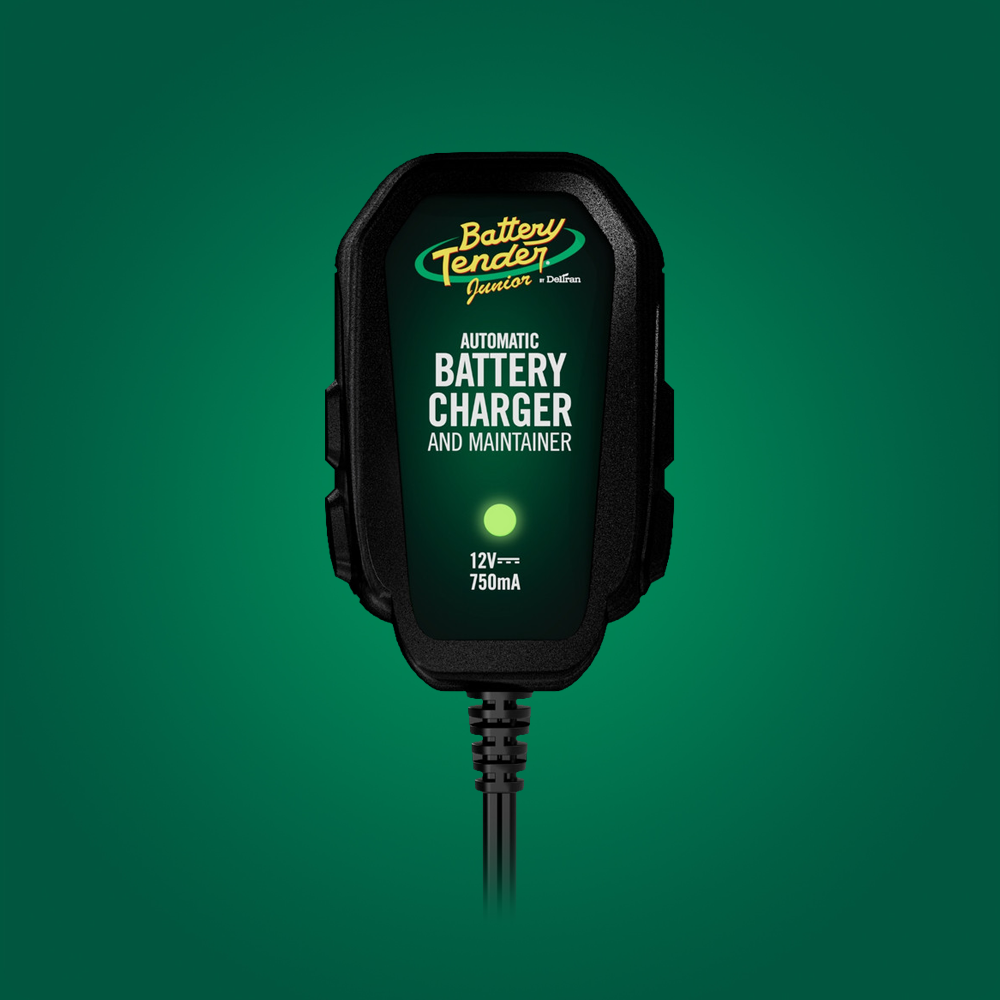
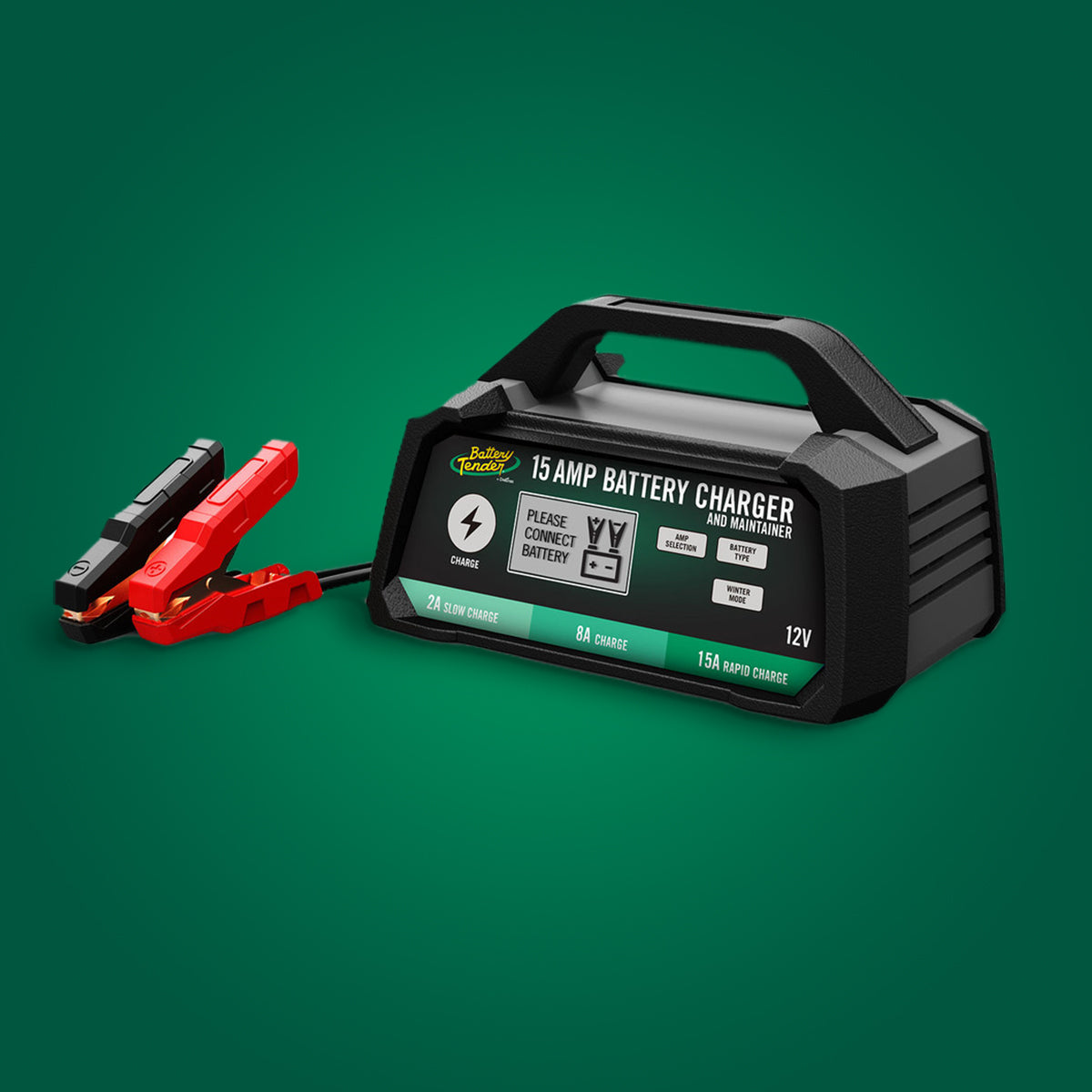
The Battery Tender 15 AMP / 8 AMP / 2 AMP Selectable Battery Charger and Maintainer is the station charging solution for emergency vehicles requiring flexible output. The selectable amperage allows technicians to match output to battery size — 2A for smaller auxiliary batteries, 8A for standard starting batteries, and 15A for heavy-duty Group 31 batteries common in fire apparatus and ambulance chassis. ISM multi-stage charging ensures every battery in the fleet remains at full charge and full health between calls, extending battery service life and reducing the risk of failure during deployment.
Fleet Operations: Multi-Bank Charging for Emergency Vehicle Stations
Fire stations, ambulance bases, and law enforcement facilities rarely park a single vehicle. A typical fire station may house two pumper trucks, a ladder truck, a rescue unit, and a battalion chief vehicle simultaneously. An EMS base may maintain four or more ambulances on continuous standby. Managing battery health across this fleet requires a centralized solution that does not demand a dedicated technician per vehicle.
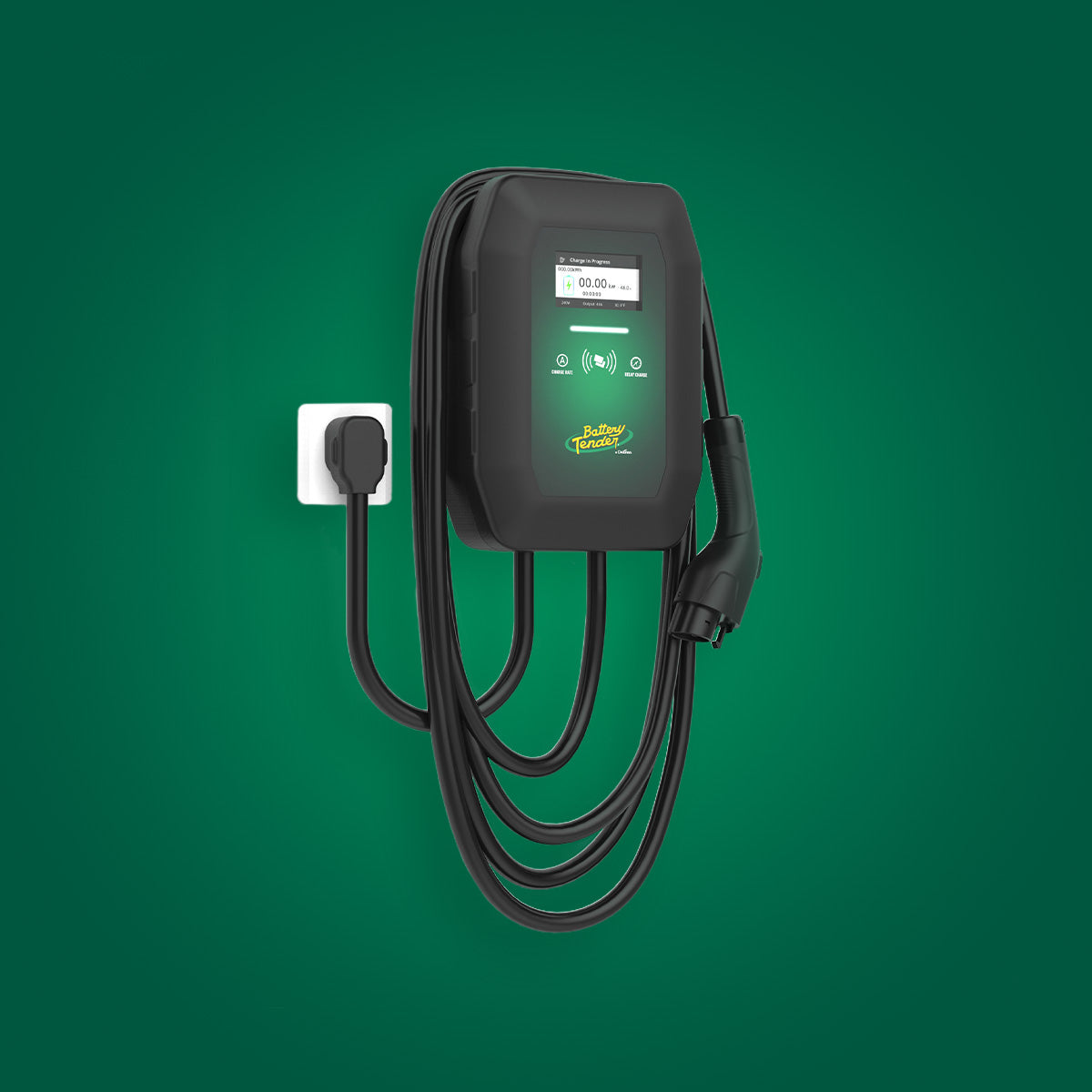
The Battery Tender 10-Bank 4 AMP Selectable Battery Charger and Maintainer delivers that centralized capability. Capable of maintaining up to ten independent batteries simultaneously from a single wall-mounted unit, this system transforms the battery maintenance workflow for fleet operations. Each bank operates independently, meaning a fully charged vehicle can remain on maintenance float while a recently returned unit works through its bulk and absorption phases without interference. Fleet managers gain a single point of monitoring for ten vehicles rather than ten independent chargers requiring individual attention.
For stations that regularly rotate vehicles in and out of service, the 10-bank system's selectable output per bank accommodates the mix of battery types and sizes common in a diverse emergency vehicle fleet — from the small auxiliary batteries in police cruiser equipment racks to the heavy Group 31 banks in ambulance chassis.
Jump Starting Heavy-Duty Emergency Vehicles: When Prevention Fails
Preventive charging eliminates most battery failures, but cold weather, extended deployments, and unexpected parasitic loads can still leave a heavy-duty vehicle unable to start when a call comes in. For these situations, the right jump-start capability is not optional — it is mission-critical.
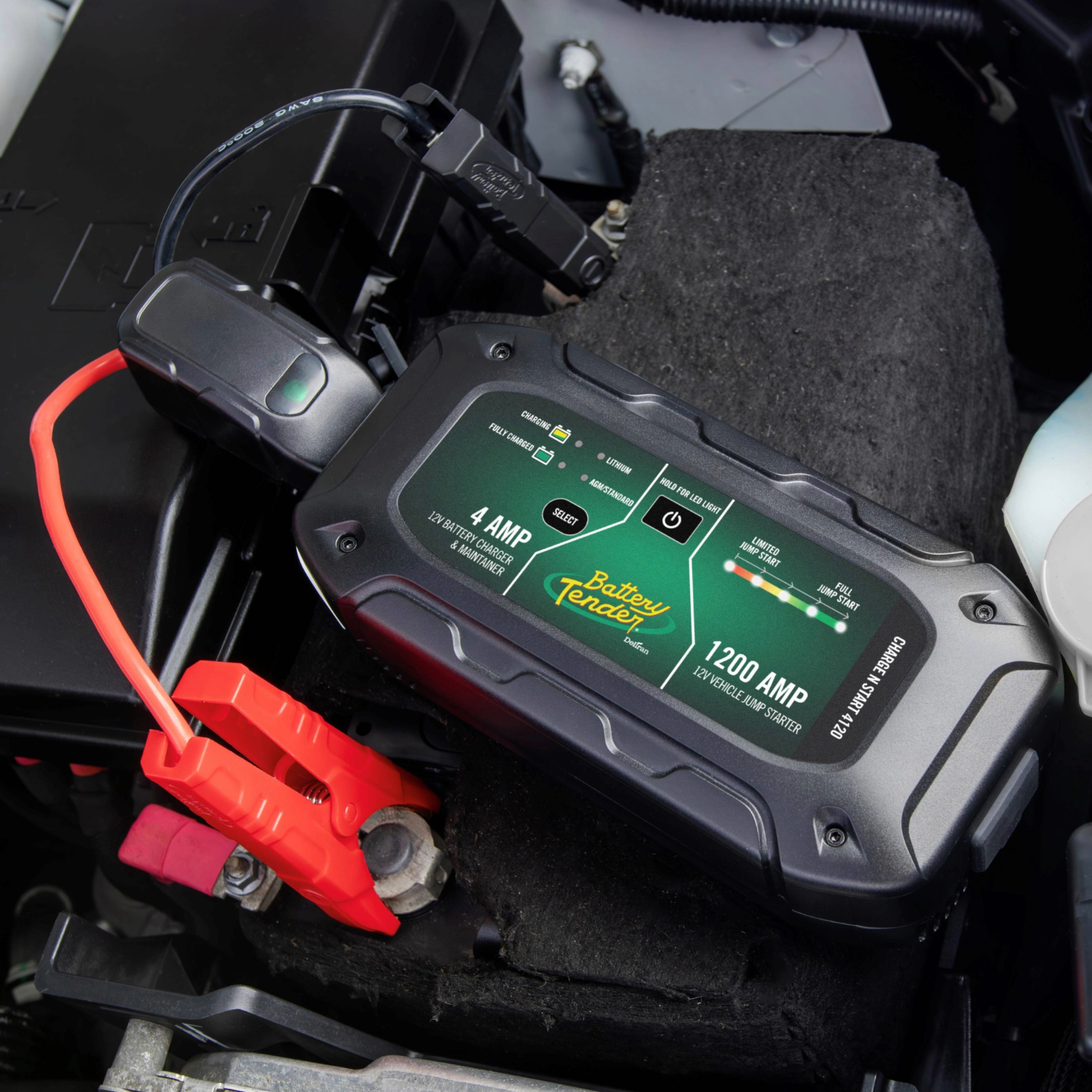
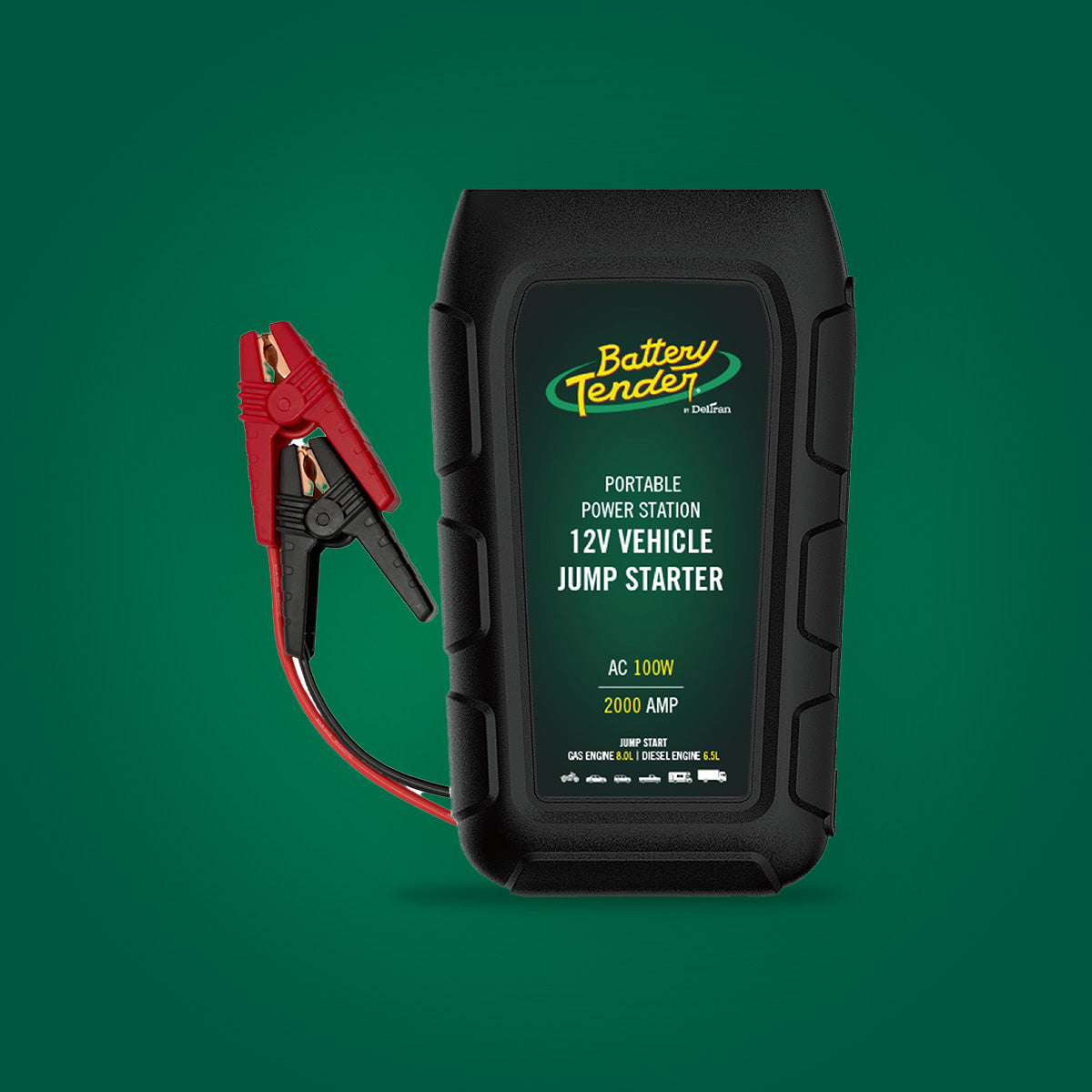
The Battery Tender 2000 AMP Power Station with 100 Watt Inverter is purpose-built for heavy-duty jump starting. Its 2,000A peak output handles the high-compression diesel engines found in fire apparatus, heavy rescue vehicles, and commercial ambulance chassis — applications where consumer-grade jump starters simply cannot deliver sufficient cranking current to spin a cold diesel engine to life. The integrated 100W inverter adds additional utility, providing AC power for diagnostics equipment or critical tools when shore power is unavailable.
For expedition vehicles in remote environments, this same capability translates directly to self-rescue. A fully charged 2000A power station carried in the cargo area means a dead house bank or depleted starting battery in a remote location does not strand the vehicle or require outside assistance.
ISM Technology: The Science Behind Reliable Large-Vehicle Charging
Battery Tender®'s Intelligent Surface Mount (ISM) technology is the common thread running through the charging solutions recommended for fifth wheel expedition and emergency vehicle power systems. Understanding why ISM matters helps explain why these chargers outperform basic alternatives in demanding applications.
ISM multi-stage charging manages four distinct phases: bulk charge, where high current drives rapid capacity recovery; absorption, where voltage is held constant while current tapers to bring the battery to full charge without overcharge damage; float maintenance, where a reduced voltage trickle sustains full charge during storage or standby; and reconditioning, available in select models, where controlled desulfation cycles extend the service life of batteries that have accumulated sulfation from repeated partial-state-of-charge cycling.
For AGM batteries — now the dominant chemistry in emergency vehicles and increasingly common in expedition and fifth wheel applications — ISM voltage precision is not merely beneficial, it is essential. AGM batteries charge at slightly higher voltages than flooded batteries and are more sensitive to overcharge. A charger that cannot maintain tight voltage control during the absorption phase risks damaging AGM batteries over time, shortening their service life and increasing replacement costs for fleet operators and RV owners alike.
Choosing the Right Charging Solution for Your Application
Selecting the correct Battery Tender® product for a large-vehicle application requires matching three variables: battery chemistry, total bank capacity, and operational context.
For fifth wheel RV house banks of 200–400 Ah in AGM or flooded configuration, the PowerPlus 12V 26 AMP delivers the output and algorithm sophistication required for complete daily recovery. For expedition vehicles on 24V architecture, the PowerPlus 24V 20 AMP is the direct solution. For emergency vehicles requiring flexible station charging across a range of battery sizes, the selectable 15/8/2A charger provides the versatility fleet technicians need. For stations managing ten or more vehicles simultaneously, the 10-Bank 4 AMP Selectable eliminates the complexity and oversight burden of managing individual chargers per vehicle. And for heavy-duty jump-start capability in the field or at the station, the 2000 AMP Power Station provides the cranking current that heavy commercial and emergency vehicle diesel engines demand.
Explore the full range of solutions at Battery Tender® RV and Outdoor Charging Solutions to find the configuration that matches your specific vehicle, battery bank, and operational requirements.
Frequently Asked Questions: Fifth Wheel Expedition and Emergency Vehicle Power Systems
Can a single Battery Tender® charger handle a large parallel battery bank?
Yes. The PowerPlus 12V 26 AMP is designed for large parallel banks up to 400 Ah and beyond, connected through a single charging point. The ISM algorithm manages the bulk and absorption phases based on the total bank's voltage behavior, ensuring complete charge across all batteries in the parallel configuration.
What is the correct charger for an ambulance with both a main chassis battery and an auxiliary battery bank?
Ideally, each battery or bank should be charged independently to ensure complete recovery on both. The 10-Bank 4 AMP Selectable system is well-suited for stations managing multiple ambulances, assigning independent banks to the chassis battery and auxiliary bank of each vehicle simultaneously.
How does ISM technology protect AGM batteries in emergency vehicles?
ISM technology maintains precise voltage control during the absorption phase, preventing the overcharge that damages AGM batteries over time. The float phase voltage is calibrated specifically for AGM chemistry, ensuring long-term maintenance does not cause gassing or plate damage — critical for batteries in 24/7 standby applications.
Can the Battery Tender® 2000 AMP Power Station jump start a diesel fire truck?
The 2000 AMP Power Station's peak output is rated for heavy-duty diesel engines, including those found in commercial fire apparatus and ambulance chassis. Always confirm the specific cranking requirements of the engine against the power station's specifications before use in safety-critical applications.
How often should fifth wheel house bank batteries be equalized or reconditioned?
For flooded lead-acid batteries, equalization every 30–90 days during active use is a common recommendation. For AGM batteries, reconditioning through a charger with a dedicated desulfation mode is appropriate when the battery shows reduced capacity or elevated internal resistance — typically detectable through a battery analyzer. Routine multi-stage charging with ISM technology reduces the frequency of required reconditioning by preventing sulfation buildup during normal cycling.
Is a 24V charger required for all expedition vehicles, or only specific platforms?
Only vehicles with 24V electrical architecture require a 24V charger. Most North American expedition builds on gasoline or light-duty diesel platforms use 12V systems. Military surplus vehicles, European commercial chassis (including many Mercedes Unimog and MAN configurations), and some heavy-duty truck platforms commonly use 24V architecture. Always confirm your vehicle's system voltage before selecting a charger.
Conclusion: Purpose-Built Power for Demanding Applications
Fifth wheel expedition and emergency vehicle power systems demand charging infrastructure built to match their complexity, capacity, and criticality. A fifth wheel house bank depleted by a night of boondocking, an expedition vehicle returning from a week in the backcountry, an ambulance maintaining full readiness between calls — each scenario requires more than a conventional charger can reliably deliver. Battery Tender® PowerPlus high-output chargers, multi-bank fleet systems, and ISM-driven charge algorithms provide the performance, precision, and reliability that operators of large and mission-critical vehicles require. Invest in the right charging infrastructure, and battery failure becomes a preventable problem rather than an unavoidable risk.
Related guides: RV Battery Maintenance: Keep House Batteries Healthy Between Every Trip (2026) · RV Solar Power Systems: Battery Charging for Off-Grid Camping · More automotive battery care guides