

Si vous visitez un forum de camping-car, vous trouverez d'innombrables messages de nouveaux propriétaires de véhicules récréatifs qui sont confus au sujet de leurs batteries — pourquoi ils ont deux systèmes distincts, pourquoi les batteries de la cellule se déchargent même s'ils viennent de rouler, ou pourquoi le moteur démarre bien mais les lumières intérieures ne fonctionnent pas. Cette confusion découle d'un aspect fondamental de la conception des camping-cars qui n'est jamais correctement expliqué à de nombreux propriétaires pour la première fois : les camping-cars ont deux systèmes de batterie complètement séparés avec des objectifs différents, des sources de charge différentes et des exigences d'entretien différentes.
Comprendre la distinction entre la batterie du châssis et la batterie de la cellule est la base de la connaissance de l'électricité des camping-cars — et la première étape pour entretenir correctement les deux systèmes.
L'architecture à deux systèmes
La batterie du châssis
La batterie du châssis dans un camping-car fonctionne exactement comme la batterie de votre voiture ou de votre camion. Elle fournit le courant de démarrage au moteur, alimente l'électronique du châssis (instruments de tableau de bord, clignotants, phares, klaxon) et est rechargée par l'alternateur du châssis lorsque le moteur tourne. Dans les camping-cars de classe A construits sur des châssis de camions commerciaux, le système de batterie du châssis peut être une configuration double 12 V ou un système 12 V, selon le fabricant du châssis.
La batterie du châssis et la batterie de la cellule sont normalement isolées l'une de l'autre — l'état de charge de la batterie de la cellule n'affecte pas la batterie du châssis, et vice versa. Cette isolation est intentionnelle et importante : elle garantit que l'épuisement de la batterie de la cellule pendant la nuit au camping ne vous empêche pas de démarrer le moteur le lendemain matin.
La batterie de la cellule
La batterie de la cellule alimente tout ce qui rend le camping-car habitable : l'éclairage intérieur, les ventilateurs, la pompe à eau, le réfrigérateur (éléments 12 V ou CC), le système de divertissement, les moteurs des extensions, les vérins de nivellement et tout autre accessoire 12 V dans les espaces de vie. Elle fournit également l'alimentation CC que les onduleurs convertissent en CA pour faire fonctionner les appareils lorsqu'ils ne sont pas connectés à l'alimentation électrique.
La batterie de la cellule est généralement composée de batteries à décharge profonde — conçues pour les cycles de décharge et de recharge soutenus et répétés que les charges de la cellule créent. Les batteries de démarrage ne conviennent pas à l'utilisation en batterie de cellule : leurs plaques minces ne sont pas conçues pour une décharge profonde et se dégradent rapidement dans ce service. La plupart des camping-cars de classe A et de classe C sont équipés d'origine de deux batteries à décharge profonde de groupe 24 ou de groupe 27 comme batterie de cellule, bien que les "boondockers" (camping sauvage) sérieux optent souvent pour des batteries de groupe 31 plus grandes ou des batteries supplémentaires pour une capacité hors réseau étendue.
Comment chaque système se recharge
Chargement de la batterie du châssis
La batterie du châssis se charge à partir de l'alternateur du véhicule lorsque le moteur tourne — le même mécanisme que n'importe quelle voiture ou camion. Elle se charge efficacement sur autoroute et est généralement bien entretenue par les habitudes de conduite normales. La batterie du châssis nécessite rarement une charge supplémentaire, sauf si le véhicule est stocké pendant de longues périodes.
Lorsque le camping-car est stocké pendant de longues périodes sans rouler, la batterie du châssis est exposée aux mêmes risques d'autodécharge et de sulfatation que toute batterie de véhicule stockée. La connexion d'un chargeur intelligent Battery Tender® à la batterie du châssis pendant un stockage prolongé empêche cette dégradation.
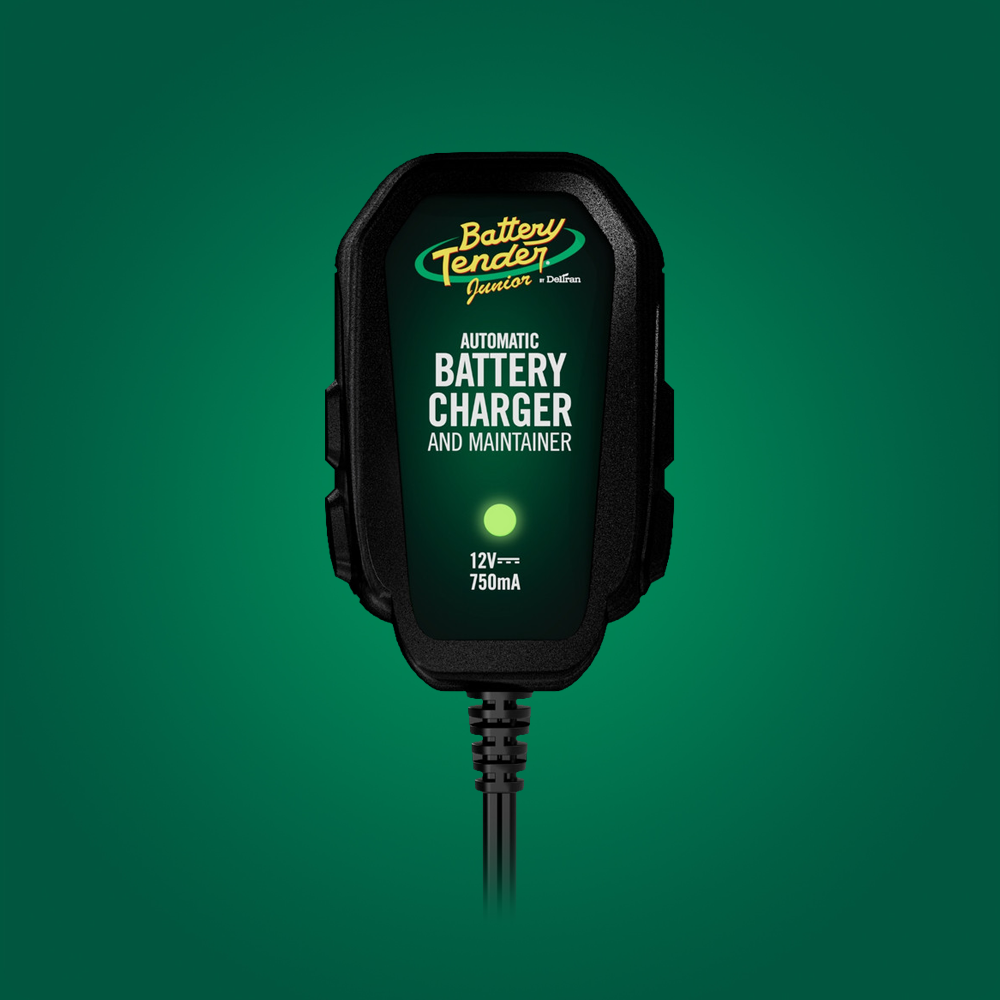
Le Battery Tender Plus 1,25 AMP 12V (SKU : 021-0128) gère l'entretien de la batterie du châssis sur toutes les classes de camping-cars.
Chargement de la batterie de la cellule : sources multiples
La batterie de la cellule se charge à partir de plusieurs sources, et comprendre quelle source est active dans quelle situation est essentiel pour la gérer correctement :
- Convertisseur/chargeur secteur : Lorsqu'il est connecté à une alimentation secteur de 30A ou 50A, le convertisseur intégré charge la batterie de la cellule. Il s'agit généralement d'un chargeur à 3 étages intégré au camping-car.
- Alternateur du moteur (via un relais de charge ou un chargeur batterie-à-batterie) : De nombreux camping-cars connectent la batterie de la cellule à l'alternateur du châssis via un relais qui s'active lorsque le moteur tourne. Cela fournit une certaine charge de la batterie de la cellule pendant la conduite, mais les systèmes d'alternateur de camping-car ne sont pas optimisés pour charger complètement une grande batterie de cellule — ils fournissent une charge supplémentaire, pas une charge complète.
- Générateur : Lorsque le générateur est en marche, le circuit d'alimentation secteur est sous tension, chargeant la batterie de la cellule via le convertisseur intégré.
- Solaire : Les panneaux solaires connectés à la batterie de la cellule via un régulateur de charge fournissent une charge diurne partout où le soleil brille.
- Chargeur intelligent externe : La connexion d'un chargeur intelligent dédié directement aux bornes de la batterie de la cellule offre la charge la plus précise et la plus complète.
La distinction entre convertisseur et chargeur intelligent
La plupart des convertisseurs de camping-cars d'usine sont des chargeurs de base à 3 étages qui font un travail adéquat en utilisation normale mais sont insuffisants dans plusieurs domaines. De nombreux convertisseurs ne fournissent pas une véritable étape d'absorption qui sature complètement les batteries, et leur tension flottante peut être légèrement trop élevée pour les batteries AGM ou trop faible pour un entretien efficace à long terme. Un chargeur intelligent Battery Tender dédié, connecté directement à la batterie de la cellule, offre une technologie ISM qui complète correctement chaque étape de charge pour une durée de vie maximale de la batterie.
Pour les propriétaires de camping-cars qui stockent leurs unités entre les voyages, l'ajout d'une connexion de chargeur intelligent dédiée à la batterie de la cellule — séparée du convertisseur — fournit une charge d'entretien qui protège l'investissement de la batterie entre les sorties.
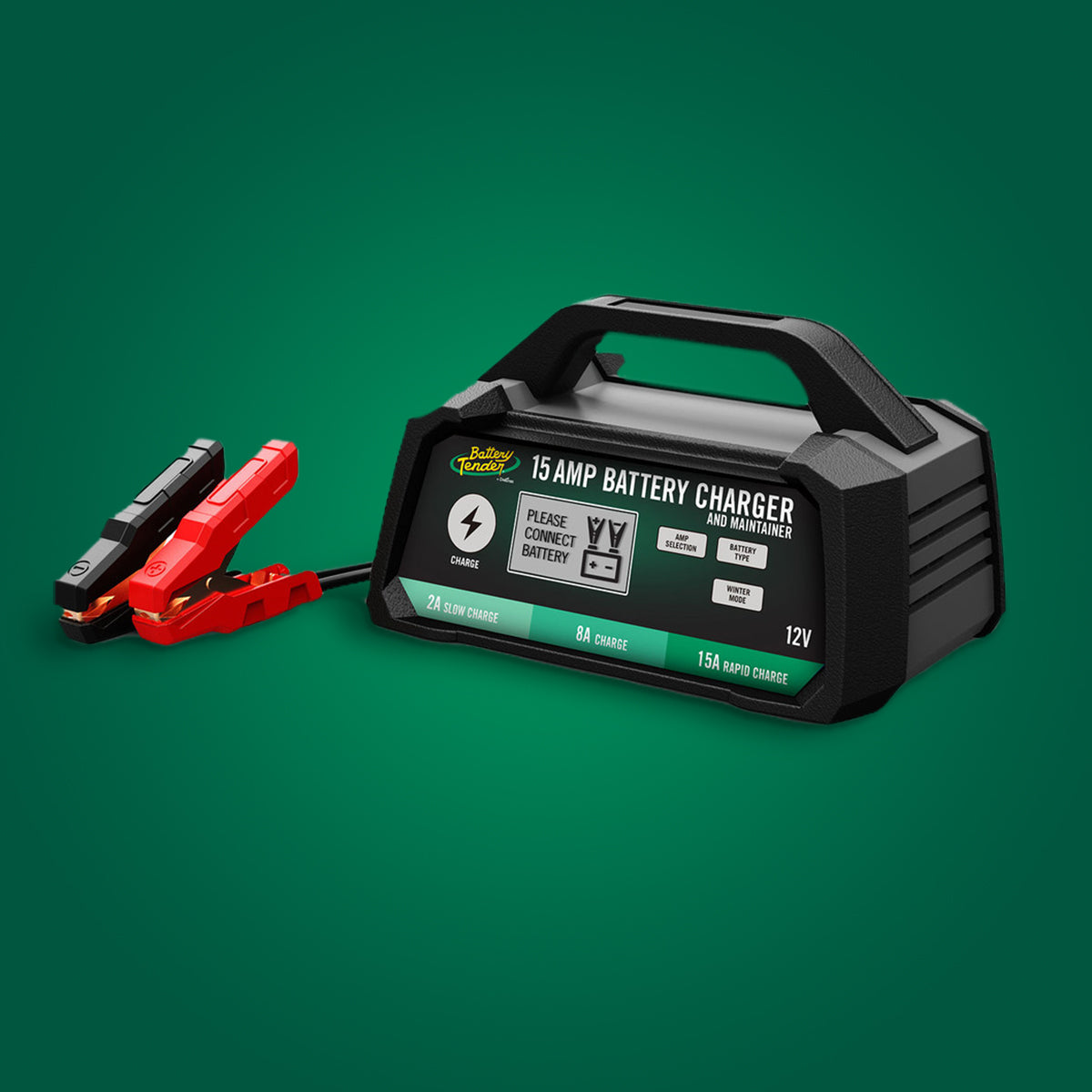
Le 8 AMP / 2 AMP Power Tender Selectable (SKU : 022-1005-DL-WH) fonctionne bien pour l'entretien de la batterie de la cellule de camping-car — utilisez le réglage 8 ampères pour une récupération plus rapide après un voyage, puis passez à 2 ampères pour un entretien de stockage à long terme.
Problèmes courants et solutions des systèmes de batterie de camping-car
| Problème | Cause probable et solution |
|---|---|
| Batteries de la cellule déchargées, le moteur démarre bien | Chargeur secteur non connecté ou défectueux ; besoin de charger la batterie de la cellule séparément |
| Le moteur ne démarre pas, la cellule fonctionne bien | Batterie du châssis épuisée ; nécessite une charge ou un démarrage d'appoint (n'affecte pas la batterie de la cellule) |
| Les deux systèmes sont hors service | Stockage prolongé sans charge d'entretien sur les deux systèmes |
| La batterie de la cellule se décharge pendant la nuit sans utilisation | Consommation parasite excessive sur le circuit de la cellule ; rechercher les charges toujours actives |
| La batterie de la cellule ne se charge jamais complètement sur l'alimentation secteur | Convertisseur sous-dimensionné ou vieillissant ; compléter avec un chargeur intelligent dédié |
Démarrage d'appoint d'un camping-car
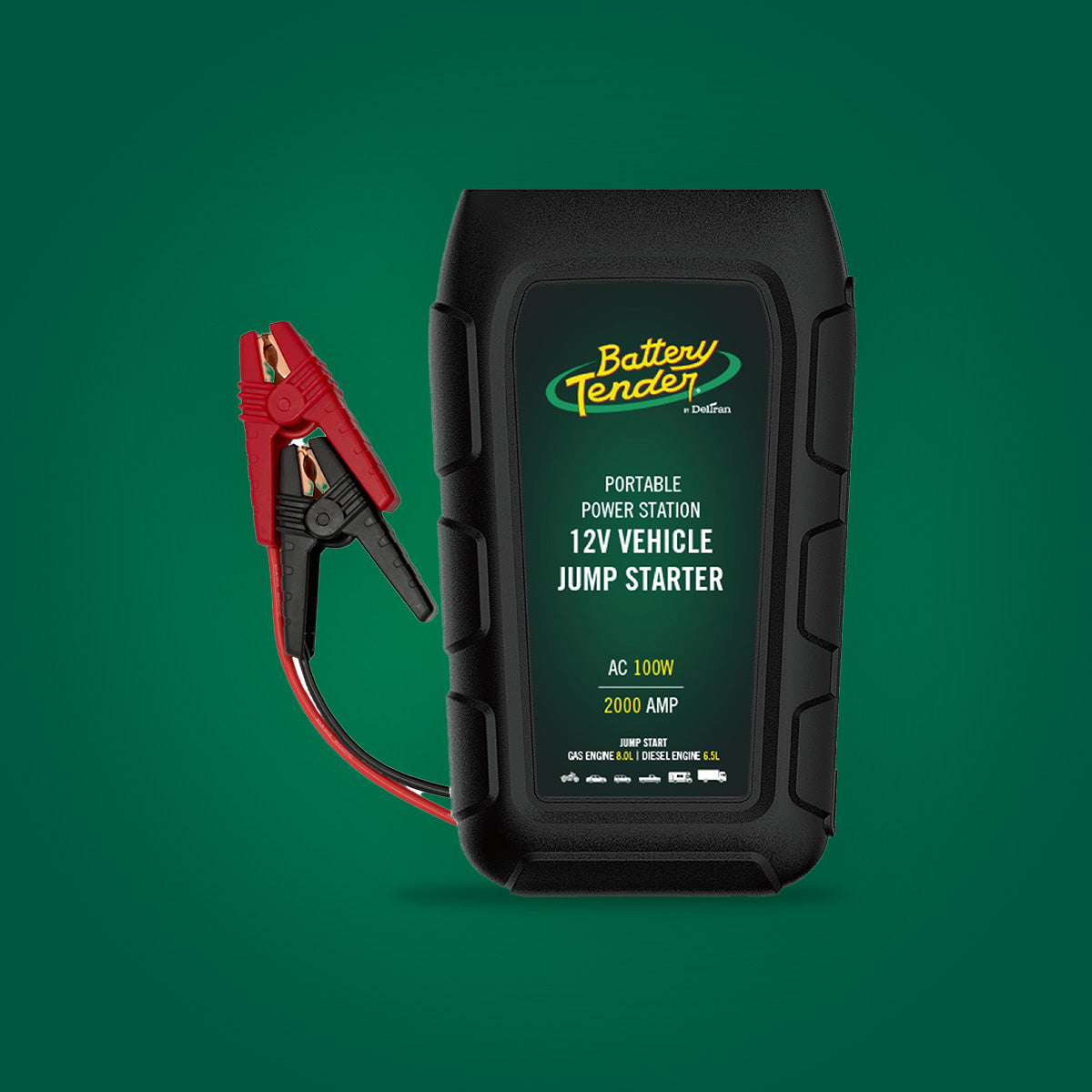
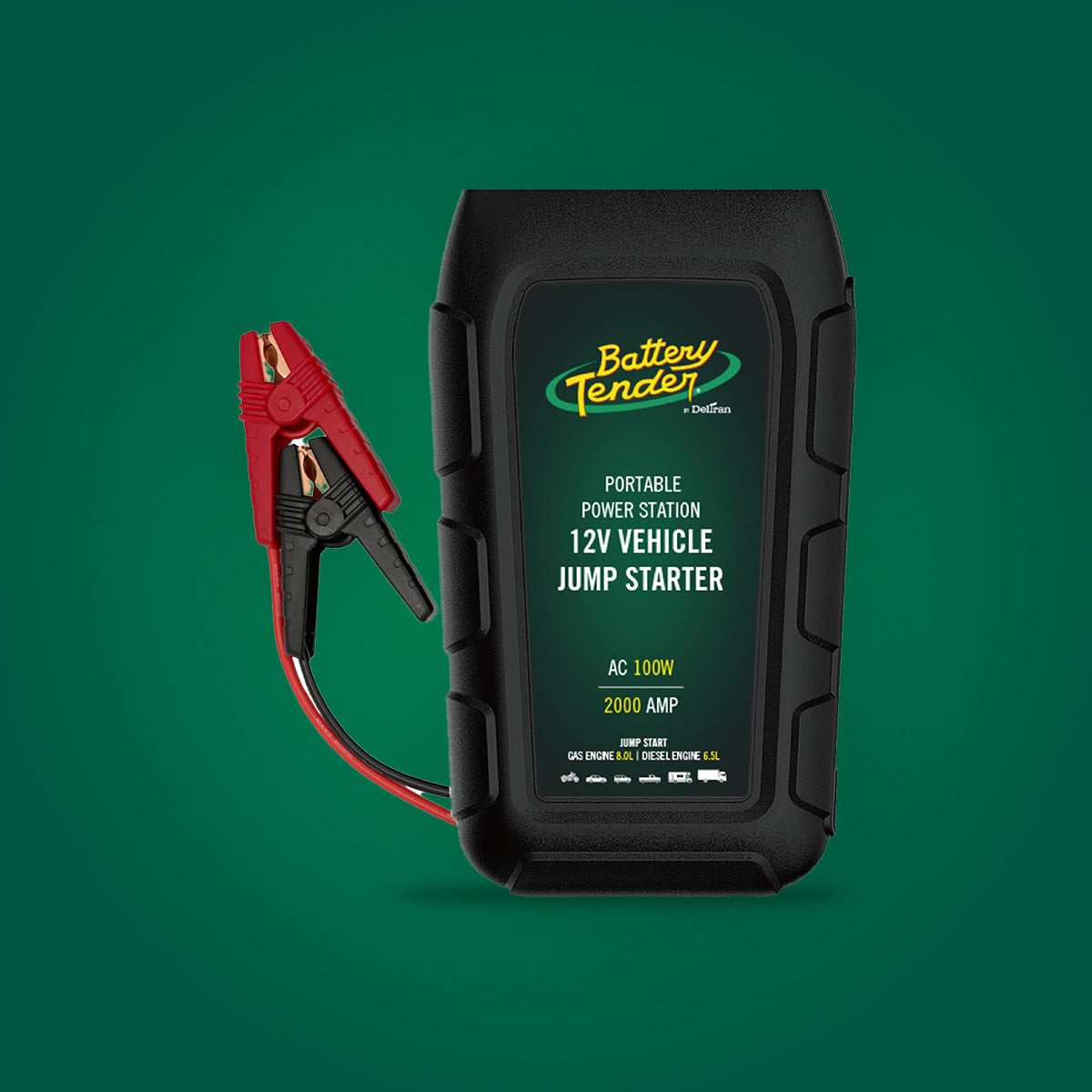
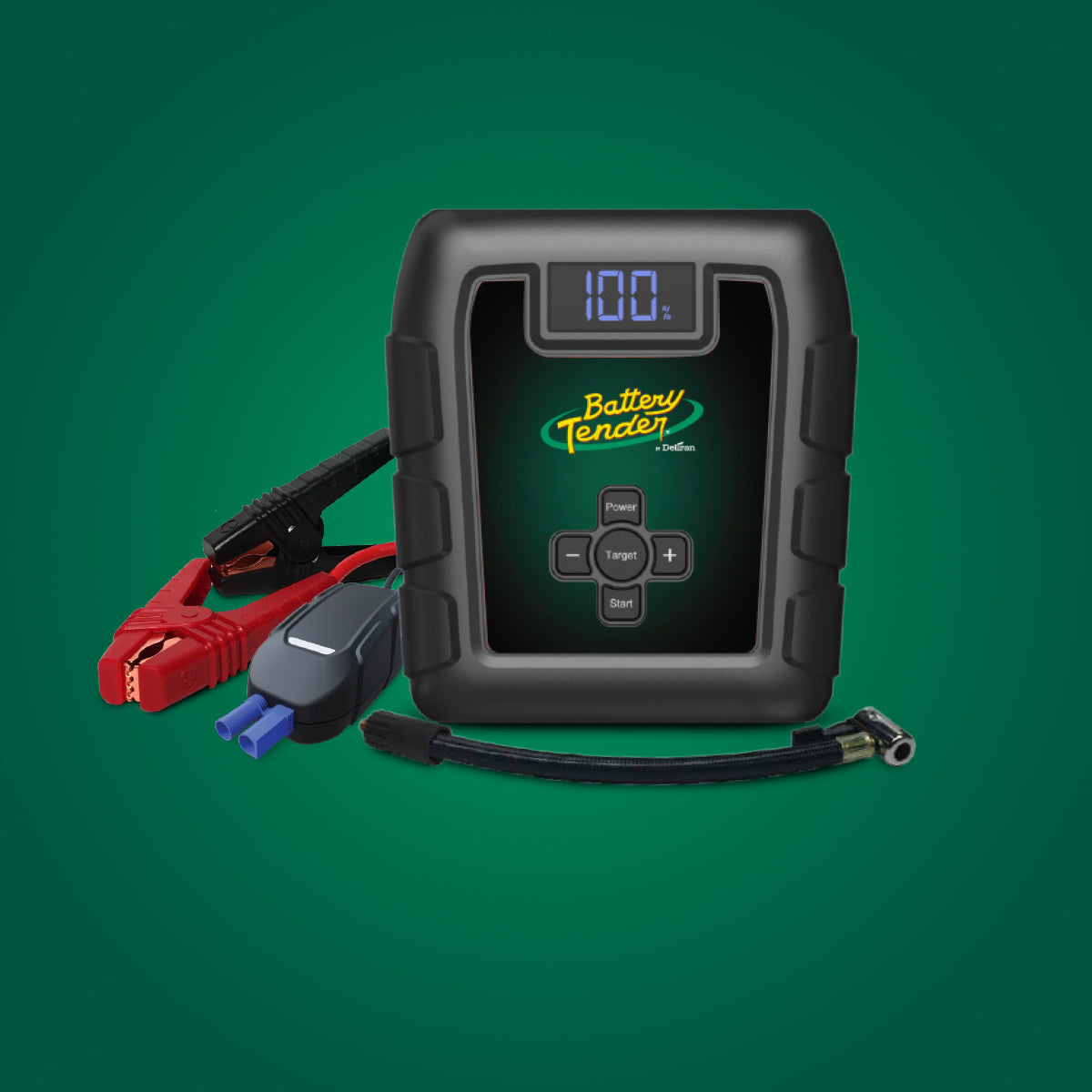
Lorsque la batterie du châssis ne parvient pas à démarrer le moteur, un démarreur d'appoint au lithium suffisamment puissant pour gérer le moteur du camping-car est la solution la plus rapide. Pour les camping-cars de classe A équipés de gros moteurs diesel, le démarreur d'appoint au lithium 2000 AMP fournit la puissance de démarrage nécessaire. Pour les camping-cars de classe B et C plus petits équipés de moteurs à essence, le Charge N Start 1200 ampères couvre l'exigence avec l'avantage supplémentaire de la capacité de chargeur intelligent intégré.
Découvrez le Charge N Start 4120 - Chargeur 4 AMP + Démarreur d'appoint 1200 AMP (SKU : 030-7020-WH) pour le démarrage du châssis des camping-cars de classe B et C.
Questions fréquemment posées
Puis-je utiliser mes batteries de cellule pour démarrer le moteur ?
Certains camping-cars sont équipés d'un interrupteur de combinaison de batteries d'urgence qui relie les batteries du châssis et de la cellule pour un démarrage d'urgence. Cependant, l'utilisation systématique de la batterie de la cellule pour le démarrage est inappropriée — elle est conçue pour des décharges profondes, pas pour un démarrage à courant élevé, et les tirages de courant élevés répétés la dégradent plus rapidement que sa conception ne le permet.
Dois-je débrancher ma batterie de châssis lorsque je stocke le camping-car ?
Le débranchement élimine la consommation parasite mais réinitialise l'électronique et les systèmes de sécurité. La connexion d'un chargeur intelligent Battery Tender est une meilleure solution — elle maintient la batterie du châssis à pleine charge sans déconnexion ni réinitialisation électronique.
Comment savoir si ma batterie de cellule est complètement chargée ?
Avec l'alimentation secteur connectée et le convertisseur en marche, une batterie de cellule complètement chargée affiche 12,6 V ou plus au repos (après avoir déconnecté le chargeur et laissé reposer 2 heures). Pendant la charge active, la tension sera plus élevée. La plupart des camping-cars modernes ont un moniteur de batterie sur le tableau de bord ou le panneau intérieur qui indique directement l'état de charge.
Pourquoi ma batterie de cellule se décharge-t-elle si vite ?
Identifiez et mesurez toutes les charges fonctionnant pendant la nuit : réfrigérateur, détecteur de CO/propane, horloges, mémoire de la stéréo, capteurs d'extension et toute autre charge toujours active. Une consommation parasite typique pendant la nuit sur une batterie de cellule de camping-car est de 5 à 15 Ah — une consommation supérieure à cela suggère une charge inhabituelle qui mérite d'être étudiée.
Conclusion
L'architecture électrique à deux systèmes des camping-cars a un objectif important : elle garantit la capacité de démarrage du moteur quelle que soit la consommation d'énergie de la cellule. Comprendre la distinction — et entretenir les deux systèmes avec une charge appropriée lorsqu'ils sont stockés — élimine les frustrations les plus courantes liées aux batteries de camping-car. Que vous soyez un campeur occasionnel qui stocke le camping-car entre les voyages ou un résident à temps plein qui vit avec la batterie et le solaire, connaître vos systèmes est la première étape pour les gérer efficacement.
Découvrez les solutions Battery Tender pour les besoins en énergie des camping-cars et des activités de plein air pour maintenir les deux systèmes en parfait état de fonctionnement.