



Rendez-vous dans n'importe quel magasin de pièces automobiles et vous verrez des chargeurs de batterie dans une large gamme de prix - d'un chargeur d'entretien à 15 $ à un chargeur intelligent à 60 $. La différence de prix est réelle, et elle reflète une différence authentique dans ce qui arrive à votre batterie. Comprendre pourquoi les fonctionnalités d'un chargeur intelligent sont importantes - et quelles fonctionnalités rechercher - rend la décision de sélection simple.
Battery Tender® a été le pionnier de la technologie de charge intelligente sur le marché grand public en 1989 avec l'introduction du premier chargeur intelligent grand public au monde. L'algorithme de charge ISM (Intelligent System Management) au cœur de chaque produit Battery Tender représente plus de 35 ans de perfectionnement continu. Ce guide explique ce que ces fonctionnalités apportent réellement à votre batterie - en des termes qui rendent l'ingénierie significative.
Le problème fondamental des chargeurs de base
Un chargeur de base applique une tension constante ou un courant constant à la batterie et continue de l'appliquer quel que soit l'état réel de la batterie. Lorsque la batterie atteint sa pleine charge, un chargeur de base ne sait pas s'arrêter - ou s'il le fait, il passe à un mode "entretien" qui peut appliquer une surcharge continue de faible niveau. Le résultat : perte d'eau (batteries à électrolyte liquide), dégagement gazeux et corrosion accélérée des plaques - tout cela à cause d'un chargeur qui semblait "entretenir" la batterie.
Un chargeur intelligent surveille en permanence la tension, la température et l'acceptation de la charge de la batterie, et ajuste sa sortie en temps réel. Cette réactivité est ce qui protège la batterie et prolonge sa durée de vie au-delà de ce que la charge de base permet.
L'algorithme de charge ISM à 4 étapes
Le cœur de chaque produit Battery Tender est l'algorithme ISM - quatre étapes séquentielles qui ont chacune un objectif spécifique :
Étape 1 : Initialisation (Qualification)
Avant l'application d'un courant de charge significatif, le chargeur évalue l'état de la batterie. Il vérifie si la batterie peut accepter une charge - les batteries avec des cellules ouvertes, des courts-circuits internes ou des tensions inférieures au seuil de récupération sont signalées. Cette étape évite d'appliquer de l'énergie inutilement à une batterie qui ne peut en bénéficier et empêche le chargeur de délivrer un courant dommageable à une batterie gravement compromise.
Si la batterie est en dessous du seuil de tension minimum pour une charge normale (généralement environ 2V par cellule, ou 6V pour une batterie de 12V), certains chargeurs Battery Tender entrent en mode de récupération qui applique un courant de faible niveau pour amener la batterie au seuil minimum avant le début de la charge complète.
Étape 2 : Charge en vrac (Courant constant)
C'est l'étape de travail - le chargeur délivre le courant nominal maximal à la batterie jusqu'à ce que la tension de la batterie atteigne la tension d'absorption cible (environ 14,4-14,8 V pour le plomb-acide). L'étape de charge en vrac fournit la charge la plus rapide et restaure environ 80 % de la capacité de la batterie. C'est là que le transfert d'énergie le plus important se produit.
Le courant reste constant pendant cette étape ; la tension augmente à mesure que la batterie accepte la charge. Une petite batterie atteint la tension cible rapidement ; une grande batterie profondément déchargée peut passer plusieurs heures en charge en vrac.
Étape 3 : Absorption (Tension Constante)
Lorsque la batterie atteint la tension d'absorption cible, le chargeur maintient cette tension constante et permet au courant de diminuer naturellement. À mesure que la batterie approche de sa pleine charge, elle accepte de moins en moins de courant - de presque le maximum au début de l'absorption à presque zéro à la fin. Cette absorption à courant réduit sature complètement les plaques de la batterie, complétant les 20 % de charge restants que la charge en vrac ne peut pas fournir.
C'est cette étape qui rend un chargeur intelligent véritablement différent d'un chargeur de base : l'étape d'absorption charge entièrement chaque cellule de la batterie - quelque chose que les chargeurs de base ignorent ou fournissent de manière inadéquate. Une batterie qui ne reçoit qu'une charge en vrac semble pleine mais ne l'est pas, et la charge partielle accélère la sulfatation.
Étape 4 : Flottement / Entretien (basse tension constante)
Une fois complètement chargée, le chargeur passe à une tension de flottement (environ 13,2-13,4 V pour le plomb-acide) qui maintient la charge complète sans surcharge. La batterie se décharge lentement ; le chargeur compense en fournissant de petites quantités de courant si nécessaire. Un chargeur Battery Tender en mode flottement n'utilise que des milliampères - il ne pousse pas continuellement du courant à travers la batterie, il adapte sa sortie au taux de décharge de la batterie.
Cet entretien de flottement peut se poursuivre indéfiniment - des semaines ou des mois - sans endommager la batterie. C'est cette capacité qui rend possible et sûr de "la laisser connectée pendant l'hiver".
Mode Désulfatation
De nombreux modèles Battery Tender incluent un mode de désulfatation par impulsions appliqué pendant l'initialisation ou la première étape de charge en vrac. Ce mode délivre des impulsions de tension à haute fréquence qui aident à décomposer les cristaux de sulfate de plomb - le résidu durci qui s'accumule sur les plaques de la batterie pendant les périodes de sous-charge ou de décharge.
La désulfatation n'est pas un remède miracle : elle peut récupérer des batteries présentant une sulfatation modérée, mais ne peut pas restaurer des batteries gravement sulfatées qui ont des dommages permanents aux plaques. Utilisée de manière proactive - en appliquant un chargeur Battery Tender avant que la sulfatation ne devienne grave - elle maintient la santé de la batterie pendant des années de stockage et d'utilisation. Appliquée à une batterie présentant déjà des problèmes de démarrage dus à une sulfatation suspectée, elle peut restaurer une capacité mesurable et prolonger la durée de vie utile de la batterie.
Compensation de température
La chimie de la batterie change avec la température. La tension de charge optimale à 0°C (32°F) diffère de la tension optimale à 38°C (100°F) - une charge à la tension de haute température par temps froid sous-charge ; une charge à la tension de basse température par temps chaud surcharge. Certains modèles Battery Tender incluent une compensation automatique de la température qui ajuste les tensions de charge cibles en fonction de la température mesurée ou estimée, optimisant le profil de charge pour les conditions réelles.
Mode Chimie sélectionnable
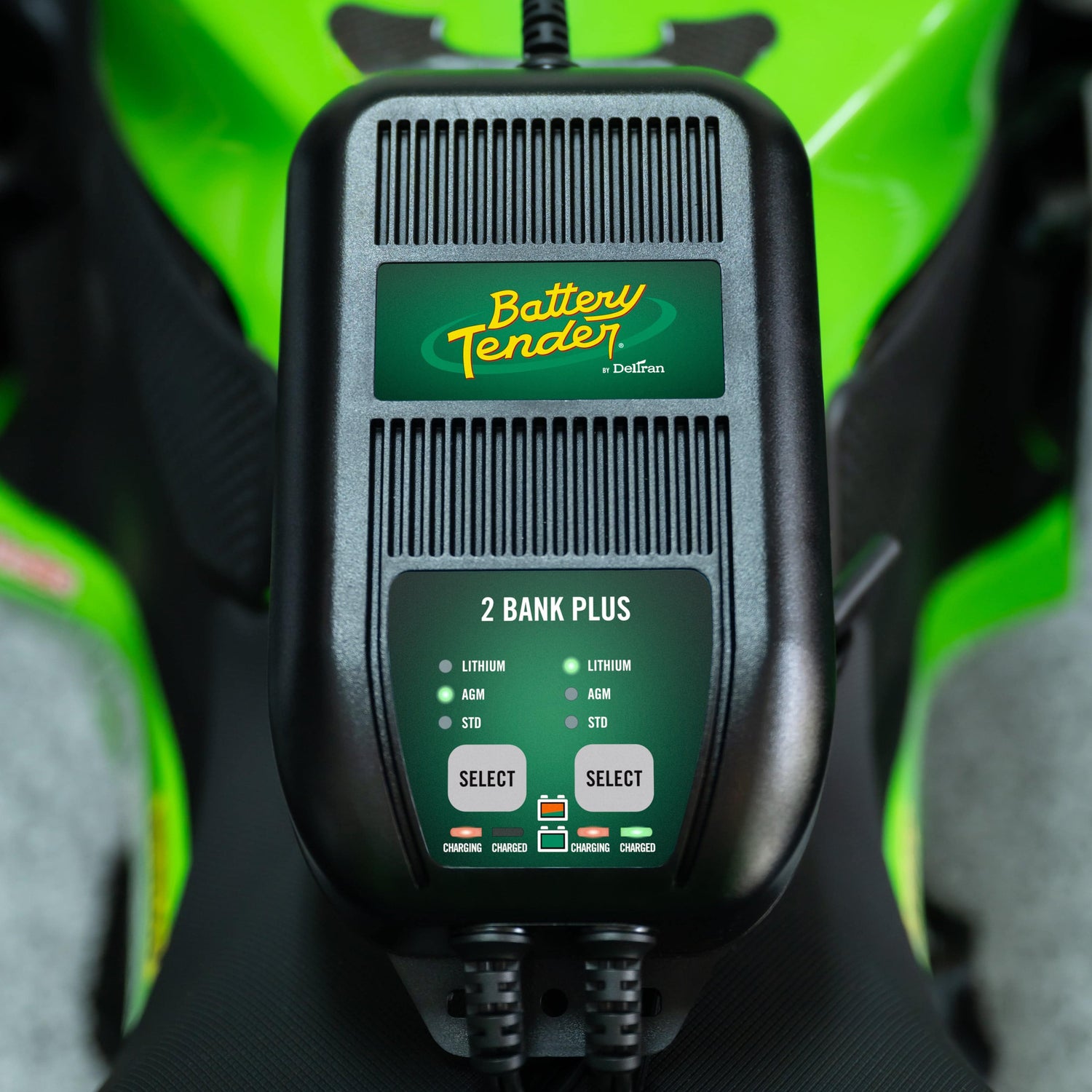
Les chimies de batterie de véhicules modernes comprennent le plomb-acide à électrolyte liquide, le plomb-acide scellé (SLA), l'AGM (Absorbed Glass Mat), le gel et le phosphate de fer et de lithium (LiFePO4). Chacune nécessite un profil de tension de charge différent - la tension d'absorption et la tension de flottement correctes pour le plomb-acide à électrolyte liquide surchargeraient un AGM et endommageraient considérablement une batterie au lithium.
Les chargeurs Battery Tender à chimie sélectionnable permettent à l'utilisateur de choisir le mode de chimie approprié avant de charger, garantissant ainsi que le profil de tension correct est appliqué quel que soit le type de batterie connectée. Pour les ménages ou les ateliers entretenant plusieurs types de véhicules avec différentes chimies de batterie, la chimie sélectionnable est essentielle plutôt qu'optionnelle.
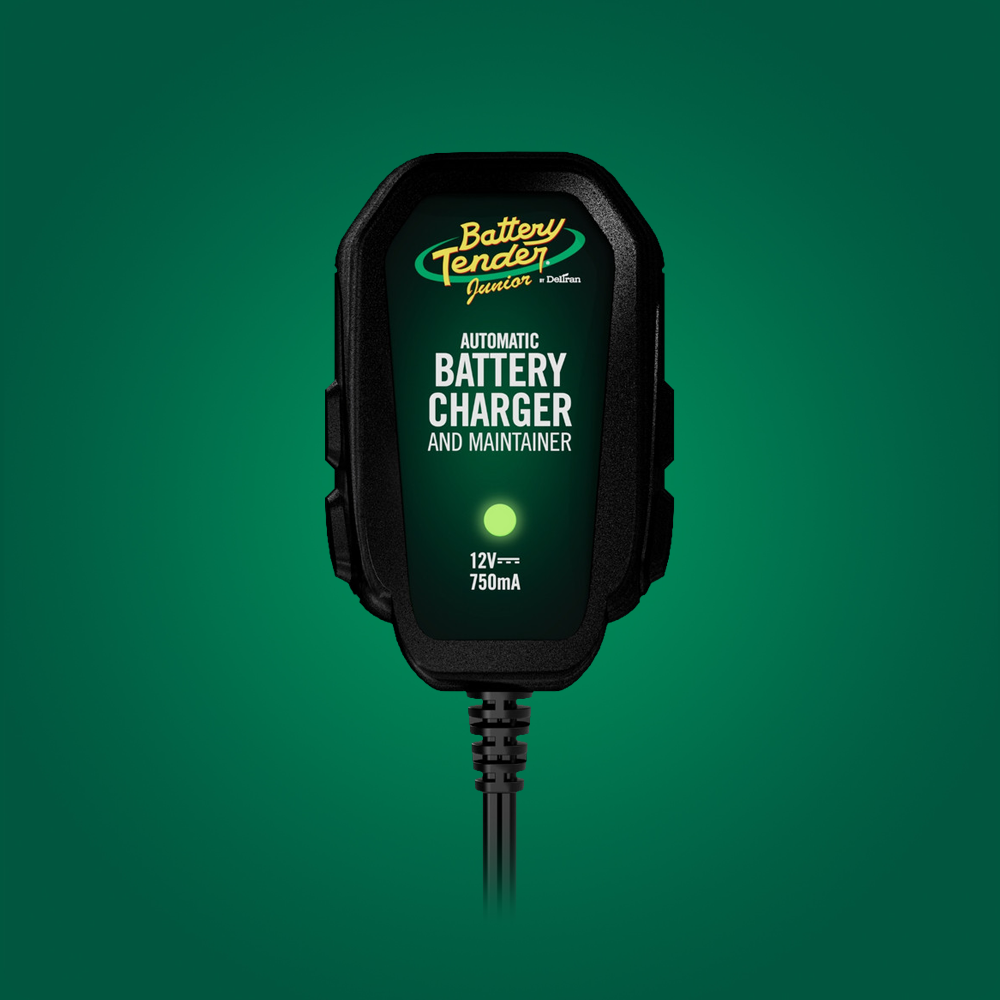
Le Battery Tender Junior 1 AMP Selectable Chemistry (SKU: 022-0199-DL-WH) gère les chimies plomb-acide, AGM et lithium dans un boîtier compact et abordable.
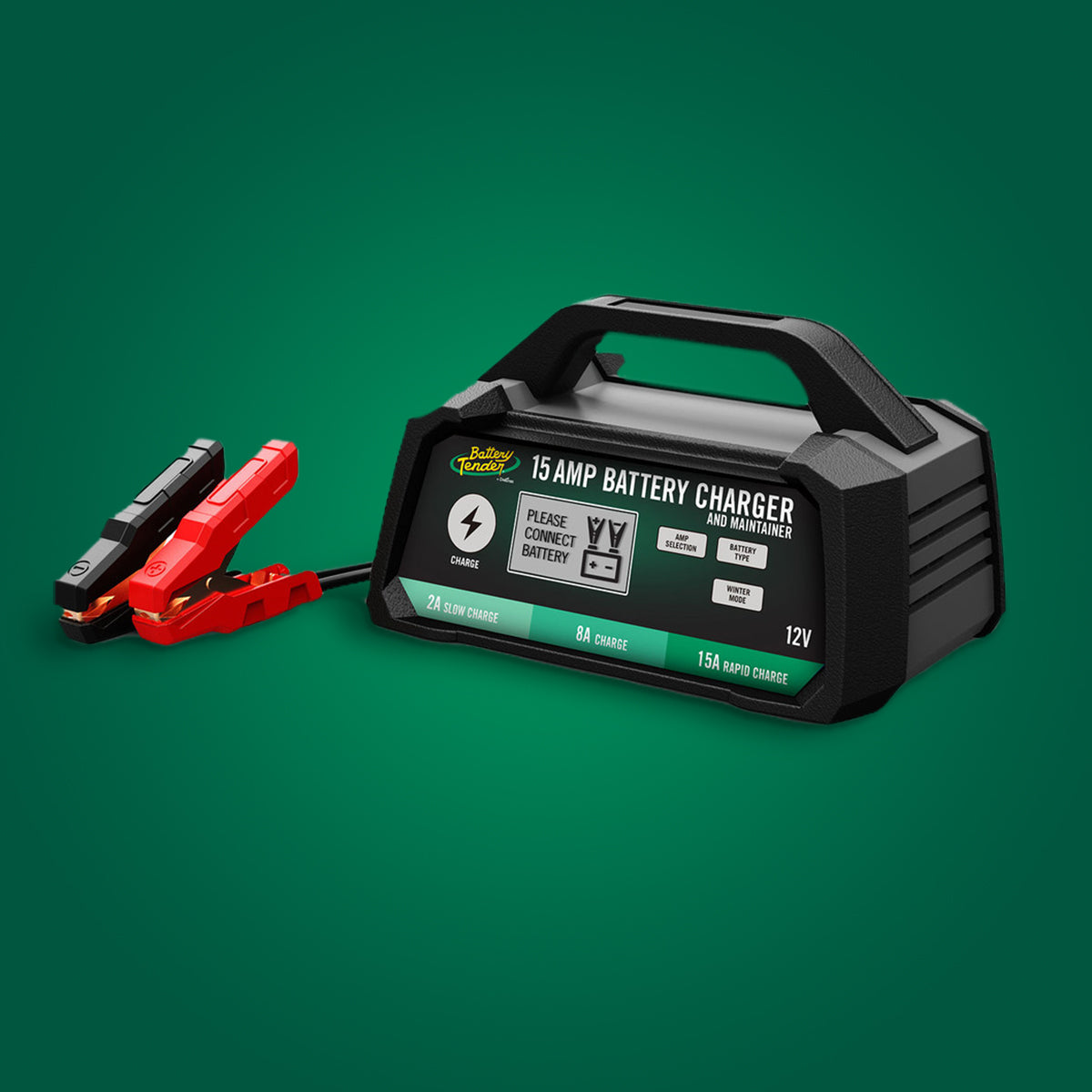
Le 8 AMP / 2 AMP Power Tender Selectable (SKU: 022-1005-DL-WH) offre une chimie sélectionnable avec deux réglages d'ampérage - idéal à la fois pour une recharge plus rapide et un entretien de stockage à long terme.
Charge N Start : Charge intelligente et démarrage d'urgence
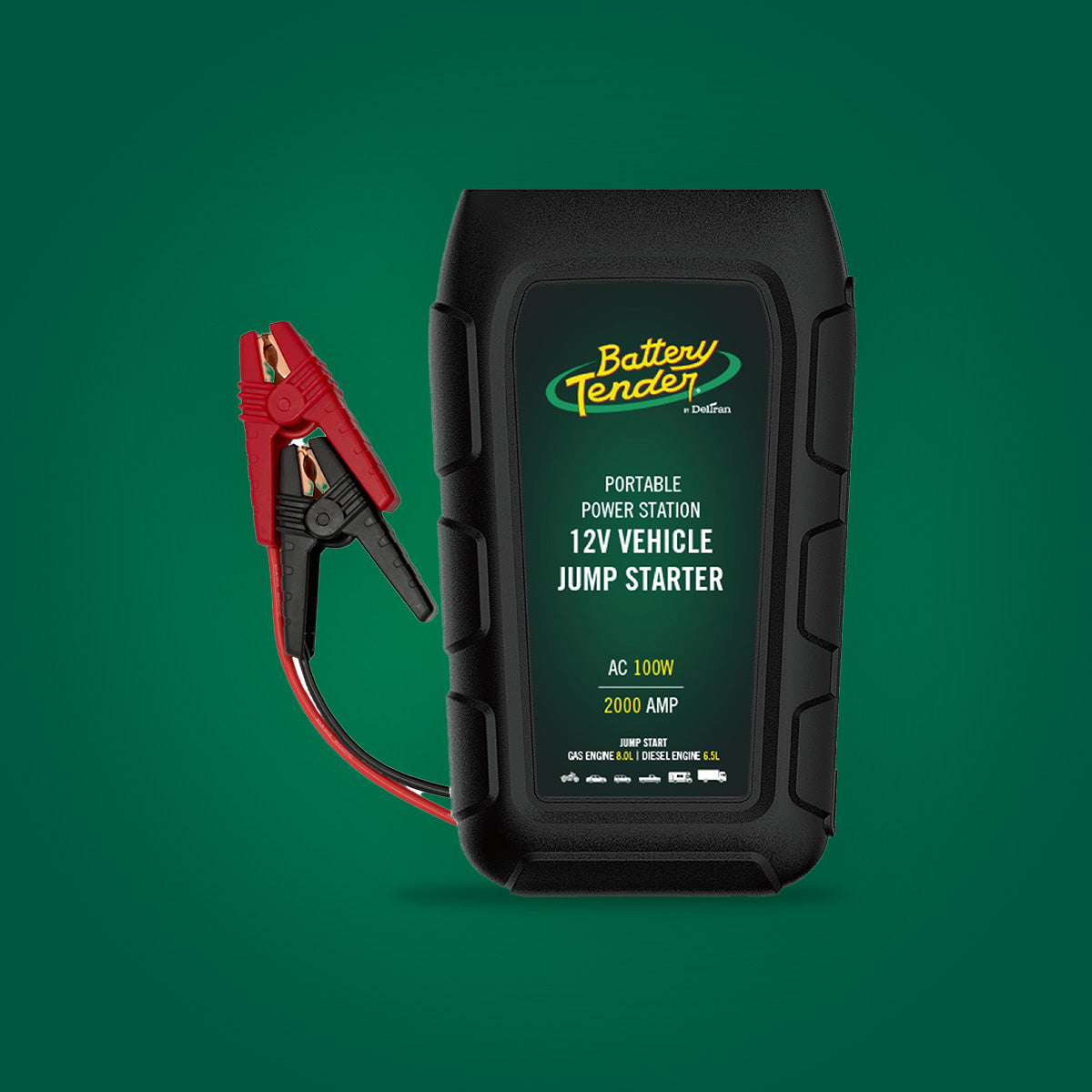
La série Charge N Start représente la convergence de la technologie de chargeur intelligent et de démarreur de secours en un seul appareil. Il applique la technologie de charge ISM à 4 étapes via sa fonction de chargeur - identique à un chargeur Battery Tender autonome - tout en fournissant également 1000 à 1200 ampères de puissance de démarrage d'urgence via sa fonction de démarreur de secours au lithium.
Cette double capacité répond aux deux situations de batterie auxquelles tout propriétaire de véhicule est confronté : la situation qui se développe lentement où une batterie nécessite une charge d'entretien sur plusieurs jours ou semaines, et la crise immédiate où elle doit démarrer tout de suite. Charge N Start est toujours prêt pour les deux.
Découvrez le Charge N Start 4120 - Chargeur intelligent 4 AMP + Démarreur de secours 1200 AMP (SKU: 030-7020-WH).
Foire aux questions
Puis-je laisser un chargeur intelligent Battery Tender connecté indéfiniment ?
Oui, l'étape de flottement ISM est spécifiquement conçue pour une connexion indéfinie. Les batteries entretenues de cette manière subissent beaucoup moins de sulfatation que celles laissées déconnectées, et le mode flottant ne consomme que des milliampères pendant l'entretien. C'est l'utilisation prévue pour les batteries de véhicules stockés.
Quelle est la différence entre un chargeur d'entretien et un chargeur intelligent ?
Un chargeur d'entretien applique une basse tension constante après la charge pour maintenir la batterie. Un chargeur intelligent va plus loin : il surveille activement l'état de la batterie tout au long du cycle de charge, applique une gradation ISM complète (initialisation, vrac, absorption, flottement) et s'adapte dynamiquement en fonction des besoins de la batterie. Les chargeurs d'entretien ignorent l'étape d'absorption, laissant les batteries partiellement sous-chargées et plus sujettes à la sulfatation.
Comment savoir dans quelle étape se trouve mon chargeur Battery Tender ?
Les chargeurs Battery Tender utilisent des voyants LED pour communiquer l'étape actuelle. Un voyant rouge fixe indique généralement une charge en vrac ; un voyant vert clignotant indique l'absorption ; un voyant vert fixe indique l'entretien flottant. Consultez le manuel de votre modèle spécifique pour le code d'indicateur - il varie légèrement selon la gamme de produits.
Un chargeur intelligent fonctionnera-t-il sur une batterie complètement déchargée ?
La plupart des modèles Battery Tender incluent un mode de récupération pour les batteries dont la tension est inférieure au seuil de charge normal. Les batteries à 0V ou avec des cellules ouvertes peuvent être irrécupérables, mais les batteries simplement profondément déchargées en raison d'un stockage prolongé ou d'un drain parasite réagissent généralement au mode de récupération. Confirmez avec les indicateurs LED du chargeur si la récupération est en cours.
Conclusion
Les fonctionnalités d'un chargeur intelligent - la gestion ISM, la désulfatation, la compensation de température, la chimie sélectionnable, l'entretien par flottement - répondent chacune à un mode de défaillance spécifique que les chargeurs de base ignorent. Le résultat n'est pas seulement une batterie chargée : c'est une batterie qui dure mesurablement plus longtemps, fonctionne de manière plus fiable et atteint une pleine charge à chaque fois plutôt que de s'arrêter à 85 % parce que le chargeur n'avait pas d'étape d'absorption. Battery Tender a plus de 35 ans de perfectionnement ISM à son actif, représentant la somme des connaissances techniques sur ce dont les batteries ont réellement besoin pour prospérer.
Découvrez la gamme complète de chargeurs intelligents Battery Tender sur batterytender.com.