


Selecting the right battery chemistry determines performance, lifespan, and total ownership cost. Lead-acid technologies (flooded, AGM, gel) dominate automotive and marine applications, while lithium (LiFePO4) offers revolutionary advantages at premium prices. Battery Tender® supports all chemistries with optimized charging profiles.
Understanding Battery Chemistries
Flooded Lead-Acid (Conventional)
Construction:
- Liquid electrolyte (sulfuric acid and water)
- Lead dioxide positive plates
- Sponge lead negative plates
- Vented cells release hydrogen gas
Advantages:
- Lowest initial cost
- Widely available
- Well-understood technology
- Serviceable (can add water)
- Tolerates overcharging better than sealed types
Disadvantages:
- Requires regular maintenance (water addition)
- Must be mounted upright
- Spills/leaks possible
- Lower cycle life than AGM
- Slower recharge acceptance
Best For:
- Budget-conscious buyers
- Applications with easy access
- Vehicles with low electrical demands
- Users comfortable with basic maintenance
AGM (Absorbed Glass Mat)
Construction:
- Electrolyte absorbed in fiberglass mat
- Sealed, maintenance-free
- Valve-regulated (VRLA)
- Can be mounted in any position
Advantages:
- No maintenance required
- Faster recharging (3-5x faster than flooded)
- Better vibration resistance
- Lower self-discharge rate
- Superior cycling capability
- Cold-weather performance improvement
- No spillage risk
Disadvantages:
- Higher cost (1.5-2x flooded)
- Less tolerant of overcharging
- Can’t add water if dried out
- Requires precise charging voltage
Best For:
- Modern vehicles with start-stop technology
- Marine applications (vibration/mounting flexibility)
- Motorcycles (vibration resistance)
- Applications requiring fast recharge
- High-cycling applications
Gel Cell
Construction:
- Electrolyte gelled with silica
- Sealed, maintenance-free
- Valve-regulated (VRLA)
- True deep-cycle capability
Advantages:
- Longest deep-cycle life
- Very low self-discharge
- Excellent deep discharge recovery
- Extreme temperature tolerance
- No spillage (even if cracked)
Disadvantages:
- Highest lead-acid cost
- Very sensitive to overcharging
- Slower recharging than AGM
- Requires precise charging voltage
- Lower cold-cranking amps than AGM
Best For:
- Deep-cycle applications (solar, marine house banks)
- Extreme temperature environments
- Applications where overcharging risk is low
- Vehicles stored long-term between uses
Lithium (LiFePO4)
Construction:
- Lithium iron phosphate chemistry
- Advanced battery management system (BMS)
- Sealed, maintenance-free
- Fundamentally different from lead-acid
Advantages:
- 80% lighter than equivalent lead-acid
- 2,000-5,000+ cycle life (vs 300-1,000 lead-acid)
- Usable capacity: ~80% of rated capacity vs ~50% lead-acid
- Rapid recharge capability
- Flat discharge voltage curve
- No sulfation or maintenance
- 10+ year lifespan typical
Disadvantages:
- Extremely high initial cost (3-4x AGM)
- Requires lithium-compatible charger
- Cold-weather charging restrictions
- BMS complexity
- Limited availability for some applications
Best For:
- Performance applications (racing, high-performance)
- Weight-critical applications
- High-cycling applications (daily cycling)
- Long-term cost optimization
- Users wanting “install and forget”
Capacity and Usable Energy Comparison
Critical Concept: Usable Capacity vs Rated Capacity
Lead-acid batteries should not be discharged below 50% for optimal lifespan. Lithium batteries can safely discharge to 20% or lower.
Effective Capacity Comparison:
100 Ah Lead-Acid (Flooded/AGM/Gel):
- Rated Capacity: 100 Ah
- Usable Capacity: ~50 Ah (to maintain lifespan)
- Weight: 60-65 lbs typical
100 Ah Lithium (LiFePO4):
- Rated Capacity: 100 Ah
- Usable Capacity: ~80 Ah
- Weight: 12-15 lbs typical
Equivalent Capacity:
100 Ah lead-acid (~50 Ah usable) requires approximately 60-65 Ah lithium to match.
Conversely:
100 Ah lithium (~80 Ah usable) equals approximately 160 Ah lead-acid.
This is why lithium batteries with “smaller” amp-hour ratings often outperform larger lead-acid batteries—the usable energy is what matters.
Real-World Example:
- 200 Ah lead-acid house bank (100 Ah usable) = ~31 lbs
- 130 Ah lithium bank (~104 Ah usable) = ~18 lbs
- Lithium provides MORE usable energy at 42% less weight
Cycle Life Comparison
Typical Cycle Life to 50% Depth of Discharge:
- Flooded Lead-Acid: 300-500 cycles
- AGM: 400-600 cycles
- Gel: 600-1,000 cycles
- Lithium (LiFePO4): 2,000-5,000+ cycles
What This Means:
If you cycle daily (RV boondocking, off-grid solar, electric boat):
- Flooded: 1-1.5 years lifespan
- AGM: 1.5-2 years lifespan
- Gel: 2-3 years lifespan
- Lithium: 6-15 years lifespan
For occasional cycling (weekend boat use):
- All lead-acid types: 4-7 years typical
- Lithium: 10-20+ years typical
Charging Requirements
Flooded Lead-Acid:
- Bulk: 14.4-14.8V
- Float: 13.2-13.4V
- Equalization: 15.5-16.0V (periodic)
- Temperature compensation important
AGM:
- Bulk: 14.2-14.7V (lower than flooded)
- Float: 13.2-13.8V
- No equalization
- More sensitive to overcharging
Gel:
- Bulk: 14.0-14.2V (lowest of lead-acid)
- Float: 13.1-13.3V
- Very sensitive to overcharging
- Precise voltage regulation critical
Lithium (LiFePO4):
- Bulk: 14.2-14.6V (varies by manufacturer)
- No float charging needed
- BMS manages cell balancing
- Temperature cutoffs prevent cold charging
- Requires lithium-compatible charger
Battery Tender Solutions
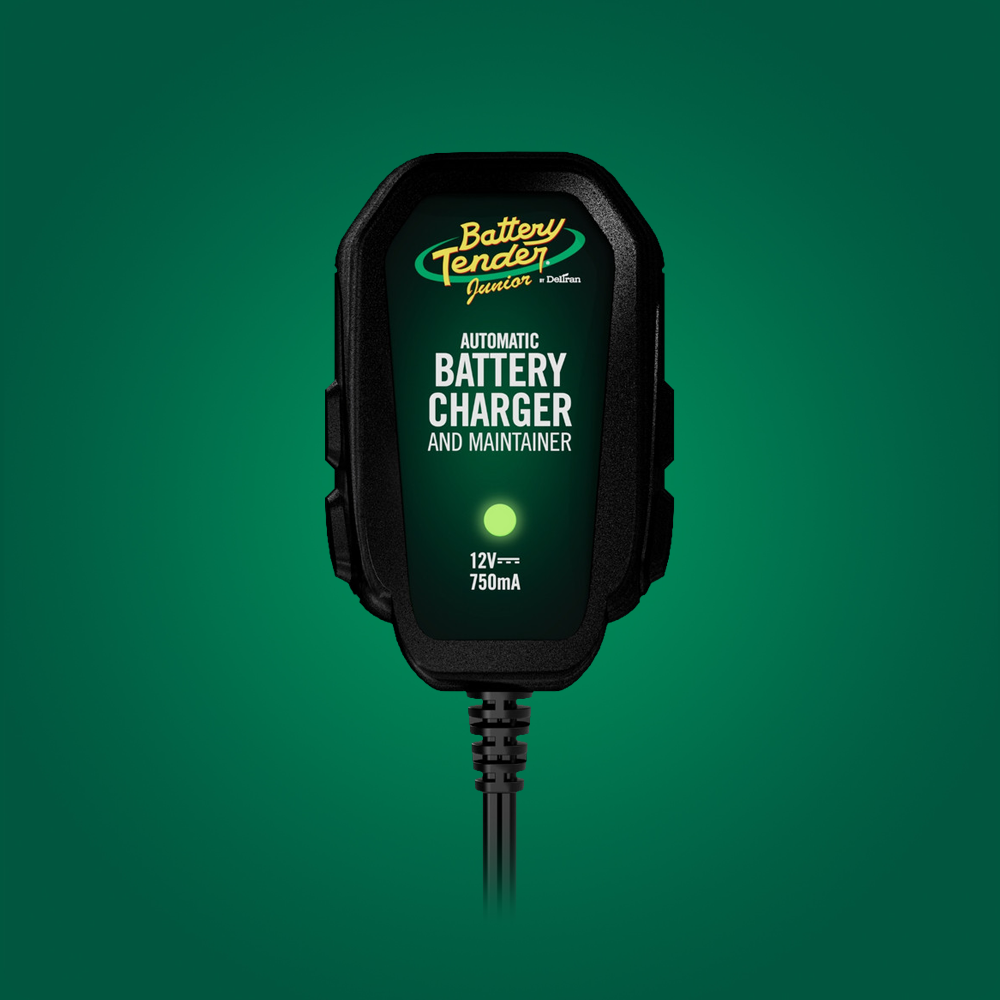
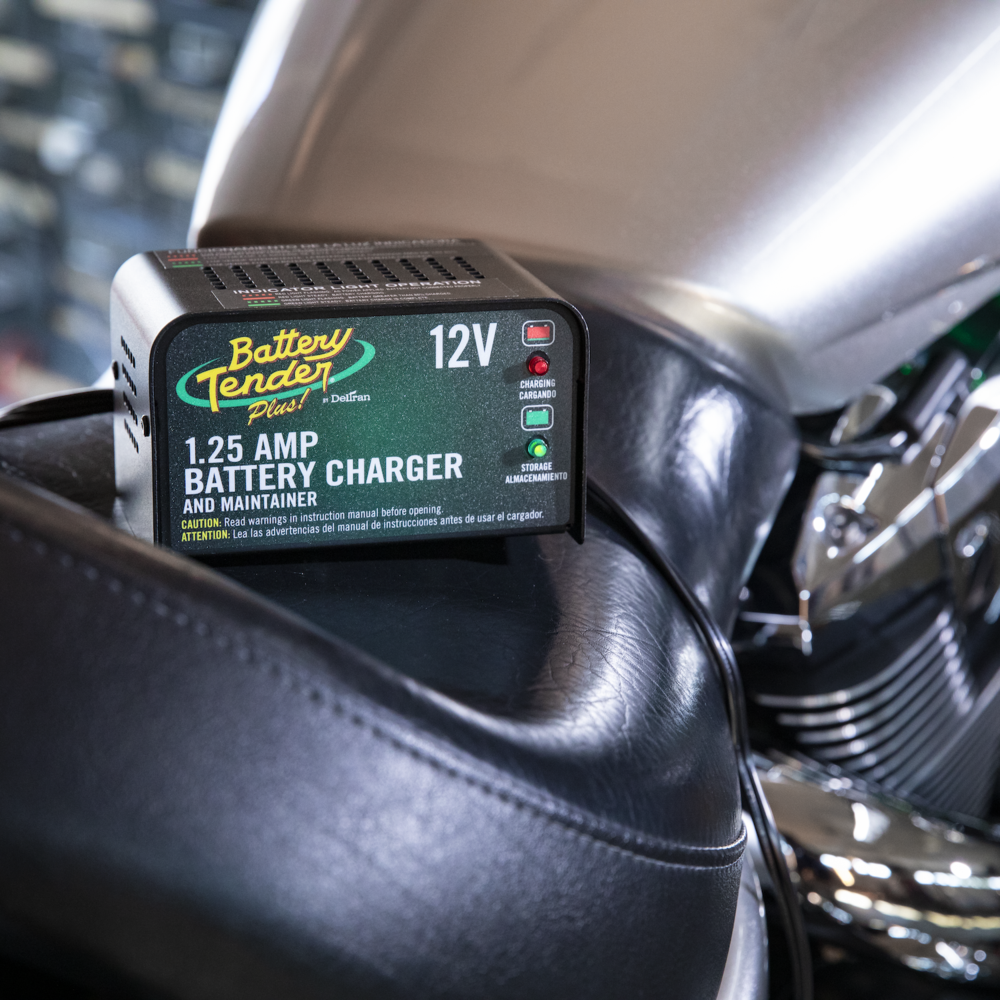
- Battery Tender Plus 1.25 AMP 12V Battery Charger and Maintainer : Automatic chemistry detection for flooded/AGM/gel
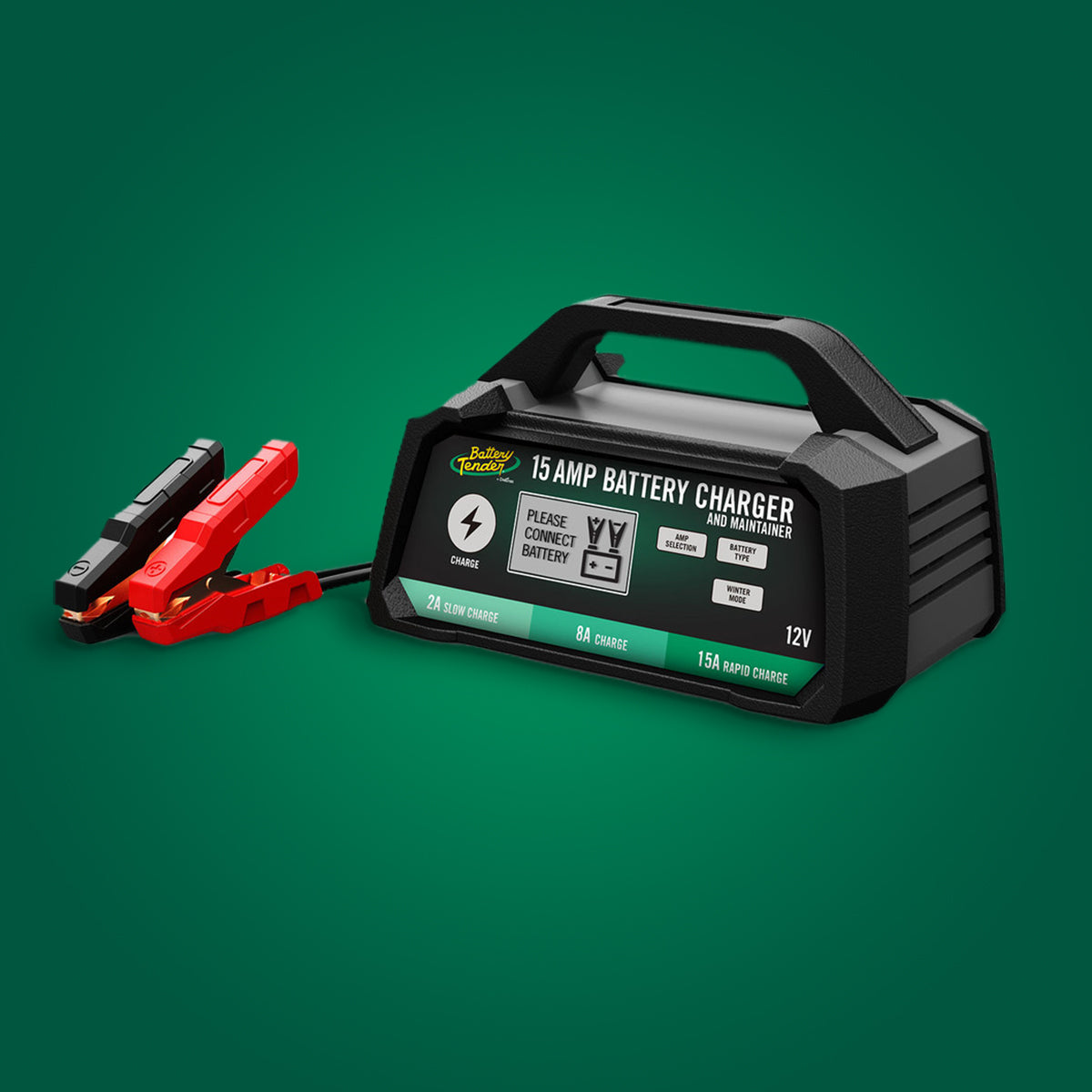
- Battery Tender PowerTender® 10 AMP Multi-Chemistry Smart Battery Charger : Manual chemistry selection including lithium mode
Application-Specific Recommendations
Starting Batteries (Cars, Trucks, Motorcycles)
- AGM - Best overall (maintenance-free, good life, fast recharge)
- Flooded - Budget option if maintenance acceptable
- Lithium - Performance vehicles only (cost rarely justified)
Deep-Cycle (Marine House Banks, RV, Solar)
- Lithium - Best performance if budget allows
- Gel - Best lead-acid deep-cycle performance
- AGM - Good compromise of cost and performance
- Flooded - Budget option, requires maintenance
Start-Stop Vehicles
- AGM - Required for most start-stop systems
- EFB (Enhanced Flooded Battery) - Acceptable for basic systems
- Never use conventional flooded in start-stop vehicles
High-Vibration (Motorcycles, Off-Road)
- AGM - Superior vibration resistance
- Lithium - Even better, but expensive
- Flooded - Acceptable if budget constrained
Weight-Critical (Racing, Aircraft)
- Lithium - Dramatic weight savings (60-80%)
- AGM - Much heavier but proven
- Flooded - Heaviest option
Total Cost of Ownership
10-Year Comparison (Marine House Bank, 200 Ah Usable)
Flooded Option:
- Initial: $400 (two 200Ah batteries)
- Replacements: $400 x 2 (years 3,6) = $800
- Water/maintenance: $50
- Total: $1,250
AGM Option:
- Initial: $700 (two 200Ah AGM)
- Replacements: $700 x 1 (year 6) = $700
- No maintenance
- Total: $1,400
Gel Option:
- Initial: $900 (two 200Ah gel)
- Replacements: $900 x 1 (year 8) = $900
- No maintenance
- Total: $1,800
Lithium Option:
- Initial: $2,400 (one 130Ah lithium = 104 Ah usable, exceeding 200Ah flooded at 50% DOD)
- Replacements: $0 (lasts 10+ years)
- No maintenance
- Total: $2,400
Lithium costs 2x more over 10 years BUT:
- Weighs 70% less
- Provides more usable energy
- Zero maintenance time
- No replacement hassle
- Better performance throughout life
Maintenance Requirements
Flooded:
- Check water level monthly
- Clean terminals regularly
- Test specific gravity
- Equalization charging periodically
- Time: 30-60 min/month
AGM:
- Check terminals occasionally
- Voltage testing recommended
- Time: 5-10 min/quarter
Gel:
- Same as AGM
- Time: 5-10 min/quarter
Lithium:
- Essentially none
- BMS monitors automatically
- Time: 0 min
Battery Tender Compatibility
All Battery Tender Smart Chargers Support:
- Flooded lead-acid
- AGM
- Gel cell
Lithium Compatible Models:
Critical: Always verify lithium compatibility before charging LiFePO4 batteries. Using lead-acid charger on lithium can damage the battery or prevent proper charging.
Decision Framework
Choose Flooded If:
- Budget is primary concern
- Comfortable with monthly maintenance
- Easy battery access
- Starting battery application with low cycling
Choose AGM If:
- Want maintenance-free operation
- Have start-stop vehicle
- Need faster recharging
- Moderate budget ($150-300/battery)
- Most common “upgrade” choice
Choose Gel If:
- Deep-cycle application (solar, marine house bank)
- Extreme temperature environment
- Willing to pay premium for longevity
- Low charging regulation risk
Choose Lithium If:
- Weight is critical
- High cycling application (daily use)
- Want longest lifespan
- Can justify 3-4x initial cost
- Understand charging requirements
FAQ
Q: Can I replace my flooded battery with AGM?
A: Usually yes, but verify charging system voltage is appropriate (14.2-14.7V). Some older vehicles charge at 14.8-15.0V which is too high for AGM.
Q: Are lithium batteries safe?
A: LiFePO4 (lithium iron phosphate) is very safe—much safer than laptop lithium-ion batteries. BMS prevents dangerous conditions. Follow manufacturer guidelines.
Q: Can I mix battery types in a bank?
A: Never. Mixed chemistries charge at different rates and have different voltage profiles. Always use identical batteries in parallel or series banks.
Q: How do I know which chemistry my current battery is?
A: Check the label. If it has removable caps, it’s flooded. If sealed and labeled “AGM” or “Absorbed Glass Mat,” it’s AGM. If labeled “Gel” or “Gel Cell,” it’s gel. If very light and labeled “Lithium” or “LiFePO4,” it’s lithium.
Conclusion
Battery chemistry selection balances initial cost, maintenance requirements, lifespan, and performance. For most applications, AGM offers the best compromise of features and cost. Lithium represents the future with superior performance justifying premium pricing for high-use applications.
Battery Tender smart chargers optimize charging for all chemistries, ensuring maximum lifespan regardless of battery type selected. Since pioneering consumer smart chargers in 1989, we’ve adapted our technology to support every battery chemistry innovation.
Browse our complete charger collection with chemistry-specific optimization.