


The Multi-Vehicle Battery Challenge
Why Multiple Vehicles Complicate Battery Care
Different usage patterns create maintenance chaos:
- Daily drivers: Need monthly charging despite regular use
- Weekend cars: Sit 5–6 days weekly, slowly discharging
- Seasonal vehicles: Stored 3–8 months, high failure risk
- Motorcycles/ATVs: Small batteries discharge faster
- Classic cars: Vintage systems more vulnerable to sulfation
Cost of poor multi-vehicle battery management:
- Average battery replacement: $150–300 per vehicle
- Household with 4 vehicles: $600–1,200 every 3–4 years
- Emergency jump-starts: Time loss, inconvenience
- Reduced battery lifespan: 40–60% shorter without maintenance
Battery Tender® solution: Centralized charging system maintains the entire fleet automatically.
Multi-Vehicle Maintenance Systems
Option 1: Individual Charger Units
Best for: 2–3 vehicles with easy garage access
Setup:
- Individual charger per vehicle
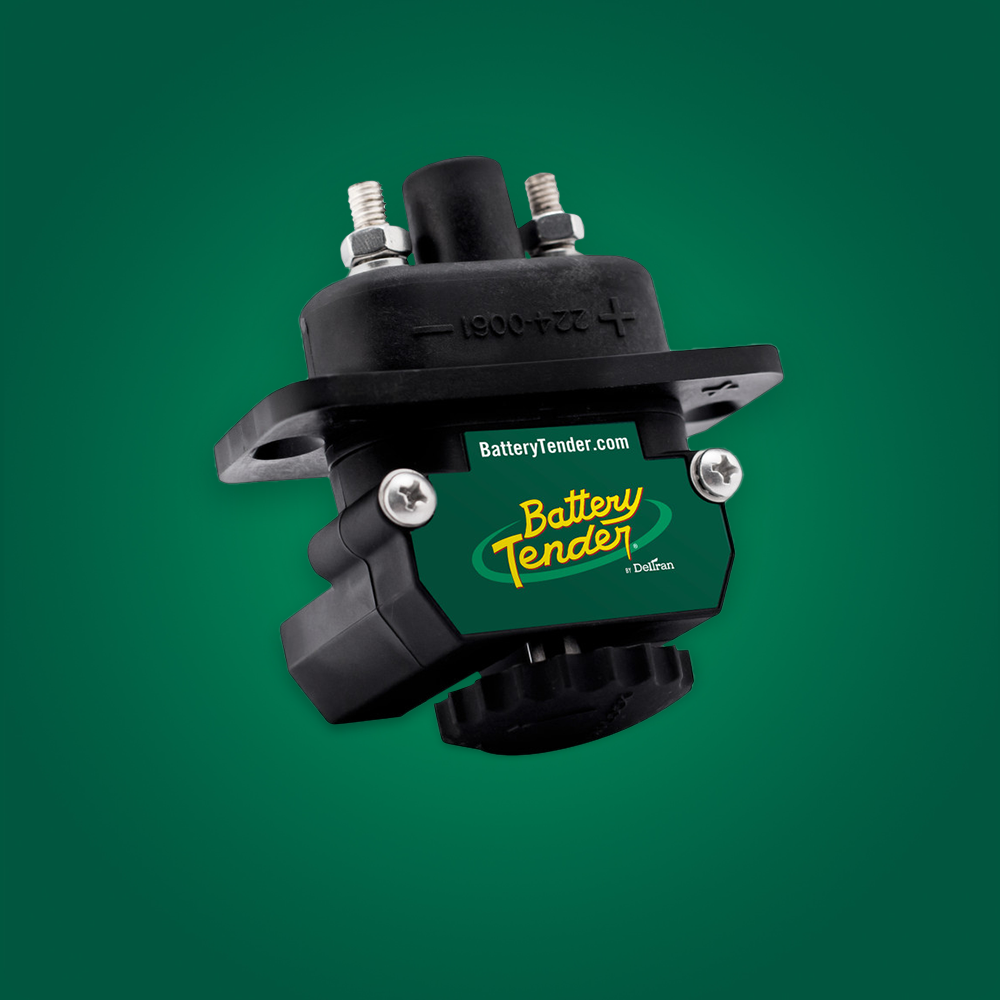
- Quick Disconnect harness on each vehicle battery
- Monthly rotation schedule
- One charger moves between vehicles
Recommended chargers based on vehicle type:
- Cars/Trucks/SUVs: 4 AMP Power Tender, 5 AMP Power Tender, or 8 AMP Power Tender
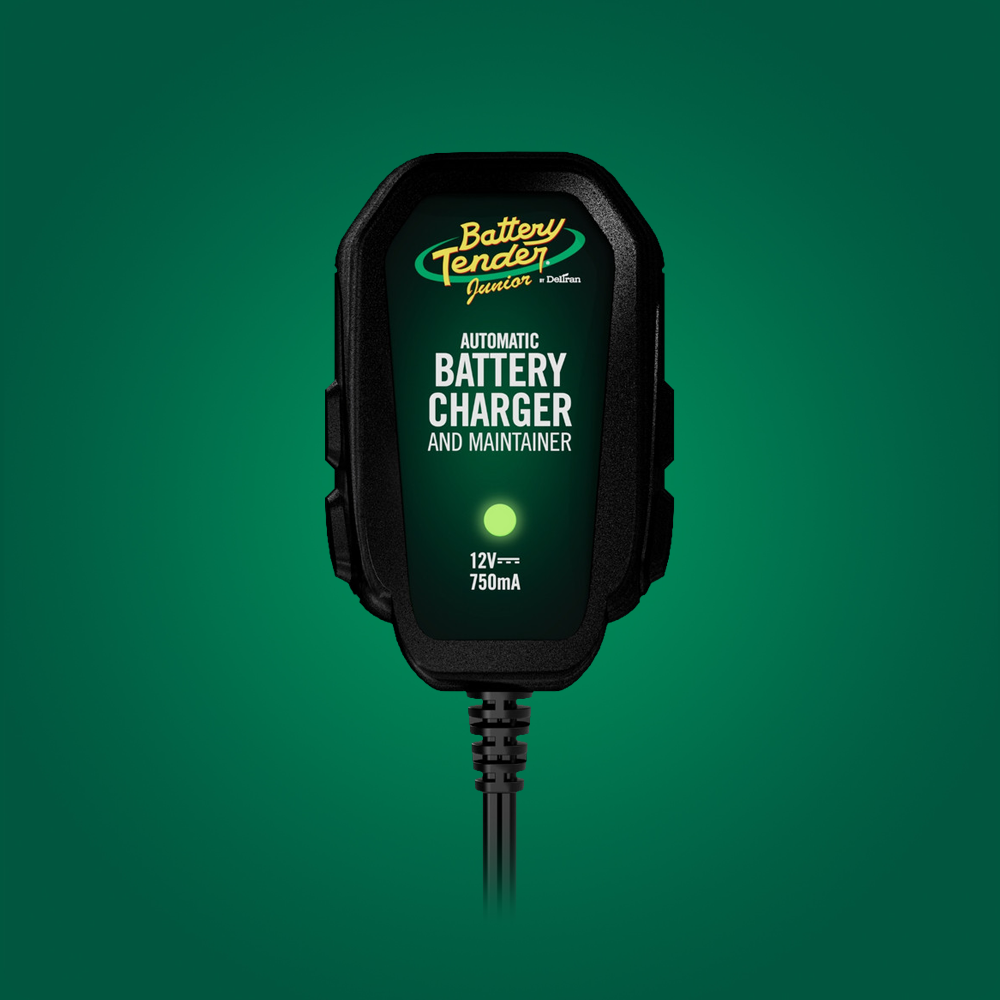
- Motorcycles/ATVs/Powersports: Battery Tender Junior 750mA or Junior 1 AMP
Advantages:
- Lower initial cost
- Portable between locations
- Can take charger to vehicle
- Easy troubleshooting
Disadvantages:
- Manual connection required
- Easy to forget vehicle in rotation
- Labor intensive for 4+ vehicles
Option 2: Multi-Bank Charger Systems (Recommended)
For 2–4 Vehicles in Single Location
WaveCharge Multi-Bank Chargers (ideal for cars, boats, and larger vehicles):
- 2-Bank Selectable 12V/6V, 6 AMP — $159.95
- 3-Bank Selectable 12V/6V, 9 AMP — $214.95
- 4-Bank Selectable 12V/6V, 12 AMP — $264.95
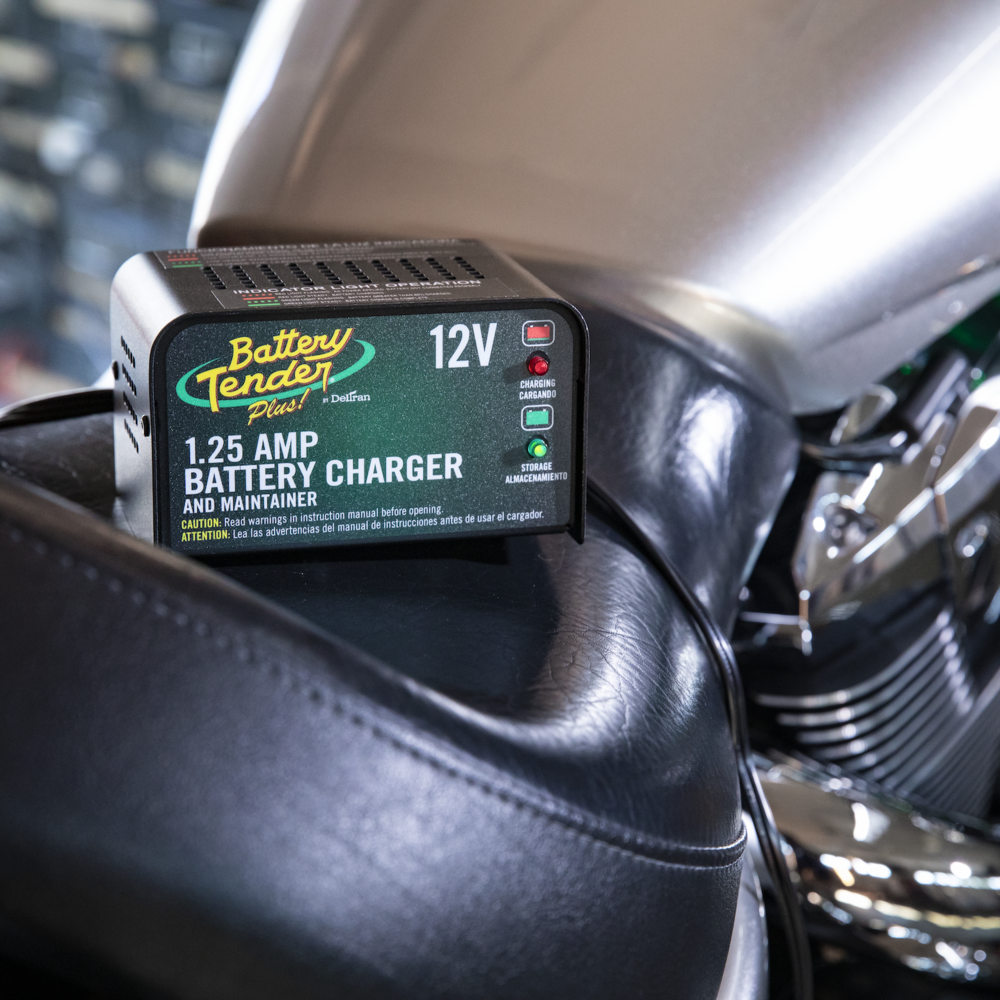
4-Bank 1.25 AMP Charger (ideal for powersports/small engine vehicles):
- 4-Bank Plus 1.25 AMP — SKU: 022-0148-DL-WH — $189.95
- Charges 4 batteries simultaneously
- 1.25A per bank (perfect for motorcycles, ATVs, lawn equipment)
- Permanent installation on each vehicle
- Set-and-forget operation
- Individual ISM technology per bank
Setup process:
- Mount charger on garage wall
- Install ring terminal quick disconnect on each battery
- Run charging leads to each vehicle parking spot
- Connect once, charges automatically
- Green lights indicate all batteries maintained
Option 3: Large Fleet Multi-Bank Systems
For 5–10 Vehicles or Commercial Applications:
5-Bank and 10-Bank 4 AMP Systems:
- 5-Bank, 4 AMP Selectable 12V/6V — SKU: 021-0133-DL-WH — $579.95
- 10-Bank, 4 AMP Selectable 12V/6V — SKU: 021-0134-DL-WH — $849.95
Features:
- 4 AMP per bank for faster charging of cars and trucks
- Selectable 12V/6V voltage
- Selectable chemistry (AGM, flooded, gel, lithium)
- Commercial-grade construction
- Wall-mount design
Ideal for:
- Multi-vehicle collectors
- Farm equipment fleets
- Commercial operations
- Large family compounds
Cost per vehicle:
- 5-Bank system: $116 per vehicle
- 10-Bank system: $85 per vehicle
Vehicle Rotation & Priority Schedule
Establishing Maintenance Priority Levels
Tier 1: Critical Daily Drivers
- Check voltage weekly
- Monthly overnight charging
- Highest failure impact
- Keep spare charger for emergency
Tier 2: Weekend/Occasional Vehicles
- Check voltage bi-weekly
- Charge every 2–3 weeks
- Moderate failure impact
- Good candidates for permanent installation
Tier 3: Seasonal/Storage Vehicles
- Connect to maintainer full-time during storage
- Monthly voltage check even while connected
- Disconnect and test before seasonal startup
Tier 4: Rarely Used Vehicles
- Permanent maintainer connection recommended
- Quarterly deep inspection
- Annual battery replacement schedule regardless of testing
Monthly Maintenance Calendar
Week 1
- Test all Tier 1 vehicles
- Charge any below 12.4V
- Visual inspection all batteries
Week 2
- Test all Tier 2 vehicles
- Charge as needed
- Clean any corroded terminals
Week 3
- Check all Tier 3 connections
- Verify maintainer operation
- Document voltage readings
Week 4
- Comprehensive fleet review
- Update maintenance log
- Order replacement batteries if needed
Cost-Benefit Analysis
5-Year Multi-Vehicle ROI
Scenario: 4-Vehicle Household
Without Battery Maintenance System
- 4 batteries @ $200 average = $800
- Average lifespan: 3 years
- Replacements over 5 years: 6.67 batteries
- Total cost: $1,334
- Plus: towing, jump-starts, inconvenience
With Multi-Bank System
- Initial investment: $264.95 (WaveCharge 4-Bank for cars)
- Electricity: $2/month × 60 months = $120
- Battery lifespan extended to 6+ years
- Replacements over 5 years: 2.67 batteries
- Replacement cost: $533
- Total cost: $917.95
Net Savings: $416 over 5 years
Plus: Zero inconvenience, no emergency situations
Per-Vehicle Annual Cost
Traditional approach:
- Battery replacement every 3–4 years: $50–75/year per vehicle
- 4 vehicles: $200–300/year fleet cost
Battery Tender approach:
- Multi-bank system amortized: $53/year
- Electricity: $24/year
- Extended battery life savings: $80–120/year
- Net annual cost: -$3 to $47/year
Payback period: 18–24 months
Smart Garage Setup
Physical Installation Strategy
Optimal charger placement:
- Central garage wall location
- Within 12 feet of all parking spots
- Near 120V outlet
- Above potential flood level
- Away from direct vehicle exhaust
Cable management:
- Extension cables available up to 25 feet
- Use cable clips along garage walls
- Label each charging lead by vehicle
- Coil excess cable neatly
- Keep connections off floor
Quick Disconnect advantages:
- 5-second connection/disconnection
- No tools required
- Weatherproof connections
- Keyed to prevent reverse polarity
- Can transfer between vehicles
Multi-Vehicle Charging Station
Professional setup includes:
- Wall-mounted multi-bank charger
- Labeled charging leads per vehicle
- Quick Disconnect on each battery
- Voltage testing station nearby
- Battery terminal cleaning supplies
- Maintenance log clipboard
Essential accessories:
- 12-foot extension cables — $20.95
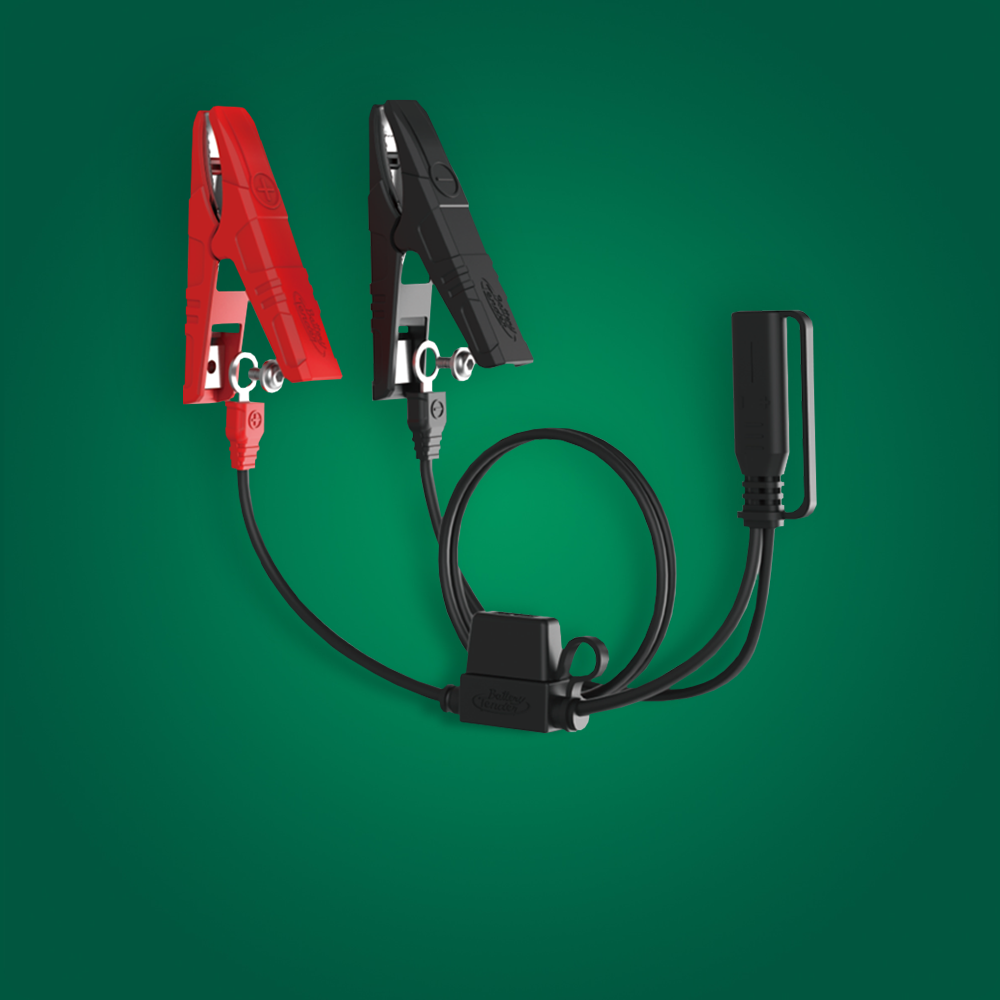
- Alligator Clip and Ring Terminal Combo — $15.95
- 25-foot extension cables — $35.95
Common Multi-Vehicle Scenarios
Scenario 1: Commuter + Classic Car + Motorcycle
Vehicle mix:
- 2018 sedan (daily driver)
- 1967 Mustang (weekend/shows)
- Motorcycle (seasonal March–November)
Recommended solution:
- Sedan: 5 AMP Power Tender with monthly charging
- Mustang: 4 AMP Power Tender permanent installation
- Motorcycle: Battery Tender Junior 1 AMP year-round
Alternative: WaveCharge 3-Bank system for all three
Scenario 2: Two Daily Drivers + Boat + RV
Vehicle mix:
- Two cars driven daily
- 24-foot boat (seasonal)
- Travel trailer
Complexity factors:
- Boat has dual battery system
- RV has house bank + chassis battery
- All vehicles parked in different locations
Recommended solution:
- Cars: Monthly rotation with 4 AMP or 5 AMP chargers
- Boat: WaveCharge Pro 2-Bank marine system (permanent)
- RV: WaveCharge 4-Bank system (1 chassis, 3 house bank)
Visit the Marine page for boat-specific solutions and the RV/Outdoor page for RV applications.
Scenario 3: Household Fleet of 6+ Vehicles
Vehicle mix:
- 3 daily driver cars
- 2 motorcycles
- 1 ATV
- 1 classic truck
Recommended solution:
For a mixed fleet like this, you’ll want separate systems based on vehicle type:
Option A: Combined Multi-Bank Approach
- 5-Bank 4 AMP system for the 3 cars + classic truck
- 4-Bank 1.25 AMP system for the 2 motorcycles + ATV (plus one spare bank)
Option B: Single Large System
- 10-Bank 4 AMP system centrally located
- Can handle all vehicle types with 4 AMP per bank
- Permanent installation on all vehicles
- Organized cable management
- Comprehensive maintenance log
Annual cost: Approximately $85–115/year total vs. $250+ for individual maintenance
Troubleshooting Fleet Battery Issues
Vehicle Keeps Dying Despite Maintenance
Diagnosis steps:
- Verify charger connected properly
- Check for parasitic drain (measure DC amperage)
- Test alternator output (should be 13.8–14.4V running)
- Inspect for damaged cables or poor grounds
- Load test battery (may be failing despite charging)
Common causes:
- Aftermarket electronics drawing power
- Failed alternator in daily drivers
- Corroded connections
- Battery age exceeding 5–7 years
Managing Seasonal Transitions
Spring vehicle revival
- Test voltage on all stored vehicles
- Full overnight charge if below 12.6V
- Visual inspection before first start
- Document baseline for summer
- Plan replacement schedule
Fall winterization
- Full charge all seasonal vehicles
- Connect maintainers before storage
- Verify green light on all units
- Monthly check-in schedule
- Update insurance/registration as needed
Emergency Vehicle Prioritization
Battery failure during time-sensitive situation:
- Keep portable charger for transfers
- Maintain one fully charged spare battery
- Know which vehicle is lowest priority
- Have a jump-starter in each daily driver
- Emergency charging procedure: 4 hours minimum with appropriate AMP charger
Frequently Asked Questions
Q: Can I use one charger to rotate between all vehicles?
A: Yes, but manual rotation is time-consuming and easy to forget. For 3+ vehicles, a multibank system provides better coverage and peace of mind. One forgotten vehicle can fail unexpectedly.
Q: How long should I charge each vehicle monthly?
A: Overnight (8–12 hours) with ISM technology is ideal. Battery Tender automatically stops when full and maintains without overcharging. Green light indicates completion.
Q: What if vehicles are parked in different locations?
A: Portable individual chargers work for distributed parking. For vehicles in the same garage, multibank systems are more efficient. Extension cables reach up to 25 feet from the charger.
Q: Do I need different chargers for different battery types?
A: Battery Tender ISM technology automatically adapts to flooded, AGM, and gel batteries. Selectable models allow you to choose between chemistry types. Lithium batteries require lithium-compatible modes available on newer models.
Q: Can I charge a dead battery with a maintenance charger?
A: Chargers rated at 3 AMP or higher include recovery mode for deeply discharged batteries. For completely dead batteries (below 3V), use 4 AMP or higher models for faster recovery.
Q: How do I know if a battery is too far gone to save?
A: If the battery won’t hold charge above 12.0V after overnight charging, or shows physical damage (bulging, leaking), replacement is necessary. Load testing at auto parts stores provides a definitive answer.
Q: Is it safe to leave chargers connected year-round?
A: Yes, Battery Tender ISM technology is designed for continuous connection. Spark-proof, reverse polarity protected, and temperature compensated. Over 10 million units in constant use.
Q: What about vehicles stored off-property (storage units)?
A: If no electricity is available, disconnect the negative battery terminal and bring the battery home for storage charging. Or invest in a solar Battery Tender charger for off-grid maintenance.
Q: Should I disconnect batteries when charging?
A: Not necessary. Battery Tender can charge with a battery installed. The Quick Disconnect system allows charging without opening the hood. Only disconnect if the vehicle has sensitive electronics (consult manual).
Q: Can I mix different amperage chargers in a household setup?
A: Yes. Match charger amperage to vehicle size: 3+ AMP for cars/trucks, 750mA–1.25 AMP for motorcycles/ATVs/small engines. Multibank chargers provide the same amperage to all banks simultaneously.
Q: What’s the difference between the 4-Bank 1.25 AMP and WaveCharge 4-Bank systems?
A: The 4-Bank 1.25 AMP (022-0148-DL-WH) at 1.25A per bank is ideal for powersports, motorcycles, and small engine vehicles. The WaveCharge 4-Bank at 12 AMP total (3 AMP per bank) is better suited for cars, trucks, and larger vehicles requiring more charging power.
Conclusion: Simplified Multi-Vehicle Battery Management
Managing batteries across 2–4+ vehicles doesn’t require daily attention or complex schedules. The key is implementing a centralized charging system that works automatically.
Your Multi-Vehicle Solution
- Install appropriate Battery Tender multibank charger based on vehicle types
- Permanent Quick Disconnect on each vehicle battery
- Monthly voltage spot-checks
- Annual replacement planning
- 5+ years of reliable starts across entire fleet
The Multi-Vehicle Advantage
With 60 years maintaining automotive fleets, Battery Tender understands the challenges of multiple vehicle ownership. Our multibank systems provide set-and-forget convenience with individual ISM technology per bank—each vehicle receives optimal charging regardless of battery size, type, or condition.
Investment in Peace of Mind
For Cars/Trucks/Larger Vehicles
- WaveCharge 4-Bank System: $264.95
- 5-Bank 4 AMP System: $579.95
- 10-Bank 4 AMP System: $849.95
For Motorcycles/ATVs/Powersports
- 4-Bank 1.25 AMP System: $189.95
Benefits
- 40–60% longer battery life
- Zero unexpected failures
- Entire fleet maintained automatically
- Professional-grade reliability
For households managing multiple vehicles, the question isn’t whether to implement battery maintenance—it’s whether you can afford the time, money, and inconvenience of not having a system.
Ready to simplify your multi-vehicle battery management?
Shop Battery Tender charging solutions: