



Why Boats Need Dual Battery Systems
Single Battery Limitations
The single-battery problem:
- Start engine, run electronics all day
- Electronics drain battery below starting threshold
- Stranded on water with no way to start engine
- Emergency rescue required ($200-500+ towing)
- Dangerous in rough weather or remote locations
Real-world scenario:
Tournament angler runs livewell, multiple fishfinders, trolling motor for 8 hours. Attempts to start the main engine for running home—battery too depleted. Dead in water 15 miles from dock.
Dual Battery Advantages
Dedicated starting battery:
- Reserved exclusively for engine starting
- Never depleted by accessories
- Guaranteed ability to return to dock
- 100% starting reliability
House/accessory battery:
- Powers all electronics and accessories
- Can be fully discharged without consequence
- Larger capacity for extended use
- Isolated from starting circuit
Cost vs. benefit:
- Dual battery system: $300-600 installed
- Single tow/rescue: $200-500 each time
- Peace of mind: Priceless
- Required for serious anglers, liveaboards
Battery Selection for Dual Systems
Starting Battery Requirements
Best choice: AGM Starting Battery
- High cranking amps (CCA rating)
- Fast discharge capability
- Not designed for deep cycling
- Group 24, 27, or 31 size typical
Group size guide:
- Group 24: Small outboards (70-115HP)
- Group 27: Mid-size engines (115-250HP)
- Group 31: Large engines (250HP+), diesels
Minimum CCA requirements:
- Gasoline outboards: 500-700 CCA
- Gasoline inboards: 700-900 CCA
- Diesel engines: 900-1200+ CCA
House Battery Requirements
Best choice: Deep Cycle or Dual-Purpose (AGM or Lithium)
- Designed for repeated discharge/recharge
- Higher amp-hour (Ah) capacity
- Withstands 200-500+ cycles
- Group 27 or 31 size typical
Capacity calculation:
- List all accessories with amp draw
- Multiply by hours of use
- Add 20% safety margin
- Example: 15A × 8 hours = 120Ah minimum
Common loads:
- Fishfinder: 1-3A
- VHF radio: 0.5-2A
- Livewell pump: 4-6A
- LED lights: 1-2A
- Stereo: 2-5A
- Trolling motor: 20-50A (separate battery often used)
Dual Battery Wiring Configurations
Battery Isolator System (Automatic)
How it works:
- Diode-based isolator splits alternator output
- Charges both batteries while engine running
- Automatically prevents house battery from draining starting battery
- No manual switching required
Advantages:
- Set-and-forget operation
- No risk of operator error
- Both batteries charge automatically
- Professional installation recommended
Disadvantages:
- Voltage drop across diodes (0.6-1.2V)
- Starting battery charges slower
- More expensive installation
- Component failure possible
Best for: Boats where simplicity and automation are priorities
Battery Switch System (Manual - Most Common)
Equipment: 1-2-BOTH-OFF Battery Switch
Four positions:
- OFF: All batteries disconnected (storage/maintenance)
- 1: Starting battery only
- 2: House battery only
- BOTH: Batteries parallel (emergency starting from house battery)
Typical operation:
- Dock: Switch to OFF
- Starting engine: Switch to 1
- Running/fishing: Switch to 2 (engine charges house battery only)
- Emergency: Switch to BOTH if starting battery dead
Installation requirements:
- Heavy-duty marine switch (300-500A continuous rating)
- Proper wire gauge (see below)
- Fused connections
- Corrosion-resistant terminals
Advantages:
- Simple, reliable
- Easy troubleshooting
- Low cost ($30-60 for switch)
- User control over system
Disadvantages:
- Requires manual switching
- Risk of leaving on wrong setting
- Both batteries can still drain if switch left on BOTH
Automatic Charging Relay (ACR) System
How it works:
- Electronically detects alternator charging voltage
- Automatically parallels batteries during charging
- Isolates when voltage drops (engine off)
- Sophisticated voltage-sensing technology
Advantages:
- Automatic operation like isolator
- No voltage drop (unlike diode isolator)
- Both batteries fully charged
- Prevents accidental drain
Disadvantages:
- Most expensive option ($150-300+ for ACR)
- Complex installation
- Requires understanding of system
- Failure more complicated than simple switch
Best for: Large boats with complex electrical systems
Installation Guide: Manual Dual Battery System
Required Materials
Batteries:
- 1x Starting battery (AGM Group 24/27/31)
- 1x House battery (Deep Cycle Group 27/31)
Hardware:
- Battery switch (1-2-BOTH-OFF, 300A+ rating)
- Battery trays and hold-downs (2)
- Marine-grade battery cables
- Ring terminals and heat shrink
- ANL fuse holder and fuses
Wire gauge requirements:
- 0-4 feet: 2 AWG
- 4-7 feet: 1 AWG
- 7-10 feet: 1/0 AWG
- 10-13 feet: 2/0 AWG
Step-by-Step Wiring
Step 1: Battery placement
- Mount both batteries securely in trays
- Use proper hold-downs (marine vibration is severe)
- Locate switch between batteries and engine
- Keep battery compartment ventilated
Step 2: Connect starting battery to switch
- Heavy cable from starting battery positive to switch "Battery 1"
- Negative to boat ground/engine block
- Fuse within 7" of battery positive terminal (150-200A ANL fuse)
Step 3: Connect house battery to switch
- Heavy cable from house battery positive to switch "Battery 2"
- Negative to boat ground (common ground point)
- Fuse within 7" of battery positive (150-200A ANL fuse)
Step 4: Connect switch to engine
- Cable from switch "COMMON" terminal to engine starter
- This cable carries all starting current
- Must be largest gauge, shortest route possible
Step 5: Connect alternator
- Connect alternator output to switch "COMMON" post
- This charges whichever battery selected (1, 2, or BOTH)
- Or install separate connection to house battery with ACR
Step 6: Connect accessories
- Run all accessory loads from house battery
- Use separate fused panel for accessories
- Starting battery should have NO loads except engine starter
Safety check:
- All connections tight
- All fuses properly rated
- No bare wire exposed
- Properly crimped terminals
- Heat shrink over all connections
Charging Dual Battery Systems
On-Water Charging (Alternator)
Single alternator charging strategy:
- While fishing: Switch to position 2 (house battery)
- Alternator charges house battery during transit
- Starting battery remains isolated and fully charged
- Before shutdown, briefly switch to 1 to top off starting battery
Dual alternator systems:
- One alternator dedicated to each battery
- No switching required
- More expensive but optimal
- Common on larger vessels
Shore Power Charging (Multibank Chargers)
Why dual batteries need multibank charger:
- Can't connect single charger to parallel batteries efficiently
- Each battery needs individual charging profile
- Different battery types require different charging
- Simultaneous charging saves time
Recommended WaveCharge Multibank Chargers for Marine:
For Standard Dual Battery Boats:
WaveCharge 2-Bank Selectable 12V/6V, 6 AMP - SKU: 022-1002-DL-WH - $159.95
- 3A per bank (6A total output)
- IP67 weather-resistant rated
- Individual ISM technology per bank
- 6V/12V selectable per bank
- Mounts permanently in bilge or engine compartment
For Larger Boats or Faster Charging:
WaveCharge Pro 2-Bank 12V, 20 AMP - SKU: 022-1007-DL-WH - $254.95
- 10A per bank (20A total output)
- IP68 rating (submersible)
- Faster charging for larger batteries
- Commercial-grade construction
- Ideal for tournament boats
For Triple Battery Systems (Starting + House + Trolling Motor):
- WaveCharge 3-Bank Selectable 12V/6V, 9 AMP - SKU: 022-1003-DL-WH - $214.95
- WaveCharge Pro 3-Bank 12V, 30 AMP - SKU: 022-1008-DL-WH - $409.95
For Complex Systems (Multiple House Batteries):
- WaveCharge 4-Bank Selectable 12V/6V, 12 AMP - SKU: 022-1004-DL-WH - $264.95
- WaveCharge Pro 4-Bank 12V, 40 AMP - SKU: 022-1009-DL-WH - $439.95
Installation:
- Mount charger in engine compartment (ventilated area)
- Run positive lead from Bank 1 to starting battery
- Run positive lead from Bank 2 to house battery
- Connect negative leads to common ground
- Plug into 120V shore power when docked
- Green lights indicate full charge
All WaveCharge chargers feature fully waterproof construction specifically designed for marine environments with corrosion-resistant materials.
Operating Dual Battery Systems
Daily Operation Checklist
Before starting:
- Battery switch to position 1 (starting)
- Verify voltage on starting battery (12.4V+ minimum)
- Check that house battery switch/breaker is on
Starting engine:
- Switch should be on 1 (starting battery only)
- Start engine normally
- Verify alternator charging (13.8-14.4V)
After engine running:
- Switch to position 2 (house battery)
- Now alternator charges house battery
- Accessories run from house battery
- Starting battery remains fully charged
Before shutdown:
- Optional: Switch briefly to 1 to top off starting battery
- Or leave on 2 (starting battery already full)
- After engine stops, switch to OFF if leaving boat
- Connect shore power charger if available
Emergency Procedures
If starting battery is dead:
- Switch to 2 (house battery)
- Attempt to start engine
- If successful, run engine 20+ minutes
- Switch to BOTH to charge starting battery
- Investigate why starting battery died
If house battery is dead:
- No problem—starting battery unaffected
- Start engine normally on position 1
- Switch to BOTH to charge house battery from starting battery
- Reduce accessory load
If both batteries dead (should never happen):
- Jump start from another boat
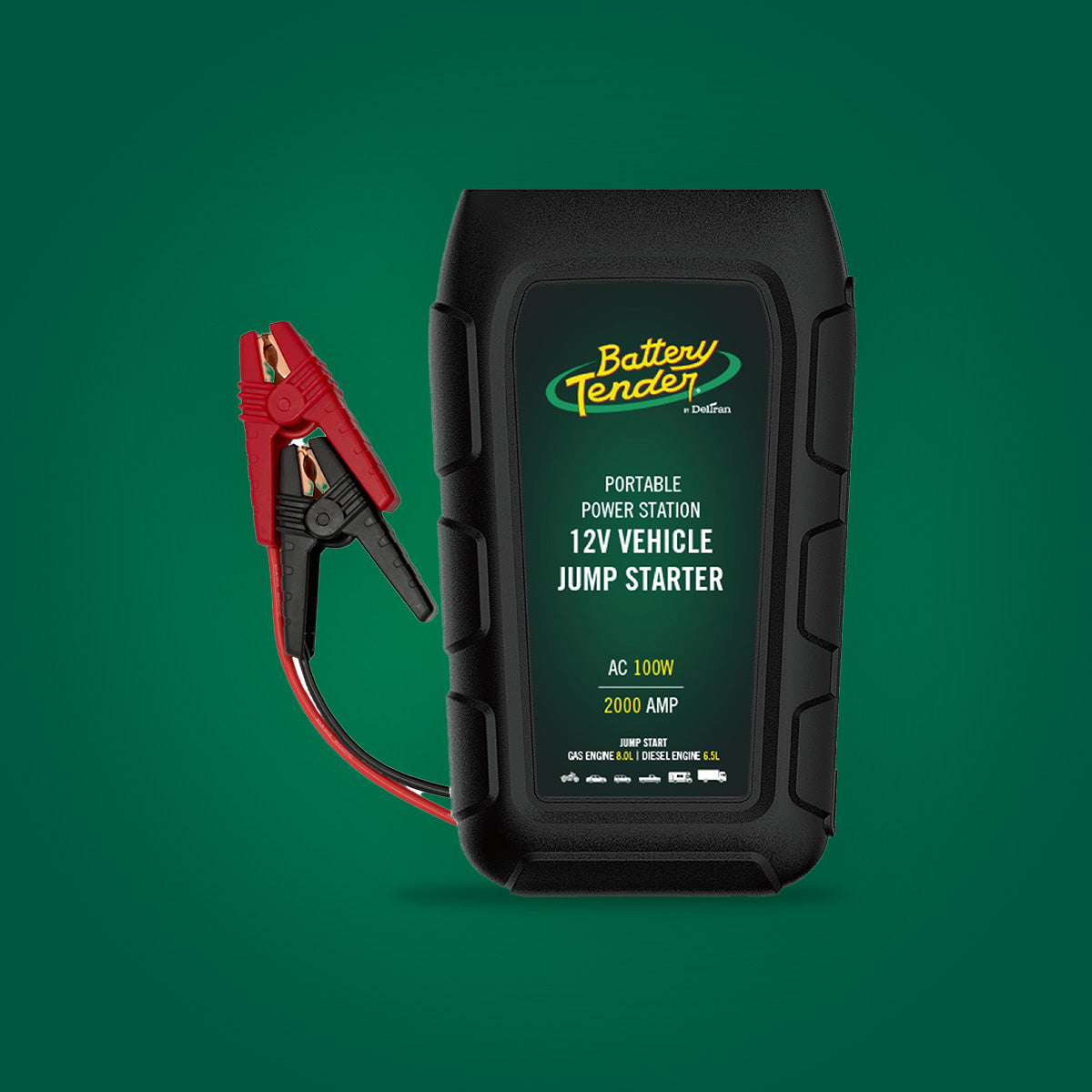
- Always carry portable jump starter as backup
- Check battery switch was left on BOTH accidentally
Maintenance for Dual Systems
Monthly Maintenance Routine
Voltage testing:
- Test both batteries individually with multimeter
- Starting battery: 12.6V+ when full
- House battery: 12.6V+ when full
- If below 12.4V, charge before use
Terminal inspection:
- Check for corrosion (white/green powder)
- Clean with baking soda solution
- Apply anti-corrosion spray
- Verify connections are tight
Battery switch inspection:
- Check for corrosion on switch terminals
- Verify firm detents in all positions
- Clean switch with electrical contact cleaner
- Replace if any position doesn't make solid contact
Seasonal Maintenance
Spring commissioning:
- Full charge both batteries before season
- Load test both batteries (auto parts store)
- Replace any battery 5+ years old
- Check electrolyte level (flooded batteries)
Winter storage:
- Connect WaveCharge multibank charger
- Leave connected throughout off-season
- Monthly check green lights both banks
- Or remove batteries for indoor storage
Marine battery winter storage best practices (off-season care)
Battery Replacement Schedule
Replace starting battery when:
- Age exceeds 5 years
- Fails load test
- Slow cranking observed
- Voltage won't hold 12.4V+
Replace house battery when:
- Age exceeds 4 years (deep cycle degrades faster)
- Won't hold charge overnight
- Swelling or physical damage
- Capacity noticeably reduced
Replacement cost planning:
- Starting battery: $150-250 (AGM)
- House battery: $200-350 (deep cycle AGM)
- Replace in pairs for consistency
- Budget $400-600 every 4-5 years
Troubleshooting Dual Battery Systems
Problem: Both batteries dead after sitting
Possible causes:
- Battery switch left on 1, 2, or BOTH (parasitic drain)
- Bilge pump wired to wrong battery
- Faulty battery switch allowing crossover
- Shore power charger not functioning
Solution:
- Always switch to OFF when leaving boat
- Verify bilge pump on separate circuit with float switch
- Test switch with multimeter for continuity
- Check charger green lights when plugged in
Problem: House battery drains quickly
Possible causes:
- Undersized for electrical loads
- Battery aging, reduced capacity
- Accessories left on when boat off
- Charging system not fully charging battery
Solution:
- Calculate actual amp-hour usage, upgrade battery if needed
- Load test battery, replace if failing
- Install reminder labels near accessories
- Verify alternator output 13.8-14.4V
Problem: Starting battery won't hold charge
Possible causes:
- Parasitic drain (bilge pump, stereo memory, etc.)
- Alternator not charging starting battery
- Battery sulfated from sitting
- Internal cell failure
Solution:
- Disconnect negative overnight, retest voltage (isolates drain)
- Verify switching to position 1 during operation
- Charge with maintenance charger in recovery mode
- Replace if voltage won't reach 12.6V
- Maintain with automatic marine battery charger
Battery Tender lights and what they all mean
Cost Analysis: Dual Battery Investment
Initial Installation Cost
- Starting battery (AGM Group 27): $200
- House battery (Deep Cycle Group 31): $300
- Battery switch: $50
- Cables and hardware: $100
- Installation labor (DIY): $0
- Total: $650
Ongoing Costs
- WaveCharge 2-Bank charger: $159.95 (one-time)
- Electricity: $3-5/year
- Battery replacement: $500 every 4-5 years
- Annual cost: ~$105
Alternative: Single Battery
- Single battery: $200
- Tow service (twice per season): $400+
- Lost fishing time: Priceless
- Safety risk: Unacceptable
ROI: First season (prevents single rescue call)
Frequently Asked Questions
Q: Can I use two identical batteries instead of starting + deep cycle?
A: Yes, two Group 27 AGM batteries work well. Designate one for starting, one for house regardless of being identical. Matching batteries is actually easier for charging—both charge identically.
Q: Do I need to upgrade my alternator for dual batteries?
A: Most marine alternators (60A+) handle dual batteries fine. If you have extensive electronics (multiple fishfinders, trolling motor charging, refrigerator), consider upgrading to 100A+ alternator.
Q: Should I leave the switch on BOTH during operation?
A: Only in an emergency. BOTH parallels batteries which defeats the purpose of redundancy. Run on position 2 (house) during operation so the starting battery stays fully charged as backup.
Q: Can I add a trolling motor to this system?
A: Trolling motors draw 20-50A and benefit from a dedicated battery. Consider a triple battery system: starting, house, trolling motor. Or use a house battery for light trolling motor use (<5 hours).
Q: What if I don't have shore power at my dock?
A: Install solar panels to maintain both batteries. Solar controllers work with multibank charging. Or bring batteries home for charging during the off-season.
Q: How long will the house battery run my electronics?
A: Depends on capacity and loads. Example: Group 31 AGM (100Ah) running 10A loads = 10 hours to 50% discharge (recommended maximum). Always calculate your specific loads.
Q: Can I wire accessories to start the battery in an emergency?
A: Technically yes, but defeats the purpose of the dual system. Keep the starting battery sacred for emergency starting only. Add a second house battery if the current one is insufficient.
Q: Do I need a special charger for AGM batteries?
A: WaveCharge series automatically detects and charges AGM, flooded, and gel batteries correctly. No special settings required—ISM technology adapts.
Q: What's the difference between WaveCharge standard and Pro series?
A: Standard WaveCharge (6-12 AMP total) provides 3A per bank, ideal for typical dual battery boats. WaveCharge Pro (20-40 AMP total) provides 10A per bank for larger batteries and faster charging, better for tournament boats or boats with extensive electronics.
Conclusion: Dual Battery Peace of Mind
Dual battery systems are the single most important electrical upgrade for serious boaters. The investment of $650-850 provides absolute certainty you'll always have power to start your engine and return to dock safely—regardless of how long you've been running electronics.
Your Dual Battery Setup
- Starting battery (Group 24-31 AGM): $150-250
- House battery (Group 27-31 Deep Cycle): $200-350
- 1-2-BOTH-OFF battery switch: $50
- WaveCharge 2-Bank charger: Starting at $159.95
- DIY installation: 4-6 hours
The Marine Charging Advantage
Battery Tender® has been the maritime industry standard since 1965. WaveCharge multibank chargers are IP67/IP68 rated for marine environments, used by professional guides and tournament anglers. When you choose Battery Tender for your vessel's electrical system, you're using the same technology that keeps commercial fishing fleets operating reliably worldwide.
Investment in Safety
- $650-850 complete dual battery system
- Prevents $200-500 tow services
- Ensures family safety
- Required for offshore/remote boating
- Industry standard for serious anglers
For boaters, dual batteries aren't a luxury—they're essential safety equipment.
Ready to install a dual battery system?
Shop Battery Tender marine charging solutions:
All WaveCharge chargers feature weatherproof construction and are specifically engineered for the harsh marine environment.


