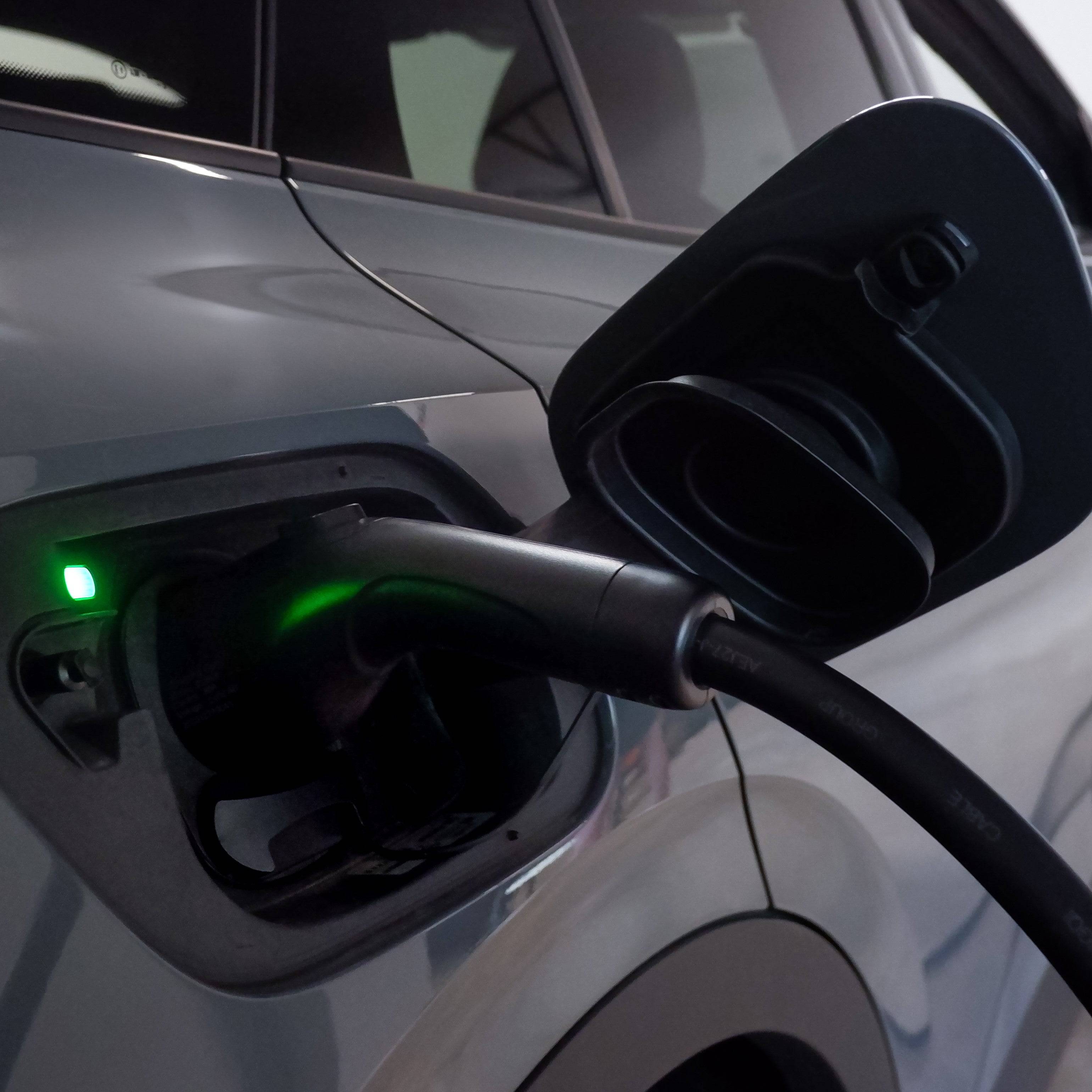



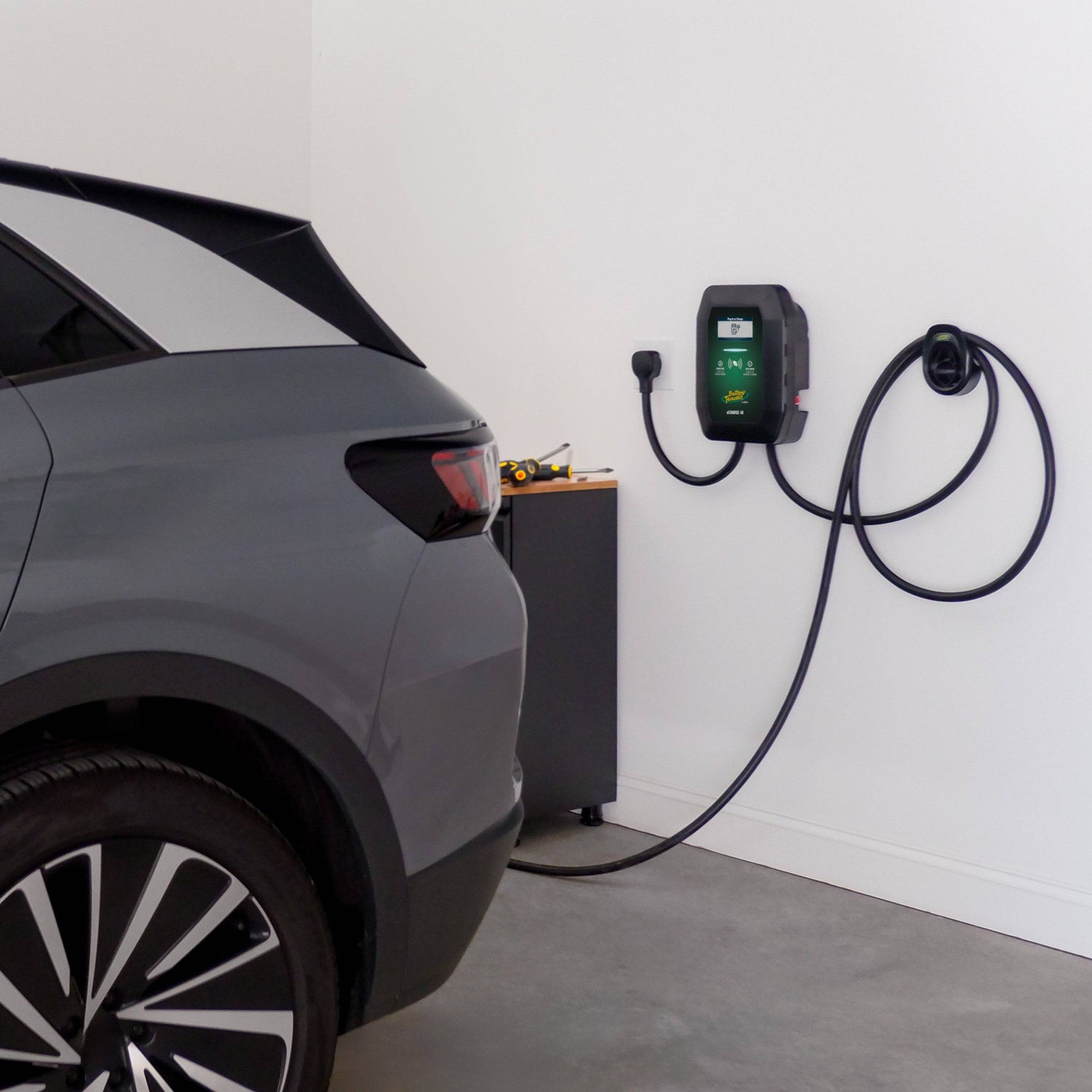
Electric vehicles demand reliable home charging infrastructure. While public charging networks expand, 80% of EV charging occurs at home—overnight, while parked, converting your garage into a personal “gas station.” Installing home charging equipment transforms EV ownership from inconvenient to seamless, but requires understanding electrical requirements, equipment selection, installation processes, and cost optimization.
Battery Tender® has spent 60 years engineering charging solutions since pioneering consumer smart chargers in 1989. This comprehensive guide shares essential knowledge for establishing safe, efficient home EV charging systems.
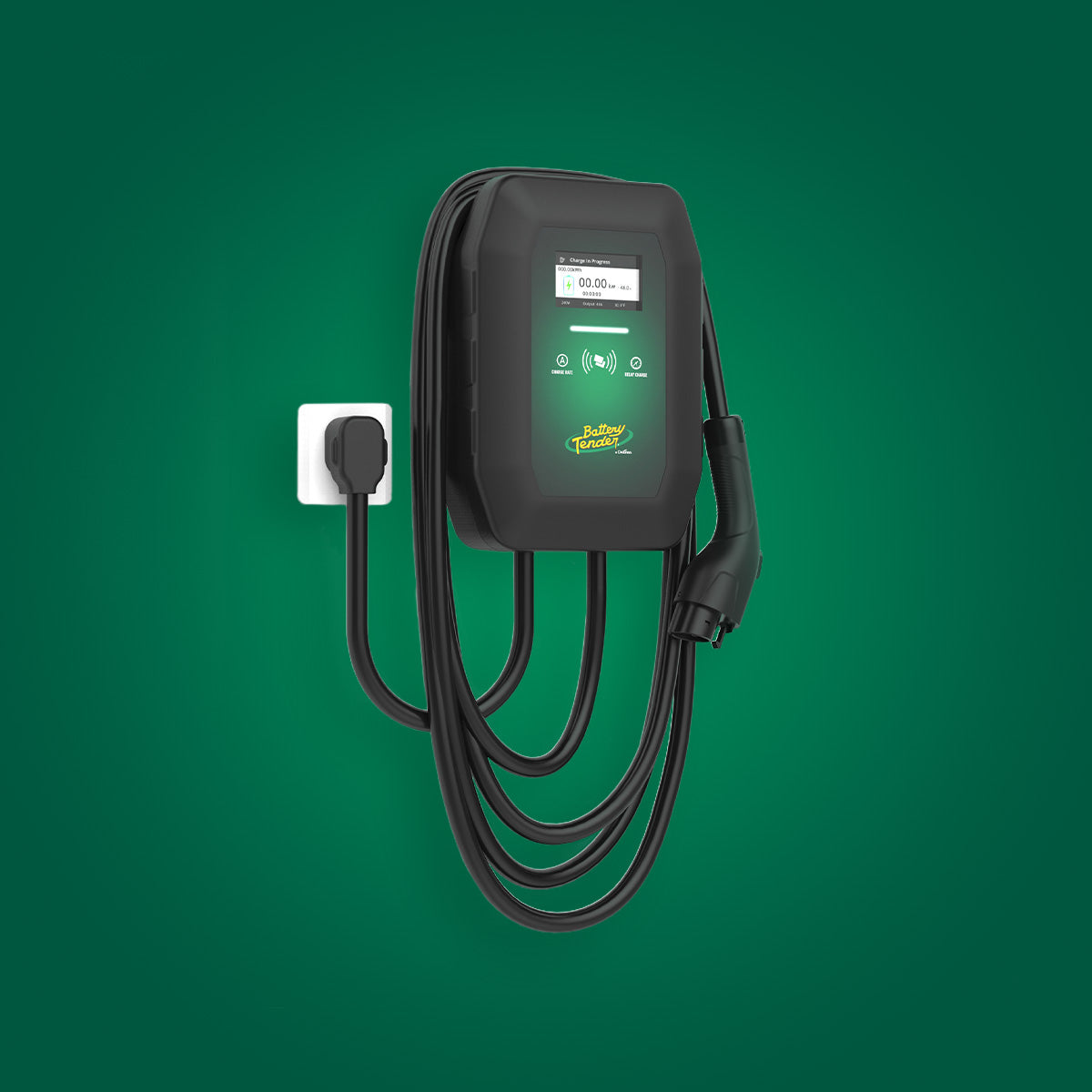
Learn more about EV charger options here: Battery Tender EV Chargers.
Understanding EV Charging Levels
Level 1 Charging (120V Standard Outlet)
What It Is
- Standard household 120V outlet
- 15–20 amp circuit typical
- Included portable “trickle charger” with most EVs
- No installation required
Charging Rate
- 3–5 miles of range per hour
- 1.4 kW charging rate typical
- Full overnight charge: 30–50 miles range added
- 12-hour charge: ~40–60 miles range range
Best For
- Plug-in hybrids (small battery)
- Low daily mileage (<40 miles/day)
- Emergency backup charging
- Apartment renters (no installation)
Limitations
- Too slow for most BEV (Battery Electric Vehicle) use
- Won’t recover daily commute (50+ miles) overnight
- Inefficient for large batteries (75+ kWh)
- Circuit can be overloaded by other devices
Level 2 Charging (240V Dedicated Circuit)
What It Is
- 240V dedicated circuit (like electric dryer)
- 32–40 amp circuit typical (some 48–60 amp)
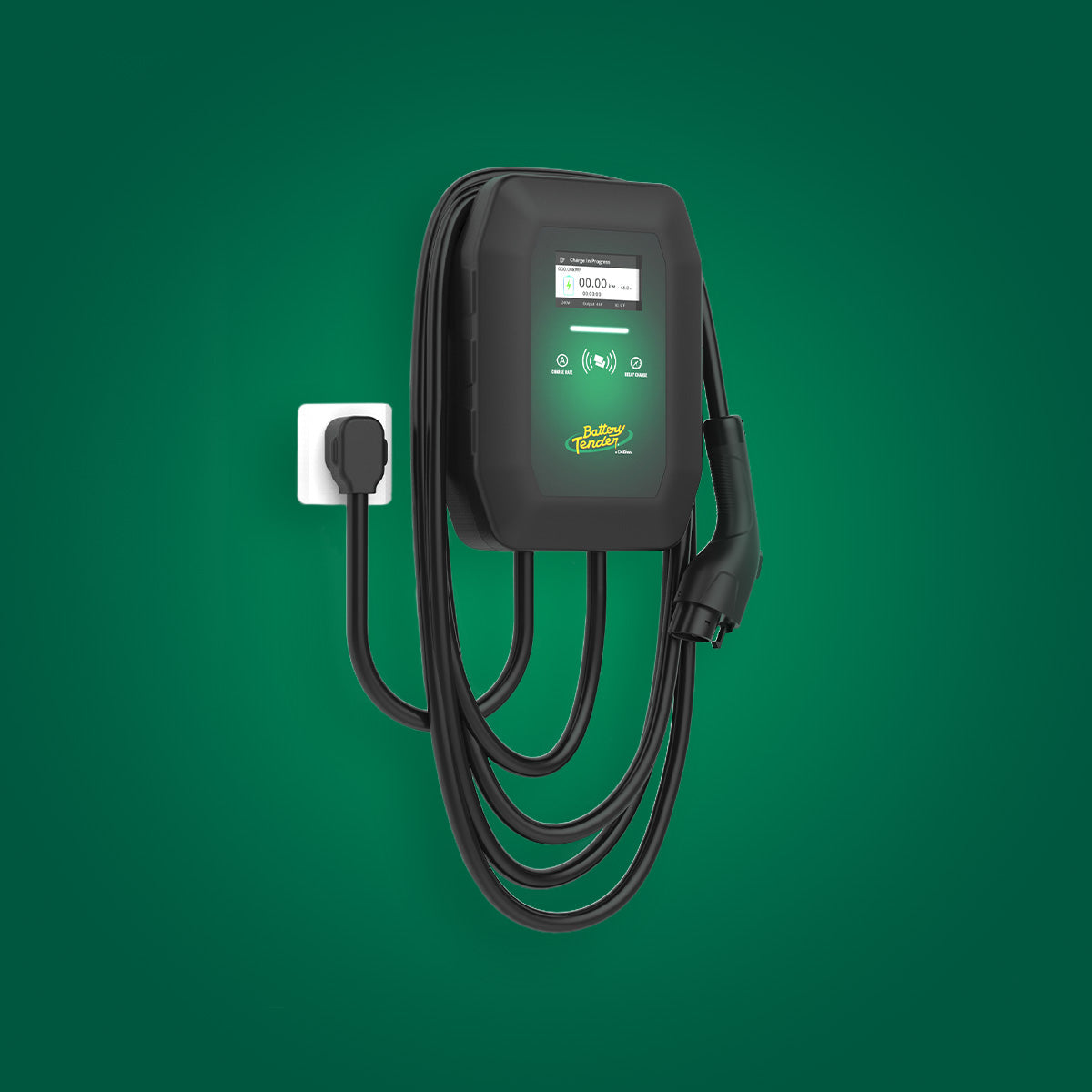
- Hardwired or plug-in charger (EVSE)
- Professional installation required
Charging Rate
- 25–60 miles of range per hour
- 7.7–19.2 kW charging rate
- Full overnight charge: 200–300 miles range added
- 8-hour charge: 200+ miles range typical
Best For
- Daily BEV use (most EV owners)
- Commutes 50–100 miles/day
- Large battery vehicles (75+ kWh)
- Home as primary charging location
Cost
- Charger (EVSE): $400–1,200
- Installation: $500–2,000
- Total: $900–3,200
Level 3 DC Fast Charging (Commercial Only)
What It Is
- 400V+ DC power (bypasses vehicle charger)
- 50–350 kW charging rate
- Public charging stations only
- NOT available for home installation
Why Not Home
- Requires 3-phase commercial power (not residential)
- Equipment cost: $50,000–150,000
- Installation cost: $50,000–200,000
- Electrical service: 200–800 amps (far exceeds residential)
- Reduces battery lifespan (heat stress)
Level 3 is for commercial corridor charging—not home use. This guide focuses on residential Level 1 and 2 charging.
Home Electrical System Evaluation
Current Electrical Service Capacity
Standard Residential Service
- 100-amp service: Older homes (pre-1970)
- 150–200-amp service: Modern homes (standard)
- 400-amp service: Large custom homes (rare)
Service Upgrade Necessity
100-Amp Service + Level 2 Charging:
- Marginal—may require upgrade
- Depends on home electrical load
- Professional assessment critical
- Upgrade cost: $1,500–3,000
200-Amp Service + Level 2 Charging:
- Generally sufficient
- No upgrade typically needed
- Can support 40–50 amp EVSE
- Plus all normal home electrical
Finding Your Service Rating
- Check main breaker in panel
- Numbers like “100”, “150”, “200”
- Located at top of breaker panel
- Or stamped on outdoor meter base
Panel Space Availability
Breaker Requirements
- Level 2 EVSE: 40–60 amp double-pole breaker
- Requires 2 adjacent slots in panel
- GFCI breaker required (code)
- Some panels lack physical space
If Panel Full
- Tandem breakers may work (if panel rated)
- Sub-panel addition possible
- Panel replacement if ancient
- Cost: $500–2,500 depending on solution
Distance from Panel to Parking
Wiring Cost by Distance
- 0–25 feet: $300–600 installation
- 26–50 feet: $600–1,200 installation
- 51–100 feet: $1,200–2,500 installation
- 100+ feet: $2,500+ installation
Why Distance Matters
- Copper wire expensive ($2–5/foot for #6 AWG)
- Conduit installation labor intensive
- Voltage drop concerns at distance
- May require larger wire gauge
Optimal Location
- Garage wall near panel (shortest run)
- Or exterior wall near panel
- Avoid routing through multiple rooms
- Consider future expansion
Grounding and Bonding
Code Requirements
- Proper equipment grounding essential
- GFCI protection required (safety)
- Ground fault protection prevents electrocution
- Improper grounding can kill
Why This Matters
- EVs are large metal objects
- High current involved (30–50 amps continuous)
- Wet weather operation common
- Fault protection saves lives
Professional Installation Critical: Licensed electricians understand codes. Proper grounding is non-negotiable. DIY installation is dangerous and illegal in most areas.
Level 2 Charger (EVSE) Selection
Hardwired vs Plug-In
Hardwired EVSE
- Permanently installed to wall
- Direct electrical connection (no plug)
- Cannot be moved
- Often required by code for 50+ amp circuits
Advantages:
- More powerful options available (48–60 amp)
- Cleaner look (no outlet)
- No outlet to fail
- Required for some installations
Disadvantages:
- Cannot take with you if moving
- Less flexible
- Harder to upgrade/replace
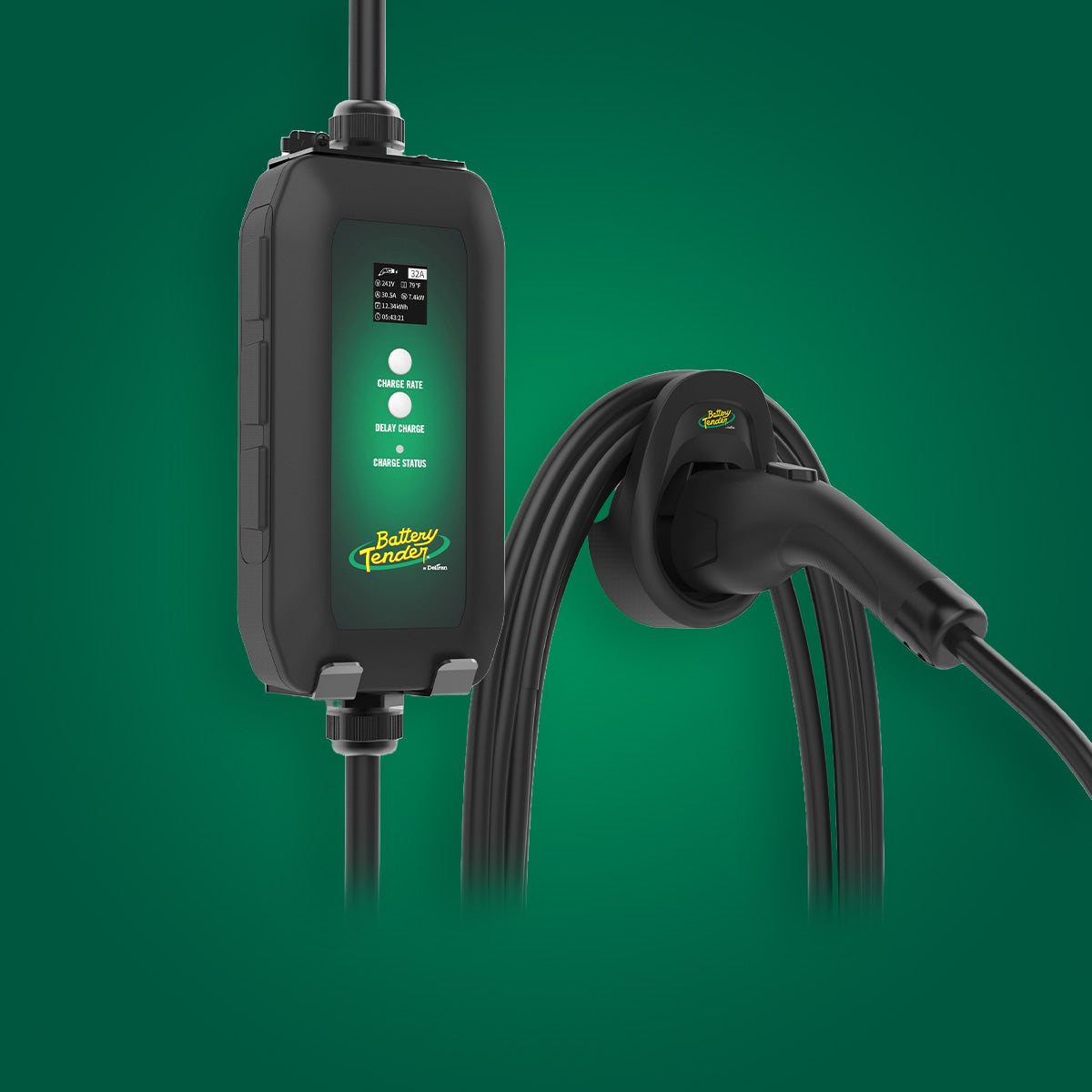
Plug-In EVSE (NEMA 14-50 or 6-50 outlet)
- Plugs into dedicated outlet
- Can be unplugged and moved
- RV-style 50-amp outlet typical
- Limited to 40-amp charging (80% of 50-amp circuit)
Advantages:
- Portable (take when moving)
- Easy replacement if upgrades
- Can use at other locations
- Outlet useful for other equipment
Disadvantages:
- Additional outlet cost ($100–200)
- Potential outlet wear over time
- Slightly less power than hardwired
Recommendation: Plug-in for most homeowners (flexibility). Hardwired for permanent high-power installations.
Amperage Selection
Charging Speed by Amperage
32-Amp EVSE (40-amp circuit):
- 7.7 kW charging power
- ~25–30 miles per hour
- 8 hours = 200–240 miles
- Sufficient for most users
40-Amp EVSE (50-amp circuit):
- 9.6 kW charging power
- ~30–35 miles per hour
- 8 hours = 240–280 miles
- Common installation (NEMA 14-50 outlet)
48-Amp EVSE (60-amp circuit):
- 11.5 kW charging power
- ~35–45 miles per hour
- 8 hours = 280–360 miles
- For heavy users or large batteries
Higher Not Always Better
- Check EV onboard charger limit (many 7.2 kW max)
- Installing 48-amp EVSE when vehicle is limited to 32-amp charging wastes money
- Future-proofing can matter if next EV supports higher power
Vehicle Onboard Charger Limits
- Entry EVs: 7.2 kW (32 amp) typical
- Mid-range EVs: 11 kW (48 amp) common
- Premium EVs: 19 kW+ (80 amp) some models
Match EVSE to Vehicle: There’s no benefit exceeding vehicle capability.
Smart Features
Wi-Fi/App Connectivity
- Monitor charging status remotely
- Schedule charging for off-peak rates
- Track energy consumption
- Receive completion notifications
Energy Monitoring
- kWh usage tracking
- Cost estimation (with rate input)
- Charging session history
- Useful for time-of-use optimization
Load Management
- Reduces power during peak home use
- Prevents service panel overload
- Critical for homes near capacity limit
- Can integrate with home energy management
Scheduled Charging
- Start charging at a specific time
- Take advantage of off-peak electricity rates
- Many utilities offer 50% off-peak discounts
- ROI: $200–600/year savings typical
Voice Assistant Integration
- Alexa/Google Home commands
- “Start/stop EV charging”
- Check status by voice
- Convenience factor
Value of Smart Features
- Basic EVSE: $400–600
- Smart EVSE: $600–1,200
- Time-of-use savings: $200–600/year
- ROI: 1–3 years for heavy users
Weather and Durability Ratings
NEMA Ratings
- NEMA 3R: Weather-resistant (rain/snow), outdoor use
- NEMA 4: Weather-tight, washdown-rated
- NEMA 4X: Corrosion-resistant, coastal areas
Indoor vs Outdoor
- Garage install: NEMA 3R sufficient
- Exterior wall: NEMA 4 recommended
- Coastal/corrosive: NEMA 4X required
Temperature Range
- Check operating temp range
- -22°F to 122°F typical
- Cold climate: verify low-temp rating
- Hot climate: verify high-temp rating
Cable Length
- 18–25 feet typical
- Longer cable = parking flexibility
- But: cable management considerations
- Retractable cable options available (premium)
Installation Process
Finding a Qualified Electrician
Requirements
- Licensed electrician (required by code)
- EV charging installation experience preferred
- Proper insurance coverage
- Permits pulled (code requirement)
- Inspection scheduled (code requirement)
Getting Quotes
- 3 quotes recommended
- Provide: Panel photo, parking location, distance
- Ask: Total cost including permit, inspection
- Verify: License number, insurance, references
Red Flags
- Offers to skip permit/inspection (illegal, dangerous)
- Dramatically low bid (corners being cut)
- No license verification
- Won’t provide written estimate
Permit and Inspection Requirements
Permit Required
- All EV charger installations (virtually everywhere)
- Pulled by electrician typically
- Fee: $50–300 depending on jurisdiction
- Processing time: 1–7 days
Inspection Required
- After installation, before use
- Building department inspector verifies
- Checks: proper wire size, GFCI, grounding, clearances
- Scheduling: 1–7 days typically
Why Permits Matter
- Ensures code compliance (safety)
- Required for insurance coverage
- Protects home resale value
- Legal requirement (fines possible)
DIY Installation
- Illegal in most jurisdictions without license
- Voids equipment warranty
- Insurance won’t cover damage/injury
- Resale complications
- Not recommended
Installation Timeline
Typical Timeline
- Day 1: Initial electrician visit, quote
- Day 3–7: Permit pulled and approved
- Day 8: Installation (2–6 hours typical)
- Day 10–14: Inspection scheduled and passed
- Total: ~2 weeks typical start to finish
Faster Possible
- Permit same-day in some areas
- Installation next-day possible
- Inspection same-week sometimes
- Rush timeline: 3–5 days possible
Delays Possible
- Panel upgrade needed (add 1–2 weeks)
- Service upgrade (add 3–4 weeks)
- Material supply chain issues
- Inspection backlog
Installation Cost Breakdown
Basic Installation (near panel, 40-amp)
- Permit: $100
- Breaker: $50–100
- Wire (25 feet): $100–200
- Conduit/materials: $50–100
- Labor: $300–800
- EVSE: $500–800
- Total: $1,100–2,100
Complex Installation (50+ feet, 60-amp)
- Permit: $150
- Breaker: $100–150
- Wire (75 feet): $300–500
- Conduit/materials: $150–300
- Labor: $800–1,500
- EVSE: $800–1,200
- Total: $2,300–3,650
With Service Upgrade
- Add $1,500–3,000 (100 → 200 amp upgrade)
- Total: $3,500–6,000+
Utility Considerations and Incentives
Time-of-Use (TOU) Rate Programs
How TOU Works
- Electricity cheaper off-peak (typically 9 PM – 7 AM)
- More expensive peak (typically 4 PM – 9 PM)
- Off-peak discount: 30–60% common
- Charges entire home on TOU (not just EV)
Example TOU Rate
- Off-peak: $0.08/kWh (9 PM – 7 AM)
- Mid-peak: $0.15/kWh (7 AM – 4 PM, 9 PM – midnight)
- Peak: $0.25/kWh (4 PM – 9 PM)
EV Charging Cost Comparison
Standard Rate ($0.14/kWh):
- 50 kWh charge = $7.00
- 15,000 miles/year = ~$900/year
TOU Off-Peak Charging ($0.08/kWh):
- 50 kWh charge = $4.00
- 15,000 miles/year = ~$500/year
- Savings: $400/year
Is TOU Worth It?
- Depends on home usage patterns
- Good if flexible on charging times
- Bad if high evening electricity use
- Analyze full bill impact (utilities provide calculators)
Dedicated EV Rate Programs
EV-Specific Rates
- Some utilities offer dedicated EV rates
- Separate meter for EV charging
- Very low off-peak rates ($0.04–0.06/kWh)
- Requires second meter installation ($500–1,500)
Benefits
- Lowest possible charging cost
- Doesn’t affect home rate structure
- Simple off-peak charging incentive
Drawbacks
- Second meter installation cost
- Additional monthly meter fee ($5–10)
- Not available in all areas
- ROI requires high annual mileage
Federal and State Incentives
Federal Tax Credit (2024–2025)
- 30% of installation cost
- Maximum $1,000 credit
- Applies to hardware and installation
- Income limits apply (phase-out)
Example
- $2,000 total installation cost
- $600 federal tax credit (30%)
- Net cost: $1,400
State and Local Incentives
- Vary widely by location
- Some states: $500–1,000 additional rebates
- Some utilities: $200–500 rebates
Reference mentioned in the PDF: Database of State Incentives for Renewables & Efficiency (DSIRE reference).
Employer Programs
- Some employers reimburse home charging
- Check with HR/benefits department
- Typically $500–1,000
Increased Electric Bill Expectations
Added Monthly Cost
15,000 Miles/Year (Typical):
- Energy required: ~4,200 kWh/year
- At $0.14/kWh standard rate: $588/year ($49/month)
- At $0.08/kWh TOU rate: $336/year ($28/month)
Compared to Gasoline:
- 30 MPG vehicle at $3.50/gallon: $1,750/year
- EV savings: $1,162–1,414/year
- Monthly: $97–118 savings
High Mileage (25,000 Miles/Year):
- Energy required: ~7,000 kWh/year
- At $0.14/kWh: $980/year ($82/month)
- At $0.08/kWh: $560/year ($47/month)
Operating Your Home Charger
Daily Charging Routine
Optimal Charging Strategy
- Plug in when home (convenience)
- Set charging to start at off-peak (if TOU rates)
- Charge to 80% daily (battery longevity)
- Charge to 100% only for trips (as needed)
Why 80% Daily?
- Lithium battery longevity maximized at 20–80%
- Most EVs recommend 80% daily limit
- 100% charges acceptable occasionally for range needs
- Battery degradation slows significantly with 80% routine
Charging Speed Expectations
Real-World Charging Times (40-amp EVSE)
Small Battery (40–50 kWh) — Nissan Leaf, Chevy Bolt:
- 20% to 80%: 4–5 hours
- 20% to 100%: 6–7 hours
- Daily commute (30–40 miles): 2–3 hours
Medium Battery (60–75 kWh) — Tesla Model 3, Hyundai Ioniq:
- 20% to 80%: 6–7 hours
- 20% to 100%: 8–10 hours
- Daily commute (30–40 miles): 2–3 hours
Large Battery (90–100 kWh) — Tesla Model S/X, Rivian:
- 20% to 80%: 8–9 hours
- 20% to 100%: 11–13 hours
- Daily commute (30–40 miles): 2–3 hours
Overnight (8 hours):
- Fully recovers 99% of daily driving scenarios
- 200–300 miles range added typical
- Sufficient for commuters
Seasonal Charging Considerations
Cold Weather (Winter)
- Battery charging slower when cold
- Vehicle may pre-condition battery (draws power)
- Cabin pre-heating uses significant energy
- Expect 20–30% longer charge times
Warm Weather (Summer)
- Optimal charging conditions
- Battery accepts charge quickly
- Minimal pre-conditioning needed
- Fastest charging speeds
Extreme Heat
- Battery cooling during charging (reduces speed)
- Charging may slow to protect battery
- Park in shade to minimize cooling demand
Troubleshooting Common Issues
Charger Won’t Start
Checklist:
- Verify vehicle charging door open
- Check vehicle in Park
- Verify charger plugged in (outlet/hardwire)
- Check circuit breaker not tripped
- Verify vehicle set to charge (not delayed)
- Check app for error messages
If Still Not Working:
- Cycle power to charger (unplug/replug or breaker)
- Check for LED error codes (consult manual)
- Contact charger manufacturer support
Related troubleshooting reference mentioned in the PDF: Battery Tender Lights and What They All Mean.
Slow Charging Speed
Causes:
- Vehicle charging limit set lower (check vehicle settings)
- GFCI breaker partially tripped (reset fully)
- Voltage drop from wire gauge too small
- High ambient temperature (auto-throttling)
- Battery already near full (tapering is normal)
Diagnosis:
- Check kW on vehicle display (should match EVSE rating)
- If significantly lower, electrical issue
- Contact electrician for voltage testing
Circuit Breaker Tripping
Immediate Causes:
- Overloaded circuit (other devices on same circuit)
- Faulty EVSE
- Ground fault (GFCI breaker sensing issue)
- Loose wiring connection
Resolution:
- Remove all other loads from circuit
- If still trips, EVSE or wiring issue
- Contact electrician immediately
- Do not repeatedly reset breaker
Safety:
- Breakers trip for protection
- Repeatedly tripping breaker indicates a real problem
- Professional diagnosis required
Future-Proofing Considerations
Installing for Next EV
Over-Spec Considerations
- Install 60-amp circuit even if current vehicle is 32-amp
- Larger wire gauge (future capacity)
- Premium EVSE location (accessible for any vehicle)
- Multiple parking spot wiring (future-proof)
Cost Difference
- 40-amp circuit: $1,200–2,000
- 60-amp circuit: $1,500–2,500
- Marginal cost: $300–500
- Avoid reinstallation later (saves $1,000+)
Multiple Vehicle Households
Two EV Household Options
Option 1: Two Separate Circuits
- Each vehicle dedicated EVSE
- No sharing/scheduling needed
- Requires sufficient service capacity
- Cost: 2× installation ($2,400–4,000)
Option 2: Load Management EVSE
- Single circuit, automatic load sharing
- Intelligent power distribution
- Requires compatible EVSEs
- Cost: ~$1,500–3,000 total
Option 3: Sequential Charging
- Single EVSE, manual vehicle switching
- Most economical
- Requires discipline (plug in order)
- Cost: Single installation ($1,200–2,000)
FAQ
Can I install Level 2 charger myself?
Not recommended and illegal in most areas without an electrical license. Improper installation risks electrocution, fire, code violations, and insurance issues. Professional installation required.
Will home charging damage my battery?
No. Level 2 home charging is ideal for battery longevity. Charge to 80% daily, 100% occasionally for trips. DC fast charging (Level 3) stresses batteries more, but home charging is gentle.
How much will my electric bill increase?
Typical driver (15,000 miles/year): $30–50/month increase depending on rates. With time-of-use rates: $25–35/month. Still far cheaper than gasoline (~$150/month for a 30 MPG vehicle).
Can I use an extension cord with a Level 1 charger?
Not recommended. If unavoidable, use 12-gauge or heavier outdoor-rated cord, maximum 25 feet. Better solution: install proper Level 2 charging.
What if I rent my home?
Discuss with the landlord. Many are willing if the tenant pays installation. Some jurisdictions require landlord accommodation (California). Portable Level 2 EVSE can move with you.
Do I need a separate circuit for EV charger?
Yes. Dedicated circuit required by code. EV charging is a continuous high-amperage load. Sharing a circuit is unsafe and a code violation.
Conclusion
Home EV charging transforms electric vehicle ownership from inconvenient to seamless. Understanding electrical requirements, selecting appropriate EVSE equipment, ensuring professional installation, and optimizing utility rates creates reliable, cost-effective “home fueling stations.”
Level 2 charging (240V, 32–48 amp) suits most EV owners, providing overnight recovery of daily driving. Professional installation ensures safety, code compliance, and optimal performance. Time-of-use rates and incentives reduce costs further.
Battery Tender brings 60 years of charging expertise—pioneering consumer smart chargers in 1989—to modern battery technology. Our understanding of proper charging protocols ensures your EV battery receives optimal care.
Plan your home EV charging installation carefully. The right equipment, properly installed, provides years of reliable service supporting your electric vehicle journey.
Explore EV chargers and accessories: EV Chargers and EV Charger Accessories.