


EV Charger Rebate Utility Guide: How to Save Hundreds on Home Charging (2026)
An EV charger rebate from a utility company can reduce the cost of a home Level 2 charging station by $200 to $1,000 or more, depending on the provider and region. Combined with the federal 30C tax credit — which covers 30% of equipment and installation costs up to $1,000 for residential customers — many EV owners recover 40% to 60% of their total investment. Battery Tender® brings over three decades of charging expertise to the EV market, offering Level 1 and Level 2 home chargers that meet the requirements of most utility rebate and federal incentive programs.
Despite the savings available, the U.S. Department of Energy estimates that fewer than half of eligible EV owners actually claim the incentives available to them. The application process varies by utility, and qualifying equipment standards differ from one program to the next. This guide explains exactly how EV charger rebate utility programs work, which federal and state incentives stack on top of them, what equipment qualifies, and how to navigate the claim process step by step in 2026.
Key Takeaways:
- Utility EV charger rebates range from $200 to $1,000+ and can be combined with the federal 30C tax credit worth up to $1,000.
- Over 200 U.S. utilities currently offer some form of EV charger rebate or time-of-use rate incentive.
- ENERGY STAR-certified and UL-listed Level 2 chargers qualify for the broadest range of programs.
- The 12V auxiliary battery in every EV also requires ongoing maintenance — a factor most rebate guides overlook entirely.
What Is an EV Charger Rebate Utility Program?
An EV charger rebate utility program is a financial incentive offered by an electric utility company to encourage customers to install home EV charging equipment. These programs reduce the upfront cost of purchasing and installing a Level 2 (240V) charger by providing a direct rebate, bill credit, or reimbursement after installation is complete.
Utilities offer these rebates for strategic reasons. According to the Edison Electric Institute (EEI), managed home EV charging — especially during off-peak hours — helps balance grid load and improves infrastructure utilization. By incentivizing home charger installations, utilities reduce demand at public charging stations during peak periods and generate new revenue from overnight electricity sales. A 2024 EEI report found that utilities serving areas with high EV adoption saw a 3% to 7% increase in residential electricity revenue.
Rebate amounts vary significantly. Smaller municipal utilities may offer $150 to $300, while major investor-owned utilities in states like California, New York, and Colorado offer $500 to $1,000. Some programs also provide free or discounted panel upgrades, dedicated circuit installation, or a separate time-of-use (TOU) rate that reduces per-kilowatt-hour costs during overnight charging windows by 30% to 60% compared to standard residential rates.
Federal Tax Credits and How They Stack with Utility Rebates
The federal government offers a separate incentive through Internal Revenue Code Section 30C, the Alternative Fuel Vehicle Refueling Property Credit. In 2026, this credit covers 30% of the total cost of EV charging equipment and installation, up to a maximum of $1,000 for residential taxpayers. The credit applies to both Level 1 and Level 2 equipment, provided the installation is at the taxpayer's primary or secondary residence.
The critical advantage for EV owners is that federal tax credits and utility rebates are stackable. A utility rebate reduces out-of-pocket cost, while the 30C credit reduces federal tax liability. The IRS does not require taxpayers to subtract utility rebates before calculating the 30C credit, meaning a homeowner who spends $700 on a qualified charger and $500 on installation can claim 30% of $1,200 ($360) as a federal credit — even if the utility also provided a $500 rebate. The combined savings in this example total $860 on a $1,200 investment.
One geographic limitation applies to the 30C credit starting in 2023: the charger must be installed in an eligible census tract, defined as a low-income community or a non-urban (rural) area. The Department of Energy provides a lookup tool at the Alternative Fuels Station Locator to verify eligibility by address. Homeowners outside qualifying tracts should focus on maximizing utility rebates and any state-level incentives.
How to Find Your Utility EV Charger Rebate Program
Finding the specific rebate program for a given utility requires checking multiple sources, because no single national database captures every local program in real time.
Step 1: Check the Utility Website Directly
Visit the website of the electric utility listed on the monthly bill. Search for terms like "EV rebate," "electric vehicle charger incentive," or "home charging program." Major utilities such as Duke Energy, Southern California Edison, Pacific Gas & Electric, Xcel Energy, and Dominion Energy maintain dedicated EV program pages. Smaller co-ops and municipal utilities may list incentives under general energy efficiency programs.
Step 2: Use the DOE Alternative Fuels Data Center (AFDC)
The U.S. Department of Energy AFDC maintains a Laws and Incentives database at afdc.energy.gov that catalogs federal, state, and utility-level incentives searchable by ZIP code. Filter results by "EVSE" (Electric Vehicle Supply Equipment) and "Utility/Private" incentive type. This database covers over 200 utility programs nationwide.
Step 3: Verify State-Level Stacking
At least 30 states offer additional EV charger incentives beyond the federal credit and utility rebates. Colorado provides up to $1,100 in state tax credits. New York offers up to $500 through NYSERDA. Oregon provides a $1,000 rebate through the Clean Vehicle Rebate Program for income-qualified applicants. State incentives typically stack with both utility rebates and the federal 30C credit, creating three-layer savings.
What Equipment Qualifies for EV Charger Rebate Utility Programs?
Most utility rebate programs require Level 2 (240V) charging equipment that meets specific certification standards. The most common requirements include UL listing (UL 2594 or UL 2231), ENERGY STAR certification, and a J1772 or NACS connector. Some programs also require Wi-Fi connectivity or smart-charging capability so the utility can verify off-peak usage or enroll the charger in demand-response programs.
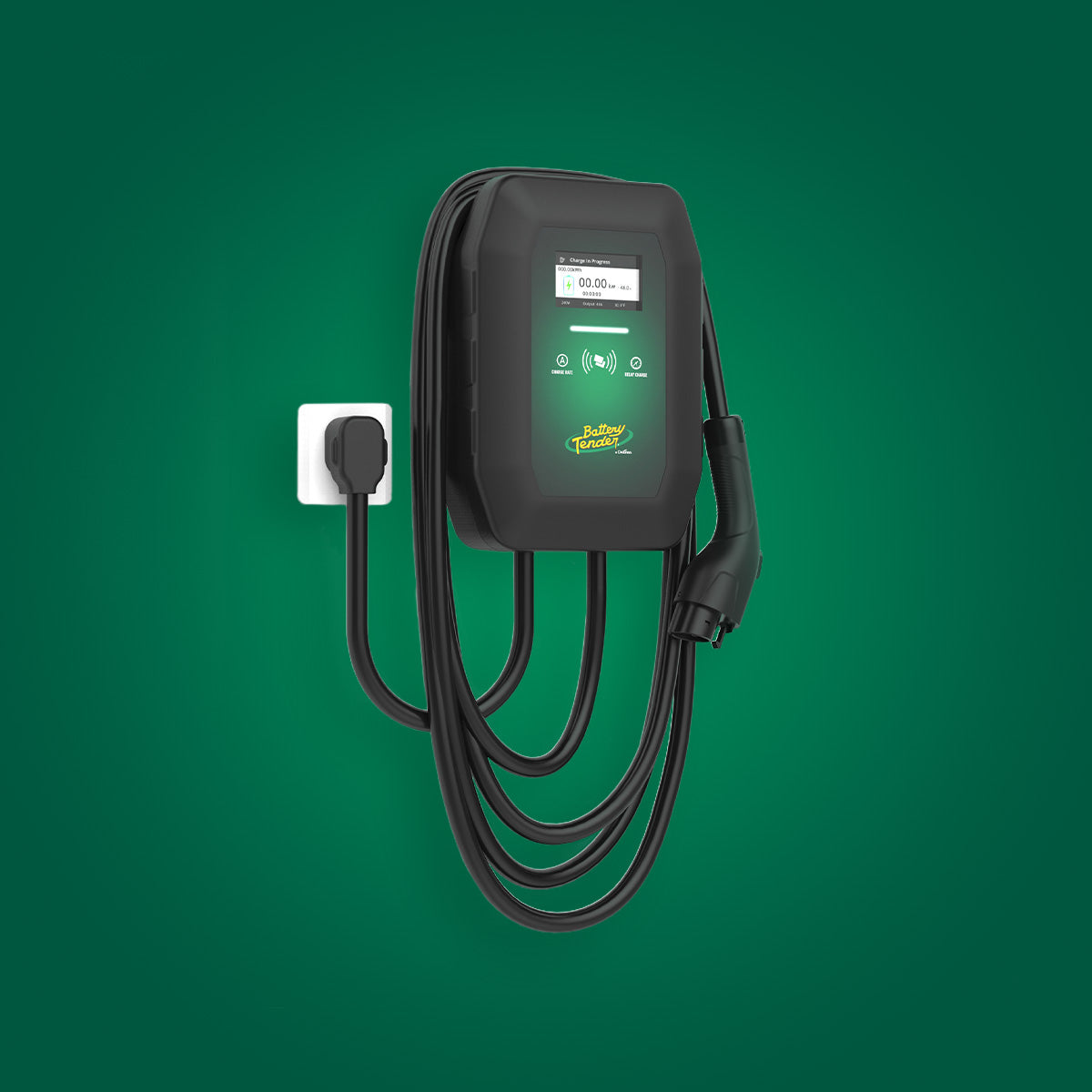
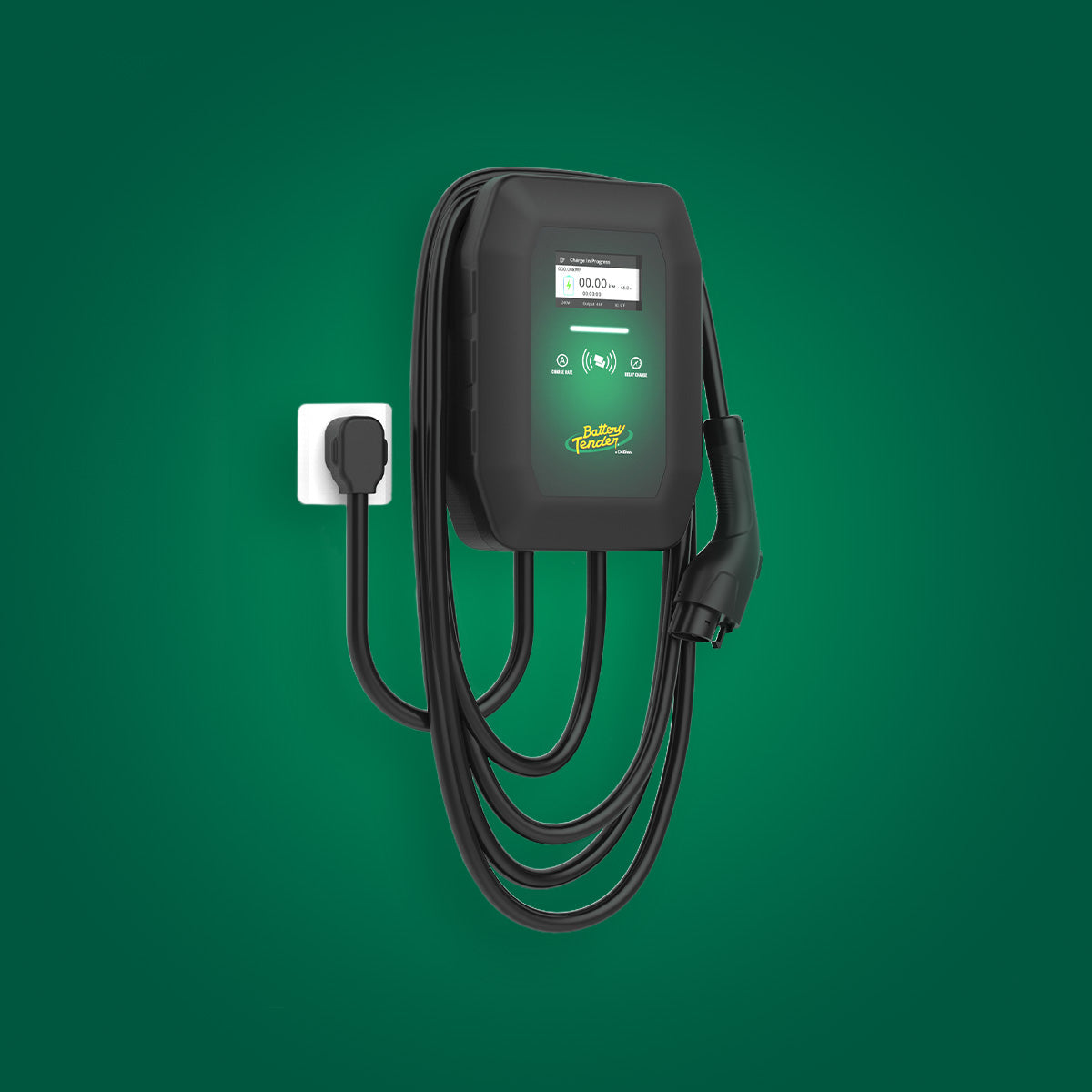
The Battery Tender eCharge 48A Level 2 charger delivers 11 kW of charging power, providing approximately 42.25 miles of range per hour. Rated at 48 amps on a 240V dedicated circuit, this wall-mount unit features RFID access control, IP66 weather resistance for outdoor installation, and a universal J1772 connector compatible with all non-Tesla EVs. Tesla owners can use the charger with a standard NACS adapter.
Battery Tender eCharge 48A Level 2 EV Charger
For homeowners with 30-amp or 40-amp circuits, the Battery Tender eCharge 40A Level 2 charger provides 9.6 kW and approximately 36 miles of range per hour. It shares the same IP66 rating, RFID capability, and J1772 connector as the 48A model, at a lower price point of $634.95. Both models meet the UL-listed and hardwired installation criteria required by the majority of utility rebate programs.
Battery Tender eCharge 40A Level 2 EV Charger . Also available at Costco.com.
EV Charger Rebate Utility Application Process: Step by Step
The application process follows a generally consistent pattern across most utility programs, though specific forms and timelines vary. Completing these steps in order prevents common delays and rejections.
1. Pre-qualify before purchasing. Some programs require pre-approval. Check whether the utility needs a completed application before equipment purchase, or whether post-purchase applications are accepted. Programs with limited funding often operate on a first-come, first-served basis.
2. Purchase qualifying equipment. Select a charger that meets the program's certification, amperage, and connectivity requirements. Retain the itemized receipt showing the manufacturer, model number, and purchase price.
3. Hire a licensed electrician. Nearly all utility programs require professional installation on a dedicated 240V circuit. The electrician should pull any required local permits and provide a signed invoice. Per the National Electrical Code (NEC Article 625), EVSE installations require a dedicated branch circuit sized to at least 125% of the charger's maximum continuous load.
4. Submit the rebate application. Provide the utility with the completed form, proof of purchase, electrician invoice, permit documentation (if required), and photos of the installed charger. Many utilities now accept online submissions through their customer portal.
5. Receive the rebate. Processing typically takes 4 to 12 weeks. Rebates arrive as a check, bill credit, or direct deposit, depending on the utility.
Portable EV Charging and Rebate-Eligible Alternatives
Not every EV owner qualifies for a utility rebate, particularly renters, condo residents, or homeowners outside the geographic coverage of participating utilities. In these cases, a portable Level 1 charger provides a zero-installation alternative that avoids rebate eligibility requirements entirely.
The Battery Tender eCharge 16A Level 1 charger plugs into any standard 120V NEMA 5-20P outlet and delivers approximately 7.2 miles of range per hour — sufficient for commuters driving 30 to 40 miles daily when charging overnight for 8 to 10 hours. At $299.95, the eCharge 16A requires no electrician, no permits, and no panel upgrades, making it the lowest total-cost entry point for home EV charging.
Battery Tender eCharge 16A Level 1 Portable EV Charger
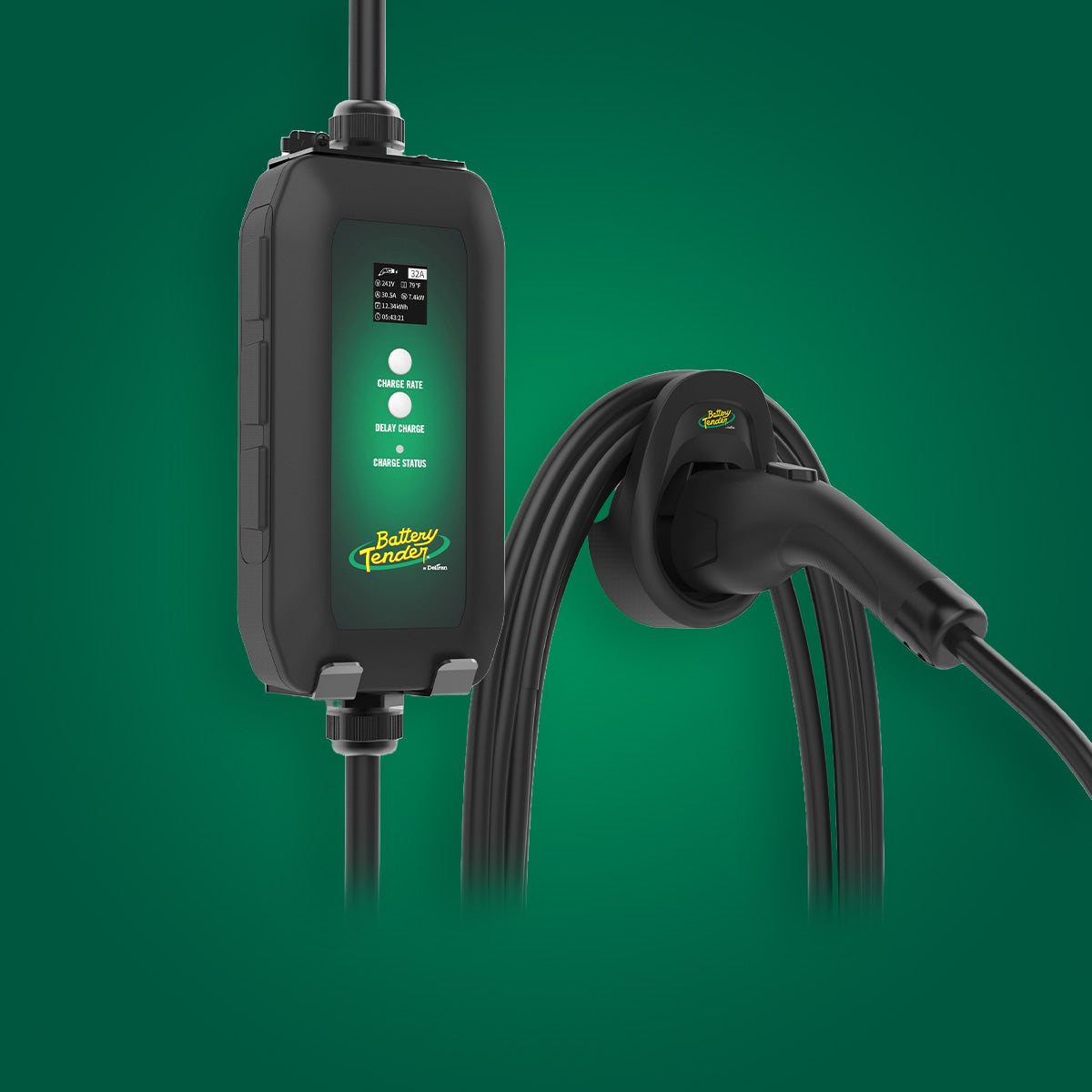
For maximum versatility, the Battery Tender eCharge 32A operates on both 120V and 240V circuits, delivering up to 28.5 miles of range per hour on a 240V connection. This true dual-voltage design allows owners to start with standard outlet charging and upgrade to Level 2 speeds later by simply switching to a 240V outlet — potentially qualifying for a utility rebate at that point without purchasing a second charger.
Battery Tender eCharge 32A Dual-Voltage Portable EV Charger . Also available at Costco.com.
Do Not Forget the 12V Auxiliary Battery in Your EV
Every electric vehicle — regardless of make or model — contains a standard 12V auxiliary battery that powers door locks, interior electronics, the onboard computer, safety systems, and the contactors that connect the high-voltage traction battery. When this 12V battery fails, the EV cannot start, cannot charge, and cannot open its doors in some cases. AAA reported a 19% increase in EV roadside assistance calls related to 12V battery failure between 2023 and 2025.
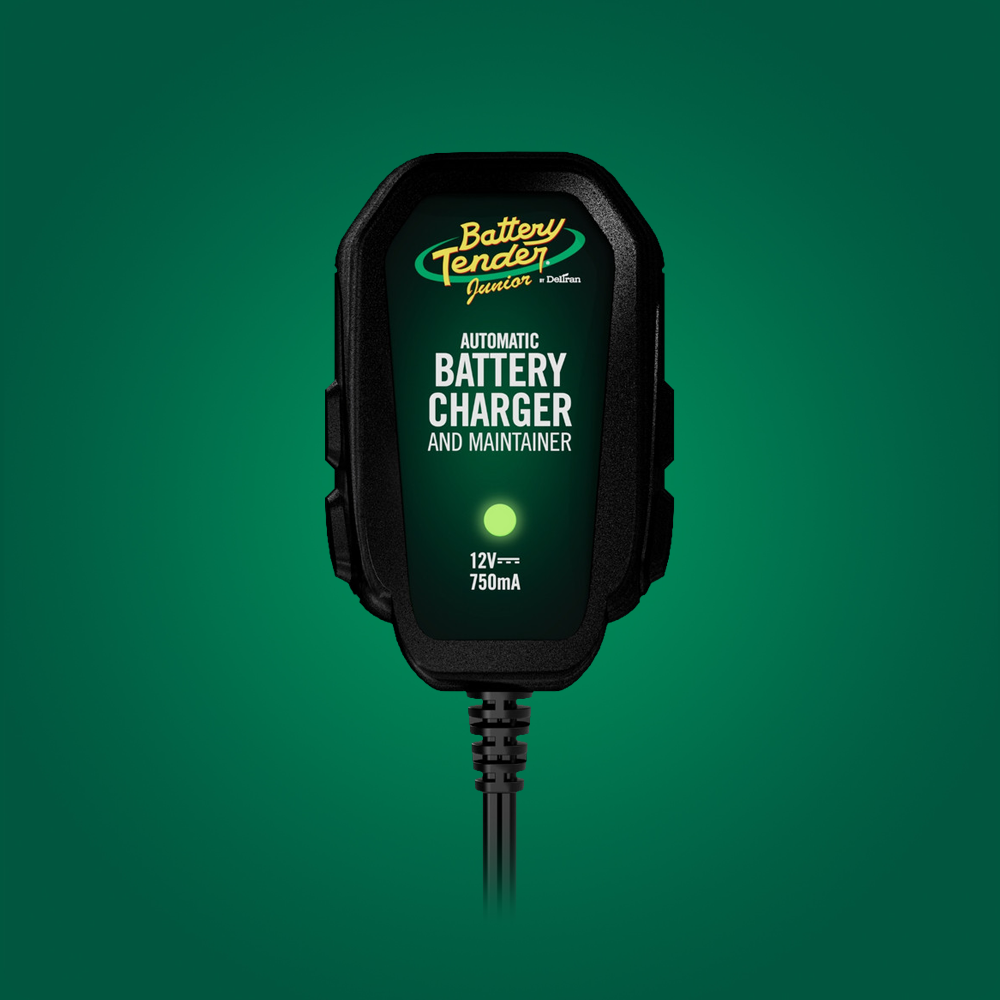
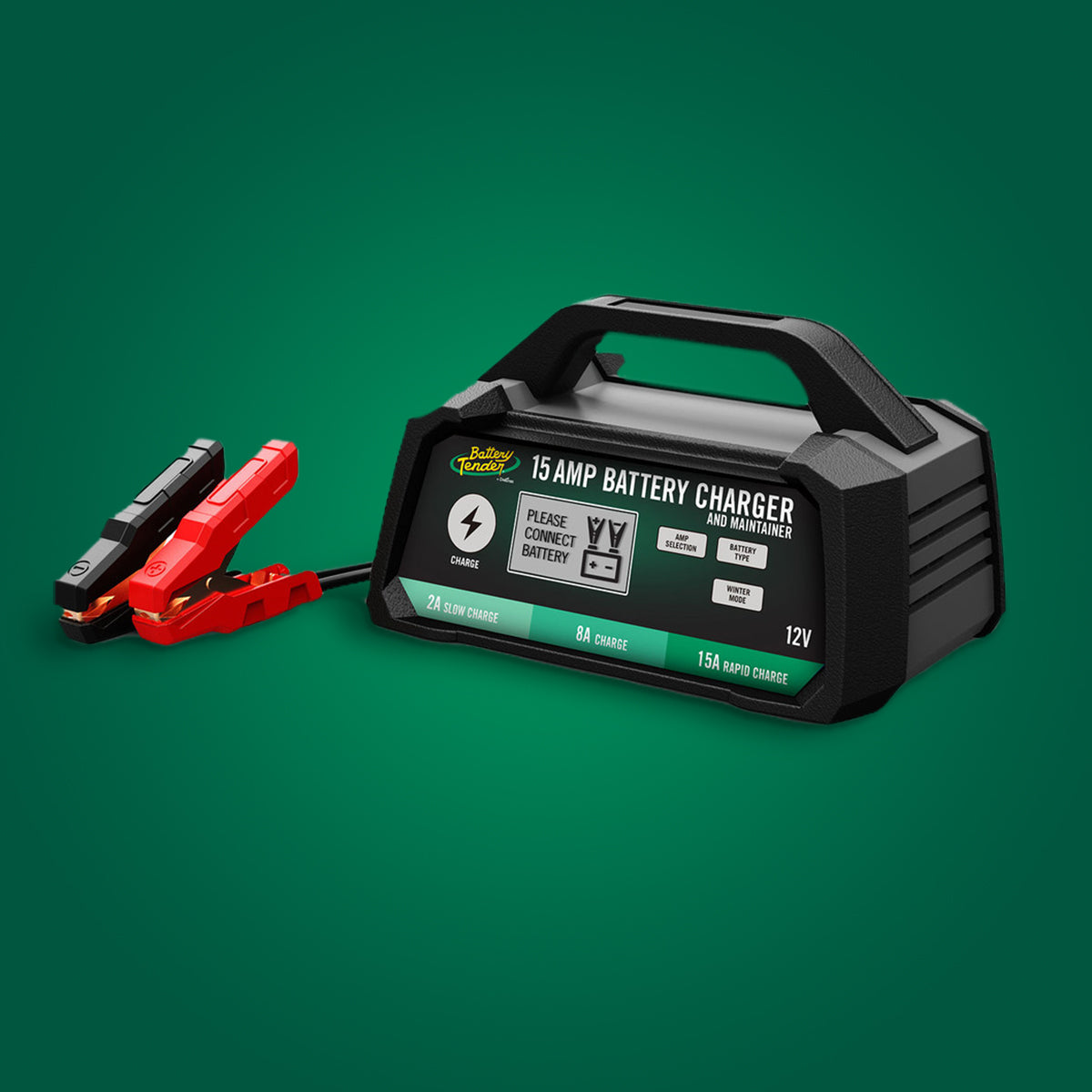
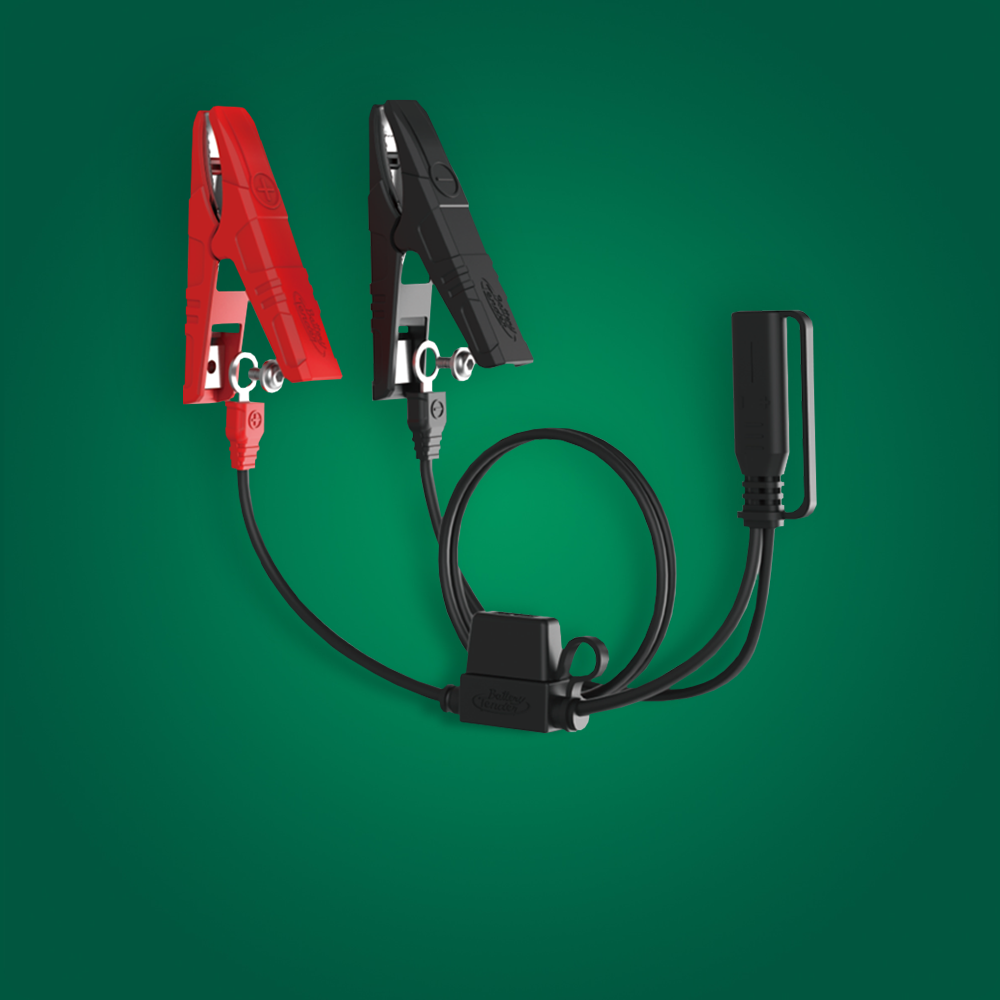
The Battery Tender Plus 1.25A 12V charger provides Infinite Sequential Monitoring (ISM) technology — a proprietary 4-stage process (Initialization, Bulk, Absorption, and Maintenance) that safely maintains 12V auxiliary batteries indefinitely. ISM technology delivers charge pulses only when voltage drops below the maintenance threshold, preventing overcharging and extending battery life. This charger handles standard lead-acid, AGM, and GEL 12V batteries found in most EVs. For EVs with lithium 12V auxiliary batteries (common in newer Tesla and Hyundai models), the Battery Tender Junior 1A Selectable offers a lithium-compatible charging mode.
Battery Tender Plus 1.25A 12V Charger
Frequently Asked Questions
Can I combine a utility rebate with the federal EV charger tax credit?
Yes. Utility rebates and the federal 30C tax credit are separate incentives that stack. The utility rebate reduces out-of-pocket cost, while the 30C credit reduces federal tax liability by 30% of equipment and installation costs (up to $1,000 for residential installations). Most state incentives also stack with both, creating potential three-layer savings.
Do Level 1 EV chargers qualify for utility rebates?
Most utility rebate programs require Level 2 (240V) equipment. Level 1 chargers typically do not qualify for utility rebates because they use existing 120V outlets and do not require installation. However, Level 1 equipment may still qualify for the federal 30C tax credit if installed in an eligible census tract, since the IRS does not distinguish between Level 1 and Level 2 EVSE.
How long does it take to receive an EV charger rebate from a utility?
Processing times range from 4 to 12 weeks after submitting a complete application. Delays occur most often due to missing documentation — particularly electrician invoices, permit records, or proof of purchase. Check with the utility to confirm whether pre-approval is required before purchasing, as applying after installation without pre-approval disqualifies applicants in some programs.
What happens to my EV charger rebate if I move?
Utility rebates are generally tied to the account holder and service address at the time of application. If a homeowner moves after receiving a rebate, the installed charger stays with the property. Most utilities do not require repayment, though some programs include a 2- to 3-year clawback clause. Review the program terms before applying, especially if a move is anticipated within the next few years.
Conclusion
An EV charger rebate from a utility company represents one of the simplest and most underutilized ways to reduce the cost of home EV charging in 2026. When combined with the federal 30C tax credit and state incentives, most homeowners can recover 40% to 60% of their total charger and installation investment. The key steps are straightforward: verify the utility program requirements, select qualifying Level 2 equipment, hire a licensed electrician, and submit complete documentation promptly.
Battery Tender eCharge Level 2 chargers deliver the power, weather resistance, and certification standards that most EV charger rebate utility programs require. From the 48A wall-mount unit for maximum charging speed to the portable 32A dual-voltage charger for flexible installations, the Battery Tender EV lineup provides a solution for every home charging scenario. Explore the full range of EV charging products at Battery Tender EV Chargers.
Related guides: Electric Vehicle Charging Station Installation Guide: Home Level 2 Complete · EV Home Charging Setup: Everything First-Time EV Owners Need to Know · More EV charging guides