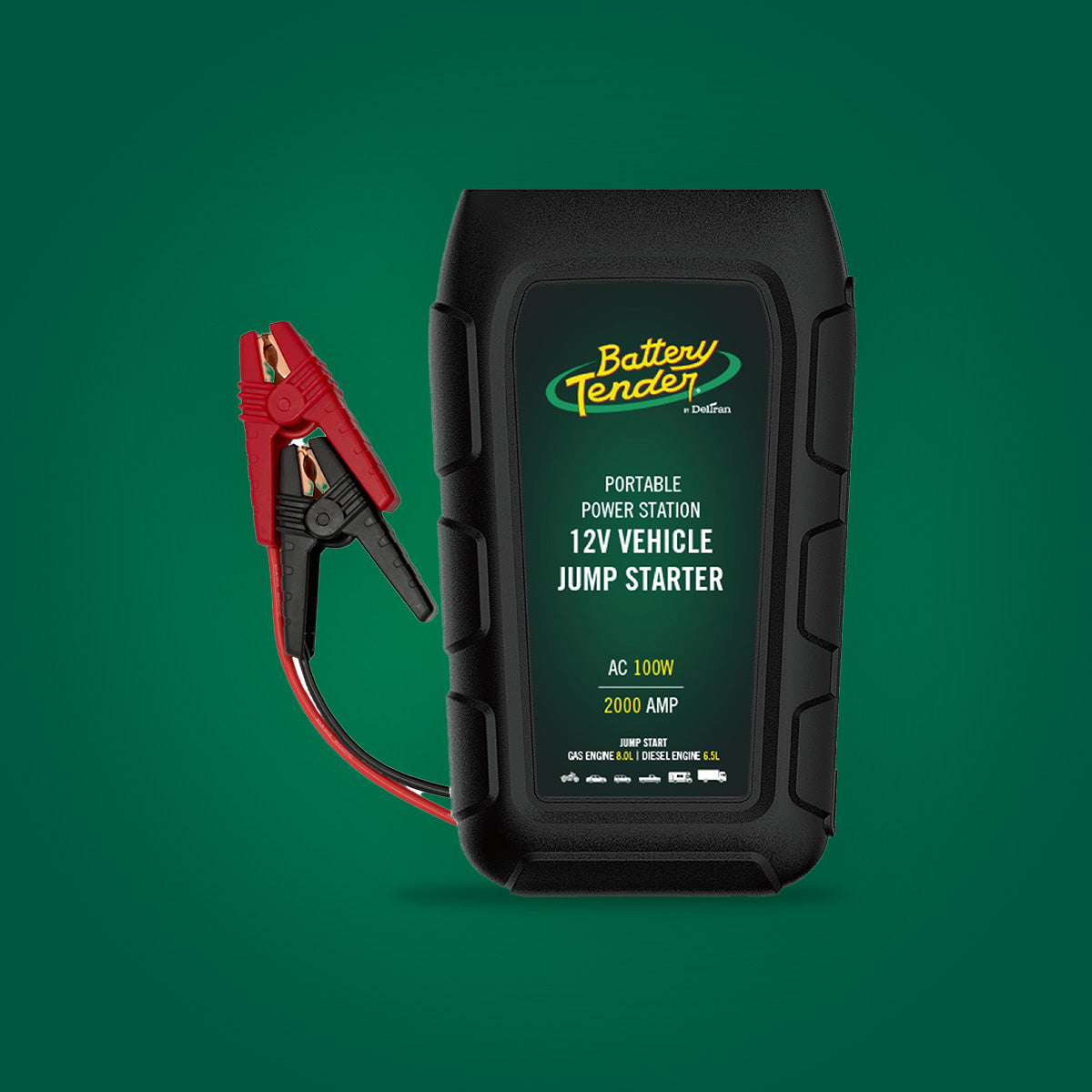
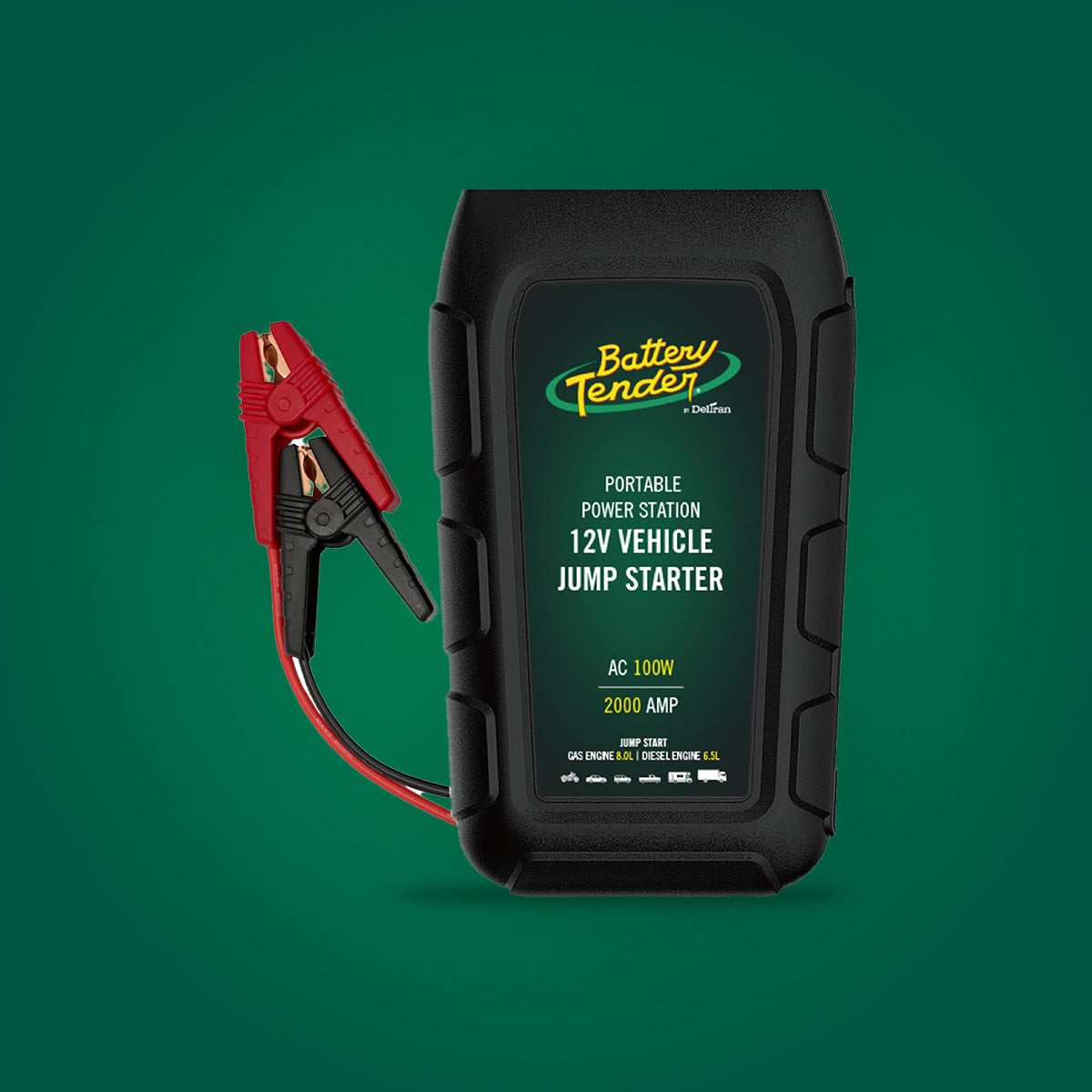
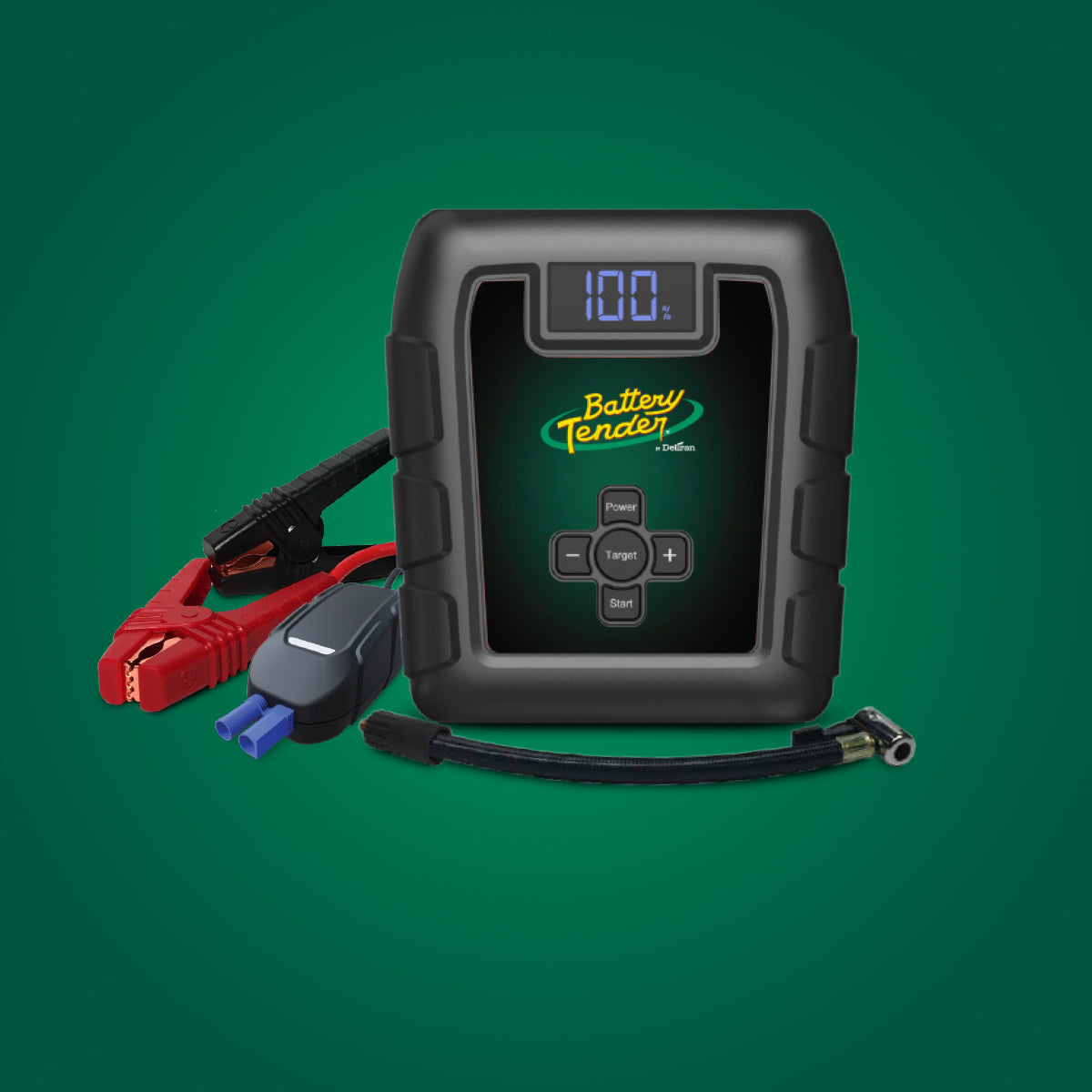
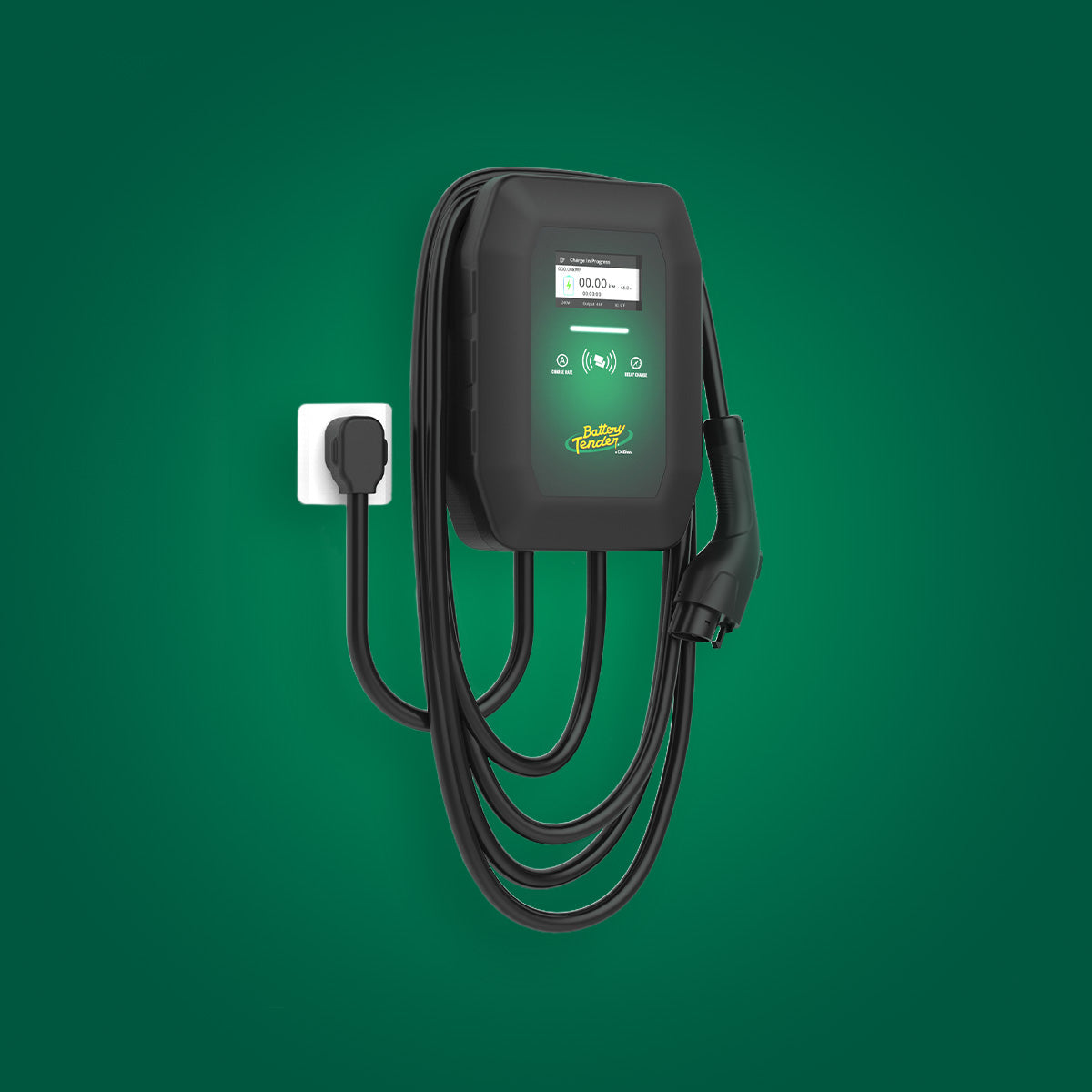

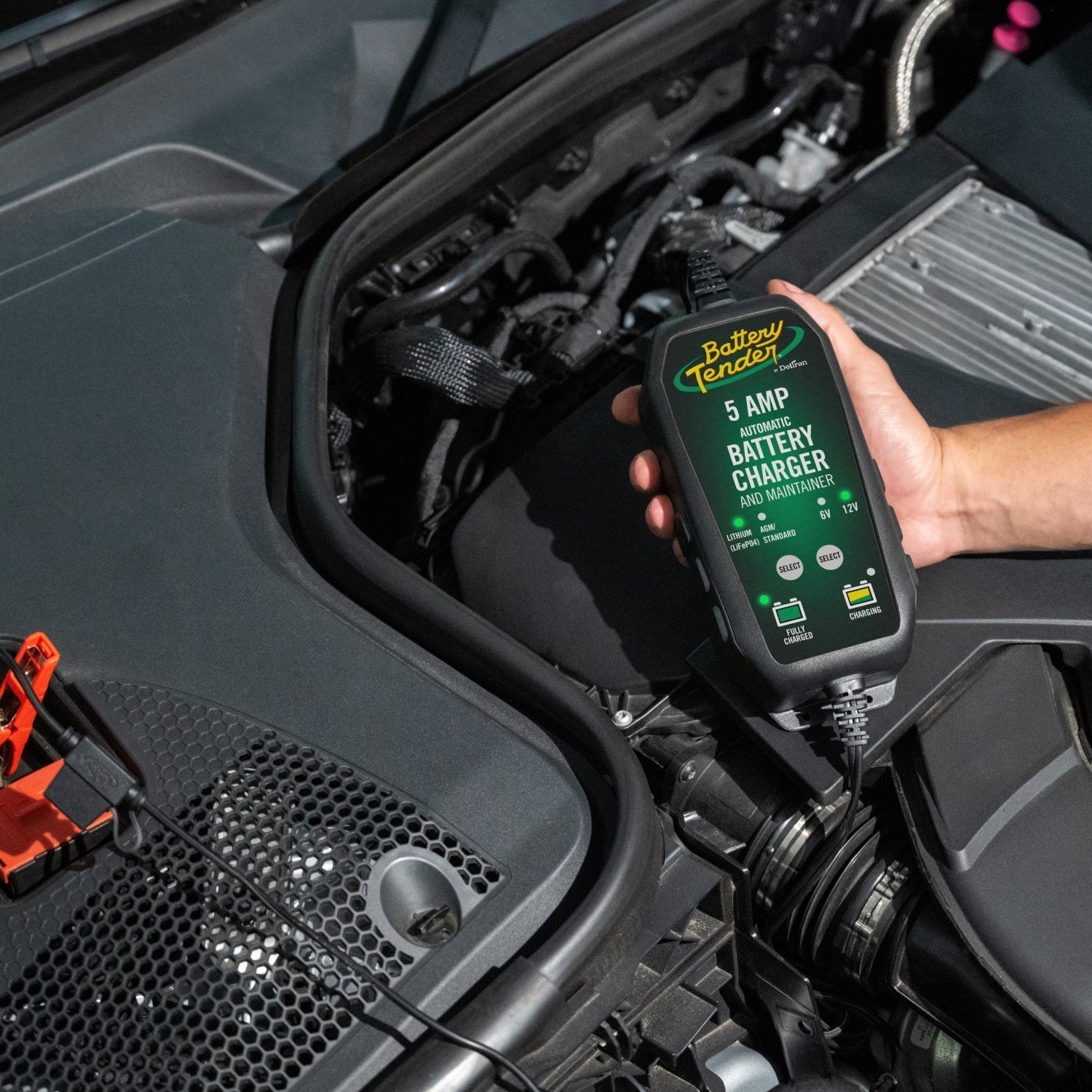
Le choix du bon ampérage pour le chargeur de batterie détermine la vitesse de charge, l'efficacité et la longévité de la batterie. Un ampérage trop faible entraîne des temps de charge d'une longueur irréaliste. Contrairement à la croyance populaire, un ampérage trop élevé n'endommage pas les batteries – les chargeurs intelligents s'autorégulent. Battery Tender® propose des solutions allant de 750mA à 40A pour chaque application.
Comprendre l'ampérage et le temps de charge
Relation de base
La capacité en ampères-heures (Ah) d'une batterie divisée par l'ampérage du chargeur est égale au temps de charge approximatif (heures) à partir d'un état entièrement déchargé.
Exemples
- Batterie de moto 20Ah + chargeur 1.25A = ~16 heures
- Batterie de voiture 70Ah + chargeur 5A = ~14 heures
- Batterie marine 100Ah + chargeur 10A = ~10 heures
Facteurs de réalité
- Les batteries se déchargent rarement complètement (démarrer à 50 % est plus courant)
- L'efficacité de la charge est d'environ 75 % (une partie de l'énergie est perdue sous forme de chaleur)
- La phase d'absorption ralentit la charge à mesure que la batterie approche de sa pleine capacité
Temps de charge pratiques (à partir d'un état de 50 %)
- Batterie 20Ah + 1.25A = 8-10 heures
- Batterie 70Ah + 5A = 5-7 heures
- Batterie 100Ah + 10A = 4-6 heures
Options d'ampérage Battery Tender®
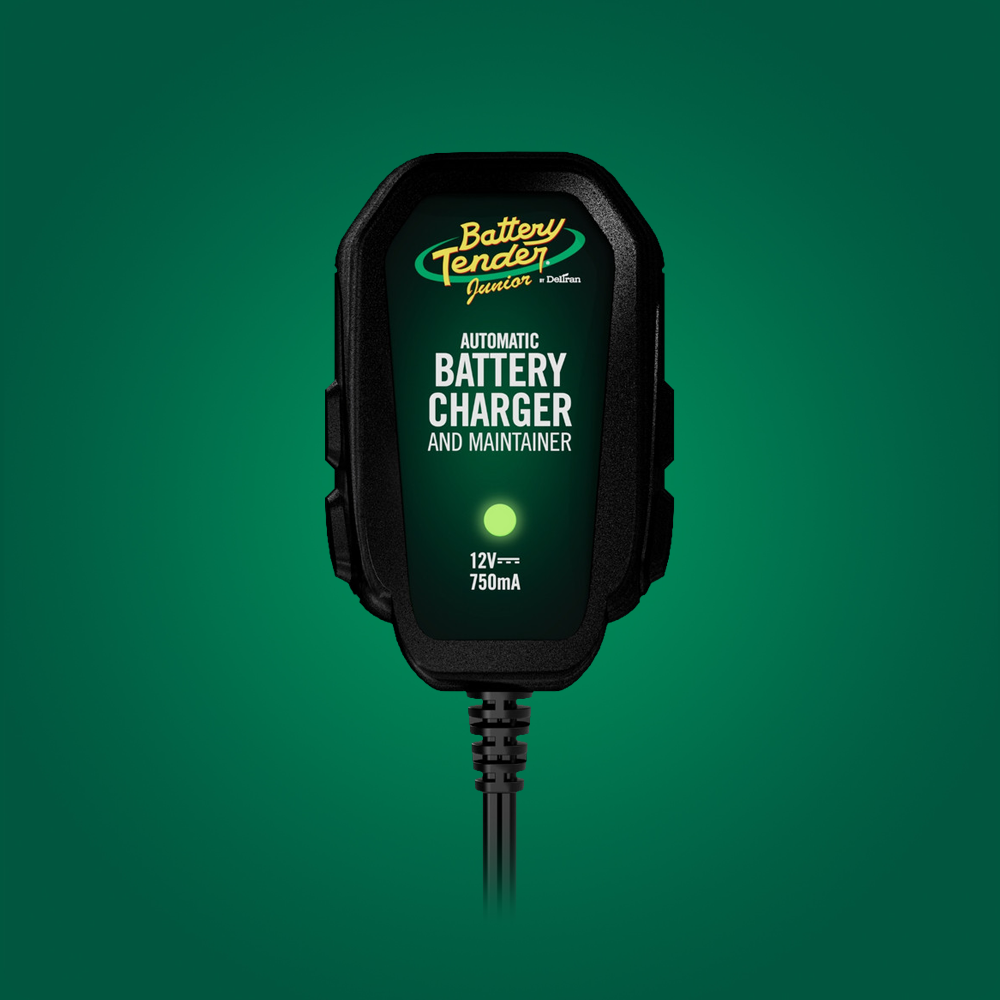
Chargeur et mainteneur de batterie Battery Tender Junior 750mA 12V
Idéal pour :
- Petits véhicules de sport motorisés : Parfait pour les motos, scooters et cyclomoteurs.
- Équipement saisonnier : Idéal pour les tondeuses à gazon et les souffleuses à neige.
- Batteries compactes : Optimisé pour les batteries de 4 à 12 Ah (VTT/UTV).
- Véhicules anciens : Sûr pour l'entretien des systèmes de batterie plus petits et plus anciens.
Temps de charge : Très lent (prévu pour une nuit ou plus).
Meilleure utilisation : Maintenance de batterie à long terme et stockage saisonnier.
Chargeur de batterie commutable 4 AMP Power Tender® 12V / 6V
Idéal pour :
- Véhicules du quotidien : Chargement fiable pour les voitures, SUV et camions légers.
- Jouets d'été : Excellent pour les motomarines et les motos tout-terrain.
- Utilisation polyvalente : Fonctionne avec les systèmes 6V vintage et 12V modernes.
- Batteries de moyenne gamme : Optimisé pour les capacités de batterie de 5 à 80 Ah.
Temps de charge : Rapide (2 à 8 heures pour atteindre une charge complète à partir de 50 %).
Meilleure utilisation : Stockage hivernal et maintenance de routine de la santé de la batterie.
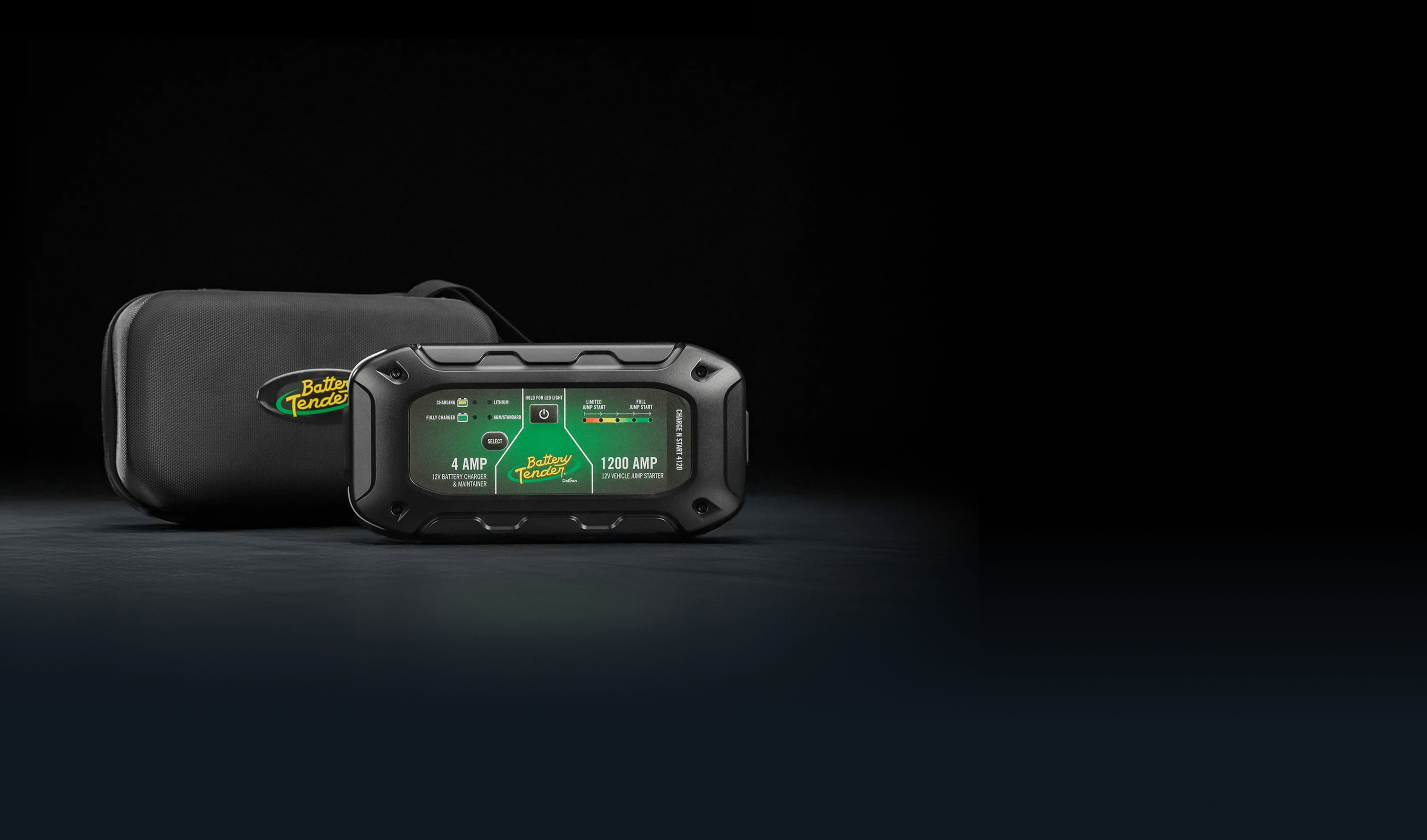
Charge N Start 4120 - Chargeur 4 AMP, Démarreur 1200 AMP
Idéal pour :
- Secours d'urgence : Un incontournable pour les voitures, camions et SUV.
- Marine et extérieur : Fiable pour les gros bateaux et les batteries de châssis de camping-car.
- Maintenance de routine : Maintient les véhicules utilisés chaque semaine à des performances optimales.
- Polyvalence de la batterie : Optimisé pour les tailles de batterie allant de 20 à 120 Ah.
Temps de charge : Rapide (2 à 8 heures à partir de 50 % de profondeur de décharge).
Meilleure utilisation : Récupération de batterie tout-en-un et entretien occasionnel du véhicule.
Quand choisir le 4120 :
- Tranquillité d'esprit : Vous voulez un chargeur qui peut également démarrer instantanément une batterie déchargée.
- Récupération profonde : Votre batterie descend régulièrement à 50 % et a besoin d'une recharge rapide et sûre.
- Plus grande capacité : Vous avez besoin de plus de puissance qu'un mainteneur standard pour les gros blocs moteur.
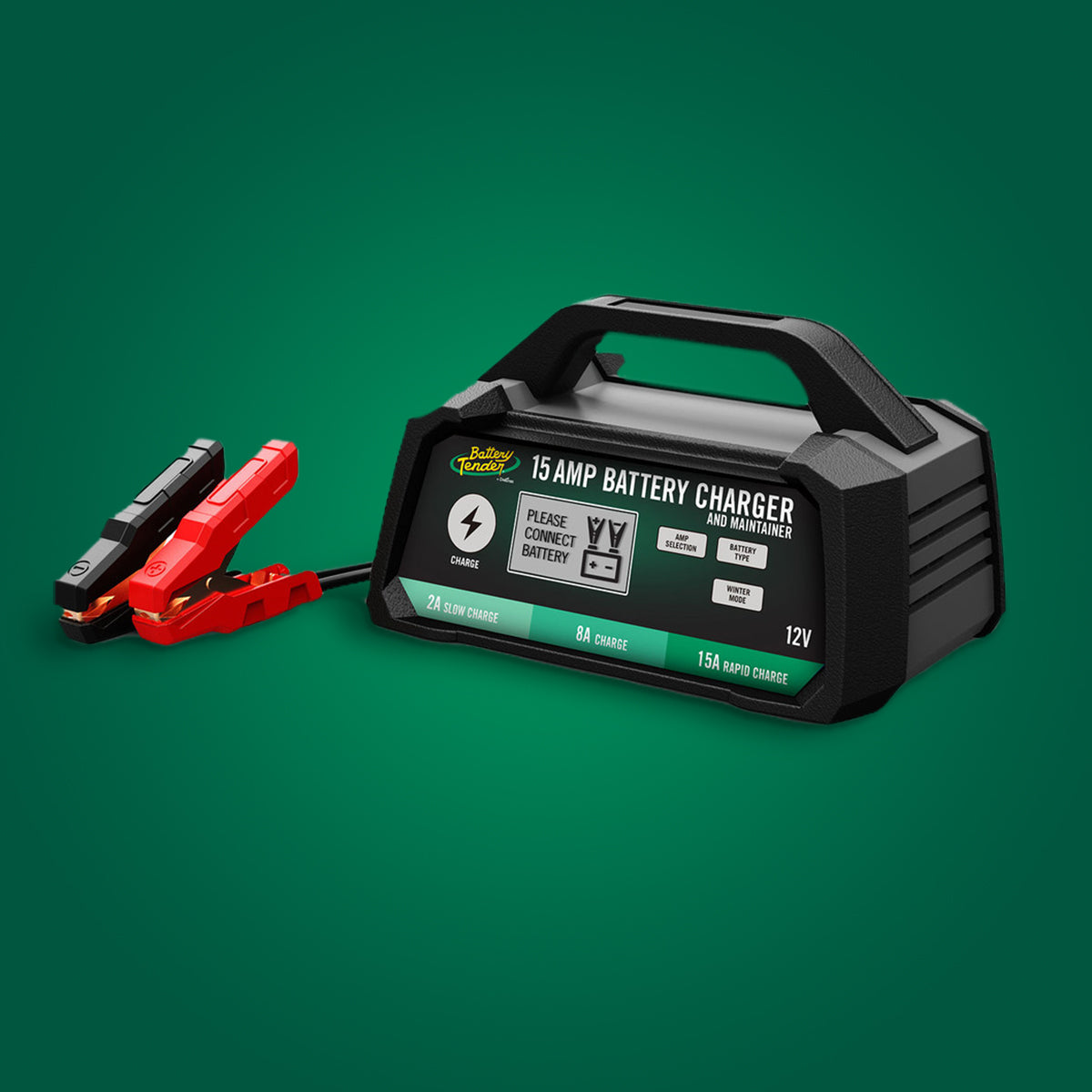
Chargeur multi-banques sélectionnable 10 banques
Idéal pour :
- Gestion de flotte : Recharge simultanée de jusqu'à 10 véhicules ou batteries.
- Ateliers professionnels : L'installation ultime pour les concessionnaires et les garages de réparation.
- Puissance élevée : Parfait pour les camions diesel et les grandes banques de batteries marines.
- Usage industriel : Optimisé pour les systèmes de batterie à grande échelle de 40 à 200+ Ah.
Temps de charge : Ultra-rapide (1 à 4 heures à partir de 50 % par banque).
Fonctionnalités avancées :
- Puissance personnalisable : Taux sélectionnables de 2A, 6A ou 10A par banque individuelle.
- Support multi-chimie : Profils dédiés pour Standard, AGM et Lithium (LiFePO4).
- Alimentation diagnostique : Maintient une tension stable de 13,6 V pour le flashage ECU et les diagnostics.
Quand choisir le 10 banques :
- Efficacité à haut volume : Vous avez besoin de maintenir une collection ou une flotte sans échanger de câbles.
- Flexibilité maximale : Vous travaillez quotidiennement avec une variété de tailles et de chimies de batteries.
- Délai d'exécution professionnel : Vous avez besoin du temps de récupération le plus rapide possible pour les batteries de grande capacité.
Recommandations spécifiques à l'application
Motos
- Standard/Cruiser : 1.25A
- Sport/Touring : 1.25A ou 5A
- Touring avec grande batterie : 5A
VTT/UTV
- Petit VTT (<500cc) : 1.25A
- UTV pleine grandeur : 5A
- Unités multiples : 10A sélectionnable
Automobile
- Voiture compacte : 3A-8A
- Berline/SUV : 5A-8A
- Camion pleine grandeur : 5A-10A
- Camion diesel : 10A
Marine
- Petit bateau (batterie unique) : 3A-10A
- Batteries multiples : 10A ou multi-banques
- Batterie de servitude (100+ Ah) : 10A
- Bateaux de tournoi : Système multi-banques
Camping-cars
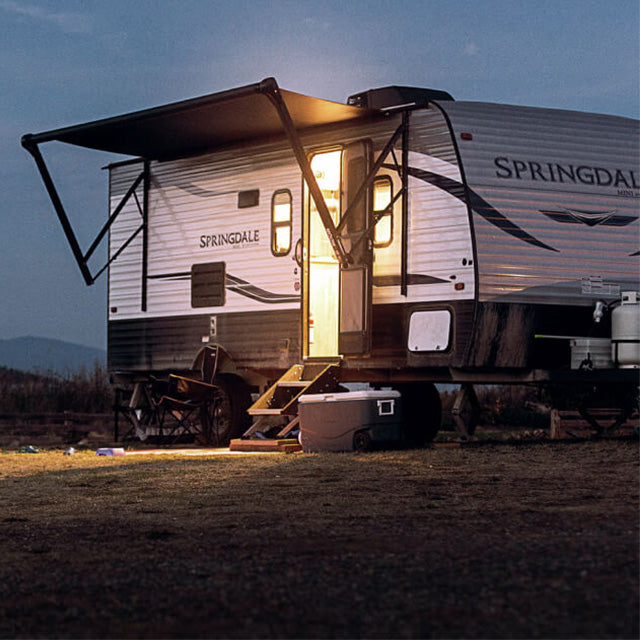
- Remorque de voyage (12V) : 5A
- Châssis de camping-car : 5A-10A
- Batterie de servitude : 10A ou multi-banques
- Plusieurs autocaravanes : Système multi-banques 5 stations
Chargeurs multi-banques ou simples
Quand choisir un chargeur multi-banques
- 3+ batteries nécessitant une charge simultanée
- Entretien de flotte
- Centres de service de concessionnaires
- Disponibilité limitée de prises
Chargeur de batterie sélectionnable 5 banques, 4 AMP 12V / 6V
- Cinq stations indépendantes de 4A
- Sélection de la chimie par batterie
- Une seule prise, une seule unité
- Économique pour plusieurs batteries
Quand choisir plusieurs chargeurs simples
- Batteries à différents emplacements
- Besoins en ampérage variables par batterie
- Flexibilité pour prêter/déplacer les chargeurs
- Redondance (si l'un tombe en panne, les autres continuent)
Erreurs courantes de sélection
Erreur n°1 : Choisir trop petit
Problème : Chargeur 1.25A sur une batterie de servitude de camping-car de 200Ah
Résultat : Temps de charge de plus de 40 heures, impraticable
Erreur n°2 : Supposer que plus grand est toujours mieux
Problème : Chargeur 10A quand 1.25A est suffisant
Résultat : Argent gaspillé (les deux fonctionnent de manière identique en mode flottant)
Erreur n°3 : Ne pas tenir compte des besoins futurs
Problème : Acheter un 1.25A, puis acheter un deuxième véhicule
Solution : Envisager un chargeur sélectionnable ou multi-banques pour la flexibilité
Erreur n°4 : Ignorer les exigences en matière de chimie
Problème : Utiliser le mode standard sur une batterie au lithium
Solution : Vérifier que le chargeur dispose des modes de chimie appropriés
Matrice de décision
Utilisation principale = Stockage à long terme :
→ 1.25A suffisant pour n'importe quelle taille de batterie
→ Tous les chargeurs intelligents maintiennent tout aussi bien
Utilisation principale = Recharge hebdomadaire :
→ Adapter l'ampérage du chargeur à la taille de la batterie
→ 5A pour la plupart des applications automobiles/marines
Utilisation principale = Professionnel/Véhicules multiples :
→ Système sélectionnable 10A ou multi-banques
→ Flexibilité maximale justifiée
Considérations budgétaires
- 1.25A Plus : ~65 $
- 5A Power Tender : ~125 $
- 10A sélectionnable : ~140 $
- Système 5 banques : ~300 $
Analyse de la valeur
Si vous avez besoin d'un ampérage plus élevé un jour, achetez-le maintenant. La différence de prix (de 65 $ à 140 $) est minime par rapport à l'achat deux fois.
FAQ
Q : Un chargeur 10A peut-il endommager une petite batterie de moto ?
R : Non. Les chargeurs intelligents régulent la sortie en fonction de la taille de la batterie et du taux d'acceptation. Un chargeur 10A ne forcera pas 10A dans une petite batterie.
Q : Comment connaître la capacité en ampères-heures de ma batterie ?
R : Vérifiez l'étiquette de la batterie, le manuel du propriétaire ou le site web du fabricant. Plages typiques : Moto 5-20Ah, Voiture 45-75Ah, Camion 65-100Ah, Marine 80-200Ah.
Q : Puis-je charger plusieurs batteries avec un seul chargeur en les alternant ?
R : Oui, mais c'est inefficace. Il est préférable d'utiliser un chargeur multi-banques ou plusieurs chargeurs simples pour une véritable charge simultanée.
Q : Un ampérage plus élevé signifie-t-il une recharge plus rapide en mode flottant ?
R : Oui, mais de manière minimale. Le mode flottant ne délivre que 0,1-0,5A quelle que soit la puissance nominale du chargeur. La différence se situe dans les phases de charge en vrac/absorption.
Conclusion
Choisir le bon ampérage équilibre le temps de charge, la flexibilité et le coût. Pour la plupart des propriétaires de véhicules, les unités Battery Tender Charge N Start répondent parfaitement à tous vos besoins d'entretien, tandis que le 5A Power Tender® convient aux besoins de recharge hebdomadaire.
Les utilisateurs professionnels et ceux qui ont de grandes batteries bénéficient d'ampérages plus élevés avec la sélectivité ou les multi-banques.
Battery Tender offre la gamme complète d'ampérages – des 750 mA pour les petites batteries aux modèles professionnels de 40 A – tous dotés de la même technologie de charge intelligente éprouvée lancée en 1989.
Parcourez notre collection complète de chargeurs pour trouver votre match parfait.