



Solar Charger Lawn Mower Guide: Panel Sizing & Setup (2026)
A solar charger lawn mower setup uses a small 12V solar panel with a built-in charge controller to hold a riding mower or lawn tractor battery at full charge without an electrical outlet. Connect the panel to the battery terminals, point it at the sun, and the controller keeps the battery topped up through storage. It maintains a healthy battery. It does not rescue a dead one.
Mower batteries usually die from neglect, not age. A 12V lead-acid starting battery of 18 to 35 Ah loses roughly 3 to 5 percent of its charge per month on its own, and key switches, clocks, and wiring draw more. Battery Tender® solar chargers solve this for sheds, barns, and back lots where no outlet exists. This guide covers sizing, product selection, hookup steps, and the limits of solar so the mower starts on the first turn of the key.
Key Takeaways
- A 12V riding mower battery (18 to 35 Ah) needs only a 5W to 17W panel for maintenance. A 35W panel adds margin for cloudy regions.
- A built-in charge controller prevents overcharging, so the panel can stay connected all season.
- Solar maintains charge. A deeply discharged battery should be recharged with an AC charger first.
- Panel placement matters more than panel size. Full sun at a tilt toward the south beats a larger panel in shade.
- Battery Tender solar chargers work with lead-acid, AGM, gel, and lithium 12V batteries.
How Does a Solar Charger Lawn Mower Setup Work?
A solar charger lawn mower system converts sunlight into low-amperage DC power, passes it through a charge controller, and delivers a regulated current to the mower battery. The controller is the key part. A raw panel pushes whatever voltage the sun produces, and an unregulated panel left on a small battery for weeks can overcharge and damage it.
The Battery Tender 17W and 35W solar chargers use 3-step charging with a built-in controller. They bring a depleted battery up, hold it at the proper voltage, and then drop to a maintenance level. That is the difference between a smart solar maintainer and a bare panel on a battery clamp.
Why mower batteries drain in storage
Self-discharge accounts for only part of the loss. Parasitic draw from the ignition switch, hour meter, or a seat-switch relay can pull 10 to 50 mA. At 25 mA, a mower consumes about 0.6 Ah per day, or 18 Ah over 30 days. That can drain most of a 24 Ah battery in a single month of storage.
Cold makes it worse. A battery at 32°F delivers far less cranking power than at 80°F, so a partially charged battery that starts a mower in July can fail in March.
Solar versus AC maintenance
If the mower sits in a garage with an outlet, an AC maintainer is simpler and independent of weather. Solar wins where no power exists: detached sheds, barns, pastures, hunting land, rental properties, and lake lots. Many owners use both, with solar through the season and an AC charger for the spring reset.
What Size Panel Does a Lawn Mower Battery Need?
Most riding mowers need a 5W to 17W panel for maintenance, and 35W only when the battery is larger, the climate is cloudy, or parasitic draw is high. Size to cover daily losses with margin, not to recharge a dead battery quickly.
Use this formula: (battery Ah × depth of discharge) ÷ panel amps = hours of full sun needed. A 17W panel at roughly 17 to 18V delivers about 1A at peak. For a 24 Ah battery down 25 percent, that is (24 × 0.25) ÷ 1A = 6 hours of peak sun, about two days in summer. In winter, with fewer sun hours and a low sun angle, it can take a week.
| Mower / Battery | Typical Battery (12V) | Recommended Solar Option | Notes |
|---|---|---|---|
| Electric-start push mower | 9 to 12 Ah | 5W to 17W panel | A 17W panel recovers quickly and handles parasitic draw. |
| Lawn tractor / riding mower | 18 to 24 Ah | 17W panel | Best balance for seasonal storage. |
| Zero-turn mower | 28 to 35 Ah | 17W panel; 35W for cloudy climates | Larger battery, longer recovery after use. |
| Garden tractor or dual-battery rig | 40 to 55 Ah total | 35W panel | Extra output covers higher self-discharge. |
Which Solar Charger Lawn Mower Option Fits Your Situation?
Choose the panel by battery size and sun exposure, and keep an AC option for locations with an outlet. These three Battery Tender models cover the common mower scenarios.
Best for most riding mowers: 17 watt panel
For a typical 18 to 35 Ah lawn tractor or zero-turn battery, the Battery Tender 17 Watt Mountable Solar 12V Battery Charger with Solar Controller delivers about 1A at peak. That is enough to offset parasitic draw and self-discharge, and the built-in controller prevents overcharging. The panel is waterproof and mountable on a shed wall, fence post, or the mower itself, and it works with lead-acid, AGM, gel, and lithium batteries.
Battery Tender 17 Watt Mountable Solar 12V Battery Charger with Solar Controller
Best for big batteries or cloudy regions: 35 watt panel
A larger battery, two batteries wired in parallel, or a site with weak winter sun calls for more power. The Battery Tender 35 Watt Mountable Solar 12V Battery Charger with Solar Controller produces roughly twice the current of the 17W model. It restores charge faster after a heavy mowing season and keeps up through short, overcast winter days.
Battery Tender 35 Watt Mountable Solar 12V Battery Charger with Solar Controller
Best when an outlet is available: Weather Resistant 800mA
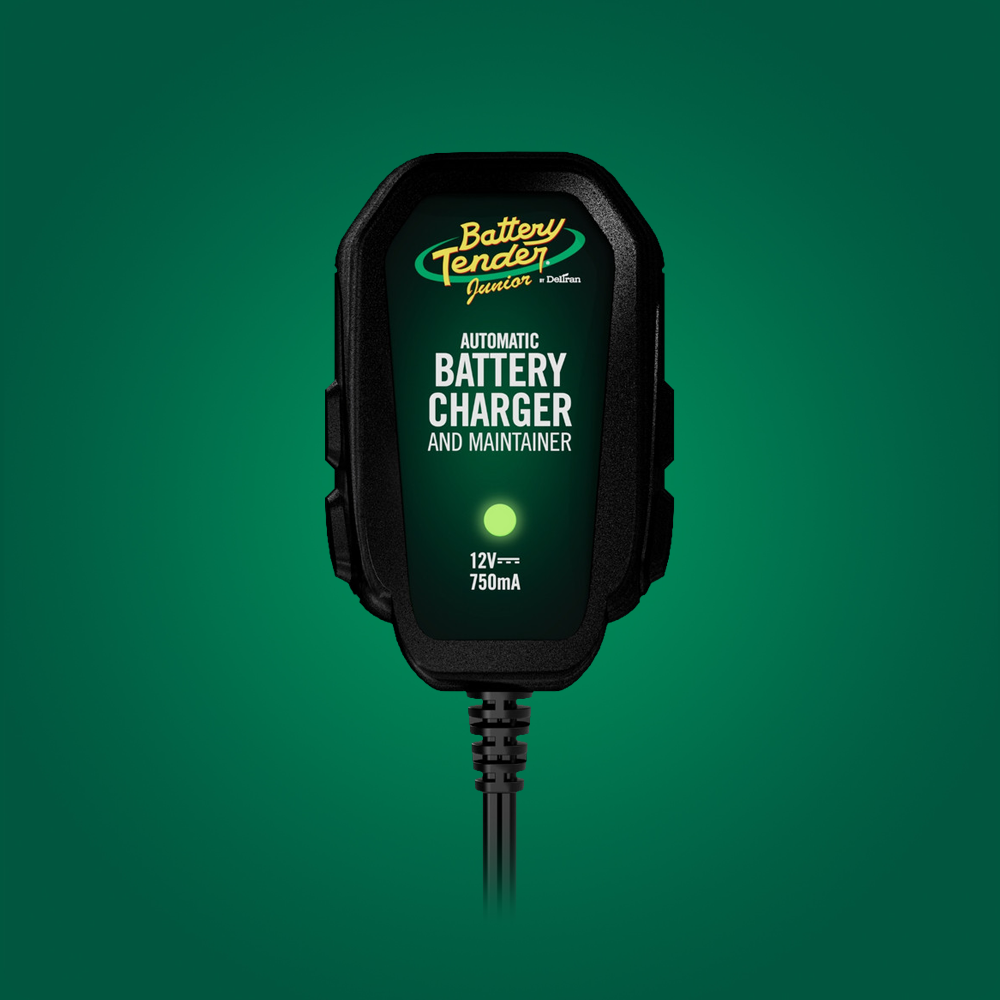
If the mower sits in a garage, carport, or outbuilding with power, the Battery Tender Weather Resistant 12V 800mA Battery Charger and Maintainer is a reliable backup to solar. It uses Infinite Sequential Monitoring (ISM), a 4-stage automatic process: initialization, bulk charge, absorption, and float maintenance. That makes it safe to leave connected for months. Its weather-resistant construction suits damp sheds and unheated spaces.
Battery Tender Weather Resistant 12V 800mA Battery Charger and Maintainer
How Do You Connect a Solar Charger to a Lawn Mower Battery?
Connecting a solar charger lawn mower kit takes about 15 minutes: clean the terminals, attach the leads, mount the panel in full sun, and confirm the controller indicator. Follow these steps in order.
- Turn the mower off and remove the key. Set the parking brake and let the engine cool.
- Inspect and clean the battery. Remove corrosion with a baking soda and water solution and a wire brush. Look for cracks or swelling. Replace a damaged battery rather than charge it.
- Check voltage. A healthy 12V lead-acid battery reads 12.6V or higher at rest. Below about 12.0V, recharge it first with an AC charger.
- Attach the leads. Connect the positive (red) lead to the positive terminal first, then the negative (black) lead to the negative terminal or a clean chassis ground away from the battery.
- Mount the panel. Place it in direct sun, angled toward the south in the Northern Hemisphere. Route the cable so it cannot touch the blades, belts, or hot engine parts.
- Confirm charging. Check the indicator at midday and re-check the battery voltage after 24 hours.
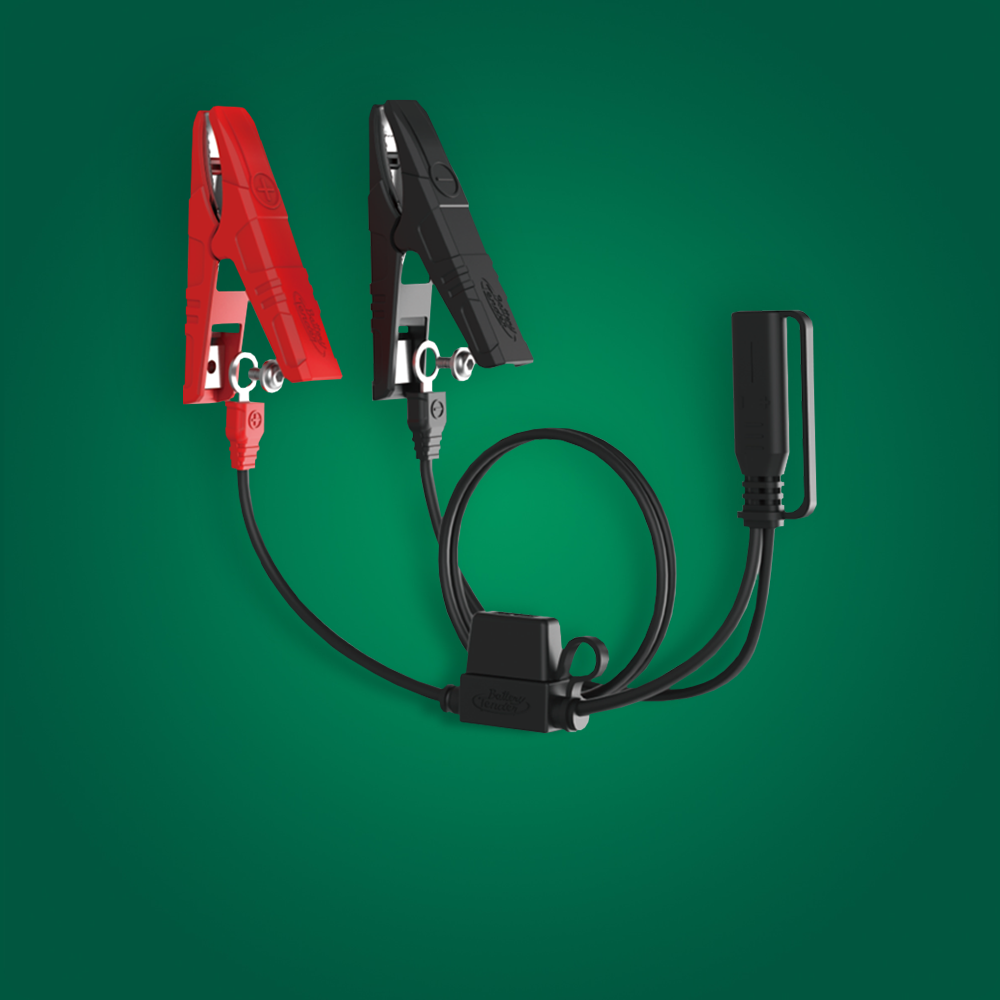
For a permanent installation, the Battery Tender Alligator Clip and Ring Terminal Combo is a practical accessory. The ring terminals bolt under the battery terminal hardware for a secure, vibration-proof connection, and the clips allow temporary hookups to a second mower or utility vehicle. This is useful for owners who maintain more than one battery with a single panel.
Battery Tender Alligator Clip and Ring Terminal Combo
Panel placement and seasonal tips
- Outdoors beats indoors. A panel behind window glass loses a significant share of its output, and a dirty window loses more.
- Tilt in winter. A steeper angle captures the low winter sun better than a flat mount.
- Keep it clear. Brush off snow, leaves, and dust. Even partial shading cuts output sharply.
- Protect the wiring. Use a grommet where the cable enters a shed or enclosure.
For other solar applications, see the portable solar battery charger guide and the walkthrough on solar charging for boats.
What Are the Limits of Solar Lawn Mower Battery Charging?
Solar maintenance has real limits: it is slow, it depends on weather, and it cannot revive a deeply discharged or sulfated battery. A 17W panel delivers about 1A at best, so recovering a battery at 50 percent charge can take several sunny days. A battery below roughly 10.5V is usually damaged, and a panel will not bring it back.
Shade, snow cover, and short winter days reduce output further. For the best result, charge the battery fully with an AC charger before storage, then let the panel maintain it. Wear eye protection when working near lead-acid batteries and keep sparks away, since flooded batteries can release hydrogen gas. If the mower uses a lithium battery, confirm that the pack's built-in battery management system accepts external charging at 12V.
Frequently Asked Questions
Can a solar charger keep a lawn mower battery charged all winter?
Yes, in most climates. A 17W panel in direct sun produces about 1A at peak, or several amp-hours on a clear day, well above the roughly 0.6 Ah per day a typical mower loses to parasitic draw. In snowy or heavily overcast regions, step up to a 35W panel, keep it clear of snow, and start with a fully charged battery.
Does a solar charger lawn mower setup work through a garage or shed window?
It works, but at reduced output. Glass blocks part of the sunlight, and dirt or tint reduces it further. For reliable results, mount the panel outdoors on the shed wall or roof and run the cable inside through a grommet. A 35W panel offsets losses if indoor placement is unavoidable.
Will a solar panel overcharge my mower battery?
Not if the panel has a built-in charge controller. The Battery Tender 17W and 35W solar chargers use 3-step charging with a controller that regulates voltage and drops to a maintenance level. Avoid connecting a raw panel without a controller, since unregulated voltage can overcharge a small mower battery.
Can a solar charger revive a dead lawn mower battery?
Generally no. Solar maintainers hold a healthy battery at full charge. They are too low in current to recover a battery that has sat deeply discharged, and sulfation may have already caused permanent damage. Recharge a low battery with an AC charger first, then use solar to maintain it.
Conclusion
A solar charger lawn mower setup is a simple, outlet-free way to prevent the dead-battery surprise at the start of mowing season. Match the panel to the battery: a 17W panel for most riding mowers, a 35W panel for larger batteries or low-sun locations, and an AC maintainer where power is available. Mount it in full sun, use a controller, and start with a fully charged battery.
Next step: check your mower battery's voltage today, then pick a panel from the Battery Tender solar battery chargers collection and install it before the mower goes into storage.