

Batteries de moto lithium vs. plomb-acide : Comparaison complète
Dans n'importe quel magasin de motos aujourd'hui, vous trouverez des batteries au lithium à côté des unités plomb-acide traditionnelles qui ont alimenté les motos pendant des générations. La technologie Lithium Fer Phosphate (LiFePO4) promet des économies de poids significatives, une durée de vie plus longue et des performances impressionnantes — mais aussi un prix initial plus élevé et quelques mises en garde importantes que chaque motard devrait comprendre avant de prendre une décision. Battery Tender® a fourni des technologies de charge pour les deux types de batteries sur tous les segments du marché des sports motorisés, et nous sommes dans une position unique pour offrir aux motards une comparaison véritablement objective.
Ce guide couvre tout ce que vous devez savoir : chimie, performance, comportement par temps froid, exigences de charge, coût total de possession, et quel type convient le mieux à chaque style de conduite.
Comprendre la technologie
Plomb-acide : La norme éprouvée
Les batteries plomb-acide alimentent les motos depuis le début du 20e siècle. La technologie est mature, parfaitement comprise et bien servie par un écosystème massif de chargeurs, testeurs et connaissances techniques. Les variantes les plus courantes dans les sports motorisés aujourd'hui sont :
- Conventionnelles inondées : La conception classique avec électrolyte liquide — nécessite un entretien, dégage de l'hydrogène gazeux pendant la charge
- AGM (Absorbed Glass Mat) : L'électrolyte est absorbé dans des nattes en fibre de verre — scellée, sans entretien, résistante aux vibrations, sans dégagement gazeux
- Gel : L'électrolyte est suspendu dans du gel de silice — scellée, sans entretien, fonctionne bien dans les températures extrêmes
L'AGM a largement supplanté les batteries inondées conventionnelles dans les motos modernes en raison de sa construction scellée et de sa résistance aux vibrations. La plupart des nouvelles motos sont équipées en usine de batteries AGM.
Lithium Fer Phosphate (LiFePO4) : L'alternative moderne
Le LiFePO4 est la chimie spécifique au lithium utilisée dans les batteries de démarrage de moto — à ne pas confondre avec d'autres variantes de lithium utilisées dans les batteries de traction des véhicules électriques ou l'électronique grand public. Le LiFePO4 offre une chimie lithium stable et sûre, spécifiquement adaptée aux décharges profondes et aux exigences de courant élevé des batteries de démarrage de moto. Il est ininflammable dans des conditions normales et ne présente pas l'emballement thermique qui a rendu les chimies lithium antérieures problématiques dans les applications automobiles.
Poids : L'avantage le plus évident
C'est là que les batteries au lithium font leur impression la plus spectaculaire. Une batterie au lithium pesant 0,7 à 0,9 kg remplace une unité plomb-acide pesant 3,6 à 5,4 kg — une économie de poids de 2,7 à 4,5 kg sur un seul composant. Pour une moto sportive ou une moto d'aventure légère où chaque kilo compte, cette réduction est tangible et significative. Pour une grosse moto de tourisme qui pèse déjà plus de 360 kg, la même réduction de poids est moins impactante mais toujours mesurable en termes de sensations de conduite.
| Spécification de la batterie | Plomb-acide AGM |
|---|---|
| Poids typique (12V standard) | 3,6–6,4 kg |
| Densité énergétique | 30–50 Wh/kg |
| Taux d'autodécharge | 3–5 % par mois |
| Durée de vie typique en cycles | 200–400 cycles |
| Durée de vie typique | 2–4 ans (entretenue) |
| Coût initial | 40–150 $ |
| Performance de démarrage à froid | Bonne à excellente |
Durée de vie et coût total de possession
Le prix initial plus élevé d'une batterie au lithium est très différent lorsqu'il est amorti sur sa durée de vie. Une batterie AGM au plomb-acide de qualité pour une moto typique coûte entre 60 et 100 $ et dure de 2 à 4 ans avec un entretien. Une batterie au lithium de remplacement coûte entre 100 et 200 $ mais dure de 4 à 8 ans dans des conditions comparables. Sur la base du coût par an, les deux technologies sont à peu près comparables. L'avantage du lithium réside dans le coût des pannes de remplacement — une batterie au plomb-acide qui n'est pas correctement entretenue peut tomber en panne en moins de deux ans, tandis que le taux d'autodécharge beaucoup plus faible d'une batterie au lithium la rend plus tolérante aux habitudes d'entretien imparfaites.
Performance par temps froid : L'avantage du plomb-acide
C'est la mise en garde la plus importante concernant les batteries de moto au lithium, et celle qui est souvent sous-estimée dans les forums d'enthousiastes. Les batteries LiFePO4 perdent rapidement leur puissance de démarrage à mesure que la température baisse. En dessous de 0°C (32°F), les ampères de démarrage disponibles d'une batterie au lithium peuvent chuter à 50-70 % de sa capacité nominale. En dessous de -18°C (0°F), certaines batteries au lithium perdent 80 % de leur capacité de démarrage — une batterie évaluée à 200 CCA pourrait ne fournir que 40 CCA, ce qui peut ne pas démarrer un moteur froid.
Les batteries au plomb-acide sont également affectées par le froid, mais elles se dégradent plus progressivement et conservent généralement plus de puissance de démarrage à des températures extrêmement basses que les unités au lithium équivalentes. Cela fait du plomb-acide le choix le plus sûr pour :
- Les motards des États du nord ou du Canada qui roulent régulièrement à des températures inférieures à -7°C
- Les opérateurs de motoneiges qui utilisent le moteur par froid extrême
- Les motards qui stockent les motos dans des espaces non chauffés et les démarrent régulièrement à froid
De nombreux fabricants de batteries au lithium incluent une procédure de "réveil" pour le démarrage à froid : engager brièvement le démarreur sans démarrer permet au système de gestion de la batterie de réchauffer les cellules avant de fournir le courant de démarrage. Cette procédure fonctionne mais ajoute une étape que les batteries au plomb-acide ne nécessitent pas.
Réchauffer une batterie au lithium pour les démarrages à froid
Si vous possédez une batterie au lithium et que vous démarrez régulièrement la moto par temps froid :
- Allumez le phare ou la clé pendant 30 à 60 secondes avant de démarrer pour créer une petite charge qui réchauffe les cellules
- Si la batterie au lithium est équipée d'un mode de réveil intégré, activez-le selon les instructions du fabricant
- Si la batterie est extrêmement froide (en dessous de -18°C), envisagez de stocker la moto dans un espace chauffé ou de réchauffer la batterie séparément avant de tenter de démarrer
Exigences de charge : C'est critique
Les batteries plomb-acide et lithium ont des exigences de tension de charge différentes, et l'utilisation d'un mauvais chargeur peut endommager l'un ou l'autre type. C'est peut-être la différence la plus importante en pratique pour les motards quotidiens.
Profil de charge plomb-acide
Les batteries plomb-acide conventionnelles et AGM se chargent à environ 14,4-14,8 V pendant l'absorption et se maintiennent à 13,2-13,8 V en mode flottant. Chaque chargeur Battery Tender pour batteries plomb-acide et AGM est conçu selon ce profil.
Profil de charge lithium
Les batteries LiFePO4 se chargent à une tension d'absorption inférieure (environ 14,4-14,6 V, similaire au plomb-acide) mais nécessitent une tension flottante différente (13,6 V ou moins) et ne peuvent absolument pas être chargées en maintien en utilisant un profil flottant plomb-acide sans risquer une surcharge et l'activation du BMS.
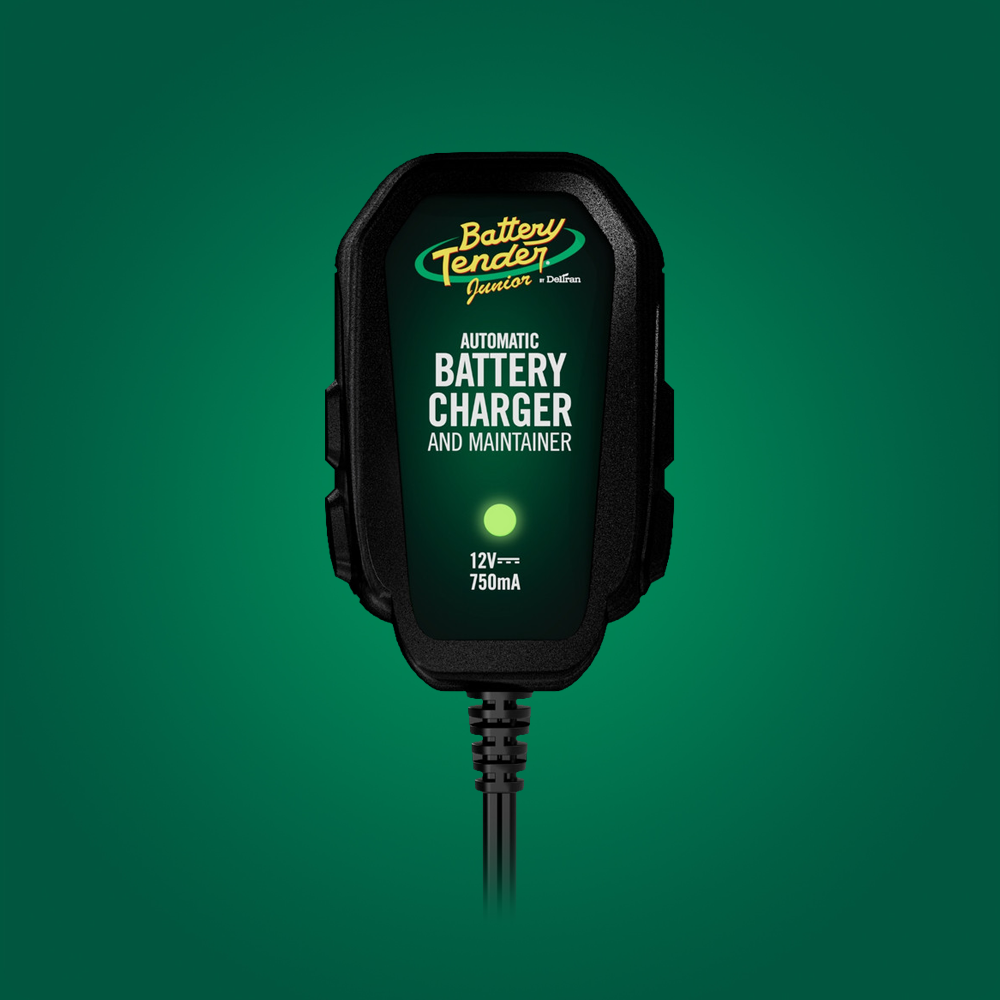
Les chargeurs à chimie sélectionnable Battery Tender gèrent les deux types de batteries avec précision. Le Junior 1 AMP 12V Selectable Chemistry Charger peut être configuré pour un fonctionnement plomb-acide ou lithium avec une simple sélection de mode, éliminant le besoin de chargeurs séparés lorsque votre flotte comprend les deux types de batteries.
Achetez le chargeur Battery Tender Junior 1 AMP 12V à chimie sélectionnable (UGS : 022-0199-DL-WH) — convient aux batteries de moto plomb-acide et lithium.
Le Battery Tender Plus 1.25 AMP 12V est également approprié pour les batteries de moto plomb-acide et AGM standard, offrant le cycle de charge ISM en 4 étapes optimisé pour l'entretien à long terme des motos stockées.
Achetez le Battery Tender Plus 1.25 AMP 12V (UGS : 021-0128).
Quel type de batterie convient à votre style de conduite ?
| Type de motard | Chimie recommandée | Raison |
|---|---|---|
| Motard sportif/journée piste | Lithium | La réduction de poids améliore directement le rapport puissance/poids |
| Touring/longue distance | Plomb-acide AGM | Fiabilité par temps froid, largement disponible pour le remplacement sur la route |
| Aventure/ADV | Les deux — lithium si le poids est une priorité | L'avantage de poids du lithium est bénéfique en tout-terrain ; le plomb-acide est plus disponible à distance |
| Cruiser/Harley | Plomb-acide AGM | Démarrages à froid, fiabilité, largement disponible, écosystème établi |
| Vintage/classique | Plomb-acide uniquement | Le profil de tension du lithium peut perturber les régulateurs plus anciens ; de nombreux systèmes vintage ne sont pas compatibles |
| Hiver/motoneige | Plomb-acide AGM | Performance de démarrage à froid, fiabilité de la température |
| Commuter (toute l'année) | Plomb-acide AGM | Fiabilité par tous les temps, coût de remplacement inférieur en cas de vol |
Que se passe-t-il pendant l'hivernage ?
Pour les motards qui stockent leurs motos pendant l'hiver, les deux types de batteries nécessitent un entretien approprié. Les batteries au plomb-acide s'autodéchargent de 3 à 5 % par mois et sulfateront et perdront de leur capacité si elles ne sont pas chargées pendant une longue période de stockage. Les batteries au lithium s'autodéchargent plus lentement, mais leur système de gestion de batterie (BMS) peut entrer en mode de protection si la tension descend en dessous d'un seuil, nécessitant un chargeur spécifique au lithium pour les récupérer.
Pour les deux types de batteries, connecter un mainteneur intelligent tout au long de l'hivernage est la bonne approche. Pour les batteries plomb-acide/AGM, le Battery Tender Plus ou Junior gère parfaitement l'hivernage. Pour les batteries au lithium, utilisez le chargeur à chimie sélectionnable réglé sur le mode lithium.
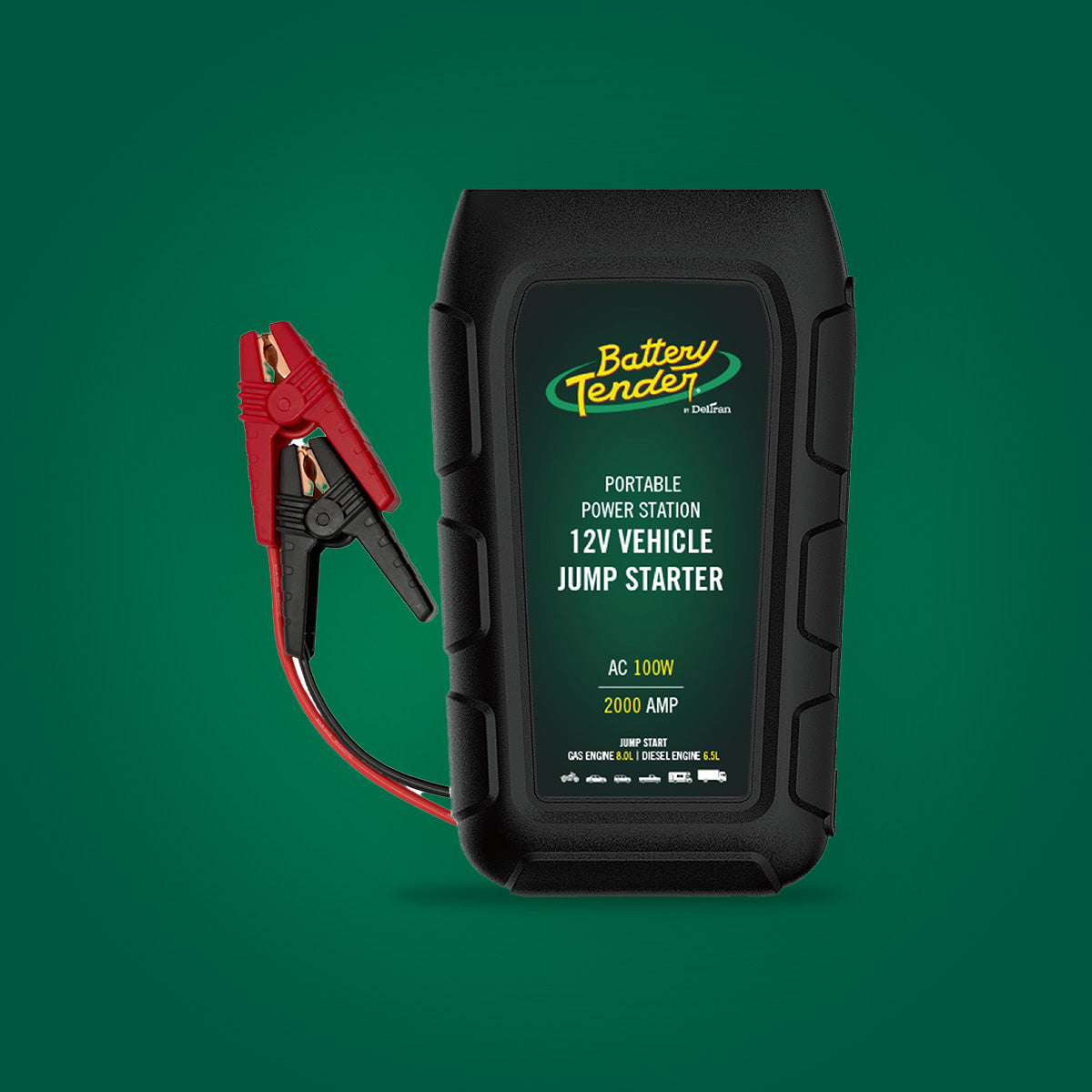
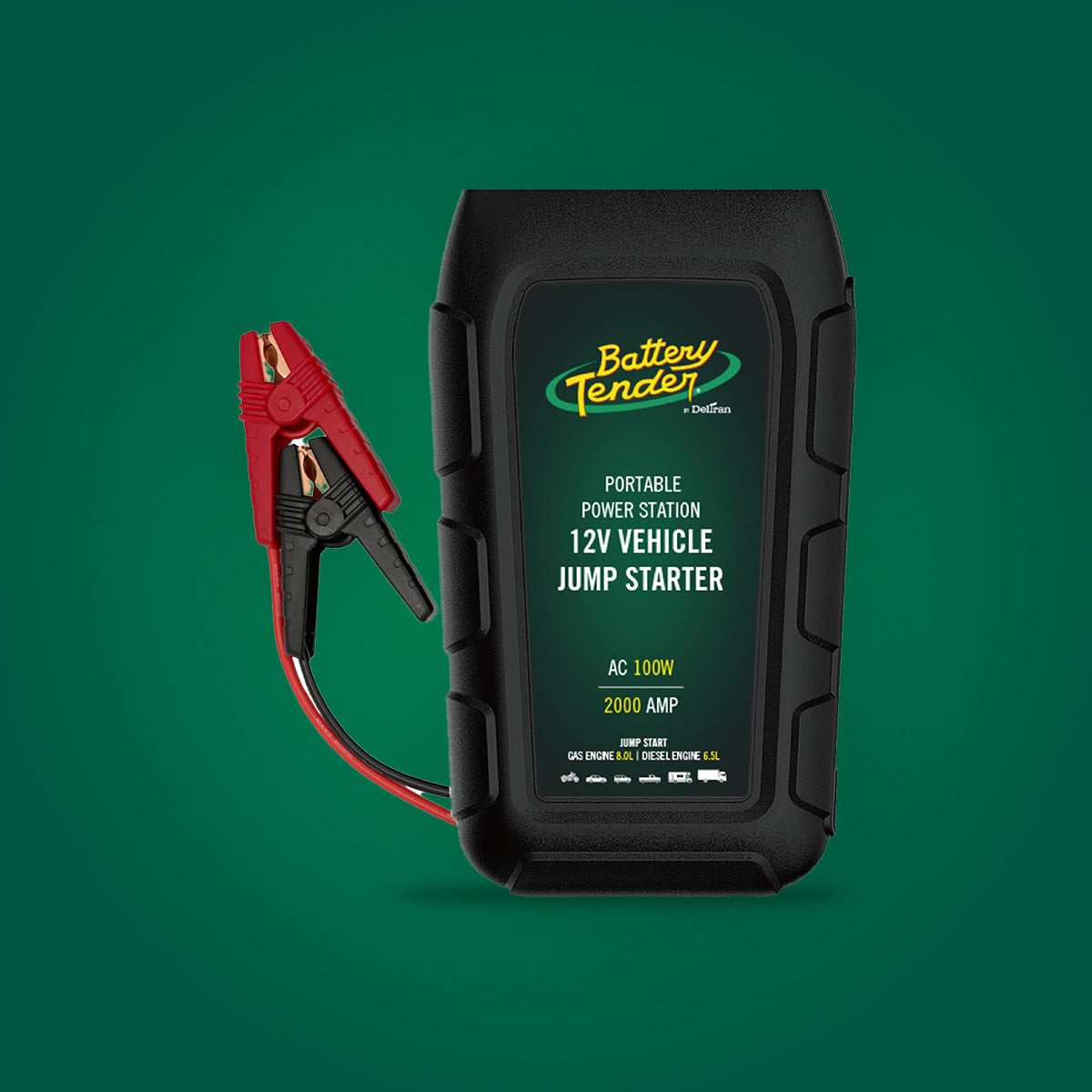
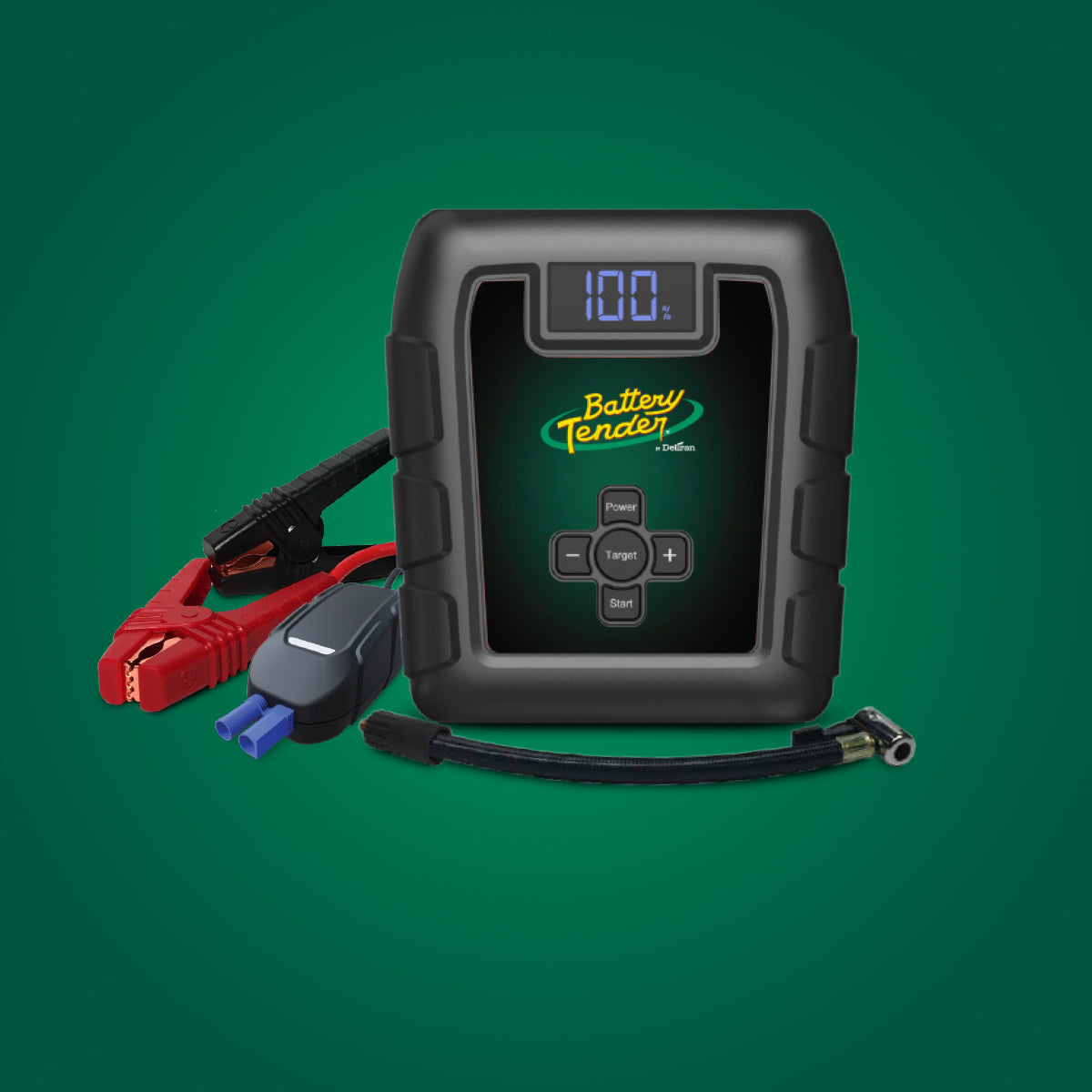
N'oubliez pas d'avoir un démarreur de secours sous la main avant la saison de stockage. Le Charge N Start 1100 avec son démarreur de secours de 1000 ampères et son chargeur intégré de 1 ampère est un compagnon idéal pour les sports motorisés — il couvre le démarrage d'urgence pour la moto et assure la charge d'entretien via le connecteur.
Découvrez le Charge N Start 1100 — chargeur 1 AMP + démarreur 1000 AMP (UGS : 030-7010-WH).
Questions fréquemment posées
Puis-je installer une batterie au lithium dans une moto plus ancienne ?
Cela dépend de l'année et du modèle. Les motos plus anciennes avec des systèmes de charge conventionnels qui n'utilisent pas de régulateur de tension avec une sortie adaptée au lithium peuvent surcharger une batterie au lithium. La plupart des motos des années 1990 et suivantes ont des systèmes de charge compatibles, mais vérifiez la liste de compatibilité du fabricant LiFePO4 pour votre modèle spécifique avant d'acheter.
Mon chargeur existant fonctionnera-t-il avec une batterie au lithium ?
Pas toujours. Les chargeurs plomb-acide standard peuvent surcharger les batteries au lithium ou ne pas les entretenir correctement. Un chargeur à chimie sélectionnable comme le Battery Tender Junior 1 AMP Selectable gère correctement les deux types de chimie.
Combien de poids puis-je économiser en passant au lithium ?
Généralement de 2,7 à 5,4 kg selon la taille de la batterie d'origine. Pour une moto sportive de 180 kg, il s'agit d'une réduction de poids de 1,5 à 3 %. Pour les motos légères, l'impact relatif est plus important.
Les batteries au lithium nécessitent-elles moins d'entretien ?
Leur taux d'autodécharge plus faible signifie qu'elles tolèrent mieux la négligence de stockage que les batteries au plomb-acide, mais elles bénéficient toujours d'un maintien de charge approprié pendant de longues périodes de stockage. "Moins d'entretien" ne signifie pas "pas d'entretien".
Conclusion
Les batteries de moto au lithium et au plomb-acide ont toutes deux une place légitime sur le marché des sports motorisés. Le lithium l'emporte en termes de poids, de densité énergétique et de durée de vie — ce qui en fait le choix préféré des motards axés sur la performance où le poids est une priorité et l'utilisation par temps froid est limitée. Le plomb-acide AGM l'emporte en termes de fiabilité de démarrage à froid, de performances par tous les temps, de compatibilité de charge universelle et de coût initial inférieur — ce qui en fait le choix pragmatique pour les motards de tourisme, les navetteurs toutes saisons et toute personne qui doit régulièrement faire face à des températures froides.
Quelle que soit la chimie que vous choisissez, une charge et un entretien appropriés font la différence entre une batterie qui dure deux ans et une qui dure six. Battery Tender a le bon chargeur pour les deux.