
Jump Start Battery Pack Storage: Battery Tender® Charge N Start (2026)
A jump start battery pack is a portable lithium-ion power source that starts a dead engine without a second vehicle. Where you store it matters as much as its size. Heat, deep cold, and long neglect cause most failures, so a pack kept in the right place at the right charge level starts the engine when you need it.
Key Takeaways
- A jump start battery pack fails most often from heat exposure and a drained internal cell, not from a defect.
- A glovebox or trunk in summer sun is one of the harshest places to keep a lithium pack.
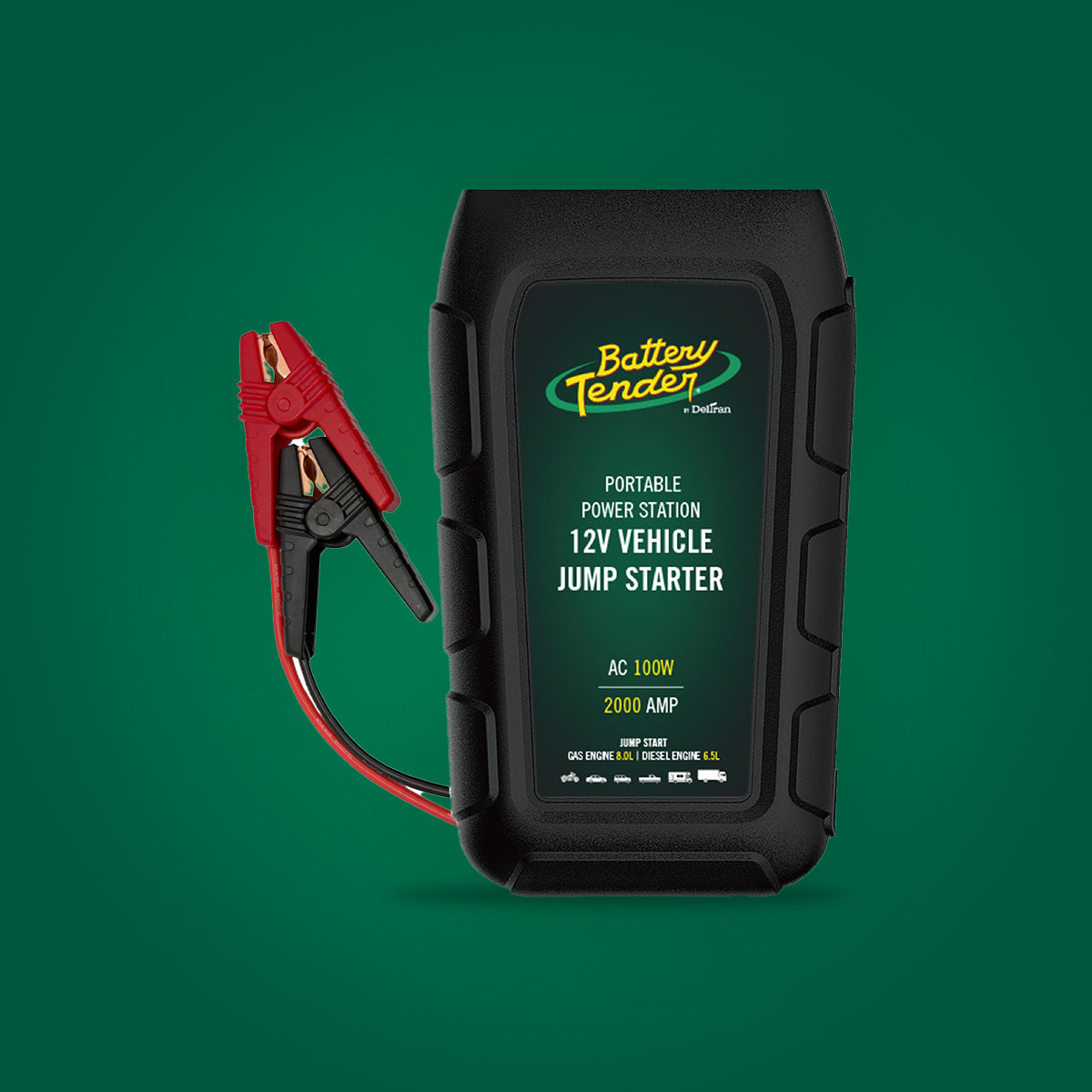
- Size by engine: 600A for powersports, 1,000-1,200A for passenger vehicles, 2,000A for diesel trucks.
- A 2-in-1 charger and jump starter can keep its own internal pack topped off between uses.
- Check the charge level every 90 days, and before any long trip or seasonal change.
What Is a Jump Start Battery Pack, and Why Does Location Matter?
A jump start battery pack is a sealed lithium-ion battery with heavy-gauge cables and clamps. It delivers a short burst of high current, usually for a few seconds, to turn a starter motor. Unlike a lead-acid battery, it loses very little charge while idle, so it can sit for months and still work.
That low self-discharge creates a false sense of security. Many owners toss the pack in the trunk and forget it for two years. Lithium-ion cells age faster when stored hot, and a pack left at a low charge level can drift down until its protection circuit refuses to deliver power.
A pack that cannot start the engine is worse than no pack, because it creates false confidence and leaves you without a backup plan. Treat the pack like a fire extinguisher: store it where conditions are stable, and check it on a schedule.
Where Should You Keep a Jump Start Battery Pack?
Keep it in the coolest, most stable spot you can reach in an emergency. For most drivers that is under a seat or in the cargo area, shaded and secured. Avoid the dashboard, the rear window shelf, and any space in direct sun.
The table below compares common storage spots. Temperature figures are typical, not guaranteed. Check the operating and storage range printed in your pack's manual.
| Storage Spot | Heat Exposure | Cold Exposure | Verdict |
|---|---|---|---|
| Glovebox | High (cabin can pass 120°F in summer) | Moderate | Acceptable in mild climates only |
| Under a seat | Moderate (shaded) | Moderate | Good daily-carry spot |
| Trunk or cargo area | High in summer | High in winter | Use a padded, insulated bag; avoid in extreme weather |
| Garage shelf | Low to moderate | Low to moderate | Best for long-term storage |
| Boat dry locker | Moderate | Low in season | Good if dry and ventilated |
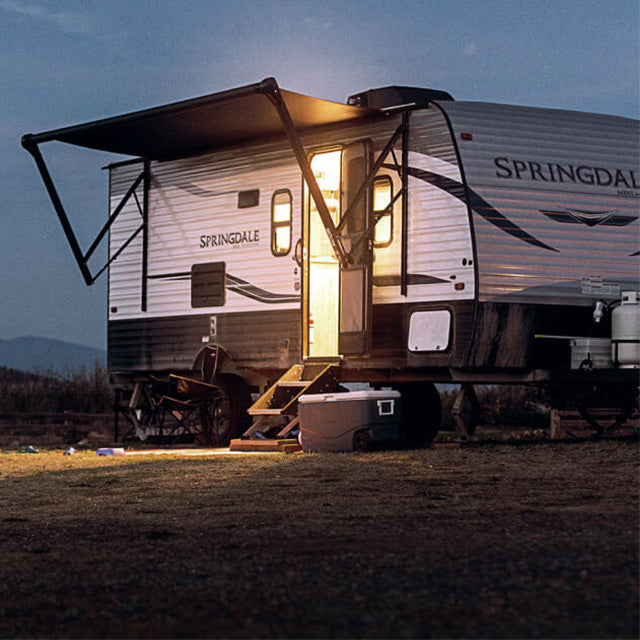
| RV or trailer bay | High in summer | High in winter | Bring indoors in extreme weather |
The Carry-or-Park Decision
Extreme weather changes the answer. In a heat wave or hard freeze, take the pack out of the vehicle and park it indoors, then return it when conditions moderate. Plan for that gap. While the pack is indoors, it cannot help you on the road, so keep a backup option on hand, such as a roadside service number or a trusted neighbor with jumper cables.
How Heat and Cold Affect a Jump Start Battery Pack
Heat damages lithium-ion cells permanently, while cold temporarily limits the current they can deliver. Heat is the more serious threat because the damage cannot be reversed.
Heat
- Sustained high temperatures speed up internal wear and shorten the number of useful charge cycles.
- Many manuals list a storage ceiling around 120-140°F. A parked car in direct sun can exceed that.
- A swollen case, a hot smell, or a pack too hot to hold means stop using it and dispose of it properly.
Cold
- Cold slows the chemical reaction inside the cells, so available current drops until the pack warms.
- Many lithium packs should not be recharged below freezing. Bring a cold pack indoors and let it reach room temperature before plugging it in.
- A cold engine also needs more cranking power, so both sides of the equation get harder at once.
For a deeper look at winter starting, see the related guide on how to jumpstart a battery with a portable jump starter.
How to Size a Jump Start Battery Pack for Your Vehicle
Match the pack's rated amps and engine capacity to your largest engine. Undersizing leads to failed starts. Oversizing costs more and weighs more, but it still starts a small engine safely.
| Vehicle Type | Typical Engine | Recommended Pack Size |
|---|---|---|
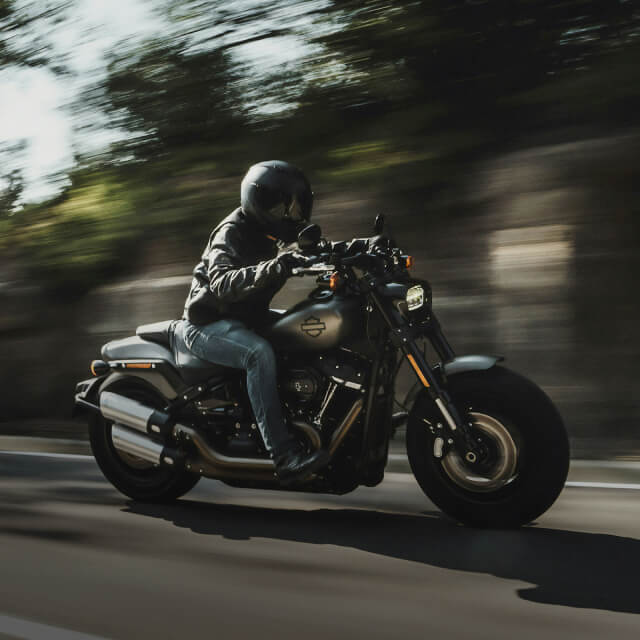
| Motorcycle, ATV, personal watercraft | Under 2.0L | 600A |
| Compact car, small crossover | Up to 5.0L gas / 3.0L diesel | 1,000A (Battery Tender Charge N Start 1100) |
| Midsize car, SUV, boat | Up to 6.0L gas / 4.0L diesel | 1,200A (Battery Tender Charge N Start 1120) |
| Full-size truck, RV | Up to 8.0L gas / 6.5L diesel | 1,200A to 2,000A |
| Diesel pickup, farm or fleet equipment | Large diesel | 2,000A |
Diesel engines need more headroom than gasoline engines because of their higher compression. A pack rated for 6.0L gas typically handles only 4.0L diesel. For more on how portable packs differ across sizes, read the battery jumper pack guide.
Why a 2-in-1 Jump Start Battery Pack Solves the Storage Problem
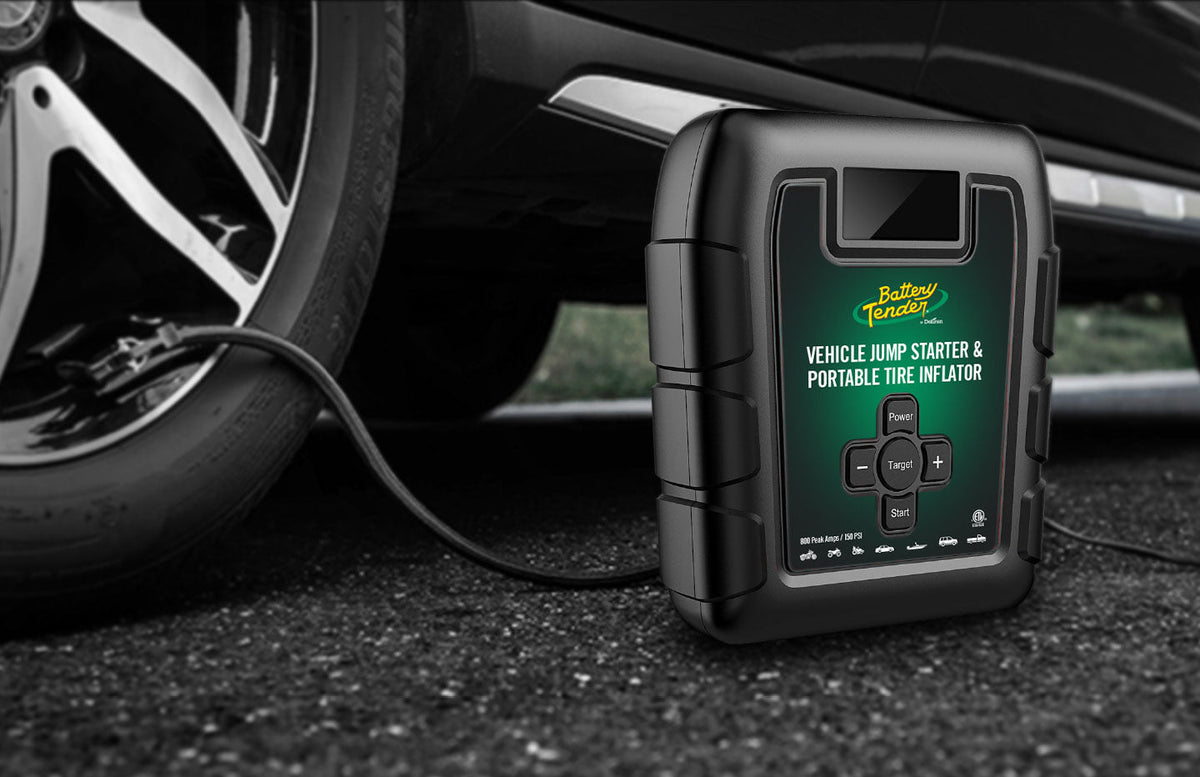
The weak point of any standalone pack is that it depends on the owner remembering to recharge it. A 2-in-1 unit combines a smart charger with a lithium-ion jump starter, so one device can start the engine and maintain batteries. That changes how you store it.
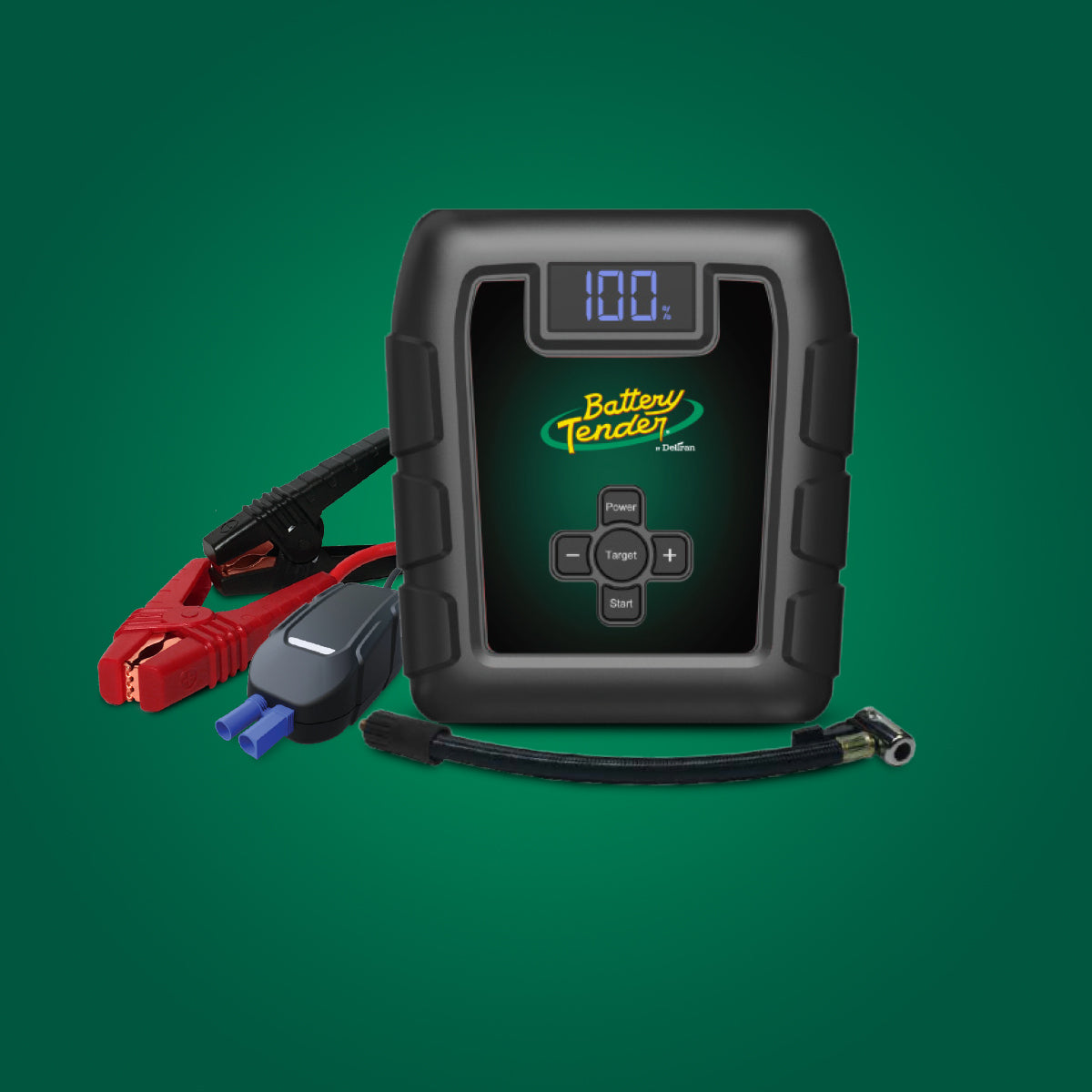
The Battery Tender Charge N Start line uses a lithium-ion internal pack. The charger section supports 12V standard (flooded), AGM, GEL, and lithium batteries. Charge N Store technology provides float maintenance for the internal pack, and SafeGuard circuit protection guards against backfeed. With the unit plugged in, the pack stays topped off instead of slowly drifting down. The charger section uses Battery Tender Infinite Sequential Monitoring (ISM), a four-stage automatic process: Initialization, Bulk Charge, Absorption, and Float Maintenance.
The Battery Tender Charge N Start 1120 suits a midsize car, SUV, or boat. Its 1,200A jump rating covers engines up to 6.0L gas or 4.0L diesel, and its 1A charger can maintain a motorcycle, lawn tractor, or spare battery between uses. A typical 50Ah battery at 50% discharge needs about 25 Ah, so a 1A charger needs roughly 25 hours under ideal conditions. That makes it a maintainer, not a quick-charge tool.
Battery Tender Charge N Start 1120 — 1 Amp Battery Charger & 1200 Amp Jump Starter
The Garage-Base Strategy
- Keep the unit on a garage shelf near an outlet and leave it plugged in during extreme weather.
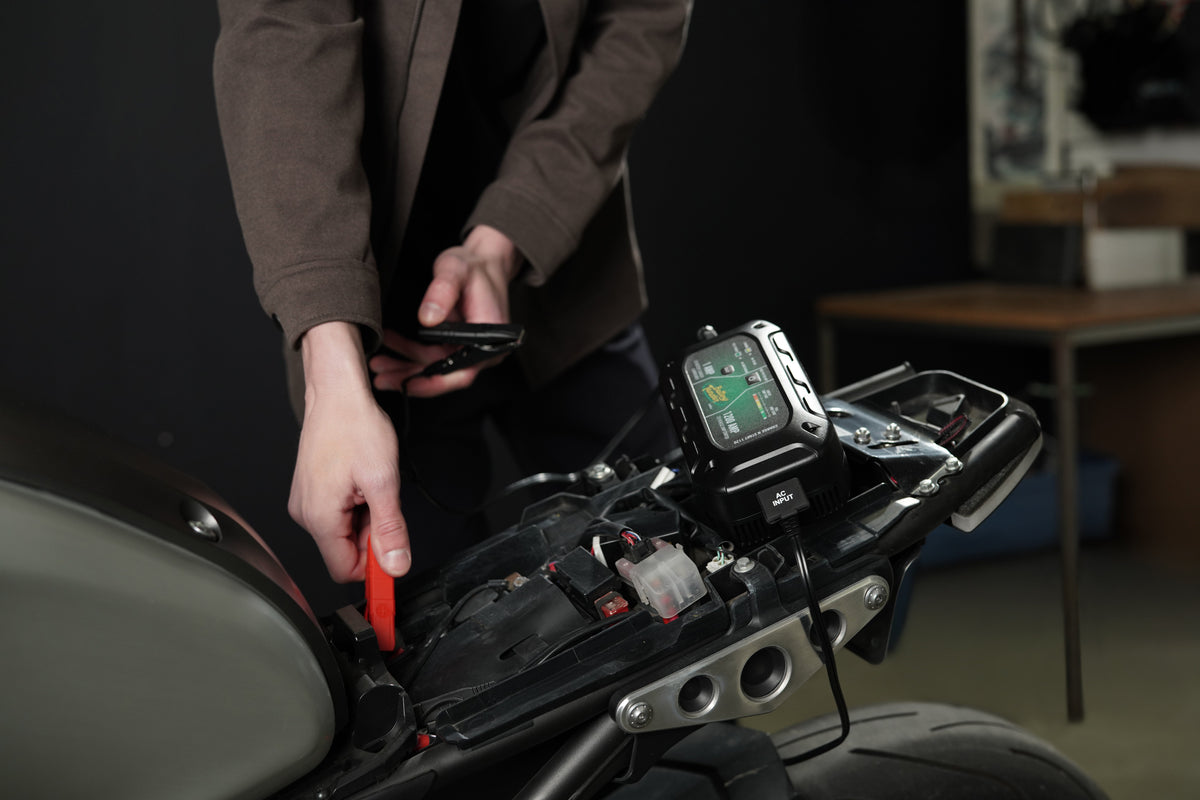
- Use the 1A charger to maintain a motorcycle, mower, or boat battery in the same space.
- Carry the unit in the cabin on trips, then return it to its charging station.
Jump Start Battery Pack Care: A Step-by-Step Routine
Follow this routine every 90 days and before long trips. It takes under five minutes and keeps the pack reliable.
- Inspect the case. Look for swelling, cracks, or a warped shape. Retire any damaged pack.
- Check the clamps and cables. Look for frayed insulation, corrosion, and bent jaws.
- Read the charge indicator. Top off anything below full. Many packs hold well above 50% for months, but a full charge gives the safest margin.
- Test the voltage on your vehicle battery. A healthy 12V battery rests near 12.6V. Under 12.0V means it needs charging, not just a jump.
- Confirm the storage spot. Move the pack if the season has changed and the location is too hot or cold.
- Record the date. Write it on tape on the case so the next check is easy.
Never leave the pack clamped to a battery after the engine starts. Remove the negative clamp first, then the positive. Let the alternator recharge the battery on a 20-30 minute drive.
Frequently Asked Questions
What is a jump start battery pack?
A jump start battery pack is a portable lithium-ion battery with built-in cables and clamps that starts a vehicle with a dead battery. It delivers a short burst of high current and does not require a second car. Most include reverse polarity, short circuit, and spark protection.
Can I leave a jump start battery pack in my car all year?
You can in mild climates, but extreme heat and cold shorten the life of lithium-ion cells. In summer heat waves and hard freezes, store the pack indoors. Check the temperature range in the manual, and keep it in the shade when you do carry it.
What size jump start battery pack do I need?
Size to your largest engine. Use 600A for motorcycles and powersports, 1,000-1,200A for passenger cars, SUVs, and boats, and 2,000A for large diesel trucks. Diesel engines need more power than gasoline engines of the same displacement, so check both gas and diesel ratings.
How often should I recharge a jump start battery pack?
Check the charge every 90 days, and top it off before long trips or seasonal changes. Lithium packs hold charge for months, but a pack left drained for a long period can lose capacity. A 2-in-1 unit left plugged in maintains itself automatically.
Does a jump start battery pack work in cold weather?
Yes, but cold reduces output until the cells warm. Keep the pack inside the cabin or indoors before use, and let it reach room temperature before recharging. Every battery loses output in deep cold, so a frozen pack may need to warm up before it can deliver full cranking current.
Conclusion
A jump start battery pack only helps if it is charged, undamaged, and within reach. Pick the right size for your engine, avoid heat-soaked storage, and follow the 90-day check. A 2-in-1 unit like the Battery Tender Charge N Start 1120 simplifies the job by maintaining its own pack while it maintains your batteries.
Next step: choose the pack that matches your engine, then set a calendar reminder for the first 90-day check. Browse the full range of Battery Tender jump starters.