
How to Jumpstart a Battery: Portable Jump Starter Guide (2026)
To jumpstart a battery, connect the red clamp to the positive (+) terminal and the black clamp to the negative (−) terminal or bare engine metal, then crank the engine for no more than 5 seconds. A portable lithium jump starter does this without a second vehicle. Jumper cables need a running donor car.
A dead battery rarely picks a convenient time or place, so the method matters. Battery Tender® pioneered smart charging in 1989, and the Battery Tender Charge N Start line extends that heritage into jump starting. Each unit combines a lithium-ion jump pack with a smart charger in one case. This guide covers both methods, the right pack size for each engine, and the step most drivers skip: recharging the battery properly afterward.
Key Takeaways
- A lithium portable jump starter is the safest way to jumpstart a battery. It has spark-proof clamps and reverse polarity protection, and it needs no second vehicle.
- Never crank longer than 5 seconds. Wait 60 seconds between attempts and stop after 3 tries.
- Match pack size to the engine: 600A for powersports, 1,000–1,200A for passenger vehicles, 2,000A for diesel.
- A jump only starts the engine. The alternator cannot fully recharge a depleted battery, so follow with a smart charger.
- The Battery Tender Charge N Start line combines a jump pack and a smart charger, so the same unit that rescues the battery also restores it.
Safety Checks Before You Jumpstart a Battery
Inspect the battery first, because jumping a damaged or frozen battery can cause an explosion or acid spray. Thirty seconds of checking prevents most jump-start accidents.
- Case condition: Look for cracks, bulging sides, or leaking fluid. Do not jump a swollen or leaking battery.
- Frozen battery: If the case is bulged or the vehicle sat in deep freeze, let it thaw before connecting anything.
- System voltage: Confirm the vehicle is 12V. Most cars, trucks, motorcycles, and ATVs are. Some tractors and heavy equipment run 24V.
- Accessories off: Turn off the ignition, headlights, heater, and radio so the full current goes to the starter.
- Clean terminals: Wipe off white or green corrosion so the clamps can bite into clean metal.
- Ventilation and sparks: Work in open air, away from flames, and remove rings and watches. Charging lead-acid batteries releases hydrogen gas.
Clicking, slow cranking, and dim dash lights usually mean a weak battery rather than a failed starter. If the battery has needed several jumps this season, read 10 Warning Signs Your Car Battery Is About to Fail before the next breakdown.
How to Jumpstart a Battery With a Portable Lithium Jump Starter
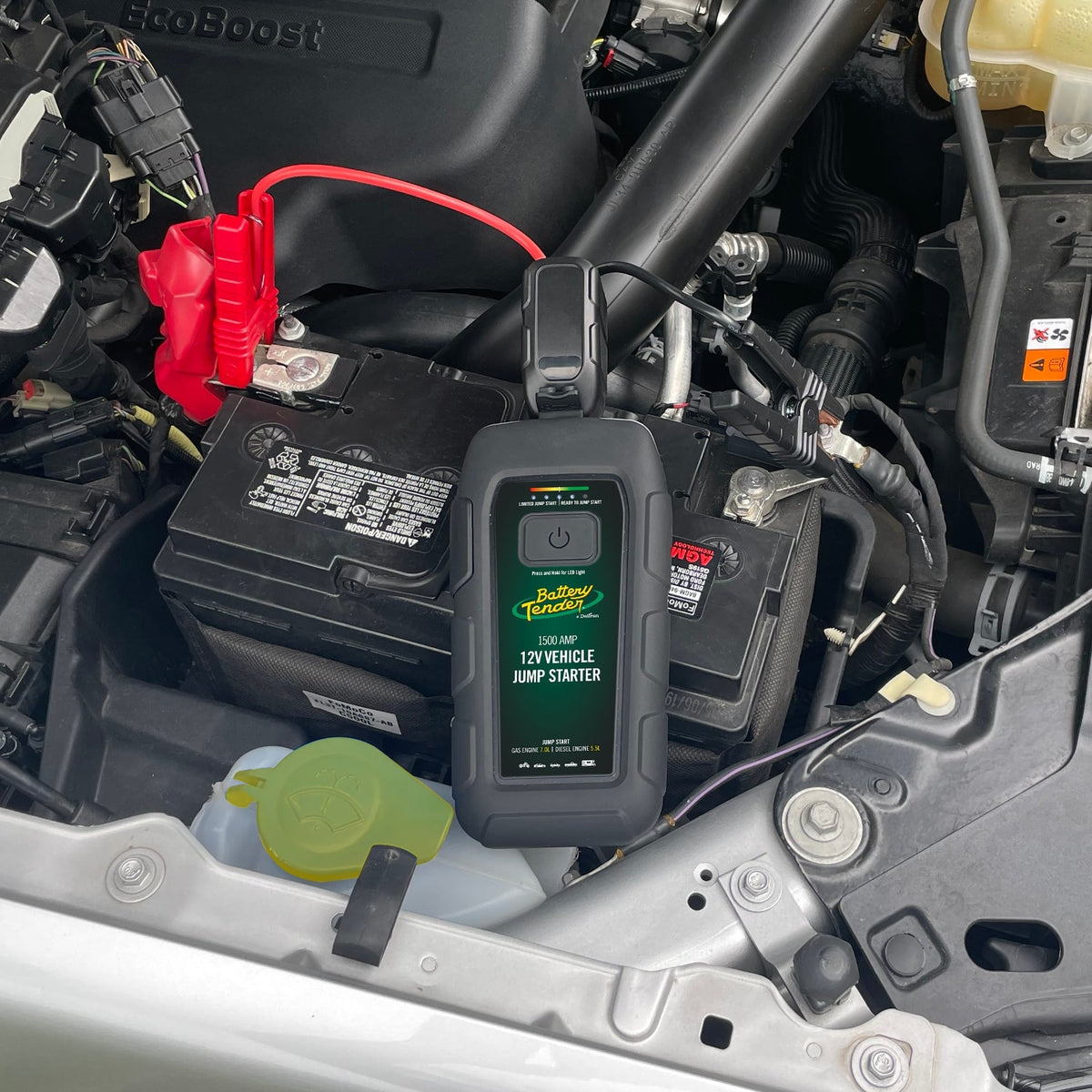
A lithium jump starter is the simplest way to jumpstart a battery because the pack carries its own power. The clamps are spark-proof, and reverse polarity and short circuit protection are standard. Lithium packs are also compact and hold their charge for months between uses.
Step-by-Step Instructions
- Check the pack charge. Confirm the indicator shows a mostly full pack before you start.
- Shut everything off. Turn the vehicle off, remove the key, and switch off all accessories.
- Connect the red clamp to the positive (+) battery terminal.
- Connect the black clamp to the negative (−) terminal. If the battery is buried under a seat or in a trunk, clamp to unpainted metal on the engine block or frame instead.
- Confirm the ready signal. Wait for the pack to show a good connection. A pack with reverse polarity protection will not energize if the clamps are swapped.
- Wait 30 seconds, then crank for no more than 5 seconds.
- Retry if needed. Wait 60 seconds between attempts and stop after 3 tries.
- Disconnect in reverse order. Remove the black clamp first, then the red clamp.
- Keep the engine running. Idle for a few minutes, then drive. Do not shut the engine off until you have a charger ready.
If the Engine Still Will Not Start
Check clamp contact first, since paint, rust, or loose terminals cause most failed jumps. If contact is good and the engine still will not turn over, the pack may be undersized for the engine or the fault may be the starter, a fuse, or a loose ground strap. The sizing table below shows which pack matches which engine.
Jumper Cables and a Donor Vehicle: The Backup Method
Jumper cables work when no jump pack is available, but they are less safe and depend on a second running vehicle. The sequence matters because the last connection should be away from the battery, where hydrogen gas can collect.
- Park the donor vehicle close without letting the vehicles touch, then turn both off.
- Clamp red to the dead battery's positive (+) terminal.
- Clamp the other red end to the donor battery's positive (+) terminal.
- Clamp black to the donor battery's negative (−) terminal.
- Clamp the last black end to unpainted metal on the dead vehicle's engine block, at least 12 inches from the battery.
- Start the donor and run it at fast idle for 3 to 5 minutes.
- Start the dead vehicle, then remove the clamps in exact reverse order.
The trade-offs are real. Cables need a willing driver, and voltage spikes from the donor can stress the electronics in modern vehicles. Thin cables also carry less current than heavy-gauge ones. Hybrids and EVs often restrict 12V jump points, so check the owner's manual first.
Sizing Your Jump Starter and Why Battery Tender Charge N Start Is the Upgrade
The right pack matches engine displacement, and diesel engines need roughly twice the cranking power of gas engines of the same size. Choosing from this table prevents buying a pack that cannot turn the engine over.
| Model | Peak Amps | Max Engine (Gas / Diesel) | Best For |
|---|---|---|---|
| Battery Tender Jump N Start 600 Amp | 600A | 4.0L / 2.0L | Motorcycles, ATVs, small engines |
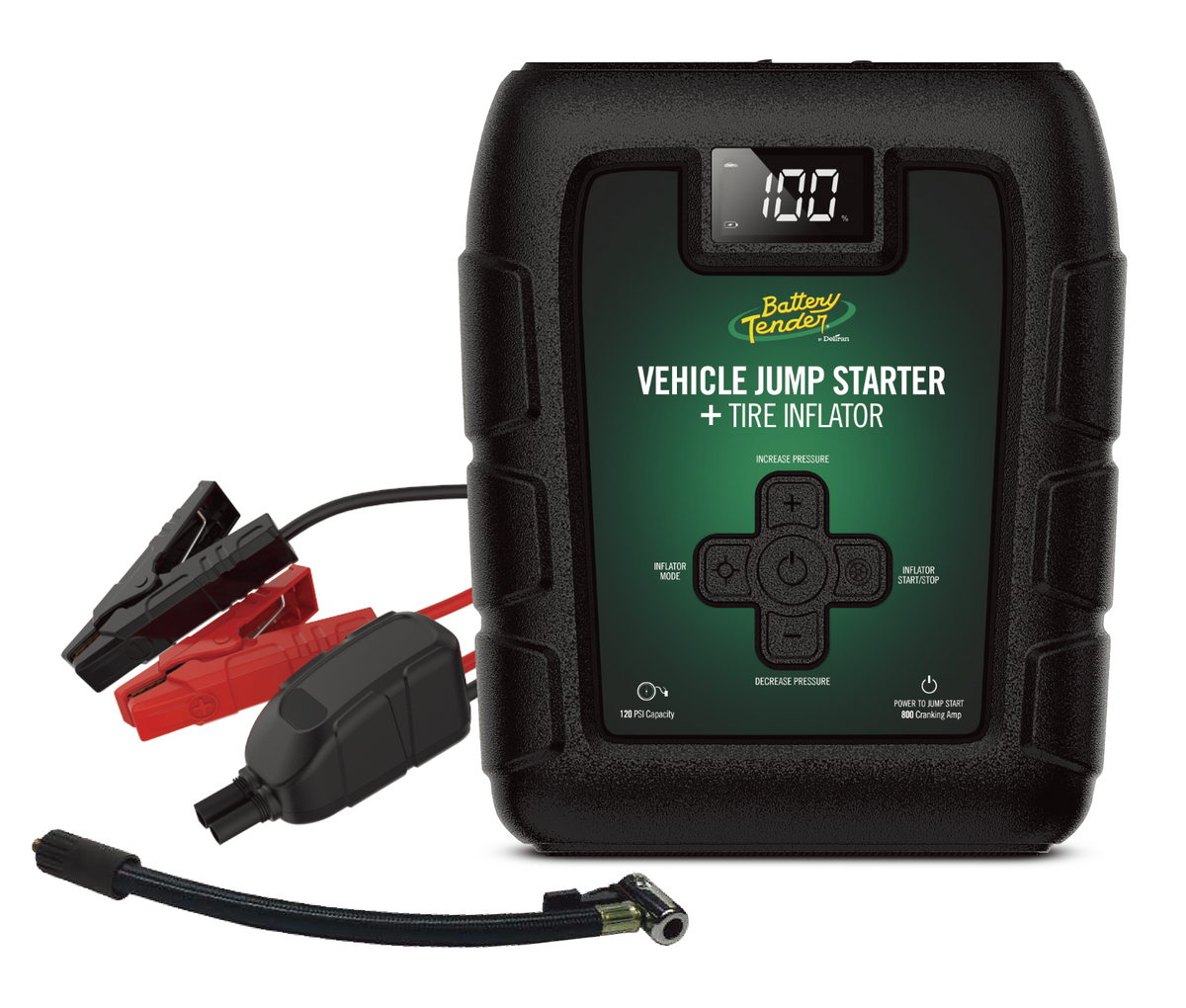
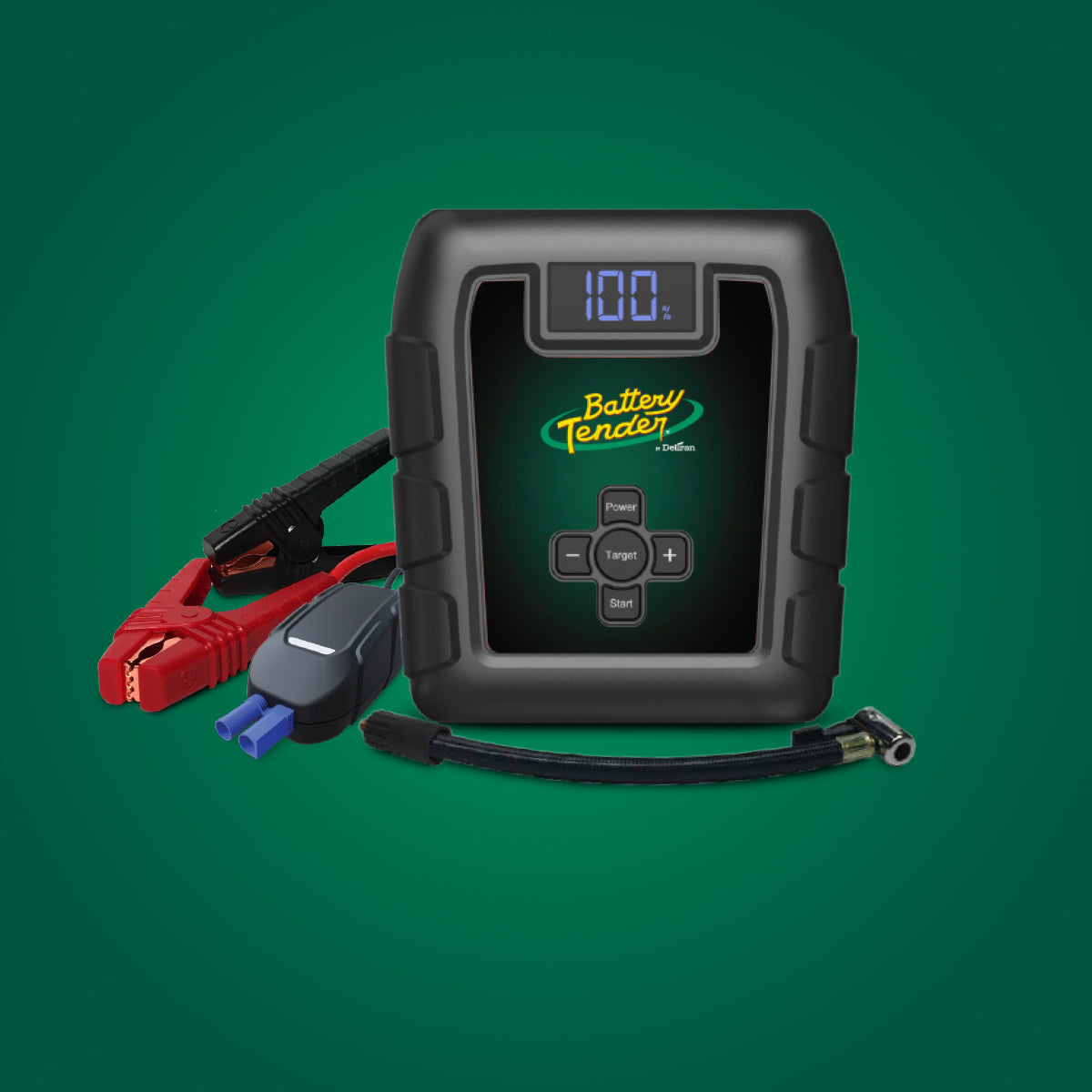
| Battery Tender Jump N Start 800 Amp + Inflator | 800A | 4.0L / 2.0L | Compact cars plus tire emergencies |
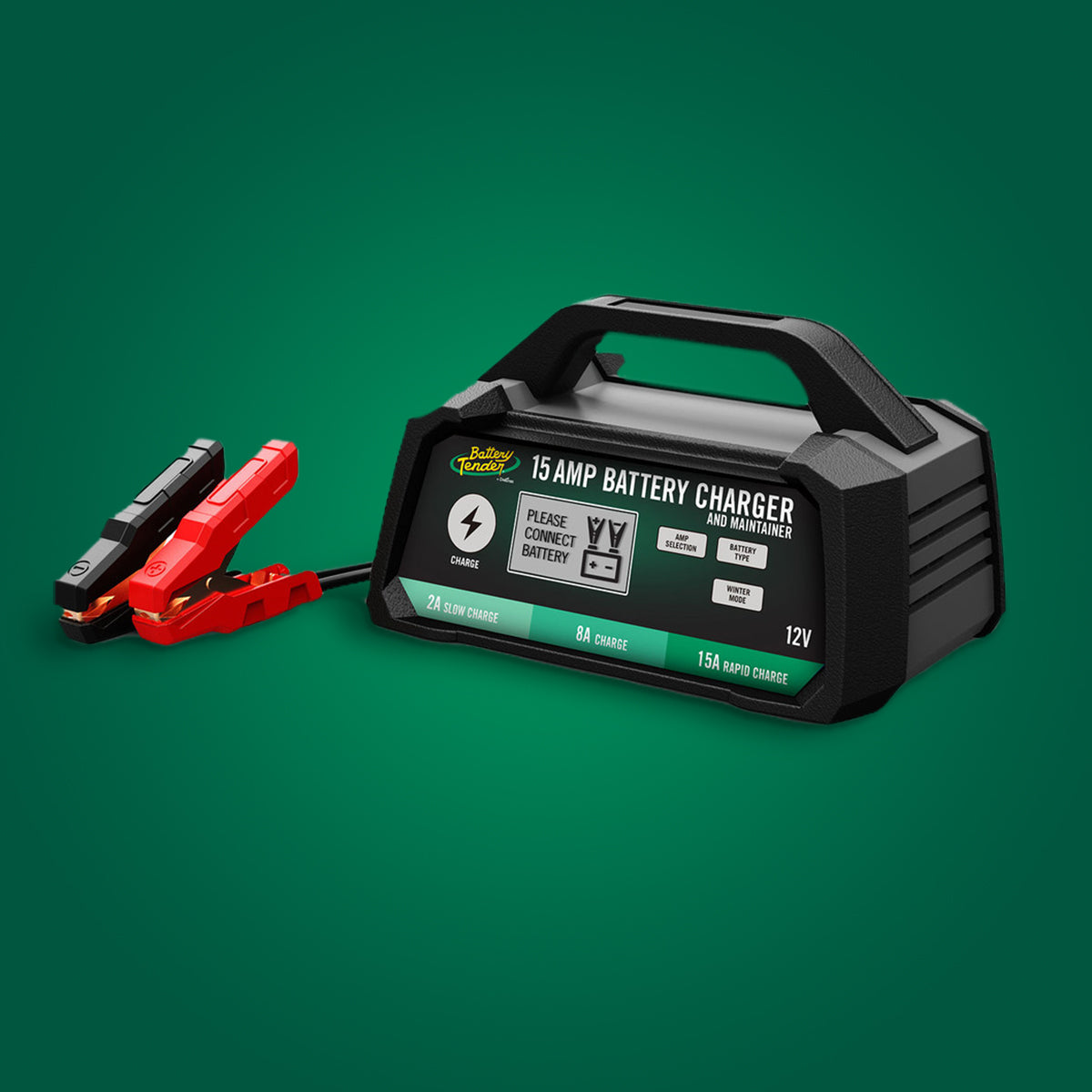
| Battery Tender Charge N Start 1100 | 1,000A | 5.0L / 3.0L | Powersports and compact cars |
| Battery Tender Charge N Start 1120 | 1,200A | 6.0L / 4.0L | Mid-size cars, SUVs, boats |
| Battery Tender Charge N Start 4120 | 1,200A | 6.0L / 4.0L | Trucks and RVs with a 4A charger |
| Battery Tender Jump N Start 1500 Amp | 1,500A | 7.0L / 5.5L | Most vehicles |
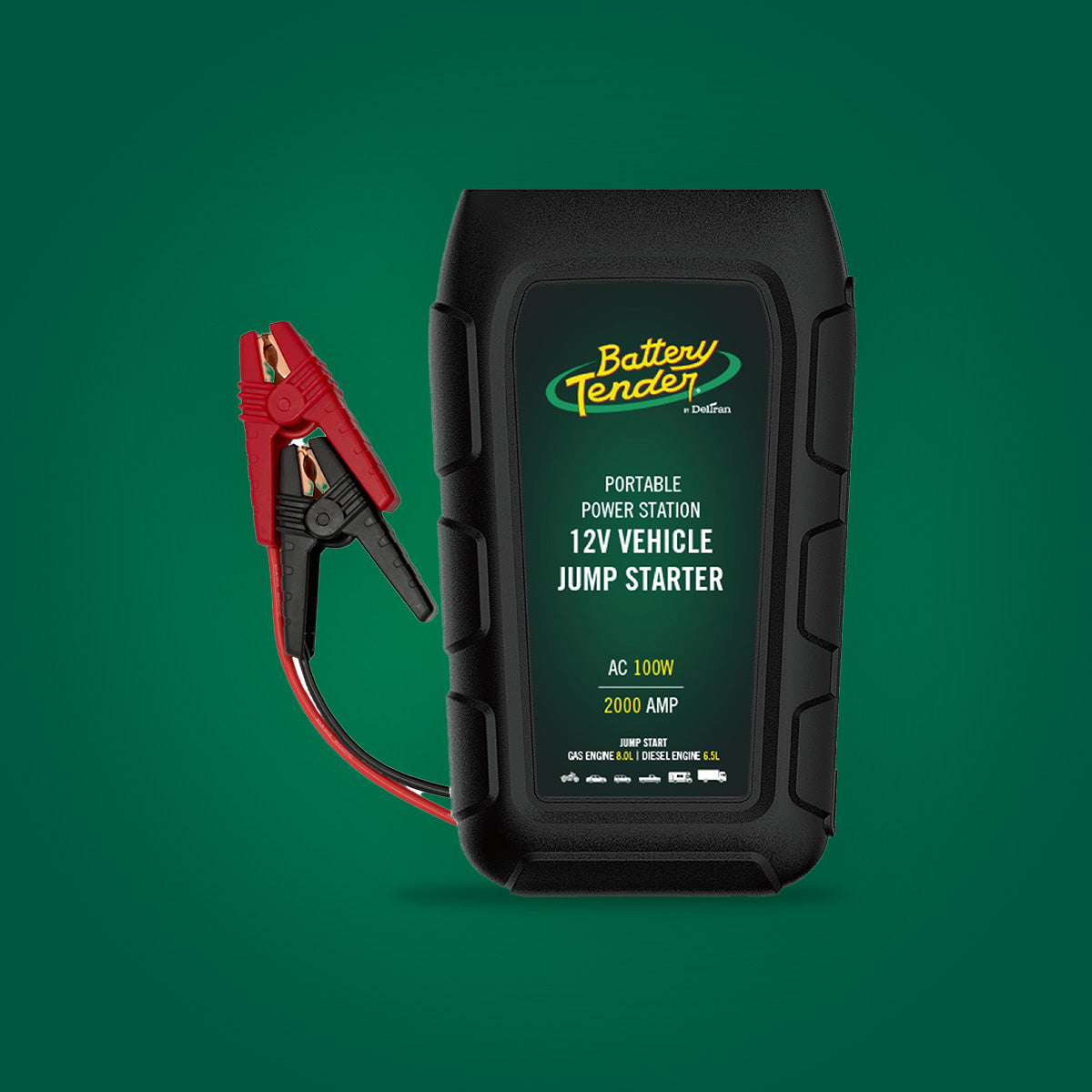
| Battery Tender Jump N Start 2000 Amp | 2,000A | 8.0L / 6.5L | Large trucks and diesel |
For a deeper side-by-side, see Portable Jump Starter Comparison: 600A vs 800A vs 1500A vs 2000A.
Why Battery Tender Charge N Start Is the Smart Upgrade
A standalone jump starter only solves the emergency. The Battery Tender Charge N Start line pairs a lithium-ion jump pack with a smart charger that handles all 12V battery types, including standard, AGM, GEL, and lithium. After the jump, the same unit can recharge the battery that failed. Charge N Store float maintenance keeps the internal pack topped off between uses, and SafeGuard anti-backfeed protection guards the circuitry. Details on each model are in the Battery Tender Charge N Start Complete Guide.
Emergency Kit for Motorcycles, ATVs, and Compact Cars
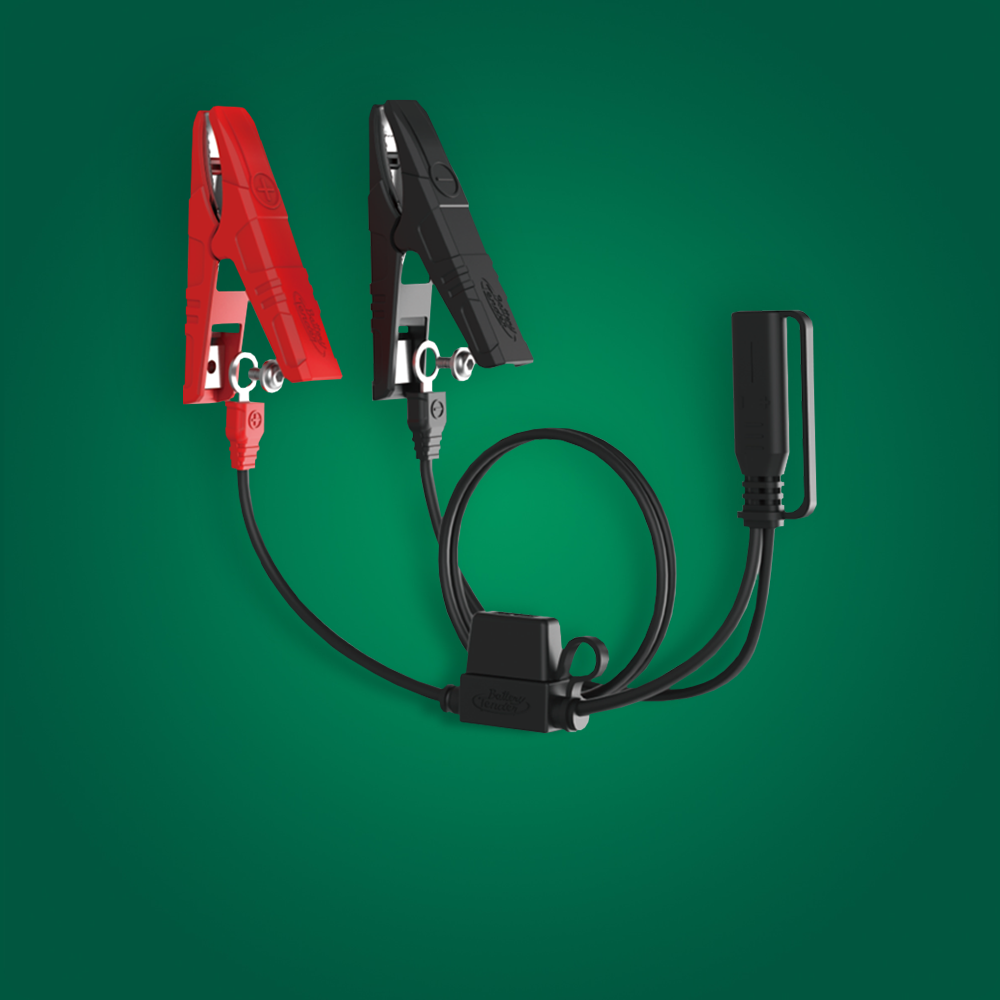
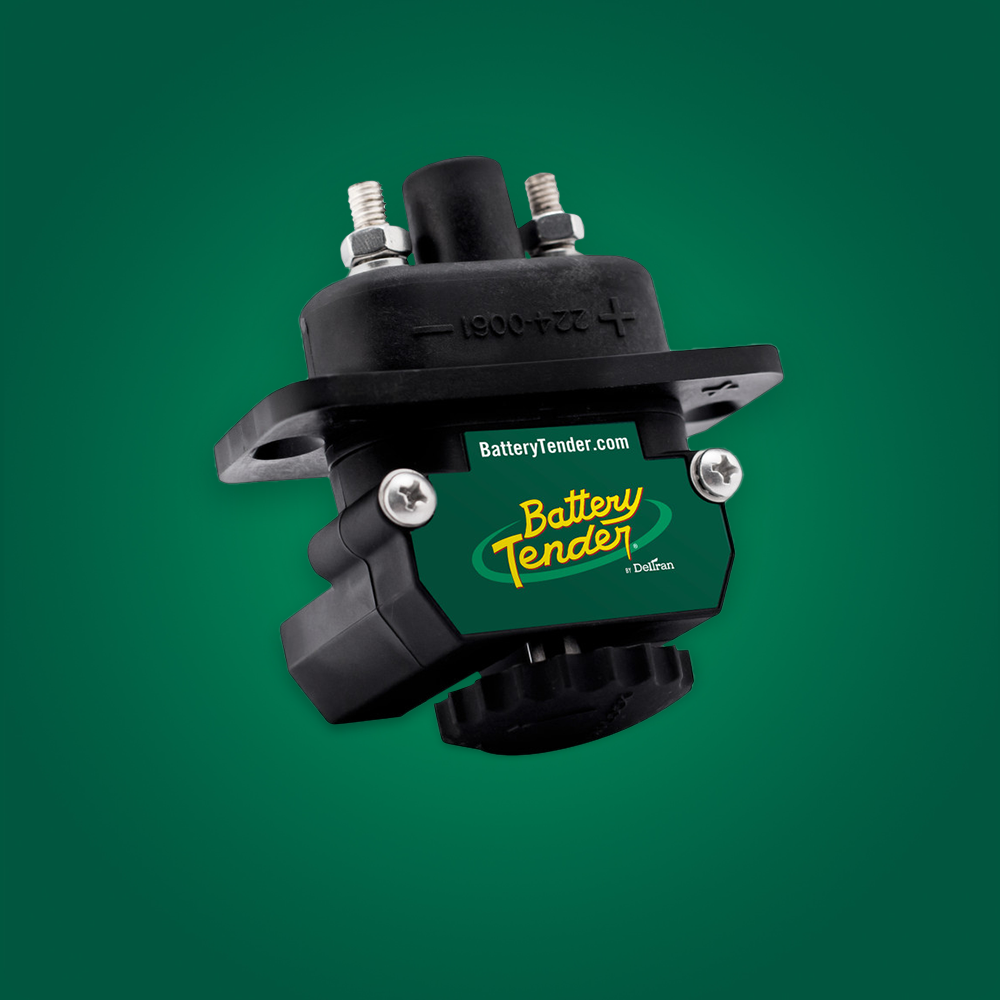
Riders and compact-car owners need a pack small enough for a saddlebag or glovebox that still covers a flat tire. The Battery Tender Jump N Start 800 Amp bundle starts engines up to 4.0L gas or 2.0L diesel and includes a 140 PSI tire inflator. The included ring terminal cable can stay permanently bolted to the battery, so a future jump takes seconds with no clamp fumbling at the roadside.
Battery Tender Jump N Start Motorcycle & Powersports Emergency Roadside + Inflator Bundle (800 AMPs)
After the Jump: Recharge the Battery, Do Not Just Drive
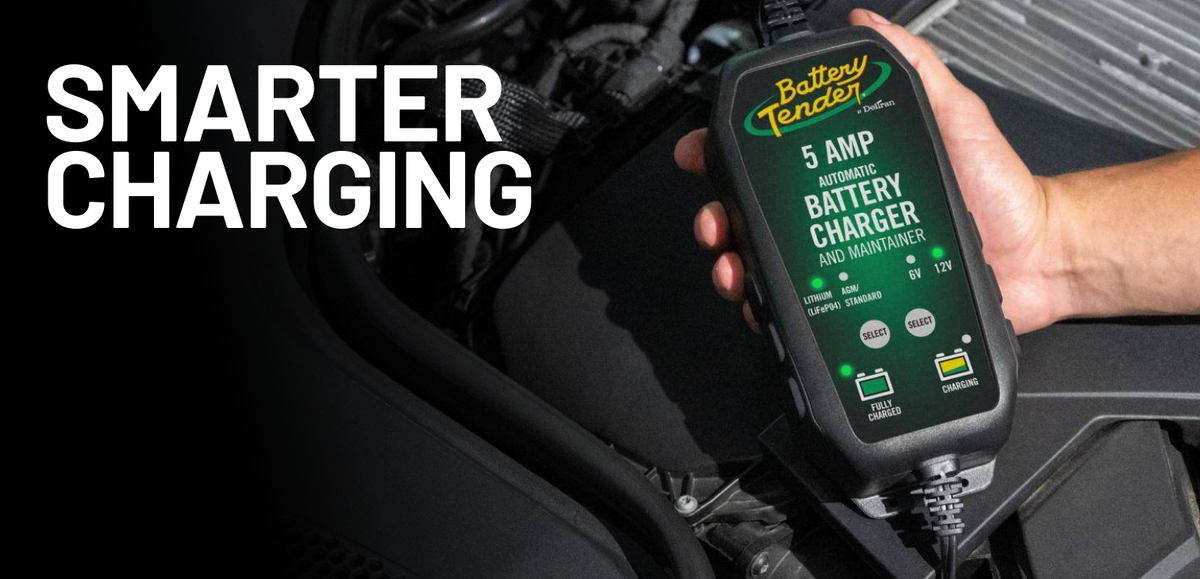
An alternator maintains a charged battery but cannot reliably restore a deeply discharged one. A 20-minute drive after a jump leaves the battery partly charged and likely to fail again, and chronic undercharging also speeds sulfation. A full charge on a Battery Tender smart charger is the correct finish to any jump.
Use the charging time formula to plan: (battery Ah × depth of discharge) ÷ charger amps = approximate hours.
| Battery | Charger | Calculation | Approx. Time |
|---|---|---|---|
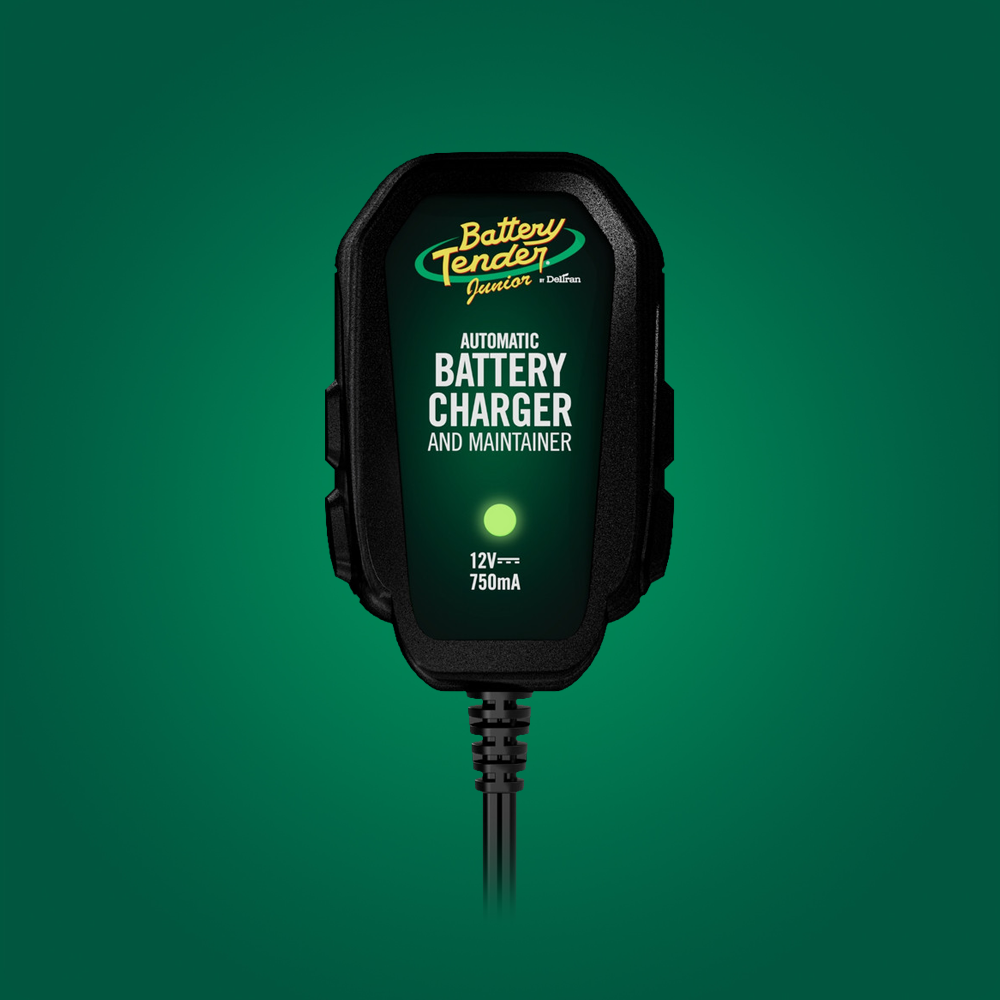
| 12Ah motorcycle, 50% discharged | Battery Tender Junior 750mA | 6Ah ÷ 0.75A | 8 hours |
| 50Ah car, 50% discharged | Battery Tender Plus 1.25 Amp | 25Ah ÷ 1.25A | 20 hours |
| 50Ah car, 50% discharged | Battery Tender Charge N Start 4120 (4A) | 25Ah ÷ 4A | About 6.25 hours |
Battery Tender chargers use Infinite Sequential Monitoring (ISM), a four-stage process: Initialization tests the battery, Bulk delivers full current to about 80% charge, Absorption holds voltage constant while current tapers, and Float Maintenance sends pulses only when voltage drops. ISM is why a Battery Tender charger is safe to leave connected long-term, unlike conventional trickle chargers that apply constant current regardless of battery state. If a battery will not hold charge after a full cycle, replace it.
Frequently Asked Questions
What is the correct order to connect jump starter clamps?
Connect the red clamp to the positive (+) battery terminal first, then the black clamp to the negative (−) terminal or to unpainted engine metal. Remove them in reverse order, black first and red second. This order limits spark risk near the battery, and packs with reverse polarity protection add a second safeguard.
How many times can I try to jumpstart a battery?
Try up to 3 times, cranking no longer than 5 seconds each and waiting 60 seconds between attempts. Longer cranking overheats the starter motor and drains the pack. If the engine does not start after 3 attempts, the cause is probably not the battery. Check connections, fuel, and the starter.
Does jumpstarting a battery damage the car?
Done correctly, a jump does not damage the vehicle. Risk comes from reversed clamps, voltage spikes from a donor car, or sparks near a venting battery. A lithium jump starter with spark-proof clamps and reverse polarity and short circuit protection removes most of these risks, which is why it is preferred over cables.
How long does a portable jump starter hold its charge?
A lithium jump starter holds its charge for months when stored properly. Check the indicator every three months and recharge after each use. Battery Tender Charge N Start models use Charge N Store float maintenance to keep the internal lithium-ion pack topped off, so the unit stays ready when plugged in.
What size jump starter do I need for a diesel truck?
Diesel engines need far more cranking power than gas engines. A 2,000A pack handles up to 8.0L gas or 6.5L diesel, which covers most heavy-duty trucks. A 600A pack is fine for motorcycles and ATVs, and a 1,000–1,200A pack covers most passenger cars and SUVs.
Conclusion
Knowing how to jumpstart a battery comes down to a few habits: inspect first, connect in the right order, limit cranking to 5 seconds, and always recharge afterward. A lithium jump pack is faster and safer than cables, and a Battery Tender Charge N Start unit adds the charger that finishes the job. Next step: match your engine to the sizing table above and browse the full Battery Tender jump starter collection.
Last updated: May 2026.