


Trickle Charger for Car Batteries: Risks and Smarter Options (2026)
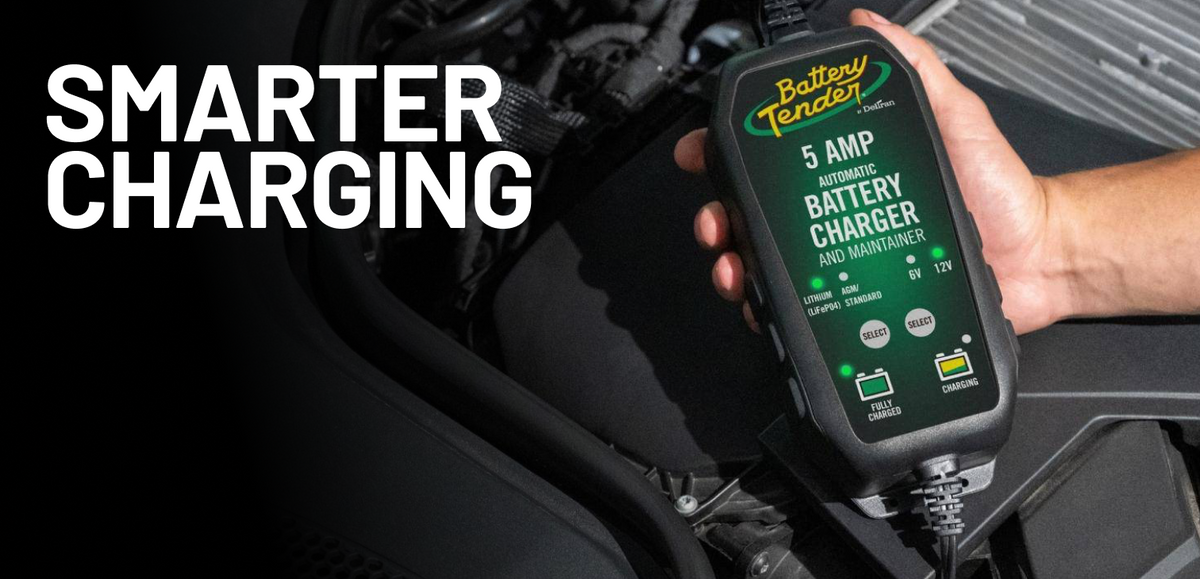
A trickle charger for car batteries pushes a fixed, low current into the battery whether it needs it or not, so it can overcharge a battery left connected for weeks. A smart maintainer such as the Battery Tender® Plus charger monitors the battery and adjusts its output, so it stays safely connected all winter.
Drivers search for a trickle charger for car use when a vehicle sits for weeks and the battery keeps dying. The instinct is right, because a parked lead-acid battery loses charge and sulfates. The tool matters, though. Battery Tender pioneered smart charging in 1989 with Infinite Sequential Monitoring (ISM), a four-stage process that replaced the fixed-output approach. This guide explains how trickle charging works, where it fails, how to size a replacement, and how to connect it correctly.
Key Takeaways
- A trickle charger delivers constant current regardless of battery state, which creates an overcharge risk on long connections.
- ISM monitors voltage and moves through Initialization, Bulk, Absorption, and Float Maintenance, so it is safe to leave connected indefinitely.
- Match the charger to the battery: roughly 2A for maintenance on most car batteries, 8A or more for recovery of deeply discharged ones.
- Sulfation starts when a lead-acid battery rests below about 12.4V, which is why storage charging matters.
- Test the battery before blaming the charger. A failed cell cannot be fixed by any maintainer.
What Is a Trickle Charger for Car Batteries and How Does It Work?
A trickle charger is a simple unit that supplies a small, constant current, typically 500mA to 1.5A, to a battery with no feedback from the battery itself.
Inside is usually a transformer and rectifier. The output does not change when the battery reaches full charge at about 12.7V. Current keeps flowing, and the battery voltage is pushed upward until the energy has nowhere to go but into heat and gas.
Older units were designed for short, supervised use, such as an overnight top-up while someone watched the clock. The trouble starts when owners buy one for a car that sits all winter, a job the technology was never built for.
Trickle Chargers vs. Float Chargers vs. Smart Chargers
- Trickle chargers: constant current regardless of battery state. Overcharge risk.
- Float chargers: constant voltage only, with no Absorption stage. Safer, but slow to recover a discharged battery.
- Smart chargers with ISM: four monitored stages that respond to the battery's actual condition.
For a deeper look at the same comparison on two wheels, see Motorcycle Battery Trickle Charger vs. Smart Charger: Why the Difference Matters (2026).
Why a Trickle Charger for Car Storage Can Damage the Battery
A constant-current unit overcharges because current continues after the battery is full, driving voltage past the safe range of about 13.2V to 13.8V for maintenance.
Once voltage climbs above roughly 14.8V on a 12V lead-acid battery, the electrolyte begins to gas. Water breaks into hydrogen and oxygen. In a flooded battery, that means lost water and exposed plates. In a sealed AGM or GEL battery, the water cannot be replaced, so the loss is permanent. Heat builds as well, and a warm battery accepts even more current, which accelerates the cycle.
The Opposite Problem: Undercharging
A low-output unit can also fall short. Alarms, body control modules, and radio memory in a modern car pull 25 to 80 milliamps continuously. A 500mA trickle charger can keep pace with that draw on a healthy battery, but it cannot bring back a deeply discharged battery that needs 8A or more to recover in a reasonable time.
Sulfation: The Slow Killer
A lead-acid battery resting below 12.4V, about 75% charge, begins forming hard lead sulfate crystals on the plates. Those crystals reduce capacity permanently. Batteries on conventional charging often last two to three years. With consistent ISM maintenance, many reach five years or more.
Seasonal owners feel this most. A car parked in October with a 12.6V battery can be below 12.0V by February without any maintenance at all.
How ISM Smart Charging Replaces the Trickle Approach
ISM replaces a fixed current with four stages that each respond to measured battery voltage.
- Initialization: the charger tests the battery and applies gentle current to determine its condition.
- Bulk (constant current): full rated current flows until the battery reaches about 80% state of charge.
- Absorption (constant voltage): voltage holds steady while current tapers, which helps dissolve sulfate crystals.
- Float Maintenance: the charger delivers pulses only when voltage drops, so the battery is never pushed past full.
That fourth stage is the reason a Battery Tender maintainer can stay connected for months. The charger watches and acts only when needed, which is the exact opposite of a fixed-output trickle charger for car storage.
Temperature Compensation
Ideal charging voltage shifts with temperature, so cold garages and hot summer driveways both call for adjusted output. Battery Tender chargers such as the Battery Tender Plus and Battery Tender Power Tender include temperature compensation, which makes them a better fit for unheated garages.
Which Charger Fits Your Car Battery?
For most cars, a 2A maintainer handles storage, and a selectable 8A to 15A unit handles recovery and bigger batteries.
Use this formula to estimate charge time: (battery Ah × depth of discharge) ÷ charger amps. A 60Ah battery that is 50% discharged needs 30Ah. At 2A, that is about 15 hours. At 8A, it is about 3.75 hours. Add 10 to 20 percent for charging losses.
| Vehicle / Situation | Typical Battery | Recommended Charger | Why It Fits |
|---|---|---|---|
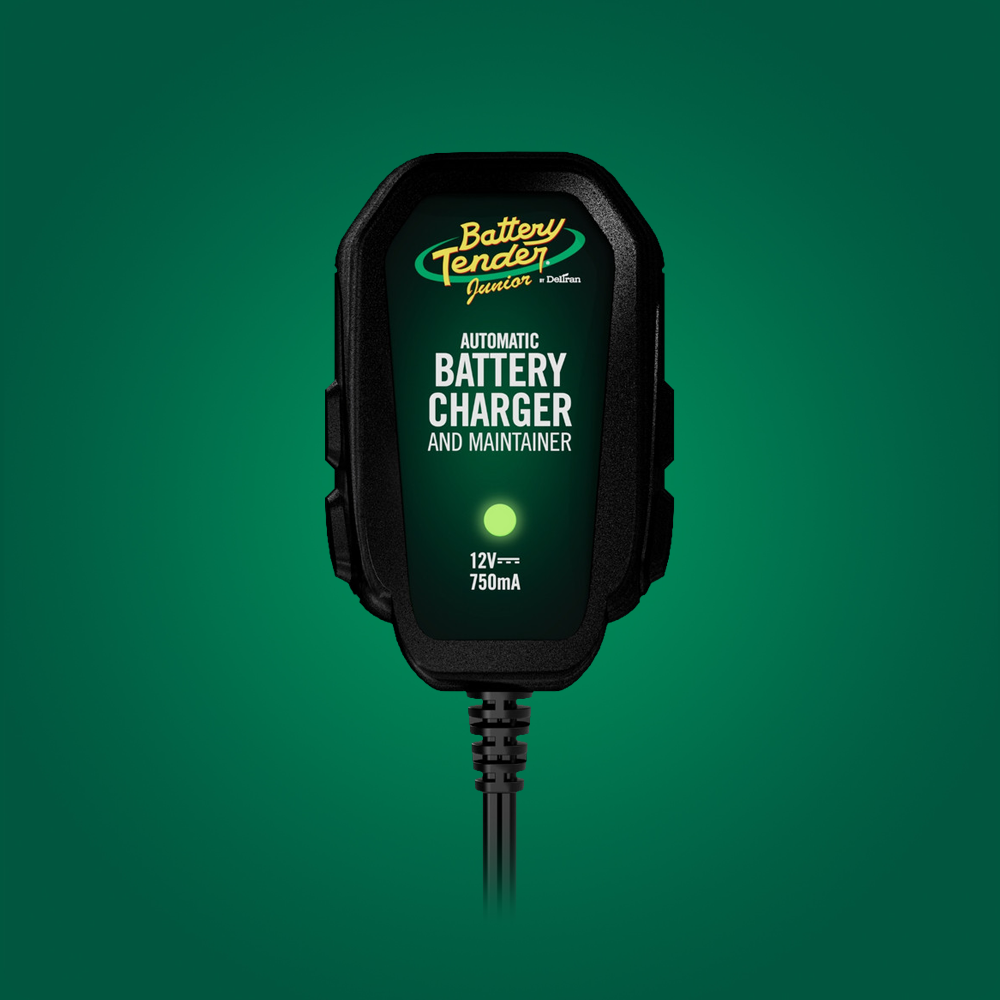
| Compact car, weekend driver | 35–50Ah | Battery Tender Plus 6V/12V 2 Amp | Enough current for maintenance and moderate recovery |
| Midsize sedan stored over winter | 50–70Ah | Battery Tender Plus 6V/12V 2 Amp | Stays connected for months with temperature compensation |
| Full-size truck or SUV, diesel | 70–110Ah | Battery Tender Power Tender 15/8/2 | Higher selectable output for large or deeply discharged batteries |
| Multi-car garage or collection | Four batteries | Battery Tender 4-Bank 12V 1.25 Amp | One unit, four separate batteries |
Single-Car Maintenance
For one car parked for the winter, the Battery Tender Plus 6V/12V 2 Amp charger is the practical replacement for a low-output trickle unit. It supports 12V car batteries and 6V batteries in classic cars, and the 2A output offsets parasitic draw while holding the battery near full.
Battery Tender Plus 6V/12V 2 Amp Battery Charger and Maintainer
Large Batteries and Recovery Charging
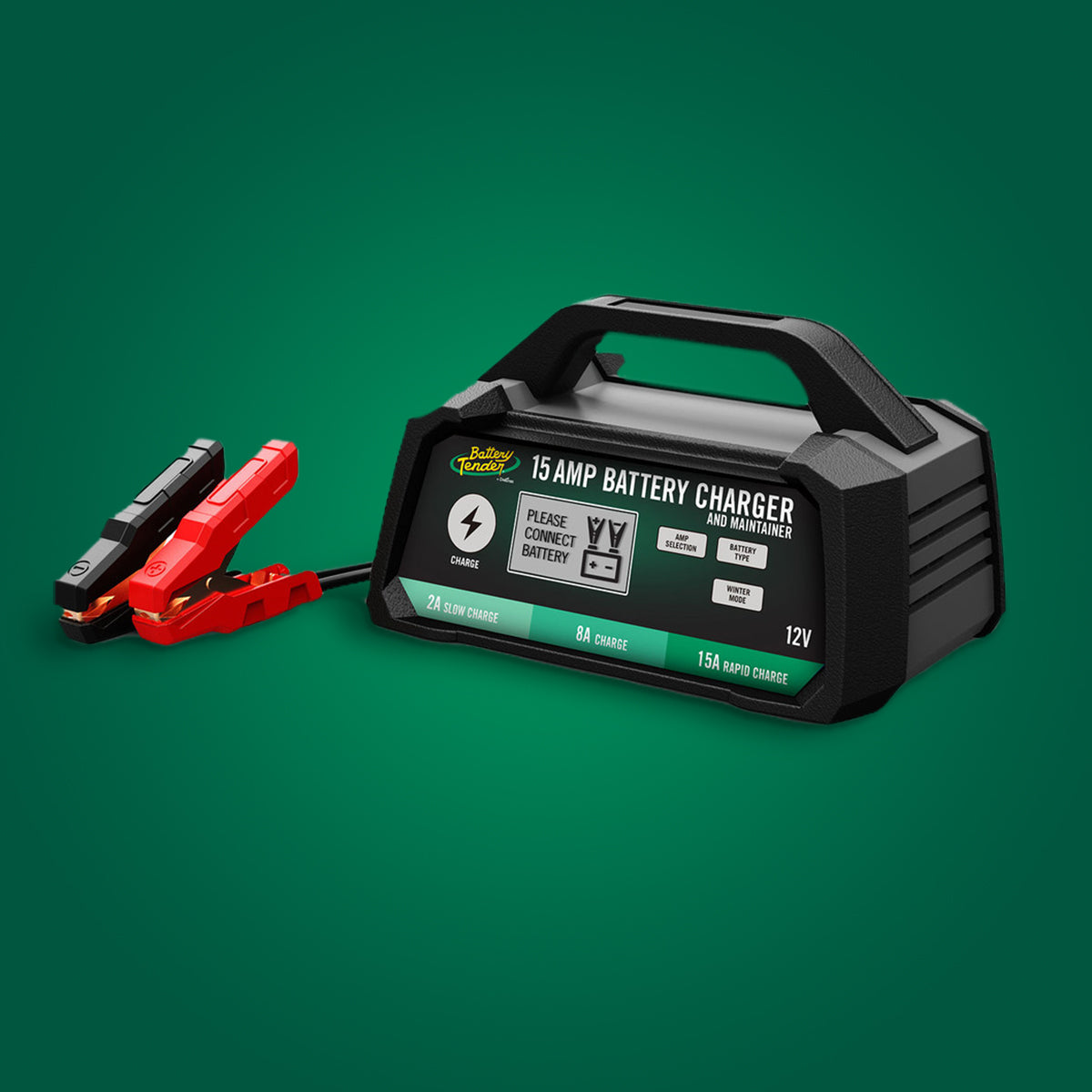
Trucks, SUVs, and cars with big-draw electronics need more headroom. The Battery Tender Power Tender 15/8/2 selects between 15A, 8A, and 2A rates on a 12V battery, so one unit handles a fast recovery charge and then a quiet 2A maintenance mode. That high-output range also suits heavy-duty and fleet use.
Battery Tender Power Tender 15/8/2 Amp 12V Battery Charger and Maintainer
Multiple Vehicles
Owners with a daily driver, a project car, and a spare often buy several chargers. The Battery Tender 4-Bank 12V 1.25 Amp charger runs four batteries independently, so each gets its own ISM cycle. That suits a garage with a car, truck, trailer, and mower, and the same approach protects a standby generator battery, as covered in Generac Generator Battery Maintenance: Standby Power Guide.
Battery Tender 4-Bank 12V 1.25 Amp Battery Charger and Maintainer
How to Connect a Maintainer in Place of a Trickle Charger for Car Use
Connect the charger to the battery before plugging into the wall, then confirm the status light shows charging.
- Test first. Read the resting voltage with a meter. Below 12.4V means it needs charging; below 10.5V suggests a damaged cell.
- Park and switch off. Turn off the ignition and all accessories. Keep the charger unplugged.
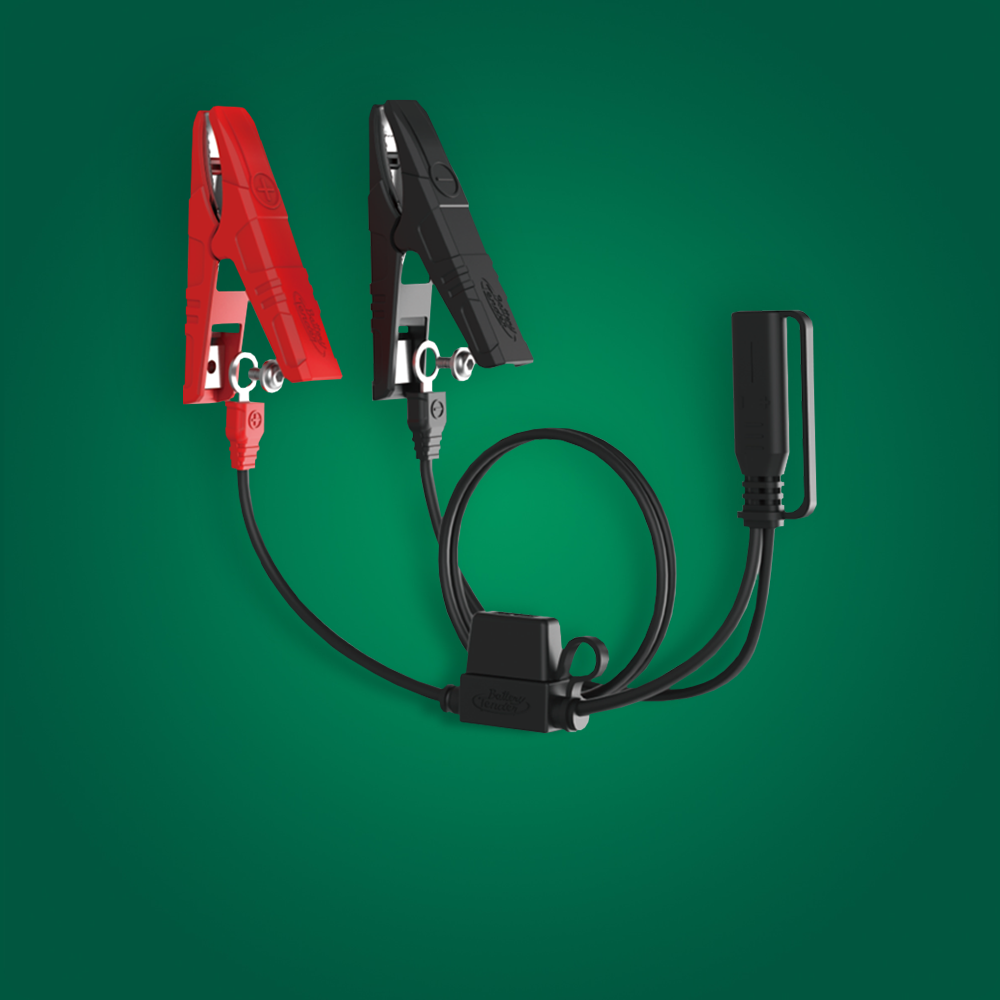
- Connect the leads. Attach the red clamp to the positive terminal, then the black to a clean chassis ground or the negative terminal. Use ring terminals for a permanent connection.
- Plug in. Insert the AC plug into a grounded outlet. Verify the indicator moves from charging to maintenance.
- Leave it connected. With ISM there is no need for a timer. Check the indicator monthly.
Safety note: charge in a ventilated space, away from sparks, and never charge a frozen battery. If the case is swollen or leaking, replace the battery.
Test Before You Charge
A battery that will not hold a charge needs replacement, not more current. The Battery Tender 12V/6V Battery Tester applies a load test, up to 100A on a 12V battery, and shows whether the battery can deliver cranking power. Test before storage and again in spring.
Battery Tender 12V / 6V Battery Tester
Keep a Backup for Emergency Starts
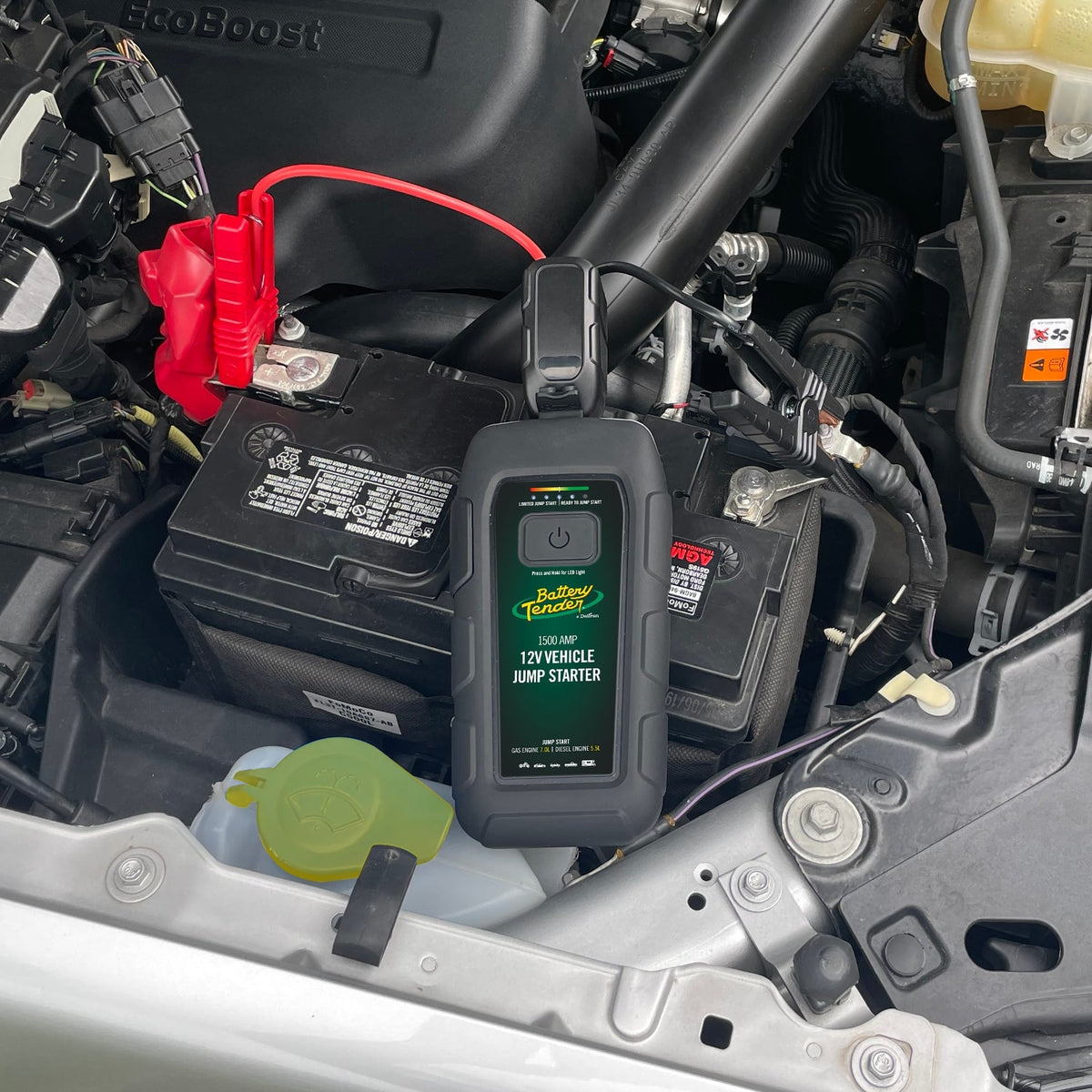
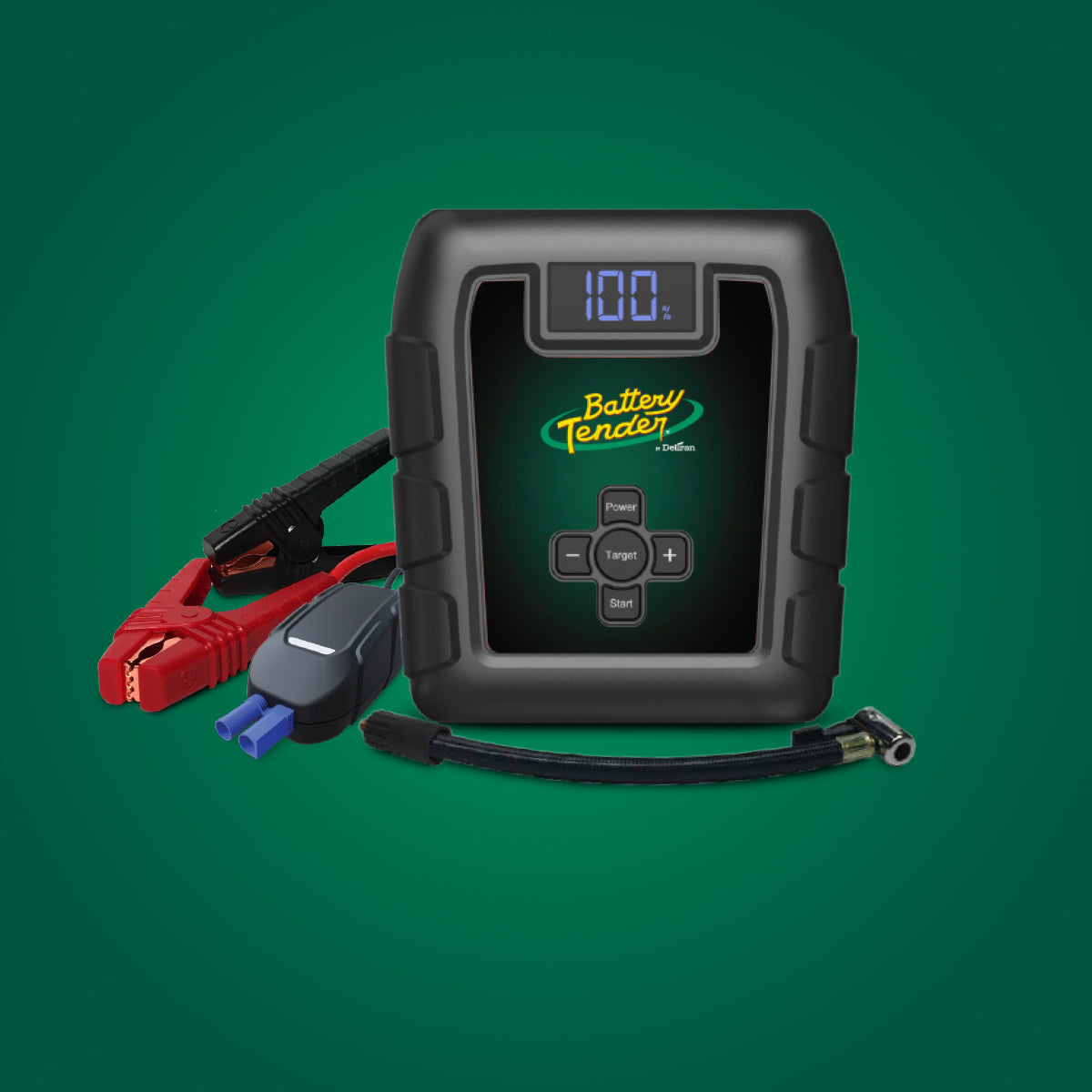
Even a well-maintained battery can be drained by one forgotten dome light. The Battery Tender Jump N Start 800 Amp Jump Starter and Tire Inflator handles 4.0L gas and 2.0L diesel engines and includes a 140 PSI inflator for roadside flats. It complements a maintainer by covering emergencies that no charging routine can prevent.
Battery Tender Jump N Start 800 Amp Jump Starter and Tire Inflator
Frequently Asked Questions
Is it safe to leave a trickle charger on a car battery overnight?
A trickle charger for car batteries is usually safe overnight if the output is under 1A and the battery is not already full. Beyond 24 hours, the constant current can overheat the battery and cause gassing. A smart maintainer with ISM avoids the problem because it switches to Float Maintenance once the battery is full.
What is the difference between a trickle charger and a battery maintainer?
A trickle charger supplies constant current whatever the battery's condition. A battery maintainer monitors voltage and adjusts output, delivering current only when needed. Battery Tender products use ISM, a four-stage process, which is why they can stay connected indefinitely without overcharging the battery.
How many amps should a charger for a car battery be?
Most car batteries do well with a 2A maintainer for storage. For recovery of a deeply discharged battery, 8A or higher shortens charging time. Trucks and SUVs with 70Ah or larger batteries benefit from 8A to 15A. Use (Ah × depth of discharge) ÷ amps to estimate hours.
Can a trickle charger revive a dead car battery?
Rarely. A low-output unit cannot recover a battery below about 10.5V, and it cannot reverse permanent plate damage. A smart charger with an Initialization stage tests the battery first and recovers many deeply discharged batteries. If the battery fails a load test, replacement is the only fix.
How long can a smart charger stay connected to a car battery?
A smart charger with ISM can stay connected for months, including an entire winter. The Float Maintenance stage monitors voltage and delivers pulses only when voltage drops, so the battery is never overcharged. Check the indicator light about once a month and confirm connections remain clean and secure.
Conclusion
A trickle charger for car batteries is a blunt tool. It was fine for short, supervised top-ups, but constant current is a liability on a battery that sits for weeks. ISM charging solves that with four monitored stages, ending in a Float Maintenance stage that acts only when needed.
Next step: measure your battery's resting voltage, pick a charger from the sizing table above, and connect it before the next storage period. Browse the full lineup in the Battery Tender battery chargers collection.