


How to Connect a Battery Tender® Smart Charger: Step-by-Step Installation Guide (2026)
Knowing how to connect a Battery Tender® charger correctly is the single most important step toward reliable, long-term battery maintenance. A proper connection ensures that Infinite Sequential Monitoring (ISM) technology can accurately read battery voltage, deliver the right current at each of its four stages, and keep any 12-volt battery safely maintained for weeks, months, or even years without risk of overcharging. Yet many vehicle owners connect chargers with loose clips, reversed polarity, or poor grounding—mistakes that reduce charging efficiency, trigger safety faults, and can even damage electronics.
This guide walks through every connection method available with Battery Tender chargers—ring terminal harnesses, alligator clips, and permanent hardwired installations—with exact steps, safety precautions, and product recommendations for each scenario. Whether the charger is going on a motorcycle in the garage, a truck parked outdoors, or a boat on a trailer, the correct connection technique makes the difference between a battery that lasts two years and one that delivers five or more.
What You Need Before You Connect a Battery Tender Charger
Every Battery Tender charger ships with either alligator clips, a ring terminal harness, or both, depending on the model. Before starting any connection, gather the following items and verify the environment meets basic safety requirements.
Checklist of Required Items
- Battery Tender charger — matched to the battery voltage (6V or 12V) and chemistry (standard lead-acid, AGM, GEL, or lithium)
- Ring terminal harness or alligator clips — included with most models; replacement harnesses available separately
- Safety glasses and gloves — lead-acid batteries contain sulfuric acid and may emit hydrogen gas during charging
- Wire brush or terminal cleaner — corroded terminals increase resistance and reduce charging accuracy
- Wrench or socket set (typically 10 mm) — for loosening battery terminal bolts when installing ring terminals
- Ventilated location — never charge in a sealed, unventilated space; hydrogen gas is flammable at concentrations above 4%
Inspect the battery visually before connecting. A cracked case, bulging sides, or leaking electrolyte indicate a damaged battery that should be replaced, not charged. According to the Battery Council International (BCI), approximately 52% of premature battery failures trace back to undercharging or sulfation—problems a properly connected Battery Tender charger is designed to prevent through ISM cycling.
How to Connect a Battery Tender® Charger Using Ring Terminals (Permanent Method)
The ring terminal harness is the preferred connection method for any vehicle that will be charged or maintained regularly. Once installed, the harness stays bolted to the battery terminals permanently, and the quick-disconnect SAE connector allows the charger to be attached or removed in seconds without tools. This is the recommended setup for motorcycles, classic cars, seasonal vehicles, ATVs, and any battery stored in a hard-to-reach compartment.
Step-by-Step Ring Terminal Installation
- Turn off the vehicle ignition and remove the key. Disconnect any aftermarket accessories that draw current.
- Locate the battery terminals. Identify the positive (+) terminal (typically marked with a red cover or "+" symbol) and the negative (−) terminal (black cover or "−" symbol).
- Clean both terminals with a wire brush until bare metal is visible. Corrosion creates resistance that can cause ISM initialization to misread battery condition.
- Connect the RED ring terminal to the positive (+) battery post. Loosen the terminal bolt, slide the ring terminal over the bolt, and retighten securely. The ring terminal must sit flush against the battery post clamp with no wobble.
- Connect the BLACK ring terminal to the negative (−) battery post. Follow the same bolt-loosen, slide, retighten procedure.
- Route the SAE quick-disconnect connector to an accessible location—through a seat gap on motorcycles, out the front grille area on cars, or along a fender well. Use zip ties to secure excess cable away from moving parts, exhaust components, and sharp edges.
- Plug the charger SAE connector into the harness SAE connector. The connectors are keyed for correct polarity and will only mate one way.
- Plug the charger into a grounded AC outlet. The ISM initialization stage begins immediately, testing the battery before applying current.
Safety note: Always connect positive first, then negative. When disconnecting, reverse the order—negative first, then positive. This sequence minimizes the risk of a short circuit if a wrench accidentally contacts the vehicle chassis.
For outdoor installations where the charger and harness are exposed to rain, dust, or temperature swings, the Battery Tender Plus 1.25A is the ideal match. It carries an IP65 weatherproof rating, includes temperature compensation that adjusts charge voltage automatically as ambient temperatures fluctuate, and handles batteries from 14 Ah to 80 Ah—covering everything from motorcycle batteries to full-size automotive batteries. The industry-leading 10-year warranty reflects the durability built into this unit.
Battery Tender Plus 1.25A 12V Charger
How to Connect a Battery Tender® Charger Using Alligator Clips (Temporary Method)
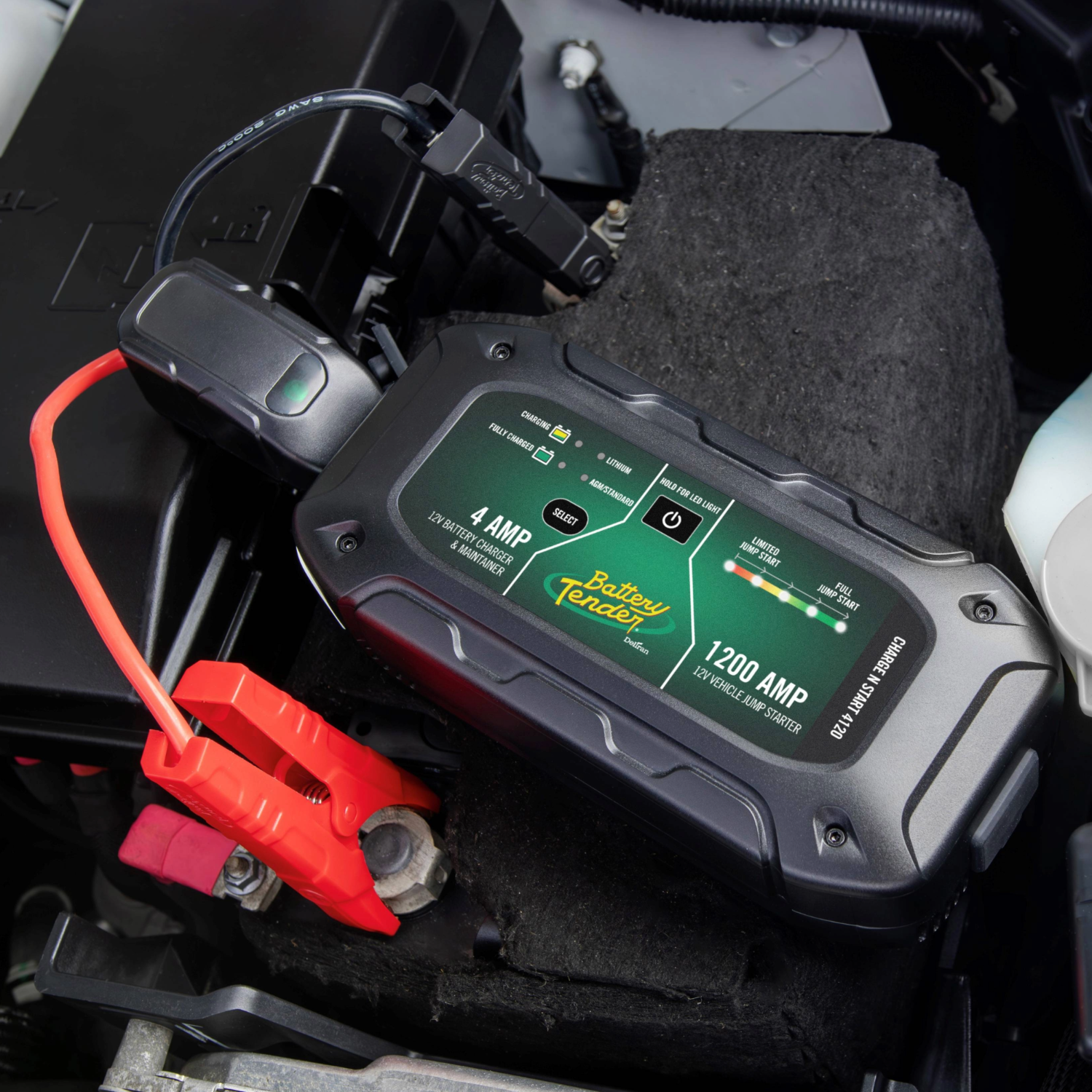
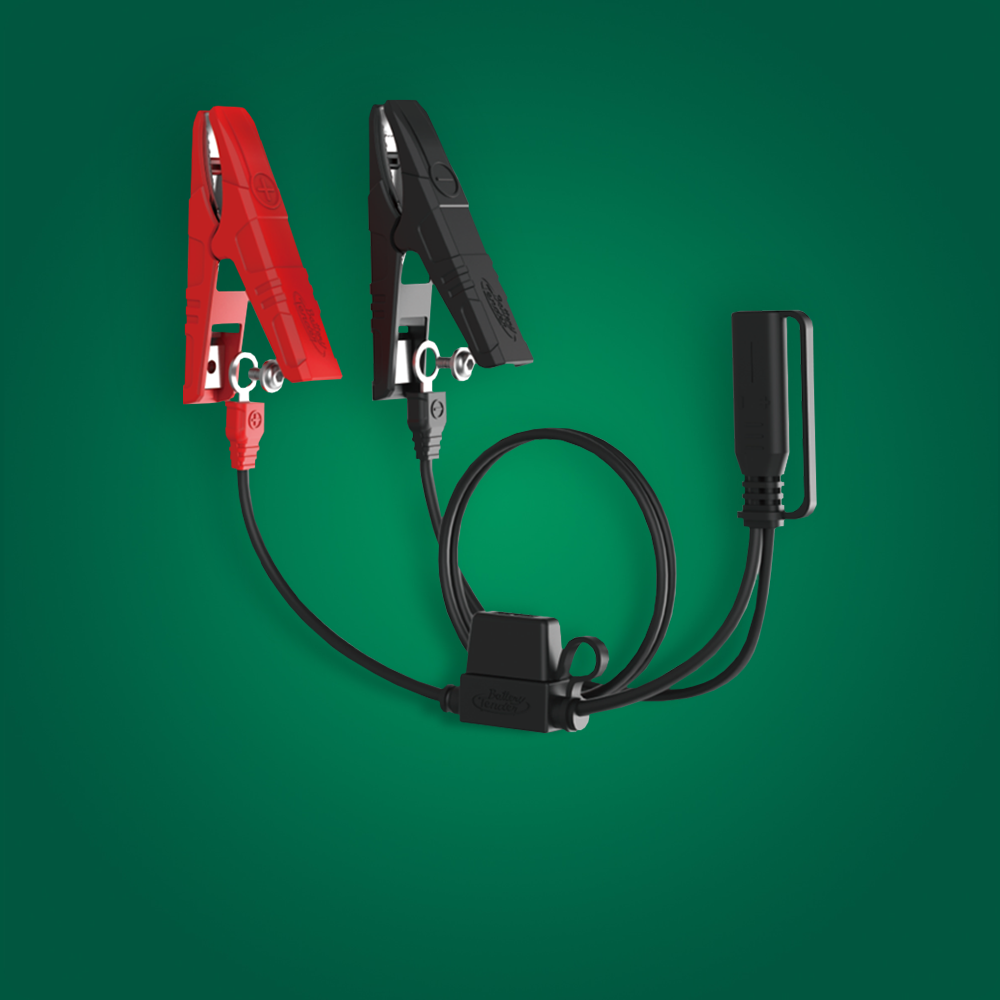
Alligator clips provide a fast, tool-free temporary connection suitable for one-time charging sessions, emergency recovery, or situations where a permanent ring terminal installation is not practical. Most Battery Tender chargers include a set of alligator clips with an SAE connector that plugs directly into the charger output cable.
Step-by-Step Alligator Clip Connection
- Ensure the charger is unplugged from the AC outlet. Never connect clips to a battery while the charger is energized.
- Attach the RED alligator clip to the positive (+) battery terminal. Open the clip jaws fully and clamp directly onto the terminal post or clamp—not onto the cable insulation.
- Attach the BLACK alligator clip to the negative (−) battery terminal or to a clean, unpainted metal surface on the engine block or frame (chassis ground). A chassis ground reduces spark risk at the battery.
- Verify both clips are secure. Wiggle each clip gently. A loose clip can arc, interrupting ISM monitoring and potentially damaging the clip or terminal.
- Plug the charger into a grounded AC outlet. The status LED will indicate the current ISM stage.
Alligator clips work well for quick top-off charges, but they are not recommended for unattended long-term maintenance. Vibration, temperature changes, or accidental contact can loosen a clip over days or weeks. For any vehicle that will sit connected for more than 48 hours, install a ring terminal harness instead.
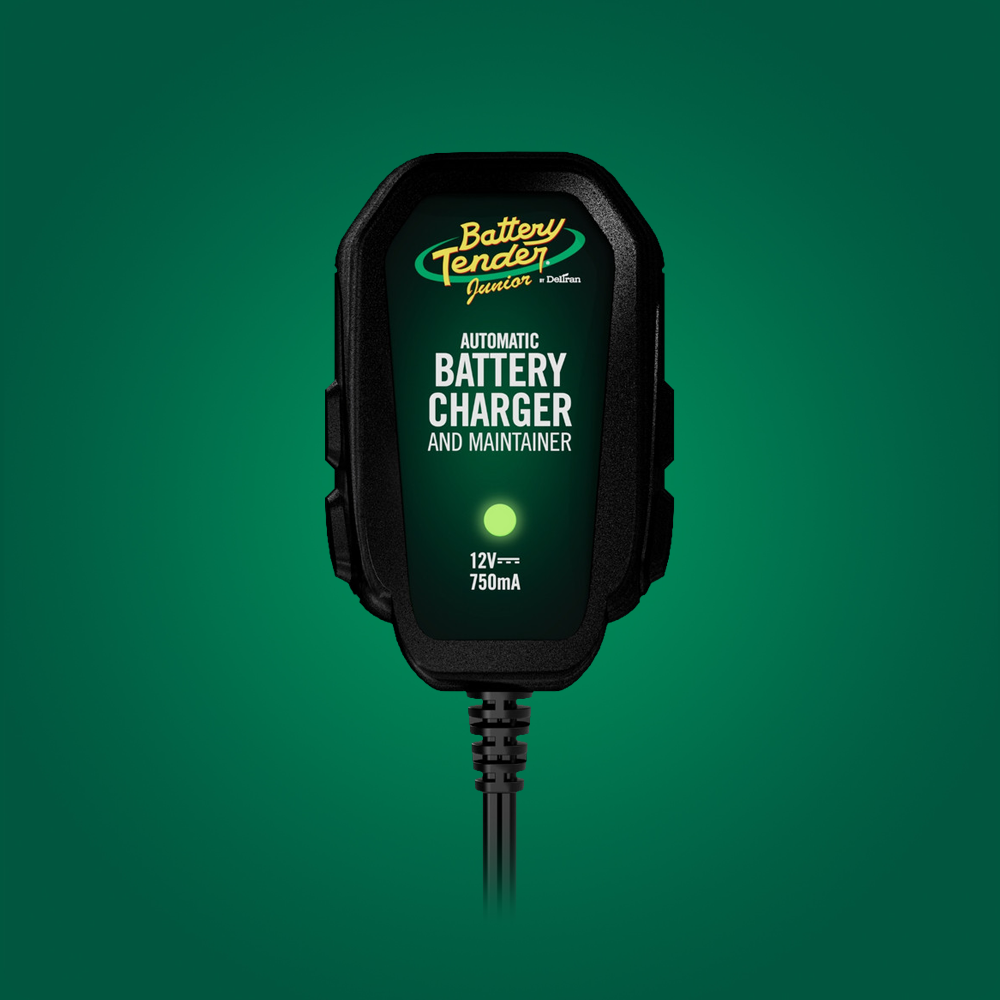
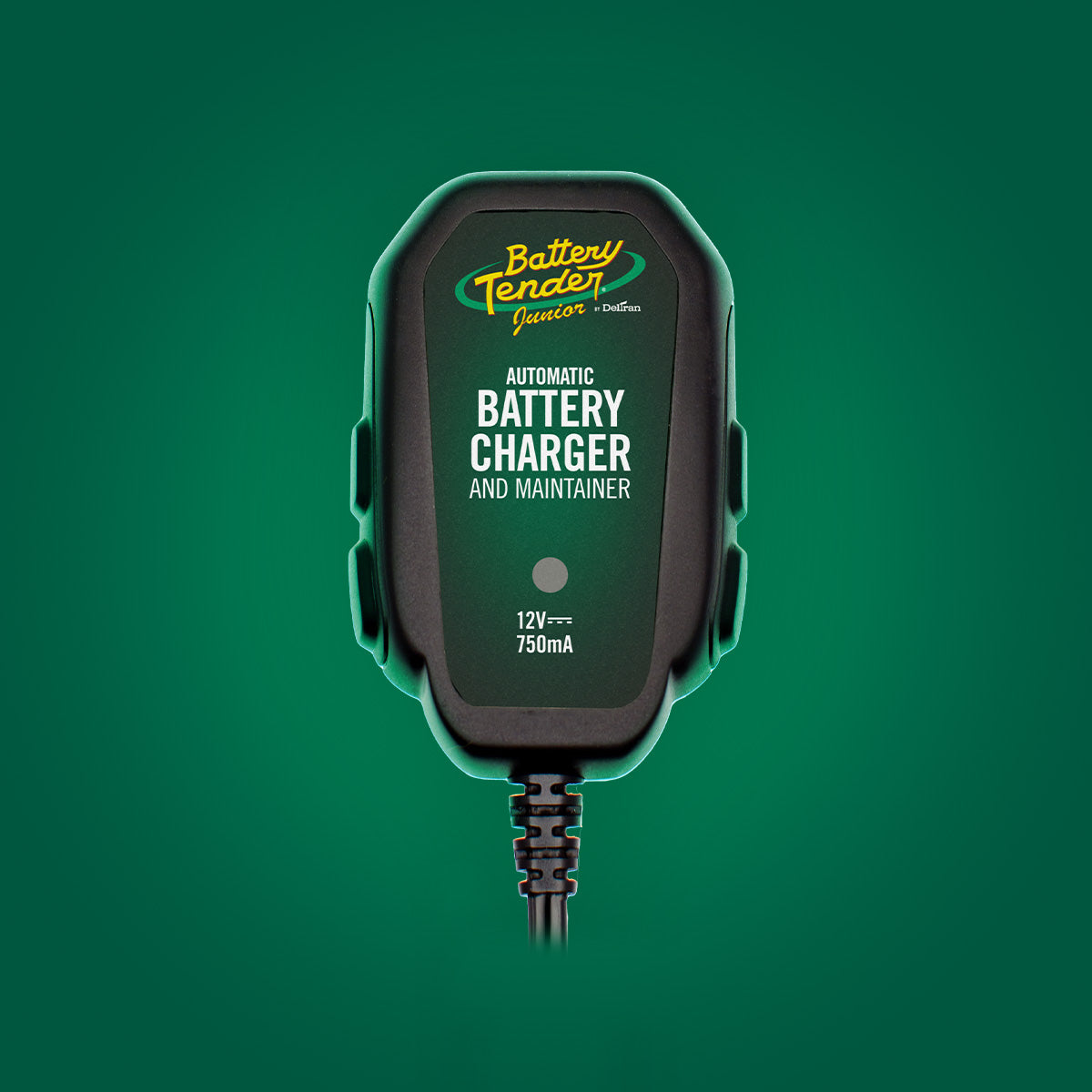
For powersports batteries between 2 Ah and 30 Ah—motorcycles, scooters, ATVs, and personal watercraft—the Battery Tender Junior 750mA is the most popular choice. At 750 milliamps of output, it charges gently enough to avoid stressing small-capacity batteries while still completing a full ISM cycle efficiently. A fully discharged 12 Ah motorcycle battery, for example, charges in approximately 16 hours (12 Ah × 1.0 depth of discharge ÷ 0.75A = 16 hours).
Battery Tender Junior 12V 750mA Charger
Important: Nearly all Battery Tender chargers include temperature compensation to adjust for charging in extreme heat or cold.
Connecting to Lithium Batteries: Chemistry Selection Matters
Lithium-iron-phosphate (LiFePO4) batteries are now mainstream in motorcycles, marine applications, and powersports vehicles. These batteries require a different charge voltage profile than lead-acid, AGM, or GEL batteries—typically 14.4V–14.6V bulk versus 14.4V–14.8V for lead-acid, with no extended float stage. Connecting a non-lithium charger to a lithium battery risks incomplete charging and reduced cycle life.
Battery Tender chargers with selectable chemistry include a physical switch or button that toggles between lead-acid and lithium charge profiles before the ISM cycle begins. The connection steps are identical to those described above for ring terminals or alligator clips, with one critical addition: select the correct battery chemistry BEFORE plugging the charger into AC power. Changing chemistry mode mid-charge interrupts the ISM cycle and may require a full restart.
The Battery Tender Junior 1A Selectable handles both lithium and lead-acid batteries at 1 amp, making it the right pick for riders who own multiple motorcycles with different battery chemistries. The physical chemistry selector switch on the charger body makes it impossible to accidentally select the wrong mode—a significant safety advantage over app-dependent chargers.
Battery Tender Junior 1A Selectable Charger
How to Connect a Battery Tender® Charger for Large Batteries and Fast Recovery
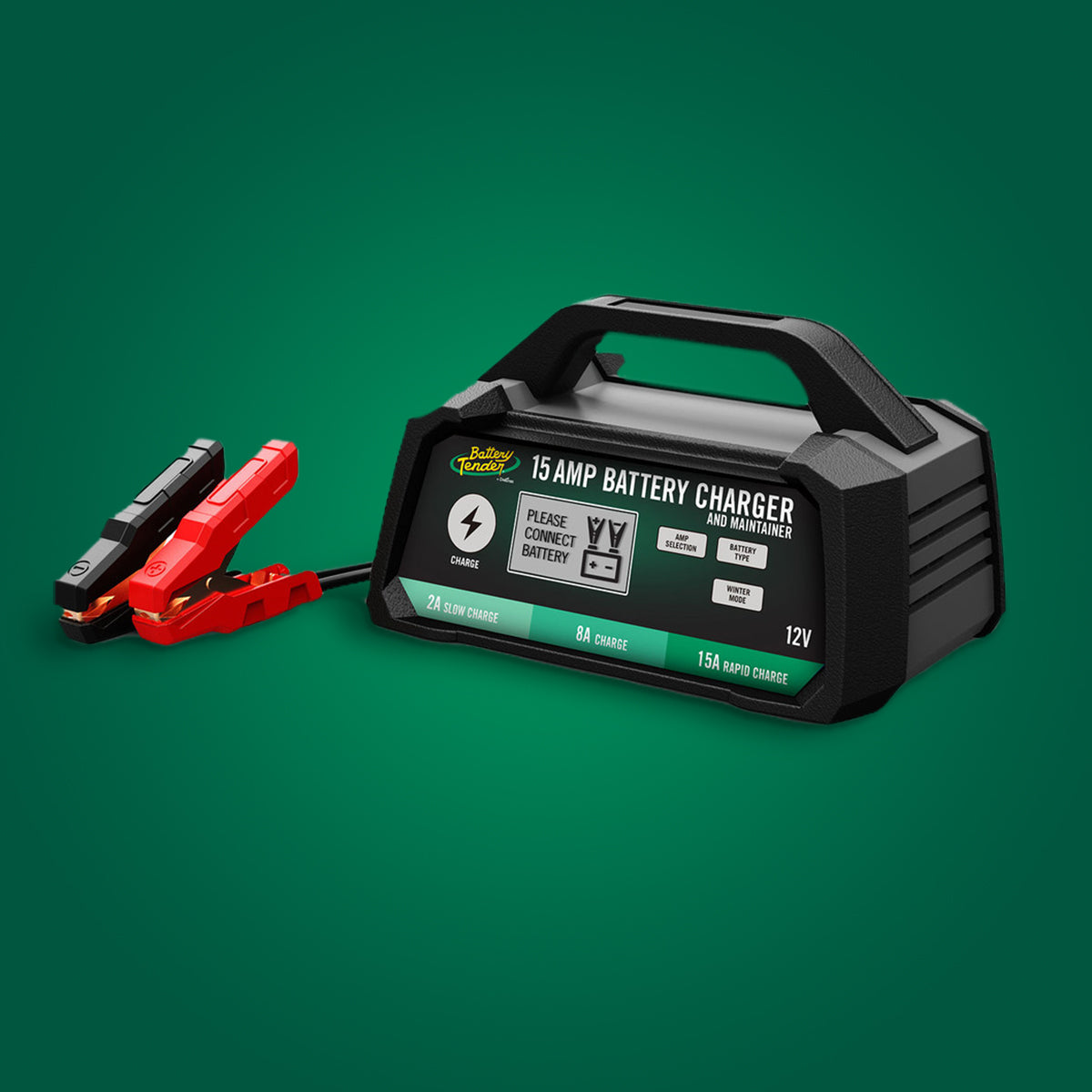
Trucks, SUVs, diesel vehicles, and equipment with batteries rated above 80 Ah need a higher-amperage charger to recover from deep discharge in a reasonable timeframe. A 100 Ah battery at 50% depth of discharge, charged at 1.25 amps, would require approximately 40 hours (100 × 0.5 ÷ 1.25 = 40). The same battery on an 8-amp setting recovers in roughly 6.25 hours (100 × 0.5 ÷ 8 = 6.25).
The Battery Tender 8A/2A Power Tender (SKU 022-1005-DL-WH) addresses this need with three selectable output modes: 8 amps for fast recovery, 2 amps for smaller batteries or gentler maintenance, and a 6-amp power supply mode that maintains voltage during ECU reprogramming or diagnostic procedures without battery involvement. It supports standard, AGM, GEL, and lithium chemistries, carries an IP65 rating for outdoor use, and connects using the same ring terminal or alligator clip methods described above.
Battery Tender 8A/2A Power Tender (SKU 022-1005-DL-WH)
Understanding the LED Status Indicators After Connection
Once the charger is connected and plugged in, the LED indicator lights communicate exactly which ISM stage is active. Understanding these signals prevents unnecessary disconnection or troubleshooting of a charger that is functioning normally.
- Red flashing: Initialization stage — the charger is testing battery condition and applying a gentle diagnostic current.
- Red solid: Bulk charge stage — full rated current is flowing into the battery, building charge toward approximately 80% state of charge.
- Red-to-green transition (amber on some models): Absorption stage — voltage is held constant while current tapers, dissolving sulfate crystal buildup on the plates.
- Green solid: Float maintenance stage — the battery is fully charged. The ISM system monitors voltage continuously, delivering short charge pulses only when voltage drops below the maintenance threshold.
If the LED flashes red and green alternately or does not progress past initialization, the battery may be below the minimum recovery voltage, have an internal open cell, or the connection may be loose. Remove the clips or SAE connector, inspect the terminals, clean any corrosion, and reconnect. If the fault persists, the battery likely requires professional testing or replacement.
Common Connection Mistakes and How to Avoid Them
Even experienced vehicle owners make connection errors that reduce charging effectiveness or trigger safety shutoffs. The following mistakes are the most common.
- Reversed polarity: Connecting red to negative and black to positive. All Battery Tender chargers include reverse-polarity protection that prevents current flow, but the charger will not charge until polarity is corrected.
- Corroded terminals: A layer of green or white corrosion adds resistance between the clip and the terminal, causing voltage drop that ISM reads as a battery defect. Always clean terminals before connecting.
- Clamping onto cable insulation: Alligator clips must contact bare metal on the terminal post or clamp. Clamping onto insulated cable jackets creates an open circuit.
- Using an extension cord: Standard household extension cords can cause voltage drop that affects charger performance. If an extension cord is unavoidable, use a 14-gauge or heavier cord no longer than 25 feet, per National Electrical Code (NEC) guidelines.
- Routing ring terminal harness near exhaust or moving parts: Heat degrades wire insulation over time, and moving parts (belts, pulleys, chains) can sever the harness. Use zip ties and loom tubing to route cables safely.
Frequently Asked Questions
Can I leave a Battery Tender charger connected indefinitely?
Yes. Battery Tender chargers use ISM technology, a 4-stage process that transitions automatically to float maintenance once the battery reaches full charge. During float maintenance, the charger delivers brief charge pulses only when voltage drops below the maintenance threshold. There is no constant current flow, so overcharging cannot occur. Vehicles in seasonal storage routinely stay connected for six months or longer without battery damage.
Do I need to disconnect the battery from the vehicle before connecting the charger?
In most cases, no. Battery Tender chargers deliver low, regulated current that is safe for modern vehicle electronics. However, for vehicles with sensitive aftermarket systems—custom ECUs, competition data loggers, or modified wiring—disconnecting the negative terminal before connecting the charger provides an extra layer of protection against voltage spikes during initialization.
Which connection method is better: ring terminals or alligator clips?
Ring terminals are better for any application requiring repeated or long-term connection. They bolt directly to the battery posts, creating a secure, vibration-resistant contact that maintains consistent resistance. Alligator clips are best for temporary, short-duration charging sessions where permanent installation is impractical. For seasonal vehicles, always install ring terminals.
Can I connect a Battery Tender charger to a lithium battery?
Yes, but only with Battery Tender models that feature a selectable chemistry switch, such as the Battery Tender Junior 1A Selectable or the Battery Tender 8A/2A Power Tender (SKU 022-1005-DL-WH). Set the chemistry selector to lithium before plugging into AC power. Standard lead-acid–only models like the Battery Tender Junior 750mA should not be used on lithium batteries.
Conclusion
Learning how to connect a Battery Tender® charger properly takes less than ten minutes but protects a battery investment that can cost $100–$300 or more. Clean terminals, correct polarity, secure contact, and the right connection method—ring terminals for permanent installation, alligator clips for temporary use—ensure that ISM technology operates at full accuracy through all four stages. Matched to the correct charger amperage and chemistry setting, a properly connected Battery Tender charger can extend battery life from the typical 2–3 year average to 5 years or beyond by preventing sulfation and eliminating overcharge risk entirely.
Explore the full lineup of Battery Tender chargers, maintainers, and accessories to find the right match for every vehicle and battery type:
Battery Tender Chargers and Maintainers — Complete Collection
Last updated: 2026