


Boat Battery Dead? How WaveCharge Marine Chargers Prevent It (2026)
A boat battery dead at the dock, at the ramp, or miles offshore turns any outing into a frustrating — and potentially dangerous — situation. According to the BoatUS Marine Insurance claim files, battery failure ranks among the top five reasons boaters call for on-water assistance each year, and most of those failures trace back to preventable causes: parasitic drain, sulfation from sitting discharged, corrosion accelerated by saltwater environments, and inadequate charging between trips. Battery Tender® pioneered smart charging technology in 1989, and the marine-specific WaveCharge product line addresses every one of these root causes with permanently installed, independently managed onboard charging.
This guide takes a different approach from general charging tutorials or winter storage advice. The focus here is diagnosing why a boat battery goes dead in the first place, understanding the unique environmental stressors that make marine batteries far more vulnerable than automotive batteries, and then matching the right permanent onboard charging solution to prevent repeat failures. Whether the dead battery is a starting bank, a house bank, or a trolling motor battery, the path from diagnosis to prevention follows the same proven principles.
Key Takeaways:
- A boat battery dead at the dock almost always results from parasitic drain, sulfation, or inadequate recharging — not sudden battery failure.
- Marine environments accelerate battery death through saltwater corrosion, vibration, heat, and fuel vapor exposure.
- Permanently installed onboard chargers with independent per-bank ISM charging eliminate the most common causes of dead marine batteries.
- IP68 waterproofing and UL marine ignition protection are non-negotiable safety qualifications for engine room installation.
Why Does a Boat Battery Go Dead? The Five Root Causes
A boat battery dead after sitting for a week or two is not a mystery — it follows predictable electrochemistry. Understanding the specific failure mechanism determines whether the battery can be recovered or needs replacement, and more importantly, whether the same failure will repeat.
Parasitic drain is the most common culprit. Modern boats carry bilge pumps, GPS units, fish finders, stereo memory circuits, and LED accent lighting that collectively draw 50–200 milliamps even when the master switch is off. A 100 mAh parasitic draw will drain a fully charged 100 Ah deep-cycle battery to 50% state of charge in approximately 21 days — well below the threshold where sulfation begins causing permanent damage.
Sulfation accounts for roughly 80% of lead-acid battery failures according to industry estimates from the Battery Council International (BCI). When a lead-acid or AGM marine battery sits below 12.4 volts, lead sulfate crystals harden on the plates. After 30 days at low state of charge, those crystals become increasingly difficult to dissolve, reducing capacity permanently. Inadequate alternator charging compounds the problem — most marine alternators deliver bulk charge only and never reach a true absorption voltage, leaving batteries chronically undercharged at 70–85% state of charge trip after trip. Corrosion and vibration — both dramatically worse in marine environments than automotive — accelerate terminal resistance and internal connection failures.
How the Marine Environment Kills Boat Batteries Faster Than Cars
Marine batteries face a combination of environmental stressors that no automotive battery ever encounters. Recognizing these stressors explains why a boat battery dead after what seems like normal use is far more common than the equivalent scenario in a car.
Saltwater corrosion attacks terminals, cables, and charger housings at rates 5–10 times faster than freshwater moisture alone. Salt spray creates conductive paths across terminal posts, increasing self-discharge and creating micro-short circuits. Vibration from wave impact and engine operation loosens plate connections and accelerates shedding of active material — the Internal Revenue from which the battery generates voltage. The American Boat and Yacht Council (ABYC) standard E-11 specifically addresses wiring and battery installation requirements to mitigate vibration damage, yet many boats fall short of full compliance.
Fuel vapor presents the most critical safety concern. Gasoline-powered boats accumulate fuel vapor in enclosed engine compartments. Any electrical device installed in that space must carry UL marine ignition protection certification, confirming it cannot produce sparks capable of igniting fuel vapor. Standard automotive chargers lack this certification and are dangerous in enclosed marine engine rooms. Temperature extremes compound everything — a boat battery sitting in a dark engine compartment in a Florida marina can reach 120°F or higher, accelerating self-discharge by roughly 50% compared to a battery stored at 77°F.
Can a Dead Boat Battery Be Recovered?
A boat battery dead from simple discharge — parasitic drain or being left with the master switch on — can usually be fully recovered if addressed within 2–4 weeks. The key factor is how long the battery sat at low voltage and how deeply it discharged.
Smart chargers using Infinite Sequential Monitoring (ISM) technology handle recovery through a specific 4-stage process. Stage 1 (Initialization) applies gentle current to test the battery and determine its condition — critical for identifying whether the battery can accept charge at all. Stage 2 (Bulk Charge) delivers full rated current until the battery reaches approximately 80% state of charge. Stage 3 (Absorption) holds voltage constant while tapering current, dissolving soft sulfate crystals that formed during discharge. Stage 4 (Maintenance) delivers demand-responsive charge pulses only when voltage drops, keeping the battery at 100% indefinitely without overcharging.
Batteries that have sat deeply discharged for 60 days or longer typically show irreversible sulfation — the Initialization stage will detect this condition. A 100 Ah marine battery at 50% depth of discharge connected to a 10A charger requires approximately 5 hours for full recovery: (100 Ah × 0.50) ÷ 10A = 5 hours. At 3A per bank, that same battery takes roughly 16.7 hours — still well within an overnight dock charge.
Why Onboard Permanent Installation Prevents a Boat Battery Dead Scenario
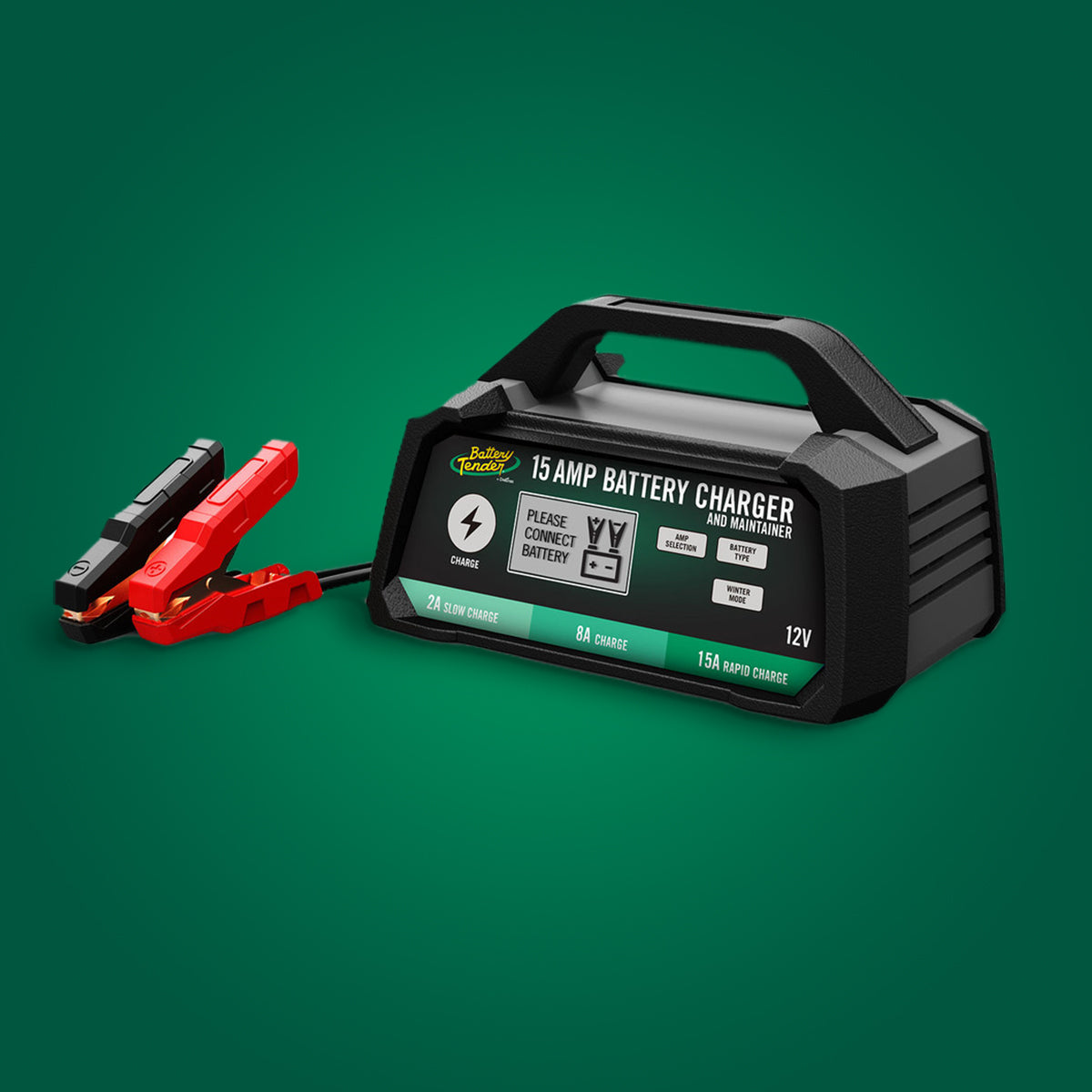
The most reliable way to prevent a boat battery dead situation is eliminating the charging gap between trips entirely. Portable chargers require the owner to remember, transport, connect, and disconnect the charger every single time the boat returns to the dock. Permanently installed onboard chargers connect to shore power automatically — the battery stays maintained from the moment the boat is tied up until the next departure.
Independent per-bank charging is essential for multi-battery boats. A typical dual-battery boat has a starting battery and a house battery with different chemistries, capacities, and discharge levels. A single-output charger connected through a battery switch cannot optimize charging for both simultaneously. ISM technology applied independently to each bank means the starting battery completes its Absorption stage on its own timeline while the deeply discharged house battery receives full Bulk charge — neither bank compromises the other.
For boats with a dual-battery setup — one starting bank and one house or trolling motor bank — the Battery Tender WaveCharge Pro 2-Bank 20A delivers 10A per bank with IP68 waterproofing and UL marine ignition protection certification. The IP68 rating means full submersion protection, not just splash resistance, and the ignition protection certification confirms safe operation in enclosed engine compartments with potential fuel vapor.
Battery Tender WaveCharge Pro 2-Bank 20A Onboard Marine Charger
Matching the Right WaveCharge Charger to a Boat Battery Configuration
Not every boat battery dead scenario demands the same solution. The correct charger depends on the number of battery banks, total capacity, chemistry mix, and installation environment.
Three-Bank Boats: Center Console and Sportfishing
Center console boats and sportfishing rigs commonly run three banks: starting, house/electronics, and trolling motor. The Battery Tender WaveCharge Pro 3-Bank 30A provides 10A of independent ISM charging per bank, with the same IP68 and UL marine ignition protection as the 2-Bank model. At 10A per bank, a 150 Ah trolling motor battery at 50% depth of discharge recovers in approximately 7.5 hours — overnight at the dock.
Battery Tender WaveCharge Pro 3-Bank 30A Onboard Marine Charger
Four-Bank Boats: Tournament Bass and Large Cruisers
Tournament bass boats with 36V trolling systems (three batteries in series) plus a starting battery need four independent banks. Large cruisers with dual engines, a generator start battery, and a house bank face the same requirement. The Battery Tender WaveCharge Pro 4-Bank 40A addresses this with 10A per bank, maintaining all four batteries at 100% state of charge between outings. Each bank runs its own ISM cycle independently — critical when one trolling battery discharges deeper than the others during a tournament day.
Battery Tender WaveCharge Pro 4-Bank 40A Onboard Marine Charger
Budget-Conscious Two-Bank Setup
For freshwater boats with simpler two-bank configurations or owners maintaining a mix of 6V and 12V batteries, the Battery Tender WaveCharge 2-Bank 6A offers selectable 6V/12V operation at 3A per bank with IP67 water resistance. While recovery times are longer — a 100 Ah battery at 50% discharge takes approximately 16.7 hours at 3A — the continuous maintenance capability means the battery never reaches a critically low state of charge in the first place.
Battery Tender WaveCharge 2-Bank 6A Selectable Marine Charger
IP68 and UL Marine Ignition Protection: Why Ratings Matter When a Boat Battery Goes Dead
Choosing an onboard charger based solely on amperage output ignores the two most critical marine safety qualifications. IP68 waterproofing means the charger housing is sealed against continuous submersion — not just rain or splash. In a marine environment where bilge water rises, waves crash over gunwales, and humidity stays near 100%, anything less than IP68 risks corrosion-induced failure or electrical short circuits.
UL marine ignition protection certification (conforming to SAE J1171 and UL 1236 standards) verifies that the charger cannot produce arcs, sparks, or surface temperatures capable of igniting fuel vapor. The ABYC E-11 standard requires ignition protection for all electrical equipment installed in gasoline engine compartments or adjacent spaces. Installing a non-certified charger in an enclosed engine room violates ABYC standards and creates a genuine explosion hazard. Every Battery Tender WaveCharge Pro model carries both IP68 and UL marine ignition protection certification.
Prevention Protocol: Keeping Marine Batteries Alive Between Trips
Preventing a boat battery dead situation requires a consistent protocol, not occasional attention. The following steps work in conjunction with a permanently installed Battery Tender WaveCharge charger:
- Connect shore power immediately upon docking. Every hour a discharged battery sits accelerates sulfation. The onboard charger ISM cycle begins automatically.
- Inspect terminals monthly. Clean corrosion with a baking soda solution and apply anti-corrosion spray or dielectric grease. Corroded terminals increase resistance and reduce effective charge current.
- Measure parasitic draw annually. Disconnect shore power, disconnect the charger output, and measure draw with an ammeter in series at each battery bank. Anything above 50 mA warrants investigation.
- Test battery capacity at start of season. A battery that recovers to 12.6V on the charger but drops below 12.0V under a 50% rated load test has lost significant capacity and should be replaced before it leaves the owner stranded.
- Verify charger LED indicators before departure. A solid green maintenance indicator confirms the ISM cycle has completed. A flashing or amber indicator means the battery has not reached full charge — investigate before departing.
Frequently Asked Questions
Why does my boat battery keep dying even after I charge it?
A boat battery that dies repeatedly after charging typically has a parasitic drain from electronics drawing current with the master switch off, or the battery has suffered permanent sulfation from sitting discharged too long. Measure parasitic draw with an ammeter and load-test the battery. If the battery passes a load test, install a permanently connected onboard charger with ISM technology to maintain voltage between trips.
Can I use a car battery charger on my boat battery?
Standard automotive chargers lack UL marine ignition protection and IP68 waterproofing, making them unsafe for permanent installation in marine environments — particularly enclosed engine compartments where fuel vapor may accumulate. Marine-rated chargers like the Battery Tender WaveCharge Pro meet ABYC E-11 requirements for ignition-protected installation and resist saltwater corrosion.
How long does it take to charge a dead boat battery?
Charging time depends on battery capacity, depth of discharge, and charger amperage. Use this formula: (battery Ah × depth of discharge) ÷ charger amps = approximate hours. A completely dead 100 Ah battery on a 10A WaveCharge Pro bank takes roughly 10 hours. A 3A WaveCharge Standard bank charges the same battery in approximately 33 hours.
Is it safe to leave a Battery Tender WaveCharge charger connected all the time?
Yes. ISM technology — Infinite Sequential Monitoring — continuously monitors battery voltage and delivers charge pulses only when voltage drops below the maintenance threshold. Unlike trickle chargers that push constant current regardless of battery state, ISM prevents overcharging and is designed for indefinite connection. This makes permanent onboard installation both safe and recommended.
Conclusion
A boat battery dead at the dock or on the water is almost always a preventable failure. Parasitic drain, chronic undercharging from alternators, sulfation from sitting idle, and the harsh realities of saltwater corrosion and engine compartment heat all conspire against marine batteries — but every one of these causes has a straightforward engineering solution. Permanently installed onboard chargers with independent per-bank ISM charging, IP68 waterproofing, and UL marine ignition protection certification address the root causes rather than just the symptoms.
Explore the full lineup of Battery Tender marine charging solutions — from the WaveCharge Standard series for budget-friendly two-bank setups to the WaveCharge Pro series for high-output, fully certified multi-bank installations — at the Battery Tender Marine Charger collection page.