

Golf Cart Battery Guide: Battery Tender® PowerPlus Charging (2026)
A golf cart battery is a deep-cycle pack that delivers 36V or 48V and lasts longest when it is fully recharged after every round. Match the charger to the pack voltage, top off flooded cells with distilled water, and expect 4 to 6 years from lead-acid.
Key Takeaways
- Most carts run a 48V golf cart battery pack. Older carts use 36V, and some older or industrial vehicles use 24V. Charger voltage must equal pack voltage.
- Flooded lead-acid packs typically last 4 to 6 years (roughly 500 to 1,000 cycles). Lithium packs can exceed 2,000 cycles.
- Charge time is (Ah × depth of discharge) ÷ charger amps. Add 10 to 20% for charging losses.
- Check water monthly, use distilled water only, and add it after charging.
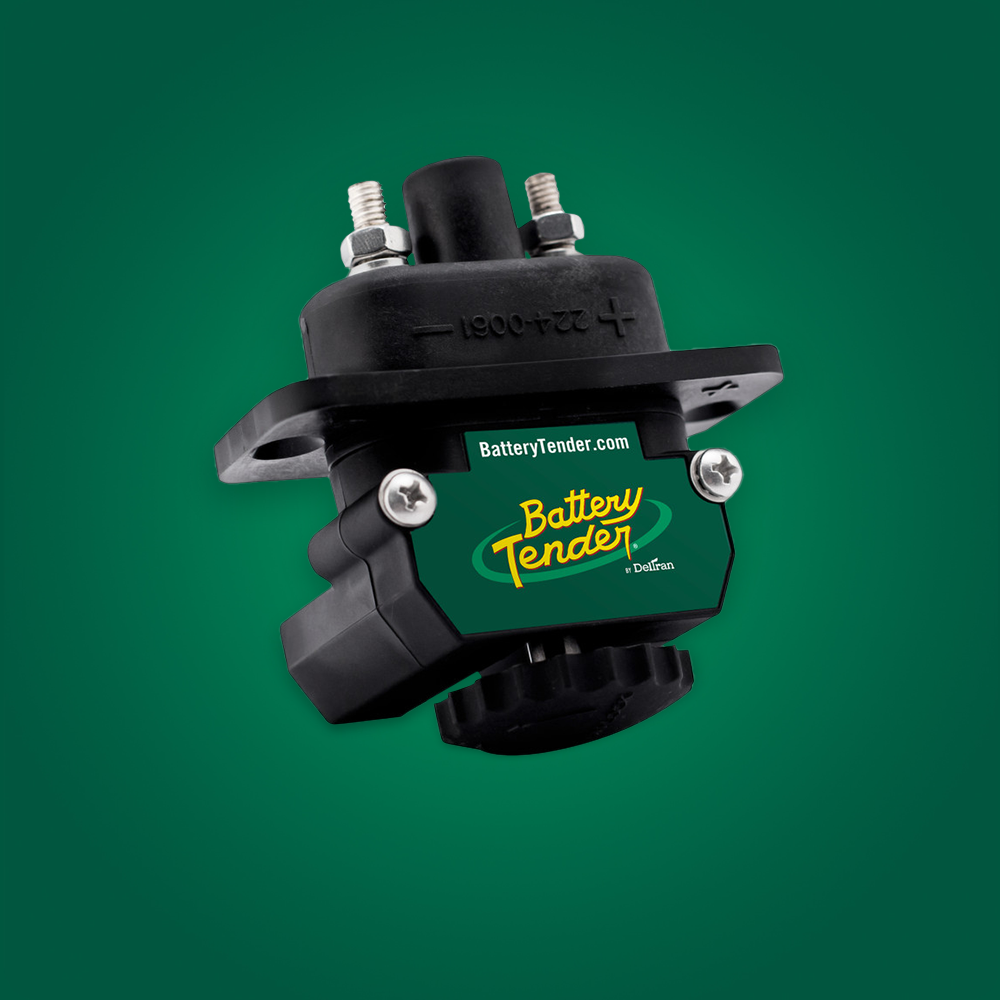
- A Battery Tender PowerPlus charger is IP68 rated, mounts permanently on-board, and uses four-stage Infinite Sequential Monitoring (ISM) charging that is safe for indefinite connection.
The Battery Tender brand has spent decades engineering smart battery chargers, and that experience applies directly to golf carts, which are among the hardest-working battery applications. A cart discharges its pack deeply every day, parks outdoors, and sits for weeks in the off-season. This guide covers how a golf cart battery works, how to size a charger, how to charge step by step, and how to store the pack so it lasts.
What Is a Golf Cart Battery and How Does It Work?
A golf cart battery is a deep-cycle battery built to deliver steady current for hours and survive repeated discharges to 50%. A car starting battery delivers a short burst of amps. A golf cart battery uses thick lead plates (or lithium cells) designed for daily cycling.
Most carts wire several 6V, 8V, or 12V batteries in series to reach pack voltage. Eight 6V batteries make 48V, six 6V batteries make 36V, and four 12V batteries make 48V. Series wiring raises voltage but not capacity, so a pack of 225Ah batteries is still a 225Ah pack.
Gas-powered carts are different. They use one 12V starting battery for the engine and lights, and that battery needs its own small charger or maintainer.
Flooded Lead-Acid, AGM, and Lithium
Chemistry decides maintenance needs and charger compatibility. Lithium is now mainstream in golf carts, but flooded lead-acid is still the most common golf cart battery on the course.
- Flooded lead-acid: Typically 6V GC2-size units rated 200 to 250Ah. They need distilled water every 4 to 6 weeks and last 4 to 6 years.
- AGM and GEL: Sealed, with no watering. They are less tolerant of overcharging, so charger voltage settings matter.
- Lithium (LiFePO4): Lighter, with 2,000+ cycles and a built-in battery management system. Confirm charger compatibility with the pack maker before connecting.
Golf Cart Battery Voltage and Charger Sizing
The charger must match the total pack voltage, not the voltage of a single battery. Count the batteries, multiply by the voltage printed on each one, and confirm the result against the cart's data plate.
| Pack Voltage | Typical Configuration | Capacity | Usable at 50% Discharge | Matching Charger | Approx. Charge Time |
|---|---|---|---|---|---|
| 36V | Six 6V GC2 batteries | 220Ah | 110Ah | Battery Tender PowerPlus 36V (18A) | 6.1 hours |
| 48V | Eight 6V GC2 batteries | 225Ah | 112.5Ah | Battery Tender PowerPlus 48V (15A) | 7.5 hours |
| 48V | Four 12V deep-cycle batteries | 150Ah | 75Ah | Battery Tender PowerPlus 48V (15A) | 5.0 hours |
| 24V | Four 6V batteries | 200Ah | 100Ah | Battery Tender PowerPlus 24V (20A) | 5.0 hours |
| 12V | Single deep-cycle battery | 100Ah | 50Ah | Battery Tender PowerPlus 12V (26A) | 1.9 hours |
The math is simple. For the 48V row, 225Ah × 0.5 = 112.5Ah, and 112.5Ah ÷ 15A = 7.5 hours. Real charge times run 10 to 20% longer because the Absorption stage tapers current, so plan on an 8 to 9 hour overnight cycle. For a deeper look at 48V options, see the 48 volt battery charger guide.
How Long Does a Golf Cart Battery Last?
A flooded lead-acid golf cart battery typically lasts 4 to 6 years, or roughly 500 to 1,000 cycles, while lithium packs commonly deliver 8 to 10 years and 2,000+ cycles. Three habits separate packs that reach the high end from packs that fail in two summers.
First, recharge after every use. Leaving a pack partly discharged lets lead sulfate harden into crystals that permanently reduce capacity. Second, avoid discharging below 50%. Third, keep water levels correct. Exposed plates sulfate and corrode within weeks. The golf cart battery maintenance guide covers the full routine.
Monthly Golf Cart Battery Maintenance Checklist
- Inspect water levels every 4 to 6 weeks (monthly in hot climates). Top off with distilled water after charging, never before.
- Clean terminals with a baking soda and water solution and a stiff brush, then rinse and dry.
- Tighten cable connections to the manufacturer's torque spec. Loose terminals create heat and voltage drop.
- Measure resting voltage. A fully charged 6V flooded battery reads about 6.3V or higher after a 2-hour rest. A reading near 6.1V means roughly 50% charge.
- Keep the pack and charger connections dry and the cart out of standing water.
Winter Storage for a Golf Cart Battery
Charge the pack to 100% before storage and keep it connected to a maintainer. Flooded batteries self-discharge about 4 to 6% per month at 77°F, and faster in heat. A resting 6V battery below about 6.2V is under 75% charged and starts to sulfate.
Cold adds a second risk. A fully charged flooded battery tolerates sub-zero temperatures, but a deeply discharged one can freeze in the low 20s °F and crack its case. Keeping the pack on a maintainer holds it at full charge and above its freezing point, and a charger with temperature compensation adjusts charge voltage for cold garages and hot sheds.
How to Charge a Golf Cart Battery Step by Step
Charge in a ventilated area, with the key off, using a charger that matches pack voltage. Flooded batteries vent hydrogen while charging, so keep sparks and open flames away.
- Park and power down. Turn the key off and set the direction selector to neutral.
- Inspect the pack. Look for cracked cases, corroded terminals, and damaged charging cable insulation.
- Check water levels. If plates are exposed, add just enough distilled water to cover them, then finish topping off after the charge.
- Verify voltage. Confirm the charger voltage matches the pack (36V charger for 36V pack, and so on).
- Connect DC first. Plug the charger into the cart receptacle, then plug the AC cord into the wall outlet. Reverse the order to disconnect.
- Confirm the charger indicator. The status light should show charging within a few seconds.
- Let the cycle finish. Do not interrupt it. After charging, rest the pack 2 hours and check voltage. A fully charged flooded 48V pack should read about 51V (8 × 6.37V).
How ISM Charging Protects a Golf Cart Battery
Infinite Sequential Monitoring (ISM) is the four-stage Battery Tender charging process. It moves through each stage automatically:
- Initialization: Tests the pack and applies gentle current to determine its condition.
- Bulk Charge (constant current): Delivers full rated current until about 80% state of charge.
- Absorption (constant voltage): Holds voltage steady while current tapers, which helps dissolve sulfate crystals.
- Float Maintenance: Monitors pack voltage and sends charge pulses only when it drops.
Float chargers use constant voltage only and skip the Absorption stage, so they recharge more slowly. Conventional trickle chargers push constant current regardless of battery state, which risks overcharging. ISM is designed for indefinite connection, which suits a cart that sits between rounds.
Which Charger Fits Your Golf Cart Battery Pack?
Pick the charger that matches pack voltage, then confirm the plug. The Battery Tender PowerPlus series is IP68 waterproof, carries UL marine ignition protection (relevant around hydrogen from flooded cells), and mounts permanently on-board.
For a 48V cart with eight 6V batteries, the 15A output recharges a 50% discharged 225Ah pack in about 7.5 hours, which fits an overnight window. The sealed housing means it can stay mounted on the cart or in a damp garage.
Battery Tender PowerPlus 48V 15 Amp Battery Charger and Maintainer
For older 36V carts with six 6V batteries, the 18A output charges a 110Ah usable pack in about 6 hours. Choose it for 36V Club Car, E-Z-GO, and Yamaha carts that spend long stretches parked outdoors.
Battery Tender PowerPlus 36V 18 Amp Battery Charger and Maintainer
E-Z-GO owners with a 2-prong angled crow foot receptacle need a matching plug. This 36V accessory cable connects the charger to the cart without modifying the wiring.
Battery Tender PowerPlus 36V E-Z-GO Crow Foot Plug
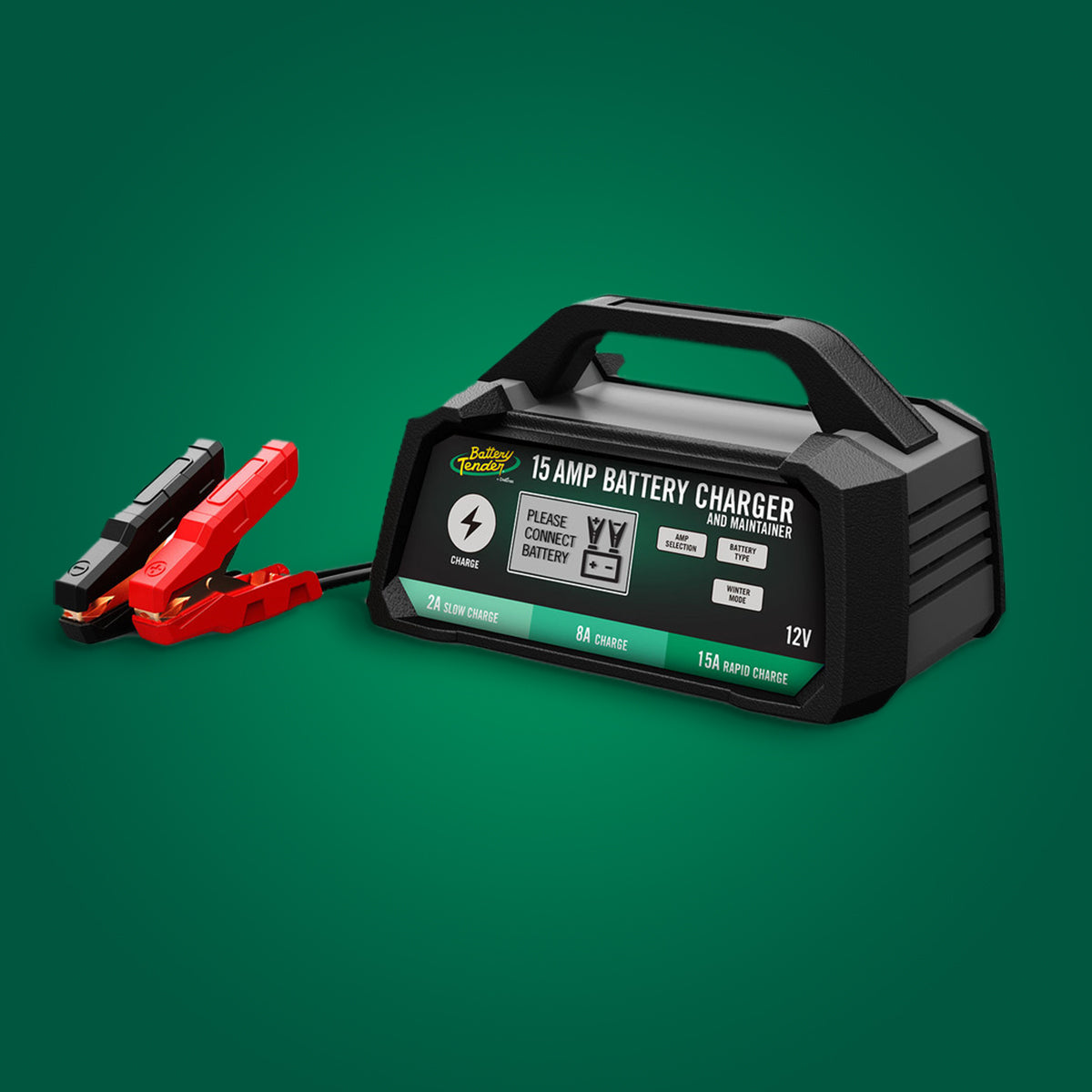
Gas carts, and electric carts that carry a 12V accessory battery, need a 12V charger. The 26A model recharges a 50% discharged 100Ah deep-cycle battery in about 2 hours.
Battery Tender PowerPlus 12V 26 Amp Battery Charger and Maintainer
Frequently Asked Questions
How often should I charge a golf cart battery?
Charge a golf cart battery after every use, even short rounds. Lead-acid packs last longest when they stay near full charge, and keeping discharge at 50% or less gives roughly 500 to 1,000 cycles. Leaving a pack partly discharged for days lets sulfate crystals harden and permanently reduces capacity. Plug in after each outing and let the full cycle finish.
Can I leave a golf cart battery on the charger all the time?
Yes, when the charger has a demand-responsive Float Maintenance stage. A Battery Tender PowerPlus charger using ISM sends pulses only when voltage drops, so it can stay connected for months. Avoid leaving a conventional constant-current trickle charger attached, because it keeps pushing current and can overcharge and dry out flooded cells.
How do I know if a golf cart battery is bad?
Test each battery after a full charge and a 2-hour rest. A healthy 6V flooded battery reads about 6.3V or higher, and a unit more than 0.2V below its neighbors is suspect. Other signs include range dropping by a third, swollen cases, heat during rest, and cells needing water far more often. Replace weak batteries before they drag down the whole pack.
How many amp-hours is a typical golf cart battery?
A typical 6V golf cart battery in GC2 size is rated about 200 to 250Ah, with 225Ah the common figure. Series wiring adds voltage but not capacity, so a 48V pack of eight of them is still 225Ah, or about 10.8kWh. Usable energy at 50% depth of discharge is roughly half that.
Conclusion
A golf cart battery pack rewards routine. Recharge after every use, keep water levels correct, store at full charge, and match the charger to pack voltage. Next step: count your batteries, add up the voltage, and choose the matching Battery Tender PowerPlus charger from the golf cart charger collection.