


EV Charger Amp Rating Explained: How to Choose the Right Amps (2026)
The EV charger amp rating determines how quickly a charger replenishes an electric vehicle battery — and it directly dictates the electrical circuit size, installation cost, and daily range recovery a homeowner can expect. Battery Tender® draws on more than three decades of charging innovation, dating back to pioneering smart battery charging in 1989, to engineer EV chargers at 16A, 32A, 40A, and 48A output levels that match every home electrical scenario and driving pattern.
Choosing the wrong amperage wastes money on oversized circuits or leaves drivers stranded with too few miles each morning. This guide breaks down the electrical math behind every common EV charger amp rating, maps each rating to real-world charging speeds, explains the National Electrical Code (NEC) requirements that govern circuit sizing, and recommends specific Battery Tender chargers for each tier. Whether charging in an apartment on a standard 120V outlet or installing a dedicated 60A circuit in a garage, this article provides the numbers needed to make a confident decision.
Key Takeaways:- EV charger amp rating directly controls charging speed — every additional amp adds roughly 0.88 miles of range per hour at 240V.
- The NEC 80% continuous-load rule requires a circuit breaker rated 25% higher than the charger amperage.
- A 48A Level 2 charger delivers approximately 42 miles of range per hour — enough to fully charge most EVs overnight.
- Level 1 chargers (16A at 120V) need no installation and recover 30–50 miles during an overnight charge.
- EV 12V auxiliary batteries still require maintenance with a standard smart charger like the Battery Tender Plus.
What Does EV Charger Amp Rating Actually Mean?
An EV charger amp rating specifies the maximum continuous electrical current, measured in amperes (amps), that the charger delivers to the vehicle onboard charger. Higher amperage means more electrical energy flows per second, which translates directly to faster battery replenishment. The relationship follows a simple formula: Power (kW) = Voltage (V) × Amperage (A) ÷ 1,000.
At 240V, a 16A charger delivers 3.84 kW, while a 48A charger delivers 11.52 kW — a three-fold difference in charging power from the same voltage supply. This distinction matters because the average American drives 37 miles per day according to the U.S. Department of Transportation Federal Highway Administration, and a 16A Level 2 charger recovers that distance in roughly 2.5 hours, while a 48A unit accomplishes the same in under 53 minutes.
Amperage is not the same as voltage. Voltage represents the electrical pressure pushing current through the circuit (120V for Level 1, 240V for Level 2), while amperage represents the volume of current flowing. Both factors multiply together to determine the actual kilowatts delivered to the vehicle. Upgrading from Level 1 (120V) to Level 2 (240V) doubles the voltage, and increasing amperage within Level 2 further multiplies the charging speed.
How EV Charger Amp Rating Affects Charging Speed
Charging speed scales linearly with amperage at a given voltage. The table below compares every common EV charger amp rating at 240V, using an EV efficiency of 3.5 miles per kWh — a conservative average based on EPA estimates for popular models like the Chevrolet Equinox EV, Tesla Model 3, and Hyundai Ioniq 5.
| Amp Rating | Voltage | Power (kW) | Range per Hour | Required Breaker (NEC) |
|---|---|---|---|---|
| 16A | 120V | 1.92 kW | ~7.2 mi/hr | 20A (NEMA 5-20P) |
| 16A | 240V | 3.84 kW | ~14.4 mi/hr | 20A |
| 32A | 240V | 7.68 kW | ~28.5 mi/hr | 40A |
| 40A | 240V | 9.6 kW | ~36 mi/hr | 50A |
| 48A | 240V | 11.52 kW | ~42.25 mi/hr | 60A |
To calculate overnight recovery, multiply the range-per-hour figure by available charging hours. A 48A charger connected for 8 hours recovers approximately 338 miles — more than enough for even the largest battery packs currently on the market. A 16A Level 1 charger on a standard outlet recovers roughly 57 miles over the same 8-hour period, which covers daily driving for most commuters.
NEC Circuit Requirements for Every EV Charger Amp Rating
The National Electrical Code (NEC Article 625) classifies EV charging as a continuous load, defined as any load expected to operate for 3 hours or more. Under NEC Section 210.20, the circuit breaker must be rated at 125% of the continuous load current. This is the origin of the 80% rule: a charger can draw no more than 80% of the breaker rating.
A 40A charger requires a 50A breaker (40 ÷ 0.80 = 50), and a 48A charger requires a 60A breaker (48 ÷ 0.80 = 60). Wire gauge must also match the breaker size — typically 6 AWG copper for a 50A circuit and 6 AWG or 4 AWG copper for a 60A circuit, depending on run length. Runs exceeding 50 feet may require upsizing wire to compensate for voltage drop, per NEC Section 210.19(A) recommendations.
Electrical panel capacity is the critical constraint many homeowners overlook. Older homes with 100A main panels may not have sufficient spare capacity for a 60A EV circuit without a panel upgrade. A licensed electrician should perform a load calculation per NEC Article 220 before installation. Homes with 200A service typically accommodate any EV charger amp rating without panel modifications.
Which EV Charger Amp Rating Matches Your Driving Habits?
The right amperage depends on three factors: daily miles driven, available charging window, and electrical infrastructure. Matching these variables prevents overspending on unnecessary circuit upgrades or underbuying a charger that leaves the vehicle short on range.
16A — Low-Mileage Commuters and Apartment Dwellers
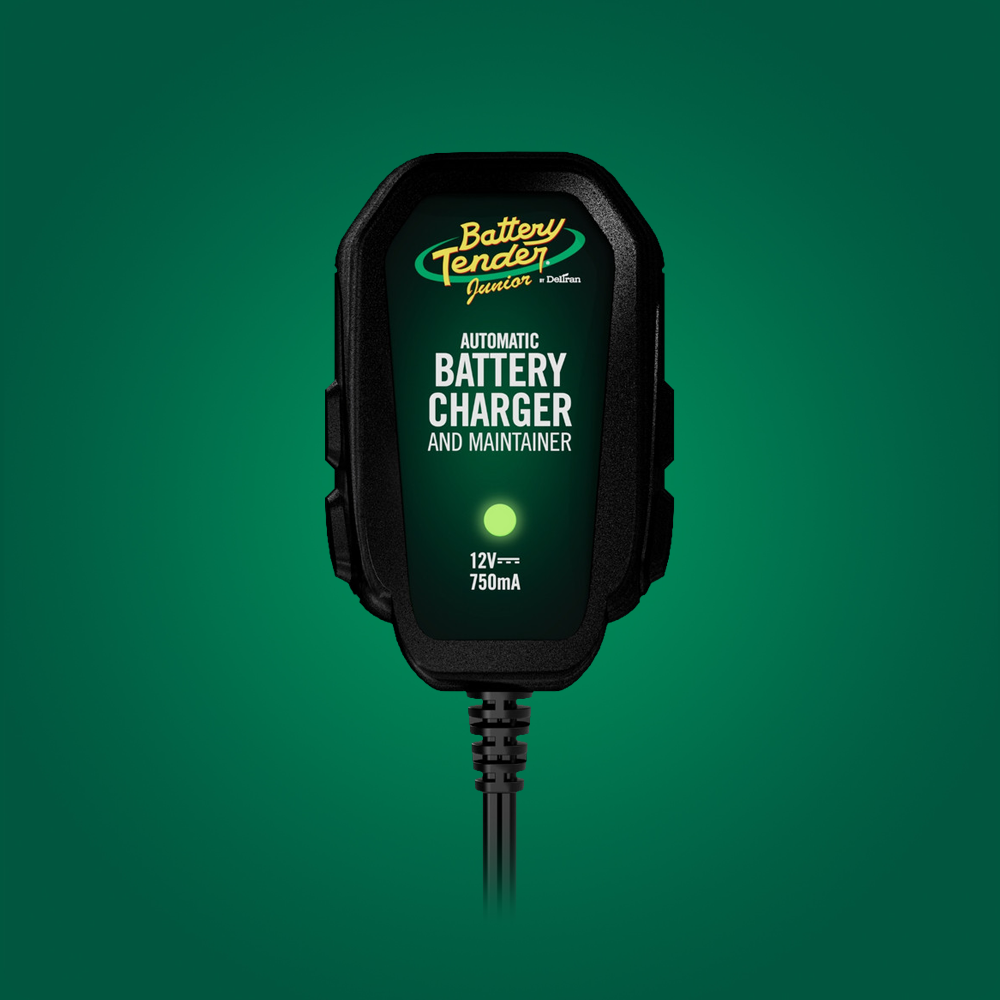
Drivers covering fewer than 40 miles daily can rely on a 16A charger. At Level 1 (120V), the Battery Tender eCharge 16A delivers approximately 7.2 miles of range per hour using a standard NEMA 5-20P outlet — no electrician, no permit, no installation cost. Over a 10-hour overnight window, that recovers 72 miles. This makes the 16A the most accessible entry point for EV charging, particularly for renters and apartment residents who cannot modify electrical infrastructure.
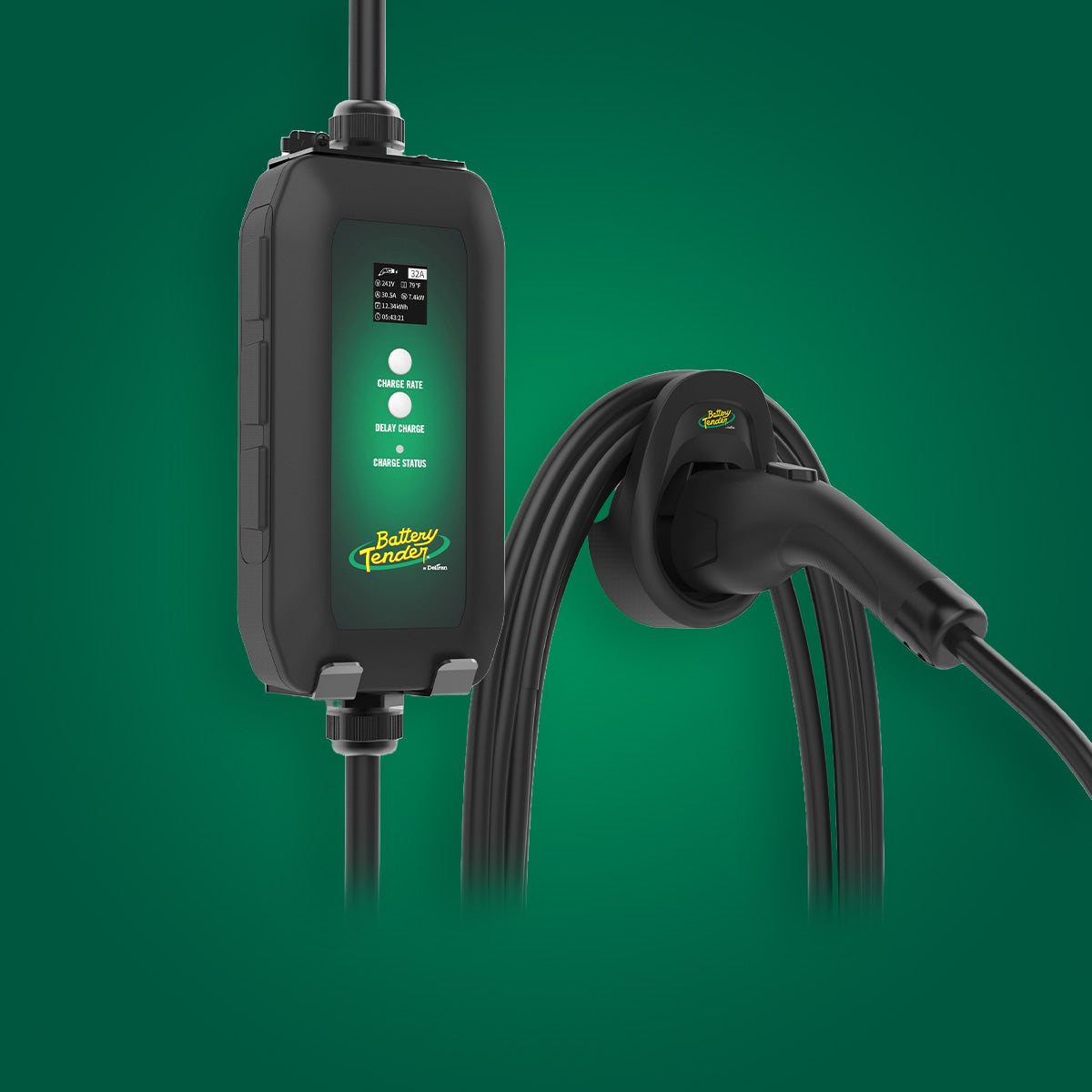
The Battery Tender eCharge 16A charger is fully portable at $299.95, plugging into any standard 120V outlet and providing a reliable daily charge for typical commuters.
Battery Tender eCharge 16A Level 1 EV Charger
32A — Flexible Drivers and Dual-Voltage Versatility
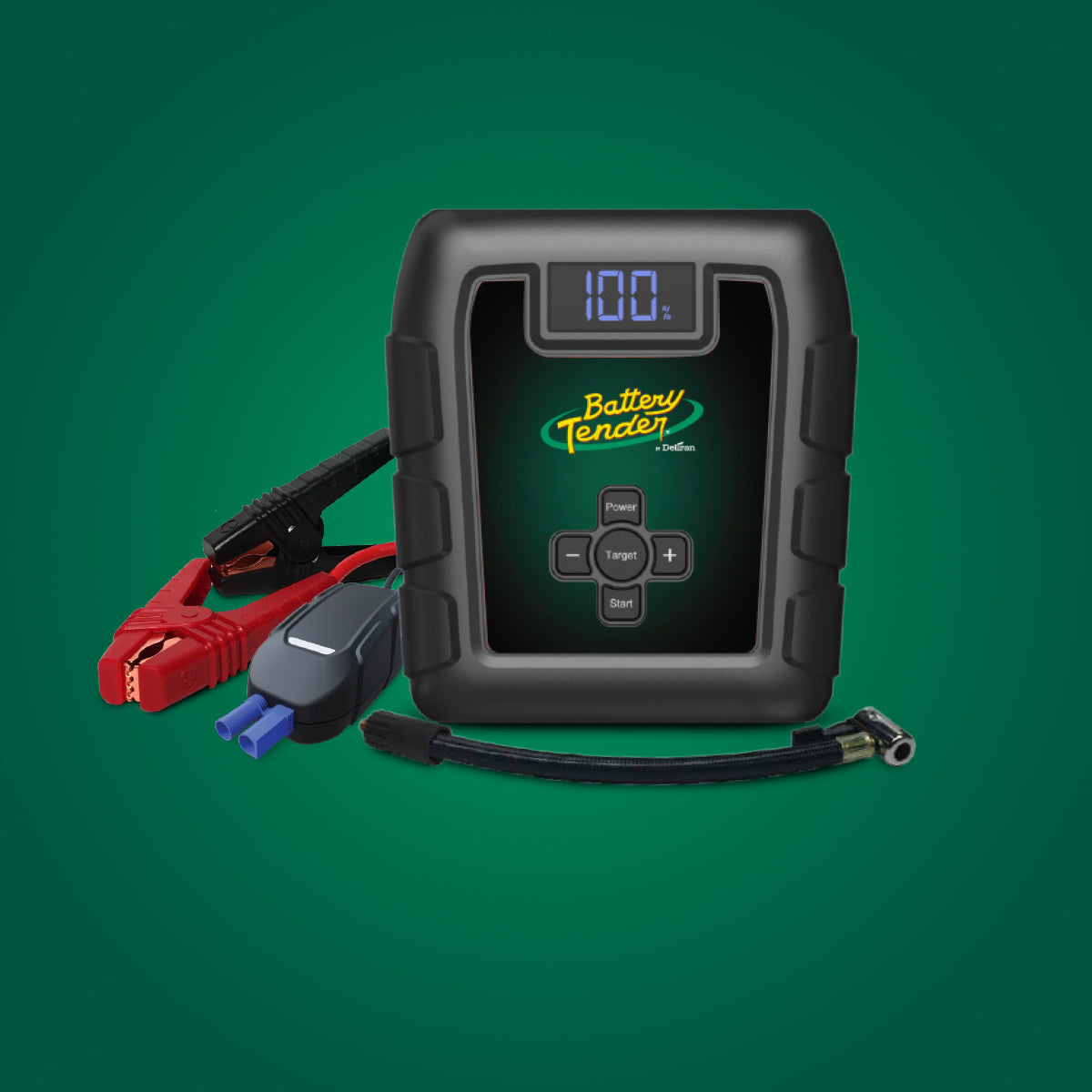
The 32A tier balances speed and electrical flexibility. At 240V, it delivers 28.5 miles of range per hour — recovering 228 miles in 8 hours. The Battery Tender eCharge 32A stands out in this category because it offers true dual-voltage operation: plug into 120V when no 240V outlet is available, then switch to 240V when infrastructure allows. This adaptability suits homeowners who plan to upgrade their electrical later or need a charger that travels between locations with different outlet types.
At $454.95, the Battery Tender eCharge 32A requires only a 40A circuit breaker on 240V, making it compatible with the 8 AWG wiring found in many existing dryer or range outlets.
Battery Tender eCharge 32A Dual-Voltage EV Charger. Also available at Costco.com.
40A and 48A — High-Mileage Drivers and Future-Proofing
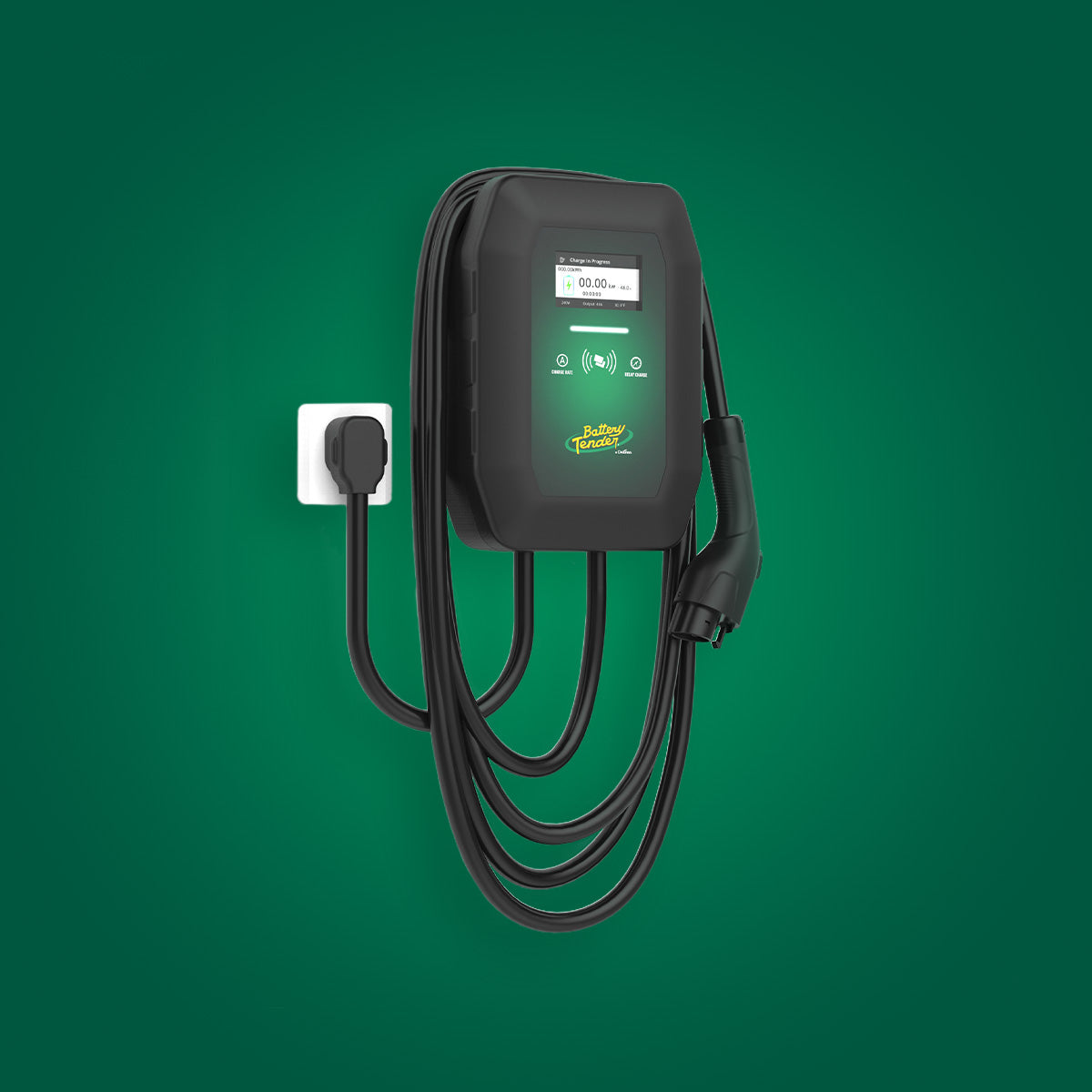
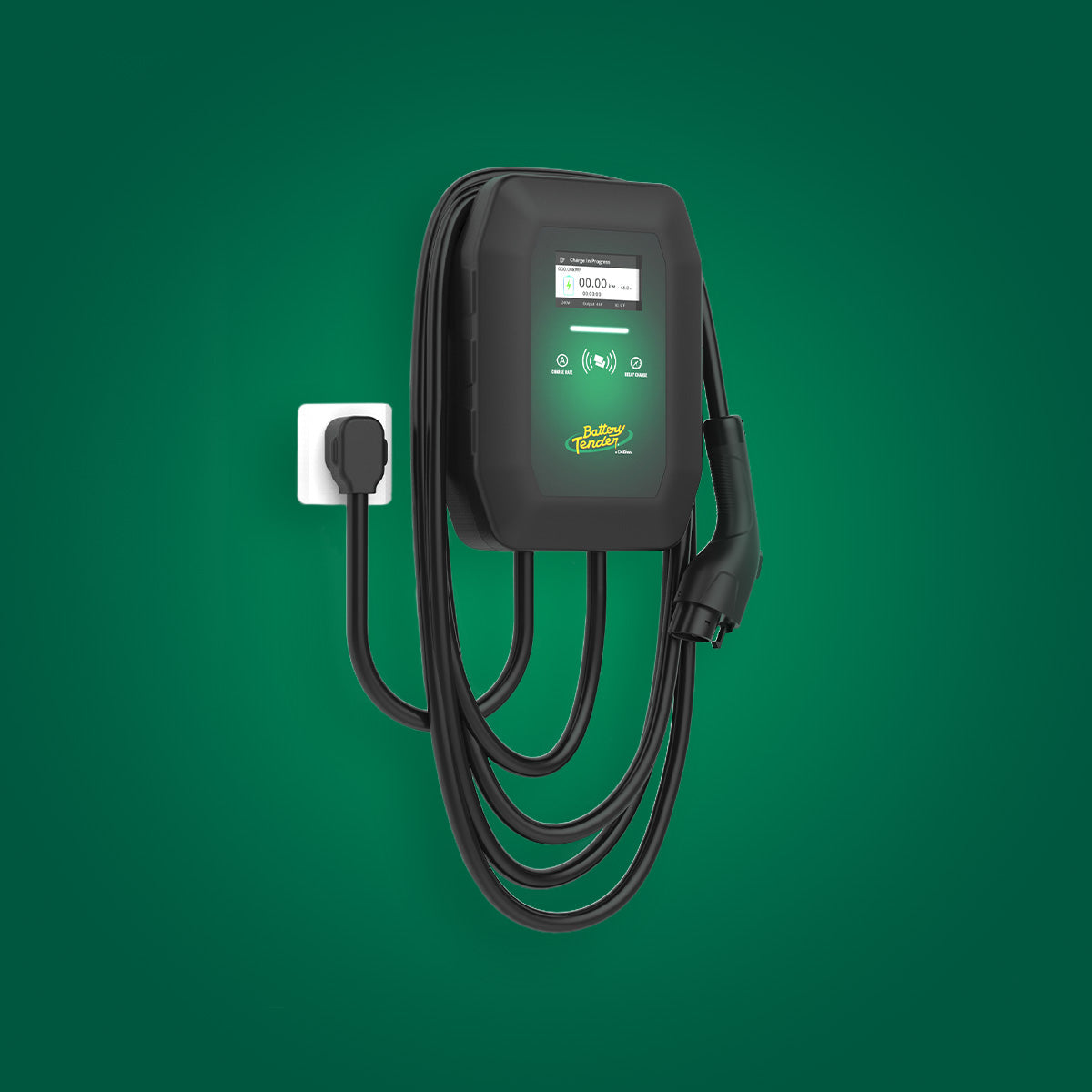
Drivers exceeding 60 miles daily, those with large-battery trucks or SUVs, or multi-EV households benefit from 40A or 48A chargers. The Battery Tender eCharge 48A delivers 42.25 miles of range per hour at 11.52 kW — fully recovering a 300-mile battery pack from 20% to 100% in approximately 6.9 hours. Both the 40A and 48A models feature RFID access control and IP66 weather resistance for wall-mounted outdoor installations.
Future-proofing favors higher amperage. Installing a 60A circuit now costs the same labor as a 50A circuit but allows upgrading from 40A to 48A charging without rewiring. Since labor represents 60-70% of installation cost according to typical electrician estimates, sizing the circuit for a 48A charger at installation prevents paying for a second electrician visit later.
Battery Tender eCharge 48A Level 2 EV Charger
Vehicle Onboard Charger Limits: Why More Amps Do Not Always Mean Faster Charging
Every EV contains an onboard charger (OBC) that converts AC power from the wall unit into DC power for the battery. The OBC has a maximum input rating — typically 7.2 kW, 9.6 kW, or 11.5 kW depending on the vehicle model and trim. A 48A wall charger delivering 11.52 kW will not charge faster than 7.2 kW if the vehicle OBC is rated at 7.2 kW (approximately 30A at 240V).
This means the charger amperage should match or exceed the vehicle OBC rating but does not need to dramatically exceed it for current use. However, future vehicles increasingly ship with higher OBC ratings — many 2025 and 2026 models include 11.5 kW onboard chargers as standard equipment. A 48A home charger that appears oversized for a current vehicle with a 7.2 kW OBC becomes perfectly matched when the next vehicle arrives with an 11.5 kW OBC.
The Overlooked Battery: Why EV 12V Auxiliary Systems Still Need Maintenance
While amp rating discussions focus on high-voltage traction batteries, every electric vehicle also contains a 12V auxiliary battery that powers door locks, lighting, infotainment, safety systems, and the contactors that connect the high-voltage pack. When this small battery fails, the EV cannot start — regardless of how much charge the main pack holds.
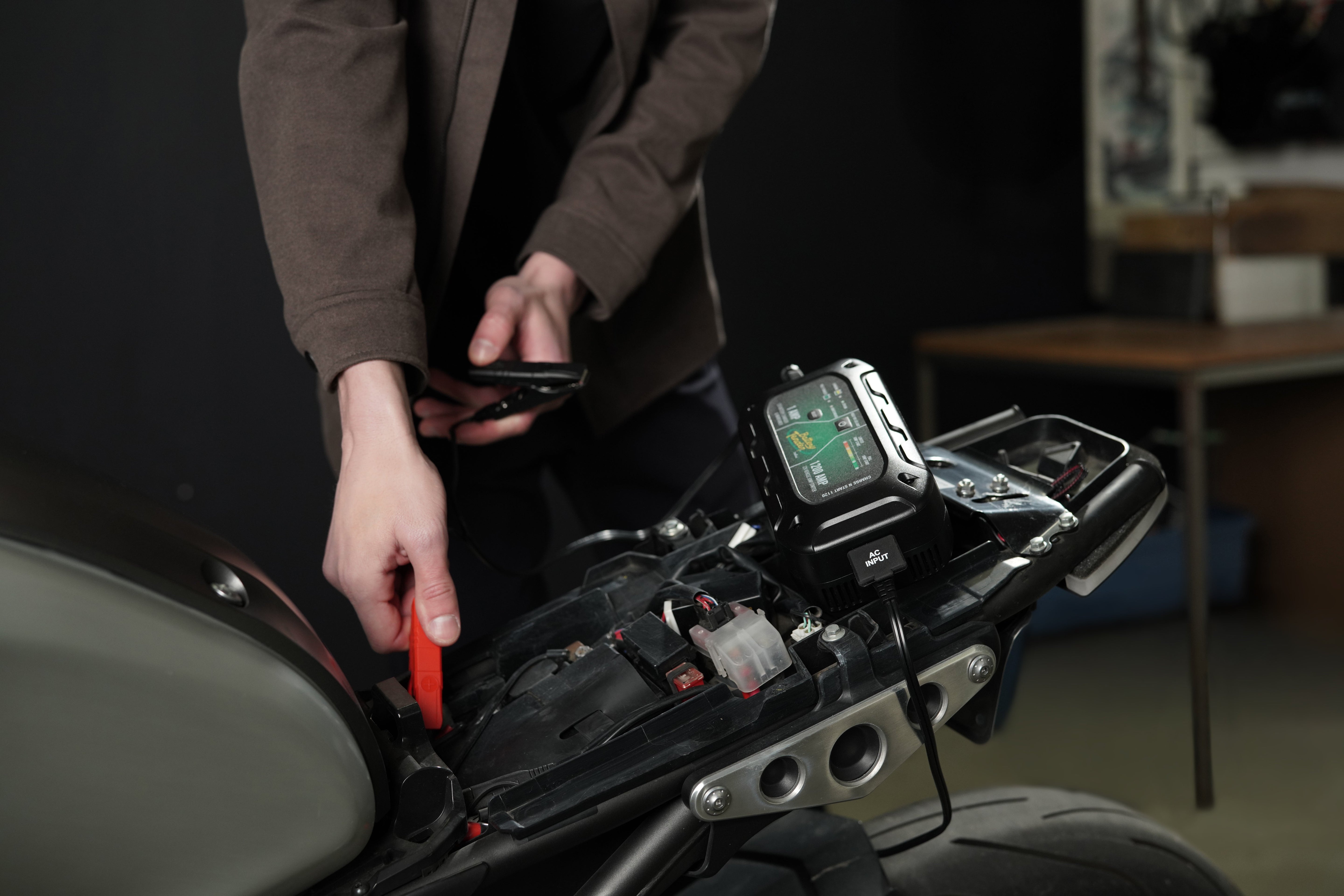
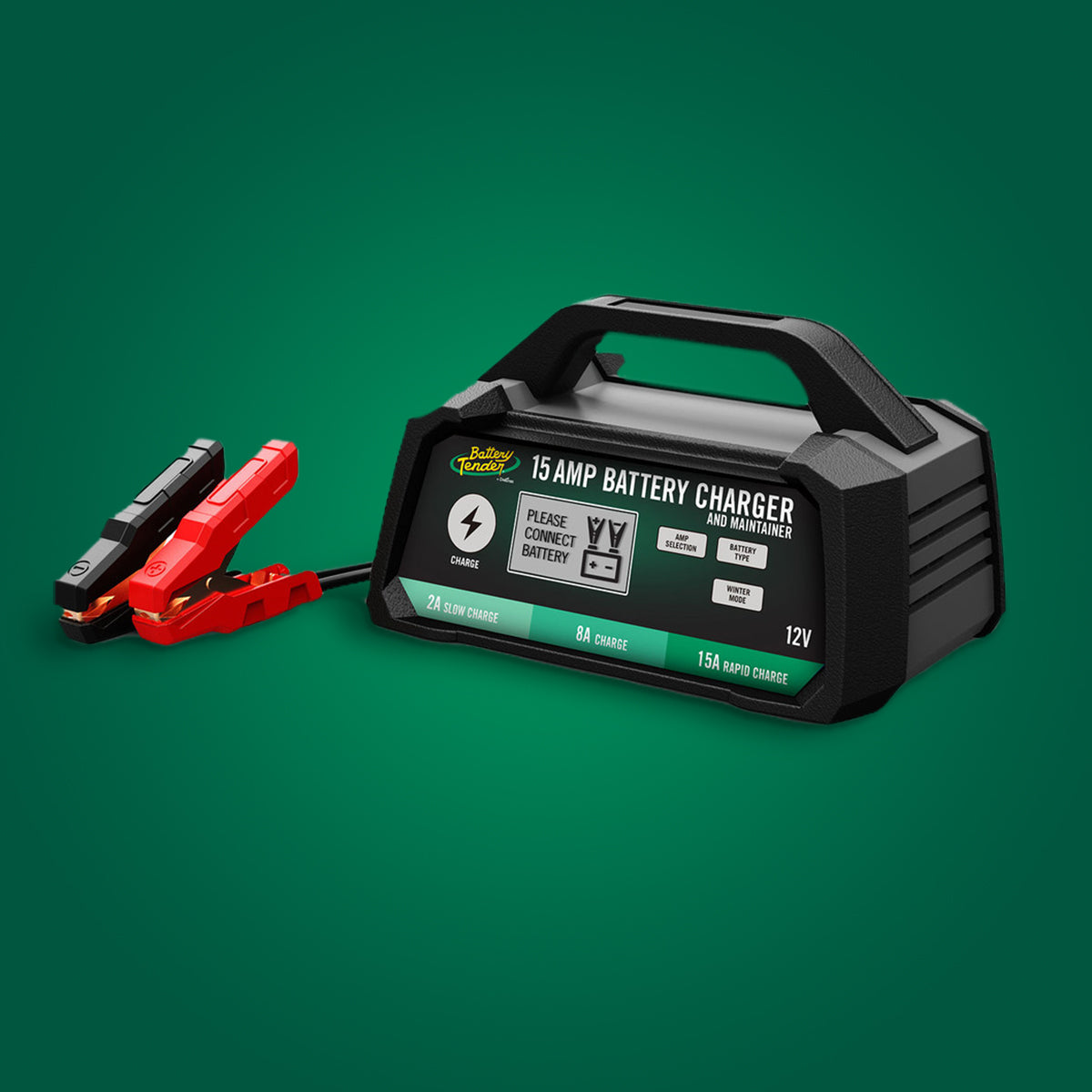
The 12V auxiliary battery does not benefit from the Level 2 charger connected to the vehicle. It relies on a DC-DC converter that steps down voltage from the main pack, and this converter only operates when the vehicle management system activates it. During extended storage, software updates, and cold weather, the 12V battery can drain below safe levels. A dedicated smart charger like the Battery Tender Plus 1.25A maintains the 12V auxiliary indefinitely using Infinite Sequential Monitoring (ISM) technology — the same 4-stage process (Initialization, Bulk, Absorption, Maintenance) that prevents overcharging in every Battery Tender product.
Battery Tender Plus 1.25A 12V Battery Charger
Cost-per-Amp Analysis: Balancing Charger Investment Against Electrical Upgrades
The charger itself represents only a portion of total EV charging infrastructure cost. A 16A portable charger requires zero installation expense, making the total cost equal to the unit price. A 48A wall-mount unit includes the charger cost plus electrician labor, circuit breaker, wire, conduit, and potentially a permit. The total installed cost varies based on distance from the electrical panel, local labor rates, and whether a panel upgrade is needed.
Comparing Battery Tender eCharge models on a cost-per-amp basis reveals practical economics:
- eCharge 16A: $299.95 ÷ 16A = $18.75 per amp — zero installation cost
- eCharge 32A: $454.95 ÷ 32A = $14.22 per amp — moderate installation
- eCharge 40A: $634.95 ÷ 40A = $15.87 per amp — includes RFID, IP66
- eCharge 48A: $684.95 ÷ 48A = $14.27 per amp — maximum speed, best value per amp
The 48A model delivers the lowest cost per amp and the highest charging speed. For homeowners with 200A panels and available circuit capacity, the 48A charger provides the most value per dollar over the expected 10+ year service life of a home EV charging station.
Frequently Asked Questions
How many amps do I need for a home EV charger?
Most homeowners find 32A to 48A ideal for Level 2 home EV charging. A 32A charger recovers approximately 28.5 miles per hour at 240V, sufficient for drivers covering up to 200 miles daily with overnight charging. A 48A charger recovers about 42 miles per hour, which future-proofs the installation for larger batteries and higher-capacity onboard chargers in newer vehicles.
Does a higher amp EV charger damage the battery?
No. The vehicle onboard charger (OBC) regulates incoming power and will only accept current up to its rated capacity. A 48A charger connected to a vehicle with a 32A OBC delivers only 32A. Level 2 AC charging is inherently gentler on batteries than DC fast charging because the OBC manages voltage, current, and temperature throughout the session.
Can I use a 16A Level 1 charger as my only EV charger?
Yes, for drivers averaging 40 miles or fewer per day. The Battery Tender eCharge 16A recovers approximately 7.2 miles per hour on a standard 120V outlet, yielding roughly 72 miles over a 10-hour overnight charge. This exceeds the 37-mile average daily American commute.