

Battery Jump Starter Guide: Battery Tender® Charge N Start (2026)
A battery jump starter is a portable lithium pack with built-in clamps that delivers a short burst of current to a weak 12V battery so the engine can crank without a second vehicle. Size it to your engine, keep it charged, and connect it in the right order.
Key Takeaways
- A battery jump starter is a lithium-ion pack plus a battery management system (BMS) and protected clamps. It starts the engine but does not recharge a drained battery.
- Match the rating to the engine: 600A for powersports, 1,000-1,200A for passenger vehicles, 2,000A for diesel trucks.
- Battery Tender Charge N Start combines a lithium-ion jump pack and a smart charger in one unit, so one purchase covers both the emergency start and the recovery.
- Recharge the pack every 90 days and keep it out of hot cars to protect the cells.
- After any jump, recharge the vehicle battery fully with a proper charger. The alternator will not do it.
What Is Inside a Battery Jump Starter?
A battery jump starter contains lithium-ion cells, a battery management system, a power-switching circuit, and a clamp cable set with protection electronics. Each part has a specific job, and knowing them makes ratings and warnings easier to read.
Lithium Cells and the Battery Management System
Lithium-ion cells release high current in a short pulse from a small, light package. They also handle cold better than the sealed lead-acid packs of older jump boxes and hold their charge for months in storage.
The BMS monitors cell voltage, current, and temperature. It cuts output if the pack overheats, over-discharges, or sees a fault. Capacity is usually listed in mAh. The Battery Tender Jump N Start 600 Amp pack is 6,400 mAh, the 1500 Amp pack is 12,000 mAh (about 40 starts per charge), and the 2000 Amp pack is 16,000 mAh (about 50 starts).
Clamps and Built-In Protections
Modern clamps are not simple copper jaws. They carry electronics that stop dangerous connections before current flows. Standard protections include:
- Spark-proof design: no power at the clamp tips until a valid battery connection is detected.
- Reverse polarity protection: blocks output if red and black are swapped.
- Short circuit protection: shuts down if the clamps touch each other.
- Over-temperature and over-current cutoffs: the BMS ends the session before the pack is damaged.
The clamp logic is covered in more detail in the Automatic Jump Starter Guide: Smart Clamps and Safe Starts (2026).
How to Size a Battery Jump Starter: Peak Amps vs. Cranking Amps
Choose a battery jump starter by engine size and fuel type: 600A for powersports and small engines, 1,000-1,200A for passenger vehicles, and 2,000A for diesel trucks. Treat the headline amp number as a guide and check the rated engine capacity.
Peak amps is the momentary maximum the pack can deliver for a fraction of a second. Cranking amps is the current it can sustain for the few seconds a starter motor needs to turn the engine. Two packs with the same peak rating can behave differently under load, which is why the rated engine capacity (liters, gas or diesel) is the more reliable sizing number. Diesel engines need more current because of higher compression, so their rated capacity is always lower than for gas engines.
| Application | Recommended Rating | Battery Tender Option | Rated Engine Capacity |
|---|---|---|---|
| Motorcycle, ATV, small engines | 600A | Battery Tender Jump N Start 600 Amp | 4.0L gas / 2.0L diesel |
| Powersports, compact cars | 1,000A | Battery Tender Charge N Start 1100 | 5.0L gas / 3.0L diesel |
| Mid-size cars, SUVs, boats | 1,200A | Battery Tender Charge N Start 1120 | 6.0L gas / 4.0L diesel |
| Trucks, RVs, heavy daily use | 1,200A plus 4A charger | Battery Tender Charge N Start 4120 | 6.0L gas / 4.0L diesel |
| V8 trucks, large SUVs | 1,500A | Battery Tender Jump N Start 1500 Amp | 7.0L gas / 5.5L diesel |
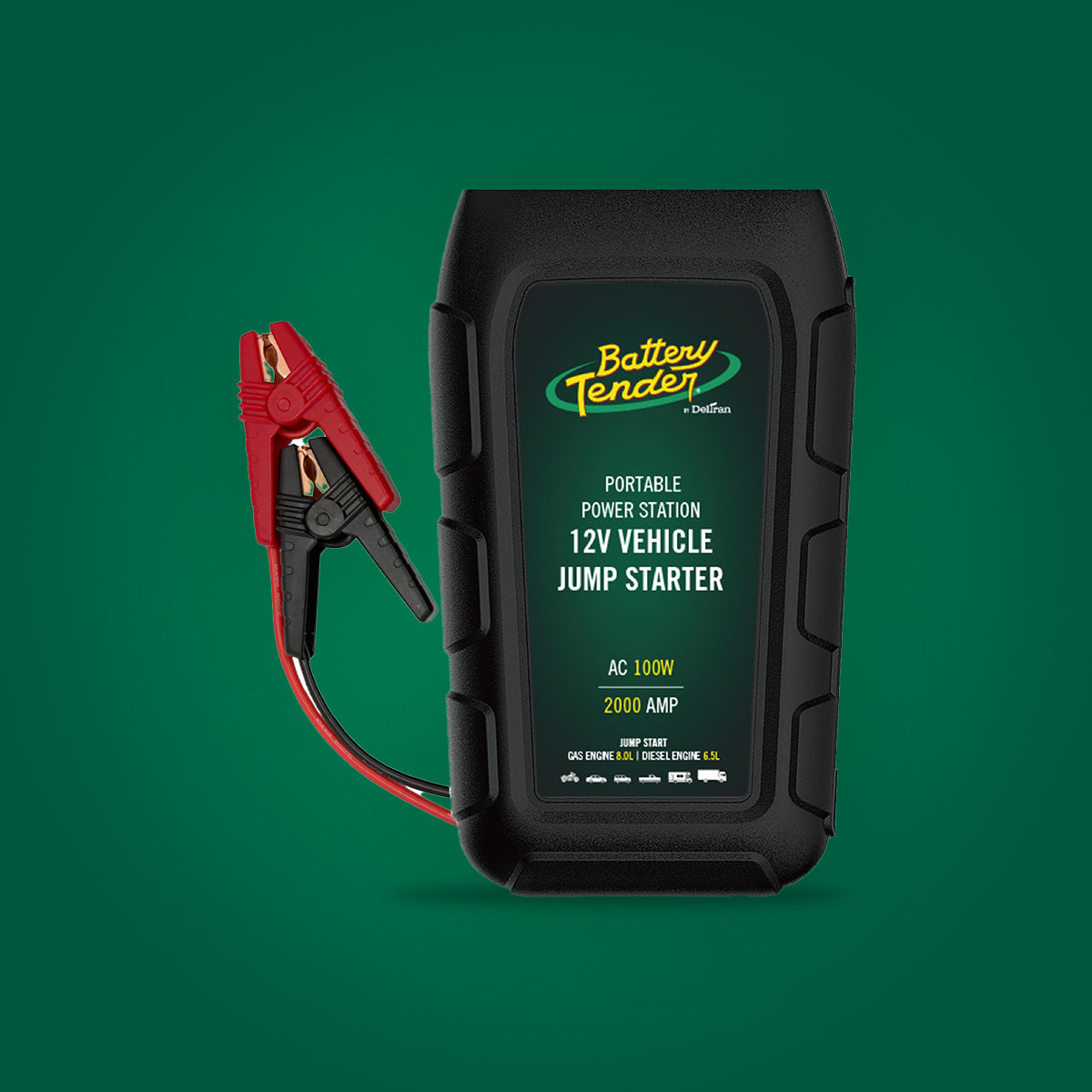
| Heavy diesel trucks | 2,000A | Battery Tender Jump N Start 2000 Amp | 8.0L gas / 6.5L diesel |
If you drive several vehicle types, size for the largest engine you own. The portable jump starter comparison of 600A, 800A, 1500A, and 2000A models covers the tradeoffs in more depth.
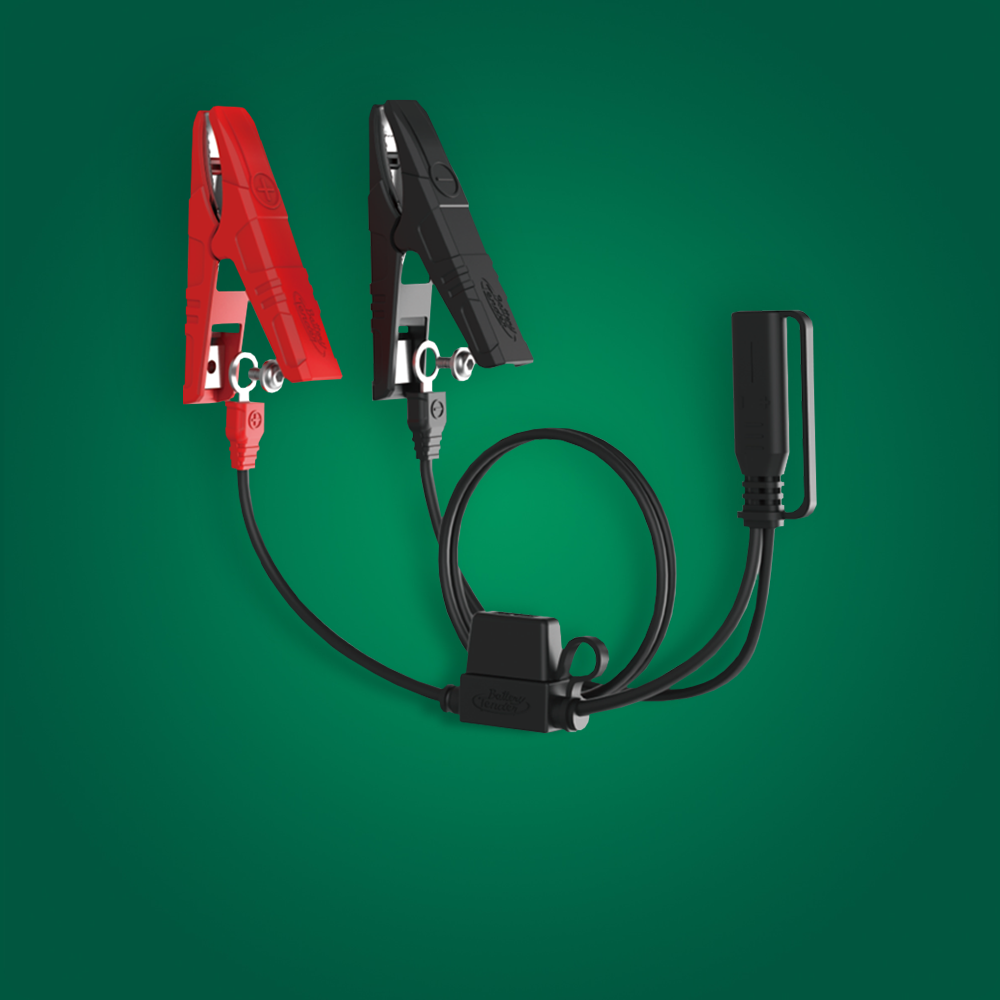
The Battery Tender Jump N Start 1500 Amp pack suits owners who ride a motorcycle or ATV and also keep a truck or SUV running. It starts gas engines up to 7.0L and diesels up to 5.5L, so one lithium pack covers the whole garage. The bundle below adds a ring terminal cable that stays attached to a bike, ATV, or tractor battery. You can then connect the pack in seconds without removing a seat or side panel, and a Battery Tender maintainer can share the same harness during storage.
Battery Tender Motorcycle and Powersports Battery Tender Jump N Start Bundle (1500 Amps)
Why Battery Tender Charge N Start Is the Smarter Upgrade From a Standalone Battery Jump Starter
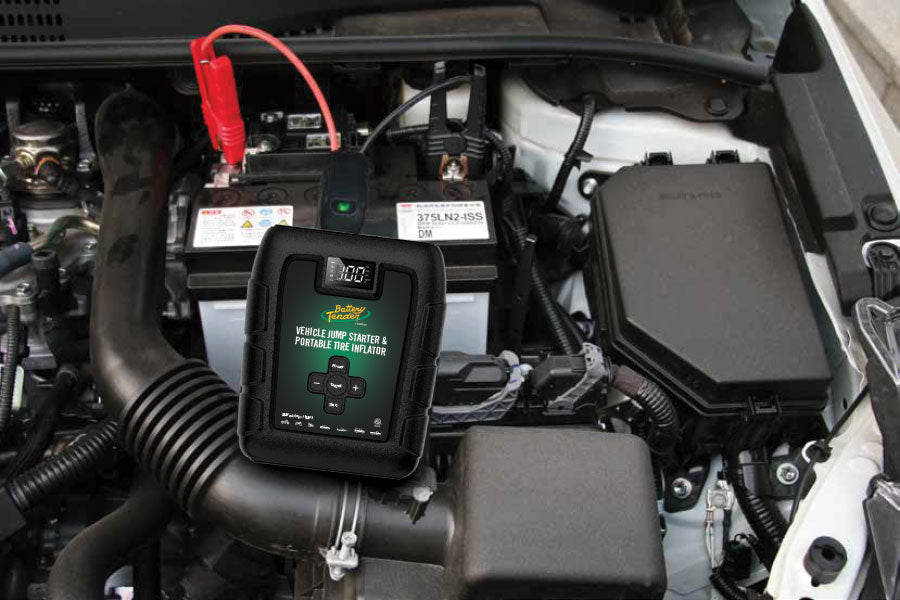
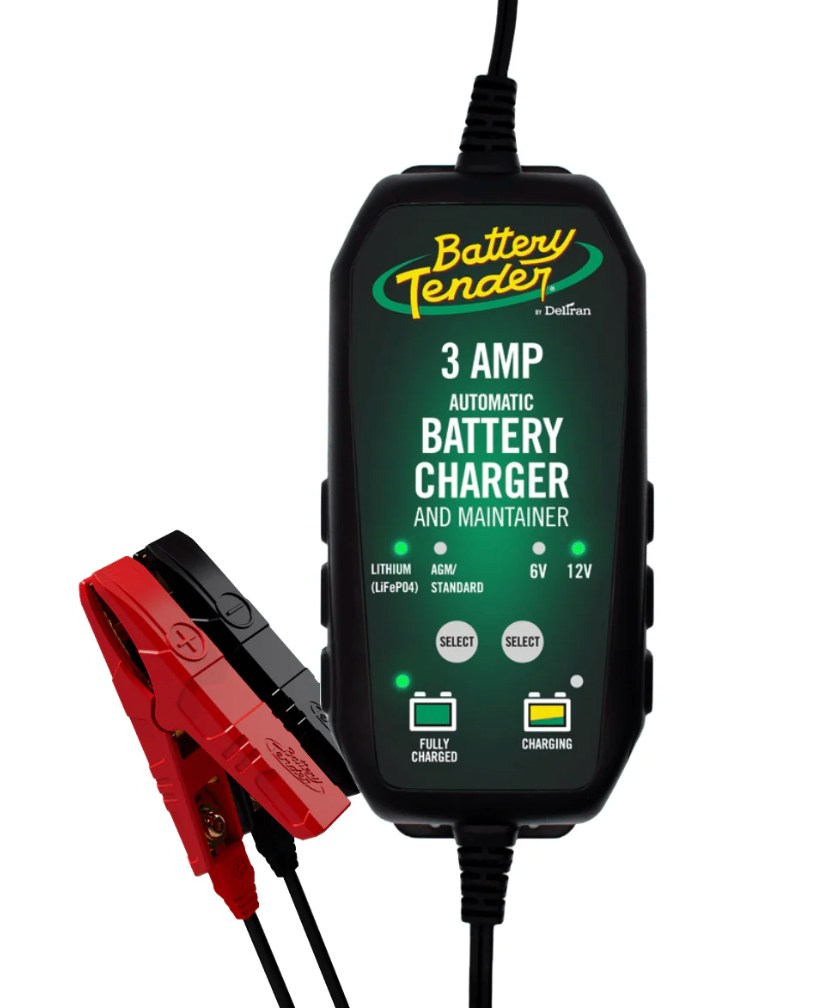
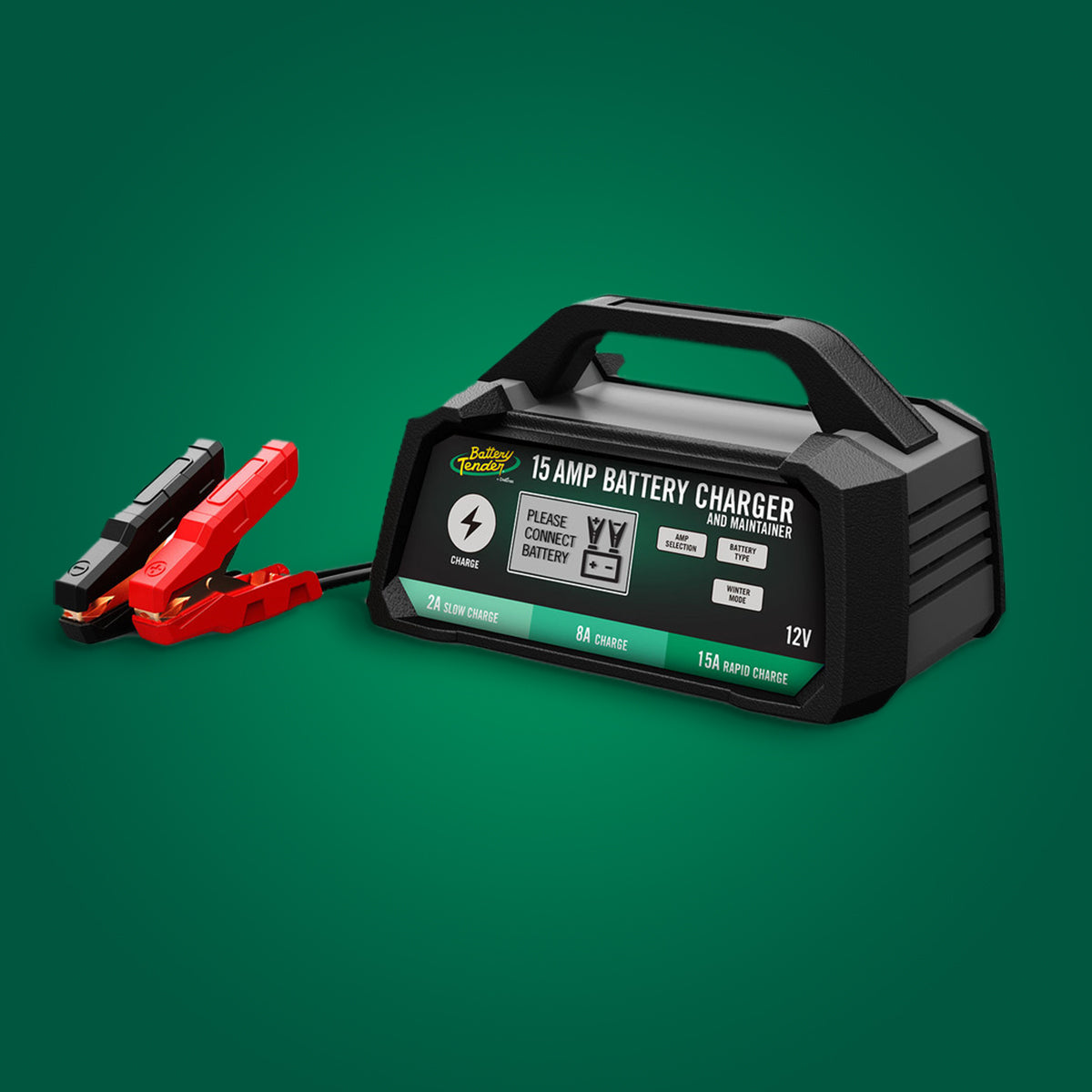
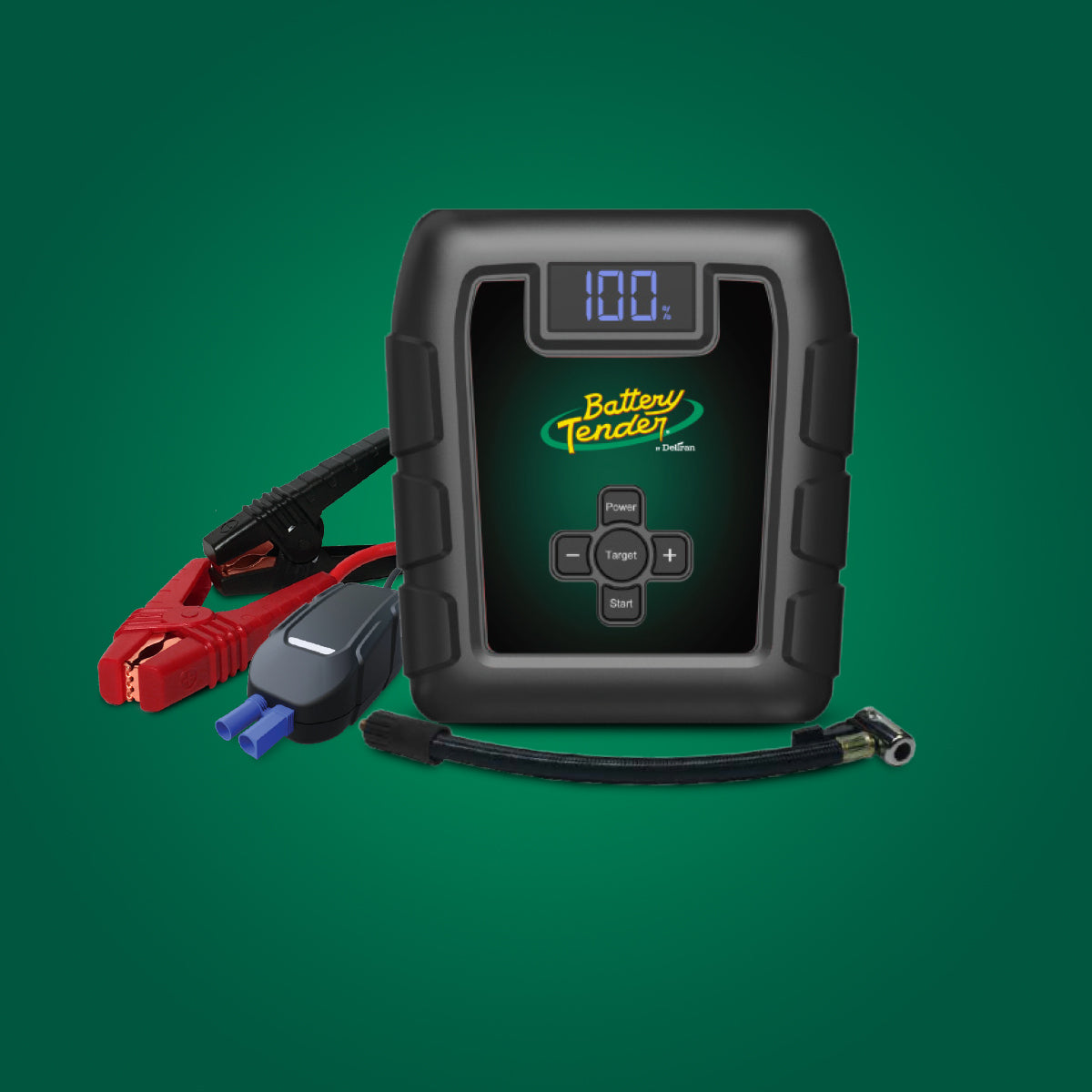
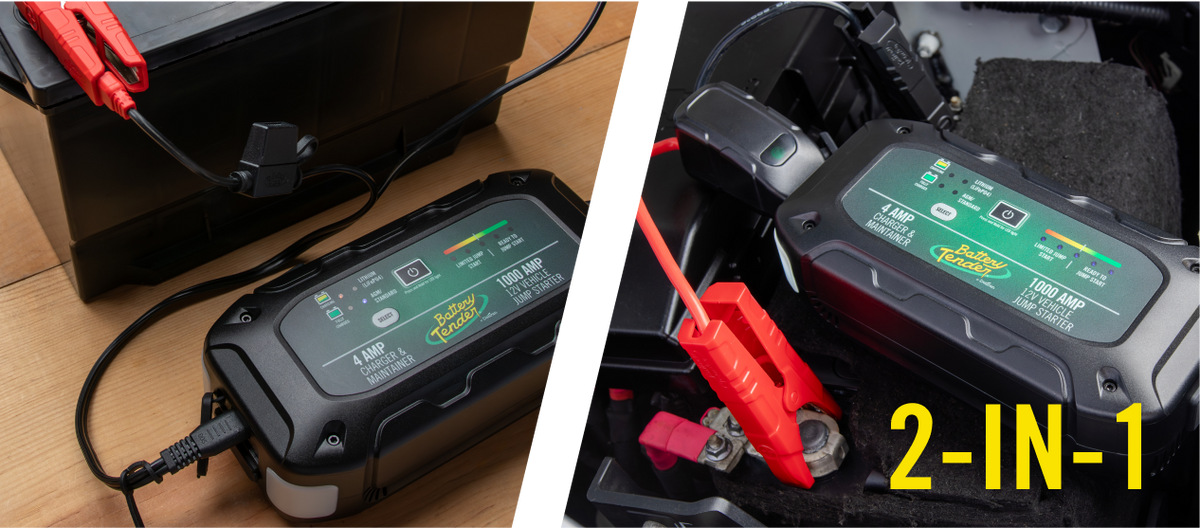
Battery Tender Charge N Start is a 2-in-1 unit that pairs a lithium-ion jump pack with a smart battery charger. A standalone battery jump starter gets the engine running, but it does nothing for the drained battery underneath.
That gap matters. After a jump, the alternator cannot fully restore a deeply discharged battery. It is built to top off a battery, not to recover one. A battery left partially charged builds sulfate crystals on its plates and loses capacity. The charger section of Battery Tender Charge N Start solves this and supports all 12V chemistries: standard lead-acid, AGM, GEL, and lithium.
The charger uses Battery Tender Infinite Sequential Monitoring (ISM) technology, a four-stage automatic charging process:
- Initialization: tests the battery and applies gentle current to judge its condition.
- Bulk Charge: delivers full rated current until the battery reaches roughly 80% state of charge.
- Absorption: holds voltage constant while current tapers, bringing the battery to full charge without overcharging.
- Float Maintenance: monitors voltage and sends charge pulses only when it drops, so the charger can stay connected indefinitely without overcharging.
Two proprietary features keep the unit ready and protected. Charge N Store keeps the internal lithium-ion pack topped off, so it is ready when needed. SafeGuard is an anti-backfeed circuit that protects the unit from reverse current.
Charge time follows a simple formula: (battery Ah × depth of discharge) ÷ charger amps. A 50Ah battery at 50% discharge holds 25Ah to replace. On the 4A Battery Tender Charge N Start 4120, that is 25 ÷ 4 ≈ 6.3 hours of charging, plus some overhead for the absorption stage. On the 1A Battery Tender Charge N Start 1100 or 1120, the same recovery takes about 25 hours, which suits overnight and weekend charging on motorcycles and small batteries.
How to Use a Battery Jump Starter Safely, Step by Step
Use a battery jump starter by connecting the clamps to the dead battery in the correct order, waiting for the ready indicator, and cranking in short bursts. Always follow the connection sequence in the manual for your specific unit.
- Prepare the vehicle. Turn off the ignition, lights, radio, and climate control, and set the parking brake.
- Inspect the battery. Do not jump a battery that is cracked, leaking, swollen, or frozen. Replace it instead.
- Check the pack. Confirm the jump starter shows enough charge on its indicator.
- Connect the clamps. Attach red to the positive (+) terminal, then black to the negative (-) terminal or an unpainted metal ground point, as the manual directs.
- Wait for the ready signal. Smart clamps indicate when the connection is valid.
- Crank in short bursts. Run the starter for no more than about 5 seconds, then wait 30 to 60 seconds before trying again.
- Disconnect in reverse. Once the engine runs, remove black first, then red.
- Drive or idle. Run the engine for 20 to 30 minutes, then fully recharge the vehicle battery with a smart charger.
Safety note: Batteries can vent flammable gas. Keep flames and sparks away, wear eye protection, and never jump a battery that looks damaged. For a fuller walkthrough, see How to Jumpstart a Battery: Portable Jump Starter Guide (2026).
Keeping a Battery Jump Starter Ready: A 90-Day Routine
A lithium battery jump starter holds its charge for months, but it still needs a recharge about every 90 days. A pack that sat dead in a trunk since last winter is the most common reason a jump fails.
Build these habits into your routine:
- Recharge on a schedule. Top up the pack every 90 days, and again within a day or two of any use.
- Mind the temperature. Store the pack at room temperature when you can. A parked car cabin in summer can climb well above 120°F, which stresses lithium cells. In freezing weather, let a cold pack warm up indoors before recharging it.
- Check the clamps. Look for corrosion, cracked insulation, or bent jaws before each season.
- Track performance. If the pack delivers noticeably fewer starts than it used to, or fails to hold a charge, plan to replace it.
Battery Tender Charge N Start simplifies this routine. The Charge N Store feature maintains the internal pack automatically while the unit sits plugged in. Owners who keep it connected to AC power in the garage have a pack that is full whenever it is needed, and the same unit can recover and maintain the vehicle battery.
Frequently Asked Questions
What is a battery jump starter?
A battery jump starter is a portable lithium-ion power pack with built-in clamps that delivers a short, high-current burst to a weak or dead 12V battery. It lets you start your engine without another vehicle or jumper cables, and modern units include spark-proof clamps, reverse polarity protection, and short circuit protection.
How many times can a battery jump starter start a vehicle on one charge?
It depends on the pack size and the engine. The Battery Tender Jump N Start 1500 Amp pack delivers about 40 starts per full charge, and the 2000 Amp pack about 50. Larger engines, cold temperatures, and deeply discharged batteries reduce that number, so recharge the pack after any use.
Does a battery jump starter work in cold weather?
Yes. Lithium packs perform better in the cold than older sealed lead-acid jump boxes, though they lose some output as temperatures drop. For best results, store the pack indoors, bring it into the cold only when needed, and let a frozen pack warm up before recharging it.
Can a battery jump starter charge a dead battery?
No. A battery jump starter provides a burst to crank the engine, not a full recharge. The battery stays partially discharged afterward, so it needs a proper charger. Battery Tender Charge N Start combines both functions: the lithium-ion pack jumps the engine, and the charger section recovers the battery.
How long does a battery jump starter hold its charge?
A lithium battery jump starter typically holds a usable charge for several months in storage, but the safe practice is to top it up every 90 days. Heat speeds up self-discharge. Battery Tender Charge N Start keeps its internal pack topped off with Charge N Store while plugged in.
Conclusion
A battery jump starter is only useful if it matches your engine, stays charged, and gets connected correctly. Pick the rating from the sizing table, follow the connection steps, and put a 90-day recharge on your calendar. If you want one unit that jump starts the engine and then recovers the battery, Battery Tender Charge N Start is the smarter upgrade over a standalone pack.
Next step: browse the full lineup of Battery Tender jump starters and choose the rating that fits your largest engine.