


Battery Charger Buyer's Guide: How to Choose the Right One (2026)
A battery charger is one of the most essential tools any vehicle owner can invest in, yet choosing the right one remains surprisingly confusing. With dozens of amperage ratings, chemistry settings, and charging technologies on the market, matching the correct charger to a specific battery requires more than guesswork. Battery Tender® pioneered smart charging technology in 1989, and understanding the core principles behind intelligent charging makes the difference between a battery that lasts two years and one that delivers five or more years of reliable service.
This guide breaks down every decision point involved in selecting a battery charger — from amperage and voltage to chemistry compatibility and physical installation. Whether maintaining a single motorcycle battery, charging a truck battery after a deep discharge, or managing a multi-vehicle collection, the information below provides a clear framework for making the right choice. Every recommendation is grounded in verifiable electrical principles and real-world charging math.
Key Takeaways:
- A battery charger must match the battery's voltage, chemistry, and capacity (Ah) for safe, effective charging.
- Infinite Sequential Monitoring (ISM) technology uses four automated stages to charge without overcharging — unlike constant-current trickle chargers.
- Charging time follows a simple formula: (Battery Ah × depth of discharge) ÷ charger amps = approximate hours.
- Temperature compensation adjusts charge voltage automatically and prevents damage in extreme heat or cold.
- Selecting the right amperage rating depends on battery size, intended use case, and how quickly recovery is needed.
What Does a Battery Charger Actually Do?
A battery charger converts AC wall power into regulated DC current that reverses the chemical discharge process inside a lead-acid or lithium battery. During discharge, lead sulfate crystals form on the battery plates. Charging drives an electrochemical reaction that converts those sulfate crystals back into active lead and sulfuric acid, restoring the battery's ability to deliver current. Without periodic recharging, sulfation becomes permanent — hardened crystals coat the plates, reduce capacity, and eventually kill the battery.
Not all battery chargers manage this process equally. Traditional trickle chargers deliver a constant current regardless of the battery's state of charge. Once the battery reaches full voltage, current keeps flowing, generating excess heat and accelerating electrolyte loss through gassing. According to data from the Battery Council International (BCI), overcharging is one of the top three causes of premature battery failure. A modern smart battery charger eliminates this risk entirely by monitoring voltage and adjusting output in real time.
The distinction matters most during long-term maintenance. A vehicle that sits for weeks — a seasonal motorcycle, a stored classic car, or a backup generator — needs a charger that can remain connected indefinitely without damaging the battery. This is precisely where Infinite Sequential Monitoring (ISM) technology from Battery Tender separates smart charging from outdated constant-current designs.
How ISM Four-Stage Charging Works Inside Every Battery Charger
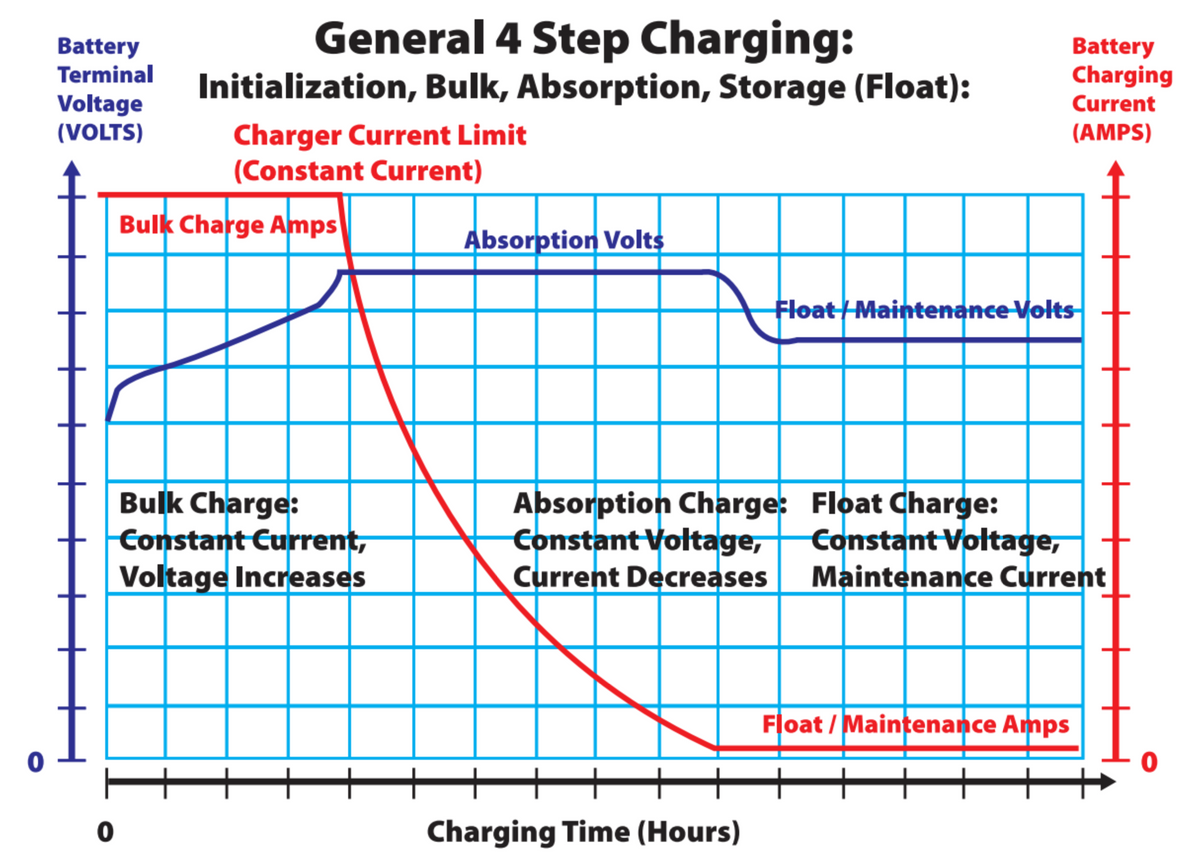
ISM is the proprietary four-stage charging process built into every Battery Tender charger. It automates the entire charge cycle and transitions between stages based on continuous voltage and current feedback from the battery. The four stages are:
- Initialization — The charger tests the battery with a gentle current to assess condition and state of charge. If the battery cannot accept current (indicating a dead short or severe damage), the charger will not proceed, protecting both the charger and the battery.
- Bulk Charge (Constant Current) — Full rated current flows into the battery until it reaches approximately 80% state of charge. This stage does the heavy lifting of recovery.
- Absorption (Constant Voltage) — The charger holds voltage constant while tapering current gradually. This stage dissolves remaining sulfate crystals from the plates and brings the battery from 80% to full charge without generating excessive heat.
- Float Maintenance — Once full, the charger drops to a demand-responsive mode, delivering brief charge pulses only when voltage drifts below a set threshold. The battery never experiences continuous current, so overcharging is impossible.
This four-stage process is fundamentally different from a two-stage float charger (which skips Absorption) or a single-stage trickle charger (which applies constant current until manually disconnected). ISM allows indefinite connection — a critical advantage for any vehicle that sits for extended periods. Research published by the Society of Automotive Engineers (SAE) confirms that controlled absorption-stage charging significantly reduces sulfation buildup compared to constant-voltage-only approaches.
How to Choose the Right Battery Charger Amperage
Amperage determines how fast a charger can recover a discharged battery. The charging time formula is straightforward: (Battery Ah × depth of discharge) ÷ charger amps = approximate hours. A 50Ah car battery discharged to 50% connected to a 1.25A charger requires approximately 20 hours to reach full charge (50 × 0.5 ÷ 1.25 = 20). The same battery on an 8A charger recovers in roughly 3.1 hours.
Lower amperage chargers (0.75A to 1.25A) excel at long-term maintenance and gentle recovery of smaller batteries in the 2Ah to 30Ah range — motorcycles, ATVs, lawn tractors, and personal watercraft. Higher amperage chargers (4A to 15A) serve larger automotive, truck, and RV batteries that need faster turnaround. The key principle: never exceed a charge rate of roughly 10-20% of the battery's Ah capacity, as excessive current generates heat and accelerates plate corrosion.
Matching Amperage to Battery Size
| Battery Capacity (Ah) | Application | Recommended Charger Amperage |
|---|---|---|
| 2–30 Ah | Motorcycles, ATVs, scooters | 0.75A – 1A |
| 14–80 Ah | Cars, SUVs, light trucks | 1.25A – 4A |
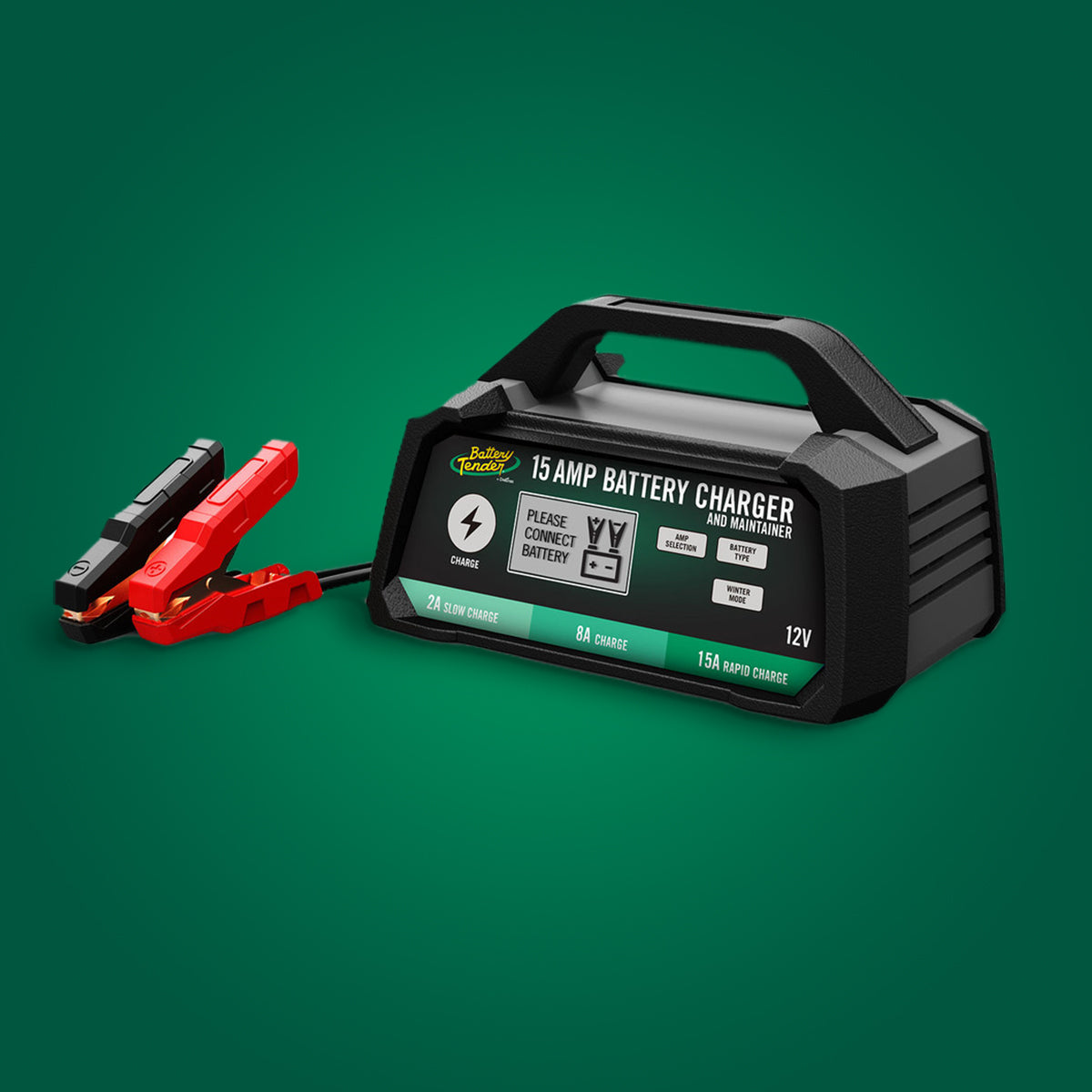
| 50–120 Ah | Trucks, RVs, marine | 4A – 10A |
| 100+ Ah | Fleet vehicles, large deep cycle | 8A – 15A |
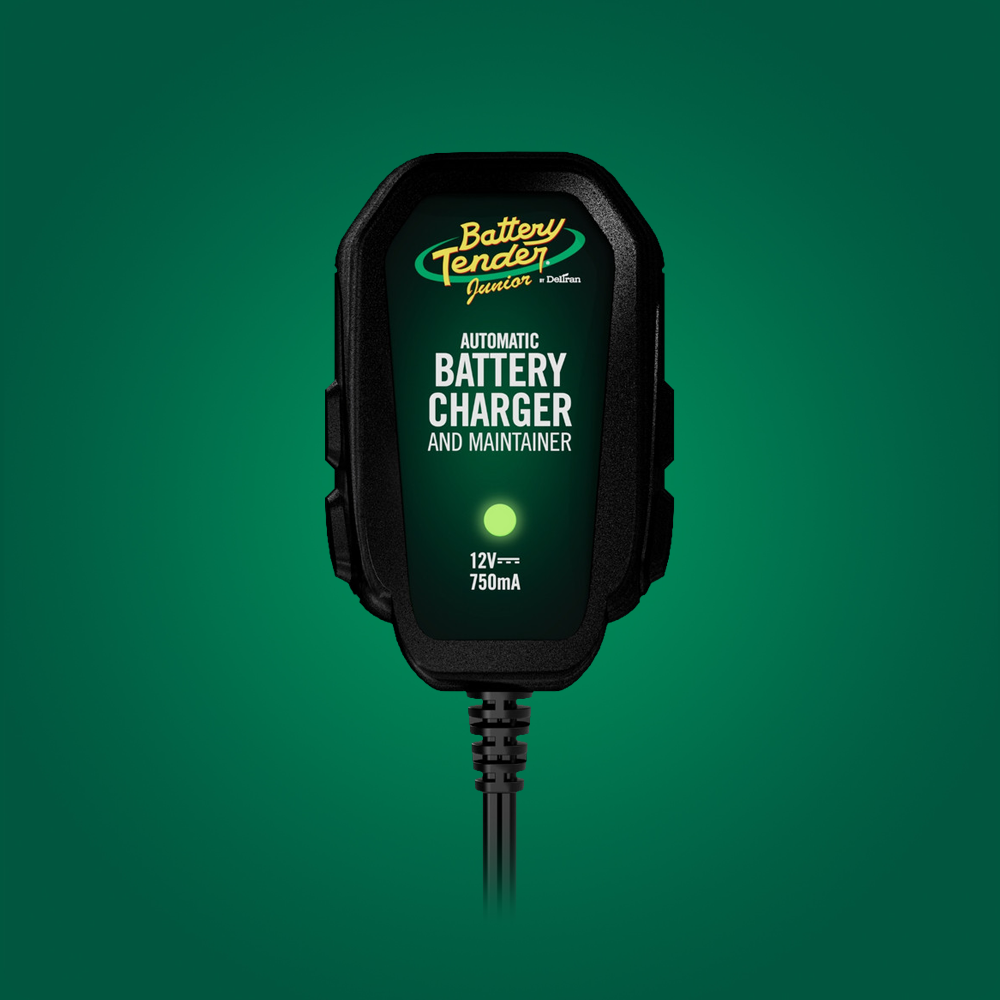
For powersports batteries in the 2–30Ah range, the Battery Tender Junior 1A Selectable provides 1A of output with selectable chemistry support for both lead-acid and lithium batteries. Its compact size and alligator clip or ring terminal connections make it ideal for motorcycle, ATV, and personal watercraft batteries.
Battery Tender Junior 1A Selectable 12V Battery Charger
Why Battery Chemistry Compatibility Matters in a Battery Charger
Different battery chemistries require different charge voltage profiles. A standard flooded lead-acid battery charges to approximately 14.4–14.7V during Absorption, while an AGM battery typically requires a slightly lower ceiling voltage to avoid damaging the glass mat separators. GEL batteries demand even more precise voltage control — exceeding 14.1V during Absorption can create gas pockets that permanently reduce capacity.
Lithium iron phosphate (LiFePO4) batteries — now mainstream in marine, motorcycle, and powersports applications — use a completely different charge curve. LiFePO4 cells charge to 14.4–14.6V but cannot tolerate the same float voltage as lead-acid without risking cell damage. A battery charger with selectable chemistry modes automatically applies the correct voltage ceiling and float parameters for each chemistry type.
Using the wrong charge profile does not merely slow charging — it actively damages the battery. The International Electrotechnical Commission (IEC 61427-1) specifies distinct charge acceptance protocols for each chemistry. A charger without selectable modes forces the user to guess, or worse, applies a one-size-fits-all voltage that inevitably harms at least one chemistry type.
Temperature Compensation: The Feature Most Buyers Overlook
Battery charge acceptance varies directly with temperature. At 32°F (0°C), a lead-acid battery requires a higher charge voltage to reach full capacity than it does at 77°F (25°C). At 104°F (40°C), the required voltage drops — and continuing to charge at the standard 77°F voltage causes gassing, electrolyte loss, and accelerated grid corrosion.
Temperature compensation circuitry measures ambient temperature and adjusts output voltage automatically — typically by approximately −3mV per cell per degree Celsius above 25°C. This adjustment prevents undercharging in cold garages during winter and overcharging in hot storage buildings during summer. Battery Tender chargers such as the Battery Tender Plus include built-in temperature compensation. For environments with significant temperature swings, this feature alone can extend battery service life by 1–2 years.
For automotive batteries that experience wide temperature variation, the Battery Tender Plus 1.25A covers the 14–80Ah range with full temperature compensation and a 10-year warranty — the longest in the industry for a charger in this class.
Battery Tender Plus 12V 1.25A Battery Charger
How to Choose a Battery Charger for Multi-Vehicle or Outdoor Use
Owners with two or more vehicles face a choice: buy multiple single-output chargers or invest in a multi-bank unit that charges several batteries simultaneously through independent ISM circuits. A multi-bank battery charger treats each connected battery as a separate charging project, advancing through all four ISM stages independently. One battery may be in Bulk Charge while another has already reached Float Maintenance.
For two-vehicle households — a daily driver and a weekend motorcycle, or a car and a stored classic — a dual-output charger eliminates the need to swap cables or buy duplicate units.
Battery Tender 2-Bank 6A Selectable 6V/12V Battery Charger
Outdoor and Harsh-Environment Installations
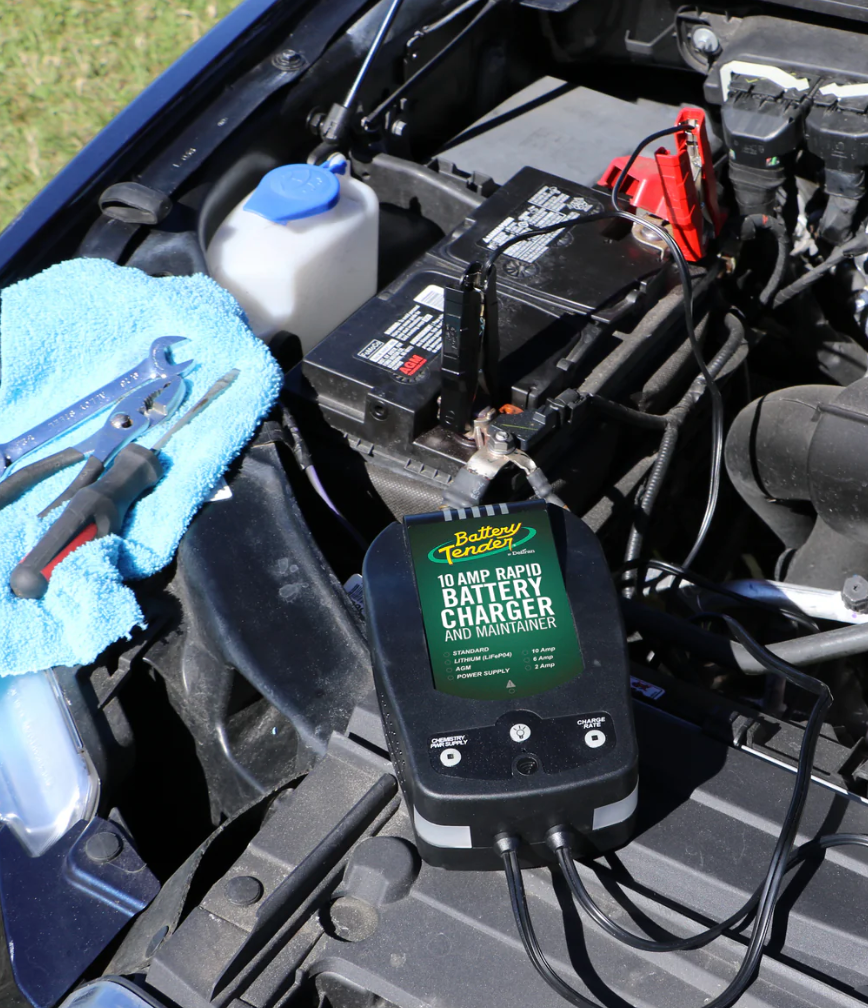
Chargers installed in unfinished garages, boat engine compartments, or outdoor utility buildings face moisture, dust, and temperature extremes. An IP65 or higher ingress protection rating ensures the charger resists water spray and particulate intrusion without compromising internal circuitry. The Battery Tender 8A/2A Battery Tender Power Tender (SKU 022-1005-DL-WH) carries an IP65 rating, supports lithium and lead-acid chemistries, and delivers selectable 8A or 2A output for large batteries in the 50–120Ah range. The 2A setting also functions as a diagnostic power supply mode for maintaining voltage during ECU reprogramming — a feature professional technicians rely on regularly.
Battery Tender 8A/2A Battery Tender Power Tender 12V Battery Charger (SKU 022-1005-DL-WH)
When a Battery Charger Is Not Enough: Emergency Jump Starting
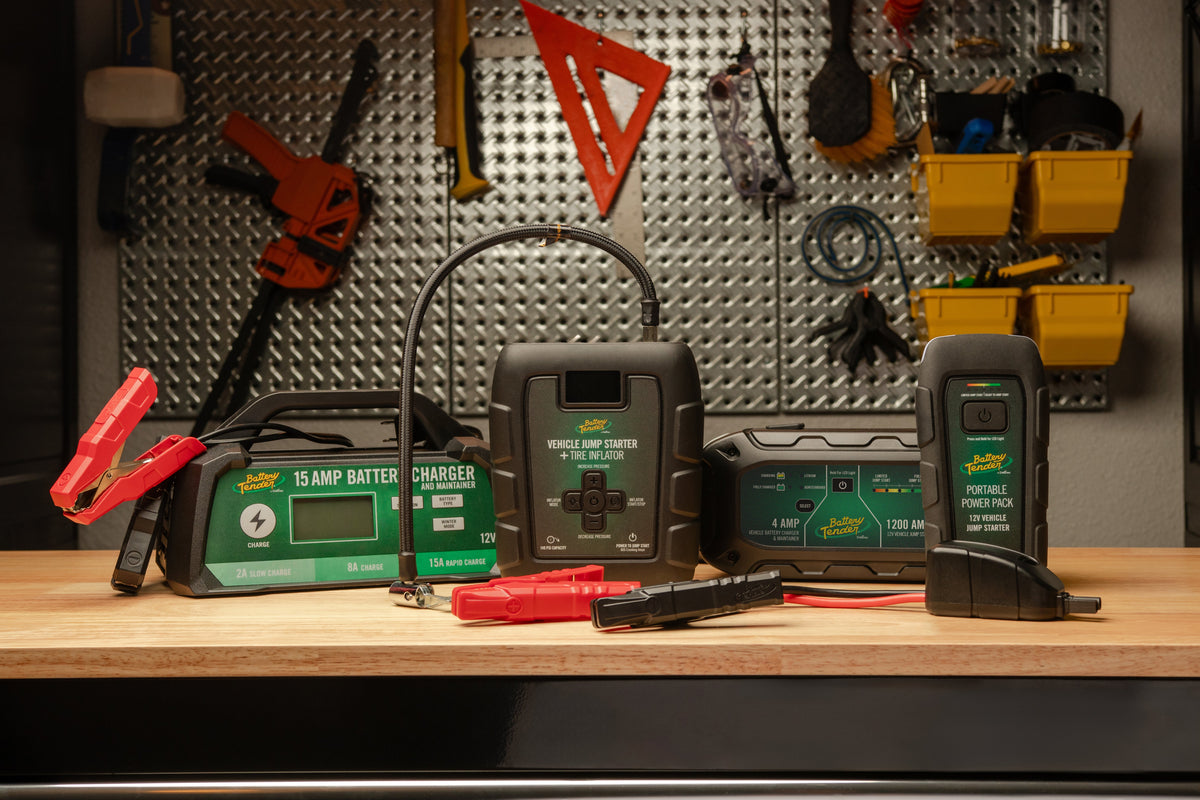
A smart battery charger prevents dead batteries through ongoing maintenance, but emergencies still happen. A vehicle left without a charger connected for months, or a battery that fails due to age, may need an immediate jump start before a charger can begin recovery. Pairing a maintenance charger with a portable jump starter creates a complete battery management system — prevention and rescue in one toolkit.
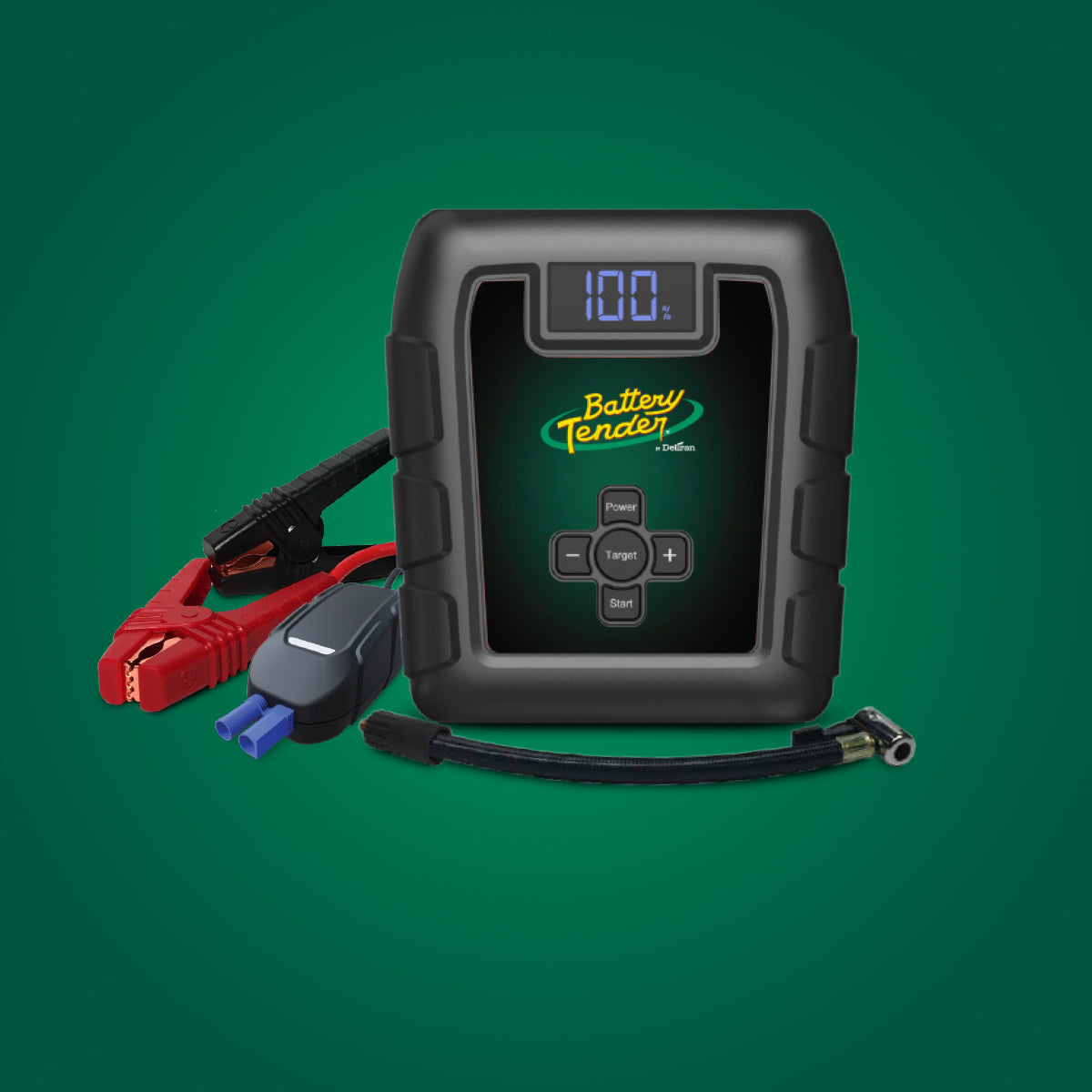
The Battery Tender Charge N Start 1120 combines both functions in a single unit: a 1A ISM charger for daily maintenance and a 1,200-peak-amp lithium-ion jump starter for emergency starting of engines up to 6.0L gas or 4.0L diesel. The internal lithium-ion battery maintains itself through proprietary Charge N Store float technology, and SafeGuard circuitry prevents backfeed that could damage vehicle electronics.
Battery Tender Charge N Start 1120 — 1A Charger + 1,200A Jump Starter
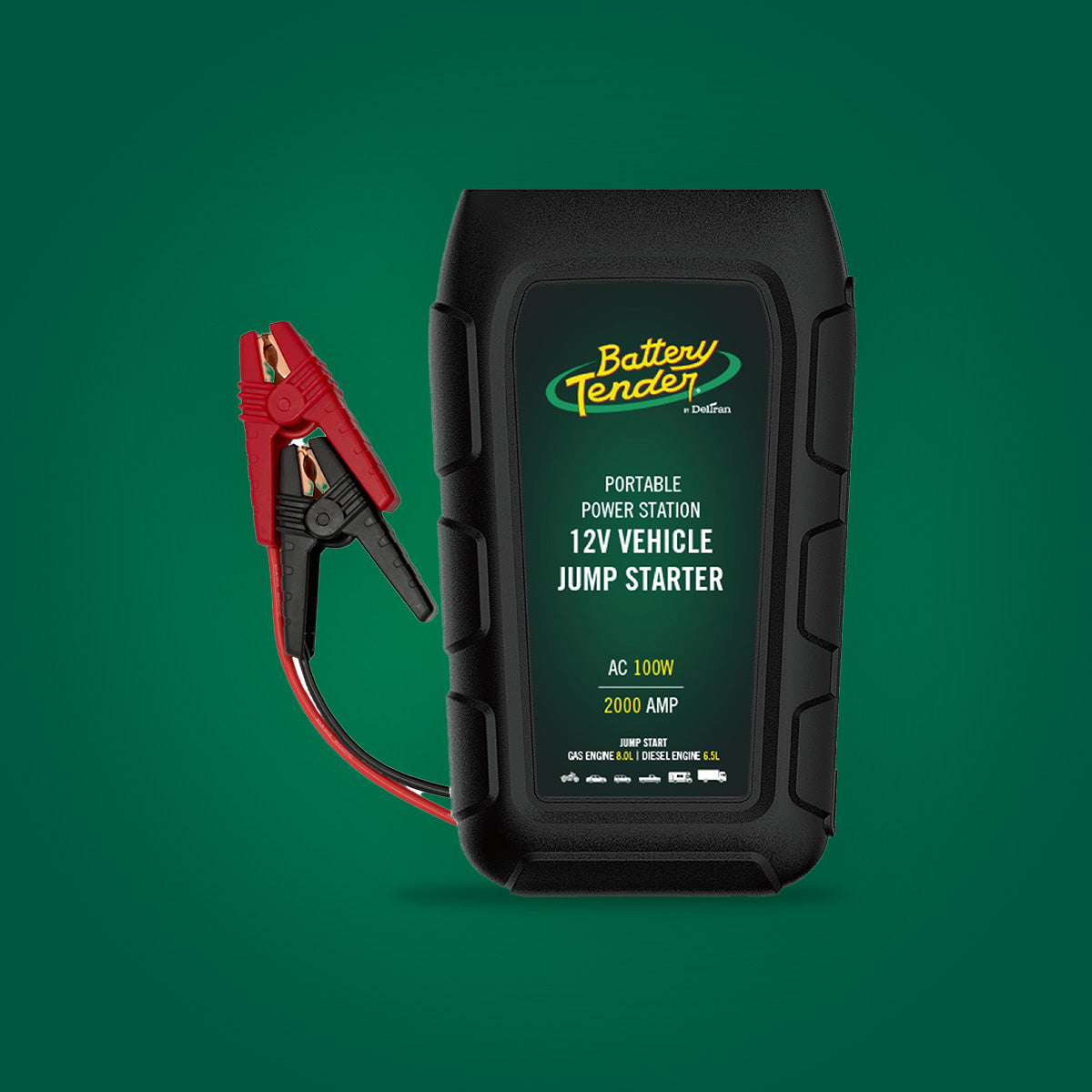
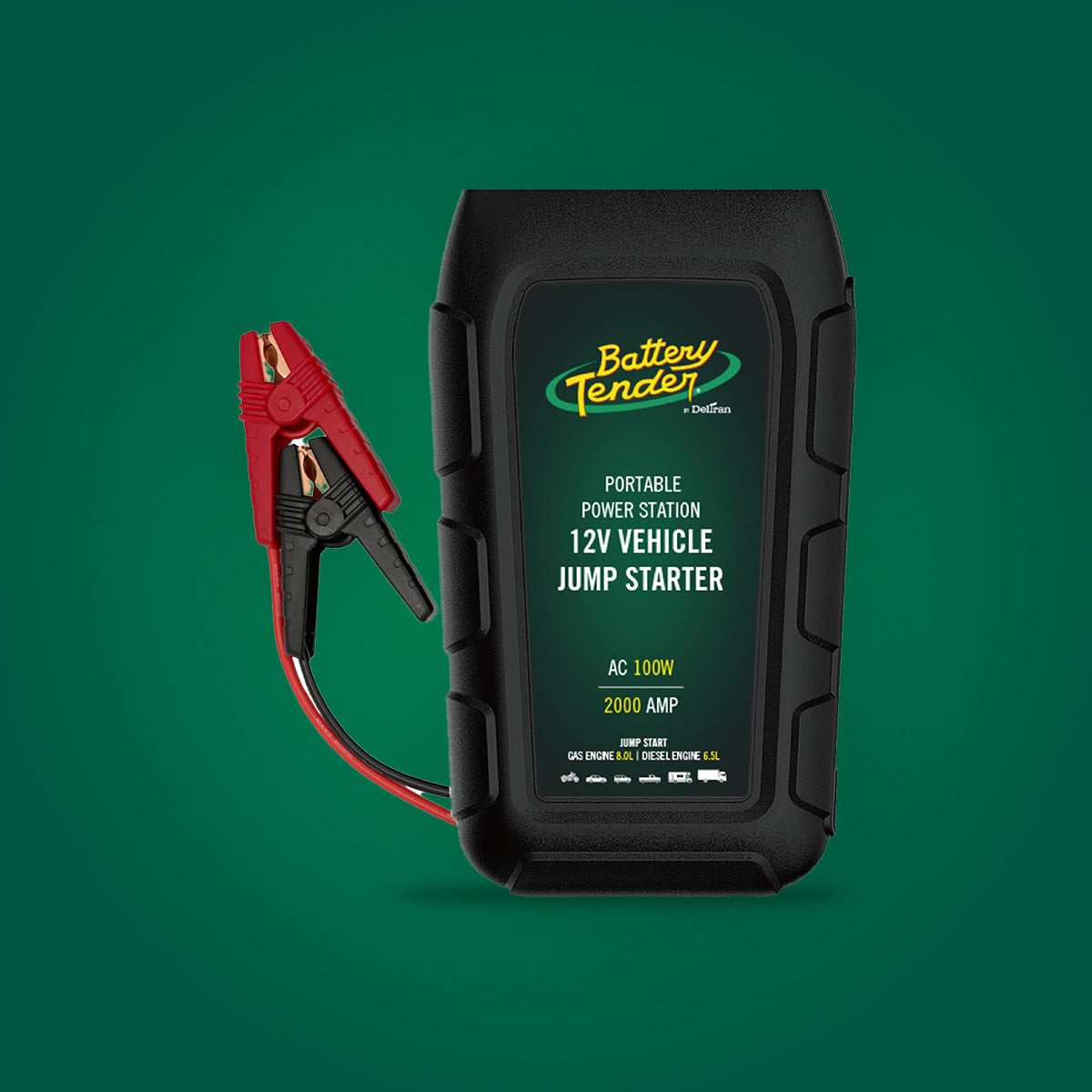
For those who prefer a standalone jump starter to keep in the vehicle at all times, the Battery Tender 1500A Jump Starter delivers 1,500 peak amps from a 12,000 mAh lithium-ion pack — enough to start engines up to 7.0L gas or 5.5L diesel up to 40 times on a single charge.
Battery Tender 1500A Portable Jump Starter
Frequently Asked Questions
How long does it take a battery charger to fully charge a dead car battery?
Charging time depends on battery capacity and charger amperage. Use the formula: battery Ah × depth of discharge ÷ charger amps = hours. A fully discharged 60Ah car battery on a 4A charger takes approximately 15 hours (60 × 1.0 ÷ 4 = 15). Higher amperage chargers like the Battery Tender 8A/2A Battery Tender Power Tender (SKU 022-1005-DL-WH) reduce this to roughly 7.5 hours at the 8A setting.
Can a battery charger be left connected to a battery indefinitely?
Only if the charger uses smart technology like ISM. A Battery Tender charger transitions to demand-responsive Float Maintenance after reaching full charge, delivering brief pulses only when voltage drops. This prevents overcharging. Traditional trickle chargers without automatic shutoff should never be left connected for extended periods, as constant current causes electrolyte boil-off and plate damage.
What is the difference between a battery charger and a battery maintainer?
A battery charger recovers a discharged battery by delivering sustained current through Bulk and Absorption stages. A battery maintainer holds an already-charged battery at optimal voltage during storage. Every Battery Tender unit performs both functions automatically through ISM — charging when needed and maintaining once full — so there is no need to purchase separate devices.
Do all battery chargers work with lithium batteries?
No. Lithium iron phosphate (LiFePO4) batteries require a different charge voltage profile than lead-acid types. Using a lead-acid-only charger on a lithium battery risks cell damage and potential thermal events. Battery Tender models with selectable chemistry — including the Battery Tender Junior 1A Selectable and the Battery Tender 8A/2A Battery Tender Power Tender — include a dedicated lithium mode that applies the correct voltage ceiling and float parameters.
Conclusion
Choosing the right battery charger comes down to four decisions: voltage (match the battery system), chemistry (select a charger with the correct modes), amperage (calculate based on battery Ah and desired charge time), and environment (ensure adequate ingress protection for the installation location). ISM four-stage technology from Battery Tender automates the entire process, eliminating overcharge risk and enabling indefinite connection for long-term storage. Whether maintaining a single motorcycle battery with a Battery Tender Junior or managing a multi-vehicle garage with a 2-Bank charger, the right match protects the investment in every battery it serves.
Explore the full lineup of smart chargers, maintainers, and jump starters at the Battery Tender Battery