


12V to 120V Inverter Guide: Sizing, Runtime, and Battery Care
A 12v to 120v inverter converts 12-volt DC battery power into 120-volt AC household power. Size it by adding up the running watts of everything you plan to plug in, then divide by 12 and by 0.85 for conversion losses to find the amp draw on the battery. The battery, not the inverter, sets how long you can run.
Battery Tender® has built smart battery chargers and maintainers for decades, and one lesson applies here: an inverter is only as reliable as the battery behind it. Most failures blamed on a 12v to 120v inverter are really deep discharge, undersized cables, or a battery that was never recharged properly. This guide covers the math, the wiring, and the recharge step most owners skip.
Key Takeaways
- Divide inverter watts by 12, then by 0.85 for efficiency, to get real battery amps. A 400-watt load pulls about 39 amps.
- Lead-acid batteries should be discharged no deeper than 50 percent, so a 100Ah battery gives about 50Ah of usable energy.
- High-wattage loads like space heaters, microwaves, and hair dryers overwhelm a 12v to 120v inverter running from a single battery.
- Recharge time equals amp-hours removed divided by charger amps, plus time for the Absorption stage.
- A smart charger with Infinite Sequential Monitoring (ISM) can stay connected between uses without overcharging.
How a 12v to 120v Inverter Works
An inverter switches 12V DC on and off thousands of times per second, steps the voltage up through a transformer, and shapes the output into 120V AC at 60 Hz. The conversion is not free. Typical efficiency runs 85 to 90 percent, so the battery supplies more power than the loads consume.
Modified Sine vs. Pure Sine Wave
Modified sine wave units are cheaper and handle lights, phone chargers, and simple tools. Pure sine wave units produce clean household-quality power and suit laptops, medical devices, variable-speed motors, and anything with a microcontroller. If a device has a motor or sensitive electronics, check its manual before using a modified sine unit.
Idle Draw and Low-Voltage Shutoff
An inverter that is switched on but powering nothing still draws current, often under 1 amp on small units. Over a weekend, that can drain a small battery. Many inverters also shut down near 10.5V to protect the battery, but that point is already deep discharge for lead-acid chemistry.
How Do You Size a 12v to 120v Inverter?
Choose an inverter rated at least 20 percent above the combined running watts of your loads, and confirm it can handle each device's startup surge. Motors and compressors can briefly draw 3 to 7 times their running wattage.
- List every device you will run at the same time.
- Find the running watts on each nameplate (watts = volts × amps if only amps are listed).
- Add the totals, then multiply by 1.2 for headroom.
- Check the largest startup surge against the inverter's surge rating.
- Divide total watts by 12, then by 0.85, to find battery amps.
| Device | Running Watts | Battery Amps at 12V |
|---|---|---|
| Phone charger | 20W | about 2A |
| LED work lights | 40W | about 3.9A |
| Laptop | 65W | about 6.4A |
| Small TV | 80W | about 7.8A |
| Mini fridge (surge near 300W) | 100W | about 9.8A |
| Power tool battery charger | 300W | about 29.4A |
| Full 400W load | 400W | about 39.2A |
A 400-watt unit covers a laptop, lights, and a phone charger with room to spare. It will not run a microwave, coffee maker, or hair dryer, which typically need 1,000 watts or more.
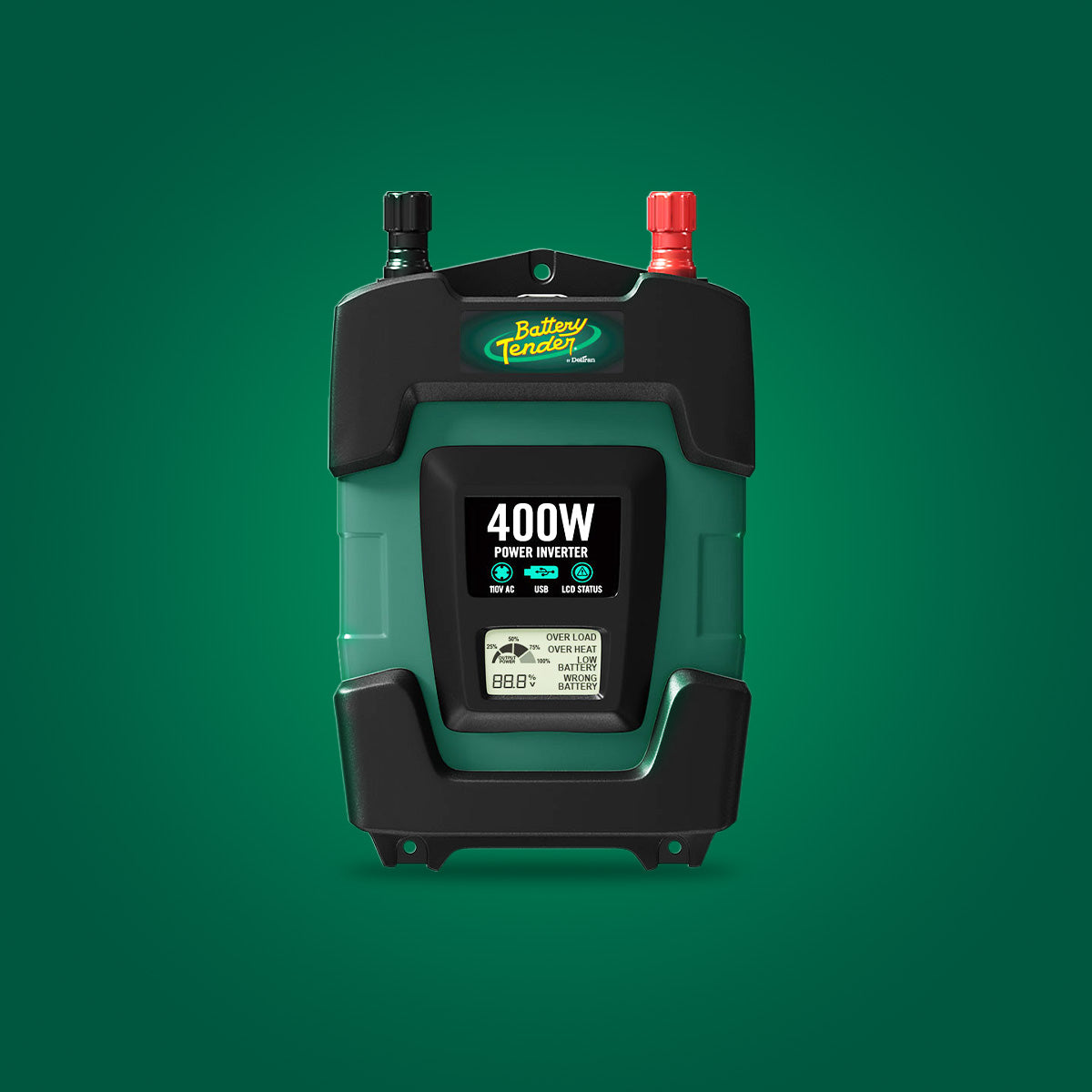
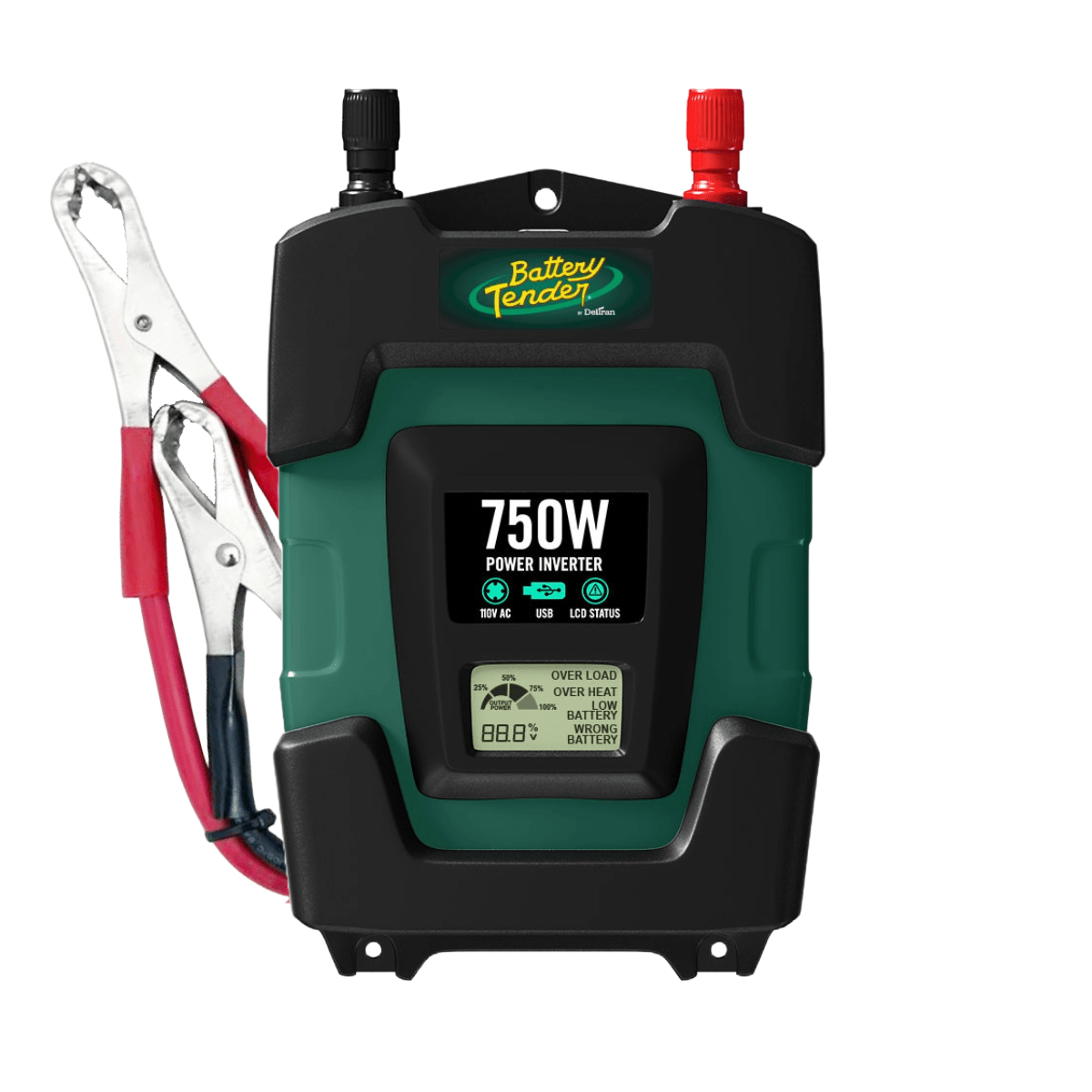
The Battery Tender Power Inverter 400 Watt 12V suits this light-to-moderate range. It fits camping, tailgating, and vehicle work where the loads stay under about 330 running watts, and it connects directly to a 12V battery.
Battery Tender Power Inverter 400 Watt 12V
How Long Will a Battery Run a 12v to 120v Inverter?
Runtime equals usable battery amp-hours divided by the amp draw. For a standard lead-acid or AGM battery, usable capacity is about 50 percent of the rating. Lithium batteries, now mainstream in marine, powersports, and RV use, can typically deliver 80 percent or more.
Example: a 100Ah AGM battery gives about 50Ah usable. Running a 100-watt mini fridge at 9.8 amps lasts about 5.1 hours. Running the full 400 watts at 39.2 amps lasts only about 1.3 hours.
- 35Ah battery: about 17.5Ah usable, roughly 27 minutes at 400 watts.
- 50Ah battery: about 25Ah usable, roughly 38 minutes at 400 watts.
- 100Ah battery: about 50Ah usable, roughly 77 minutes at 400 watts.
Cold reduces these numbers further. A lead-acid battery near 32°F delivers noticeably less capacity than at 77°F, so plan extra margin in winter.
A Self-Contained Option for Light Loads
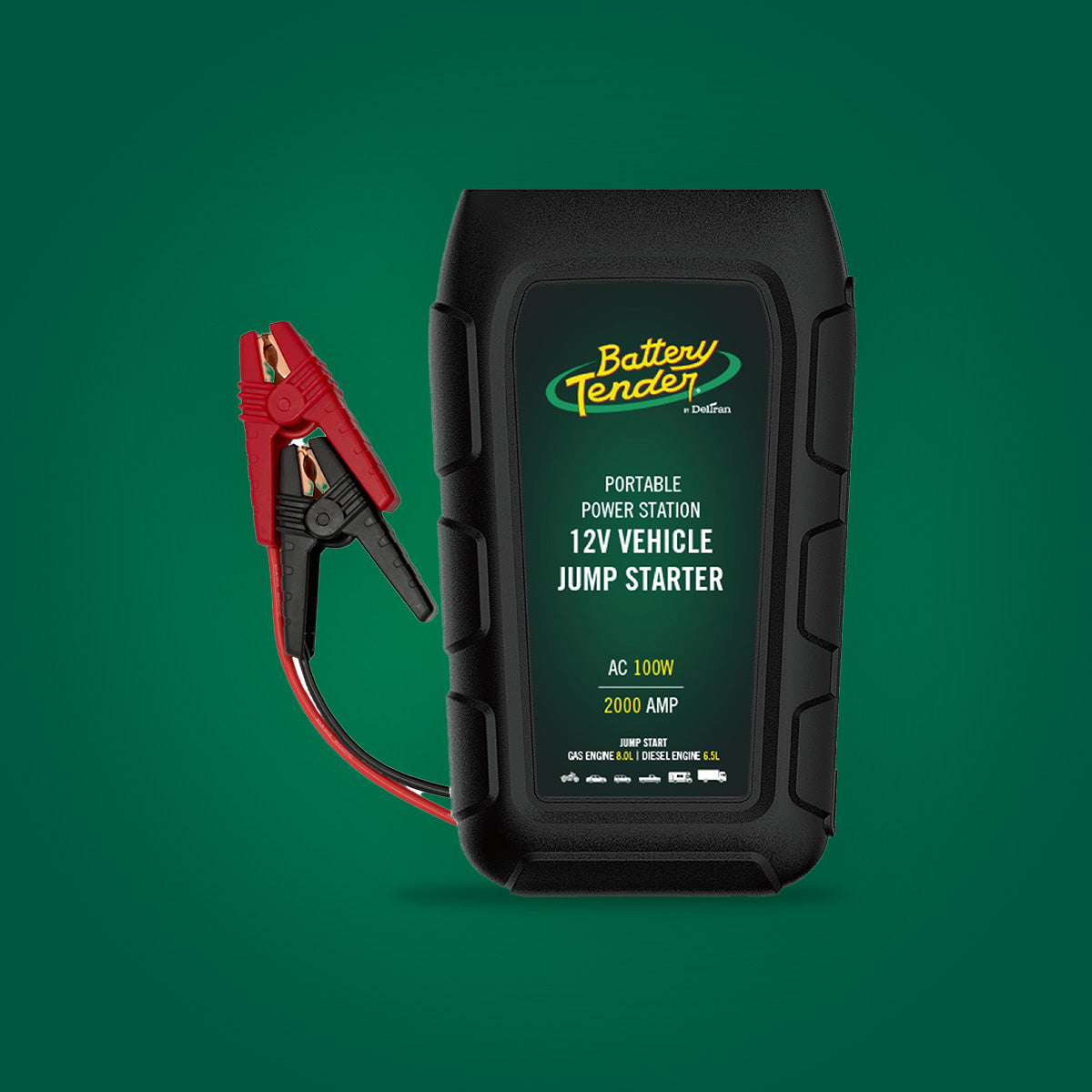
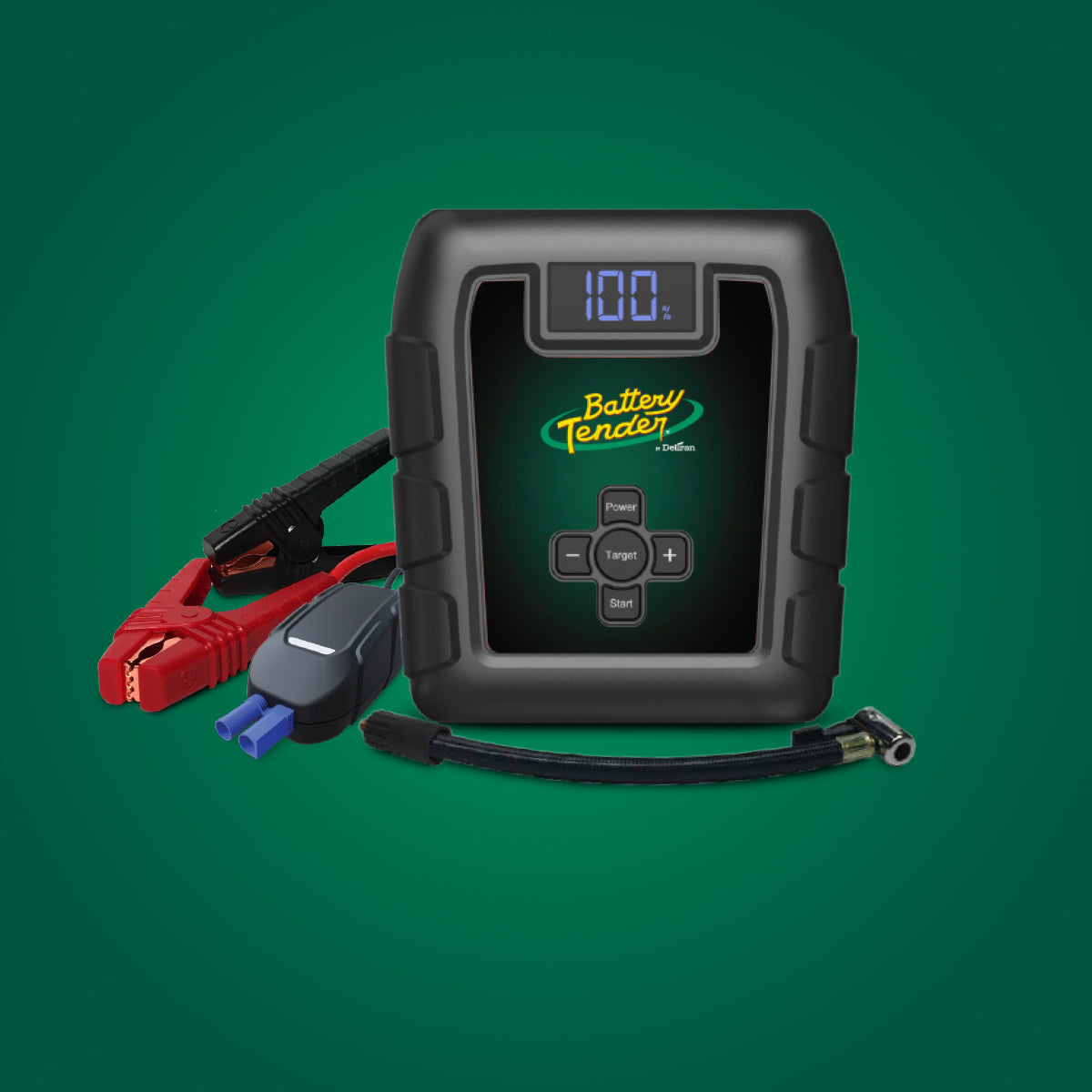
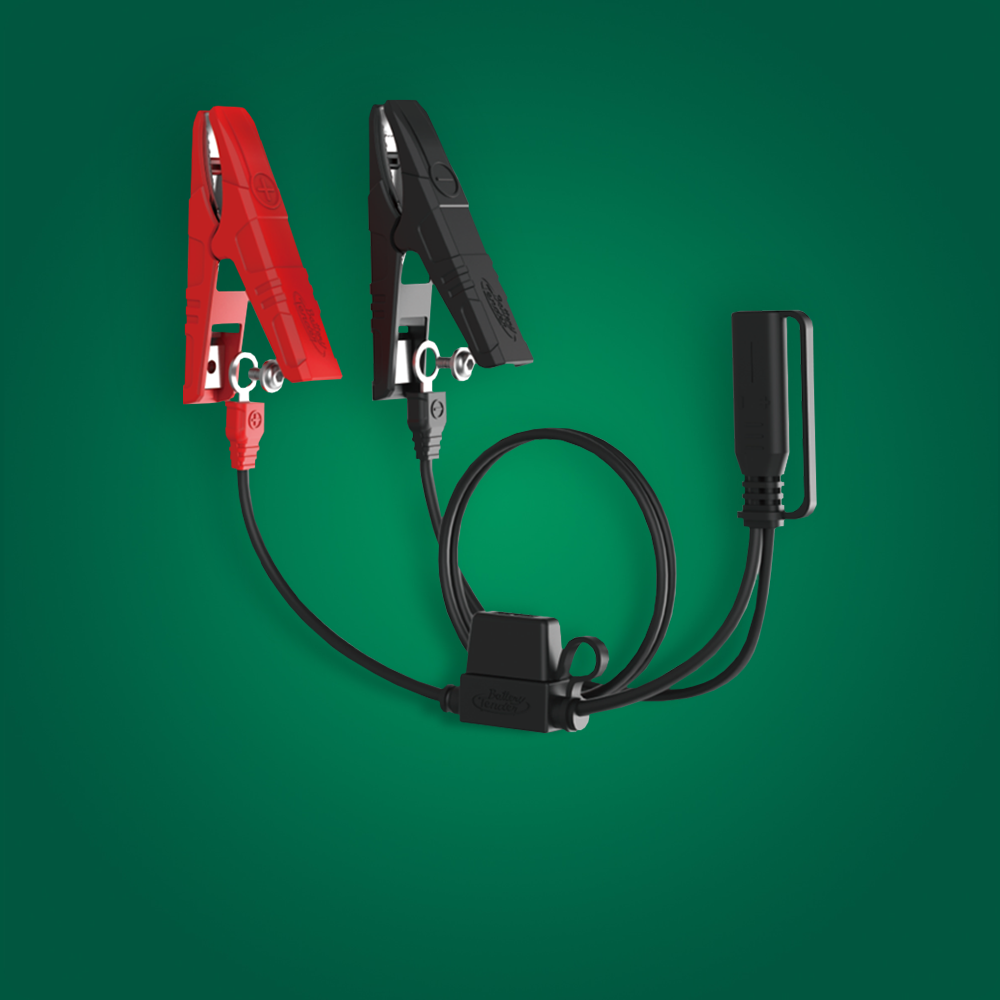
If you only need to power phones, a laptop, or a small light, a battery-powered unit avoids tapping the vehicle battery at all. The Battery Tender Jump N Start + Power Bank + Inverter Bundle (2000 Amps) pairs a 2000A lithium jump starter with a built-in 100W inverter. It fits readers who want emergency starting and low-wattage AC from one pack, and the included ring terminal cable supports permanent connection to a motorcycle or powersports battery.
How Do You Connect a 12v to 120v Inverter Safely?
Connect the inverter with short, heavy-gauge cables, a fuse on the positive lead, and good ventilation. Voltage drop and heat cause more inverter problems than the unit itself. At 40 amps, thin cables overheat quickly.
- Turn the inverter off and confirm the battery is 12V and the inverter is rated for 12V input.
- Mount the inverter in a dry, ventilated spot, away from the battery compartment where hydrogen gas can collect.
- Install a fuse on the positive cable, close to the battery terminal, sized to the cable and the inverter's maximum draw.
- Connect positive first, then negative, using the cable gauge the inverter manual specifies.
- Switch the inverter on and test with a small load before adding anything larger.
- For loads over about 150 watts in a vehicle, run the engine so the alternator supports the battery.
Warning: never run an inverter or engine in an enclosed space. For boats, follow ABYC E-11 guidance on AC and DC electrical systems.
Recharging the Battery Behind Your 12v to 120v Inverter
Recharge as soon as possible after use, because lead-acid batteries left partially discharged form sulfate crystals that reduce capacity. Charge time equals amp-hours removed divided by charger amps, plus about 20 percent for the Absorption stage. The table below shows bulk recharge time only, so add that Absorption margin to each figure.
| Battery | Removed at 50% Discharge | 2A Charger | 8A Charger | 15A Charger |
|---|---|---|---|---|
| 35Ah | 17.5Ah | about 8.8 hrs | about 2.2 hrs | about 1.2 hrs |
| 50Ah | 25Ah | about 12.5 hrs | about 3.1 hrs | about 1.7 hrs |
| 100Ah | 50Ah | about 25 hrs | about 6.3 hrs | about 3.3 hrs |
Why ISM Matters for Inverter Batteries
Infinite Sequential Monitoring (ISM) is the four-stage process used in Battery Tender chargers:
- Initialization: tests the battery and applies gentle current to judge its condition.
- Bulk Charge: delivers full rated current until the battery reaches roughly 80 percent charge.
- Absorption: holds voltage constant while current tapers, safely bringing the battery to full charge.
- Float Maintenance: sends charge pulses only when voltage drops.
Conventional trickle chargers push constant current regardless of battery state and can overcharge. Float-only chargers skip the Absorption stage and recover a deeply discharged battery slowly. ISM suits inverter batteries that cycle between heavy use and long idle periods.
Matching the Charger to the Battery
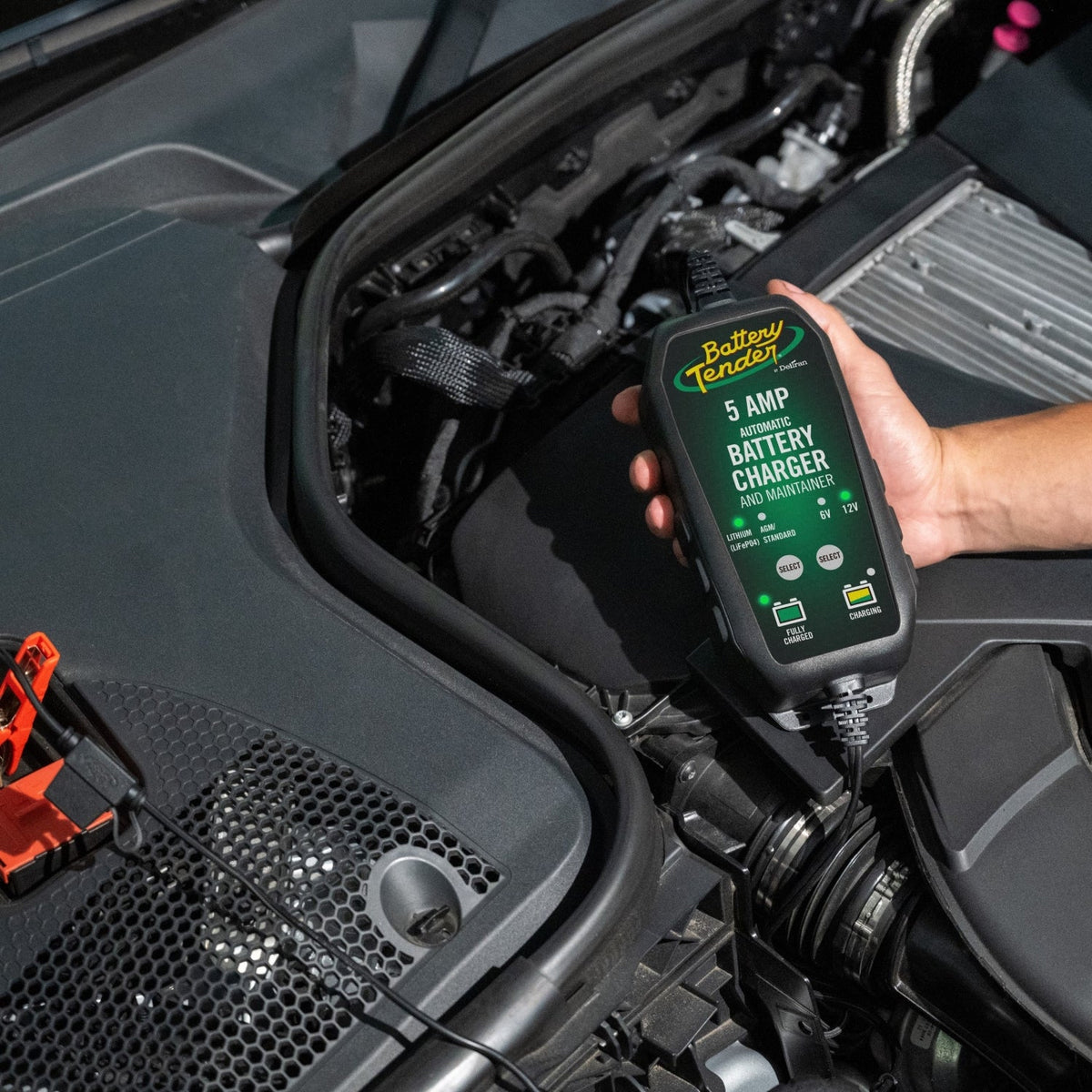
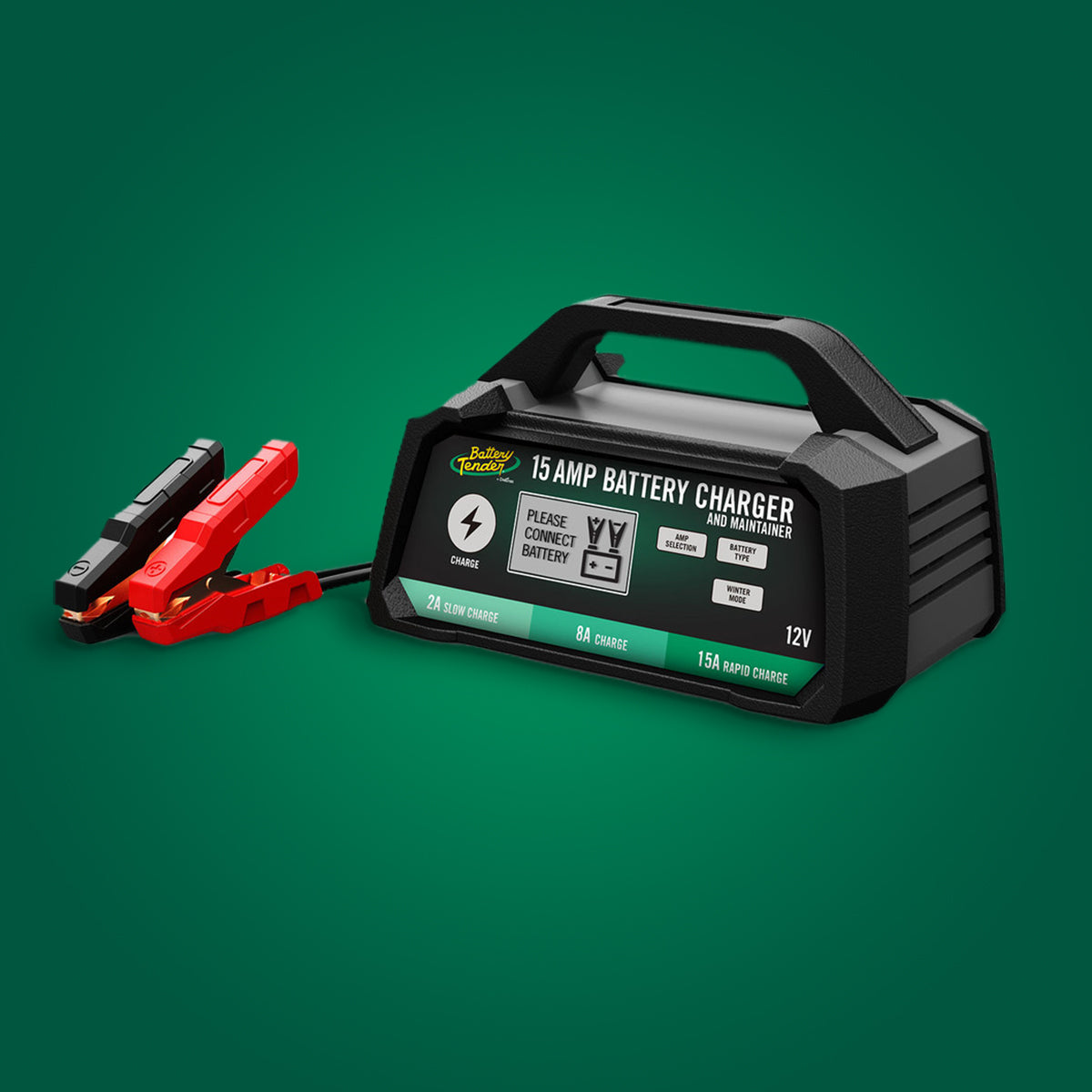
For 100Ah banks that get discharged regularly, the Battery Tender Power Tender 15/8/2 Amp charger shortens the recharge from about 25 hours to about 3.3 hours at 15A, based on the table above. It offers selectable chemistry for lead-acid and lithium batteries, and it includes temperature compensation, which adjusts charge voltage in hot or cold battery locations.
Battery Tender Power Tender 15/8/2 Amp 12V Battery Charger and Maintainer
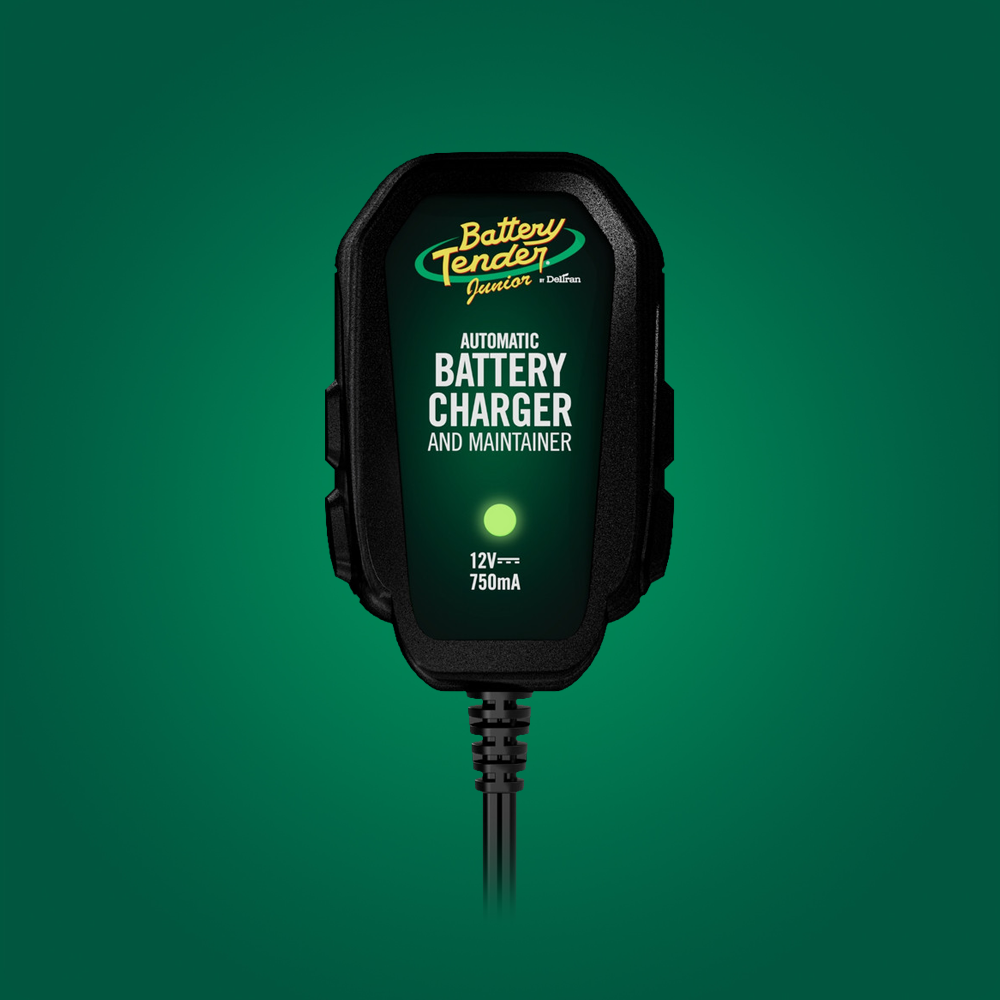
For a 20 to 50Ah battery that sits between camping trips or job-site use, the Battery Tender Plus 6V/12V 2 Amp charger works well as a storage maintainer. It also includes temperature compensation. It is slow for deep recharges on large banks, but ISM lets it stay connected for weeks or months while the battery waits for the next outage or trip. The Battery Tender Junior line suits smaller powersports batteries.
Battery Tender Plus 6V/12V 2 Amp Battery Charger and Maintainer
Test the battery before relying on it. A fully charged 12V lead-acid battery rests near 12.6V or higher, and about 12.0V indicates roughly 50 percent charge. A Battery Tender 12V / 6V Battery Tester adds a load test, which exposes a weak battery that still shows normal voltage with nothing connected.
Battery Tender 12V / 6V Battery Tester
The same logic applies to backup power equipment. Standby generators depend on a charged starting battery during outages, as covered in the guide to Generac generator battery maintenance.
Frequently Asked Questions
What size 12v to 120v inverter do I need?
Add the running watts of every device you will use at once, then multiply by 1.2 for headroom. A laptop, phone charger, and LED lights total about 125 watts, so a 300 to 400-watt inverter is plenty. Check surge ratings for any motor or compressor, since startup draw can reach several times the running wattage.
Can I run a 12v to 120v inverter from a car battery?
Yes, for light loads. Keep the engine running above about 150 watts so the alternator carries the load and the battery is not drained. A car battery is built for starting, not deep cycling, so repeated discharge below 50 percent shortens its life. Recharge with a smart charger afterward.
Will an inverter drain my battery when nothing is plugged in?
Yes. Even with no load, an inverter that is switched on draws a small idle current, often under 1 amp on small units. Over several days that can drain a small battery below a safe level. Switch the inverter off when not in use, or disconnect it during storage.
Can I leave a Battery Tender charger connected to a battery that powers an inverter?
Yes. Battery Tender chargers use ISM, which finishes with Float Maintenance and sends pulses only when voltage drops, so the battery is not overcharged. Switch the inverter off first, since a running inverter draws current that the charger would have to supply instead of restoring the battery.
How long does it take to recharge a battery after running an inverter?
Multiply battery amp-hours by the depth of discharge, then divide by charger amps. A 100Ah battery discharged 50 percent needs 50Ah returned. At 8 amps that is about 6.3 hours, and adding about 20 percent for the Absorption stage brings the total near 7.5 hours.
Conclusion
A 12v to 120v inverter works well when the load fits the battery: calculate amps, limit discharge to 50 percent on lead-acid, use proper cables and a fuse, and recharge promptly. The next step is to match a charger to your battery size using the table above, then connect it after every outage, trip, or job. Browse the full range of Battery Tender battery chargers to find the right amperage for your setup.