



Battery Tender charger for car storage: 6-Step Setup (2026)
The most reliable way to protect a parked car battery is a Battery Tender® Plus maintainer connected for the whole storage period. A Battery Tender charger for car storage uses Infinite Sequential Monitoring (ISM) to bring the battery to full charge, then adds current only when voltage drops, so it can stay connected for months without overcharging.
A parked modern car is never fully "off." Clocks, alarm modules, and keyless-entry receivers typically draw 20–50 mA around the clock. At 40 mA, that is about 29 amp-hours per month (0.04 A × 720 hours). On a 50Ah battery, that is more than half the capacity gone in 30 days. This guide covers sizing, a six-step setup, voltage benchmarks, and the special cases of vintage cars, multi-car garages, and cold garages.
Key Takeaways
- Parasitic draw of 20–50 mA can drain a 50Ah car battery below starting strength in roughly 3–8 weeks of storage.
- A 1.25A Battery Tender Plus maintainer covers batteries from 14Ah to 80Ah, which includes most passenger-car batteries.
- Battery Tender ISM technology is safe to leave connected indefinitely; conventional trickle chargers are not.
- A healthy stored battery rests at 12.6–12.8V (12V systems). Anything below 12.4V means sulfation has started.
- Vintage 6V and 8V cars and multi-car collections each need a different charger than a standard 12V setup.
What does a Battery Tender charger for car storage actually do?
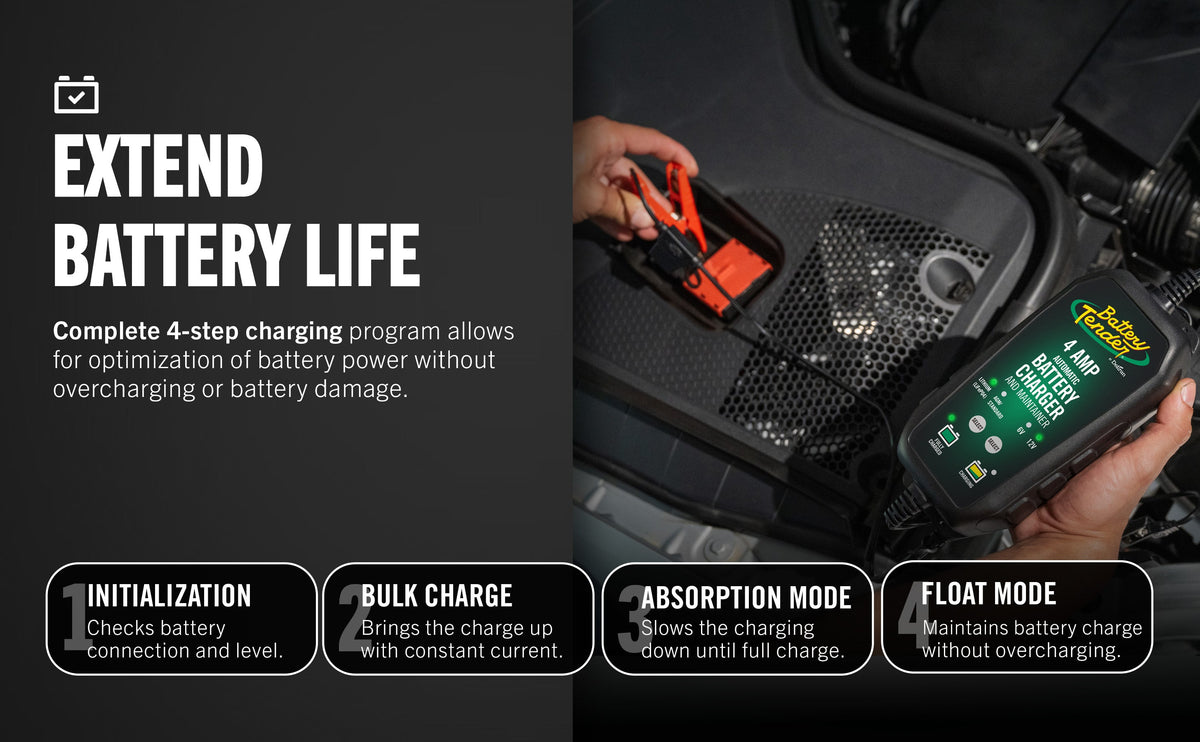
It restores a battery to full charge, then holds it there automatically. The difference from a simple plug-in charger is the four-stage ISM process, which monitors battery voltage continuously and changes its output to match.
- Initialization: tests the battery and applies gentle current to determine its condition.
- Bulk Charge: delivers full rated current until the battery reaches roughly 80% state of charge.
- Absorption: holds voltage constant while current tapers, topping off the last 20% and helping dissolve early sulfate crystals.
- Float Maintenance: sends charge pulses only when voltage falls, so the battery sits at full charge with no overcharge.
Conventional trickle chargers behave differently. They push constant current regardless of battery state, which dries out flooded cells and overheats AGM batteries over weeks. The full comparison is in Best Car Trickle Charger? Why Smart Maintainers Win (2026).
Sulfation is the reason this matters. A lead-acid battery left below full charge grows hard lead sulfate crystals on its plates, and this is the leading reason stored batteries fail. Keeping the battery topped up with ISM helps stretch typical battery life from 2–3 years toward 5 years or more.
How do you set up a Battery Tender charger for car storage?
Setup takes about 10 minutes and six steps. Follow them in order, and always connect the charger to the battery before plugging it into the wall.
- Check resting voltage first. With the car off for at least 12 hours, measure across the terminals with a multimeter. Note the reading. It is your baseline.
- Clean and inspect. Remove corrosion from the terminals with a baking-soda solution and a brush. Look for a swollen case or leaks. Do not charge a cracked or frozen battery.
- Pick a dry, ventilated spot. Keep the charger body off the floor and away from standing water. Batteries vent small amounts of hydrogen while charging, so avoid sealed closets.
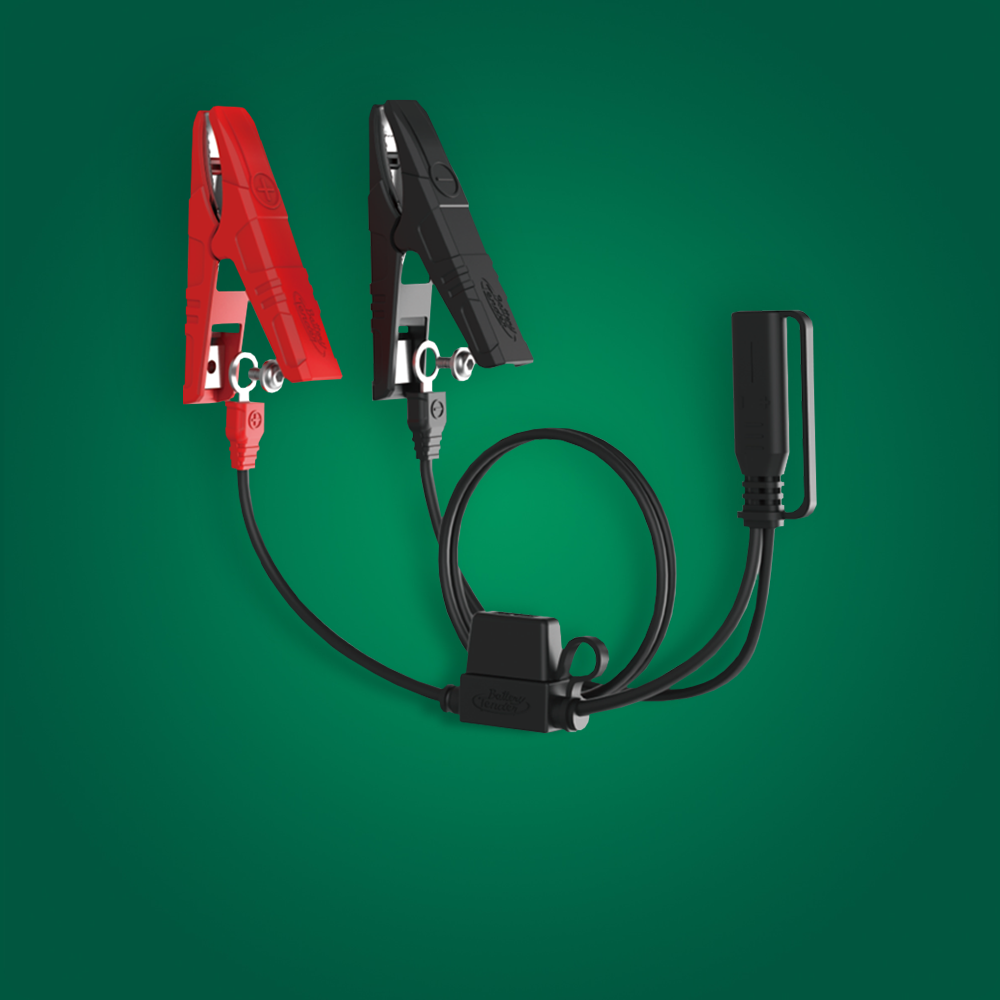
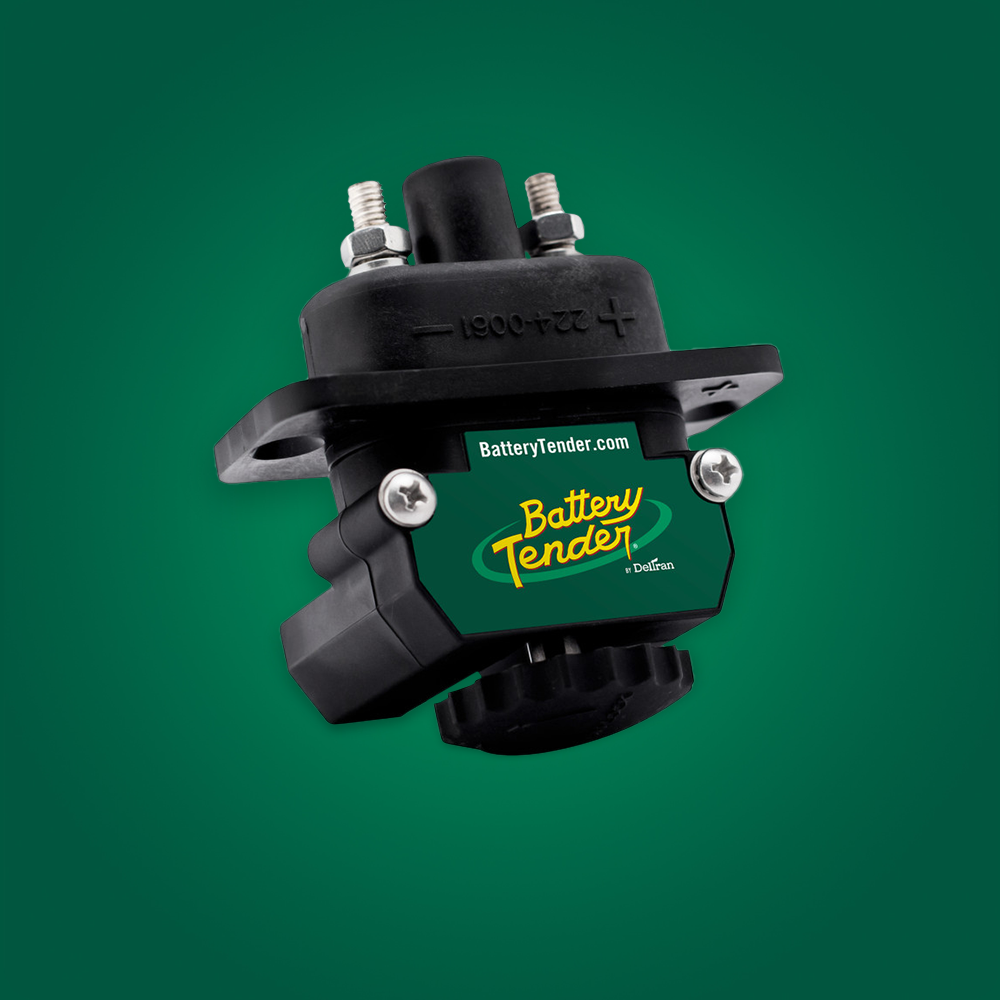
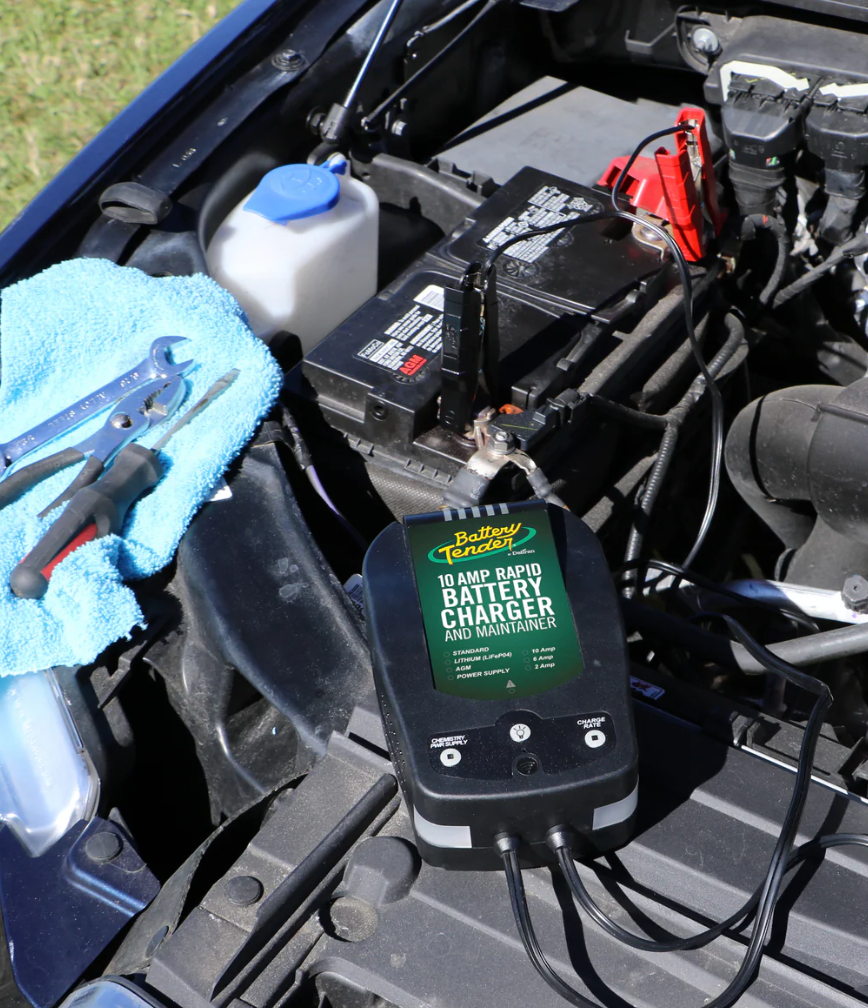
- Connect the leads. Attach red to positive and black to negative, or to a bare chassis ground away from the battery. Use the permanent ring terminal harness for a clean setup, or the clamps for temporary use.
- Plug into a GFCI-protected outlet. Route the cord so nothing can pull it or pinch it under a door or tire.
- Confirm the status lights. The charger should show it is charging, then switch to maintenance once the battery is full.
If the outlet is far from the car, a quick-disconnect extension cable keeps the charger near the battery and the cord tidy. The 12-foot length reaches most garage layouts without a household extension cord.
Battery Tender 12ft SAE Quick Disconnect Extension Cable
Which maintainer fits a stored car?
Match the charger to battery voltage first, then to amp-hour capacity. A 1.25A maintainer suits batteries from 14Ah to 80Ah, which covers most compact cars, sedans, and SUVs. The charging-time formula is (Ah × depth of discharge) ÷ charger amps.
| Stored vehicle | Battery | Suggested charger | Approx. time from 50% discharged |
|---|---|---|---|
| Sedan or compact car | 12V, 50Ah | Battery Tender Plus 12V, 1.25A | 25Ah ÷ 1.25A = 20 hours |
| SUV or small truck | 12V, 70Ah | Battery Tender Plus 12V, 1.25A | 35Ah ÷ 1.25A = 28 hours |
| Vintage car with 8V system | 8V, 30Ah | Battery Tender Plus 8V, 1.25A | 15Ah ÷ 1.25A = 12 hours |
| Pre-1956 classic | 6V, 60Ah | Battery Tender Plus 6V, 1.25A | 30Ah ÷ 1.25A = 24 hours |
| Five-car collection | 12V, 50Ah each | Battery Tender Power Tender 10-Bank, 4A per bank | 25Ah ÷ 4A = about 6 hours per car |
Real times run longer than the formula because charging slows during Absorption. Treat the numbers as planning estimates. For stored cars the speed rarely matters, since the charger has weeks to work.
Temperature compensation is built into the Battery Tender Plus charger line. It adjusts charge voltage when a garage runs cold or hot, which protects the battery in unheated winter storage. Batteries above 80Ah, such as large truck or diesel starting batteries, call for a higher-amp Battery Tender Power Tender model.
How long can a Battery Tender charger for car storage stay connected?
It can stay connected indefinitely. ISM Float Maintenance holds the battery at full charge for months or years, because the charger stops delivering current whenever the battery is full. That is the defining difference between a smart maintainer and a conventional trickle charger.
Use these resting-voltage benchmarks (12V lead-acid, measured with the charger unplugged for at least an hour) to check on the battery:
- 12.6–12.8V: fully charged and healthy.
- 12.4V: about 75% charged; sulfation risk begins if it stays there.
- 12.2V: about 50% charged; recharge promptly.
- Below 12.0V: deeply discharged; the battery may not recover fully.
If a connected battery still reads low after 24–48 hours, the battery is probably the problem and not the charger. The diagnostic steps are in Car Battery Won't Hold Charge: Rest-Voltage Test Guide (2026).
Check the setup once a month: confirm the status light, look at the connections, and make sure the cord has not been moved. That takes two minutes and catches a tripped outlet or a loose clamp before it costs a battery.
What about classic cars, multi-car garages, and cold garages?
Each of these situations changes the charger choice, but not the method. The setup steps stay the same.
Vintage cars with 6V or 8V batteries
Many pre-1956 American cars used 6V batteries, and some vintage vehicles and equipment use 8V. A standard 12V charger will overcharge these batteries and can damage them. The Battery Tender Plus 8V charger is built for 8V batteries and delivers 1.25A through ISM, which suits typical batteries in the 14–80Ah range.
Battery Tender Plus 1.25 AMP 8V Battery Charger and Maintainer
For a 6V classic, the Battery Tender Plus 6V charger delivers the same 1.25A ISM charge at the correct voltage. Positive-ground cars need extra care when connecting leads, so confirm the polarity of the vehicle before attaching anything.
Battery Tender Plus 1.25 AMP 6V Battery Charger and Maintainer
Multi-car garages and collections
Running one charger per car works, but a multibank unit saves outlets and cord clutter. The Battery Tender Power Tender 10-Bank charger gives each of ten batteries its own independent ISM charge at up to 4A per bank, with selectable 6V or 12V operation. That lets a collection of modern 12V cars and a few 6V classics share one charger, and one battery's condition never affects another's.
Battery Tender Power Tender 10-Bank 4 Amp 12V/6V Battery Charger and Maintainer
Cold garages and waking the car up
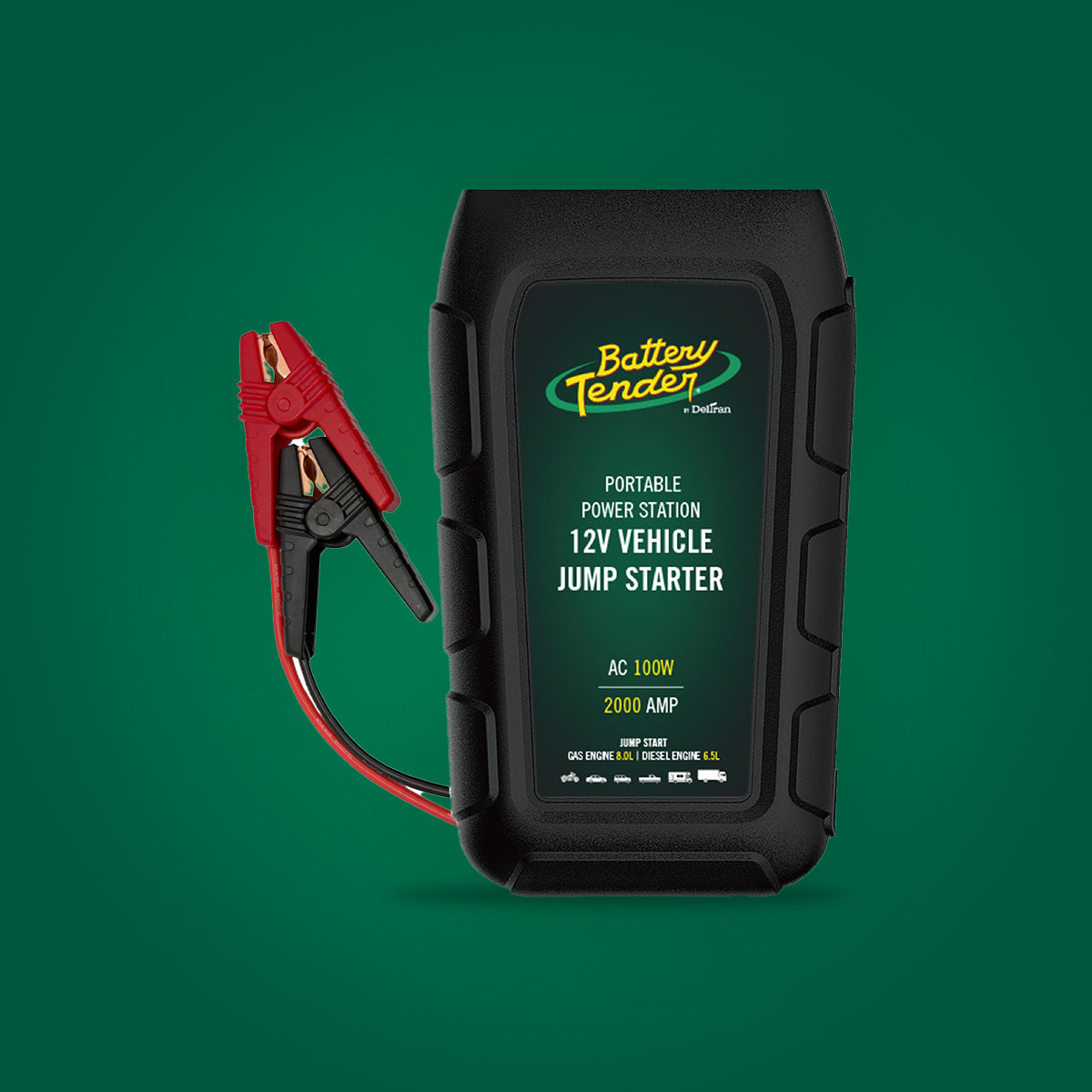
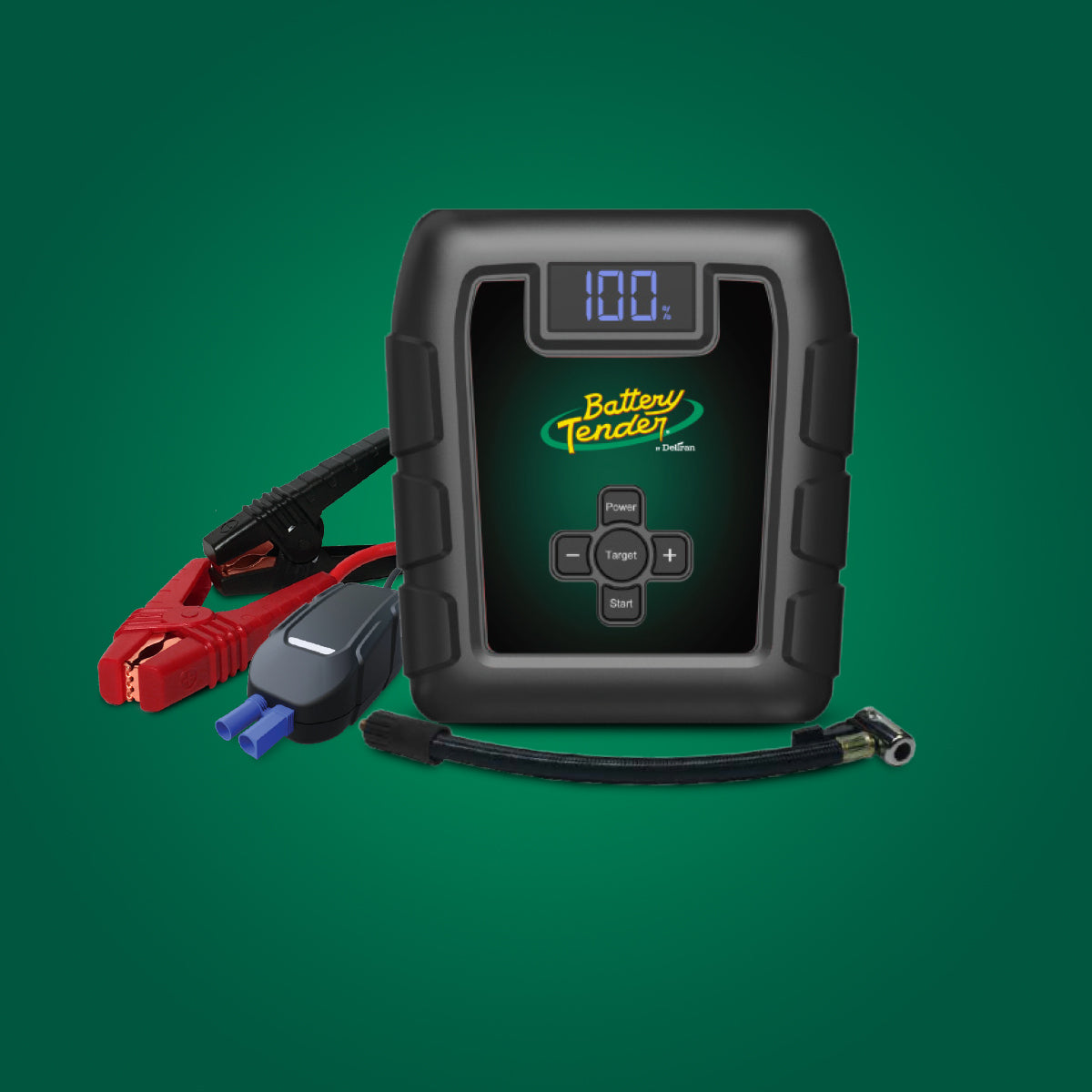
A fully charged battery will not freeze until well below -50°F, while a discharged one can freeze near 20°F. That is the practical reason to keep the battery topped up through winter. When the car comes out of storage, disconnect the charger, confirm 12.6V or higher, and start the engine. If the battery is weak after a long layup, a portable lithium jump starter is a good backup to keep in the trunk. The Battery Tender Jump N Start 600 Amp Lithium Jump Starter starts engines up to 4.0L gas or 2.0L diesel, so it suits compact cars and small SUVs. Larger engines need a higher-rated model. A jump starter only gets the engine running. It does not charge or maintain the battery.
Battery Tender Jump N Start 600 Amp Lithium Jump Starter
Frequently Asked Questions
Can I leave a Battery Tender charger for car storage connected all winter?
Yes. ISM technology monitors battery voltage and supplies current only when it drops, so the charger can stay connected for the entire storage period without overcharging. Check the connections and status light about once a month. Conventional trickle chargers cannot offer this safety, because they supply constant current regardless of the battery's state.
Should I disconnect the car battery before storing it?
Disconnecting the negative cable stops parasitic draw, but it also resets electronics such as radio presets and some module memory. Connecting a Battery Tender maintainer without disconnecting the battery is simpler and keeps the car's settings intact. Disconnect only if the car will sit without access to an outlet.
What size charger do I need for a stored car?
A 1.25A maintainer fits batteries between 14Ah and 80Ah, which covers most passenger cars. Larger truck or diesel batteries above 80Ah need a higher-amp charger. Match the voltage first: 12V for modern cars, and 6V or 8V for many vintage vehicles. The charging-time formula is (Ah × depth of discharge) ÷ charger amps.
Can a maintainer revive a dead car battery?
Sometimes. A battery that is merely discharged will usually recover, but one with heavily sulfated plates or a shorted cell will not. If the resting voltage stays below 12.0V after 24–48 hours on a charger, test the battery with a load tester or replace it. Maintainers prevent damage better than they repair it.
Is a jump starter a substitute for a maintainer in storage?
No. A jump starter delivers a short burst of cranking power and does nothing to keep the battery charged during storage. A maintainer prevents the discharge in the first place. Many owners use both: the maintainer during storage, and a jump starter in the trunk for emergencies once the car is back on the road.
Conclusion
A Battery Tender charger for car storage is a small, inexpensive way to ensure a battery is still healthy when the car comes out of the garage. Size the charger to the battery (1.25A for 14–80Ah), connect it using the six steps above, and check the voltage monthly. Pick the 8V or 6V Battery Tender Plus model for vintage cars, and the Battery Tender Power Tender 10-Bank charger for a collection. To find the right model for your car, browse the full Battery Tender battery charger collection.