



Battery Charger and Maintainer for Car: Pick by Use (2026)
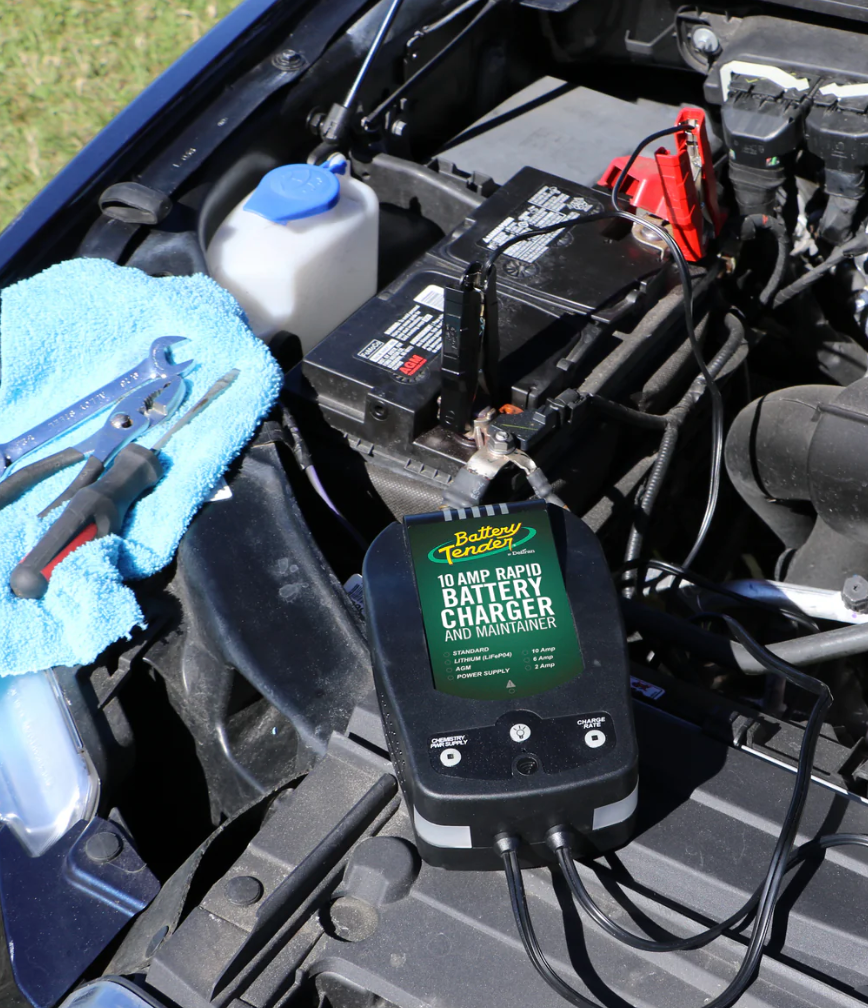
A battery charger and maintainer for car use is a smart, multi-stage unit that recovers a weak 12V battery and then holds it at full charge until the next drive. For most cars, a 1.25-amp Battery Tender® Plus charger handles upkeep, and a 5-amp unit such as the Battery Tender Power Tender 5 Amp speeds recovery of larger or deeply drained batteries.
Most guides sort chargers by amps alone. This guide sorts them by how the car is used, because a daily commuter, a weekend roadster and a garaged classic each lose charge in a different way. Identify the pattern first, then size the amps. Updated for 2026.
Key Takeaways
- A charger restores a discharged battery. A maintainer holds a full battery at full charge. A good battery charger and maintainer for car use does both automatically.
- A parked modern car draws roughly 25–50 mA, enough to drain a 50Ah battery to a hard-start level in about 3–4 weeks.
- Battery Tender chargers use Infinite Sequential Monitoring (ISM), a four-stage process (Initialization, Bulk Charge, Absorption, Float Maintenance), so they are safe to leave connected indefinitely.
- Use 1.25A for upkeep of 14–80Ah batteries. Use 5A when you need a full recharge in under a day.
- A rest voltage below 12.4V means the battery is already losing ground to sulfation. Connect a maintainer promptly.
What Does a Battery Charger and Maintainer for Car Use Actually Do?
It performs two separate jobs in one housing: it refills a depleted battery, then it keeps that battery topped off without overcharging. Basic chargers do only the first job and must be unplugged once the battery is full. A true maintainer is built to stay connected for weeks or months.
Why does a parked car still lose charge?
Alarm systems, keyless-entry receivers and control-module memory draw current even with the key out. Typical modern cars pull 25–50 mA. At 40 mA, that is about 1 amp-hour per day. A 50Ah battery has roughly 25Ah of usable capacity before it drops to 50% state of charge, so it lasts about 25 days before starting becomes unreliable. Cold weather shortens that window because it reduces available capacity.
Short trips make it worse. A 10-minute drive rarely replaces what the starter consumed, so the battery runs a small deficit every week. Over months, that deficit leaves sulfate crystals on the plates, which is a leading reason batteries die at two to three years instead of five or more.
What does a rest-voltage reading tell you?
Measure with the car off for at least four hours. About 12.6–12.8V means fully charged, 12.4V is roughly 75%, 12.2V is roughly 50%, and 12.0V is roughly 25%. For a deeper walkthrough, see the car battery rest-voltage test guide.
How Does ISM Compare With a Conventional Trickle Charger?
ISM adapts to the battery's condition, while a conventional trickle charger pushes the same small current regardless of state. That constant current is why conventional trickle chargers can overcharge a battery and boil off electrolyte if left connected. Battery Tender ISM technology avoids this by adjusting its output at each stage.
ISM works in four stages:
- Initialization: tests the battery and applies a gentle current to judge its condition.
- Bulk Charge: delivers full rated current until the battery reaches about 80% state of charge.
- Absorption: holds voltage constant while current tapers, finishing the charge safely and helping limit sulfation.
- Float Maintenance: sends charge pulses only when voltage drops, so the battery stays full without overcharging.
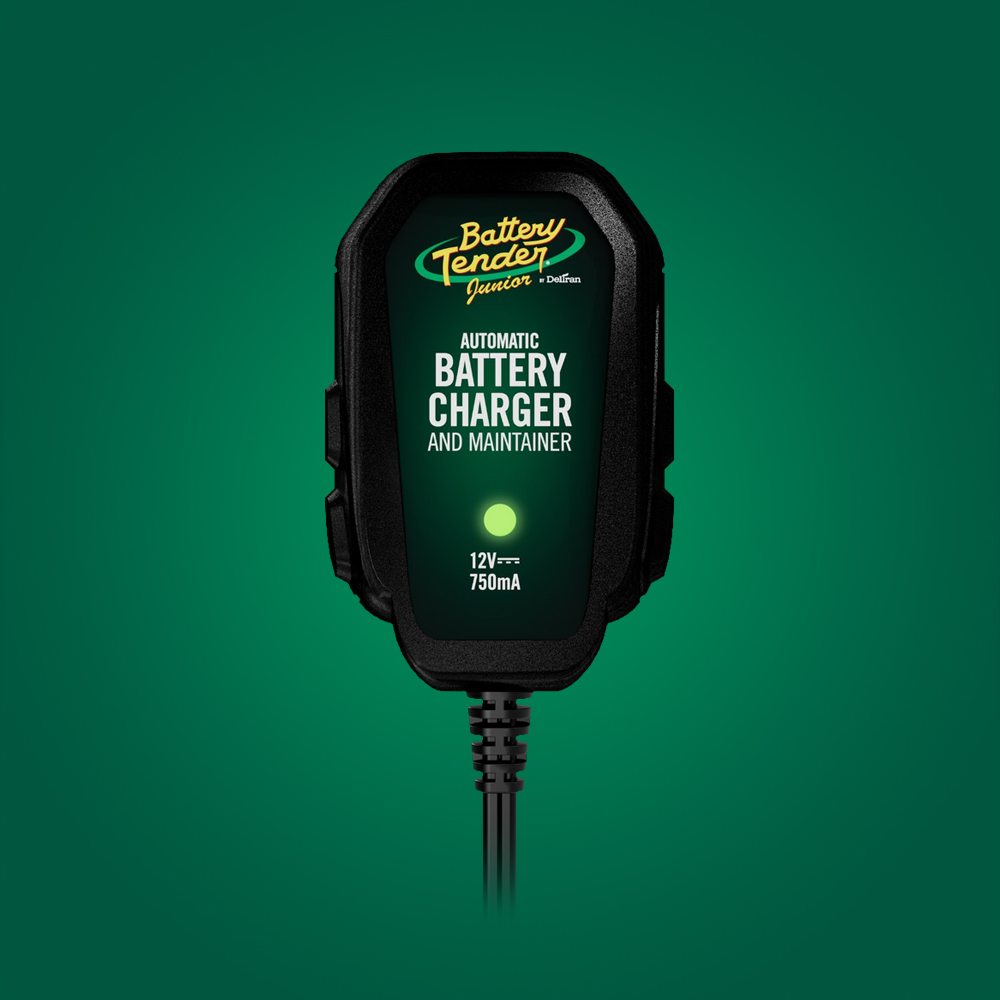
Battery Tender Plus models include temperature compensation, which lowers charge voltage in a hot garage and raises it in a freezing one. Battery Tender Junior models are lower-output units best matched to smaller powersports batteries, so a Battery Tender Plus charger is the stronger fit for most car batteries. For the full comparison, read why smart maintainers beat trickle chargers.
Which Battery Charger and Maintainer for Car Fits Your Driving Pattern?
Match the unit to how long the car sits and how large the battery is. The table below pairs five common patterns with a starting recommendation.
| Driving pattern | Typical battery | Suggested unit | Reason |
|---|---|---|---|
| Daily short trips (under 15 min) | 40–60Ah | Battery Tender Plus 1.25A, 12V | Overnight top-off once a week offsets the trip deficit |
| Weekend or second car (sits 2–6 weeks) | 45–70Ah | Battery Tender Plus 1.25A, 12V | Covers 25–50 mA parasitic draw indefinitely |
| Stored 3–6+ months | 50–80Ah | Battery Tender Plus 1.25A or Battery Tender Power Tender 5 Amp | Float Maintenance holds full charge all season |
| Weak or deeply discharged, or large battery | 70–100Ah | Battery Tender Power Tender 5 Amp | Recharges a half-drained 70Ah battery in about 8 hours instead of 34 |
| Classic car on 6V or 8V | Varies | Battery Tender Plus 6V or 8V | Voltage-matched output |
When does a 5-amp unit make sense?
Choose 5A if the battery is above 70Ah, if it is already below 12.2V, or if you need the car ready by tomorrow. It also selects between 12V and 6V output, so one unit can cover a modern car and a 6V classic.
The Battery Tender Power Tender 5 Amp suits an SUV, truck or diesel with a large battery, and a classic-car owner who also has a 6V project. It recovers a drained battery roughly four times faster than a 1.25A unit, and still drops to maintenance mode once charging is done.
Battery Tender Power Tender 5 Amp 12V/6V Battery Charger and Maintainer
What about classic cars with 6V or 8V systems?
Many cars built before the mid-1950s use 6V systems, and some very early cars use 8V. A 12V charger will damage them. The Battery Tender Plus 6V delivers 1.25A at the right voltage, which suits a typical 6V group battery in the 70–100Ah range for upkeep during winter storage.
Battery Tender Plus 1.25 AMP 6V Battery Charger and Maintainer
An 8V system is rare, but it is also the one most often left without a matched charger. The Battery Tender Plus 8V fits those restorations, giving the owner an exact-voltage maintainer rather than a workaround.
Battery Tender Plus 1.25 AMP 8V Battery Charger and Maintainer
How do you calculate charging time?
Use this formula: (battery Ah × depth of discharge) ÷ charger amps = hours. Add about 20% for the Absorption taper. The table shows two common cases at 50% discharge.
| Battery | Ah to replace | At 1.25A | At 5A |
|---|---|---|---|
| 50Ah | 25Ah | 20 hr (about 24 hr with taper) | 5 hr (about 6 hr with taper) |
| 70Ah | 35Ah | 28 hr (about 34 hr with taper) | 7 hr (about 8 hr with taper) |
How Do You Connect a Battery Charger and Maintainer for Car Batteries?
Connect the clamps or ring terminals to the battery before plugging into the wall, and unplug from the wall before removing them. Work in a ventilated space, because charging can release hydrogen gas. Keep sparks and flames away.
- Turn the ignition off and remove the key.
- Inspect the battery for cracks, bulging or leaking. Do not charge a damaged battery.
- Clamp the red positive lead to the positive terminal.
- Clamp the black negative lead to the negative terminal, or to a bare chassis ground away from the battery if the manual specifies it.
- Plug the charger into a grounded 120V outlet and confirm the indicator lights.
- Leave it connected. In maintenance mode, the unit can stay attached for the whole storage period.
- To disconnect, unplug from the outlet first, then remove the negative lead, then the positive.
What Else Belongs With a Battery Charger and Maintainer for Car Care?
A tester and an emergency jump starter round out the kit. The maintainer prevents the problem, the tester confirms the battery's health, and the jump starter covers a failure that happens away from the garage.
If a battery will not hold 12.4V after a full charge, it may be at end of life. The Battery Tender 12V / 6V Battery Tester checks 12V batteries at 100 amps and 6V batteries at 50 amps, so you can decide whether to maintain the battery or replace it before winter.
Battery Tender 12V / 6V Battery Tester
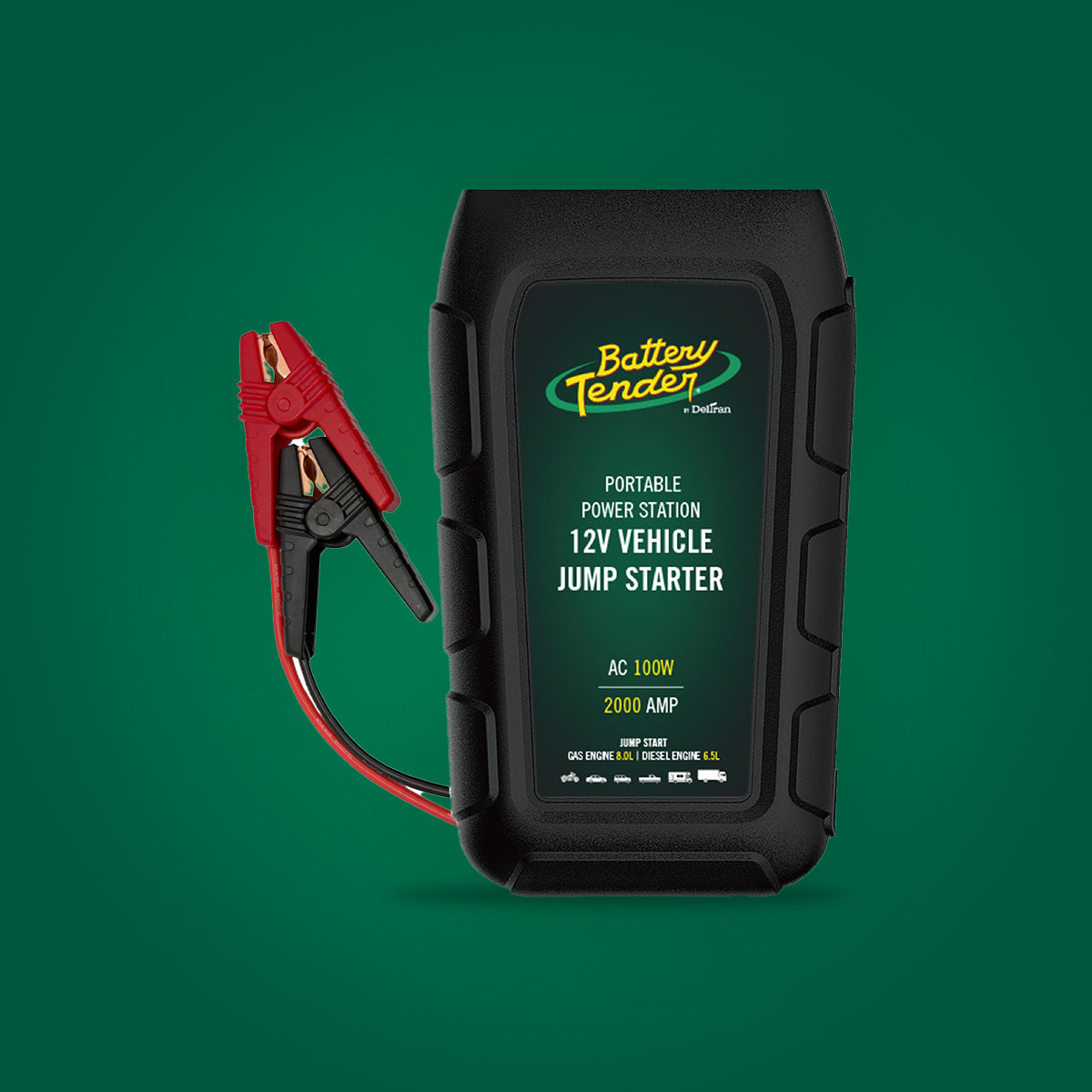
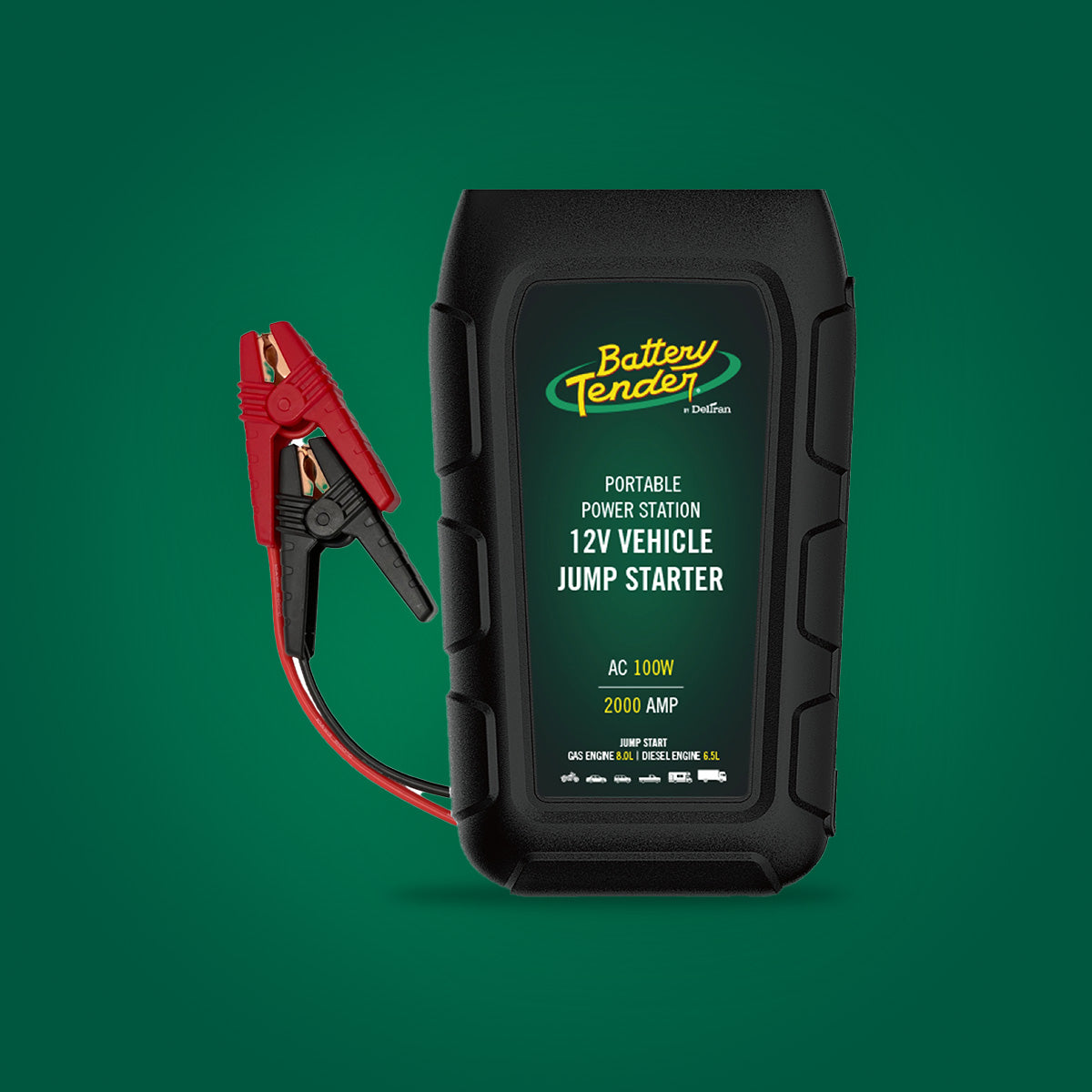
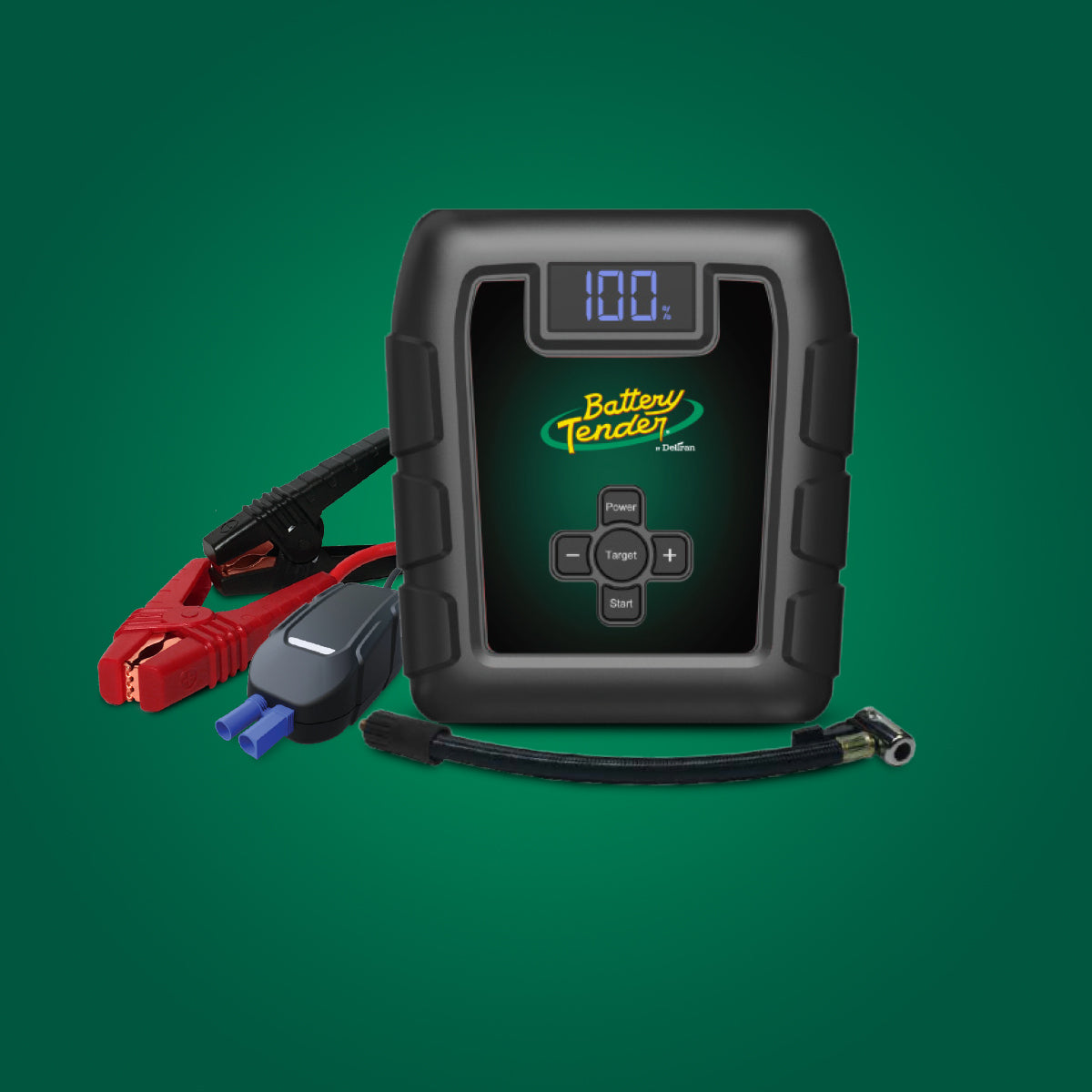
For emergencies, the Battery Tender Jump N Start 800 Amp Jump Starter and Tire Inflator delivers up to 800 amps to restart a car with a flat battery, and its built-in tire inflator handles the other common roadside problem. It does not replace a maintainer, because it restarts a car but does not condition a battery. For a full breakdown of the roles, see jump starter, charger or maintainer.
Battery Tender Jump N Start 800 Amp Jump Starter and Tire Inflator
Frequently Asked Questions
Can I leave a battery charger and maintainer for car use connected all winter?
Yes, if it is a smart maintainer. ISM drops into Float Maintenance after charging and sends pulses only when voltage falls, so it will not overcharge. Conventional trickle chargers push constant current and should not stay connected unattended for months.
What size charger do I need for a car battery?
For upkeep of a 14–80Ah battery, 1.25 amps is enough. For recovery, choose about 5 amps, which refills a 50Ah battery at 50% discharge in roughly 6 hours. Larger batteries above 70Ah and any battery below 12.2V benefit from the higher output.
Will a maintainer revive a completely dead car battery?
Sometimes. Initialization tests the battery and applies a gentle current first, so a deeply discharged battery may begin accepting charge. A battery that stays below about 10.5V, or one with an internal short, is usually at end of life. Test it before replacing it.
Does a jump starter replace a maintainer?
No. A jump starter delivers a burst of cranking amps so the engine can turn over. It does not restore plate chemistry or prevent sulfation. A maintainer stops the battery from going flat in the first place, and a jump starter is the backup when something goes wrong.
Conclusion
The right battery charger and maintainer for car use depends on how the car is driven, how long it sits and how large the battery is. Choose 1.25A for upkeep, 5A for recovery or large batteries, and a voltage-matched model for a 6V or 8V classic. Measure your battery's rest voltage tonight, then browse the full Battery Tender battery charger collection to pick your unit.