






Car Battery Charging Guide: Alternator vs. Smart Charger (2026)
Car battery charging happens in two places: the alternator while you drive, and an external charger while the car sits. The alternator is built to run the car and top off a healthy battery, not to recover a drained one. A smart charger finishes the job safely and can stay connected for months.
Battery Tender® pioneered the consumer smart battery charger category in 1989, and the core idea has not changed: match the charge to the battery's actual condition. This guide covers why driving alone often leaves a battery undercharged, how to read voltage to know when to plug in, how four-stage charging works, and how to size a charger by amp-hours and connect it correctly in 2026.
Key Takeaways
- An alternator holds a battery at roughly 13.8–14.7 V, but short trips rarely return the full charge used to start the engine.
- A resting voltage of 12.4 V or lower means the battery is below about 75% charge and should be put on a charger.
- Charging time is (battery Ah × depth of discharge) ÷ charger amps, so a 50Ah battery at 50% discharge needs about 20 hours at 1.25 amps.
- Infinite Sequential Monitoring (ISM) charging adapts through four stages and is safe to leave connected indefinitely.
- Match the charger voltage (6V, 8V or 12V) to the battery before connecting anything.
Why Doesn't the Alternator Finish Car Battery Charging?
The alternator is designed to power the car's electrical systems and replace the energy used to start the engine. It is not designed to bring a deeply discharged battery back to 100%. Regulated output is typically 13.8–14.7 V, and that voltage is limited by the vehicle's computer and by heat in the engine bay.
Short trips are the main culprit. A ten-minute drive with headlights, a blower fan, a heated seat and a rear defroster can leave the battery with less charge than it started with. Repeat that pattern for weeks and the battery slides into chronic undercharge.
Undercharge matters because lead-acid batteries form lead sulfate crystals on the plates whenever the battery sits partly discharged. Left alone, those crystals harden, reduce usable capacity and shorten battery life. Preventing that hardening is the whole purpose of external car battery charging.
Trade-offs worth knowing
- Long highway drives of 30 minutes or more do help recharge a battery, but they cannot reverse months of sulfation.
- A deeply discharged battery pulls very high current from the alternator, which adds heat and stress to the alternator itself.
- No charger restores a battery with an internal short or a failed cell. Test first when a battery will not hold charge.
What Does Your Battery Voltage Say About Its Charge?
Resting voltage is the simplest indicator of state of charge. Measure it with a multimeter after the car has sat for at least four hours, with no lights on and the engine off. A reading taken right after driving is inflated by surface charge and will mislead you.
| Resting Voltage (12V Lead-Acid) | Approximate State of Charge | Action |
|---|---|---|
| 12.6–12.7 V | 100% | None needed |
| 12.4 V | about 75% | Plan a charge soon |
| 12.2 V | about 50% | Charge now |
| 12.0 V | about 25% | Charge immediately, then load test |
| 11.9 V or lower | near 0% | Slow charge, then test for damage |
These values apply to standard flooded batteries at about 70°F. AGM batteries rest slightly higher when full, often 12.8 V. Cold batteries read lower, so adjust expectations in winter.
Voltage alone does not reveal capacity. A worn battery can show 12.6 V and still fail under load. The Battery Tender 12V / 6V Battery Tester applies a load test, rated at 100 amps for 12V batteries and 50 amps for 6V batteries, so it shows whether the battery can deliver cranking power, not just surface voltage.
How Does Smart Car Battery Charging Work in Four Stages?
Smart car battery charging follows the battery's condition instead of pushing a fixed current. Battery Tender chargers use Infinite Sequential Monitoring (ISM), a four-stage process that adjusts current and voltage at each step. ISM is why a Battery Tender charger can stay connected for months without overcharging.
- Initialization: The charger tests the battery and applies gentle current to determine its condition before committing to a full charge.
- Bulk Charge (constant current): The charger delivers its full rated current until the battery reaches about 80% state of charge.
- Absorption (constant voltage): Voltage holds steady while current tapers, which completes the charge and helps dissolve sulfate crystals.
- Float Maintenance: The charger delivers small pulses only when battery voltage drops, keeping the battery full without overcharging it.
A conventional trickle charger skips this logic. It sends constant current regardless of battery state, so a full battery keeps receiving current and eventually overheats and loses electrolyte. A float-only charger holds constant voltage but has no Absorption stage, so it recovers a battery more slowly. For a deeper comparison, see Best Car Trickle Charger? Why Smart Maintainers Win (2026).
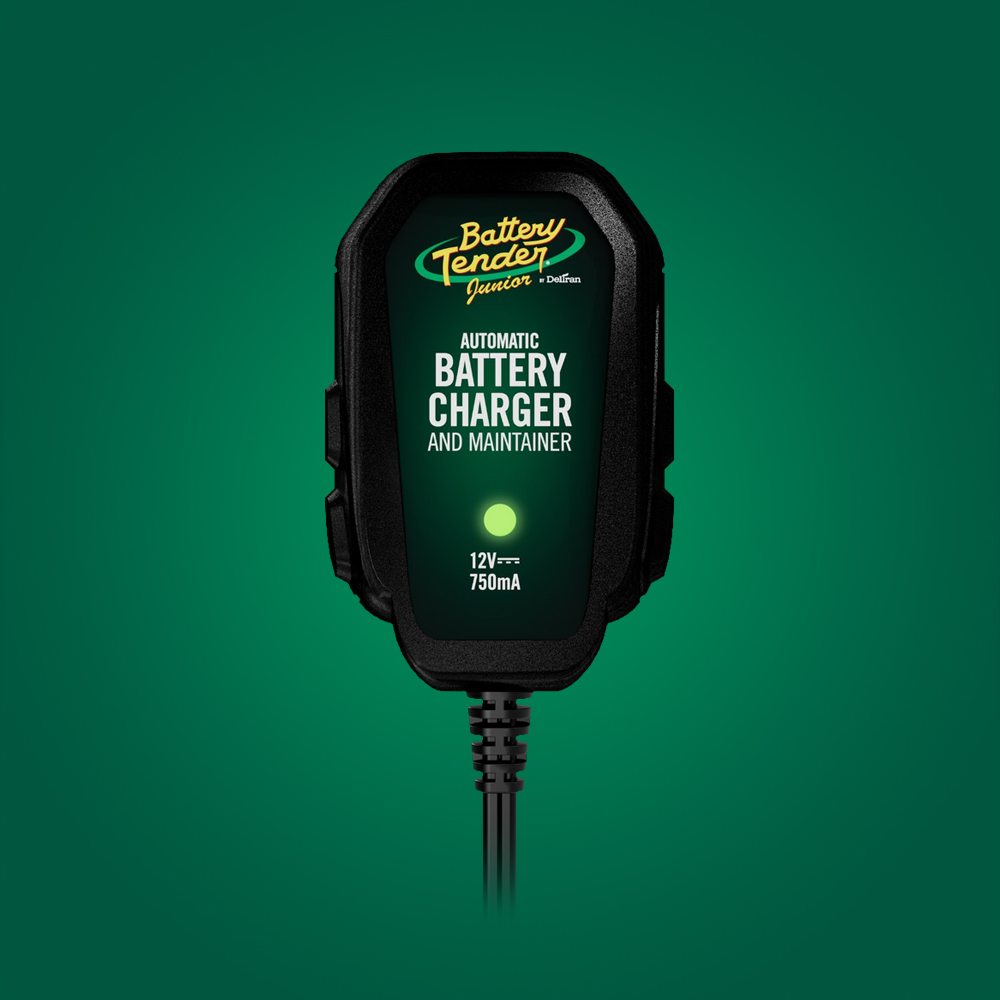
Temperature compensation adds another layer. All Battery Tender chargers except Battery Tender Junior models adjust charge voltage for ambient temperature, which prevents undercharging in a cold garage and overcharging in a hot one. Keeping a battery out of sulfation can extend its service life from a typical 2–3 years to 5 or more.
Which Charger Fits Your Car Battery Charging Setup?
Match the charger to three things: battery voltage, battery capacity in amp-hours, and how many vehicles you maintain. Capacity decides how long recovery takes. Voltage decides whether the charger is safe to connect at all.
| Vehicle / Battery | Typical Capacity | Voltage | Charger Fit |
|---|---|---|---|
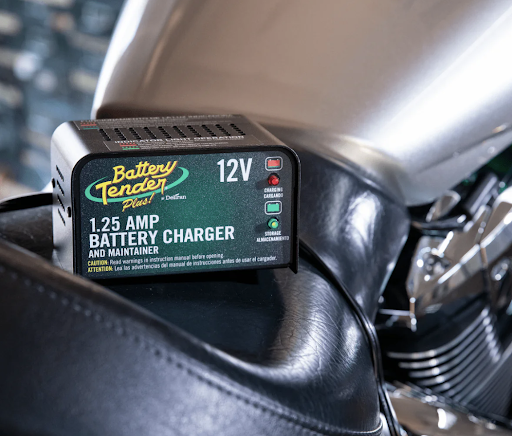
| Compact car | 35–45 Ah | 12V | 1.25 amp maintainer |
| Midsize sedan or crossover | 45–60 Ah | 12V | 1.25 amp maintainer for upkeep |
| Full-size SUV or truck | 60–80 Ah | 12V | 1.25 amp maintainer for upkeep; higher amps for faster recovery |
| Pre-1956 classic car | varies | 6V | 6V maintainer |
| Vintage or specialty equipment | varies | 8V | 8V maintainer |
Specialty voltages: 6V and 8V
Many classic cars built before the mid-1950s run 6V systems, and plugging a 12V charger into one can damage the battery and wiring. The Battery Tender Plus 1.25 AMP 6V Battery Charger and Maintainer fits these cars because it charges at the correct voltage and uses ISM so a collector car can sit connected all winter. The Battery Tender Plus family covers batteries from 14 to 80Ah, which includes the large 6V batteries in most classics.
Certain vintage vehicles and equipment use 8V batteries, and standard chargers do not support them. The Battery Tender Plus 1.25 AMP 8V Battery Charger and Maintainer is built for that voltage, so the battery receives the correct charge profile instead of an approximation.
Multiple cars, one charger
A household with several rarely driven vehicles benefits from a multi-output design. The Battery Tender 4-Bank 12V 1.25 Amp Battery Charger and Maintainer gives each of four batteries its own 1.25 amp output with independent charge monitoring. That means a weekend convertible, a spare truck and a lawn tractor can share one outlet without the batteries affecting each other.
Charging time math
Use this formula: (battery Ah × depth of discharge) ÷ charger amps = approximate hours. A 50Ah battery at 50% discharge holds 25Ah of missing charge, and 25 ÷ 1.25 = 20 hours. Add a few hours for the Absorption stage, so plan on roughly a day.
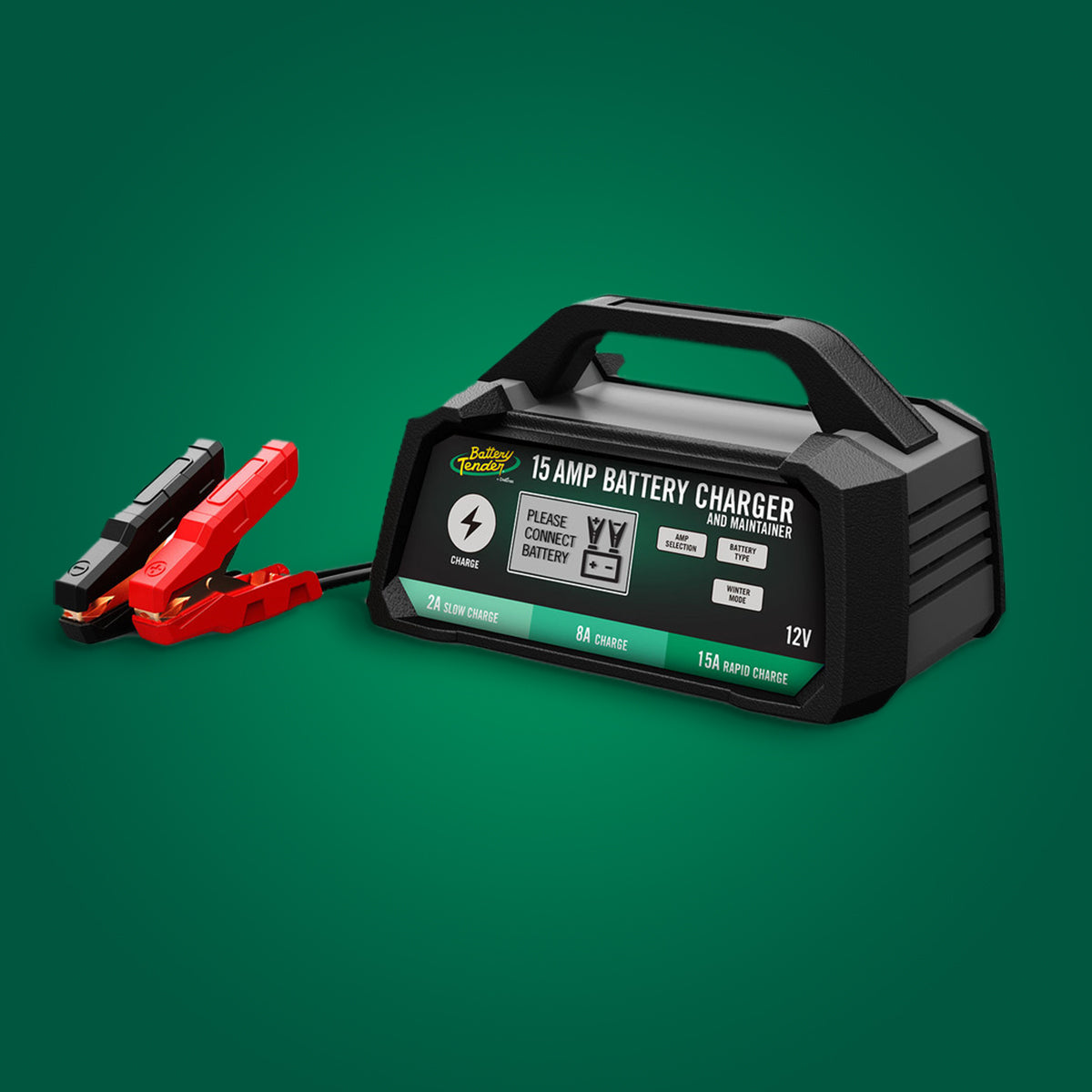
A 70Ah truck battery at 12.0 V is about 75% discharged, which is 52.5Ah missing. At 1.25 amps that is 42 hours of charging. A 1.25 amp maintainer is the right tool for keeping a battery full and for slow recovery from moderate discharge, while a deeply drained large battery is faster on a higher-amp charger from the Battery Tender charger collection.
How Do You Connect a Charger Step by Step?
Connect the charger with the AC cord unplugged, positive clamp first and negative last. This sequence limits sparking near the battery, which can vent hydrogen gas during charging. Work in a ventilated space away from flames and sparks.
- Check voltage: Confirm the battery is 12V, 8V or 6V and select a matching charger.
- Turn everything off: Switch off the ignition, lights and accessories.
- Inspect the battery: Do not charge a cracked, bulging or leaking battery. Frozen batteries must thaw first.
- Connect positive: Attach the red clamp or ring terminal to the positive terminal.
- Connect negative: Attach the black clamp to the negative terminal, or to a bare metal chassis point if the battery is in an enclosed space.
- Plug in the charger: Confirm the indicator lights show charging has started.
- Disconnect safely: Unplug the AC cord first, then remove the negative clamp, then the positive.
For vehicles that sit for months, a ring terminal harness installed permanently on the battery makes reconnection a ten-second job. Motorcycle owners who maintain a bike alongside a car can find more detail in the 12V Motorcycle Battery Guide: Types, Care, and Charging (2026).
Add a jump starter for emergencies
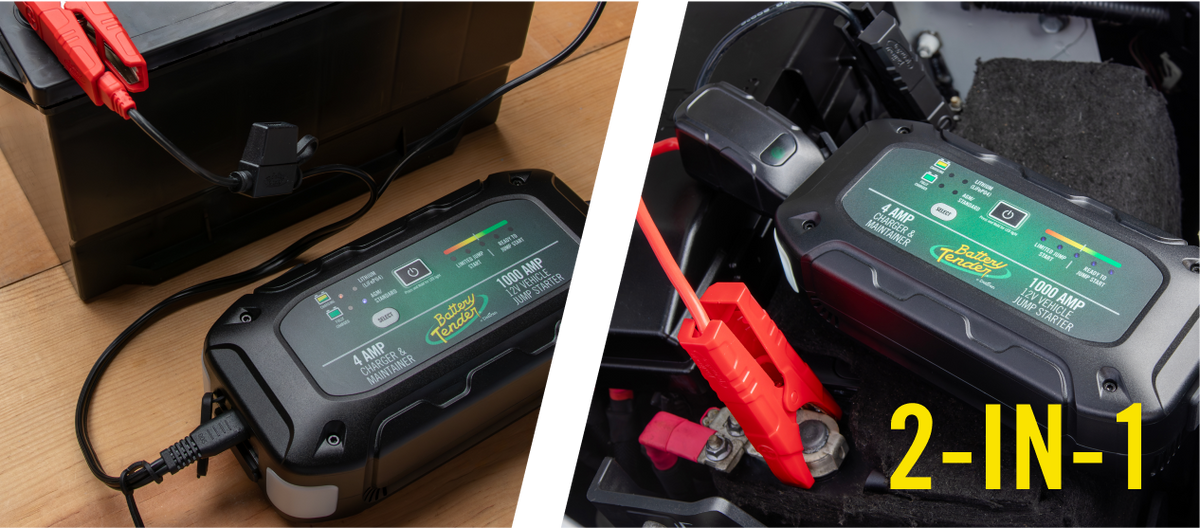
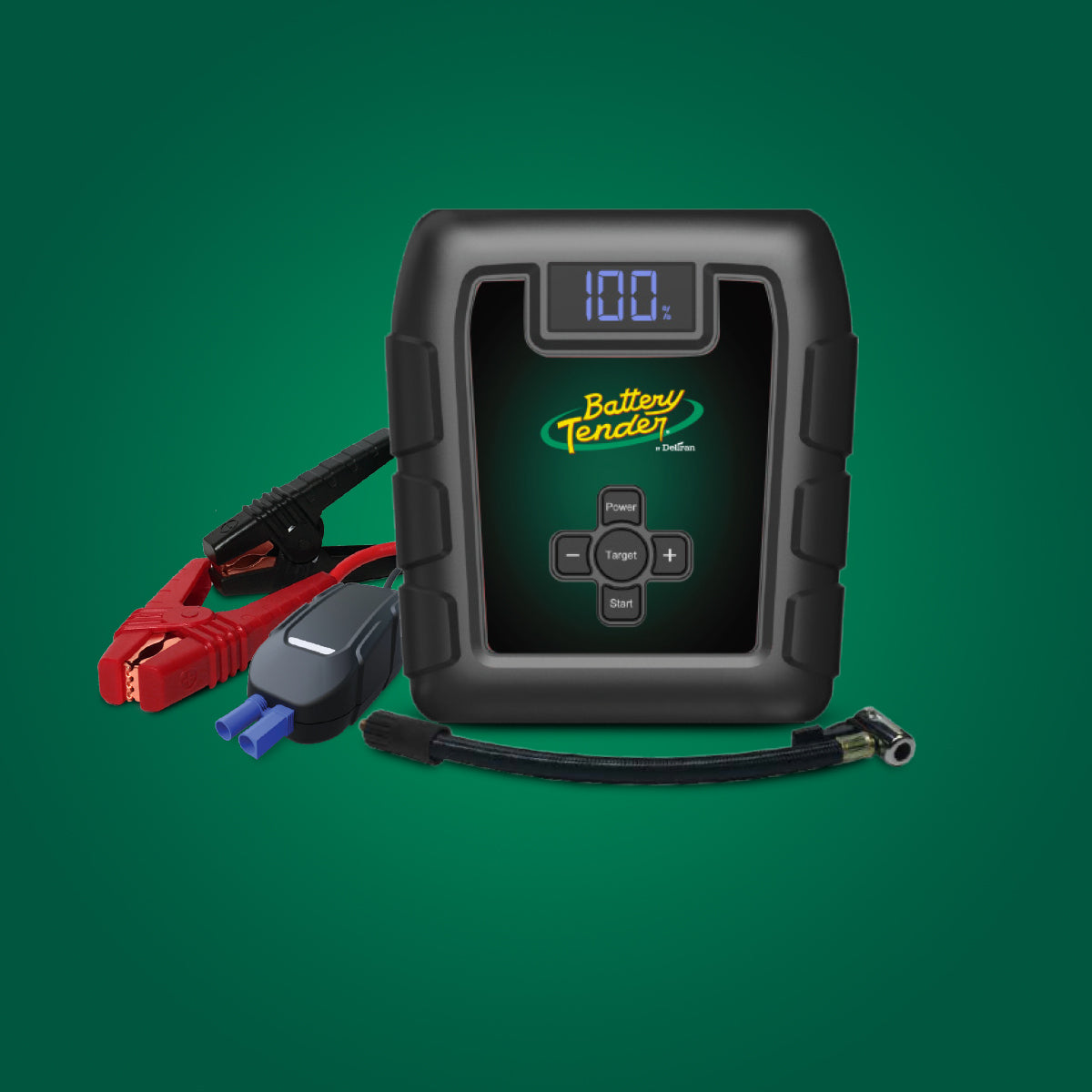
A maintainer prevents most dead batteries, but an aging battery can still fail in the middle of a commute. The Battery Tender Jump N Start 800 Amp Jump Starter and Tire Inflator starts engines up to 4.0L gas or 2.0L diesel and includes a 140 PSI tire inflator, so it covers both of the common roadside problems in one trunk-sized unit. It rescues a stranded car but does not replace charging, because a jump gets the engine running while the battery stays depleted.
Frequently Asked Questions
How long does car battery charging take?
Charging time equals battery amp-hours times depth of discharge, divided by charger amps. A 50Ah battery that is 50% discharged needs about 25Ah, so a 1.25 amp charger takes roughly 20 hours plus a few hours for the Absorption stage. A higher-amp charger shortens that proportionally.
Does driving fully recharge a car battery?
Not reliably. The alternator maintains a healthy battery and replaces starting energy, but short trips and heavy accessory loads often leave a battery partially discharged. A deeply drained battery can take many hours of highway driving to recover, and repeated undercharge causes sulfation. An external smart charger completes the charge safely.
Can you leave a car battery charger connected all the time?
Yes, if it is an ISM smart charger. After the Absorption stage, the Float Maintenance stage supplies small pulses only when voltage drops, so the battery stays full without overcharging. Conventional trickle chargers deliver constant current regardless of battery state and should not be left connected indefinitely.
What voltage means a car battery needs charging?
A resting reading of 12.4 V or lower, measured at least four hours after the engine is shut off, means the battery is below about 75% charge and should be charged. At 12.2 V the battery is about half full. Below 12.0 V, charge immediately and load test afterward.
Can I use a 12V charger on a 6V classic car battery?
No. A 12V charger applies roughly double the voltage a 6V battery is designed for, which can overheat the battery, boil off electrolyte and damage wiring. Use a charger designed for 6V batteries, such as a Battery Tender Plus 6V model, and confirm the vehicle voltage before connecting.
Conclusion
Car battery charging is not finished when the engine starts. The alternator tops off a healthy battery, but short trips, cold weather and storage leave batteries partly discharged, and that is when sulfation shortens their life. Check resting voltage, size the charger by amp-hours, and use an ISM smart charger that adapts through four stages and stays connected safely.
Next step: measure your battery's resting voltage this week, then choose the right voltage and amperage from the Battery Tender charger collection to keep your car battery charging on schedule through 2026 and beyond.