

Car Battery Charger Jump Starter: Battery Tender® Charge N Start
A car battery charger jump starter setup pairs two tools: a lithium jump pack that starts a dead engine in seconds, and a smart charger that restores the battery afterward. The jump fixes today's problem, and the charger fixes the cause. Battery Tender Charge N Start combines both functions in one unit.
Most dead-battery calls repeat because the jump never addressed why the battery died. This 2026 guide shows how to match the tool to the failure, size each by engine and battery capacity, and sequence the jump and the recharge correctly.
Key Takeaways
- A jump starter delivers a short, high-current burst. A charger restores stored energy over hours. Neither replaces the other.
- Size the jump rating by engine: 600A for powersports, 1,000-1,200A for passenger vehicles, 2,000A for large diesels.
- Charging time is (battery Ah × depth of discharge) ÷ charger amps. A 60Ah battery at 50% discharge needs about 7.5 hours at 4A.
- A battery that needs repeated jumps is failing or being drained. Test it before assuming a jump solved anything.
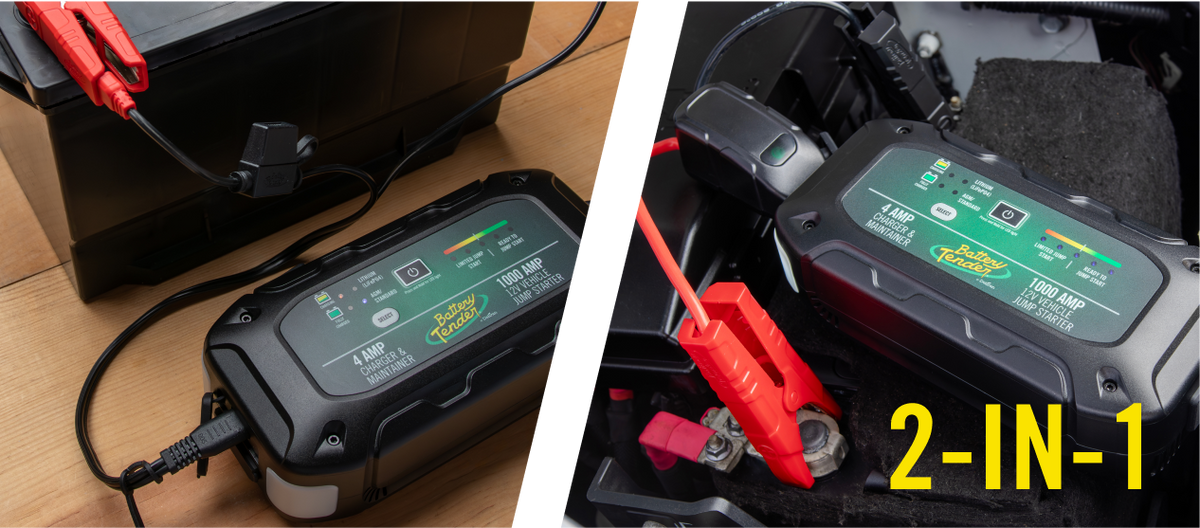
- Battery Tender Charge N Start puts a 4A or 1A charger and a lithium-ion jump pack in one housing.
Why a Car Battery Charger Jump Starter Solves Two Different Problems
A jump starter supplies cranking current; a charger supplies stored energy. Confusing the two is the most common reason a "fixed" battery fails again a week later.
What the Jump Pack Does
A lithium-ion jump pack releases hundreds of amps for a few seconds, enough to turn the starter motor while the weak battery sits in the circuit. The jump transfers almost no lasting charge to the battery. Once the engine runs, the alternator takes over.
Modern packs include spark-proof clamps, reverse polarity protection, and short circuit protection. Lithium chemistry also holds its charge for months between uses, so the pack is ready when cold weather saps the cranking power of a lead-acid starting battery.
What the Charger Does
A charger pushes a controlled current into the battery for hours and reverses the slow damage of deep discharge. An alternator is a poor substitute. It typically runs at 13.8-14.7 volts and is designed to top off a healthy battery, not recover a drained one. A battery left deeply discharged also starts forming sulfate crystals on its plates, which permanently reduces capacity if not corrected.
Battery Tender chargers use Infinite Sequential Monitoring (ISM), a four-stage process. Initialization tests the battery. Bulk delivers full rated current to roughly 80% state of charge. Absorption holds voltage constant while current tapers. Float Maintenance sends charge pulses only when voltage drops. Conventional trickle chargers push constant current regardless of battery state and risk overcharging. Float-only chargers skip absorption and recover more slowly. ISM makes the charger safe to leave connected indefinitely.
Which Tool Fixes Which Dead Battery?
The cause of the failure decides the tool. Match the situation to the fix before reaching for clamps.
- Lights or a dome light left on once, battery otherwise healthy: jump the vehicle, then fully recharge the battery.
- Vehicle sits for three weeks or longer: connect a maintainer. Parasitic draw from the clock, alarm, and computer memory slowly drains the battery.
- Mostly short trips under 15 minutes: the alternator never replaces the starting energy. Charge the battery monthly.
- Battery older than four to five years: jump to get moving, then test. A battery that fails a load test needs replacement, not charging.
- Dimming lights or a battery warning light while driving: suspect the alternator. Measure voltage at the terminals with the engine running. Below roughly 13.5 volts means a charging system problem that no charger fixes.
A load test separates a drained battery from a dying one. The Battery Tender 12V / 6V Battery Tester applies a 100 amp load to 12V batteries and a 50 amp load to 6V batteries. It fits drivers whose battery jumps fine but will not hold a charge overnight.
Battery Tender 12V / 6V Battery Tester
How to Size a Car Battery Charger Jump Starter by Engine
Size the jump rating to engine displacement and fuel type, with diesels needing the most. Undersized packs crank slowly or shut down on overload protection, especially below freezing.
| Application | Jump Rating | Engine Guide (gas / diesel) | Best-Fit Battery Tender Product |
|---|---|---|---|
| Motorcycle, ATV, small engines | 600A | 4.0L / 2.0L | Battery Tender Jump N Start 600 Amp Lithium Jump Starter |
| Compact cars, crossovers | 1,000A | 5.0L / 3.0L | Battery Tender Charge N Start 1100 (1A charger) |
| Mid-size cars, SUVs, boats | 1,200A | 6.0L / 4.0L | Battery Tender Charge N Start 1120 (1A charger) |
| Trucks, RVs, heavy daily use | 1,200A | 6.0L / 4.0L | Battery Tender Charge N Start 4120 (4A charger) |
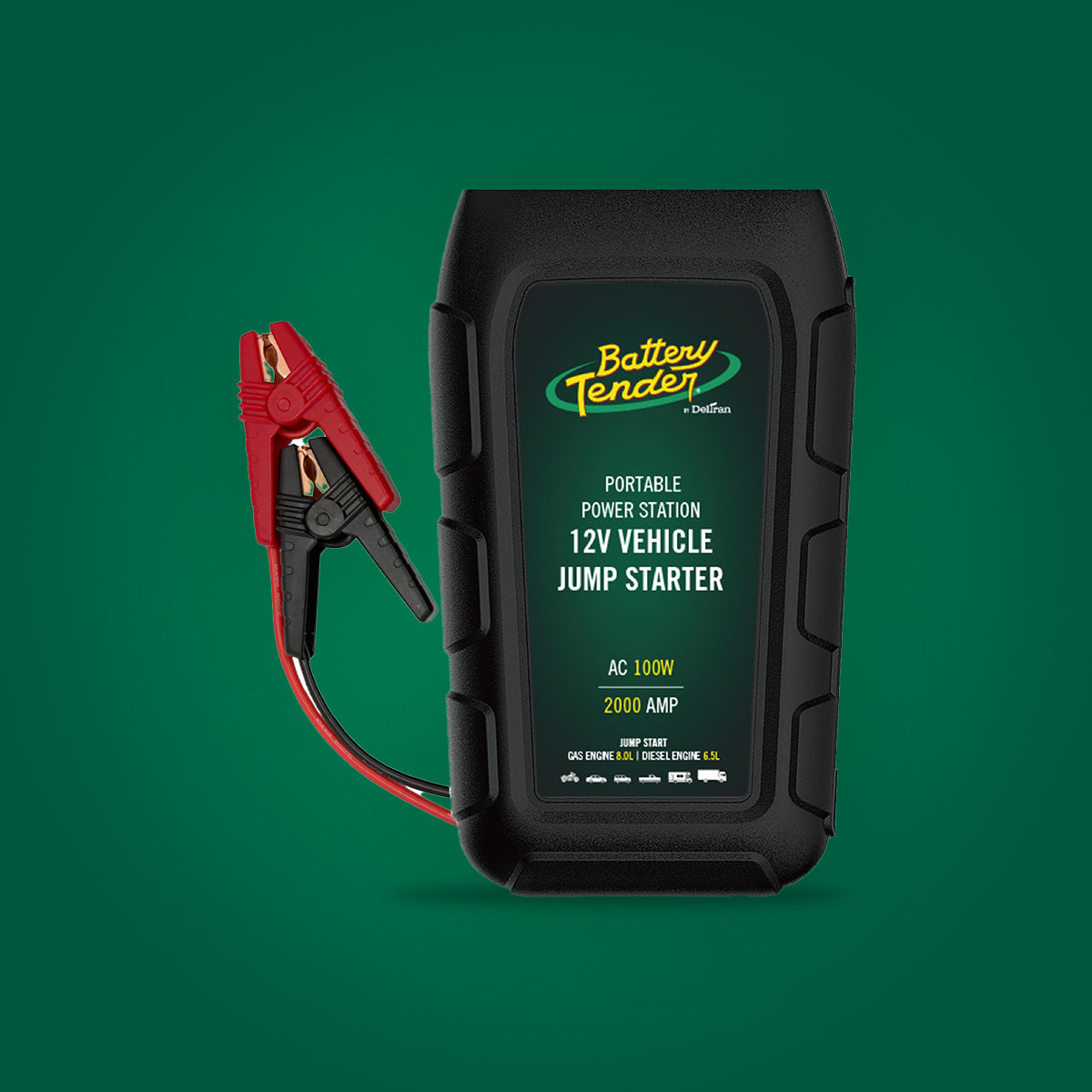
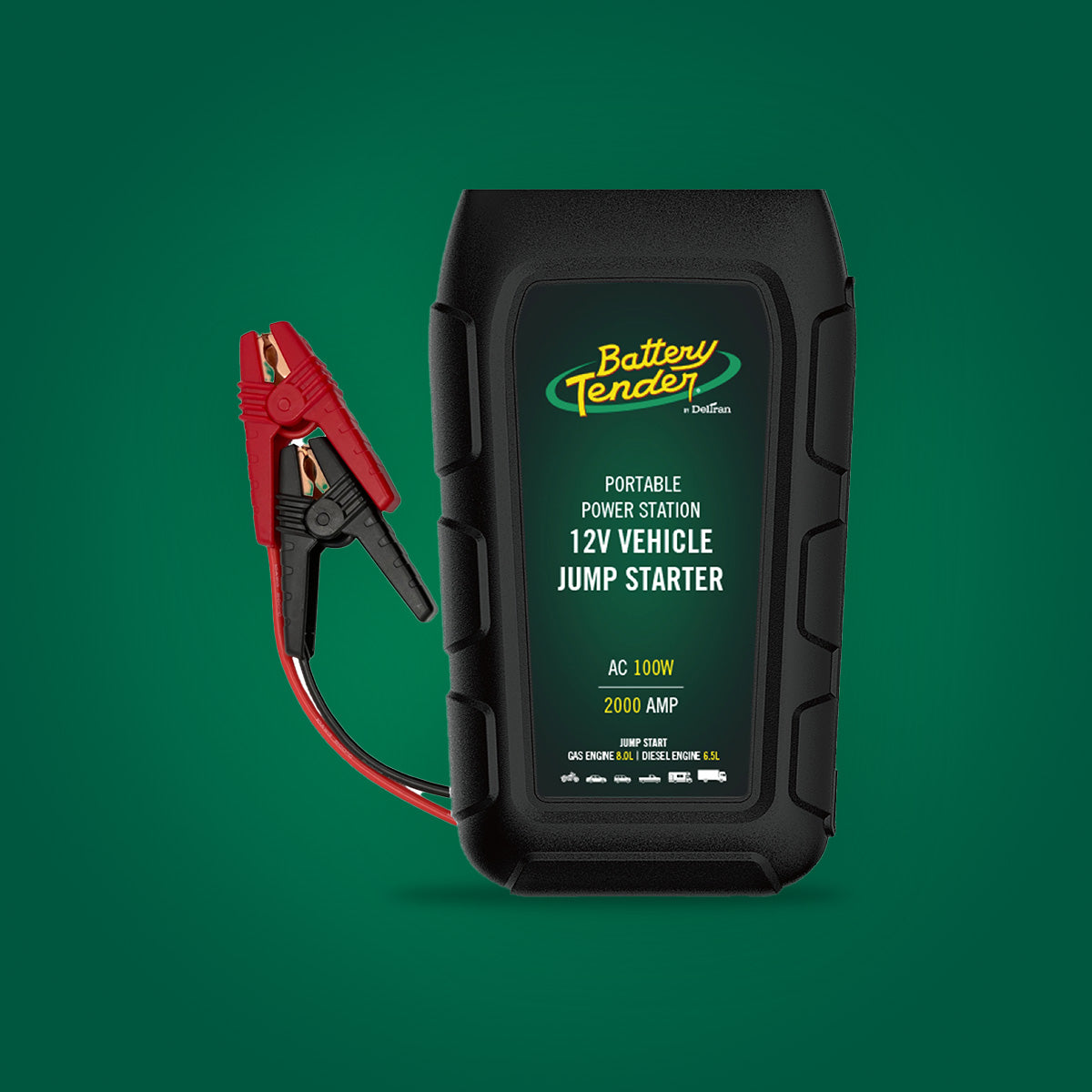
| Large gas V8s, big diesel trucks | 2,000A | 8.0L / 6.5L | Battery Tender Jump N Start 2000 Amp Lithium Jump Starter plus a dedicated charger |
Round up if the vehicle lives in a cold climate or the battery is large. A diesel's compression ratio, often 15:1 or higher, demands far more cranking current than a gas engine of similar displacement. Shoppers who also want tire inflation from the same pack can compare options in the best car jump starter with air compressor buying guide.
Where Battery Tender Charge N Start Fits, and Where a Dedicated Charger Wins
Battery Tender Charge N Start is the smart upgrade from a standalone jump pack because the same unit that rescues the car can also recharge it. The right pick depends on battery size and how the vehicle is used.
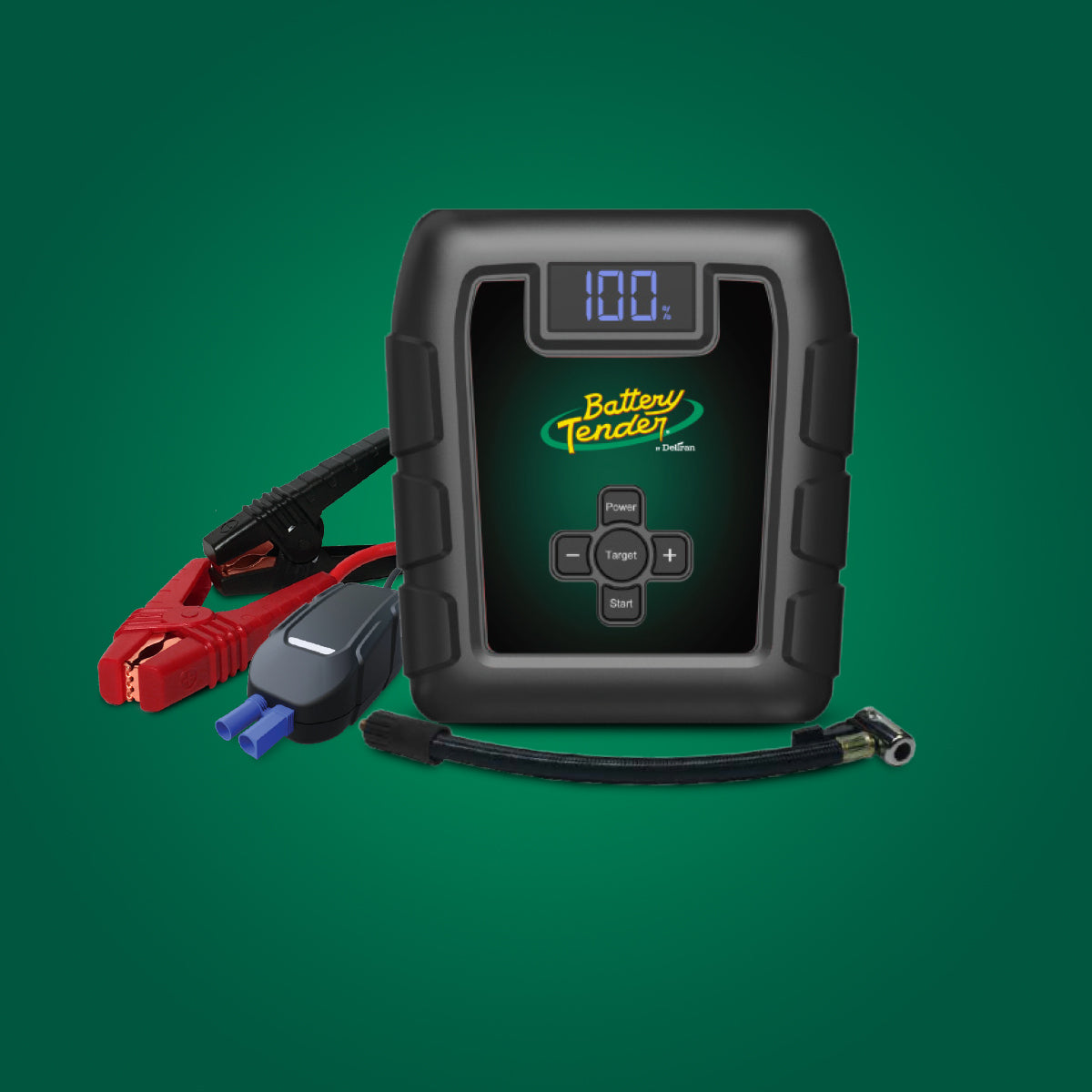
Battery Tender Charge N Start 4120 for Trucks and Daily Drivers
The internal jump pack is lithium-ion, and the charger section handles all 12V battery types: standard, AGM, GEL, and lithium. The 4A charger recovers a 60Ah battery in roughly 7.5 hours from 50% discharge. That is fast enough to restore overnight what a short drive after a jump cannot. Charge N Store maintains the internal pack, and SafeGuard prevents backfeed. The 1,200A jump rating covers 6.0L gas and 4.0L diesel engines.
Battery Tender Charge N Start 4120 — 4 Amp Battery Charger & 1200 Amp Jump Starter
Battery Tender Power Tender 15/8/2 for Large Batteries and Fast Turnaround
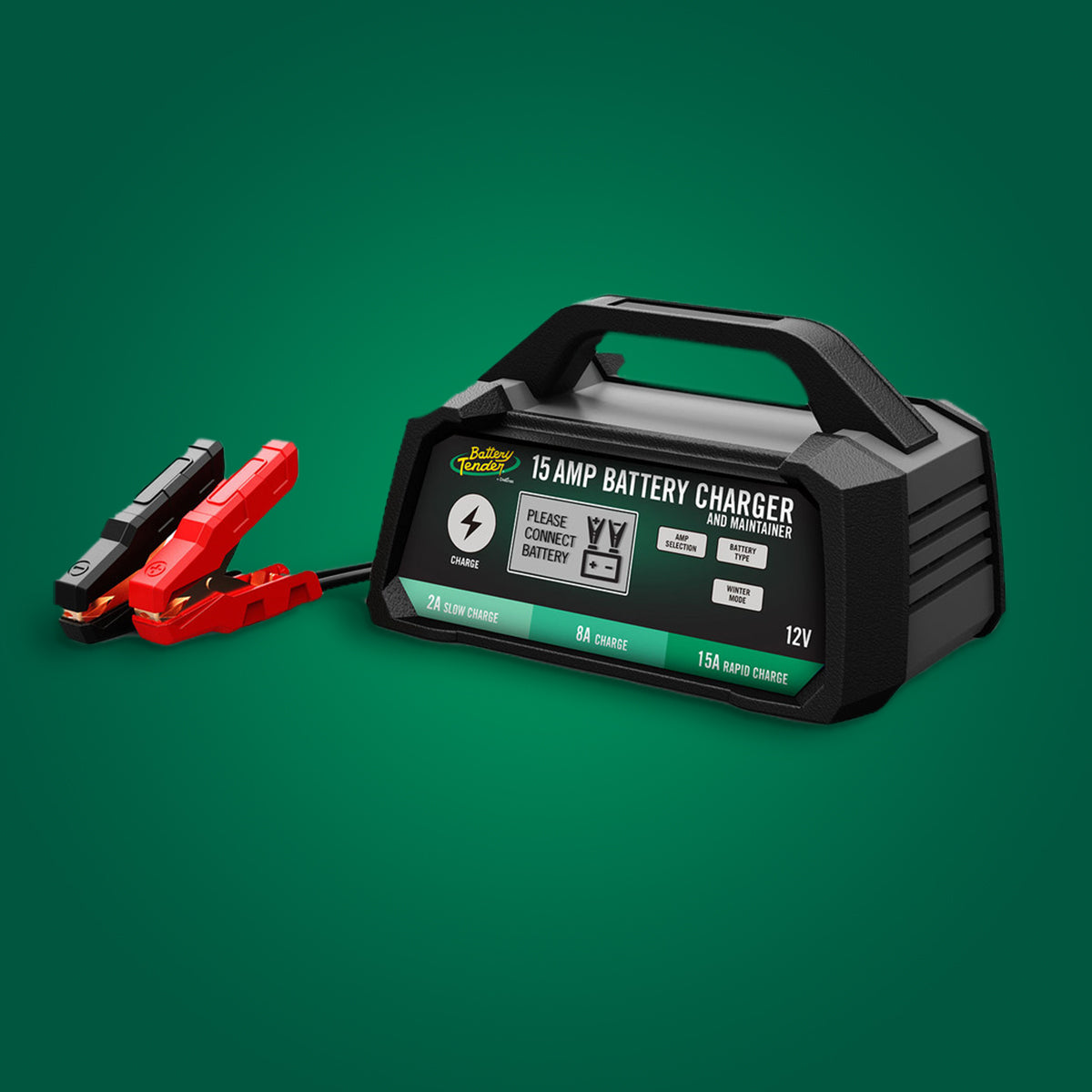
Shops, fleets, and owners of RVs or diesel trucks with 100Ah batteries need more charging current than a combo unit supplies. A 100Ah battery at 50% discharge holds 50Ah of deficit, so a 15A charger needs about 3.3 hours. A 4A charger needs about 12.5 hours. The Battery Tender Power Tender 15/8/2 offers three selectable rates and selectable chemistry. Choose 15A for recovery and drop to 2A for storage. It pairs well with a 2,000A jump pack for big-engine rescues.
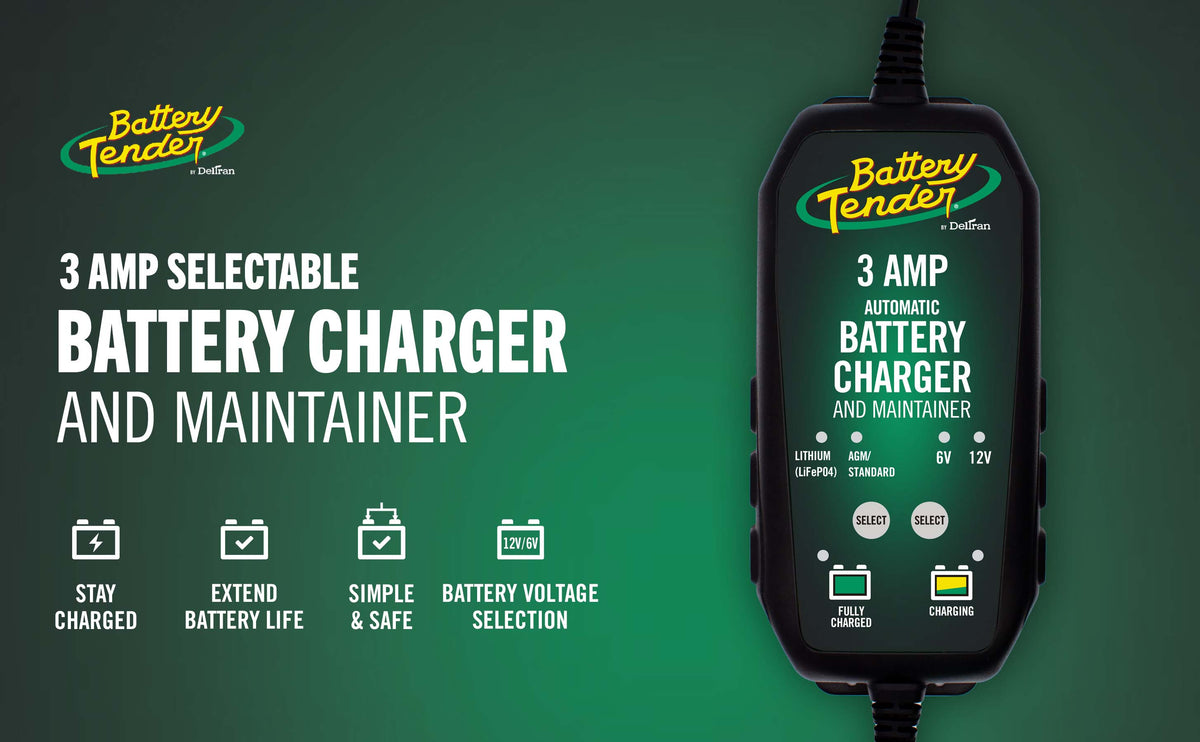
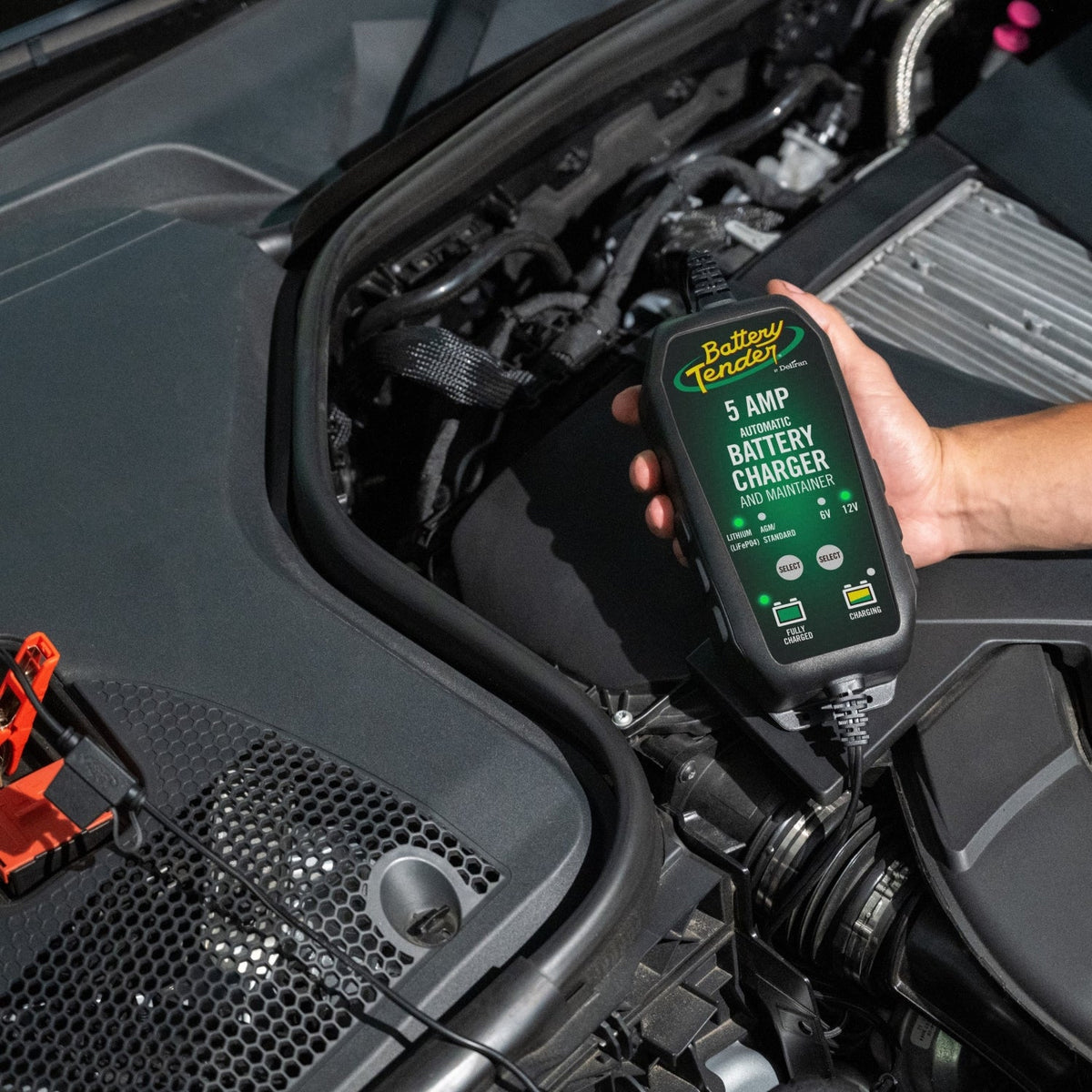
Battery Tender Power Tender 15/8/2 Amp 12V Battery Charger and Maintainer
Charge-time math for a 60Ah battery at 50% discharge (30Ah needed):
- 1.25A maintainer: 30 ÷ 1.25 = about 24 hours
- 4A charger: 30 ÷ 4 = about 7.5 hours
- 15A charger: 30 ÷ 15 = about 2 hours
Real times run slightly longer because the Absorption stage tapers current near full charge.
Battery Tender Plus for Storage and Low-Use Vehicles
A weekend car, classic, or spare vehicle that sits for weeks does not need a rescue tool. It needs a maintainer that keeps the battery topped up. The Battery Tender Plus delivers 1.25A at 12V, enough to offset parasitic draw and self-discharge indefinitely under ISM control. The Battery Tender Plus also includes temperature compensation, which adjusts output for hot and cold garages.
Battery Tender Plus 1.25 AMP 12V Battery Charger and Maintainer
Battery Tender eCharge 40 Amp for EV Households
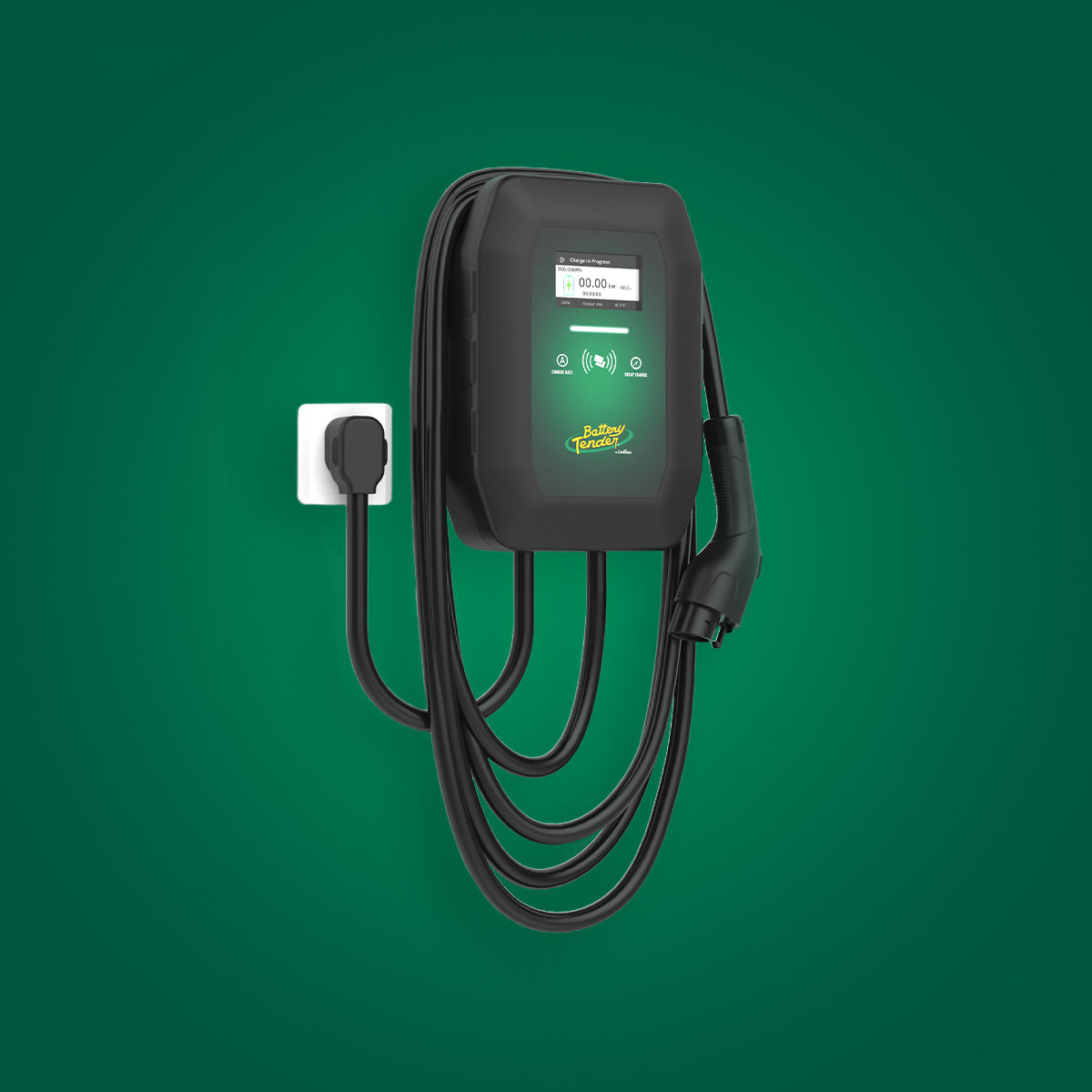
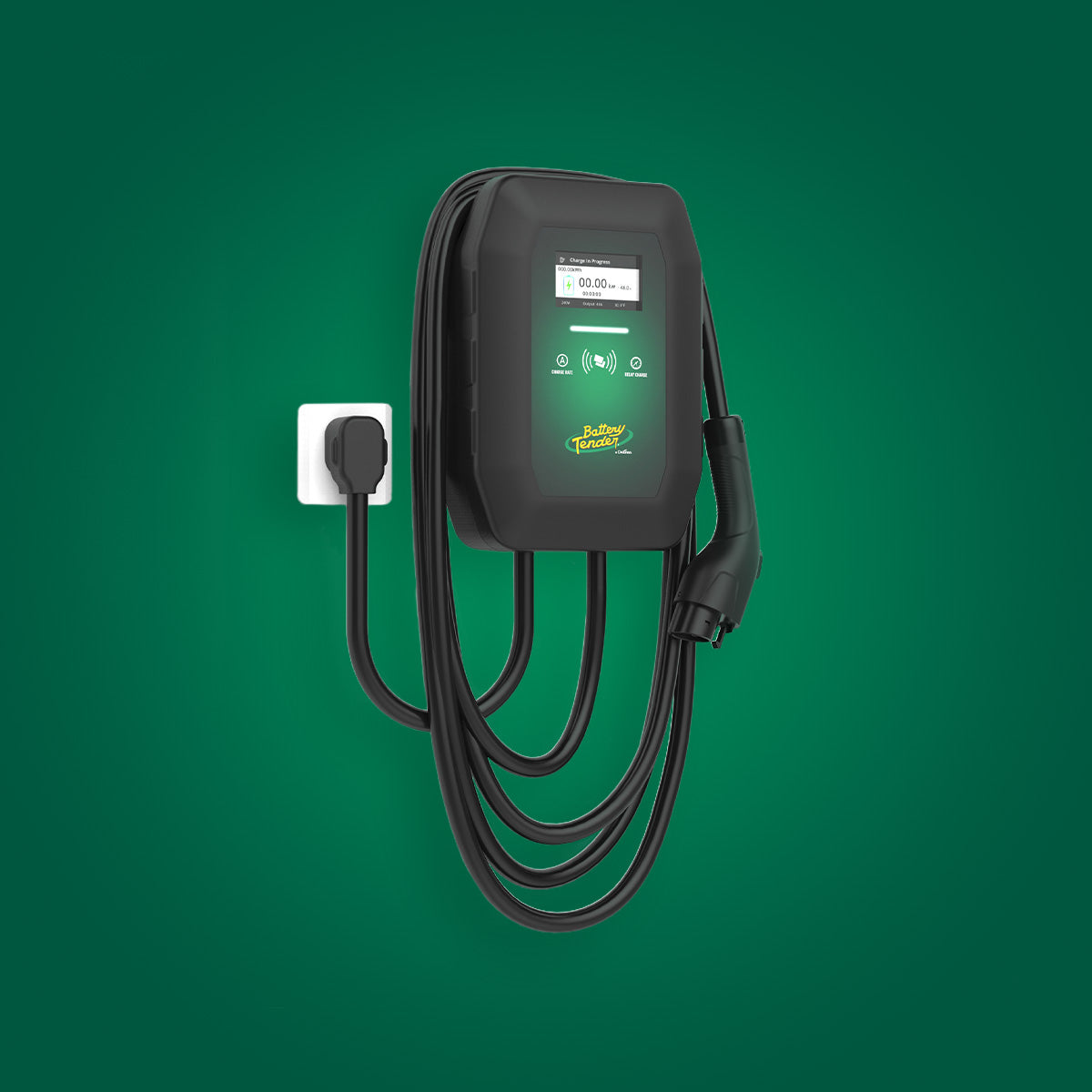
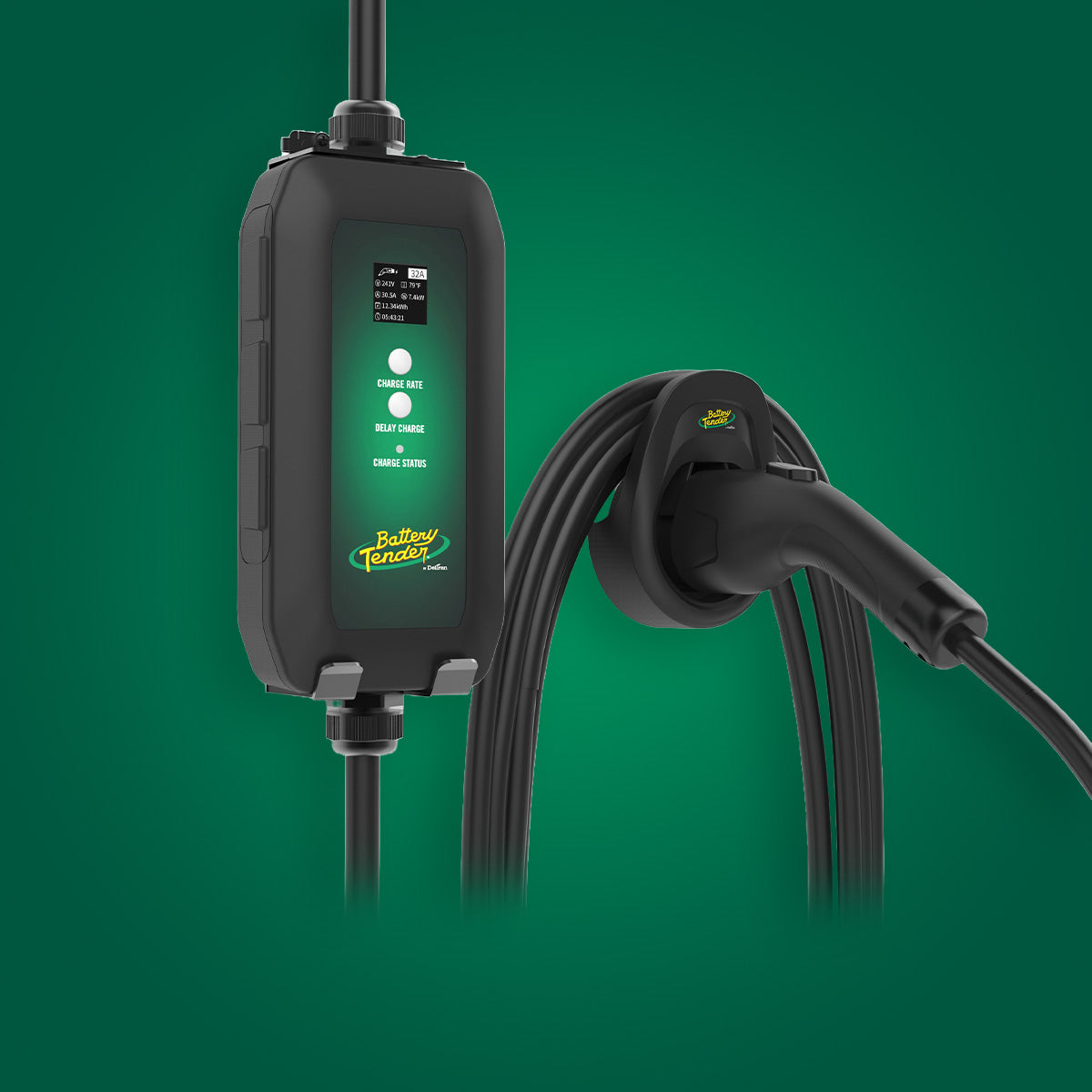
Electric vehicles still carry a 12V auxiliary battery, and when it dies the car will not wake up, whatever the traction pack holds. A Battery Tender Charge N Start unit in the trunk covers that failure. The Battery Tender eCharge 40 Amp Level 2 EV Charger handles the other job: 9.6kW of home charging for the main pack, with RFID access and an IP66 rating. It is also available at Costco.com.
Battery Tender eCharge 40 Amp Level 2 EV Charger
Jump First, Then Charge: The Correct Order
Start the engine first, then restore the battery on a charger. Reversing the order wastes hours and leaves the owner stranded. For a full walkthrough, see the portable jump starter guide.
- Inspect the battery. Do not jump a battery that is cracked, swollen, leaking, or frozen.
- Turn everything off. Shut off lights, radio, and climate control, and remove the key.
- Connect the red clamp to the positive terminal, then the black clamp to the negative terminal or a bare metal ground point.
- Confirm the indicator. Wait for the green or ready light before cranking.
- Crank for no more than five seconds. Wait one minute between attempts. Three failed tries means the pack is undersized or the problem lies elsewhere.
- Disconnect in reverse order once the engine runs, and let it idle a few minutes.
- Recharge fully within 24 hours. Connect a charger and let ISM complete all four stages. Then retest the battery.
Keep the jump pack ready between uses. Recharge it after every use, and store it indoors when possible. Extended heat in a closed car degrades lithium-ion cells faster than moderate indoor temperatures.
Frequently Asked Questions
Is a car battery charger jump starter the same as a regular jump starter?
No. A regular jump starter only delivers a short cranking burst. A car battery charger jump starter combination, such as Battery Tender Charge N Start, adds a smart charger that restores the battery over hours. The jump gets the engine running, and the charger repairs the underlying discharge so the problem does not repeat.
Can a jump starter charge a dead car battery?
Not meaningfully. A jump starter is built to deliver high current for seconds, not to recharge a battery over hours. After a jump, the alternator adds only a partial charge, and a deeply drained battery can stay low for days. Use a smart charger to recover the battery fully.
How long does it take to charge a car battery after jump starting?
Use (battery Ah × depth of discharge) ÷ charger amps. A 60Ah battery at 50% discharge holds a 30Ah deficit. A 4A charger needs about 7.5 hours, a 15A charger about 2 hours, and a 1.25A maintainer about 24 hours. Absorption adds a little extra time.
What size car battery charger jump starter do I need for a diesel truck?
Diesel engines need more cranking current than gas engines of the same size. A 1,200A unit such as Battery Tender Charge N Start 4120 handles diesels up to 4.0L. For larger diesels, up to 6.5L, choose a 2,000A jump starter and add a dedicated charger such as the Battery Tender Power Tender 15/8/2.
Why does my battery die again after a successful jump?
A repeat failure means the battery was never recharged, or something is draining or failing. Causes include a worn battery, a weak alternator, a parasitic draw, or too many short trips. Charge the battery fully, load test it, and check alternator voltage with the engine running.
Conclusion
A car battery charger jump starter strategy works because it handles both halves of a dead-battery event. Size the jump rating to the engine, recharge on a smart charger within 24 hours, and test the battery whenever a jump becomes routine. For most drivers, Battery Tender Charge N Start 4120 covers both jobs in one unit, and a Battery Tender Power Tender 15/8/2 or Battery Tender Plus covers the heavier recovery and long-storage cases.
Next step: pick the jump rating from the sizing table above, then compare every option in the Battery Tender jump starter collection.