
Battery Charger for Motorcycle: Voltage Check to Storage Setup (2026)
The right battery charger for motorcycle use is a smart, low-amp unit in the 0.75–1.25A range for most 7–30Ah bike batteries. Test the resting voltage first, connect the charger, and leave it attached through storage so the battery never drifts below 12.4V.
Key Takeaways
- Measure resting voltage with a multimeter before charging. 12.7V or higher is full; 12.0V or lower means recovery charging, and possibly a replacement.
- Match amps to amp-hours: 800mA suits 7–14Ah batteries, and 1.25A suits 14–30Ah batteries.
- Connect a Battery Tender® maintainer on the day the bike parks, not after the battery has already gone flat.
- Install a ring terminal or quick disconnect lead once. Every later connection takes about 10 seconds.
- A four-stage smart charger is built to stay connected for the full 6–9 months of storage.
Check Voltage Before Choosing a Battery Charger for Motorcycle Use
A multimeter reading tells you whether the battery needs a charger, a longer recovery, or a replacement. Let the bike sit at least four hours after riding or charging so surface charge settles. Then touch the red probe to the positive post and the black probe to the negative post.
These readings apply to lead-acid and AGM batteries at rest, around 70°F:
- 12.7V or higher: fully charged.
- 12.4V: about 75% charged. Connect a maintainer now.
- 12.2V: about 50% charged. Sulfate crystals begin hardening on the plates.
- 12.0V: about 25% charged. Recovery charging is needed.
- Below 11.8V: deeply discharged. Recovery is uncertain.
A battery that charges to 12.7V but falls below 12.4V within 24 hours of disconnecting has lost capacity and should be replaced. Most motorcycle batteries last 3–5 years. Lithium motorcycle batteries rest at higher voltages, roughly 13.3V when full, so confirm any charger lists lithium compatibility before connecting it.
Voltage matters most before storage. A lead-acid battery loses 3–5% of its charge per month on its own, and AGM loses about 1–3%. A 12.7V battery parked in October without a charger can sit near 12.0V by spring, and the electrical system draws on it the whole time.
Size the Battery Charger for Motorcycle Batteries by Amp-Hours
Charger output should match battery capacity, which is printed on the battery case as Ah. Powersports batteries run 7–30Ah. Small sport bikes and dirt bikes sit at 7–12Ah, and big cruisers and touring bikes at 20–30Ah. A maintainer-class charger in the 0.8–1.25A range is gentle enough to stay connected and strong enough to recover a partly discharged battery.
The charging-time formula is (battery Ah × depth of discharge) ÷ charger amps. Add roughly 20% for the tapering Absorption stage.
| Battery Capacity | Typical Bike | Recommended Charger | Hours from 50% Discharged |
|---|---|---|---|
| 7Ah | Small sport bike, scooter | Battery Tender Weather Resistant 800mA | 3.5 ÷ 0.8 = about 4.4 |
| 12Ah | Mid-size sport bike, dirt bike | Battery Tender Weather Resistant 800mA | 6 ÷ 0.8 = about 7.5 |
| 14Ah | Adventure bike, standard | Battery Tender Plus 1.25A | 7 ÷ 1.25 = about 5.6 |
| 20Ah | Cruiser, V-twin | Battery Tender Plus 1.25A | 10 ÷ 1.25 = 8 |
| 30Ah | Touring bike, trike | Battery Tender Plus 1.25A | 15 ÷ 1.25 = 12 |
Owners of big twins can find model-specific guidance in the Harley-Davidson battery maintenance guide.
How Infinite Sequential Monitoring (ISM) Protects the Battery
Battery Tender chargers use Infinite Sequential Monitoring (ISM), a four-stage process:
- Initialization: tests the battery and applies gentle current to judge its condition.
- Bulk Charge: delivers full rated current until the battery reaches about 80% state of charge.
- Absorption: holds voltage constant while current tapers, bringing the battery to full charge without overheating it.
- Float Maintenance: monitors voltage and sends charge pulses only when it drops.
Conventional trickle chargers push constant current regardless of battery state, which risks overcharging over months. Float-only chargers hold constant voltage but skip the Absorption stage, so they recover a flat battery more slowly. ISM is the reason a Battery Tender charger can stay connected indefinitely.
Temperature in an Unheated Garage
Cold changes the voltage a battery needs for a full charge. A charger with temperature compensation adjusts its output as the garage cools or warms, so check the product specifications before choosing a charger for an unheated space. Never charge a frozen battery. Let it warm above 32°F first.
Matching Battery Tender Chargers to Your Bike and Garage
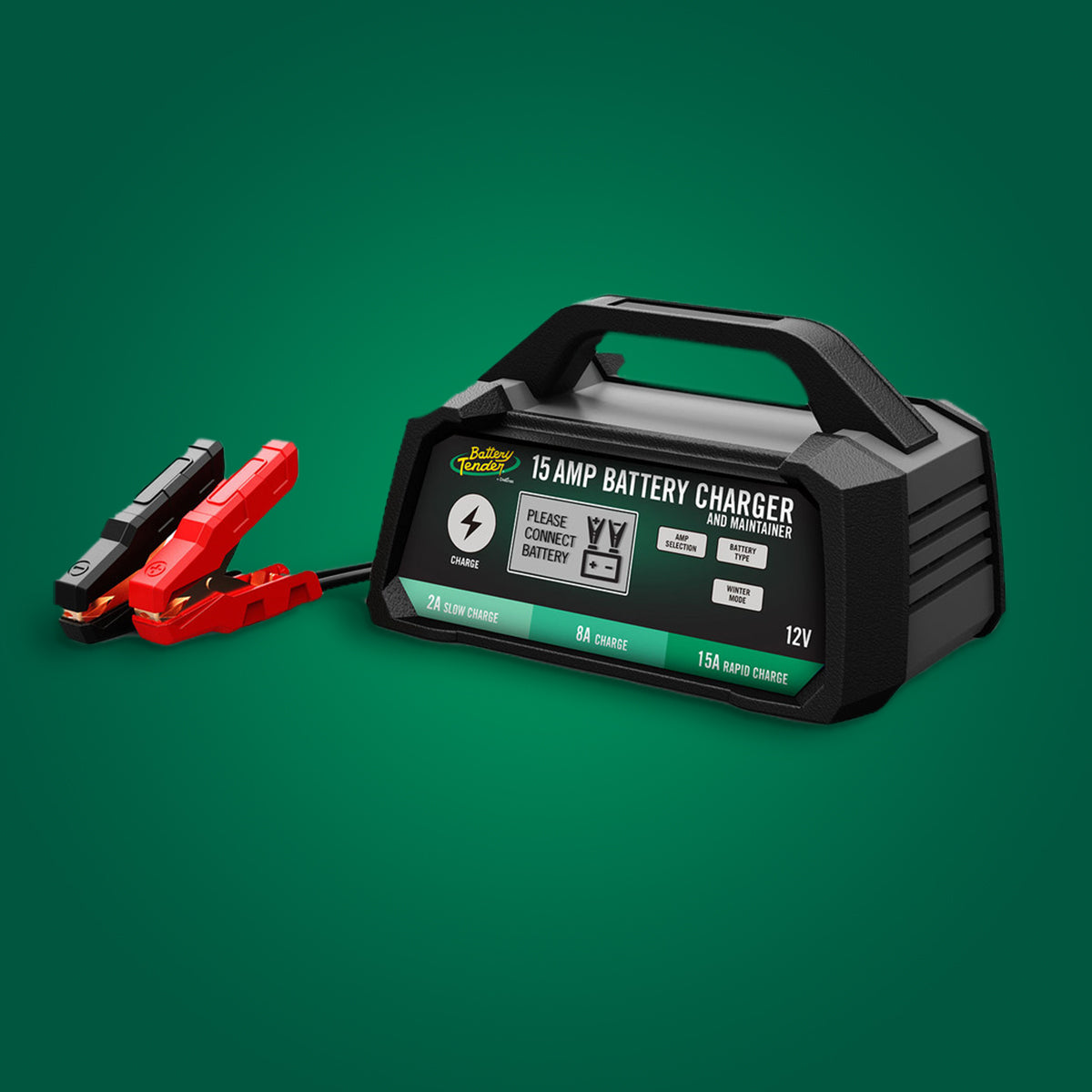
Chargers differ in output, weather protection, and voltage options. The right choice depends on battery size, where the bike sits, and whether any 6V bikes share the garage. For a broader model-by-model view, the product comparison guide covers the full lineup.
Small to Mid-Size Bikes in Damp Spaces
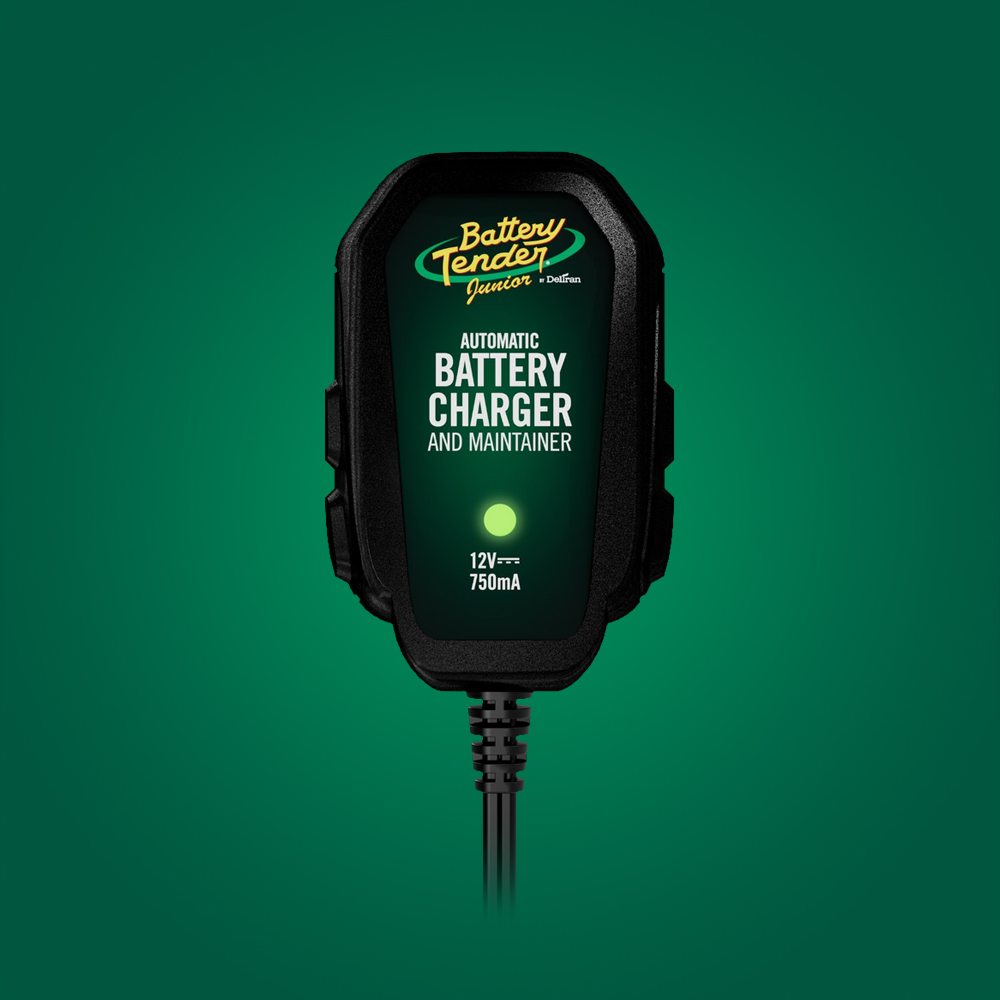
For 7–14Ah batteries on sport bikes, dirt bikes, and scooters, 800mA is enough. It recovers a half-discharged 12Ah battery in about 7.5 hours and then holds it. The sealed design suits carports, trailers, sheds, and garages where condensation forms on cold mornings.
Battery Tender Weather Resistant 12V 800mA Battery Charger and Maintainer
Cruisers and Touring Bikes
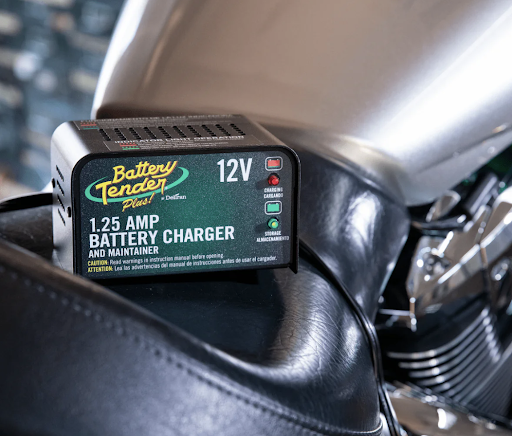
Batteries of 14–30Ah carry more reserve and more parasitic load from alarms, clocks, and ECUs. At 1.25A, the Battery Tender Plus recovers a 20Ah battery from 50% in about 8 hours, and it includes temperature compensation for swings in an unheated garage. The IP65 version resists dust and water spray, which helps in a wash bay or open-sided shelter.
Battery Tender Plus 12V 1.25 Amp IP65
Vintage 6V Bikes and Mixed Garages
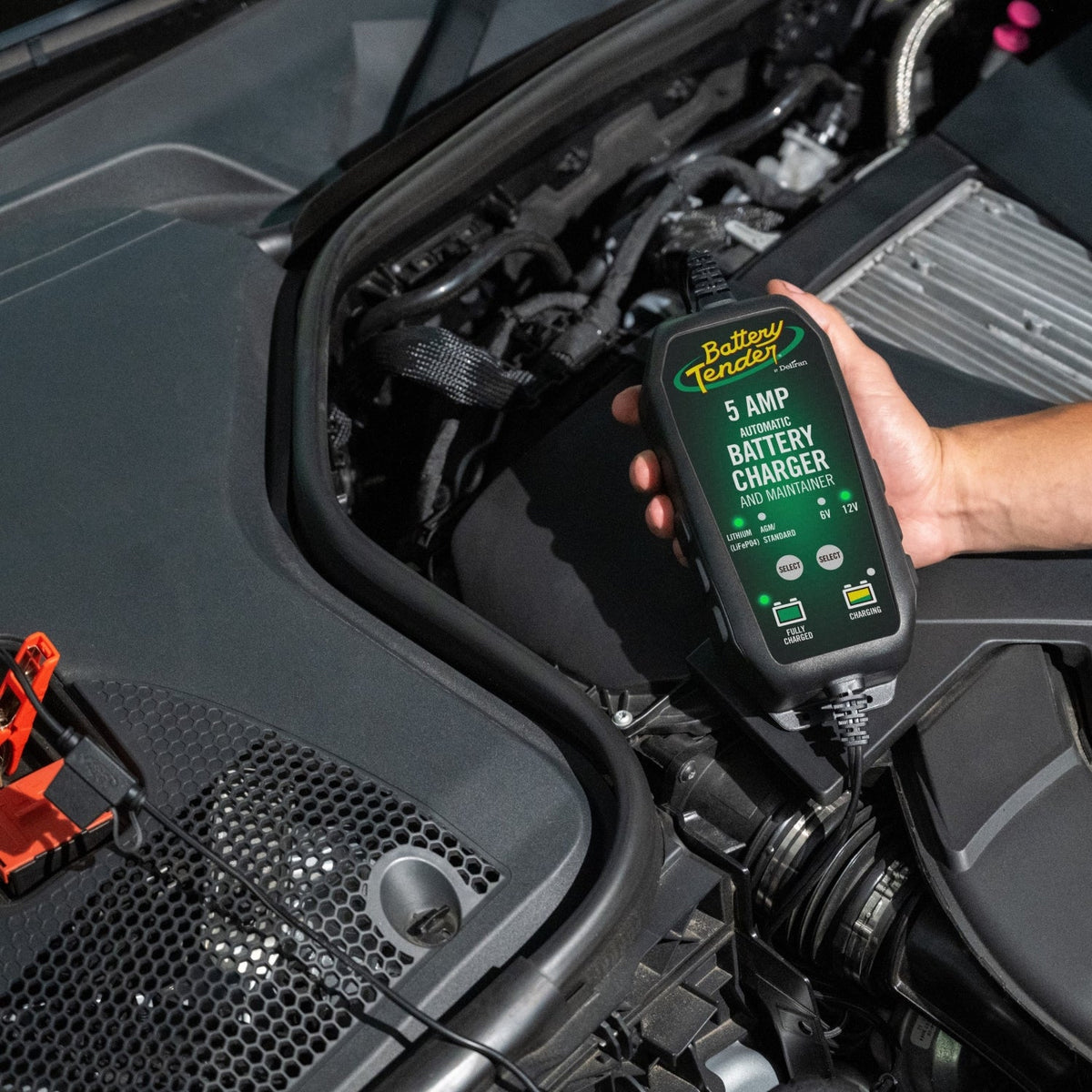
A garage with a 12V sport bike and a 6V classic needs a charger that handles both. The selectable Battery Tender Plus switches between 6V and 12V at 1.25A, so one unit covers each bike.
Battery Tender Plus 1.25 AMP Selectable 12V / 6V Battery Charger and Maintainer
Accessories That Complete the Setup
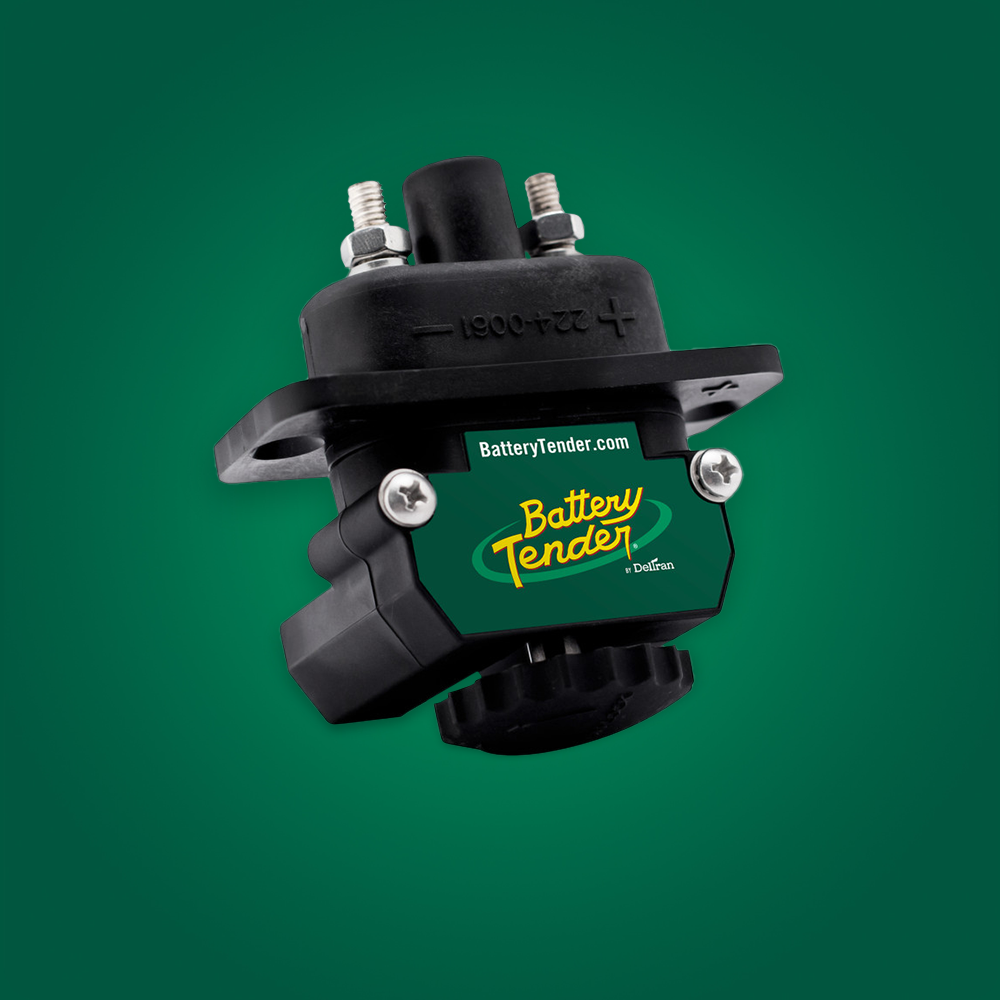
A voltage indicator shows battery state in two seconds without lifting the seat. It plugs into the same quick disconnect lead the charger uses, so a glance at the indicator before a ride confirms the battery is ready.
Battery Tender Quick Disconnect Battery Voltage Indicator
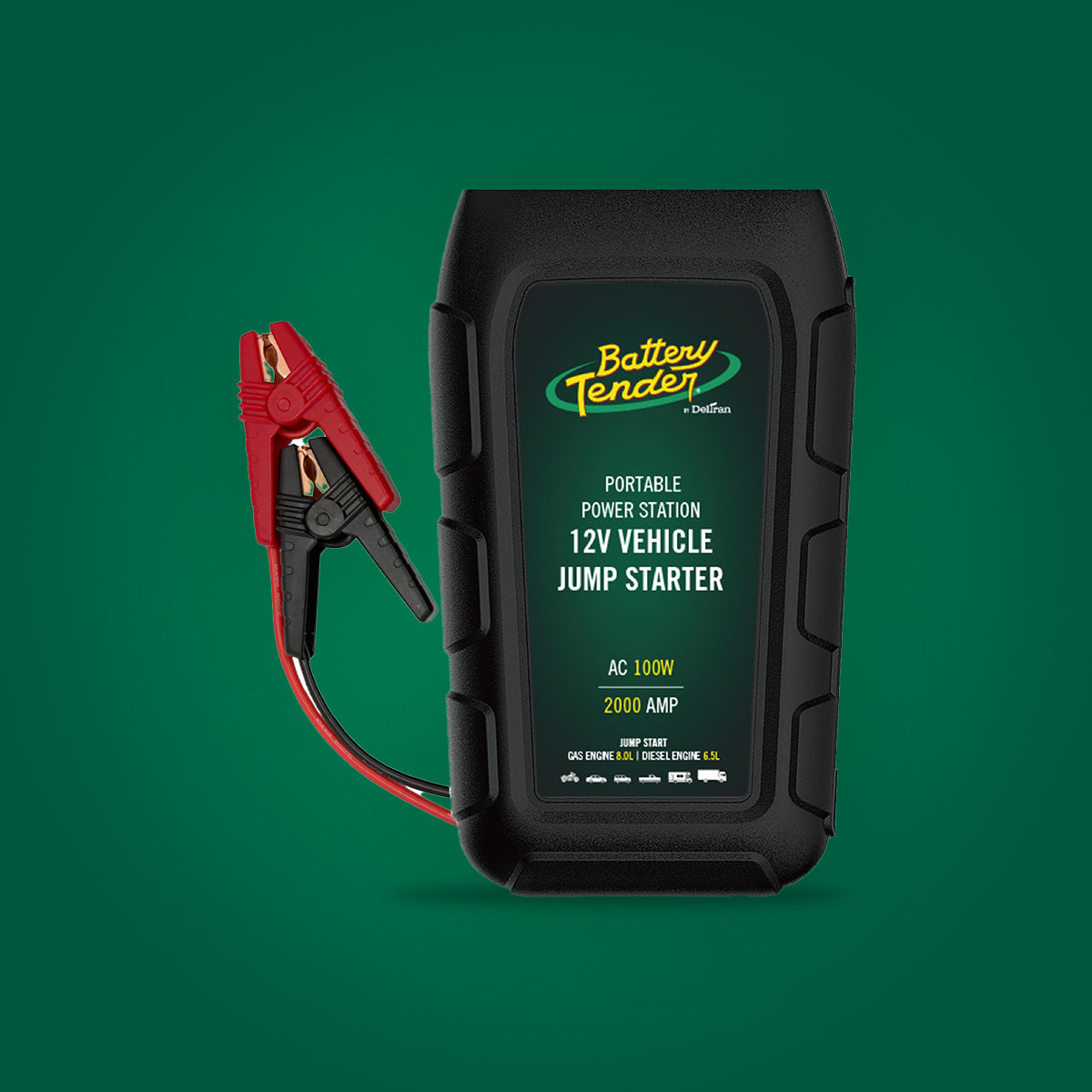
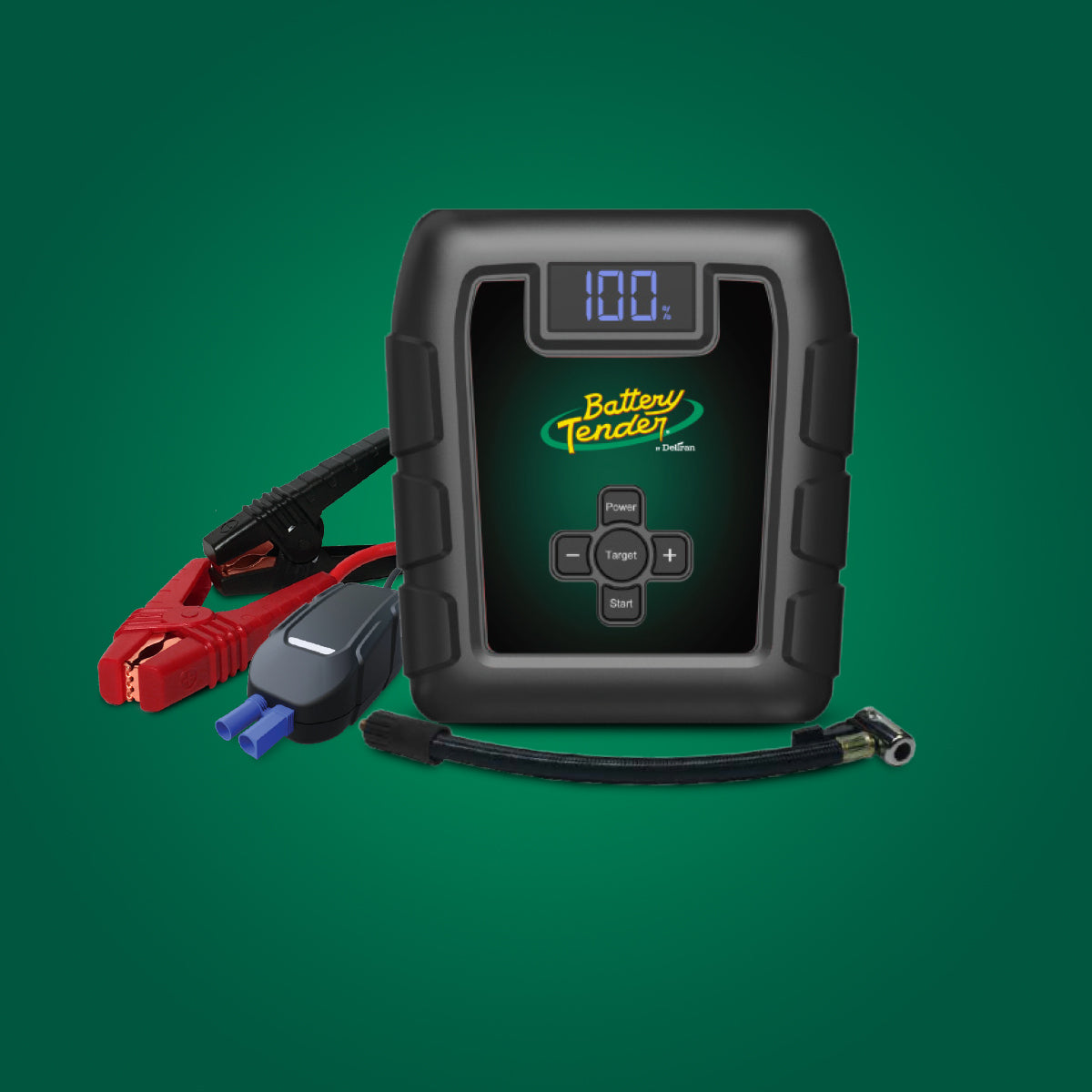
A charger protects the battery at home, but a bike can still be stranded on the road with a weak battery. The Battery Tender Jump N Start 800A bundle includes a ring terminal lead and a tire inflator for roadside emergencies. It works as a backup for long trips, not as a substitute for a maintained battery.
Battery Tender Jump N Start 800 Amp + Inflator Motorcycle & Powersports Emergency Roadside Bundle
Install the Connection Once, Then Plug In Every Time
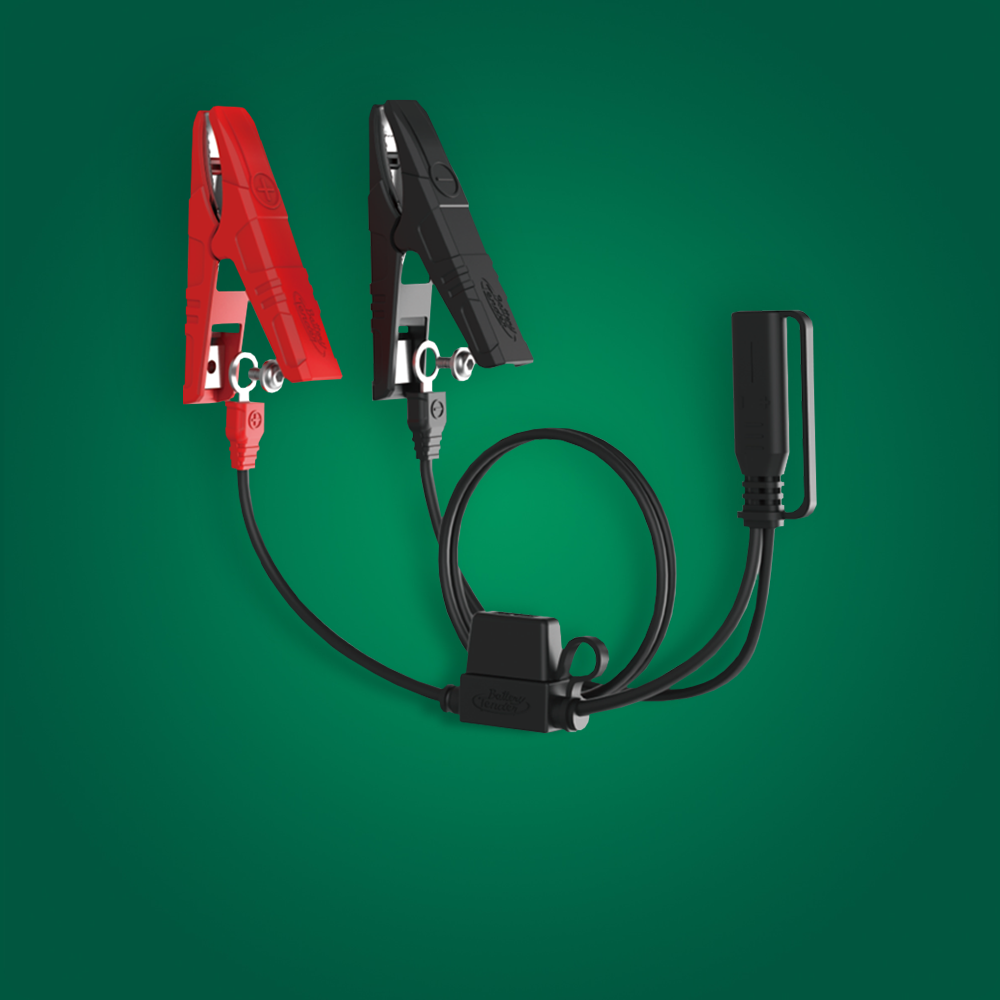
The reason most owners skip charging is hassle, not cost. Pulling the seat and clamping onto posts every few weeks gets old. Install a permanent lead once, and a battery charger for motorcycle storage becomes a 10-second plug-in.
- Test voltage. Record the resting reading using the table above.
- Clean the terminals. Remove corrosion with a wire brush. On flooded batteries, top off cells with distilled water to the fill line.
- Attach the lead. With the ignition off, connect the red ring terminal to the positive post and the black ring terminal to the negative post. Tighten both.
- Route the lead. Run it to an accessible spot near the seat or tail section. Secure it with zip ties, away from the chain, the exhaust, and moving suspension parts.
- Connect the charger. Plug the charger into the lead first, then into the AC outlet. Confirm the indicator light shows charging.
- Verify after 24 hours. Check that the indicator shows a maintenance state. Unplug briefly and confirm voltage reads 12.6V or higher.
- Disconnect in spring. Unplug the AC cord first, then the lead, and ride.
Safety Checklist
- Charge in a ventilated space with no open flame or sparks nearby.
- Connect the DC lead before plugging into AC, and unplug AC before disconnecting.
- Never charge a frozen or visibly swollen battery.
- Keep the charger body off the engine and exhaust.
- Check that the charger lists your battery chemistry (lead-acid, AGM, or lithium) before connecting.
Frequently Asked Questions
What size battery charger do I need for a motorcycle?
Most motorcycles need a charger between 0.75A and 1.25A. Use 800mA for 7–14Ah batteries on sport bikes and dirt bikes, and 1.25A for 14–30Ah batteries on cruisers and touring bikes. Higher amperage charges faster, but a low-amp smart charger is safer to leave connected for months.
Can I leave a battery charger on a motorcycle battery all winter?
Yes, when it is a smart charger with a maintenance stage. A Battery Tender charger monitors voltage and delivers charge pulses only when needed, so it is safe for indefinite connection. A constant-current trickle charger can overcharge and boil off electrolyte, so it should not be left connected for months.
How long does it take to charge a motorcycle battery?
Divide the amp-hours removed by the charger amps, then add about 20%. A 12Ah battery at 50% discharge needs 6Ah, so an 800mA charger takes roughly 7.5 hours of charging plus taper time. A 20Ah battery at the same depth takes about 8 hours on a 1.25A charger.
Can I charge a motorcycle battery without removing it?
Yes. A low-amp smart charger can charge the battery while it stays installed. Turn the ignition off, connect the ring terminal lead or clamps to the correct polarity, and plug the charger into AC last. A permanent quick disconnect lead makes this easy without pulling the seat.
Will a battery charger revive a dead motorcycle battery?
Sometimes. If the battery reads about 10.5V or higher, a smart charger can often recover it through the Initialization and Bulk Charge stages. A battery below that, or one that falls under 12.4V within a day of charging, usually has permanent sulfation or shorted cells and needs replacing.
Conclusion
Choosing a battery charger for motorcycle storage comes down to three decisions: test voltage first, match amps to amp-hours, and install a permanent lead so connecting is effortless. A battery held at 12.6V or higher all winter is ready to ride when spring arrives.
Next step: read your battery's Ah rating, pick the charger from the sizing table, and browse the full motorcycle battery chargers collection to match it to your bike.