


Multiple Car Battery Charger Guide: Multi-Bank Setup (2026)
A multiple car battery charger is either one multi-bank unit with an independent charging circuit per battery or several single-output chargers on separate outlets. Battery Tender® multi-bank chargers use Infinite Sequential Monitoring (ISM), so each connected battery is charged and maintained on its own, even when one is nearly dead and another is full.
Most garages, farms, and collections hold three to ten batteries that sit idle for weeks. This guide shows how to pick a setup by battery count, voltage, and amp-hours, then connect it safely.
Key Takeaways
- Never wire several batteries to one single-output charger in parallel. Each battery needs its own monitored charging circuit.
- Two vehicles call for a 2-bank unit or two single chargers. Four or more vehicles justify a 10-bank maintainer.
- Multi-bank maintainers are built to hold batteries at full charge. Recharge deeply discharged batteries first, using the math in this guide.
- Mixed voltages (6V, 8V, 12V) are easy to handle if each battery gets a voltage-matched circuit.
- Pair the maintainer with a battery tester and a jump starter so a surprise failure does not leave a vehicle stranded.
What Is a Multiple Car Battery Charger and When Do You Need One?
A multiple car battery charger is any charging setup that serves more than one vehicle battery at the same time without sharing current between them. You need one when two or more vehicles sit unused for more than two to three weeks.
There are three common configurations:
- Multi-bank charger: one housing, one power cord, several independent outputs.
- Several single chargers: one unit per vehicle, each on its own outlet.
- One charger moved by hand: cheap, but every battery not connected is self-discharging.
The third option fails most often. A typical lead-acid battery loses about 1 to 3 percent of its charge per week, and faster in heat. A battery left unattended for two months can drop below 12.0V, where lead sulfate crystals harden and capacity falls. Constant connection with a smart maintainer prevents that.
Why Can't You Run Several Batteries Off One Charger in Parallel?
You cannot parallel several batteries on one single-output charger because the charger sees them as one battery. It cannot tell which one is full and which one is flat.
Batteries in a household fleet rarely match. A 14Ah motorcycle battery, a 60Ah sedan battery, and a 100Ah truck battery have different internal resistance and different states of charge. In parallel, current flows between them as well as from the charger, so the weakest battery may be undercharged while the strongest is overcharged.
Independent banks avoid this. Battery Tender ISM technology runs four stages on each connected battery:
- Initialization: tests the battery and applies gentle current to judge its condition.
- Bulk Charge: delivers full rated current until the battery reaches roughly 80 percent state of charge.
- Absorption: holds voltage constant while current tapers, bringing the battery safely to full charge.
- Float Maintenance: monitors voltage and sends charge only when it drops.
Conventional trickle chargers push constant current whether the battery needs it or not. Across several batteries, that means some overcharge while others stay low. The related guide Best Car Trickle Charger? Why Smart Maintainers Win explains that difference in detail.
How Do You Size a Multiple Car Battery Charger?
Size a multiple car battery charger by counting batteries, noting each voltage, and checking amp-hour capacity against the charger output. For pure maintenance, even 1 amp per battery is plenty. Recovery from deep discharge is where amperage matters.
| Garage Situation | Typical Batteries | Recommended Setup |
|---|---|---|
| Two daily-use cars, occasional storage | 2 × 12V, 45–70Ah | Battery Tender 2-Bank 12V 1.25 Amp |
| Car plus motorcycle, both stored in winter | 12V, 12–60Ah | Battery Tender 2-Bank 12V 1.25 Amp |
| Collection of 4–10 vehicles, mixed 6V/12V | 6V and 12V, 10–100Ah | Battery Tender Power Tender 10-Bank 4 Amp |
| One 8V battery among 12V vehicles | 8V, 1 battery | Battery Tender Plus 1.25 Amp 8V |
Charging time math
Use this formula: (battery Ah × depth of discharge) ÷ charger amps = approximate hours. For example, a 60Ah car battery that is 50 percent discharged holds 30Ah of missing charge. At 1.25 amps, 30 ÷ 1.25 = 24 hours of charging. Add a few hours for the Absorption stage.
The same battery on a 4-amp charger would need about 7.5 hours of charge, though a multi-bank unit may split that rating across banks. Check the per-bank output on the product page before relying on that figure. When a battery is below 50 percent, recharge it with a dedicated single charger first, then move it to the multi-bank unit for long-term upkeep.
Which Multiple Car Battery Charger Setup Fits Your Garage?
The right setup depends on how many batteries you maintain and whether voltages differ. Three Battery Tender models cover most households.
Four or more vehicles: a 10-bank maintainer
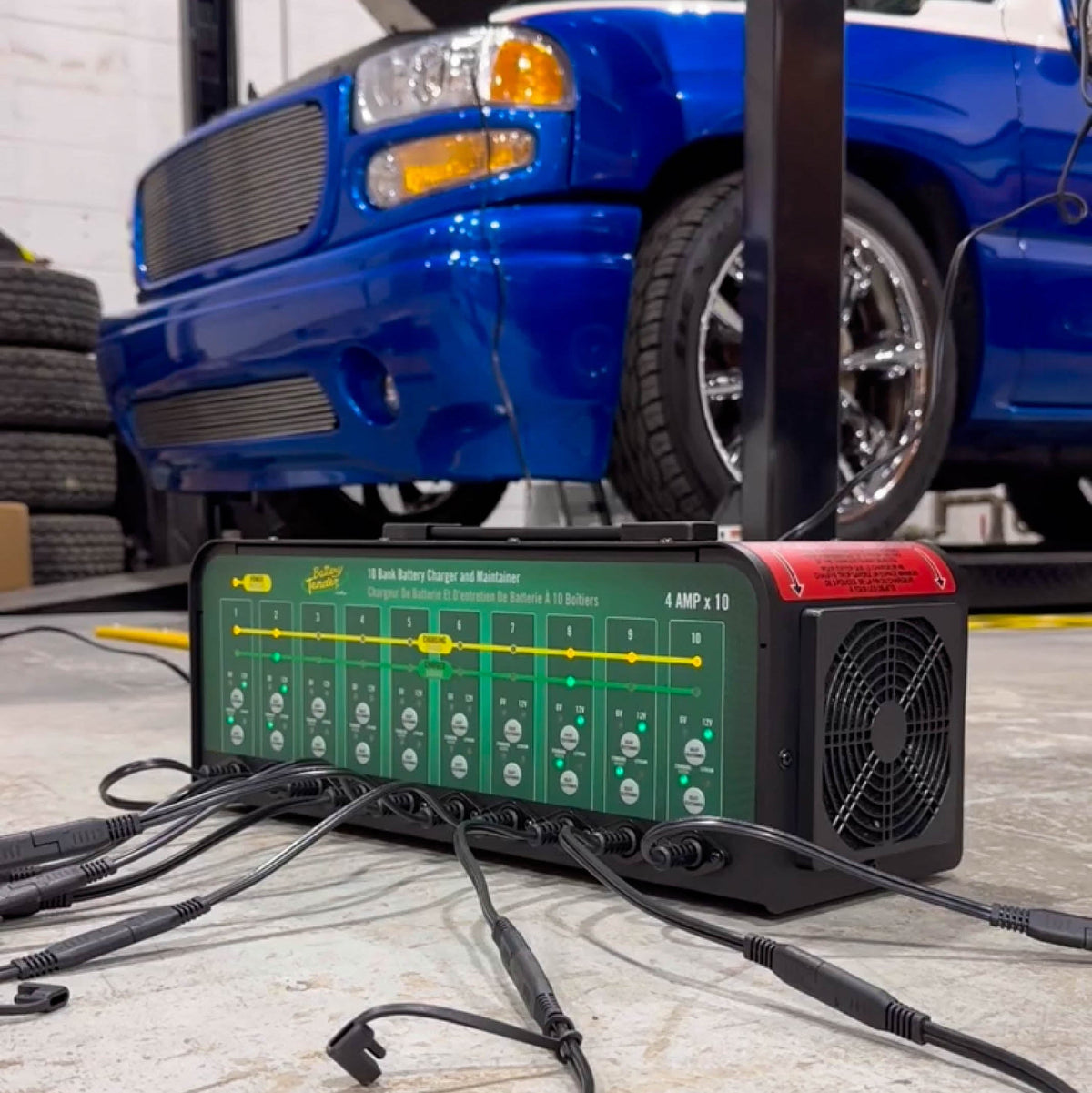
The Battery Tender Power Tender 10-Bank 4 Amp charges 6V and 12V batteries, with an independent ISM circuit per bank. That suits a collector with a classic 6V car, a pickup, a motorcycle, a boat, and a mower, all on one cord and one outlet.
Battery Tender Power Tender 10-Bank 4 Amp 12V/6V Battery Charger and Maintainer
One trade-off: this unit is designed to maintain a fleet, not to serve as a rapid recovery tool. Do not expect it to revive ten dead batteries overnight.
Two vehicles: a 2-bank maintainer
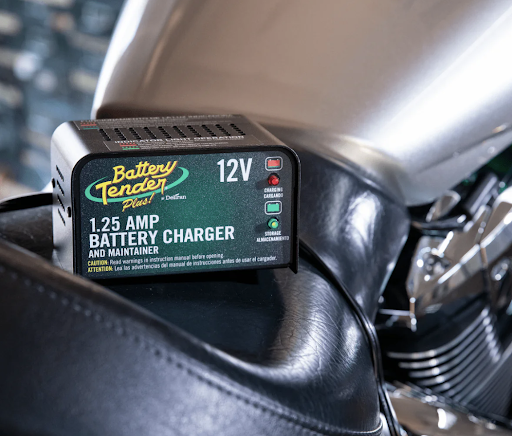
The Battery Tender 2-Bank 12V 1.25 Amp runs two 12V batteries from one outlet. It fits a household with a daily driver and a weekend car, or a car and a motorcycle in the same bay. At 1.25 amps, it holds batteries from roughly 12Ah to 70Ah without overcharging.
Battery Tender 2-Bank 12V 1.25 Amp Battery Charger and Maintainer
Odd voltage: the 8V exception
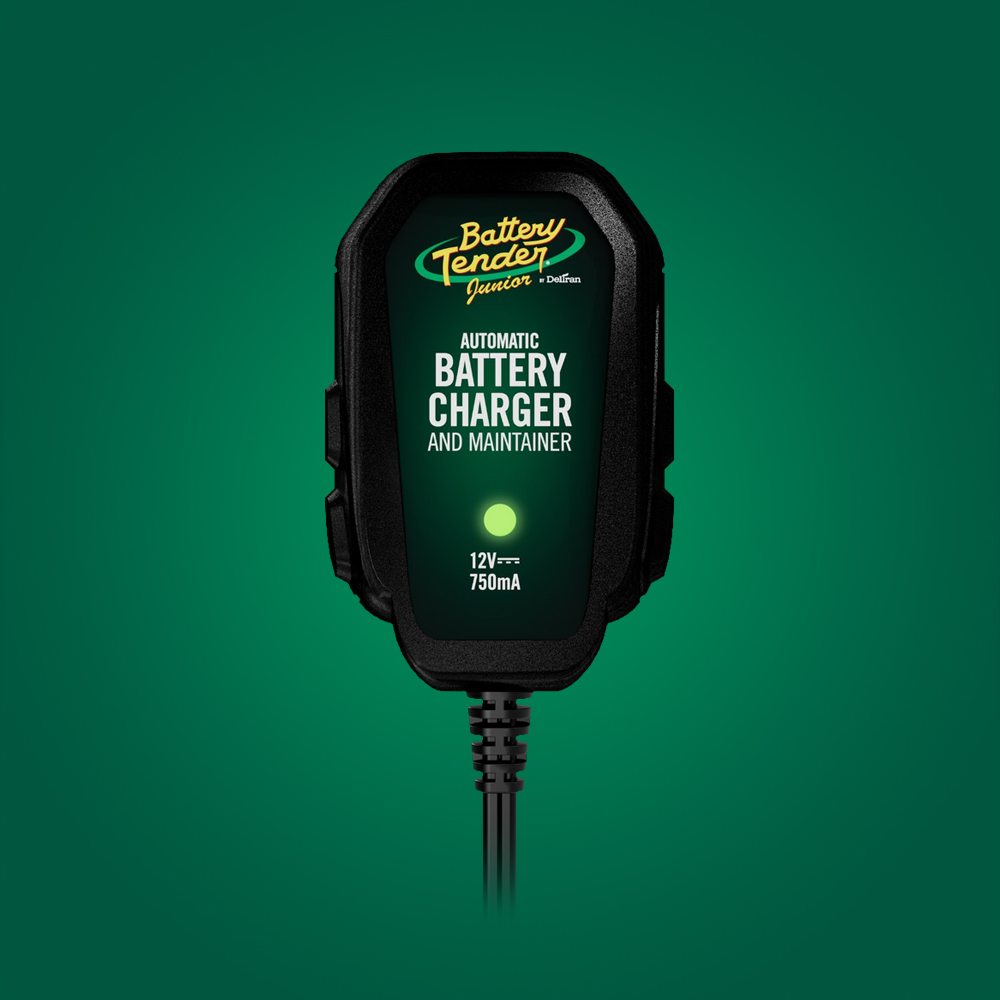
Some vintage equipment, floor machines, and certain golf carts use 8V batteries, which a 6V/12V charger cannot serve correctly. The Battery Tender Plus 1.25 Amp 8V is built for them and can sit alongside the other chargers in the same garage. Battery Tender Plus models include temperature compensation, which adjusts charge voltage in cold or hot buildings. Battery Tender Junior models do not include it, so keep that in mind if you mix chargers in an unheated space.
Battery Tender Plus 1.25 AMP 8V Battery Charger and Maintainer
How Do You Connect a Multiple Car Battery Charger Step by Step?
Connect a multiple car battery charger with the unit unplugged, one battery at a time, and verify each bank's indicator before leaving it.
- Check each battery. Note voltage (6V, 8V, or 12V) and chemistry. Lead-acid, AGM, and GEL are common; confirm lithium compatibility on the charger label before connecting.
- Place the charger. Put it on a dry, flat surface, away from fuel and out of walking paths.
- Keep the charger unplugged while attaching clamps or ring terminals.
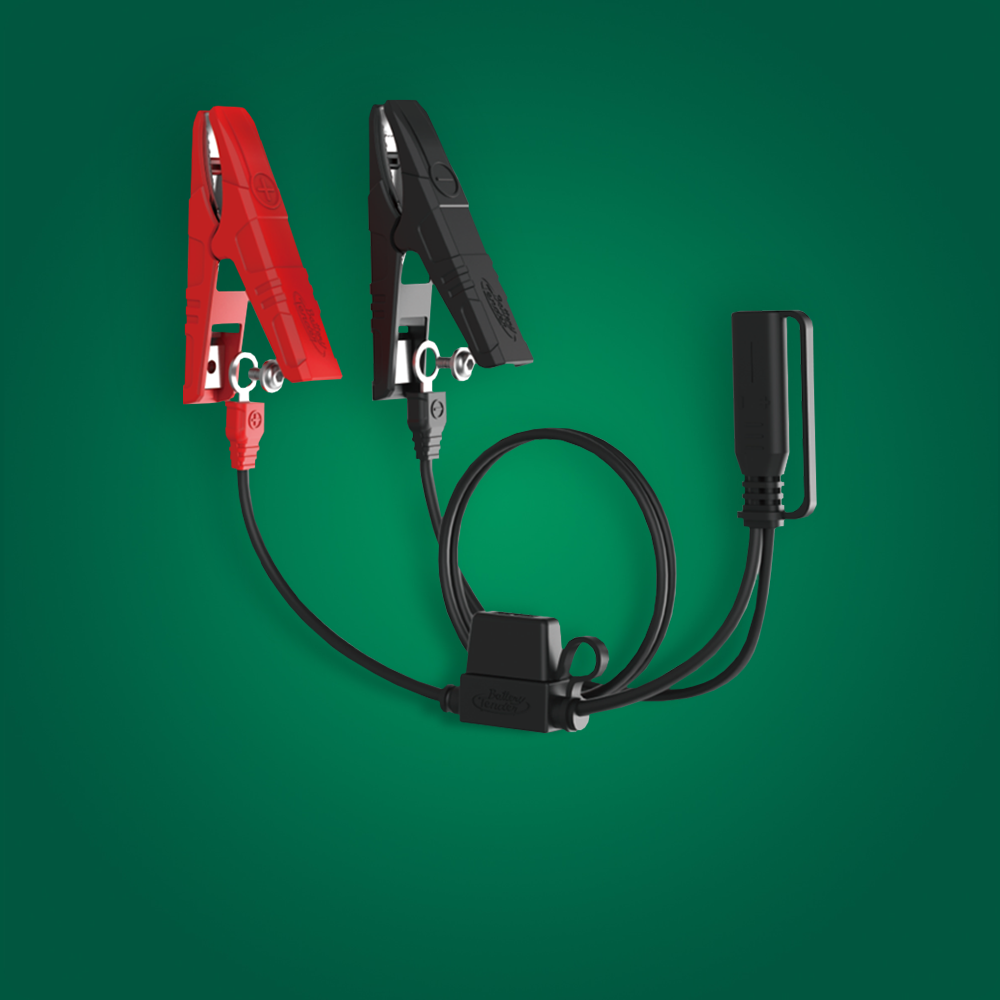
- Connect red to positive, black to negative or a chassis ground on each vehicle. Route cables so they cannot touch each other or moving parts.
- Plug in the charger and confirm that each bank's LED shows a charging or maintenance status.
- Recheck after 24 hours. Batteries that still show Bulk Charge after a day may be deeply sulfated or failing.
For safety, use a grounded outlet, preferably GFCI protected. If you need an extension cord, choose a heavy-gauge outdoor-rated one and uncoil it fully. Keep the setup ventilated, because charging lead-acid batteries can release small amounts of hydrogen.
Do You Need a Tester and Jump Starter With a Multiple Car Battery Charger?
Yes. A maintainer keeps batteries charged, but it cannot reveal a battery that holds voltage yet cannot deliver cranking current.
The Battery Tender 12V / 6V Battery Tester checks both voltages, so it covers a garage with modern and vintage vehicles. Test each battery at the start of the storage season, then again before the first drive.
Battery Tender 12V / 6V Battery Tester
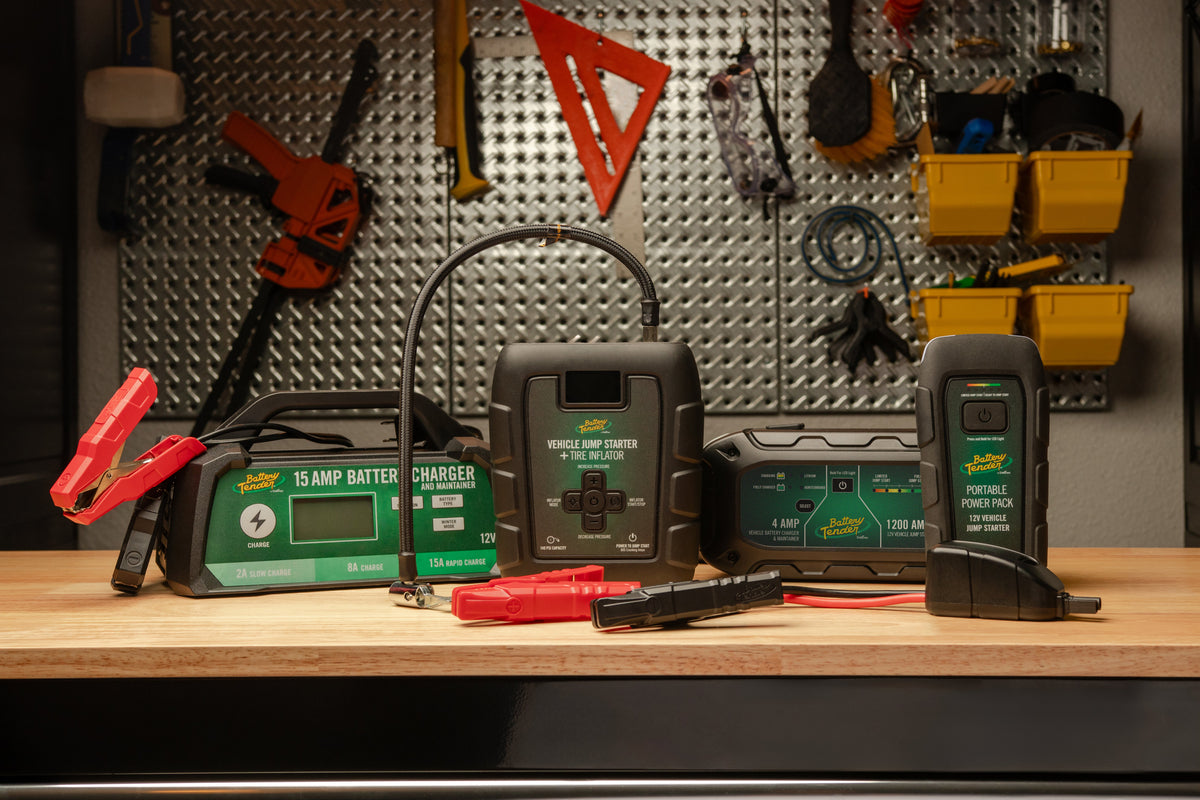
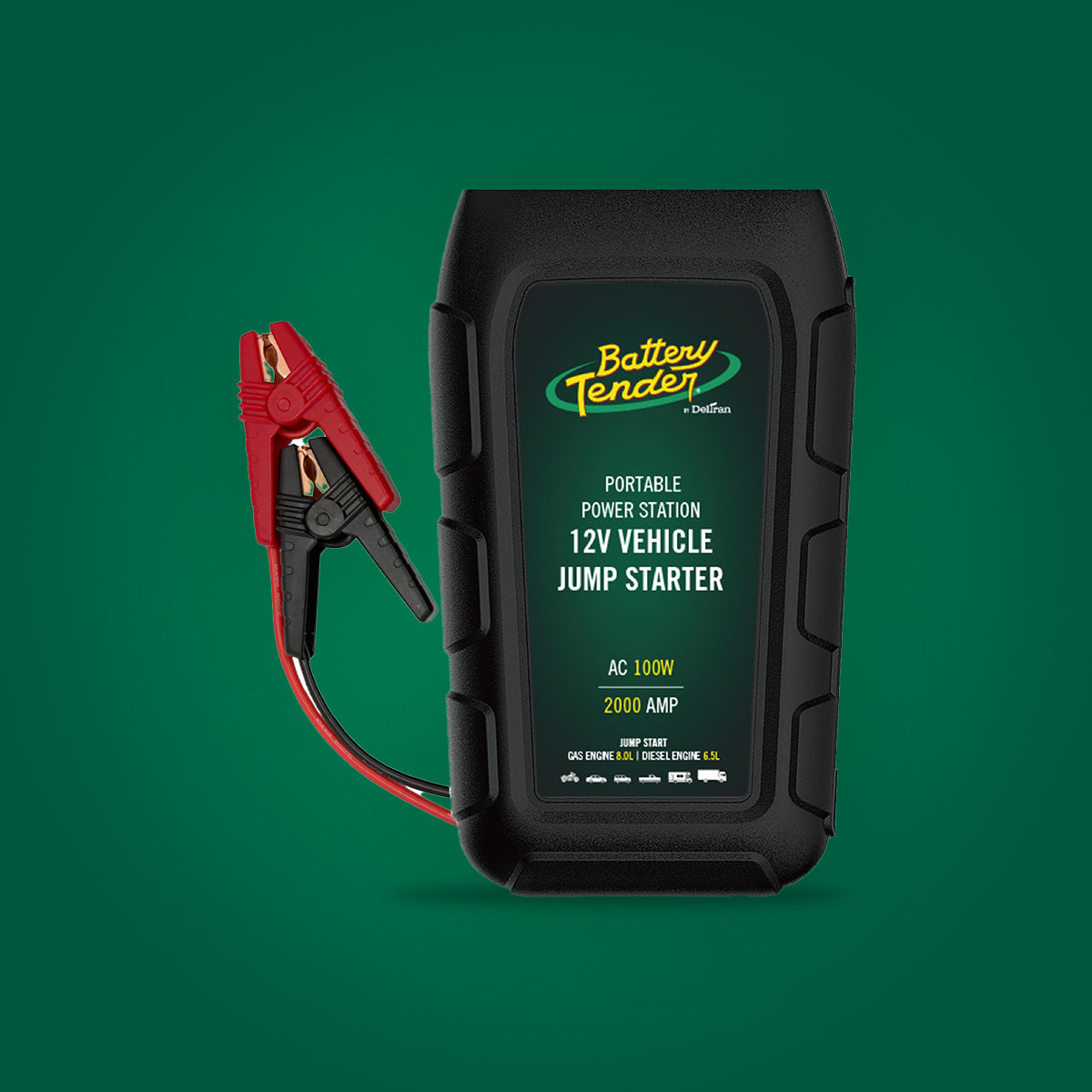
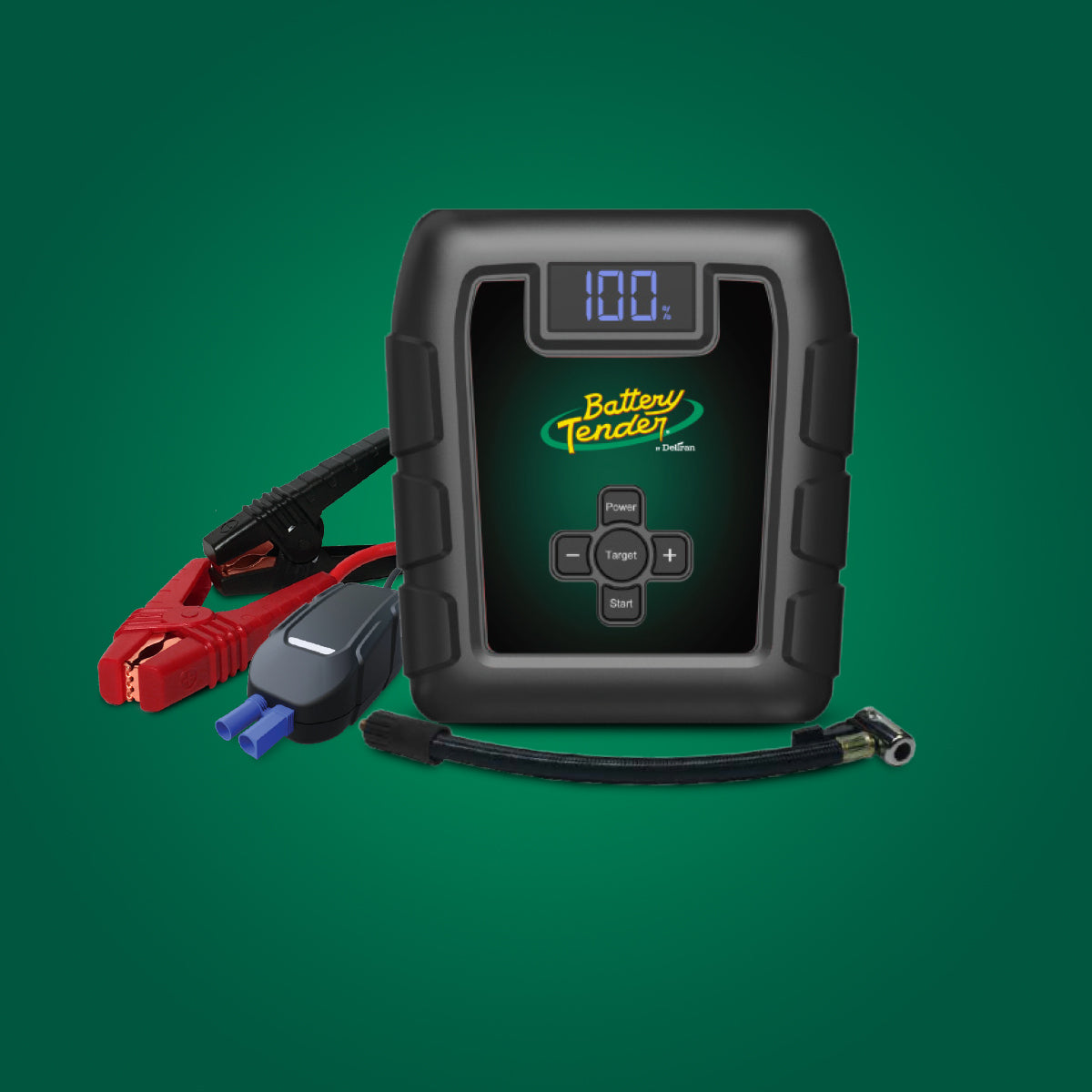
A jump starter covers the cases a maintainer cannot. The Battery Tender Jump N Start 800 Amp with Tire Inflator suits most cars and light trucks (confirm the engine-size rating on the product page) and also restores the tire pressure that typically drops during storage.
Battery Tender Jump N Start 800 Amp Jump Starter and Tire Inflator
Frequently Asked Questions
Can one battery charger maintain multiple cars at the same time?
Yes, but only a multi-bank unit with independent circuits for each output. A single-output charger cannot safely serve several batteries because it cannot monitor each one separately. A multi-bank maintainer with ISM evaluates every connected battery on its own and adjusts accordingly.
Is a multiple car battery charger safe to leave connected all winter?
Yes, if it is a smart charger. ISM technology reduces output to demand-driven maintenance pulses once a battery is full, so it can stay connected for months. Conventional trickle chargers deliver constant current and can overcharge, so they should not be left connected unattended.
Can I mix 6V and 12V batteries on one multi-bank charger?
Yes, if the charger is voltage selectable per bank. The Battery Tender Power Tender 10-Bank supports 6V and 12V batteries, so a classic 6V car and a modern 12V truck can share one unit. Always set or verify the voltage for each bank before connecting.
How long does it take to charge two car batteries at 1.25 amps?
Each bank works independently, so the time depends on each battery. A 60Ah battery at 50 percent discharge needs about 24 hours at 1.25 amps (30Ah ÷ 1.25A). A fully discharged 60Ah battery needs close to 48 hours. Smaller motorcycle batteries finish much sooner.
How many amps do I need to maintain several car batteries?
For maintenance only, 1 to 1.25 amps per battery is enough, even for 100Ah batteries. Higher amperage matters only for recovery from deep discharge. If batteries are regularly below 50 percent, use a dedicated higher-amp single charger for recovery, then maintain them with a multi-bank unit.
Conclusion
A multiple car battery charger works when every battery has its own monitored circuit. Count your batteries and voltages, use the charging time formula to find which ones need recovery first, then pick a 2-bank, 10-bank, or voltage-specific unit to match. The next step is to list every battery in your garage with its voltage and amp-hours, then compare options in the Battery Tender battery charger collection.