


Battery Starter for Car: Jump Starter, Charger or Maintainer? (2026)
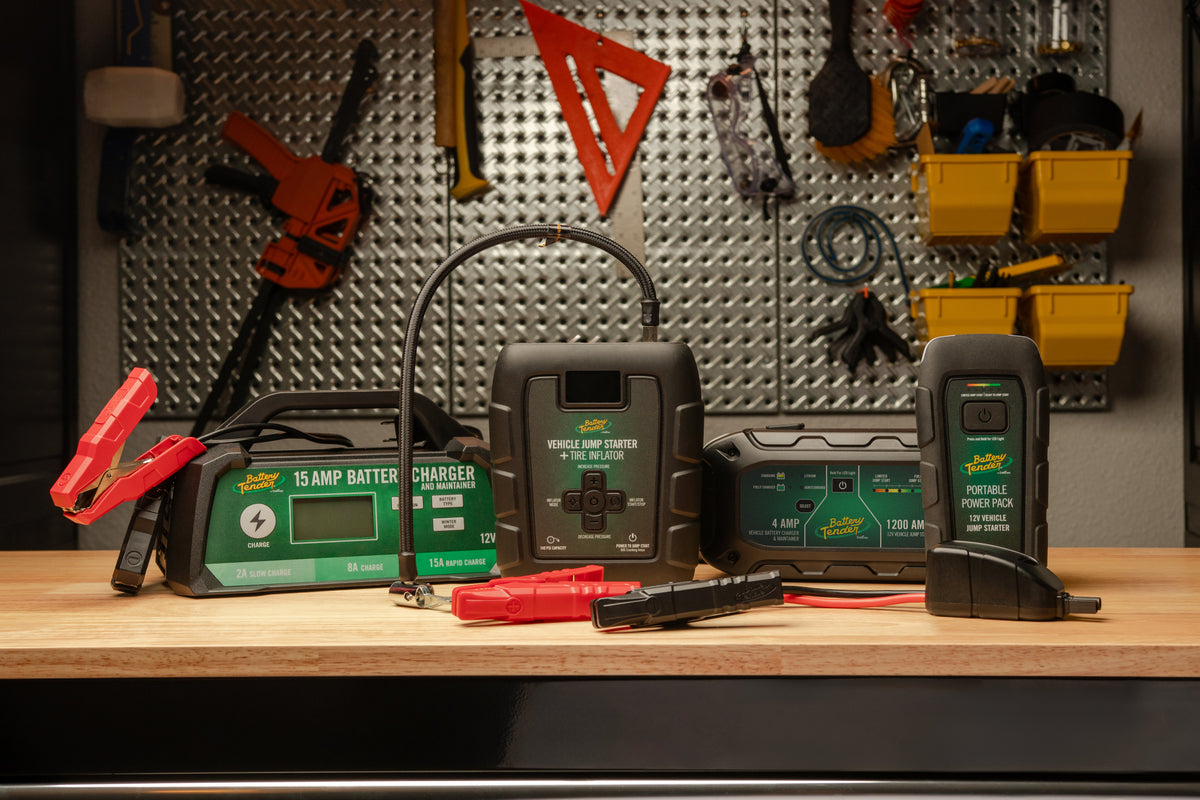
A battery starter for car use is usually one of two tools. A portable jump starter delivers hundreds of amps to crank a dead engine right now. A smart charger such as the Battery Tender® Plus restores and maintains the battery so the engine keeps starting. Use the jump starter for emergencies and the maintainer for prevention.
Key Takeaways
- A jump starter borrows power to crank the engine once. It does not recharge the battery, so a dead battery still needs a full charge afterward.
- A 1.25 amp smart maintainer cannot start a car. It prevents the dead battery by holding it at full charge during storage and short-trip use.
- Battery Tender chargers use Infinite Sequential Monitoring (ISM), a four-stage process that adapts to battery condition and is safe to leave connected indefinitely.
- A healthy 12V battery rests at 12.6V or higher. At 12.0V or below, it is roughly 75% discharged or worse and needs a charger, not just a jump.
- Standard 12V jump starters do not fit 6V or 8V classic car systems. Those vehicles need a matching-voltage maintainer.
What Does "Battery Starter for Car" Actually Mean?
The phrase covers three different tools, and buying the wrong one is the most common mistake. Match the tool to the problem: a dead battery now, a battery that keeps dying, or an engine that will not crank even with a healthy battery.
Jump starters: instant cranking power
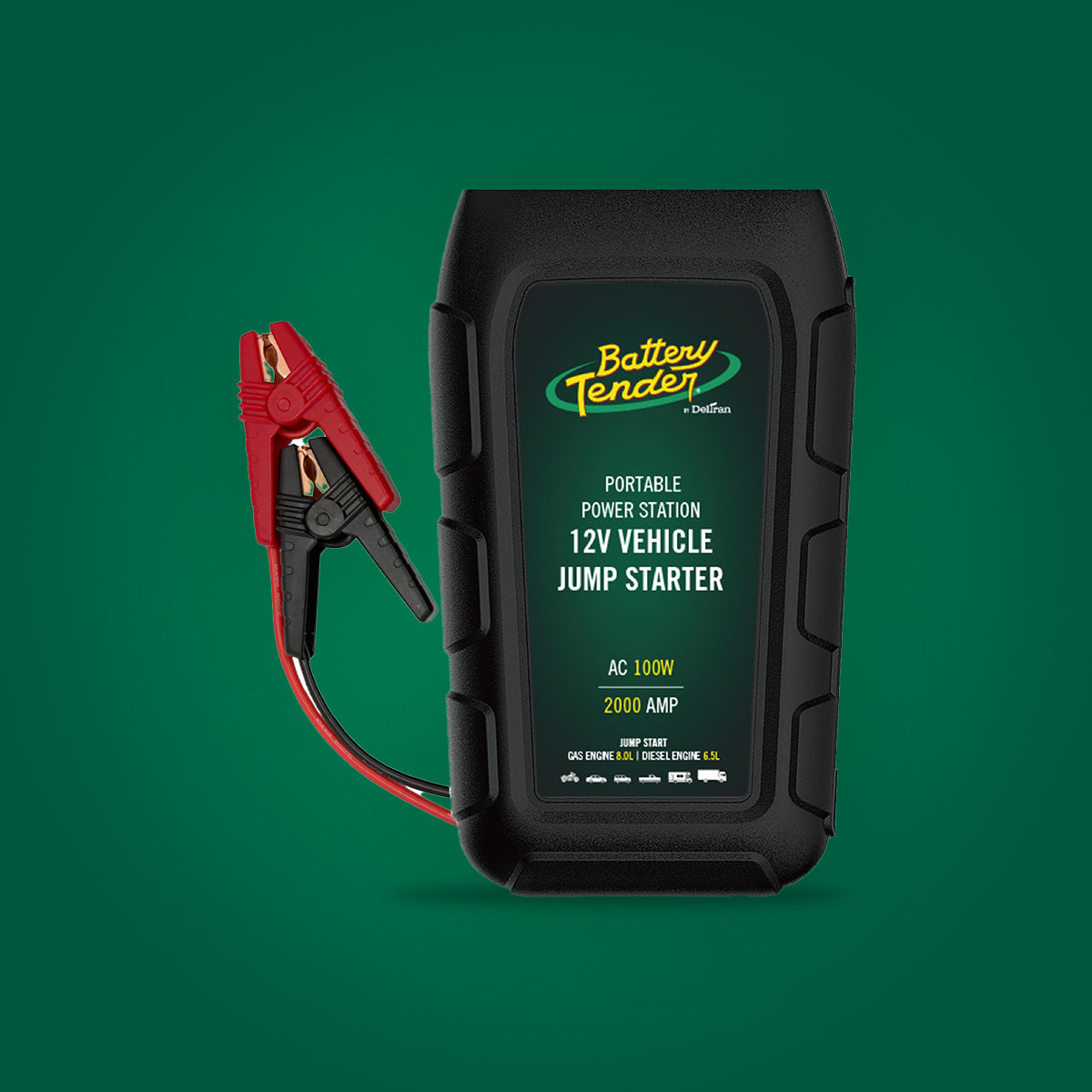
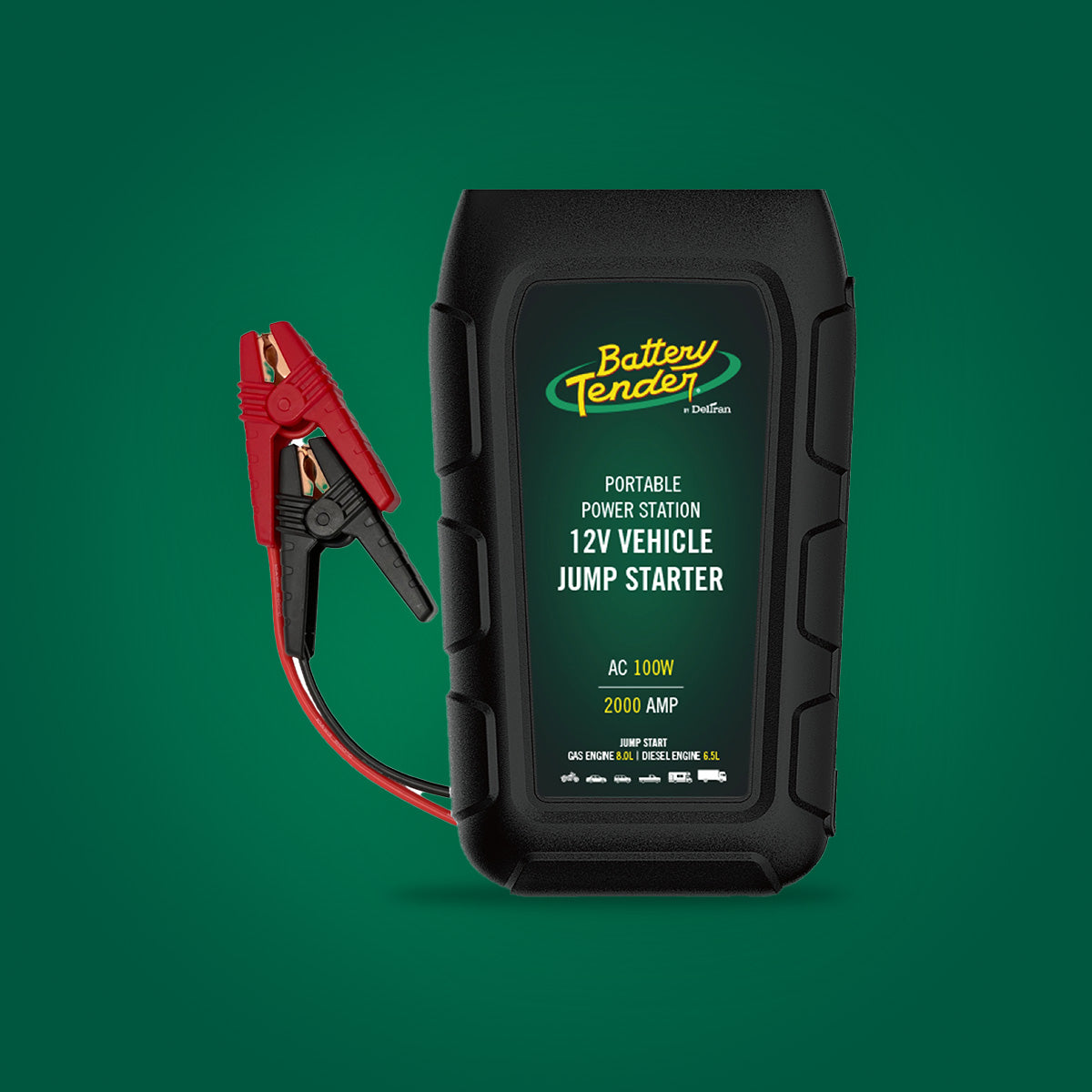
A jump starter is a portable lithium or lead-acid power pack with clamps. It supplies a short burst of 600 to 2,000 amps to turn the engine over without a second vehicle. The engine's alternator then takes over. Ratings matter: an 800A unit handles up to about 4.0L gas or 2.0L diesel engines, while larger V8s and diesel trucks need 1,500A or more.
Chargers and maintainers: restoring the battery itself
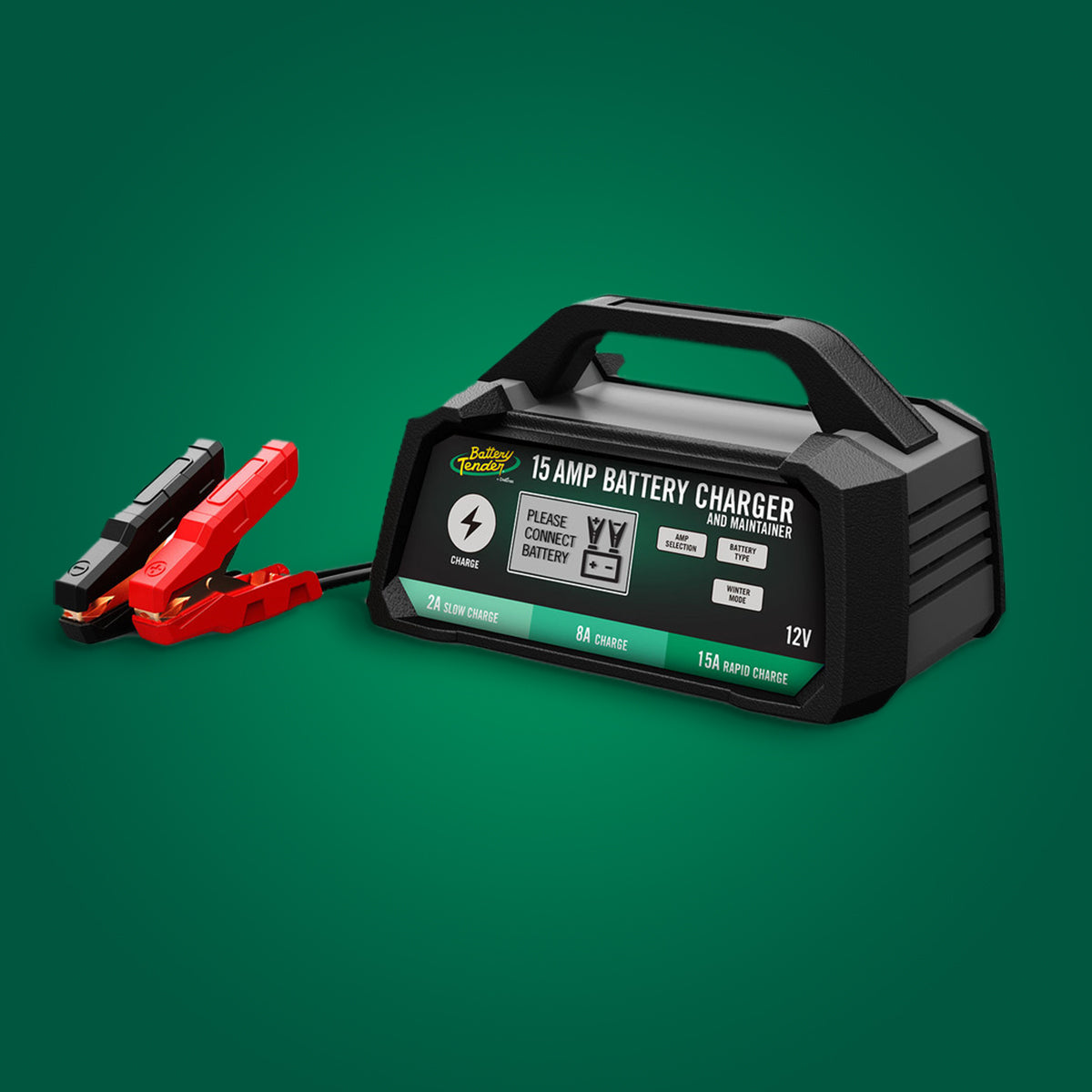
A charger refills the battery over hours. A maintainer does the same job and then holds the battery at the correct voltage for weeks or months. Because it works in the background, a maintainer prevents the failure instead of fixing it.
The starter motor: not a battery product at all
Some drivers searching this phrase have a failed starter motor or solenoid. The sign is a single loud click, or a whirring sound, with bright dash lights and a battery that reads 12.4V or higher. No charger or jump starter fixes that. A mechanic does.
Which Battery Starter for Car Fits Your Situation?
The right battery starter for car problems depends on symptoms and on a voltage reading. Use the table below, then confirm with a meter or tester before spending money.
| Symptom | Likely cause | Right tool |
|---|---|---|
| Rapid clicking, dim dash lights | Discharged battery | Jump starter now, then a full charge |
| Slow cranking after 2+ weeks parked | Self-discharge or sulfation | Smart maintainer |
| Dead every winter morning | Aging battery, cold-weather loss | Battery tester, then maintainer or replacement |
| Single click, strong lights | Starter motor or solenoid | Mechanic |
| Starts fine, dies within days | Parasitic drain or weak alternator | Diagnosis; maintainer as a stopgap |
Read the battery before you buy
Measure resting voltage with the engine off for at least four hours. These figures apply to a standard 12V lead-acid battery at about 70°F:
- 12.6V to 12.7V: fully charged
- 12.4V: about 75% charged
- 12.2V: about 50% charged
- 12.0V or below: about 25% charged or less, and sulfation risk is rising
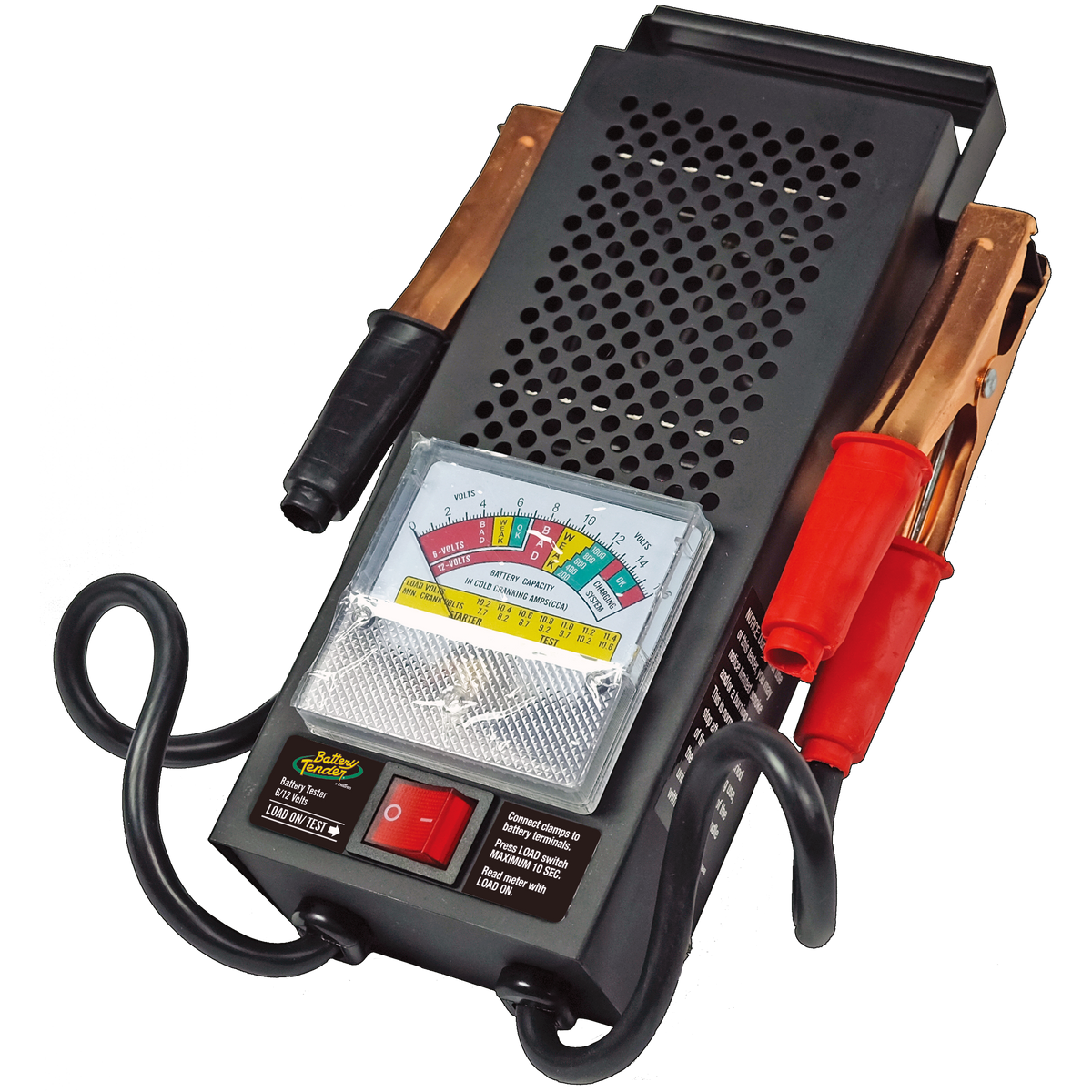
Voltage shows state of charge, not health. A battery can read 12.6V and still fail under load. The Battery Tender 12V / 6V Battery Tester is worth owning for that reason: it is rated for 12V at 100 amp and 6V at 50 amp, so it checks whether a battery can hold up under load before you blame the starter motor.
Battery Tender 12V / 6V Battery Tester
How Do You Use a Jump Starter on a Car Battery Safely?
Connect positive first, then negative to bare metal, wait a minute, and crank for no more than five seconds. A modern jump starter needs no second vehicle, which makes it the practical battery starter for car owners who park alone, commute at night, or travel in winter.
- Read the manual. Confirm the vehicle is 12V and check for a designated jump point.
- Turn everything off. Switch off the ignition, lights, radio, and climate control.
- Connect the red clamp to the positive (+) battery terminal.
- Connect the black clamp to unpainted engine or chassis metal, away from the battery and fuel lines.
- Power on the jump starter and wait 30 to 60 seconds.
- Crank for five seconds or less. If the engine does not start, wait two minutes before trying again.
- Disconnect in reverse order, black clamp first, then drive at least 30 minutes.
Do not jump a battery that is cracked, bulging, or frozen. Keep sparks and flames away from the battery, because lead-acid batteries vent hydrogen while charging.
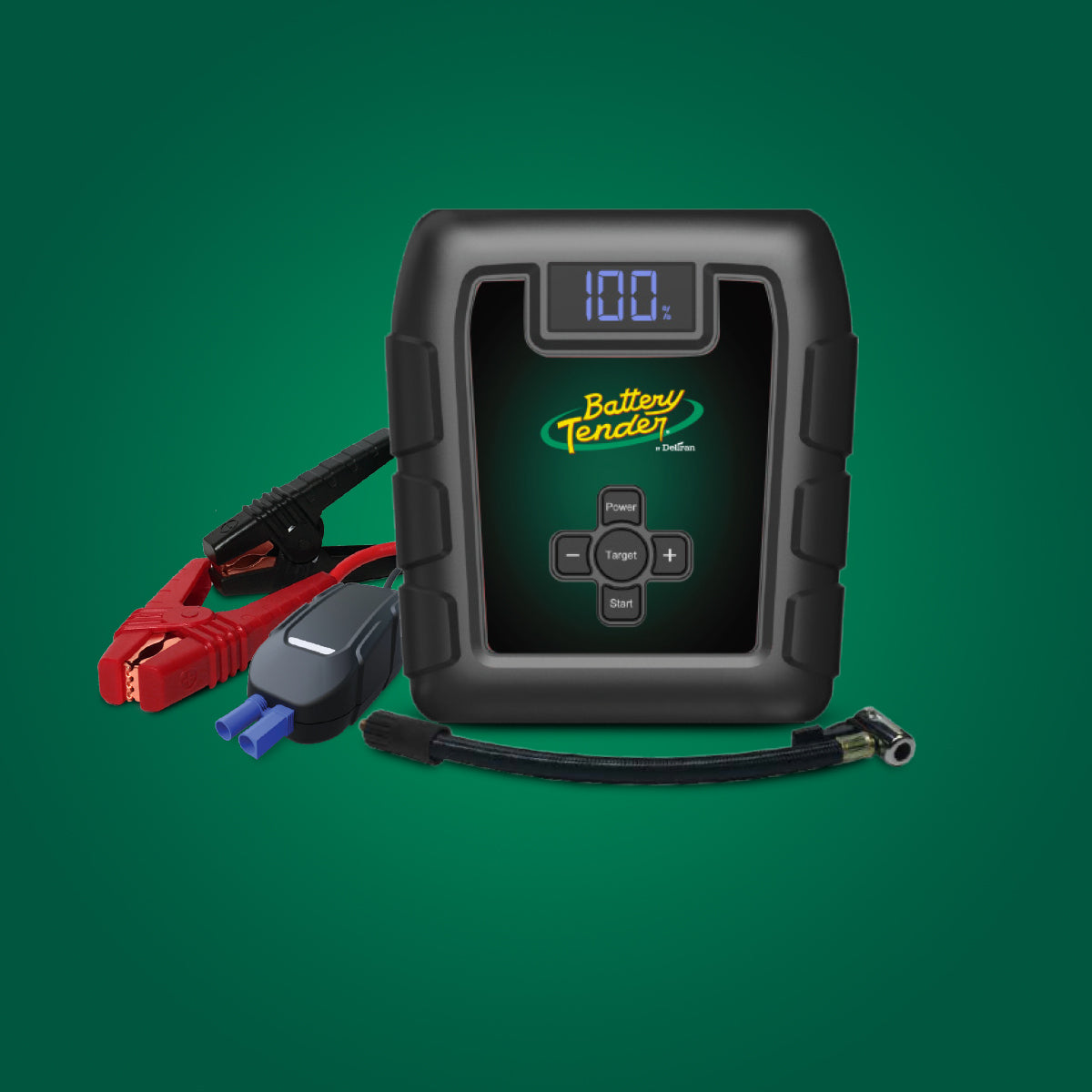
For most cars, crossovers, and light trucks, the Battery Tender Jump N Start 800 Amp Jump Starter and Tire Inflator is a sensible fit. Its 800A output covers engines up to roughly 4.0L gas or 2.0L diesel, and the built-in inflator handles the other common roadside emergency, a soft tire.
Battery Tender Jump N Start 800 Amp Jump Starter and Tire Inflator
Owners with larger engines should compare ratings in the portable jump starter comparison. For recovery steps after a stranded start, see the car jumper guide.
What Keeps a Car Battery Starting Without a Battery Starter for Car?
A smart maintainer keeps the battery charged between drives so you never need a rescue. Cars parked for two weeks or longer, driven mostly on trips under 15 minutes, or stored through winter benefit most, because modern electronics drain a battery slowly even when the car is off.
How ISM differs from trickle charging
Battery Tender ISM technology works in four stages:
- Initialization: tests the battery and applies gentle current to judge its condition.
- Bulk Charge: delivers full rated current until the battery reaches about 80% state of charge.
- Absorption: holds voltage constant while current tapers, bringing the battery to full charge without overheating it.
- Float Maintenance: holds the battery at float voltage and adds charge only when voltage drops.
A conventional trickle charger pushes constant current regardless of battery state. Left connected for weeks, it can overcharge, boil off electrolyte, and warp plates. Sulfation is a leading cause of early battery failure, and a smart maintainer that keeps the battery fully charged limits it, helping the battery last noticeably longer. The smart maintainer versus trickle charger article covers the full comparison.
Sizing: match the charger to the battery
The Battery Tender Plus family is rated for batteries from roughly 14Ah to 80Ah. That range covers motorcycles, compact cars, and most passenger-car batteries. Battery Tender Plus models include temperature compensation, so the charge voltage adjusts for hot garages and cold sheds.
| Battery | Typical capacity | Recommended maintainer |
|---|---|---|
| Compact car, 12V | 40 to 50Ah | Battery Tender Plus 12V 1.25 amp |
| Midsize sedan or SUV, 12V | 50 to 70Ah | Battery Tender Plus 12V 1.25 amp |
| Pre-1956 American classic, 6V | 80 to 100Ah (above the typical range; expect longer recharge times) | Battery Tender Plus 6V 1.25 amp |
| Vintage car with 8V system | Varies by model | Battery Tender Plus 8V 1.25 amp |
Charging time math
Use this formula: (battery Ah × depth of discharge) ÷ charger amps = approximate hours. A 50Ah battery that is 50% discharged needs 25Ah. At 1.25 amps, that is 25 ÷ 1.25 = 20 hours, plus 10 to 20% for charging losses. A 1.25 amp maintainer is built for upkeep. Use a higher-amp charger to recover a deeply discharged battery faster.
Which Battery Tender Plus matches your car
For a modern gas or diesel car with a 12V battery, the Battery Tender Plus 12V 1.25 amp is the standard choice. It covers the 14 to 80Ah range, and one unit handles a daily driver parked for winter or a weekend car that sits between drives.
Battery Tender Plus 1.25 AMP 12V Battery Charger and Maintainer
Classic cars built before the mid-1950s often use a 6V positive-ground or negative-ground system, and a 12V jump starter or charger can damage them. The Battery Tender Plus 6V 1.25 amp matches that voltage and keeps a stored battery topped off without overcharging.
Battery Tender Plus 1.25 AMP 6V Battery Charger and Maintainer
A few vintage cars used 8V systems, which standard 6V and 12V chargers cannot service correctly. The Battery Tender Plus 8V 1.25 amp is the dedicated option for those owners, and it removes the risk of undercharging or overcharging through a mismatched voltage.
Battery Tender Plus 1.25 AMP 8V Battery Charger and Maintainer
Frequently Asked Questions
What is the best battery starter for car owners who rarely drive?
Occasional drivers get the most value from a smart maintainer, because a battery sitting for weeks loses charge on its own. A 1.25 amp unit such as the Battery Tender Plus 12V 1.25 amp charger keeps it at full charge. Add a portable jump starter in the trunk as a backup for unexpected dead batteries.
Can a jump starter charge my car battery?
A jump starter is built to crank the engine once, not to recharge a battery. After a jump, the alternator restores some charge, but a deeply discharged battery needs 30 minutes or more of driving and often a full charge from a plug-in charger. Recharging fully protects battery life.
Is it safe to leave a maintainer connected to a car battery all winter?
Yes, if it is a smart maintainer. Battery Tender chargers use Infinite Sequential Monitoring (ISM), which drops to a demand-responsive Float Maintenance stage once the battery is full. It adds charge only when voltage falls, so the unit can stay connected for months without overcharging the battery.
How do I know if I need a new battery or just a charge?
Charge the battery fully, let it rest four hours, and check voltage. If it reads 12.6V or higher but cranks slowly or fails a load test, the battery is worn out. If it reads 12.6V and starts normally, it only needed a charge. A battery tester settles the question.
Can I use a 12V jump starter on a 6V or 8V classic car?
No. Standard jump starters are built for 12V systems, and applying 12V to a 6V or 8V electrical system can damage the wiring, coil, and bulbs. Classic cars with these systems should be maintained with a matching-voltage charger, and any jump start should use a battery of the correct voltage.
Conclusion
The right battery starter for car owners depends on the problem: a jump starter rescues a dead battery today, and a smart maintainer prevents the next one. Test the battery, match the charger to its voltage and capacity, and keep a jump starter in the trunk for emergencies. For your next step, browse the full Battery Tender battery charger collection and choose a maintainer that matches your battery voltage.