


Car Battery Won't Hold Charge: Rest-Voltage Test Guide (2026)
A car battery won't hold charge for one of four reasons: sulfation, age-related plate wear, a parasitic draw, or a faulty charging system. A 24-hour rest-voltage test with a basic multimeter separates these causes. If the battery rests at 12.6V or higher, it can usually be saved. If it falls below 12.4V overnight, it is usually time to replace it.
Most guides tell drivers to "get the battery tested" and stop there. This guide gives a test any owner can run in the driveway, with pass/fail voltages, and a recovery plan for batteries worth saving. Battery Tender® chargers use Infinite Sequential Monitoring (ISM), a four-stage process that safely recovers and maintains lead-acid batteries, so the guide also covers when a maintainer fixes the problem and when it does not.
Key Takeaways
- A healthy, fully charged 12V battery rests at 12.6–12.8V and stays above 12.4V for 24 hours with the negative cable disconnected.
- If a car battery won't hold charge only while connected to the vehicle, suspect a parasitic draw above 50 mA, not the battery.
- Sulfation is the one cause a smart charger can often reverse, if the battery has not sat discharged for months.
- Charge time equals (amp-hours × depth of discharge) ÷ charger amps, plus about 20% for losses.
- ISM maintenance prevents repeat failures. Conventional trickle chargers can overcharge and cause them.
Why Your Car Battery Won't Hold Charge: Four Causes
A battery that loses charge quickly has either lost internal capacity, is being drained from outside, or is not being recharged properly. Identifying which one matters, because only some are fixable.
Sulfation
Lead sulfate crystals form on the plates whenever a battery sits below about 12.4V (roughly 75% charge). Left for weeks, the crystals harden and block the chemical reaction. The battery then accepts charge slowly and loses voltage fast.
Age and Plate Wear
Most lead-acid car batteries last three to five years. Heat shortens that, and so do repeated deep discharges. Once active material sheds off the plates, capacity is gone permanently.
Parasitic Draw
Modules, alarms, aftermarket stereos, and dash cams can drain a good battery in days. The battery tests fine but goes flat while parked.
Charging System Fault
A weak alternator or a loose belt leaves the battery chronically undercharged. A new battery in that car will fail the same way.
The Rest-Voltage Test: Find Out Which Cause You Have
The rest-voltage test shows whether the battery itself can store energy. It takes about 24 hours and needs only a digital multimeter and a charger.
- Charge fully. Charge the battery until the charger indicates full. Use the formula in the sizing section below for the expected time.
- Isolate the battery. Unplug the charger, turn off all loads, and disconnect the negative cable. This removes the vehicle's electronics from the test.
- Rest 12 hours. Surface charge fades over this period. Measuring early gives a falsely high reading.
- Measure. Set the multimeter to DC volts. A healthy battery reads 12.6–12.8V.
- Wait another 24 hours and measure again. A sound battery stays above 12.5V. Below 12.4V means internal self-discharge, so the battery is failing.
Use the table below to read the result.
| Resting Voltage (12V) | Approx. State of Charge | What It Means |
|---|---|---|
| 12.6V or higher | 100% | Fully charged, healthy |
| 12.4V | 75% | Needs charging; sulfation begins below this |
| 12.2V | 50% | Recharge now |
| 12.0V | 25% | Deeply discharged; recovery is uncertain |
| 11.8V or lower | Near 0% | Likely sulfated or damaged |
If the battery passes with the negative cable off but goes flat when connected, the battery is fine and the vehicle is draining it. The next section shows how to find the drain.
Rule Out Parasitic Draw and Alternator Problems
When a car battery won't hold charge only while installed, the fault is in the vehicle. Two quick checks cover most cases.
Measure Parasitic Draw
- Set the multimeter to DC amps (10A range) and connect it in series between the negative post and the cable clamp.
- Close the doors, lock the car, and wait 20–45 minutes for modules to go to sleep.
- Normal draw is 20–50 milliamps. A reading above 50 mA is excessive.
- Pull fuses one at a time. When the reading drops, that circuit holds the culprit.
A draw of 50 mA drains about 1.2Ah per day, so a 48Ah battery loses a large share of its charge in a few weeks. A draw of 300 mA or more flattens a battery in days.
Test the Alternator
Start the engine, hold about 2,000 rpm, and measure across the battery terminals. A healthy system reads 13.8–14.7V. Below 13.5V means undercharging. Above 15V means overcharging, which boils electrolyte and kills batteries. For a longer diagnostic walkthrough, see Car Battery Not Holding Charge? Diagnose and Fix It (2026).
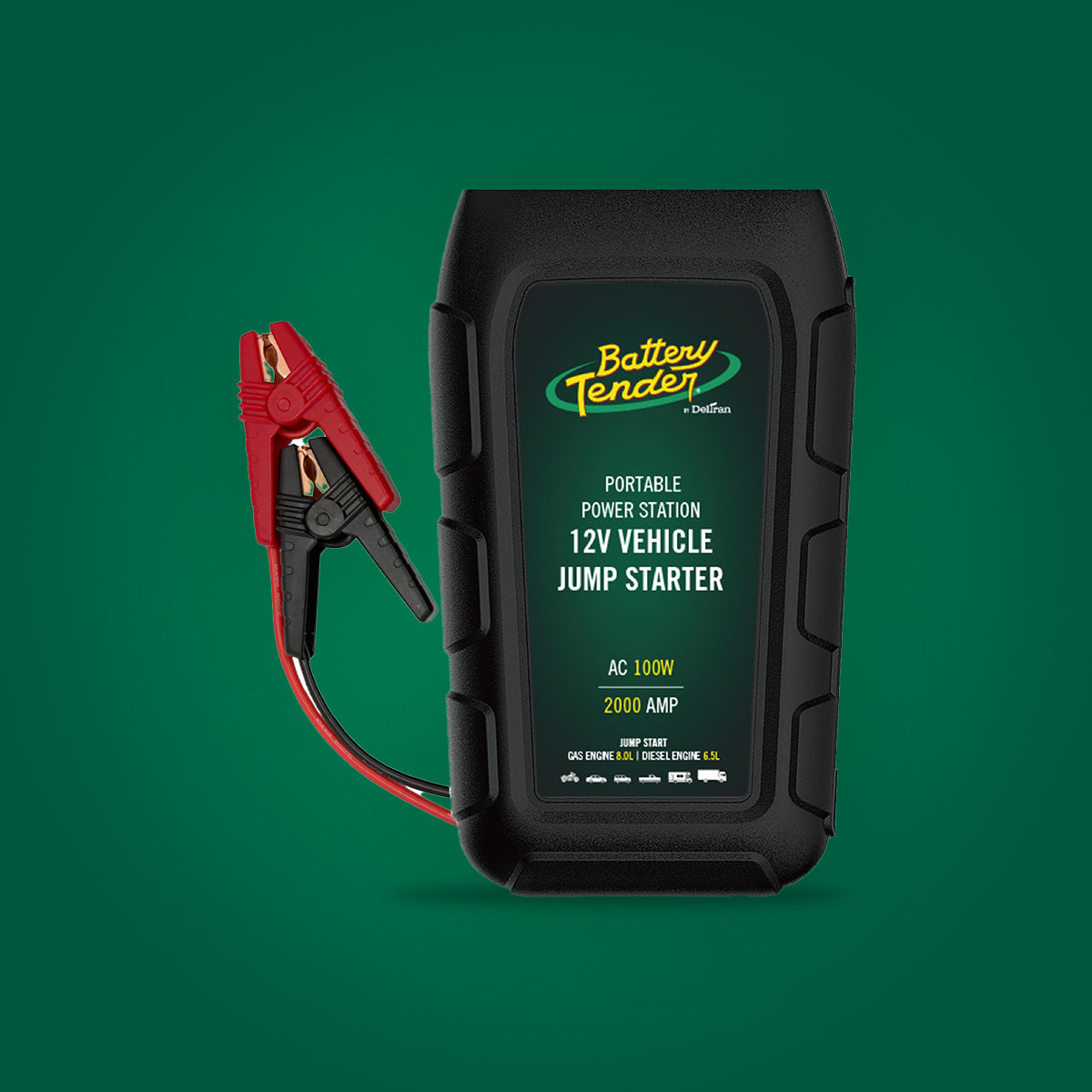
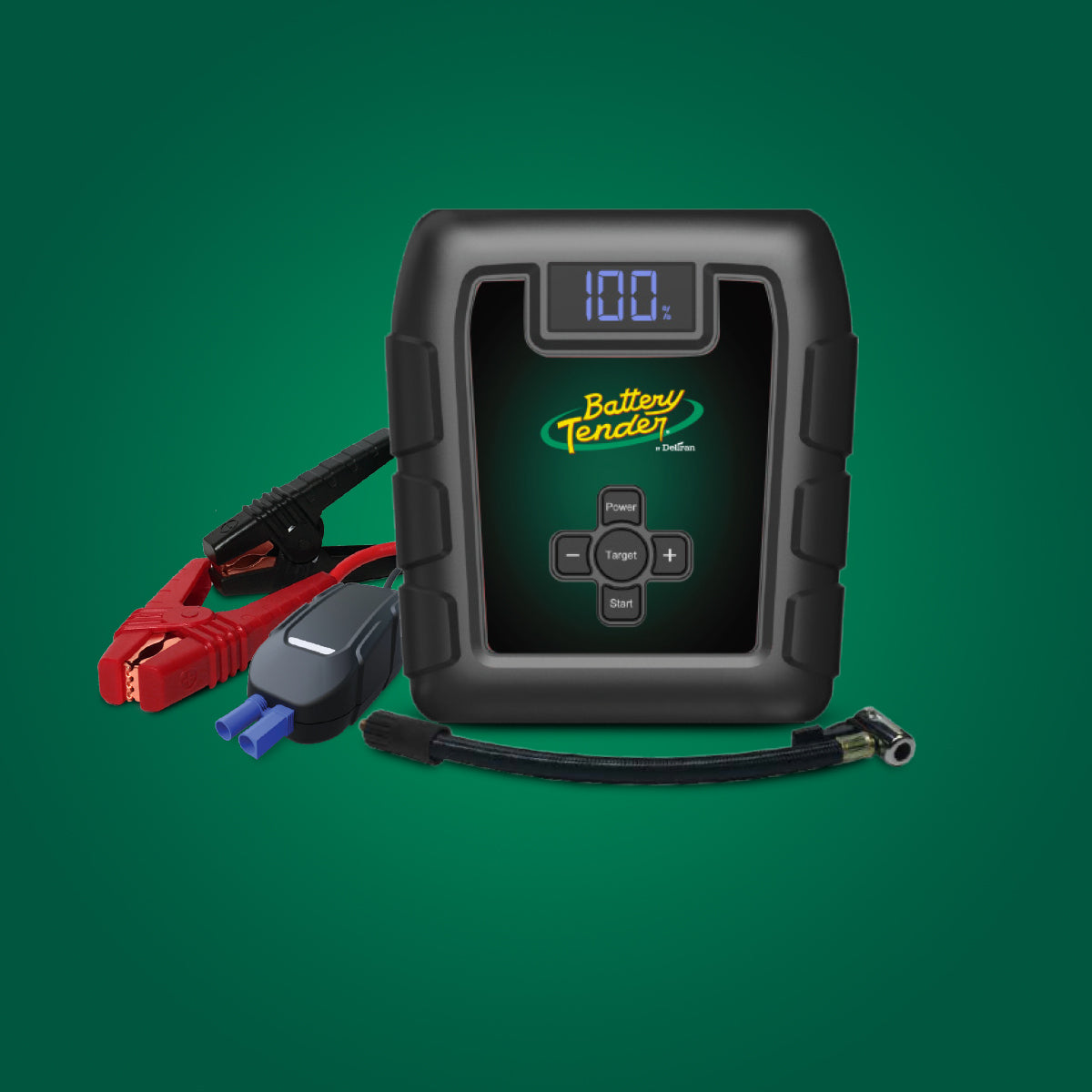
A battery that won't hold charge can also leave you stranded while you troubleshoot. The Battery Tender Jump N Start 800 Amp Jump Starter and Tire Inflator starts the engine without a second vehicle, and the built-in inflator handles a low tire on the same stop. Confirm the engine-size rating on the product page before you buy.
Battery Tender Jump N Start 800 Amp Jump Starter and Tire Inflator
Recover or Replace: Sizing the Charger and Setting Expectations
A battery that passed or nearly passed the rest test is worth recovering. Match the charger to the battery and calculate the time before starting.
The formula is (battery Ah × depth of discharge) ÷ charger amps. Add about 20% for charging losses. The table shows 1.25A charging times for a battery at 50% discharge.
| Battery Size | Energy to Replace (50% DoD) | Calculation (1.25A) | Approx. Time with Losses |
|---|---|---|---|
| 14Ah (motorcycle) | 7Ah | 7 ÷ 1.25 = 5.6 h | About 7 hours |
| 35Ah (compact car) | 17.5Ah | 17.5 ÷ 1.25 = 14 h | About 17 hours |
| 48Ah (midsize car) | 24Ah | 24 ÷ 1.25 = 19.2 h | About 23 hours |
| 80Ah (truck/SUV) | 40Ah | 40 ÷ 1.25 = 32 h | About 38 hours |
Batteries above 60Ah recover faster with a higher-output charger. The 10 amp charger sizing guide explains when to step up.
Match the Voltage
Most cars use 12V batteries, and the Battery Tender Plus 1.25 AMP 12V Battery Charger and Maintainer covers 14–80Ah. That range fits motorcycles through full-size trucks. The ISM Initialization stage tests the battery first and applies gentle current, which suits a sulfated battery that can't take a hard charge.
Battery Tender Plus 1.25 AMP 12V Battery Charger and Maintainer
Owners of classic cars with original 6V systems need a matching voltage. The Battery Tender Plus 1.25 AMP 6V Battery Charger and Maintainer charges those batteries at a safe rate and keeps them ready between shows.
Battery Tender Plus 1.25 AMP 6V Battery Charger and Maintainer
Some specialty vehicles and utility carts run 8V batteries. A 12V charger will overcharge them, and a 6V charger will undercharge them. The Battery Tender Plus 1.25 AMP 8V Battery Charger and Maintainer is built for exactly that voltage, which prevents the repeated undercharging that makes this type of battery appear to be failing.
Battery Tender Plus 1.25 AMP 8V Battery Charger and Maintainer
Know When to Replace
Replace the battery if it shows any of these signs:
- It fails the 24-hour test after a full charge.
- The case is bulging, cracked, or leaking.
- It is more than five years old and cranks slowly.
- One cell is shorted, indicated by a full charge that still reads about 10.5V.
A maintainer cannot repair a shorted cell or restore shed plate material. Charging a frozen or swollen battery is also unsafe.
When a Car Battery Won't Hold Charge: ISM vs. Trickle Chargers
The charger you use after recovery decides whether the problem returns. Smart charging with ISM prevents it, and trickle charging can cause it.
ISM works in four stages:
- Initialization: tests the battery and applies gentle current to gauge its condition.
- Bulk Charge: delivers full rated current until the battery reaches about 80% state of charge.
- Absorption: holds voltage constant while current tapers, which helps dissolve sulfate crystals.
- Float Maintenance: monitors voltage continuously and sends charge pulses only when it drops.
A conventional trickle charger sends constant current regardless of battery state. A full battery keeps receiving current, which causes gassing, electrolyte loss, and plate corrosion. Float-only chargers hold constant voltage without an Absorption stage, so they charge more slowly. Battery Tender ISM chargers are designed for indefinite connection, so there is no need to unplug them at the end of a charge.
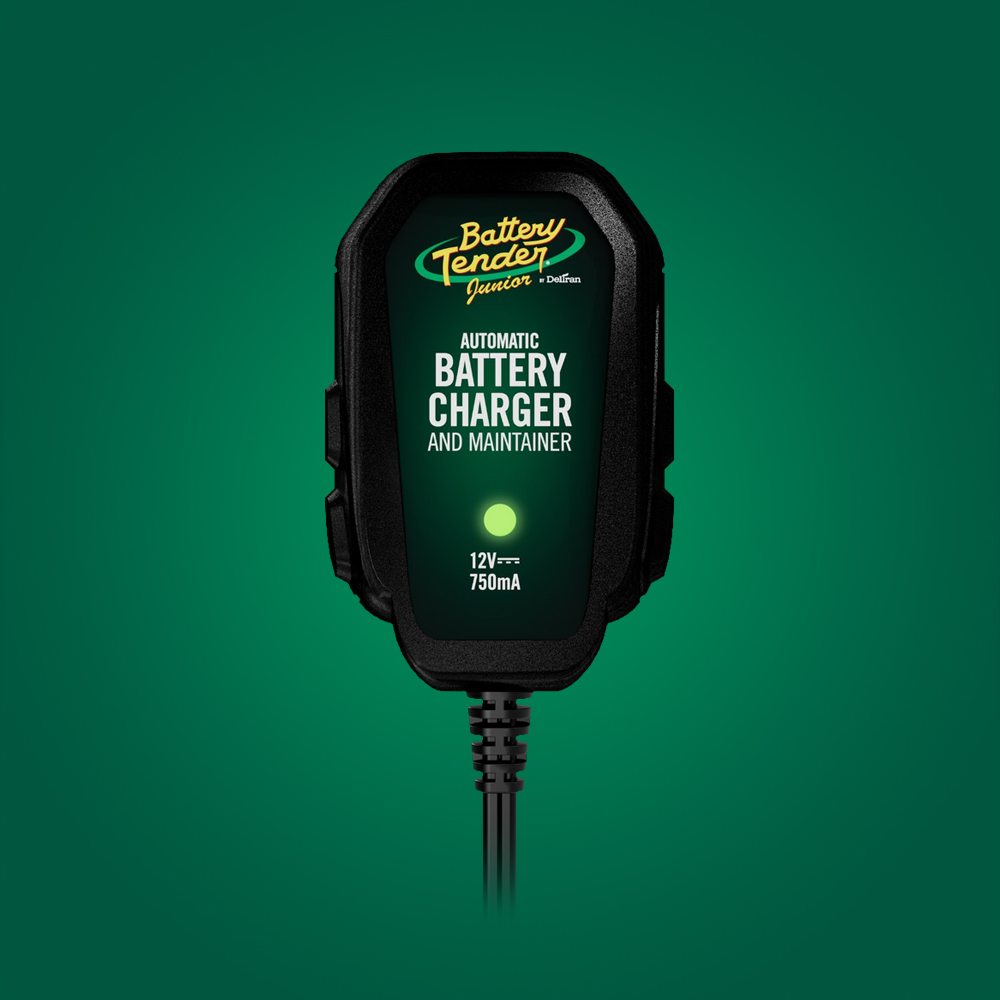
Battery Tender Plus chargers include temperature compensation, which adjusts charge voltage in cold and hot garages. Battery Tender Junior models do not include it. For a car battery in a garage with large temperature swings, a Battery Tender Plus charger is the better choice.
By preventing sulfation with regular maintenance, many drivers push battery life from a typical three years toward five or more. Results depend on climate, driving habits, and battery quality.
Make Connection Easy
The best maintainer is the one that stays connected. If the car parks far from an outlet, or the battery sits under a seat or in the trunk, the Battery Tender 25ft SAE Quick Disconnect Extension Cable 4-Pack reaches the outlet. It also lets you leave a permanent pigtail on several vehicles. With the connection already in place, it takes seconds to plug in after each drive.
Battery Tender 25ft SAE Quick Disconnect Extension Cable 4-Pack
Safety Notes
- Charge in a ventilated area and wear eye protection.
- Connect the charger to the battery before plugging into the wall outlet.
- Never charge a frozen, swollen, or leaking battery.
- Last updated: 2026. Verify specifications on the product page before purchase.
Frequently Asked Questions
Why does my car battery die overnight after a full charge?
Overnight failure after a full charge points to either a parasitic draw or an internal fault. Disconnect the negative cable and measure resting voltage after 12 and 24 hours. If voltage holds above 12.5V, the vehicle is draining it. If it falls below 12.4V, the battery has lost capacity and needs replacing.
Can a car battery that won't hold charge be fixed?
Sometimes. Mild sulfation from a few weeks of discharge can often be reversed with a slow, multi-stage charge. Shorted cells, bulging cases, and shed plates cannot be repaired. Run the 24-hour rest test after charging. If voltage stays above 12.5V, the battery is recovering. If not, replace it.
How long should a healthy car battery hold a charge?
At about 70°F with nothing connected, a healthy battery can sit for two to three months before dropping toward 12.4V. Heat speeds self-discharge, and modern vehicle electronics shorten the time to weeks. If the car sits more than two to four weeks, connect a maintainer.
Will a new battery hold charge if the alternator is bad?
No. A weak alternator leaves the new battery chronically undercharged, and it will sulfate and fail early. Before replacing a battery, check charging voltage with the engine running at 2,000 rpm. A reading between 13.8V and 14.7V indicates a healthy charging system.
Conclusion
When a car battery won't hold charge, the rest-voltage test tells you whether to recover or replace it: holding above 12.5V after 24 hours means keep it, and dropping below 12.4V means replace it. Rule out parasitic draw and alternator faults first, then size the charger to the battery using the formula above. Match the voltage to the battery, and keep the connection convenient so maintenance actually happens.
Next step: charge the battery fully tonight, disconnect the negative cable in the morning, and start the rest-voltage test. When you are ready to pick a maintainer, browse the full Battery Tender battery charger collection.