


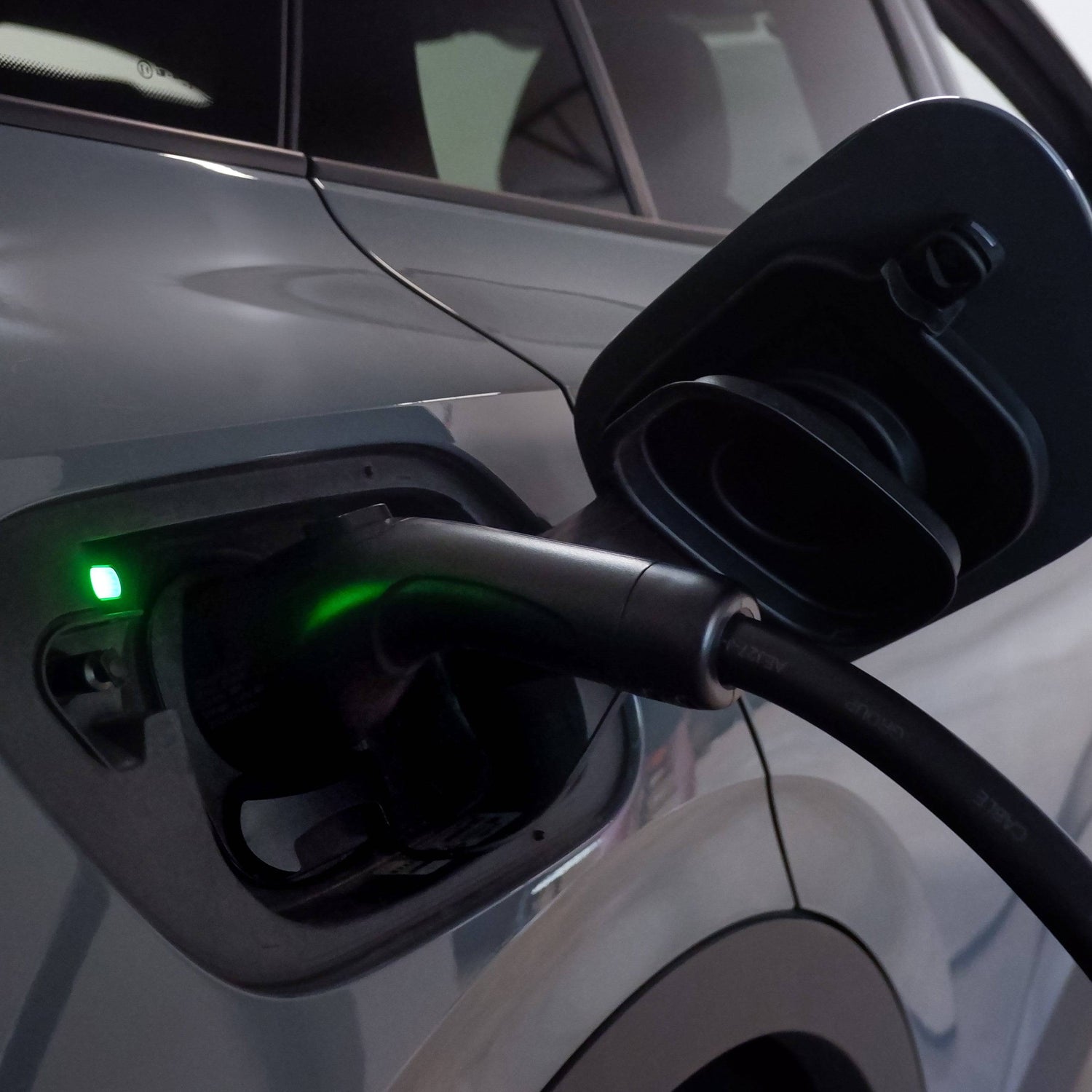
EV Charger Not Working? Complete Troubleshooting Guide (2026)
An EV charger not working ranks among the most frustrating problems an electric vehicle owner can face. Whether the charger refuses to start, throws an error code, or charges intermittently, most issues trace back to a handful of common causes — many of which do not require a professional electrician to diagnose. Battery Tender® draws on more than three decades of charging expertise, beginning when the company pioneered smart charging technology in 1989, to help EV owners identify and resolve home charging failures quickly.
This guide walks through every major reason a home EV charger stops working, from simple cable faults and tripped breakers to more complex electrical panel and communication errors. It covers both Level 1 (120V) and Level 2 (240V) equipment, provides a systematic diagnostic sequence, and explains when a problem demands professional attention versus a five-minute fix. According to the U.S. Department of Energy, over 80% of EV charging happens at home, making a reliable home charger essential to daily driving.
Key Takeaways:
- Over 60% of home EV charger failures involve the electrical supply (breaker, outlet, or wiring) rather than the charger unit itself.
- A Ground Fault Circuit Interrupter (GFCI) trip is the single most common reason a charger stops mid-session.
- EV charger communication errors between the vehicle and charger often resolve with a simple unplug-and-reconnect reset.
- A dead or degraded 12V auxiliary battery inside the EV can prevent the vehicle from accepting a charge, even when the charger functions correctly.
Why Is the EV Charger Not Working? Identifying the Source
The first step in troubleshooting an EV charger not working is determining whether the problem lies with the charger, the vehicle, or the electrical supply. This distinction matters because each source requires a different diagnostic approach. A systematic process prevents wasted time and unnecessary service calls.
Start by testing the outlet or circuit with another device. Plug a lamp, power tool, or multimeter into the same outlet or circuit that feeds the charger. If no power is present, the problem is upstream in the electrical panel. If the outlet has power, the issue is either the charger hardware, the charging cable, or the vehicle itself. According to the Society of Automotive Engineers (SAE J1772 standard), the charging handshake between vehicle and charger involves a pilot signal that must confirm proper grounding and current capacity before power flows. Any interruption in that communication sequence will prevent charging.
Try charging the vehicle at a public station or a different home outlet. If the vehicle charges normally elsewhere, the home charger or its electrical circuit is the culprit. If the vehicle refuses to charge at any station, the problem is vehicle-side — most commonly the 12V auxiliary battery, the onboard charger module, or the charge port latch.
Tripped Breakers and GFCI Faults: The Most Common Causes
A tripped circuit breaker is the most frequent reason an EV charger not working appears to be a charger failure when the actual cause is electrical. Level 2 chargers draw significant current — a 40-amp unit on a 50-amp circuit operates at 80% of the circuit's rated capacity, which is the maximum continuous load permitted by the National Electrical Code (NEC Article 625.41). Any additional load on a shared circuit, or a momentary power surge, can trip the breaker.
Check the electrical panel. A tripped breaker sits between the ON and OFF position, or may have shifted fully to OFF. Reset it by pushing firmly to OFF, then back to ON. If the breaker trips again immediately upon restarting the charger, the issue may be a short circuit in the wiring, an oversized charger for the circuit, or a failing breaker. A breaker that trips repeatedly requires inspection by a licensed electrician.
GFCI trips are equally common, particularly for outdoor or garage installations. The NEC requires GFCI protection on EV charging circuits in many residential configurations. GFCI devices detect imbalances as small as 4–6 milliamps between hot and neutral conductors. Moisture intrusion, condensation in the connector, or minor ground leakage can trigger a GFCI trip. Dry the connector thoroughly, reset the GFCI at the outlet or breaker panel, and attempt charging again.
⚠️ Safety Warning: Never bypass, tape, or disable GFCI protection on an EV charging circuit. GFCI devices prevent electrocution. If a GFCI trips repeatedly, the charger or wiring has a genuine ground fault that requires professional diagnosis.
Charger Communication and Pilot Signal Errors
Modern EV chargers communicate with the vehicle through a control pilot signal embedded in the J1772 or NACS connector. This 1 kHz square wave tells the vehicle what current the charger can supply, and the vehicle responds by adjusting the signal voltage to request power. When this handshake fails, the charger may show a solid or blinking error light, and the vehicle dashboard typically displays a charging fault message.
Common causes of pilot signal failure include debris or corrosion in the charge port pins, a damaged connector latch that fails to seat fully, or firmware glitches in either the charger or the vehicle. To reset the communication cycle, unplug the connector from the vehicle, wait 30 seconds, and reconnect. If the vehicle has a touchscreen, navigate to the charging menu and confirm that no charge schedule, charge limit, or departure timer is blocking the session.
Inspect the connector pins for discoloration, bent contacts, or carbon deposits. Clean the pins gently with a dry, lint-free cloth. Never use water or conductive cleaning agents inside the charge port. If pin damage is visible, stop using the connector and contact the charger manufacturer.
When the Vehicle Refuses to Charge: The 12V Auxiliary Battery Factor
A frequently overlooked cause of apparent charger failure is a weak or dead 12V auxiliary battery inside the electric vehicle. Every EV — regardless of make or model — uses a traditional 12V battery to power the vehicle's control modules, charge port latch actuator, and communication systems. If this battery drops below approximately 11.8V, the vehicle cannot complete the handshake required to initiate high-voltage charging from the main battery pack.
Symptoms of a degraded 12V auxiliary battery include intermittent charging failures, slow dashboard response, inoperative door locks, and the charge port failing to open or latch. The vehicle may appear completely dead even though the high-voltage traction battery holds a full charge. The EV's onboard DC-DC converter normally maintains the 12V battery, but extended periods of inactivity, extreme temperatures, or a failing converter can allow the 12V battery to discharge.
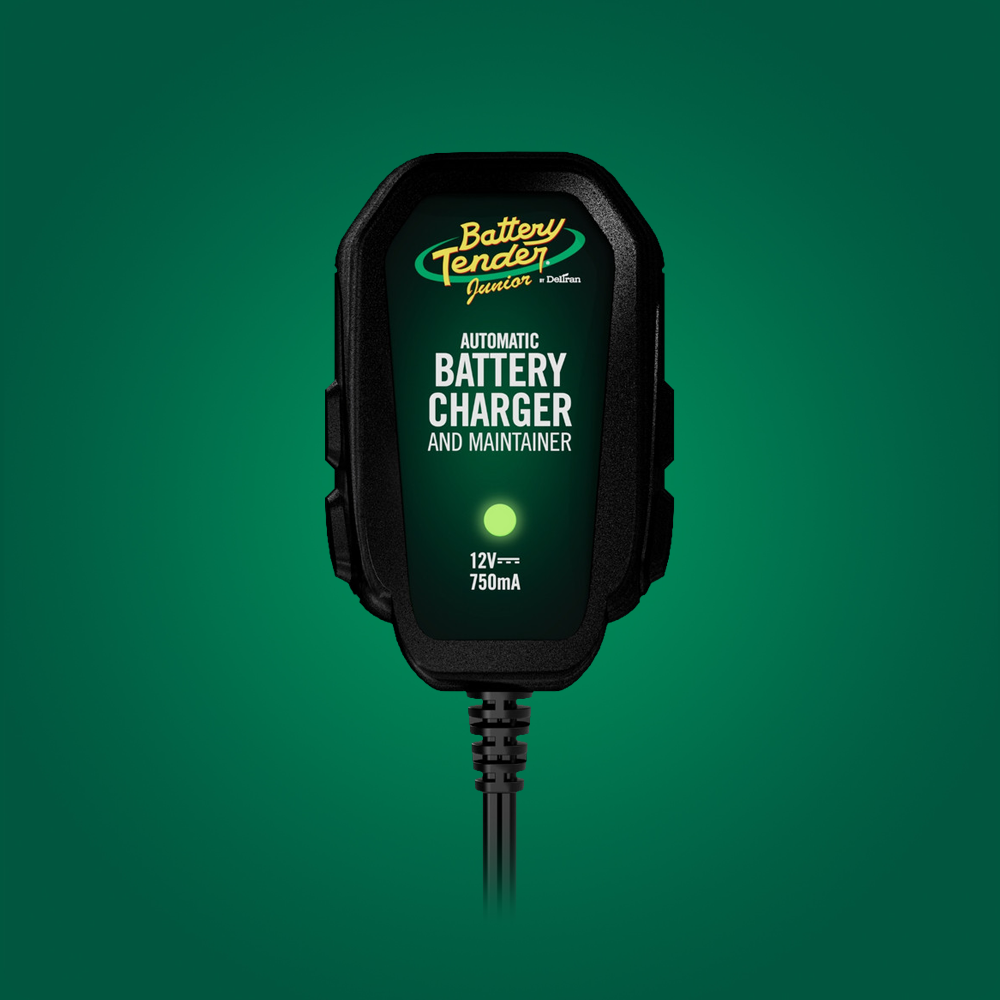
Maintaining the 12V auxiliary battery with a dedicated smart charger prevents this failure mode entirely. The Battery Tender Plus 1.25A 12V is specifically suited for EV auxiliary batteries. It uses Infinite Sequential Monitoring (ISM) — a proprietary 4-stage charging process consisting of Initialization, Bulk Charge, Absorption, and Float Maintenance — to keep the 12V battery at optimal voltage without overcharging. Temperature compensation adjusts the charge voltage for ambient conditions, protecting the battery during both summer heat and winter cold.
Battery Tender Plus 1.25A 12V Charger
Step-by-Step EV Charger Troubleshooting Sequence
Follow this diagnostic sequence in order. Each step eliminates a category of failure before moving to the next.
- Check the electrical panel. Confirm the dedicated EV circuit breaker is in the ON position. Reset if tripped. Verify no GFCI has tripped at the outlet or panel.
- Verify power at the outlet or hardwired connection. Use a multimeter or plug in a known working device. Level 1 outlets should read 120V ± 5%. Level 2 circuits should read 240V ± 5%.
- Inspect the charging cable and connector. Look for frayed insulation, bent pins, discoloration, or melted plastic. Check that the connector seats fully in the vehicle charge port and latches securely.
- Reset the charger. Unplug from the vehicle, then power-cycle the charger (turn off the breaker, wait 60 seconds, restore power). Reconnect to the vehicle.
- Check vehicle-side settings. Confirm no scheduled charging window, charge limit, or valet mode is active. Some vehicles default to a charge limit of 80% and will not accept power above that threshold.
- Test the 12V auxiliary battery. Measure voltage at the 12V battery terminals. A healthy battery reads 12.4V–12.8V at rest. Below 12.0V, charge the auxiliary battery with a smart charger before attempting EV charging.
- Try a different charger or public station. This isolates whether the fault is charger-side or vehicle-side.
- Contact a licensed electrician or the charger manufacturer. If all previous steps fail, the issue likely involves internal charger electronics, wiring faults behind the wall, or the vehicle's onboard charger module.
Choosing a Reliable Home EV Charger to Prevent Future Problems
Charger hardware quality directly impacts long-term reliability. Units with poor thermal management, inadequate weatherproofing, or low-quality contactors are more prone to failure over time. When selecting or replacing a home EV charger, prioritize units with robust safety certifications (UL Listed or ETL Listed to UL 2594), IP-rated enclosures for outdoor durability, and built-in ground fault protection.
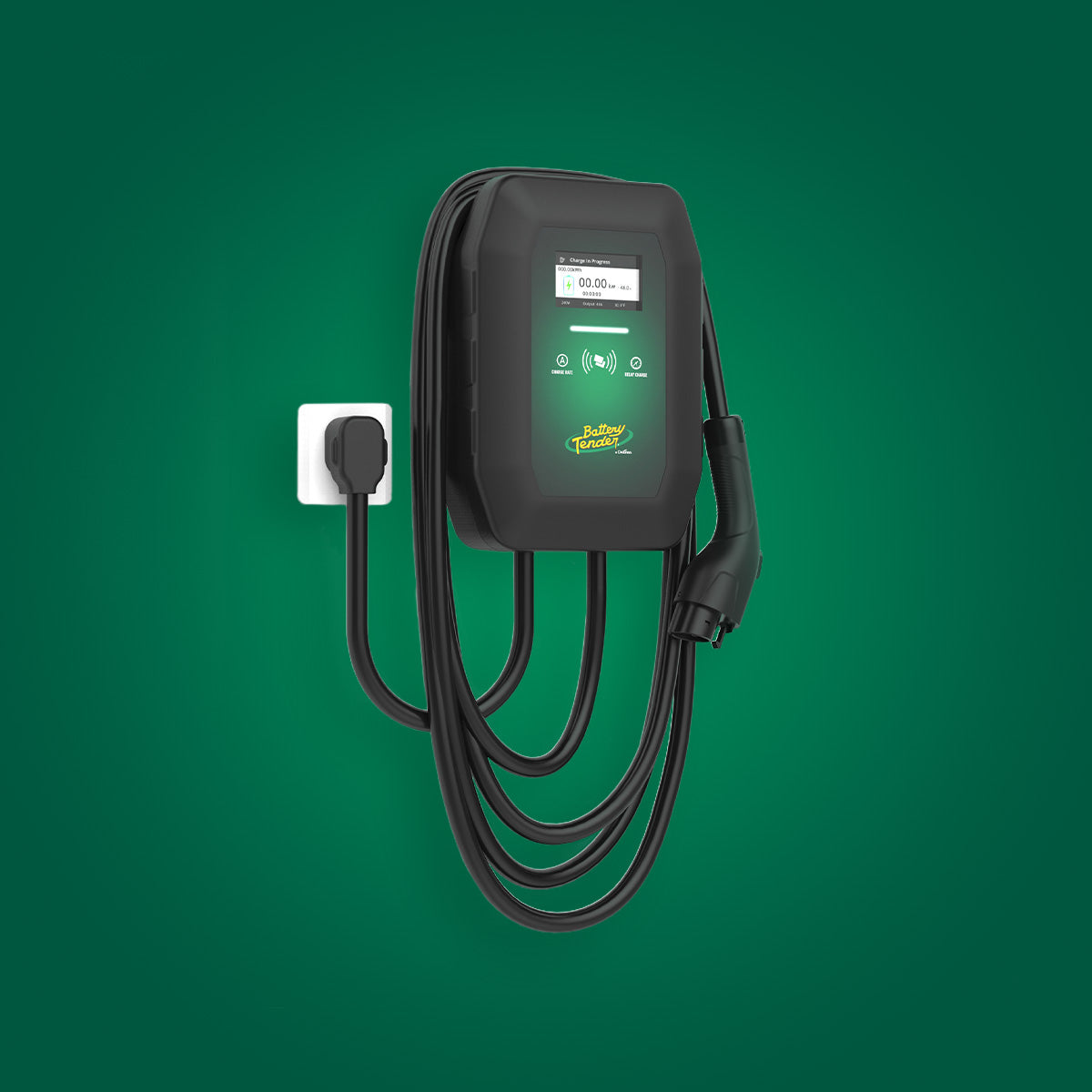
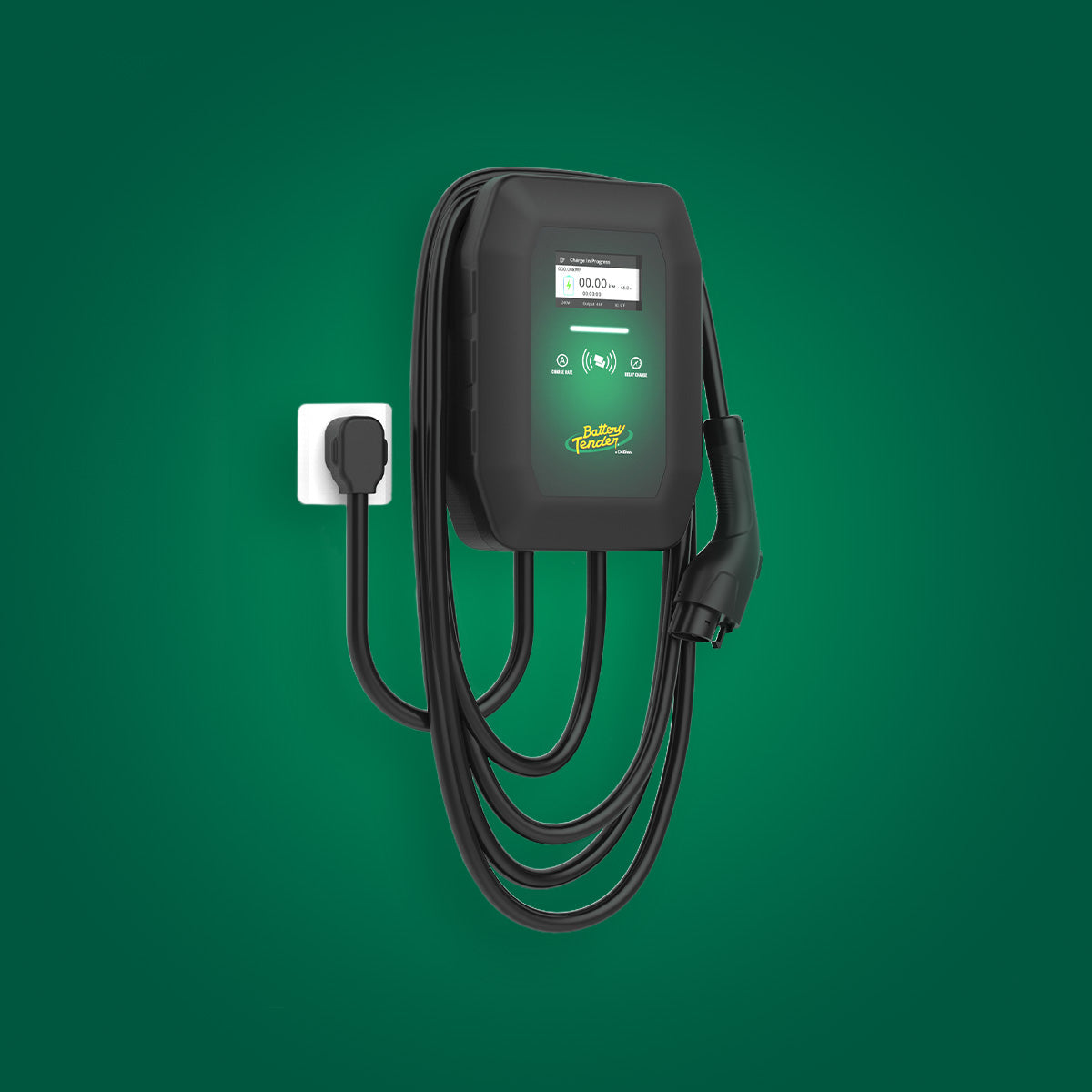
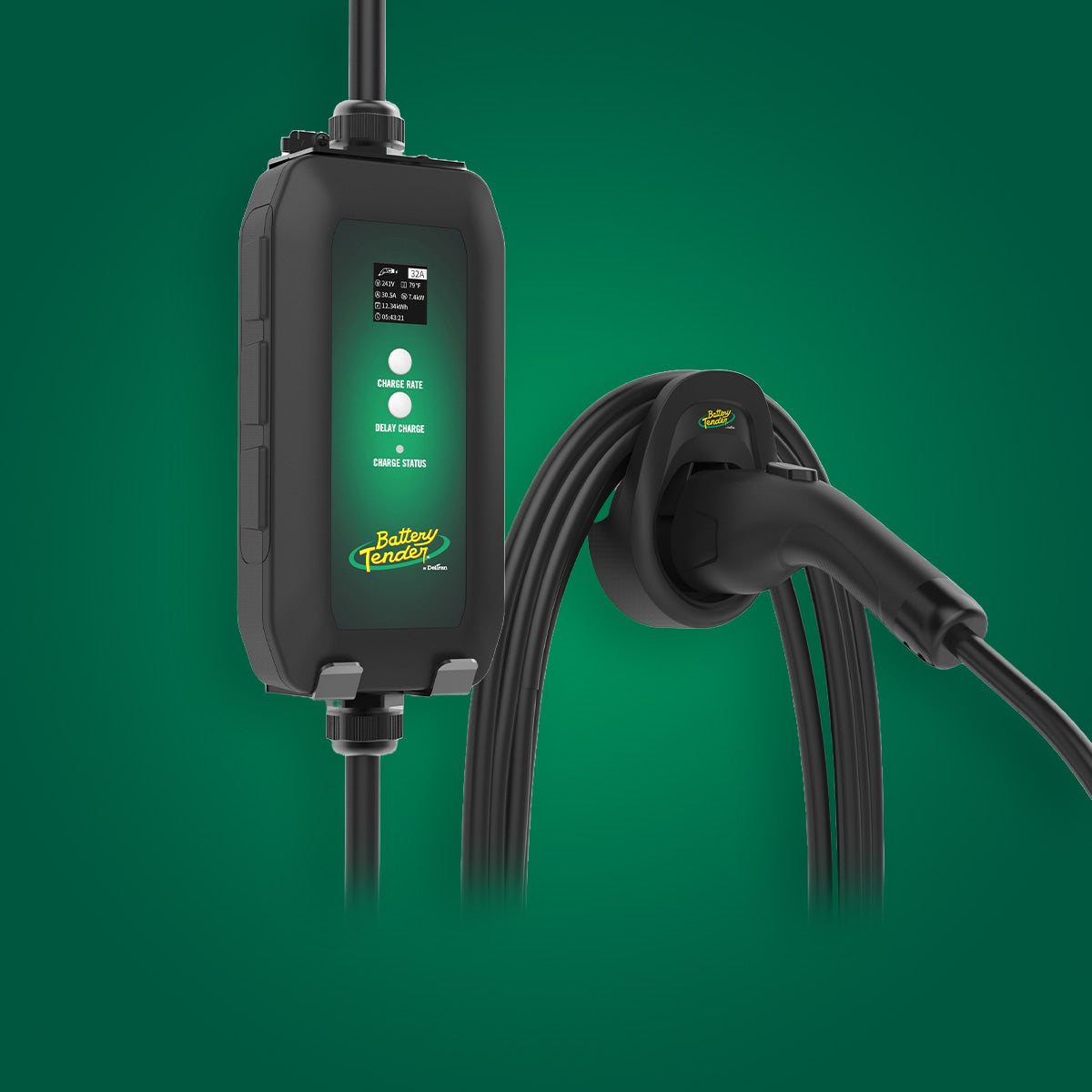
The Battery Tender eCharge 40A Level 2 wall-mount charger delivers 9.6 kW of charging power, adding approximately 36 miles of range per hour. It features an IP66-rated enclosure for outdoor installation, RFID access control for shared or multi-user environments, and a 240V hardwired connection on a dedicated circuit. The unit is designed and engineered by Battery Tender, applying the same ISM charging intelligence that has protected batteries across automotive, marine, and powersports applications since 1991.
Battery Tender eCharge 40A Level 2 EV Charger. Also available at Costco.com.
For EV owners who need portability or lack a 240V circuit, the Battery Tender eCharge 16A Level 1 portable charger plugs into any standard 120V NEMA 5-20P outlet. It charges at 2 kW, adding approximately 7.2 miles of range per hour — sufficient for overnight recovery of 40–60 miles for most commuters. No electrician or installation is needed, making it ideal for renters, apartment dwellers, or as a backup travel charger.
Battery Tender eCharge 16A Level 1 Portable EV Charger
For maximum home charging speed, the Battery Tender eCharge 48A delivers 11 kW and adds approximately 42.25 miles of range per hour. It shares the same IP66 weatherproofing and RFID access features as the 40A model but provides the highest continuous output available in the Battery Tender eCharge lineup.
Battery Tender eCharge 48A Level 2 EV Charger
When to Call a Professional Electrician
Some EV charger problems fall outside the scope of owner troubleshooting and require a licensed electrician. Call a professional if any of the following apply:
- The circuit breaker trips every time the charger starts, even after a full power-cycle reset.
- The outlet, plug, or charger connector shows signs of heat damage: melted plastic, discoloration, or a burning smell.
- The charger was exposed to flooding, standing water, or physical impact damage.
- A multimeter reading at the outlet shows voltage significantly below 108V (Level 1) or 216V (Level 2), indicating a wiring fault.
- The home's electrical panel is at or near capacity, and adding or upgrading circuits requires a load calculation per NEC Article 220.
⚠️ Safety Warning: EV charging circuits carry high current. Never attempt to open, repair, or modify the internal wiring of a charger unit or electrical panel without proper licensing and training. All hardwired Level 2 installations should be performed by a licensed electrician in compliance with local building codes and the NEC.
Frequently Asked Questions
Why does my EV charger keep tripping the breaker?
An EV charger tripping the breaker typically indicates the circuit is undersized for the charger's amperage, another device shares the circuit, or the breaker itself is worn. NEC Article 625.41 requires a dedicated circuit sized to at least 125% of the charger's maximum continuous current draw. A licensed electrician can verify circuit sizing and breaker condition.
Can a dead 12V battery prevent my EV from charging?
Yes. Every electric vehicle uses a 12V auxiliary battery to power control modules, the charge port latch, and the communication system that initiates high-voltage charging. If the 12V battery falls below approximately 11.8V, the vehicle cannot complete the J1772 handshake. Maintaining the 12V battery with a Battery Tender Plus charger prevents this common failure.
How do I reset my home EV charger?
Disconnect the charging connector from the vehicle. Go to the electrical panel and turn off the charger's dedicated breaker. Wait 60 seconds to allow internal capacitors to discharge and the control board to reset. Restore power at the breaker, then reconnect the connector to the vehicle. This power-cycle reset clears most communication and firmware glitches.
Is it safe to use an EV charger in the rain?
EV chargers designed for outdoor use carry IP ratings that certify water and dust resistance. The Battery Tender eCharge 40A and eCharge 48A both carry IP66 ratings, meaning they resist powerful water jets from any direction. The J1772 and NACS connector standards also include weatherproofing. However, never charge if standing water covers the outlet or connector, and always ensure GFCI protection is active.
Conclusion
An EV charger not working is usually a solvable problem. The majority of failures trace to tripped breakers, GFCI faults, connector issues, or a depleted 12V auxiliary battery — all of which an informed owner can diagnose before calling for professional help. Following a systematic troubleshooting sequence eliminates guesswork and gets charging restored faster. For long-term reliability, choosing a charger built on proven charging technology and maintaining the often-overlooked 12V auxiliary battery are the two most effective preventive measures available to EV owners in 2026.
Explore the complete lineup of Battery Tender EV charging solutions, from portable Level 1 chargers to high-output Level 2 wall-mount units, at the link below.
Browse All Battery Tender EV Chargers
Last updated: 2026
Related guides: EV 12V Auxiliary Battery Maintenance · EV Home Charging Setup: Everything First-Time EV Owners Need to Know · More EV charging guides