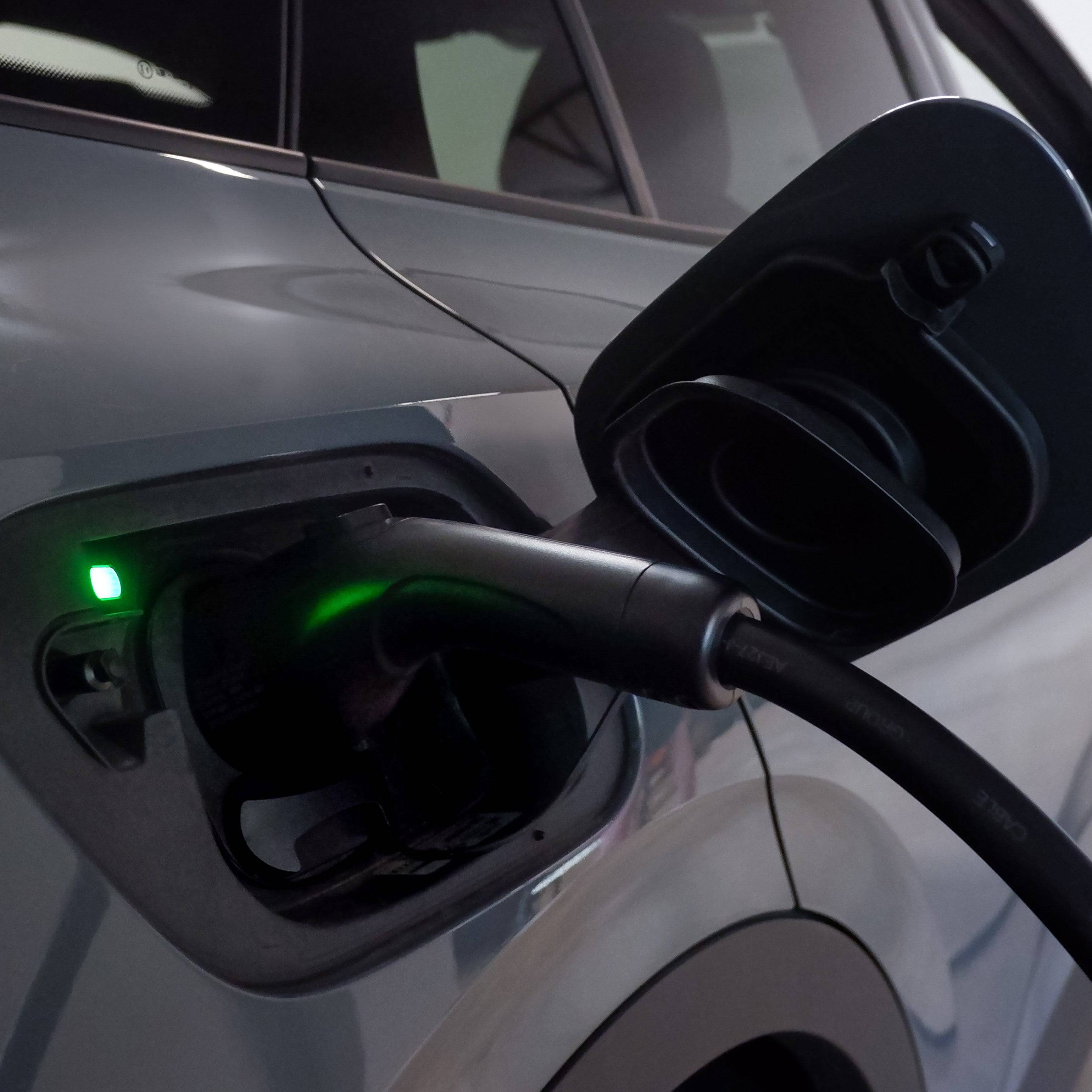
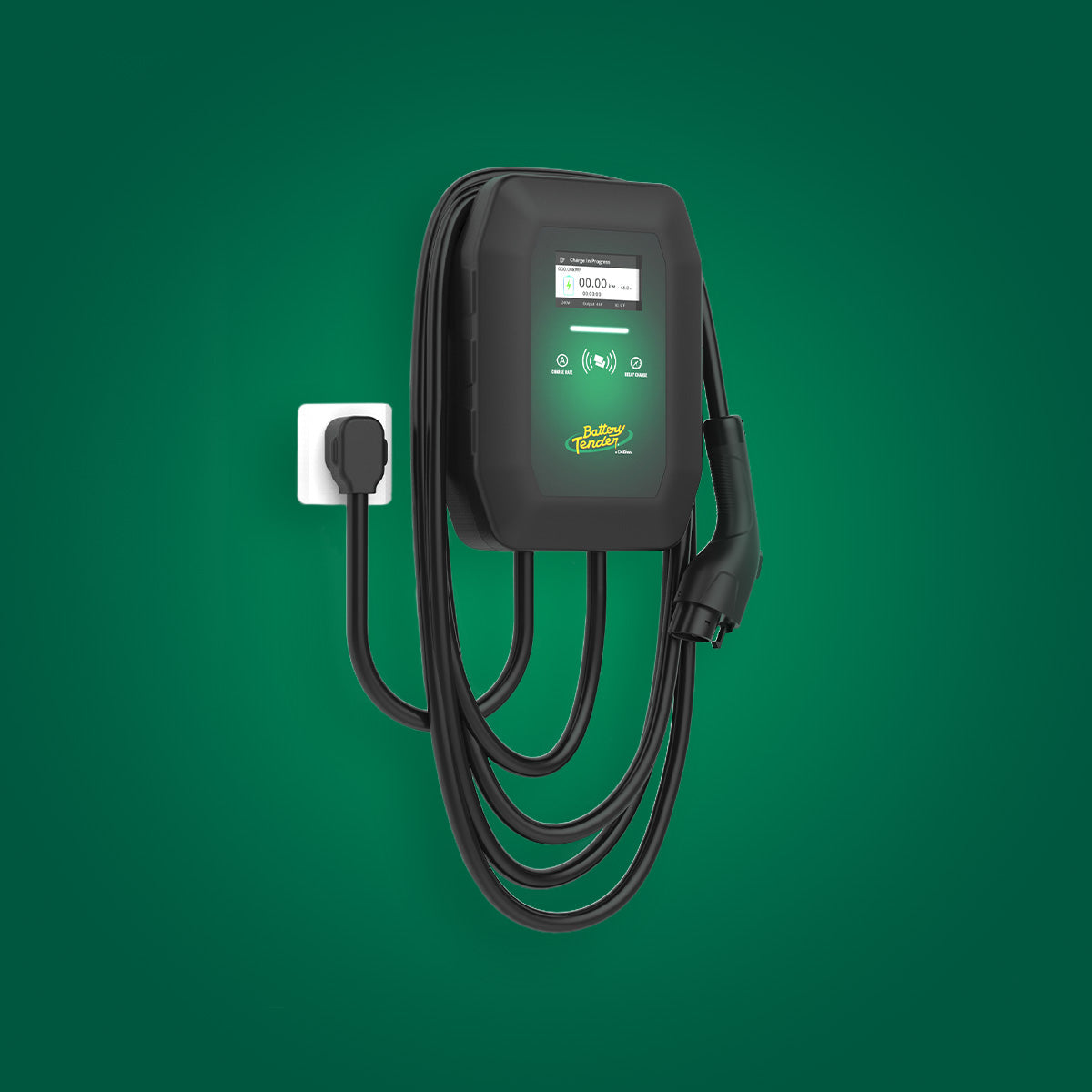
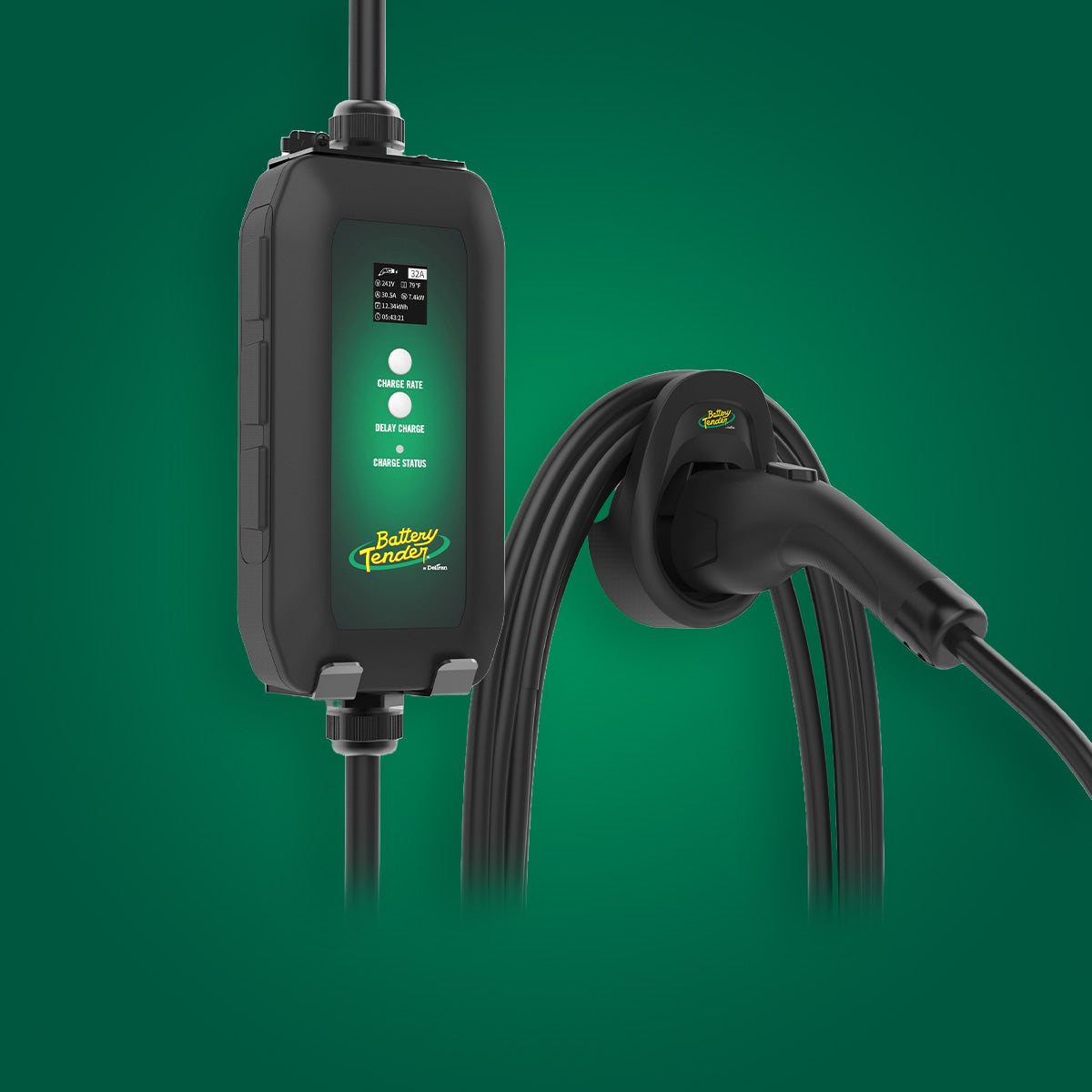



Electric Car Charger Home Setup: The 12V Auxiliary Battery Most EV Owners Forget (2026)
Every electric car charger home installation focuses on the high-voltage traction battery — the massive lithium pack that propels the vehicle. But every electric vehicle also depends on a conventional 12V auxiliary battery that powers door locks, headlights, infotainment systems, HVAC controls, and the onboard computer that authorizes the high-voltage system to charge in the first place. When this small 12V battery fails, the entire vehicle becomes inoperable regardless of how much charge the main pack holds. Battery Tender® pioneered smart charging technology in 1989 specifically to solve this kind of overlooked battery maintenance problem.
This guide covers the critical gap that most electric car charger home discussions ignore: maintaining the 12V auxiliary battery that keeps every EV system functional. A dead 12V battery can prevent the vehicle from accepting a Level 2 charge, lock owners out of the cabin, and trigger costly roadside assistance calls — all avoidable with proper Infinite Sequential Monitoring (ISM) technology. Understanding this relationship between your home EV charger and your 12V auxiliary battery can save hundreds of dollars in emergency service fees and extend auxiliary battery life from a typical 2–3 years to 5 or more years.
Key Takeaways:
- Every EV has a 12V auxiliary battery that controls essential systems — and it can fail independently of the main traction battery.
- A dead 12V auxiliary battery can prevent your electric car charger home setup from functioning entirely.
- ISM 4-stage smart charging maintains 12V auxiliary batteries safely for indefinite connection without overcharging risk.
- EV owners who maintain their 12V battery with smart charging technology can extend its lifespan from 2–3 years to 5+ years.
- Multi-vehicle households benefit from 2-bank chargers that maintain an EV auxiliary battery and a second vehicle simultaneously.
Why Does Your Electric Car Charger Home Setup Need 12V Battery Maintenance?
The 12V auxiliary battery is the gateway to every electronic system in an electric vehicle. When an EV owner plugs in a Level 1 or Level 2 charger at home, the 12V battery powers the onboard charge controller that communicates with the charging station, authorizes the charging session, and manages the battery management system (BMS). Without adequate 12V power, the vehicle cannot initiate or sustain a high-voltage charge — even if the home charger is functioning perfectly.
Unlike internal combustion vehicles, EVs do not use an alternator to continuously recharge the 12V battery while driving. Instead, a DC-DC converter steps down voltage from the main traction pack to replenish the auxiliary battery. This system works well during regular driving, but becomes a liability during extended parking. According to the Society of Automotive Engineers (SAE J2464), parasitic electrical loads from always-on telematics, security systems, and connected-car features can drain an EV auxiliary battery in as few as 14 days of inactivity.
This makes a complete electric car charger home setup about more than just Level 2 charging. A properly maintained 12V auxiliary battery ensures the EV can actually accept that Level 2 charge, open its doors, and activate its systems on demand. Neglecting this battery turns an expensive home charger installation into a useless wall fixture during the exact moments when the vehicle sits idle longest — vacations, business travel, or seasonal low-use periods.
How Does the 12V Auxiliary Battery Differ from the EV Traction Battery?
The traction battery in an EV typically operates at 400V or 800V and stores 60–100+ kWh of energy in thousands of lithium-ion cells. The 12V auxiliary battery, by contrast, is a conventional low-voltage battery — usually AGM (Absorbent Glass Mat) or increasingly lithium-ion (LFP) — with a capacity between 35 and 80 Ah. Despite its modest size, it controls every system that requires low-voltage power.
Critical systems powered by the 12V auxiliary battery include:
- Charge port door actuator — must open for the Level 2 charger to connect
- Onboard charge controller — manages EVSE communication and high-voltage authorization
- Body control module — door locks, windows, lighting, and cabin access
- Infotainment and telematics — over-the-air updates, remote app control, GPS
- 12V outlets and USB ports — cabin power for accessories and devices
- Safety systems — airbag controllers, stability control modules, ABS computers
When this battery drops below approximately 11.8V, cascading failures begin. The vehicle may refuse to wake up, the charge port may not unlatch, and the high-voltage contactors that connect the traction battery to the drivetrain may not engage. The result is a fully charged EV that cannot move — a scenario that catches many new EV owners off guard.
How ISM 4-Stage Smart Charging Protects EV Auxiliary Batteries
ISM technology from Battery Tender uses a proprietary 4-stage automatic charging process specifically designed to maintain batteries indefinitely without overcharging. This distinction matters enormously for EV owners, because a conventional trickle charger delivers constant current regardless of battery state — eventually boiling electrolyte, warping plates, and destroying the auxiliary battery it was meant to protect.
The four ISM stages work as follows:
- Initialization — The charger tests the battery with a gentle current to determine condition and readiness. If the battery is severely depleted or damaged, the charger identifies this before applying full charging current.
- Bulk Charge (Constant Current) — Full rated current flows into the battery until it reaches approximately 80% state of charge. This stage recovers the majority of lost capacity efficiently.
- Absorption (Constant Voltage) — The charger holds voltage constant while tapering current, dissolving sulfate crystals that form on lead plates during discharge. This stage is critical for restoring full capacity and preventing permanent sulfation.
- Float Maintenance — The charger delivers demand-responsive charge pulses only when voltage drops below a set threshold, keeping the battery at 100% without ever overcharging. This stage can continue safely for months or years.
For EV owners, the Float Maintenance stage is the most important. An ISM-equipped charger connected to the 12V auxiliary battery compensates for parasitic drain from telematics, security modules, and BMS monitoring — all of which continue drawing power even when the vehicle is parked and the main traction battery is fully charged.
Which Battery Tender Charger Is Right for Your Electric Car Charger Home Setup?
Multi-vehicle households — which represent most EV-owning homes — benefit most from a charger that can maintain two batteries simultaneously. The Battery Tender 2-Bank charger delivers 1.25A per bank with independent ISM circuits, allowing one bank to maintain the EV auxiliary battery while the second bank maintains a motorcycle, classic car, lawn tractor, or second vehicle parked in the same garage.
This dual-output design eliminates the need to purchase two separate chargers and two separate electrical outlets. Each bank operates independently through its own complete ISM 4-stage cycle, so a deeply discharged battery on one bank does not affect the maintenance of a fully charged battery on the other.
Battery Tender 2-Bank 12V 1.25A Charger (SKU: 022-0165-DL-WH) — $139.95
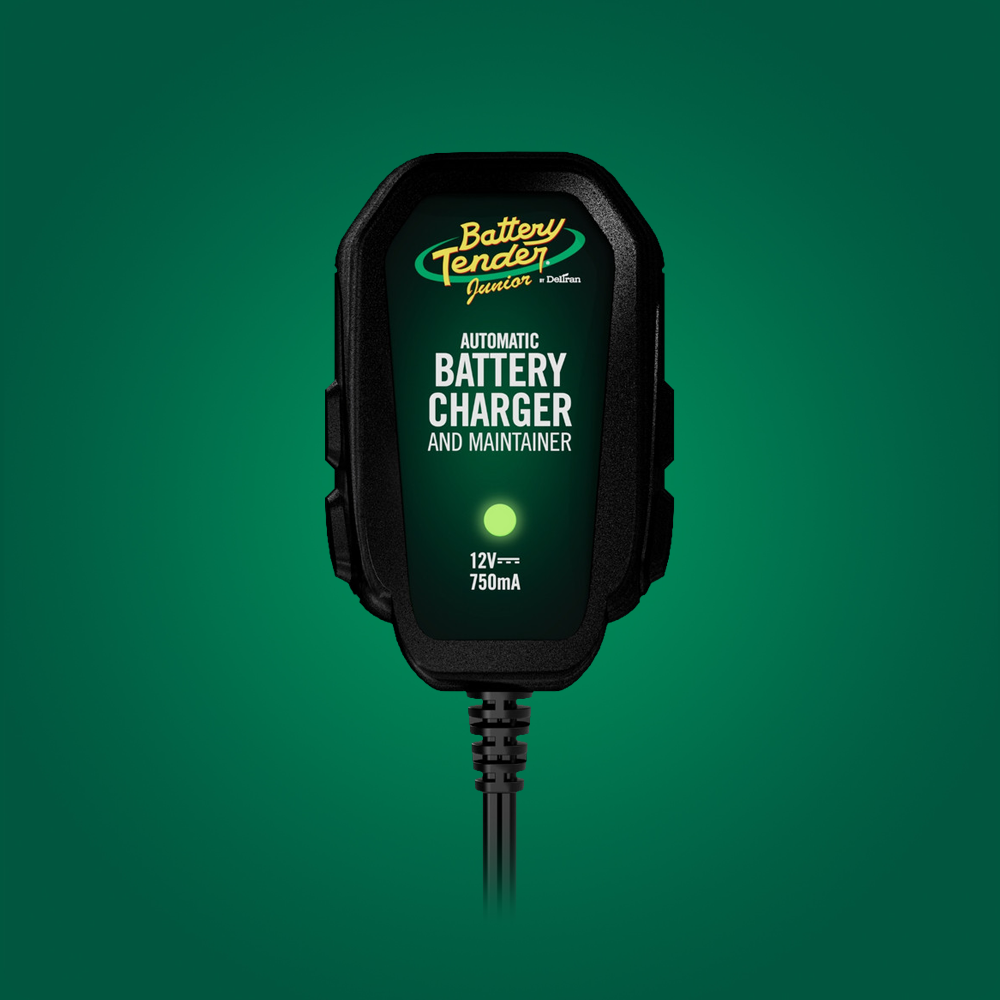
For single-vehicle EV households or owners who want a dedicated unit for the auxiliary battery, the Battery Tender Plus delivers 1.25A of ISM charging power with temperature compensation that adjusts charge voltage based on ambient conditions. This is particularly valuable in garages that experience temperature swings from below freezing to above 90°F across seasons. The Battery Tender Plus covers batteries from 14–80 Ah — the exact range of most EV auxiliary batteries — and carries an industry-leading 10-year warranty.
Battery Tender Plus 12V 1.25A Charger (SKU: 021-0128) — $64.95
EV owners in coastal, humid, or high-moisture environments should consider the weatherproof version with IP65-rated enclosure protection. The Battery Tender Plus IP65 uses identical ISM charging circuitry but adds sealed construction that resists rain, condensation, and salt-air corrosion — ideal for carports, open garages, or covered parking structures without full climate control.
Battery Tender Plus IP65 1.25A 12V Charger (SKU: 022-0185G-DL-WH) — $84.95
How to Connect a Battery Tender Charger to Your EV Auxiliary Battery
Accessing the 12V auxiliary battery varies by manufacturer and model, but the process for connecting a Battery Tender charger follows a consistent pattern across all EVs:
- Locate the 12V auxiliary battery. In most EVs, the auxiliary battery sits under the hood (frunk area), under the rear cargo floor, or beneath the rear seat. The vehicle owner's manual specifies the exact location and any access panels that need removal.
- Identify the battery type. Check the battery label for chemistry (AGM, flooded lead-acid, or lithium). Most EV auxiliary batteries manufactured after 2020 are AGM. If the vehicle uses a lithium 12V auxiliary (increasingly common in newer models), select the lithium chemistry setting on the Battery Tender Junior 1A Selectable or ensure compatibility with the charger chosen.
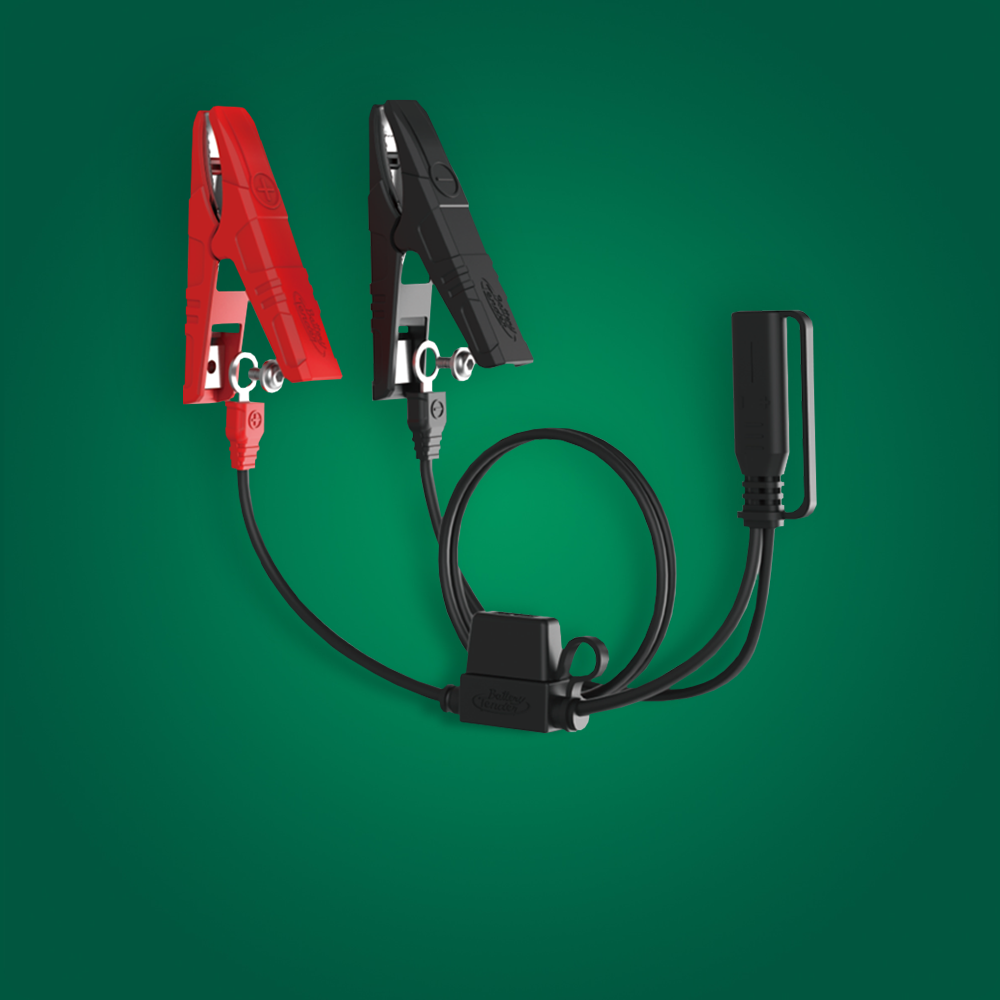
- Connect the ring terminal harness. Attach the included ring terminal harness to the positive and negative posts of the 12V battery. Route the quick-disconnect plug to an accessible location near the vehicle — many owners route it through the frunk seal or along the firewall for easy connection without opening the hood each time.
- Plug in the Battery Tender charger. Connect the quick-disconnect plug from the charger output to the ring terminal harness. The ISM system immediately begins Initialization, testing the battery before applying charge current.
- Verify operation. A green LED indicates the battery is fully charged and the charger has entered Float Maintenance. A red or amber LED indicates active charging through Bulk or Absorption stages.
Once connected, the charger can remain attached indefinitely. The ISM Float Maintenance stage draws minimal power from the wall outlet — typically under 5 watts — while keeping the auxiliary battery at optimal voltage. For a 50 Ah AGM auxiliary battery at 50% depth of discharge, approximate charging time is: (50 Ah × 0.50) ÷ 1.25A = 20 hours to full charge before entering maintenance mode.
Common Electric Car Charger Home Mistakes That Kill 12V Batteries
The most common mistake EV owners make is assuming the DC-DC converter handles all 12V battery needs. While the converter does recharge the auxiliary battery during driving and active charging sessions, it does not operate when the vehicle is fully charged and in deep sleep mode. Extended parking with a full traction battery but no active charging session leaves the 12V battery unprotected against parasitic drain.
The second most common mistake is using a traditional trickle charger. Trickle chargers deliver constant current regardless of battery state, which means they continue pushing amperage into a fully charged battery. This causes electrolyte loss in AGM batteries, plate corrosion, and thermal stress — degrading auxiliary battery life rather than extending it. The National Fire Protection Association (NFPA) 70E identifies unattended constant-current charging as a fire risk in enclosed spaces like home garages.
A third mistake is ignoring the 12V battery during winter months. According to the International Electrotechnical Commission (IEC 60896), a lead-acid battery loses approximately 50% of its cranking capacity at 0°F compared to 80°F. While EVs do not crank a starter motor, the 12V battery must still deliver sufficient voltage to close high-voltage contactors and boot the vehicle's computer systems. Cold-weather failure of the auxiliary battery is the leading cause of EV no-start events in northern climates.
EV 12V Battery vs. ICE 12V Battery: Maintenance Differences
Internal combustion engine (ICE) vehicles recharge their 12V batteries constantly via an alternator while the engine runs. Even a 15-minute drive can replenish significant charge. EVs lack this continuous recharging mechanism during most parking scenarios, making the auxiliary battery more vulnerable to deep discharge events.
EV auxiliary batteries also tend to experience shallower but more frequent discharge cycles from always-on systems. OTA (over-the-air) update monitoring, Sentry Mode-style security cameras, cabin climate preconditioning scheduled through phone apps, and cellular connectivity for remote status checks all draw from the 12V system. These micro-drains accelerate sulfation in lead-acid batteries — precisely the condition that ISM Absorption stage charging is designed to reverse.
The practical implication: EV owners need proactive 12V battery maintenance more than ICE vehicle owners, not less. A Battery Tender charger connected to the auxiliary battery during garage parking eliminates the primary cause of premature 12V battery failure in electric vehicles and ensures the home Level 2 charger can always initiate a charging session when needed.
Frequently Asked Questions
Can a dead 12V auxiliary battery prevent my electric car charger home setup from working?
Yes. The 12V auxiliary battery powers the onboard charge controller that communicates with the Level 2 EVSE (Electric Vehicle Supply Equipment). If the 12V battery drops below approximately 11.8V, the charge port may not open, the vehicle may not authenticate the charging session, and the high-voltage contactors may not close. The EV effectively becomes unable to accept any charge until the 12V battery is restored.
Is it safe to leave a Battery Tender charger connected to the 12V auxiliary battery indefinitely?
Yes. ISM technology uses demand-responsive Float Maintenance that delivers charge pulses only when battery voltage drops below a set threshold. Unlike trickle chargers that push constant current, ISM never overcharges. Battery Tender chargers are specifically engineered for indefinite connection and have been trusted for this purpose since the product line launched in December 1991.
Do I need a special charger for a lithium 12V auxiliary battery in my EV?
Some newer EVs use lithium iron phosphate (LFP) 12V auxiliary batteries instead of AGM. These require a charger with a lithium-compatible charging profile. The Battery Tender Junior 1A Selectable offers switchable lead-acid and lithium modes, making it compatible with both battery chemistries found in modern EVs. Always verify the auxiliary battery type on the label before selecting a charger.
How long does a 12V auxiliary battery last in an electric vehicle without maintenance?
Without proactive maintenance, most EV 12V auxiliary batteries last 2–3 years before requiring replacement. Parasitic loads from telematics, security systems, and BMS monitoring accelerate sulfation and capacity loss. With regular ISM smart charging from a Battery Tender charger, auxiliary battery lifespan can extend to 5 or more years by preventing sulfation buildup during periods of inactivity.
Conclusion
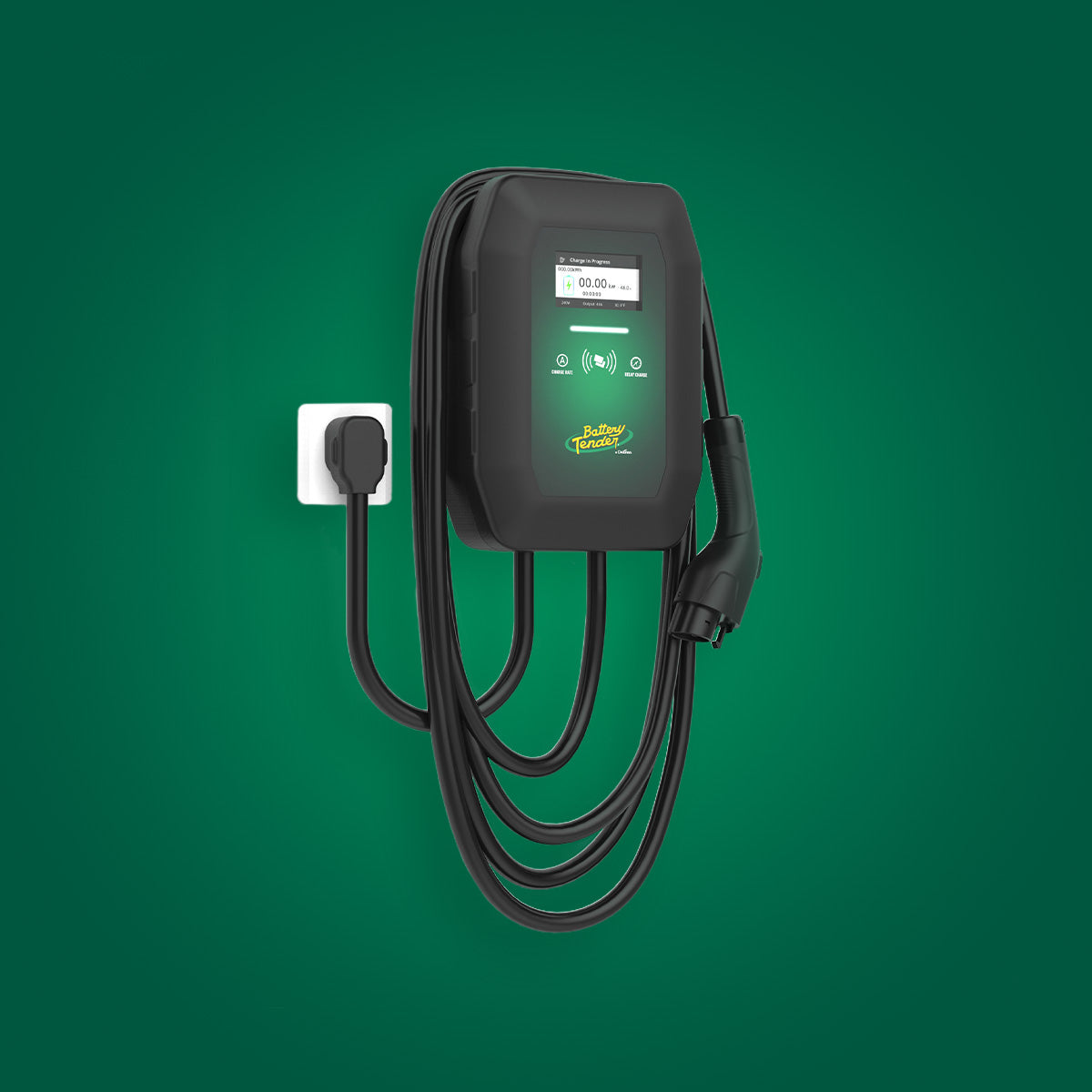
A complete electric car charger home setup in 2026 requires more than a Level 2 EVSE mounted on the garage wall. The 12V auxiliary battery — the small, often-forgotten component that controls every vehicle system — deserves the same attention as the high-voltage traction pack. ISM 4-stage smart charging from Battery Tender provides the safest, most effective method for maintaining this critical battery indefinitely, preventing the no-start scenarios and costly service calls that plague EV owners who overlook auxiliary battery health.
Whether choosing the dual-output 2-Bank for a multi-vehicle household, the flagship Battery Tender Plus with its 10-year warranty and temperature compensation, or the weatherproof IP65 model for exposed installations, every option delivers the same proven ISM technology that Battery Tender pioneered over three decades ago. Explore the complete lineup of smart chargers and maintainers at the Battery Tender charger collection page to find the right match for every vehicle in the garage.
Related guides: EV 12V Auxiliary Battery Maintenance · Tesla Model 3 and Model Y Battery Maintenance: Auxiliary System Guide · More EV charging guides