


What Can Drain a Car Battery When the Car Is Off? Causes & Fixes
What can drain a car battery when the car is off? Parasitic draw from control modules, stuck interior lights, alarms, and aftermarket accessories is the usual cause. A failing alternator diode or a worn battery can add to it. A healthy modern car pulls 50 milliamps (mA) or less with the key off, and a heavier draw can flatten a typical battery in days rather than weeks.
A car that sits for two weeks and then clicks instead of cranking usually gets blamed on a bad battery. Often the battery is fine and something is quietly pulling current overnight. This guide covers the common culprits, a step-by-step multimeter test, and how a Battery Tender® smart charger keeps the battery healthy while the drain is tracked down.
Key Takeaways
- Normal key-off draw is 50 mA or less. A 50Ah battery with a 100 mA drain falls to 50% charge in about 10 days.
- The most common causes are modules that fail to sleep, stuck lights, hardwired dash cams and alarms, a leaking alternator diode, and an aging battery.
- A digital multimeter set to 10A DC, wired in series, finds the circuit. Pull fuses one at a time until the reading drops.
- Knowing what can drain a car battery when the car is off lets you fix the cause instead of just jump-starting the car again.
- A Battery Tender maintainer with Infinite Sequential Monitoring (ISM) technology holds the battery at full charge during diagnosis and storage and is safe to leave connected indefinitely.
What Can Drain a Car Battery When the Car Is Off? The Usual Suspects
Five things cause most overnight and weekend battery loss: control modules, lights and switches, aftermarket accessories, a leaking alternator, and the battery itself. Each one is easy to check once you know where to look.
Modules and Always-On Electronics
Modern vehicles carry dozens of control units, including the body control module, infotainment, telematics, and keyless-entry receivers. After the car is locked, these modules should go to sleep within roughly 20 to 45 minutes. A module that never sleeps, often after a failed software update or a water-damaged connector, can pull hundreds of milliamps.
Lights, Switches, and Relays
A glove box, trunk, vanity mirror, or under-hood lamp that stays lit is a classic drain. A 5-watt bulb at 12 volts draws about 0.4 amps (400 mA). That drain is invisible when the car is parked in daylight. A relay stuck closed can also keep a fuel pump, blower, or amplifier powered.
Aftermarket Accessories
Dash cams wired for parking mode, GPS trackers, remote starters, aftermarket alarms, and amplifiers are frequent offenders. Many are wired to a constant-power fuse with no low-voltage cutoff. They keep drawing until the battery is too weak to start the engine.
Alternator Diodes and Battery Self-Discharge
A failed rectifier diode inside the alternator can leak current back through the windings with the engine off. Separately, a healthy lead-acid battery loses roughly 3 to 5% of its charge per month to self-discharge at 77°F, and heat speeds that up. A battery three or more years old has less capacity, so the same draw flattens it sooner.
How Fast Can a Parasitic Draw Kill a Battery?
A 100 mA draw takes a 50Ah battery from full to 50% in about 10 days. The formula is: (battery Ah × 0.5) ÷ draw in amps ÷ 24 = days to 50% charge. Below 50%, the battery struggles to start the engine, and repeated deep discharges accelerate sulfation.
| Key-Off Draw | 50Ah Battery to 50% | 70Ah Battery to 50% |
|---|---|---|
| 25 mA (normal) | about 42 days | about 58 days |
| 50 mA (upper limit of normal) | about 21 days | about 29 days |
| 100 mA | about 10 days | about 15 days |
| 300 mA | about 3.5 days | about 5 days |
| 500 mA | about 2 days | about 3 days |
Cold makes it worse. At 32°F a battery delivers roughly 20% less than its rated capacity, while the engine needs more cranking power. You can read the battery's state of charge at rest, after the car has sat for several hours:
- 12.6V or higher: fully charged
- 12.4V: about 75%
- 12.2V: about 50%
- 12.0V or lower: about 25%, and sulfation risk rises
How to Find What Is Draining Your Car Battery When the Car Is Off
A digital multimeter, wired in series between the negative post and the negative cable, measures parasitic draw directly. The test takes about an hour, most of it waiting for modules to sleep. Fully charge the battery first, because a weak battery gives misleading readings.
- Prepare the car. Turn off all accessories, remove the key, and keep the fob at least 10 feet away. Close the doors and hood, and use a screwdriver to hold the door latch in the closed position so the cabin lights stay off.
- Set the meter. Select DC amps, move the red lead to the 10A port, and keep the black lead in COM.
- Loosen the negative clamp. Leave it seated on the post, touch one meter lead to the post and the other to the cable clamp, then lift the clamp off while holding the leads in place. The circuit stays closed, so the modules do not wake up.
- Wait 20 to 45 minutes. Modules need time to power down. Do not open a door or turn the key during this period, or the wait starts over.
- Read the draw. A reading of 50 mA or less is normal. Higher means a circuit is active that should not be.
- Pull fuses one at a time. Work through the interior and under-hood fuse boxes, using the owner's manual chart. When the reading drops sharply, the circuit on that fuse is the source.
- Check the alternator. If no fuse changes the reading, disconnect the alternator output. A big drop points to a bad diode.
Safety: never crank the engine with the meter in series on the 10A setting, because the meter fuse will blow. Wear eye protection and remove rings and watches before working near the battery.
How to Stop the Drain and Keep the Battery Charged
Fix the Source
Match the repair to the cause:
- Replace a stuck relay or a failed door, hood, or trunk switch.
- Rewire hardwired accessories through a fuse tap with a low-voltage cutoff, or unplug them for long storage.
- Have the dealer check for software updates if a module will not sleep.
- Replace the alternator if the diodes are leaking.
- Test the battery before replacing it. A battery with weak cells will drain flat under a normal 30 mA draw.
The Battery Tender 12V / 6V Battery Tester checks 12V batteries at a 100-amp load and 6V batteries at 50 amps. It tells you whether the battery is the problem or just a victim of the drain. Run it after a full charge, before spending money on parts.
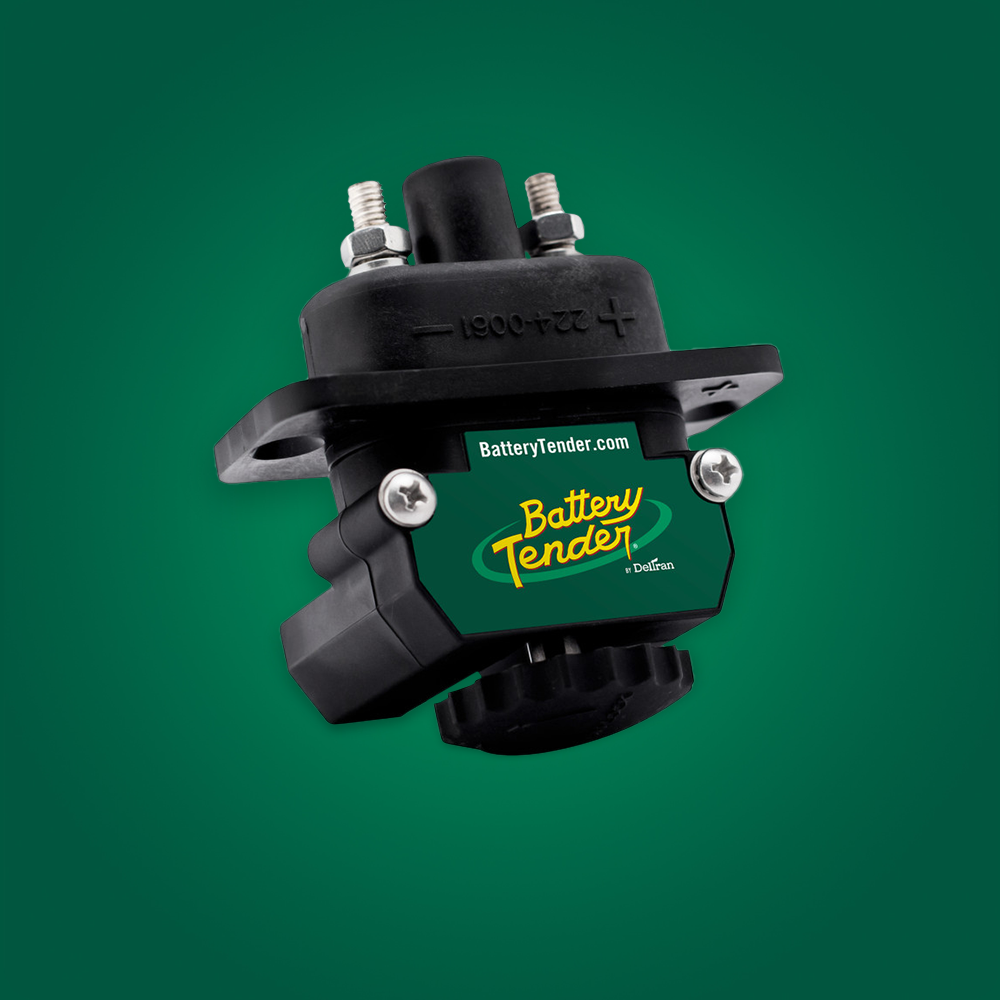
Battery Tender 12V / 6V Battery Tester
Why ISM Charging Beats Trickle Charging
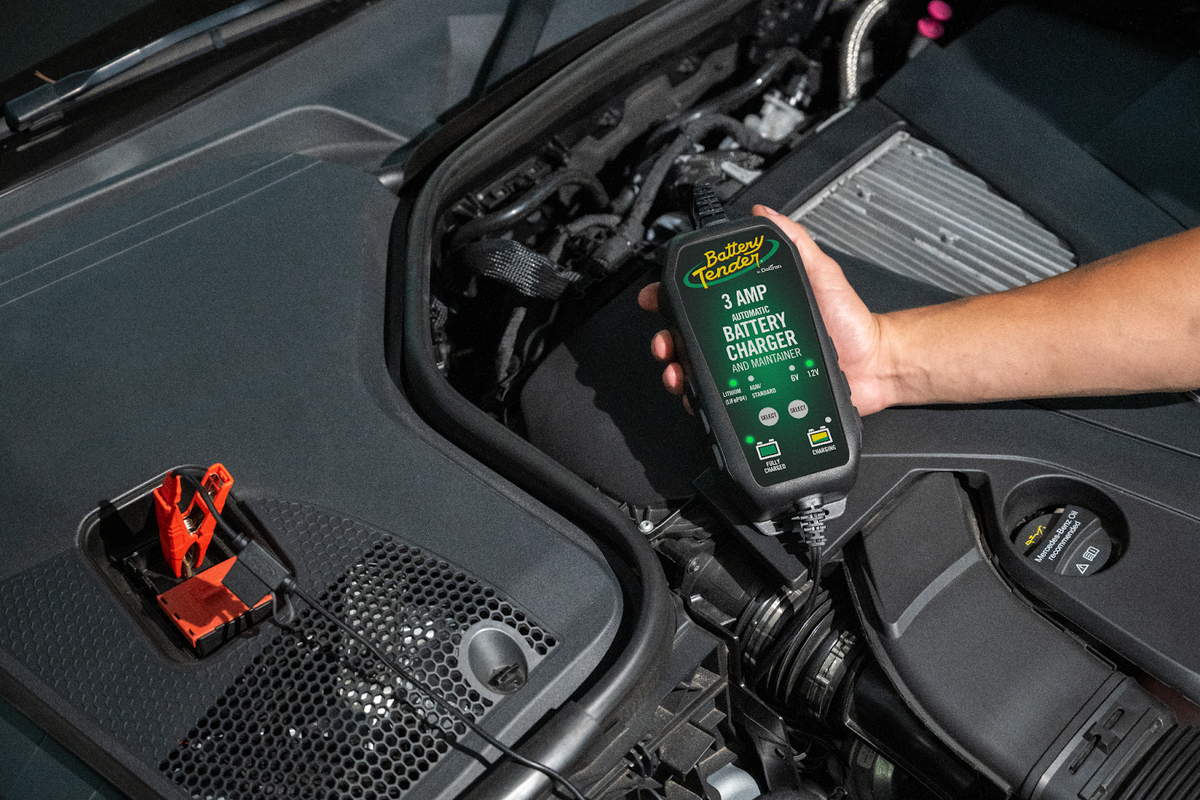
Some drains cannot be eliminated, such as a factory alarm and keyless-entry receivers, so a maintainer is the practical answer for cars that sit. Battery Tender chargers use ISM, a four-stage automatic charging process:
- Initialization: tests the battery and applies gentle current to judge its condition.
- Bulk Charge: delivers full rated current until about 80% state of charge.
- Absorption: holds voltage constant while current tapers, which helps dissolve sulfate crystals.
- Float Maintenance: delivers charge only when voltage drops.
A conventional trickle charger delivers constant current whether the battery needs it or not, so it risks overcharging and gassing the battery. A Battery Tender charger with ISM is safe to leave connected indefinitely. Preventing sulfation can help extend battery life from the typical 2 to 3 years to 5 or more. Temperature compensation, included on Battery Tender chargers such as the Battery Tender Plus, also adjusts the charge voltage in hot garages and cold driveways.
Keep an Emergency Backup
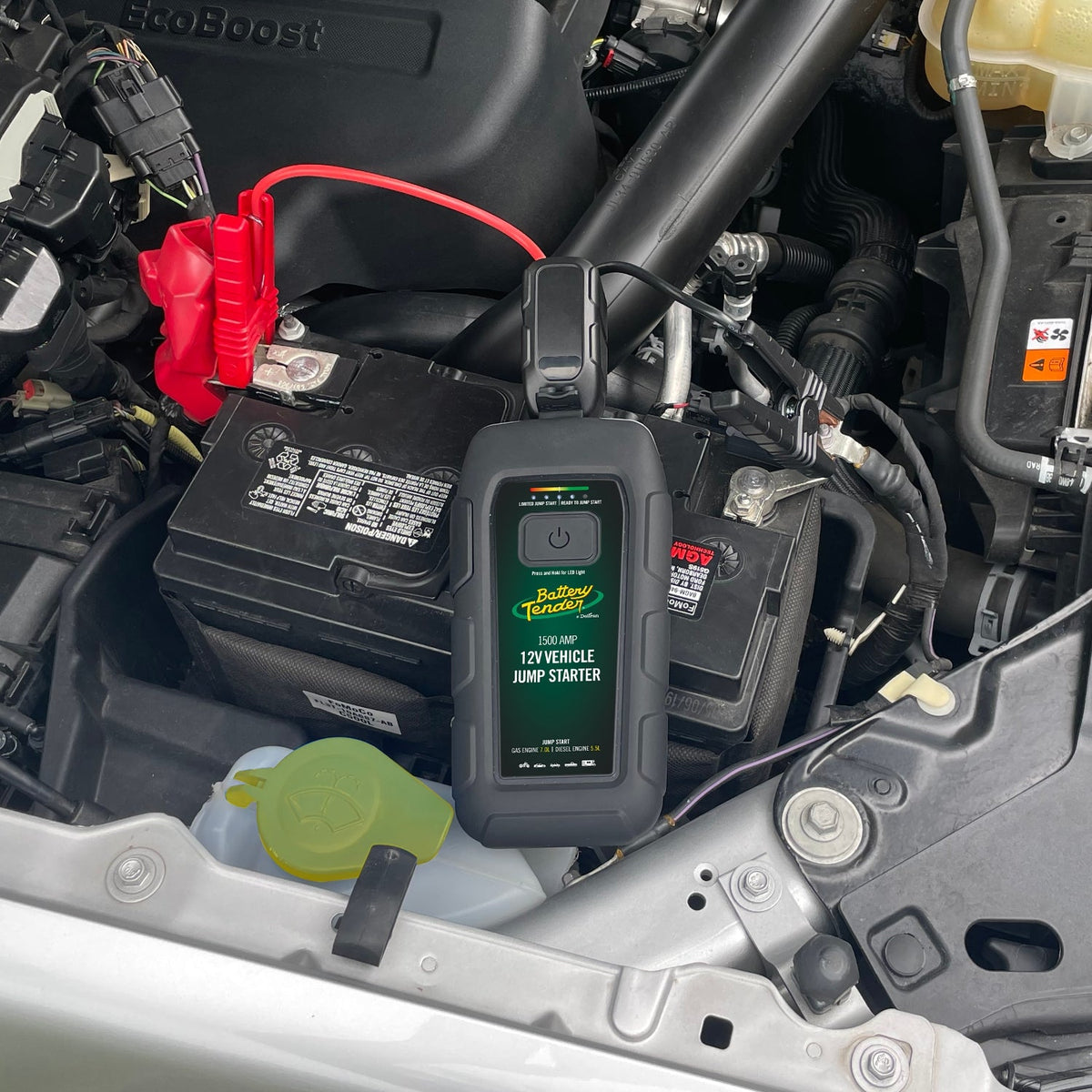
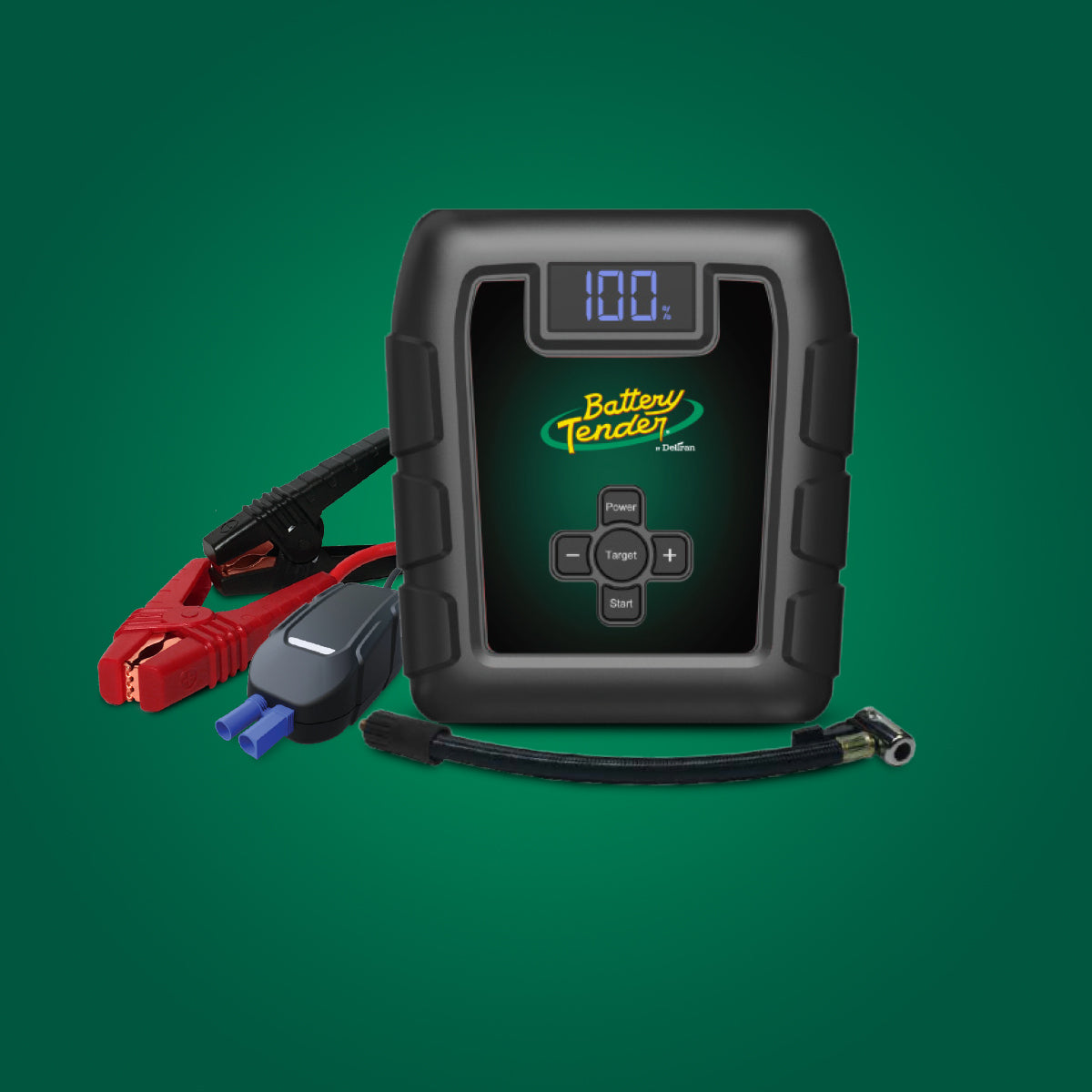
Even a well-maintained car can be caught out by a draw you have not found yet. The Battery Tender Jump N Start 800 Amp Jump Starter and Tire Inflator suits cars and small SUVs. It starts engines up to 4.0L gas or 2.0L diesel, and its built-in 140 PSI inflator handles a low tire from the same compact unit. A jump starter gets the car moving but does not fix the drain, and the article on whether a jump starter works on a dead battery explains what happens inside a deeply discharged battery.
Battery Tender Jump N Start 800 Amp Jump Starter and Tire Inflator
Choosing a Maintainer for a Car That Sits
Match the charger to the battery's amp-hour rating and how deeply it tends to discharge. Charging time is (Ah × depth of discharge) ÷ charger amps. A 70Ah battery at 50% discharge needs 35Ah, which takes about 4.4 hours at 8 amps or about 17.5 hours at 2 amps, before charging losses.
| Situation | Typical Battery | Best Fit | Why |
|---|---|---|---|
| Daily driver or weekend car with a mild drain | 45 to 70Ah, 12V | Battery Tender Plus 6V/12V 2 Amp | Offsets the drain and recharges a partly drained battery at a gentle rate |
| Truck, SUV, or AGM battery that gets deeply discharged | 70 to 100Ah+, 12V | Battery Tender Power Tender 15/8/2 Amp | Selectable rates let you recover fast, then drop to maintenance |
| Garage with several cars or a mix of vehicles | Multiple 12V batteries | Battery Tender 4-Bank 12V 1.25 Amp | Four outputs run from one unit |
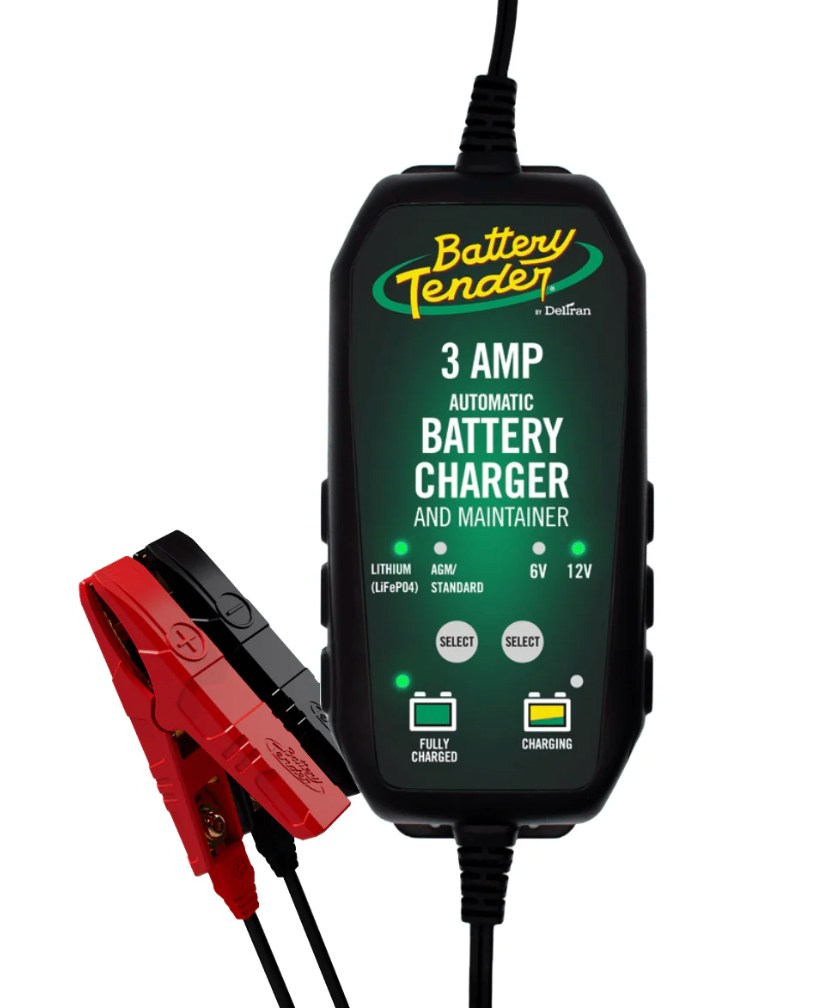
For an everyday car, a sedan with a 600 CCA battery and a hardwired dash cam, the Battery Tender Plus 6V/12V 2 Amp is the right match. The 2-amp rate recharges a sagging battery in a day or two, and the 6V setting also serves a classic car in the same garage.
Battery Tender Plus 6V/12V 2 Amp Battery Charger and Maintainer
A pickup or SUV with an 80 to 100Ah battery, or an AGM battery that has already been drained flat, calls for more current. The Battery Tender Power Tender 15/8/2 Amp has selectable output and selectable chemistry, so you can recharge at 8 or 15 amps, then switch to 2 amps for long-term maintenance. It also handles the deeper discharge when diagnosis takes several days.
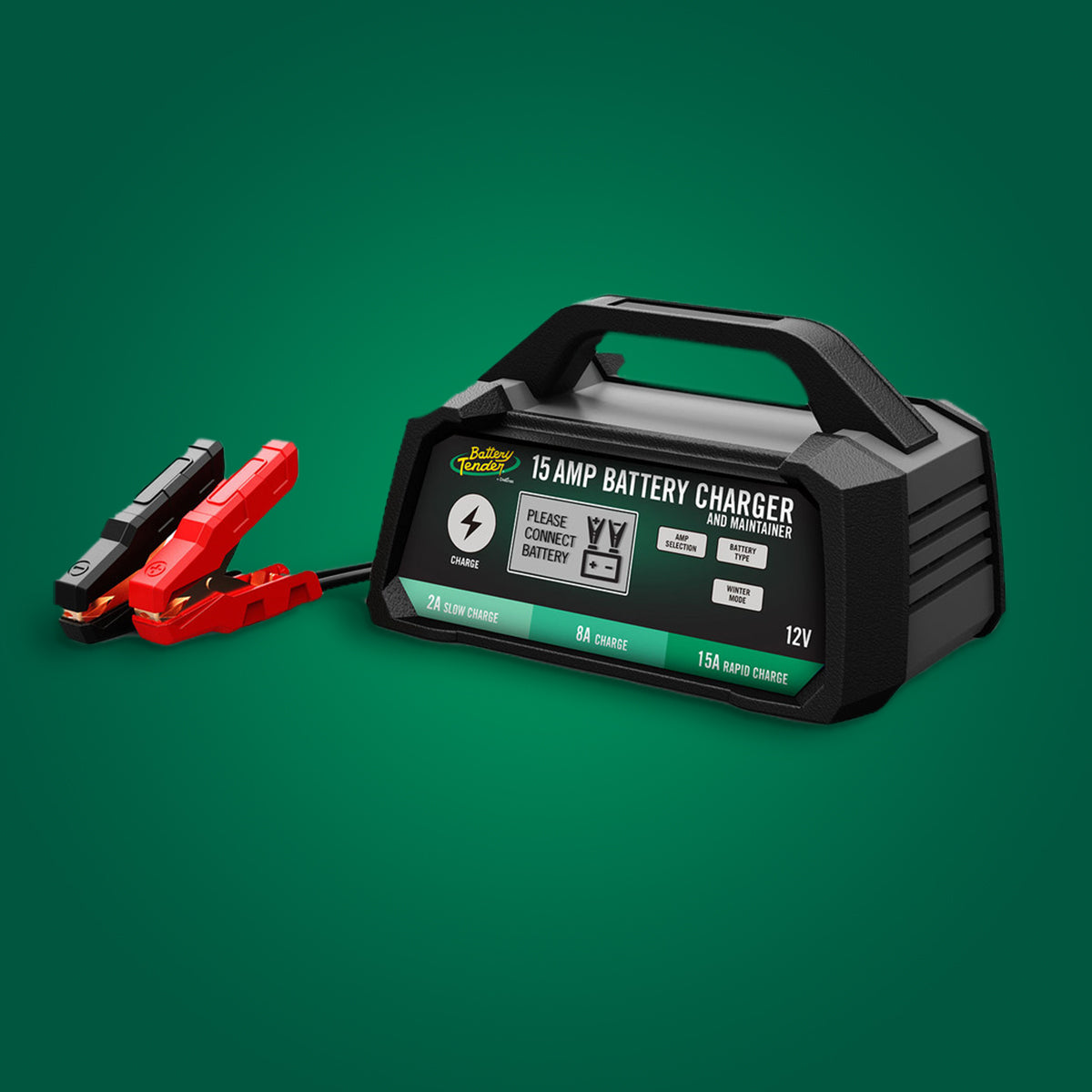
Battery Tender Power Tender 15/8/2 Amp 12V Battery Charger and Maintainer
A household with a daily driver, a convertible, a pickup, and a lawn tractor has four batteries to look after. The Battery Tender 4-Bank 12V 1.25 Amp runs all four from one wall outlet, with each bank charging its own battery. That is easier than juggling four chargers and four extension cords.
Battery Tender 4-Bank 12V 1.25 Amp Battery Charger and Maintainer
The same drain logic applies to standby generators, whose starting batteries sit idle for months. The generator battery maintenance guide covers that setup in detail.
Frequently Asked Questions
How long can a car sit before the battery dies?
A healthy car with a normal 25 to 50 mA draw can sit three to six weeks before a typical 50Ah battery falls to 50% charge. An old battery, cold weather, or an extra accessory can cut that to a week or less. A maintainer removes the time limit.
How many milliamps is a normal parasitic draw?
Most modern cars draw between 25 and 50 mA once all modules have gone to sleep, usually 20 to 45 minutes after locking. Older cars without many electronics draw less, often under 25 mA. A reading above 50 mA after the wait period means a circuit is staying active and should be traced.
Can a new battery still go dead from a parasitic drain?
Yes. A new battery has full capacity, but a 300 mA drain still empties half of a 50Ah battery in about three and a half days. Repeated deep discharges also shorten battery life through sulfation. Find and fix the drain, or connect a maintainer, to protect a new battery.
Is it safe to leave a maintainer connected while I look for the drain?
Yes. Battery Tender chargers use ISM technology, which stops charging when the battery is full and resumes only when voltage drops. That makes them safe to leave connected for days or months. Disconnect the charger before testing parasitic draw with the multimeter, since the charger's current will hide the reading.
Conclusion
Understanding what can drain a car battery when the car is off turns a recurring dead-battery mystery into a one-hour test. Measure the draw with a multimeter, pull fuses until the reading drops, and fix the source. Then connect a Battery Tender maintainer so the battery stays charged through any draw you cannot remove. Next step: pick a charger that matches your battery size in the Battery Tender battery charger collection.