


Level 1 vs Level 2 Charger: Speed, Cost, and Setup Compared (2026)
A level 1 vs level 2 charger decision comes down to speed and setup. Level 1 plugs into a standard 120V outlet and adds roughly 4 to 7 miles of range per hour with no installation. Level 2 runs on a 240V circuit and adds roughly 28 to 42 miles per hour. Drivers who cover under 40 miles a day can usually live with Level 1, and everyone else should plan for Level 2.
Battery Tender® pioneered the smart battery charger category in 1989, and the Battery Tender eCharge line applies that charging experience to electric vehicles, from a 16A Level 1 unit to a 48A Level 2 unit. This guide works through the math that actually decides the question: miles added per hour, overnight range, breaker sizing, and the 12V auxiliary battery that neither charging level maintains.
Key Takeaways
- Level 1 (120V) adds about 7.2 miles per hour with the Battery Tender eCharge 16 Amp. Level 2 adds 36 to 42.25 miles per hour with the 40A and 48A models.
- An 8-hour overnight session adds roughly 58 miles on Level 1 and 288 to 338 miles on Level 2.
- Daily mileage decides the matter: under 40 miles favors Level 1, over 60 miles favors Level 2.
- Level 2 requires a dedicated 240V circuit installed by a licensed electrician. The breaker must be rated at 125% of the charger's continuous amperage.
- Both levels charge only the high-voltage pack. The 12V auxiliary battery still needs its own maintainer.
Level 1 vs Level 2 Charger: The Core Differences
The core difference is voltage, and voltage sets power. A Level 1 charger delivers 120V at 12 to 16 amps, which is 1.4 to 2 kW. A Level 2 charger delivers 240V at 32 to 48 amps, which is 7.6 to 11 kW. That is roughly a four- to eight-fold difference in power, and charging time scales with it almost directly.
| Spec | Level 1 | Level 2 |
|---|---|---|
| Supply voltage | 120V | 240V |
| Typical charger amperage | 12A to 16A | 32A to 48A |
| Power output | 1.4 to 2 kW | 7.6 to 11 kW |
| Range added per hour | About 4 to 7.2 miles | About 28.5 to 42.25 miles |
| Installation | None, if a suitable outlet exists | Licensed electrician, dedicated circuit |
| Best for | Low daily mileage, apartments, travel backup | Daily commuters, multi-driver homes, larger packs |
Where Level 1 Fits
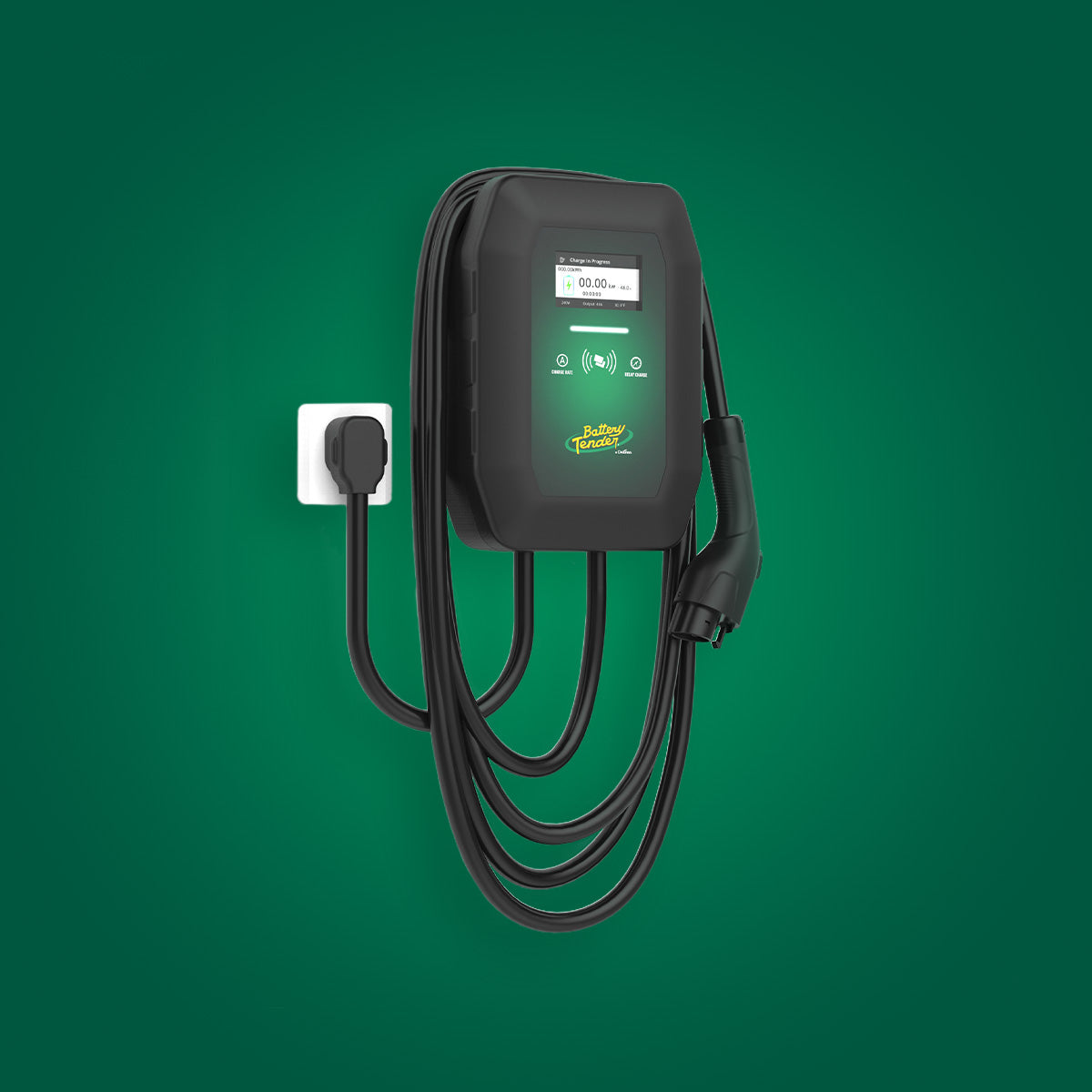
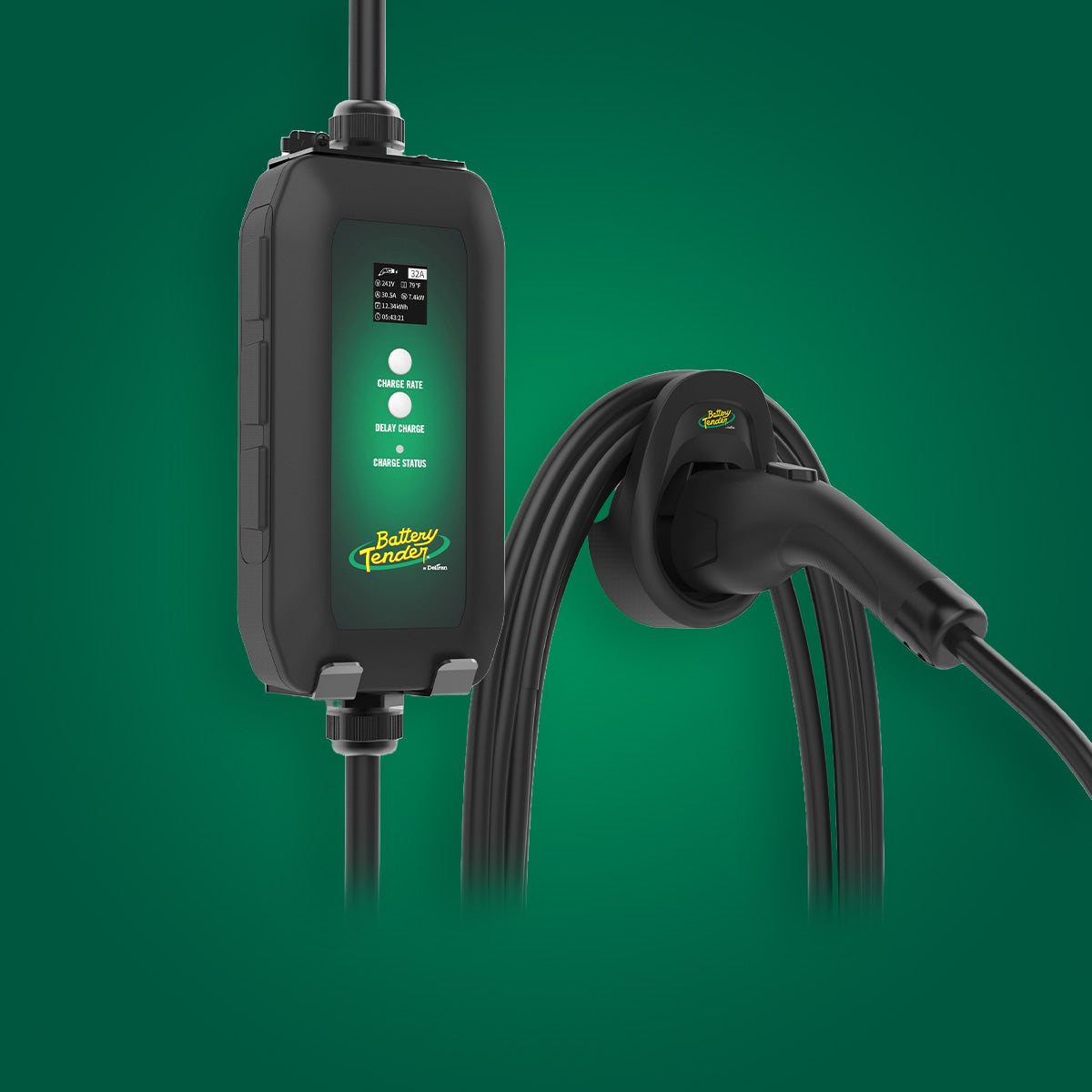
Level 1 fits drivers whose daily mileage is low and whose car sits parked for 10 or more hours. The Battery Tender eCharge 16 Amp Level 1 EV Charger delivers 2 kW and about 7.2 miles per hour from a NEMA 5-20P plug. It requires a 20A outlet on a dedicated circuit, so a standard 15A household outlet is not a match. It also works as a travel backup, since 20A outlets are common in garages, workshops, and RV pedestals.
The Battery Tender eCharge 16 Amp Level 1 EV Charger suits renters, apartment residents with a garage outlet, and second-car households. It needs no panel work, and it moves with you if you relocate.
Battery Tender eCharge 16 Amp Level 1 EV Charger
Where Level 2 Fits
Level 2 fits anyone who drives more than about 40 to 60 miles daily, shares a charger between two vehicles, or wants a full pack by morning every time. The speed also pays off on a bad day, because a surprise 150-mile trip no longer forces a charging-station stop.
How Much Range Does Each Level Add Per Hour?
Level 1 adds about 7.2 miles per hour with the Battery Tender eCharge 16 Amp, while the Battery Tender eCharge 40 Amp and 48 Amp Level 2 units add 36 and 42.25 miles per hour. Those figures are the rated numbers for each unit. Real-world results shift with vehicle efficiency, battery temperature, and state of charge.
The formula behind the numbers is simple:
- Multiply charger power (kW) by roughly 0.85 to 0.90 to account for charging losses.
- Multiply the result by your vehicle's efficiency, commonly 3 to 4.5 miles per kWh.
- The product is miles added per hour.
Example: a 9.6 kW Level 2 charger × 0.88 efficiency × 4.2 miles per kWh is about 35 miles per hour, which matches the rated 36 miles per hour for the 40A unit.
| Battery Tender eCharge Model | Level | Power | Miles/Hour | 8-Hour Overnight Range |
|---|---|---|---|---|
| 16 Amp | Level 1 (120V) | 2 kW | 7.2 | About 58 miles |
| 32 Amp | Level 1+2 | 7.6 kW | 28.5 | About 228 miles |
| 40 Amp | Level 2 (240V) | 9.6 kW | 36 | About 288 miles |
| 48 Amp | Level 2 (240V) | 11 kW | 42.25 | About 338 miles |
One limit applies to every Level 2 purchase: the vehicle's onboard charger caps the accepted rate. A car limited to 7.2 kW gains nothing from a 48A unit over a 32A unit, because it pulls only what it can accept. Check the onboard charger rating in the owner's manual before choosing amperage.
Matching a Level 1 vs Level 2 Charger to Your Daily Mileage
Daily mileage is the number that settles a level 1 vs level 2 charger choice. Divide the miles you drive each day by the miles per hour a charger adds, and compare the answer to the hours your car sits parked. If the result is under your parked time, that level works.
| Daily Miles | Hours on Level 1 (7.2 mi/hr) | Hours on 40A Level 2 (36 mi/hr) | Verdict |
|---|---|---|---|
| 30 | 4.2 | 0.8 | Level 1 is enough |
| 60 | 8.3 | 1.7 | Level 1 is marginal |
| 100 | 13.9 | 2.8 | Level 2 recommended |
| 150 | 20.8 | 4.2 | Level 2 required |
Choosing Between 40A and 48A
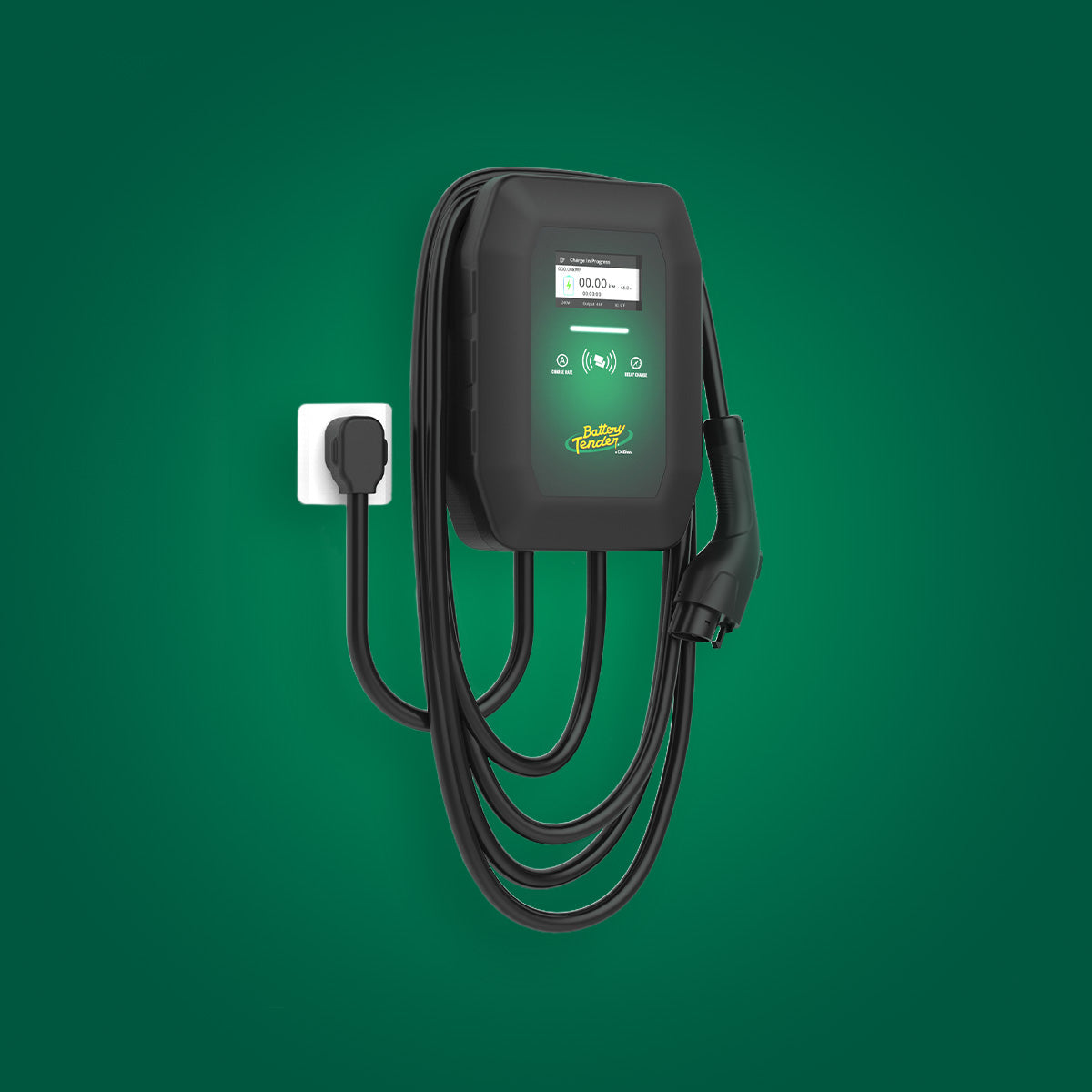
The Battery Tender eCharge 40 Amp Level 2 EV Charger delivers 9.6 kW, which suits most vehicles, since many onboard chargers top out near that rate. It is hardwired or wall-mounted, includes RFID access control, and carries an IP66 rating for garage or outdoor mounting. It requires a 50A breaker.
Battery Tender eCharge 40 Amp Level 2 EV Charger. Also available at Costco.com.
The Battery Tender eCharge 48 Amp Level 2 EV Charger delivers 11 kW and about 42.25 miles per hour. It is the right pick when the vehicle accepts 11 kW, when two drivers share one charger, or when the pack is large enough that a 9.6 kW charge runs past a normal overnight window. It requires a 60A breaker and must be matched to adequate panel capacity.
Battery Tender eCharge 48 Amp Level 2 EV Charger
What Installing Level 2 Actually Involves
Installing Level 2 means running a dedicated 240V circuit sized to the charger. EV charging is a continuous load, so the National Electrical Code requires the breaker and wiring to handle 125% of charger amperage. A 40A charger needs a 50A breaker, and a 48A charger needs a 60A breaker. A licensed electrician should do the work and pull the permit.
- Check panel capacity. Ask the electrician for a load calculation. A 100A panel with an electric range and dryer may not have room for a 60A circuit.
- Choose the amperage. Match it to the vehicle's onboard charger, not to the biggest unit available.
- Pick the location. Shorter runs from the panel cost less, and the cable must reach the charge port.
- Permit and inspection. Most jurisdictions require both for a new 240V circuit.
- Test. Confirm the voltage, GFCI protection, and a full test charge before leaving the unit unattended.
For mounting where no wall is suitable, such as a driveway edge or open carport, a freestanding post solves the problem. The Battery Tender EV Pedestal Stand holds a wall-mount charger at a usable height without drilling into masonry or siding.
Battery Tender EV Pedestal Stand
For a full walkthrough of conduit, permits, and panel upgrades, read the home Level 2 installation guide. If cost is the sticking point, Do I Need a Level 2 Charger? walks through a decision framework.
Why the 12V Auxiliary Battery Needs Care at Either Level
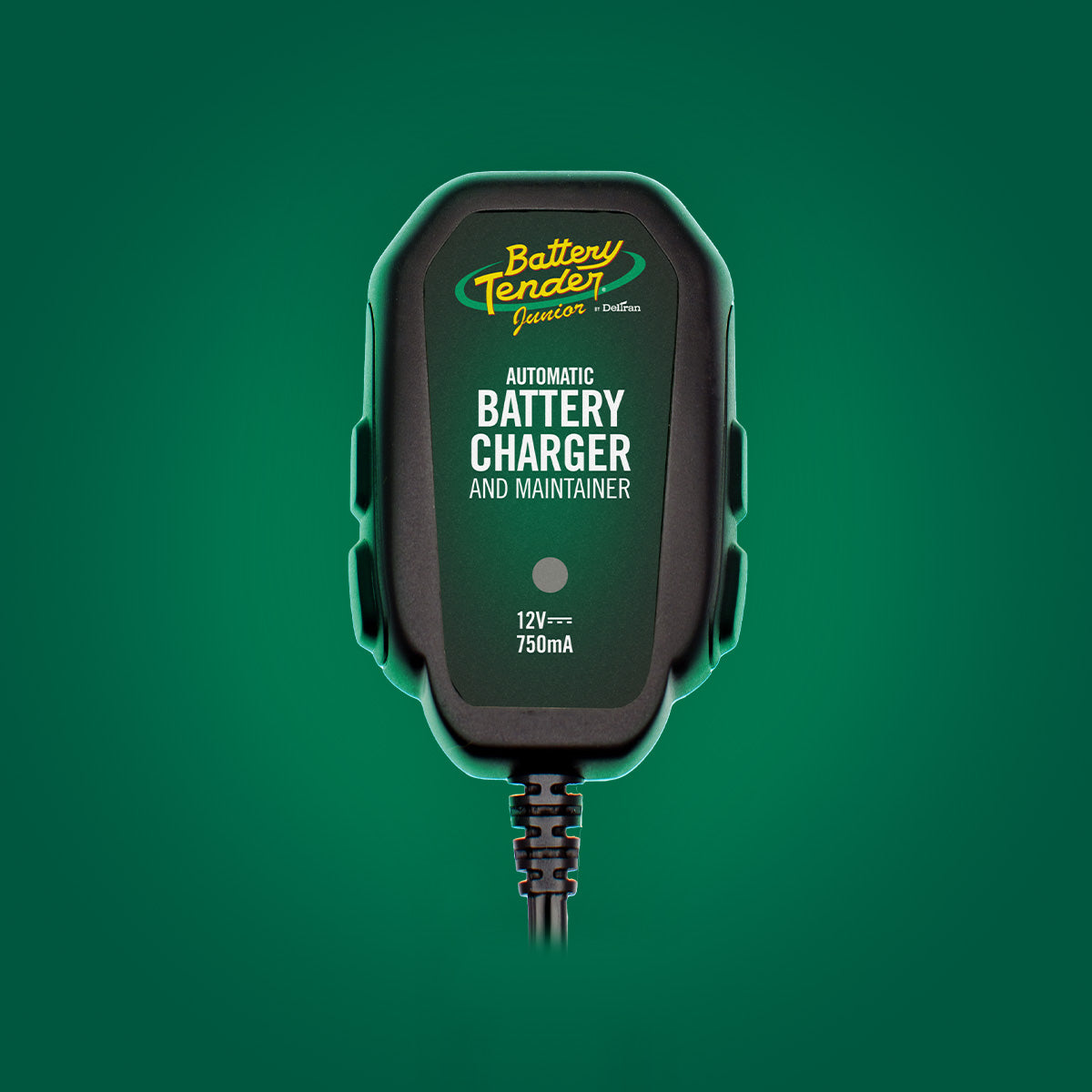
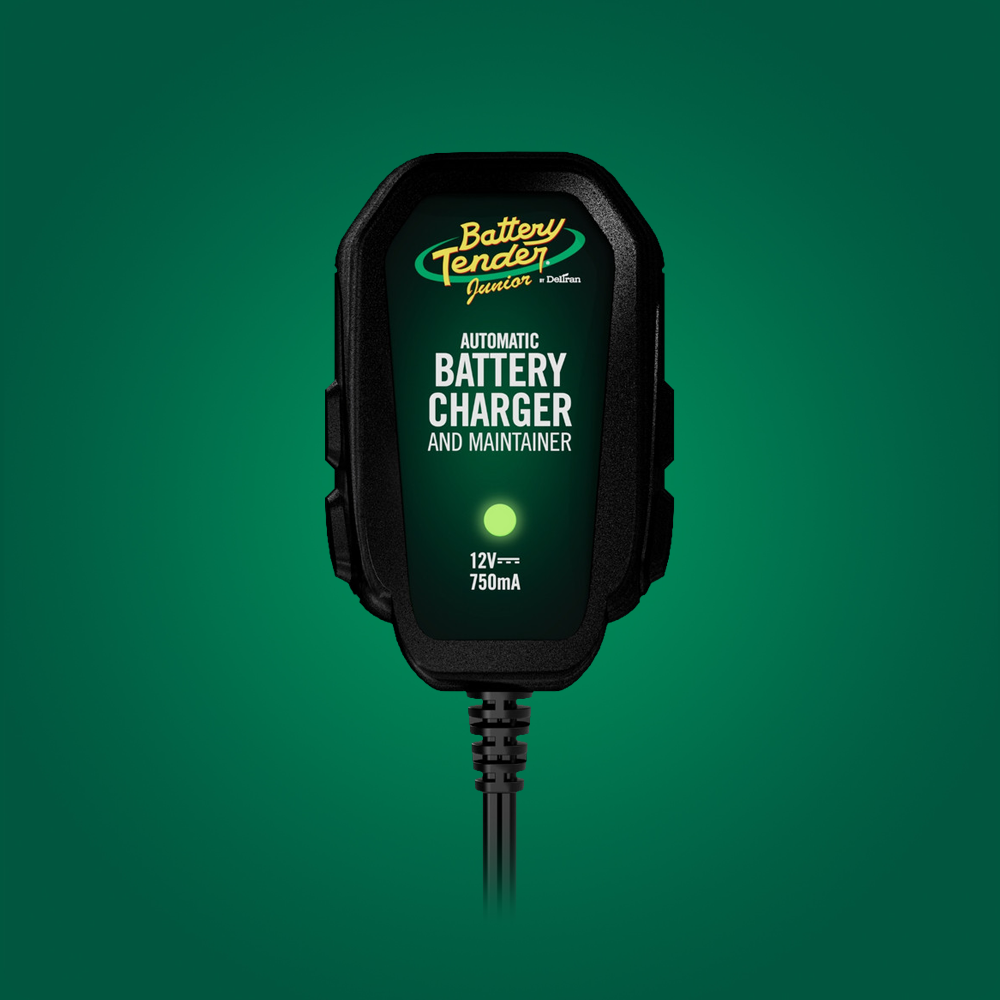
Neither charging level maintains the 12V auxiliary battery. That battery powers the contactors that connect the high-voltage pack, plus door locks, computers, and the key-fob system. A weak 12V battery can leave an EV unresponsive even with a full pack. Many are AGM or lead-acid units rated around 35 to 60 Ah, so check the owner's manual for chemistry and capacity. Some newer EVs use a lithium-ion 12V battery instead. For those, choose a lithium-compatible model such as the Battery Tender Junior Multi-Chemistry 12V 1 Amp battery charger.
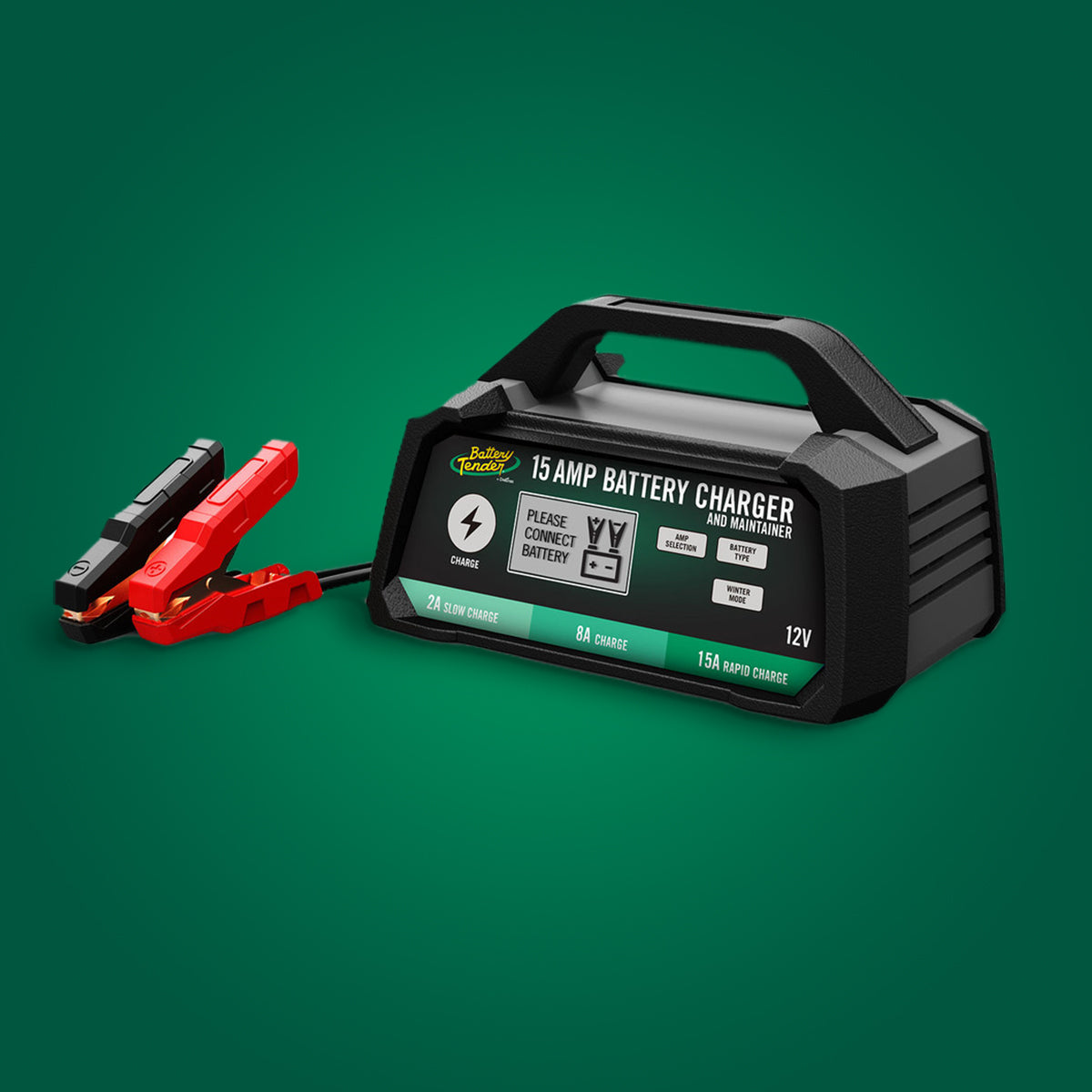
For lead-acid and AGM 12V batteries, a Battery Tender Plus 1.25 Amp 12V battery maintainer handles this job. It uses Infinite Sequential Monitoring (ISM), a four-stage automatic process. Stage 1 Initialization checks the battery. Stage 2 Bulk Charge delivers full current to about 80% state of charge. Stage 3 Absorption holds voltage constant while current tapers. Stage 4 Float Maintenance monitors voltage and charges only when needed. That makes the Battery Tender Plus charger safe to leave connected long-term, and its temperature compensation matters in a cold garage.
Charging time follows the standard formula. For a 45 Ah battery at 50% depth of discharge on a 1.25A charger: (45 × 0.5) ÷ 1.25 = 18 hours.
- Confirm the 12V battery chemistry and location in the owner's manual. Some EVs use designated terminals or jump points.
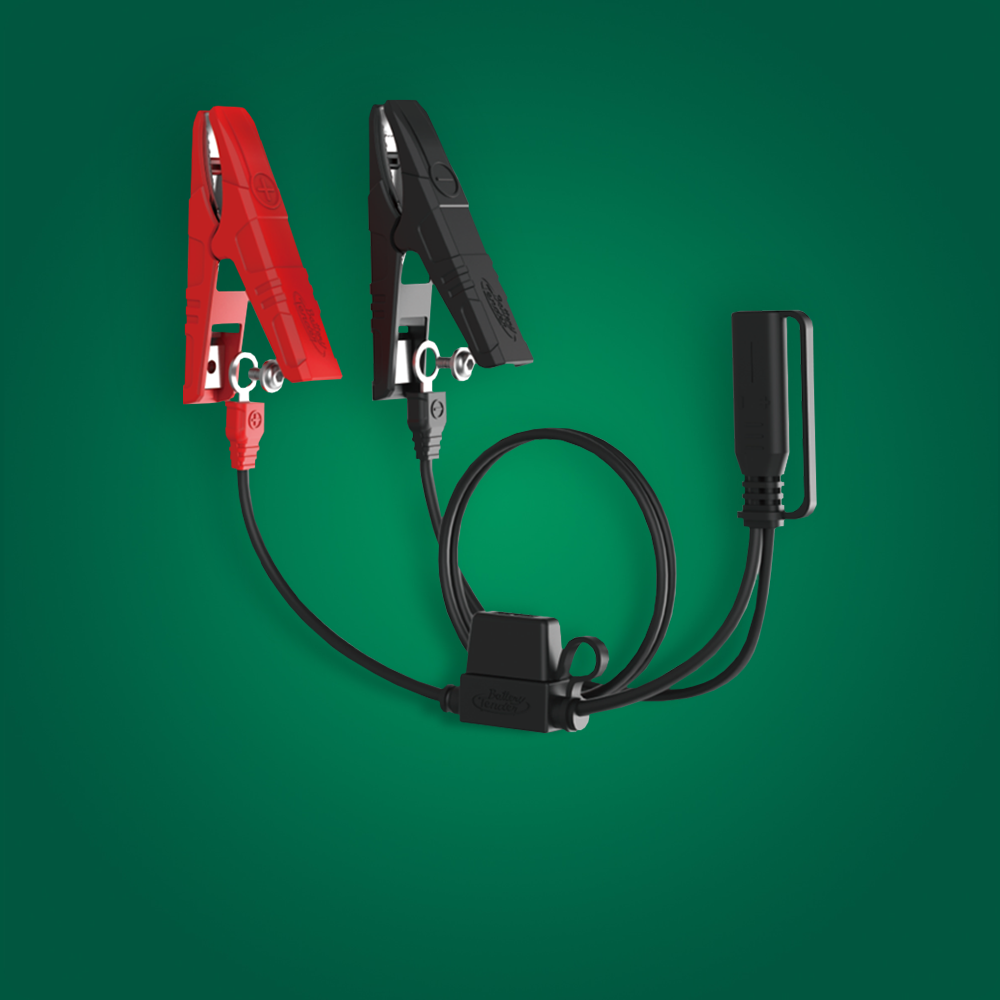
- Connect the Battery Tender Plus charger to the battery or designated terminals, positive first.
- Plug the charger into AC power and leave it connected during storage.
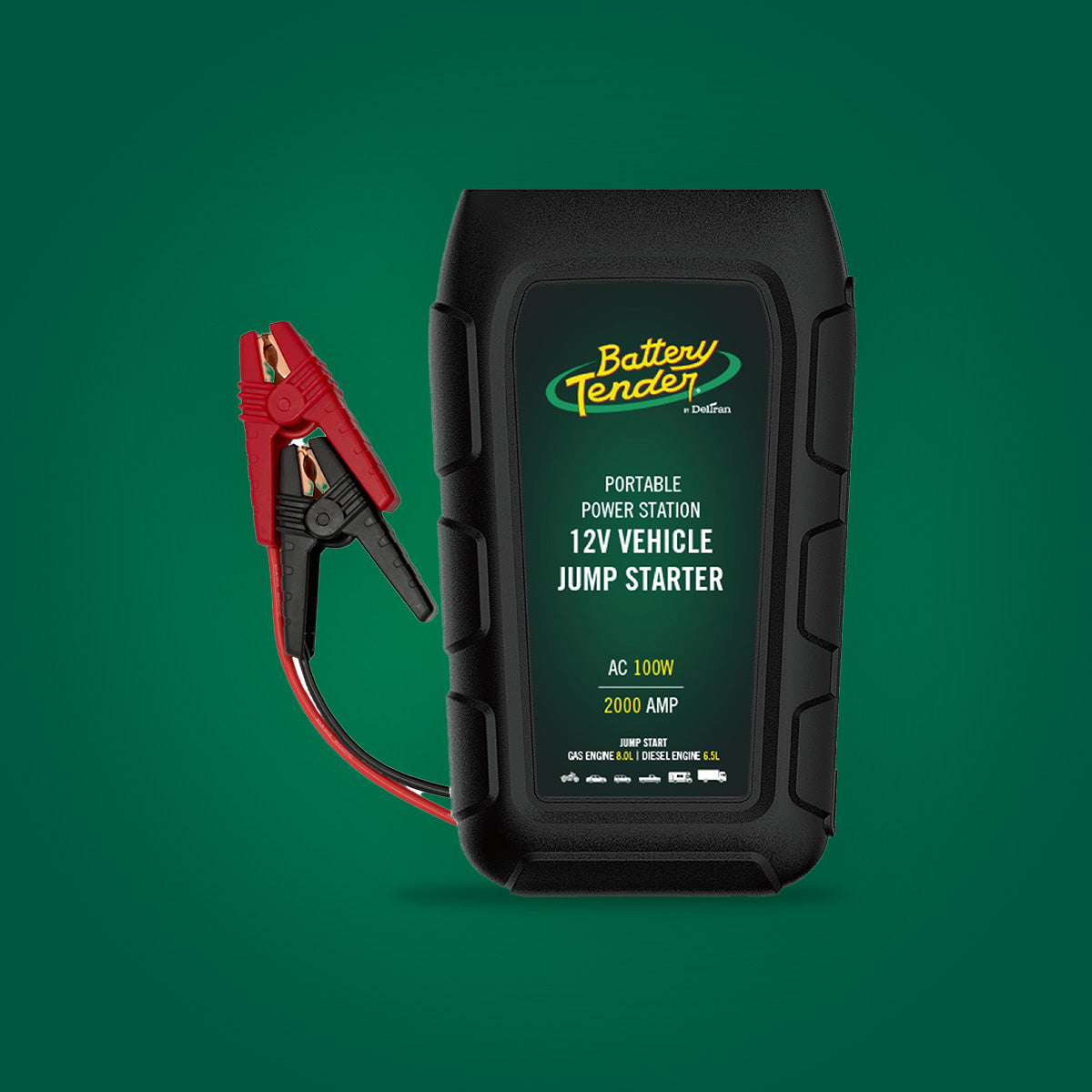
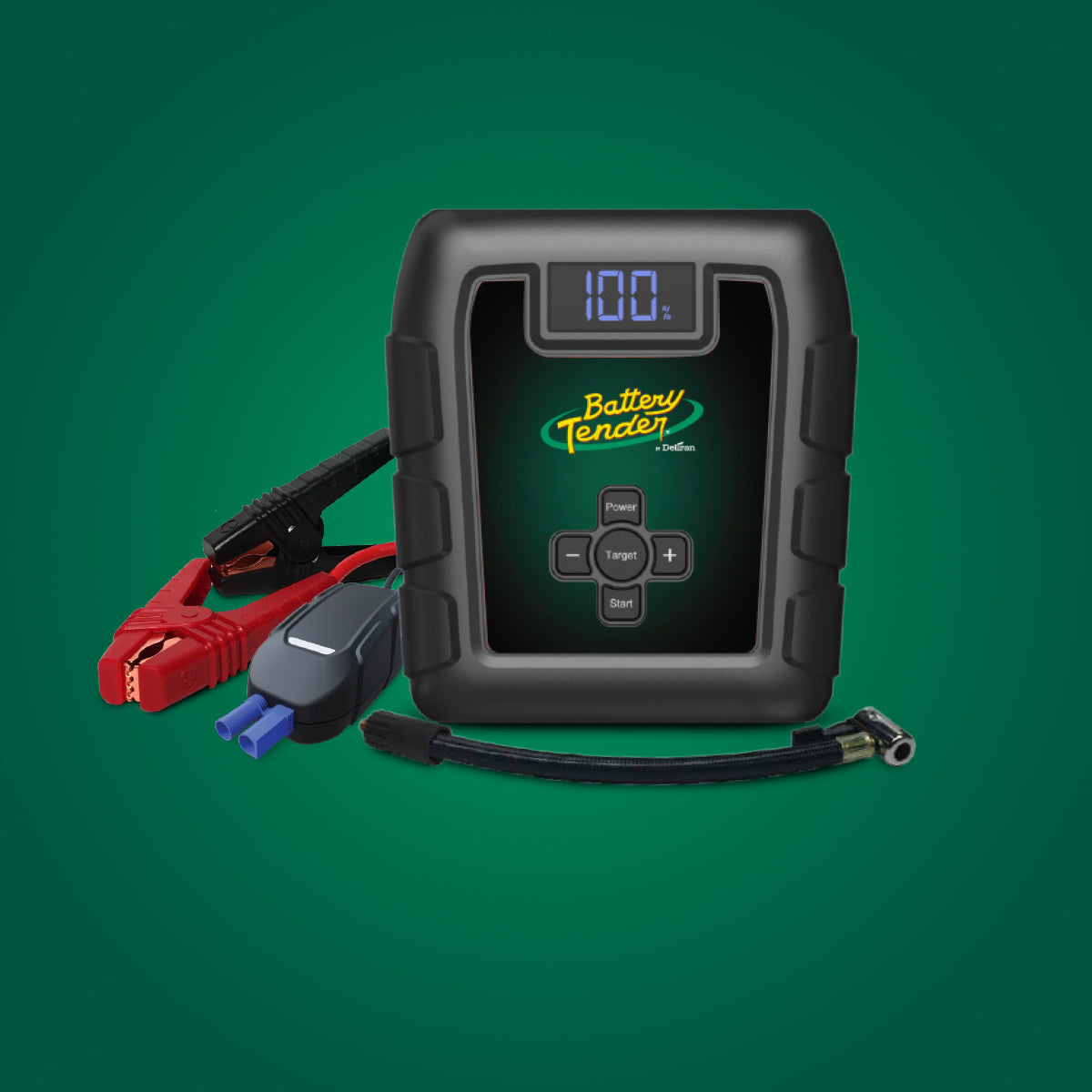
Always follow the vehicle manufacturer's instructions before connecting anything to the 12V system. Keep an emergency option on hand for the day the 12V battery fails anyway. The Battery Tender Jump N Start 800 Amp Jump Starter and Tire Inflator fits compact and midsize EVs, and the built-in 140 PSI inflator helps because many EVs ship without a spare tire.
Battery Tender Jump N Start 800 Amp Jump Starter and Tire Inflator
Frequently Asked Questions
Is the difference between a level 1 vs level 2 charger big enough to justify installation?
It depends on daily mileage. A 40A or 48A Level 2 charger is roughly five to six times faster than a 16A Level 1 unit. If you drive under 40 miles a day and park 10 hours or more, Level 1 usually covers it. Above 60 miles a day, the time savings typically justify the electrician's cost.
Can I use Level 1 charging every day?
Yes, if the numbers work. At 7.2 miles per hour, a 12-hour overnight session adds about 86 miles, which covers most commutes. Problems appear only when daily driving exceeds that or when you need a quick top-up between trips. A dedicated 20A circuit and no extension cords are essential.
Does Level 2 charge more efficiently than Level 1?
Generally yes. Both levels lose energy to heat and onboard conversion, but the fixed overhead of running vehicle systems during charging is spread across fewer hours at Level 2. The gap is typically a few percentage points, so cost per mile favors Level 2 modestly, while speed favors it dramatically.
Can I start with Level 1 and upgrade to Level 2 later?
Yes. A portable Level 1 unit costs little and needs no installation, so it makes a practical starting point. After you add a 240V circuit, the Level 1 unit stays useful as a travel and backup charger. Nothing about the first purchase prevents the second.
Do I still need a 12V maintainer if I charge my EV every night?
For storage or extended parking, yes. Home charging feeds the high-voltage pack, and the vehicle tops up the 12V battery only while its systems are awake. Short trips, background electronics, and long idle periods can still run that battery down. A Battery Tender Plus maintainer, or a Battery Tender Junior Multi-Chemistry charger for lithium 12V batteries, keeps it fully charged while the car sits.
Conclusion
The level 1 vs level 2 charger choice is a math problem, not a preference. Divide daily miles by miles per hour, compare the result to your parked hours, and pick the level that fits with margin. Level 1 handles light commuting with zero installation, while Level 2 delivers 28.5 to 42.25 miles per hour for heavier use. Whichever you choose, pair it with a Battery Tender battery maintainer so the 12V auxiliary battery never becomes the weak link.
Next step: pull your daily mileage and your vehicle's onboard charger rating, then use the table above to pick an amperage. Browse the full Battery Tender EV charger collection to compare models.