



Fleet Battery Maintenance: Reducing Dead Batteries Across Vehicles (2026)
Fleet battery maintenance focused on reducing dead batteries across vehicles starts with one operational truth: dead batteries are not random failures — they are predictable, preventable outcomes of neglect. Battery Tender® Infinite Sequential Monitoring (ISM) technology eliminates the primary causes of premature battery death by continuously adapting charge output to each battery's real-time condition. Whether a fleet consists of 5 service trucks or 50 seasonal vehicles, a structured maintenance protocol built around smart charging can cut battery replacement costs by more than half while virtually eliminating no-start incidents.
The difference between a fleet that cycles through batteries every 18–24 months and one that achieves 5+ years per battery comes down to sulfation prevention and proper charge management. This guide delivers a complete, actionable framework for fleet managers, shop supervisors, and multi-vehicle owners to implement systematic battery maintenance — covering root-cause analysis, charger selection by fleet size, deployment protocols, and cost-per-vehicle math that justifies the investment.
Key Takeaways:- Sulfation causes 80% of premature lead-acid battery failures — ISM 4-stage charging actively reverses early sulfation during every charge cycle.
- Fleet vehicles that sit idle for 3+ days lose approximately 1% state of charge per day, reaching critical depletion within 6 weeks.
- Structured fleet battery maintenance can extend average battery life from 2–3 years to 5+ years, reducing replacement costs by 50–60%.
- Multi-bank and scalable Battery Tender chargers allow simultaneous maintenance of 2 to 10 vehicles per unit, lowering per-vehicle equipment cost to under $30.
Why Do Fleet Vehicles Suffer More Dead Batteries Than Daily Drivers?
Fleet vehicles experience higher battery failure rates than personal vehicles because their usage patterns create the exact conditions that accelerate sulfation. A daily commuter vehicle runs its engine — and therefore its alternator — for 30–60 minutes or more each day, maintaining a near-full state of charge. Fleet vehicles, by contrast, often sit idle for days or weeks between assignments, undergo repeated short-trip cycles that never fully recharge the battery, or support parasitic electrical loads from GPS trackers, dash cameras, telematics modules, and alarm systems.
According to data published by the Battery Council International (BCI), lead-acid batteries that remain below 80% state of charge for extended periods develop lead sulfate crystal buildup on their plates. These crystals harden over time, permanently reducing the battery's capacity and cranking power. A battery that spends 60 days at 50% charge may lose 20–30% of its original capacity — a loss that no amount of subsequent charging can fully recover.
The financial impact compounds across a fleet. A single battery replacement costs $150–$300 depending on vehicle class. A 20-vehicle fleet replacing batteries every 2 years spends $1,500–$3,000 annually on batteries alone — before accounting for tow charges, technician labor, missed service windows, and the downstream cost of a stranded vehicle. Fleet battery maintenance aimed at reducing dead batteries across vehicles is not a maintenance preference; it is a direct operational cost control.
How ISM 4-Stage Charging Prevents Fleet Battery Failures
ISM technology is the core mechanism that makes Battery Tender chargers safe for indefinite connection and effective at extending battery life across a fleet. Unlike trickle chargers that deliver constant current regardless of battery condition — eventually overcharging and boiling electrolyte — ISM adapts its output through four distinct stages.
Stage 1: Initialization — The charger tests the battery with a gentle current to assess condition and confirm it can accept a charge safely. This stage catches deeply discharged or damaged batteries before full power is applied. Stage 2: Bulk Charge — Full rated current flows until the battery reaches approximately 80% state of charge. This is where the majority of energy transfer occurs. Stage 3: Absorption — Voltage holds constant while current tapers gradually. This stage dissolves soft sulfate crystals that have formed on the plates, actively restoring capacity. Stage 4: Float Maintenance — The charger monitors voltage continuously and delivers brief charge pulses only when voltage drops below a threshold. The battery stays at full charge without ever being overcharged.
For fleet operations, Stage 3 (Absorption) and Stage 4 (Float Maintenance) deliver the most value. The Absorption stage reverses early-stage sulfation during every charge cycle — a process that trickle chargers and basic float chargers cannot perform. The Float Maintenance stage means chargers can remain connected to idle vehicles for weeks or months without technician intervention or overcharge risk. This combination is what enables the jump from a 2–3 year average battery life to 5+ years.
Fleet Battery Maintenance: Calculating Your Charger-to-Vehicle Ratio
Effective fleet battery maintenance requires matching charger capacity to fleet size, vehicle rotation schedule, and facility layout. The formula is straightforward: divide the maximum number of vehicles that sit idle simultaneously by the number of banks per charger.
For a 10-vehicle fleet where 4 vehicles are typically parked overnight, two 2-bank chargers cover the idle pool. For a 30-vehicle fleet with 10 vehicles rotating through a maintenance bay weekly, a combination of multi-bank units and individual chargers deployed at parking stations provides full coverage. The goal is not one charger per vehicle — it is one charger bank per simultaneously idle vehicle.
Larger operations — dealership lots, rental agencies, municipal fleets — benefit from the Battery Tender 5-Bank 4A Selectable charger or the Battery Tender 10-Bank charger. These units deliver independent ISM charging to each connected vehicle, meaning a fully charged sedan does not affect the charge rate delivered to a deeply discharged truck on the adjacent bank. At $849.95 for the 10-Bank, the per-vehicle cost drops to $85 per maintained vehicle — less than the cost of a single battery replacement.
Choosing the Right Battery Tender Charger for Each Fleet Segment
Not every fleet vehicle has the same battery or the same usage pattern. Matching the correct charger to each segment maximizes charging efficiency and minimizes equipment spend. The following recommendations cover the most common fleet configurations.
Small Fleets and Mixed-Chemistry Vehicles (2–10 Units)
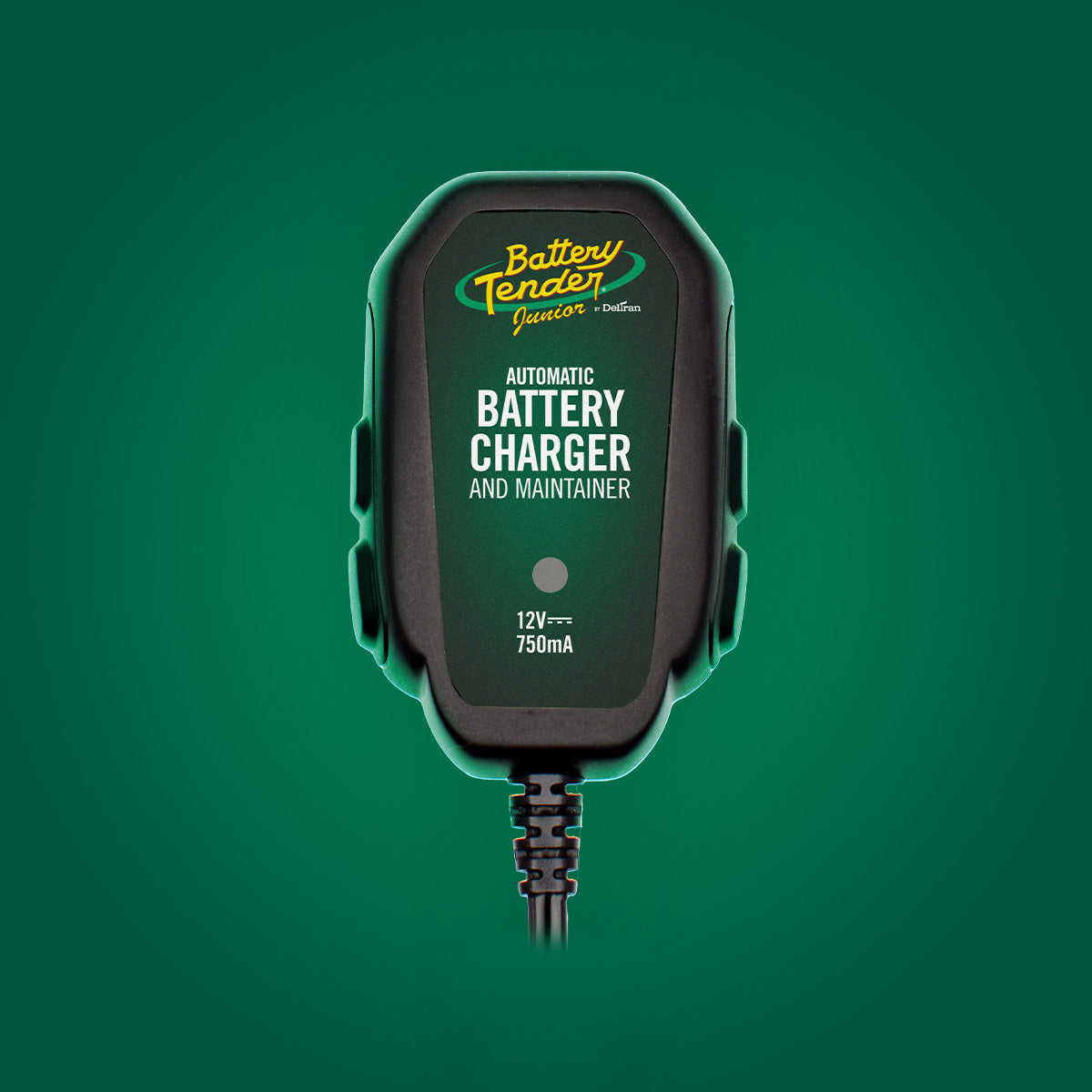
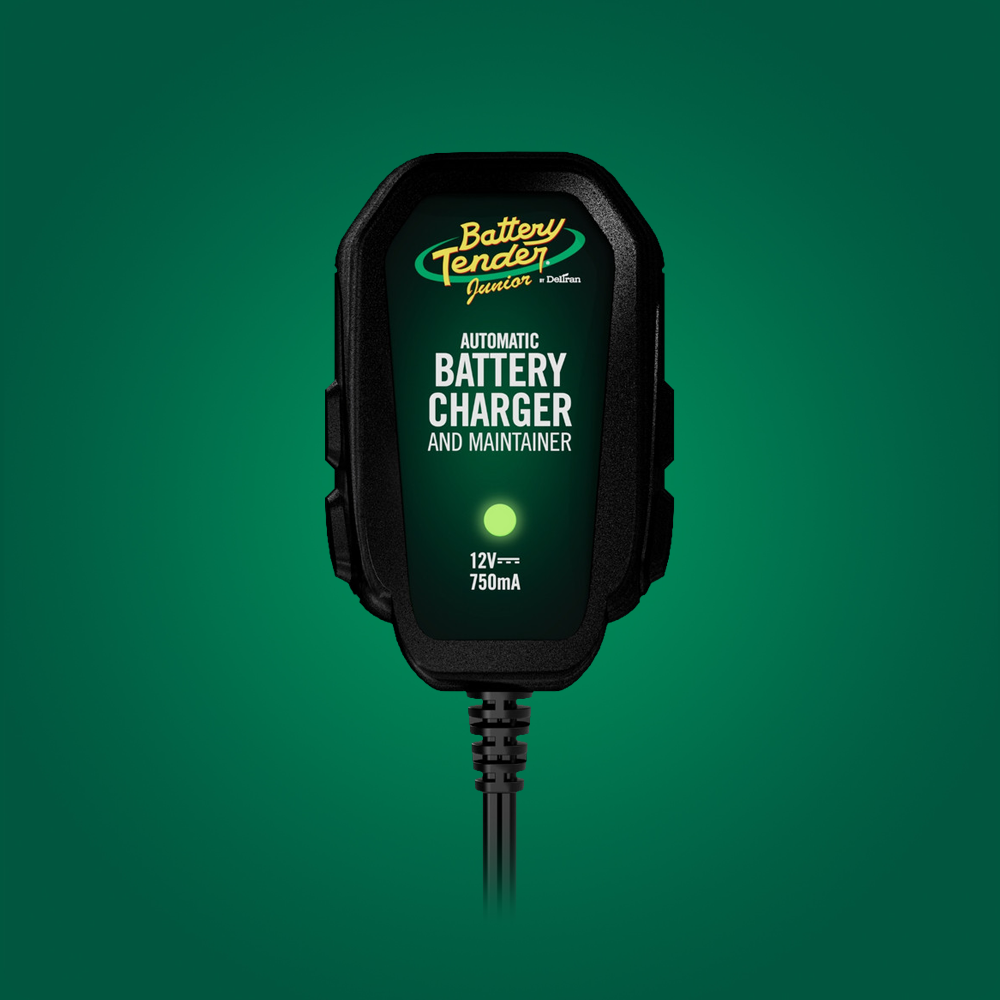
Fleets that include vehicles with both standard lead-acid and lithium batteries need selectable-chemistry chargers. The Battery Tender Junior 1A Selectable handles 12V batteries from 2–30 Ah across both chemistries, making it ideal for powersports fleets, lawn care equipment trailers, and mixed small-engine operations. At $52.95 per unit, equipping a 10-vehicle small-engine fleet costs just $529.50 — roughly the price of replacing two batteries.
Battery Tender Junior 1A Selectable (12V, Lead-Acid/Lithium)
Mid-Size Automotive and Service Fleets (10–25 Units)
Service vans, delivery vehicles, and company cars with standard 12V automotive batteries (40–80 Ah) require a charger with temperature compensation and sufficient amperage to recover moderately discharged batteries overnight. The Battery Tender Plus 1.25A covers batteries from 14–80 Ah with full temperature compensation, and its industry-leading 10-year warranty means the charger investment is protected for a full decade of fleet service. For facilities with two parking bays per station, pairing a 2-bank unit reduces cable runs and wall outlet requirements.
Battery Tender Plus 12V 1.25A (10-Year Warranty)
For fleet bays where two vehicles park side by side, the Battery Tender 2-Bank charger maintains both simultaneously from a single outlet, with independent ISM on each bank.
Battery Tender Plus 6V/12V 1.25A Selectable
Outdoor and Exposed Parking Fleet Locations
Fleets stored in uncovered lots, construction staging areas, or outdoor maintenance yards need weatherproof charging equipment. The Battery Tender Plus IP65 is sealed against dust and water jets, allowing permanent installation at outdoor parking stations without enclosure boxes. Temperature compensation adjusts charge voltage automatically as ambient conditions shift from summer heat to winter cold — a critical capability for reducing dead batteries across vehicles exposed to seasonal extremes.
Battery Tender Plus IP65 1.25A Weatherproof Charger
Implementing a Fleet Battery Maintenance Protocol: Step-by-Step
Hardware alone does not reduce dead batteries. A documented protocol ensures every technician and driver follows the same process. The following framework applies to fleets of any size.
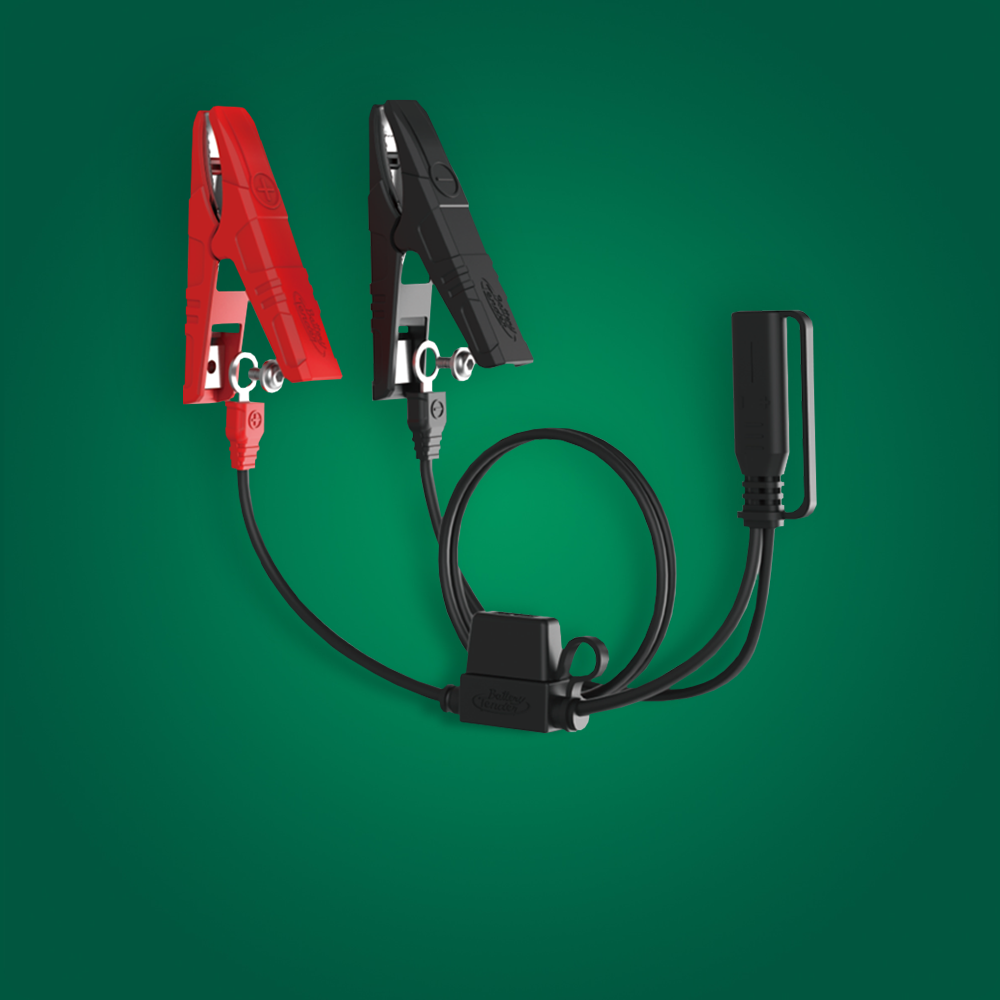
Step 1: Baseline every battery. Test each fleet vehicle battery with a conductance tester or load tester. Record cold cranking amps (CCA), state of charge percentage, and battery age. Replace any battery testing below 75% of rated CCA — no charger can restore a mechanically failed battery. Step 2: Install quick-connect harnesses. Attach ring terminal harnesses (SAE connectors) to every fleet vehicle battery. This reduces connection time from 3–5 minutes to under 10 seconds and eliminates clamp-related terminal damage. Step 3: Assign charger stations. Mount chargers or multi-bank units at designated parking positions. Label each station with the corresponding vehicle number. Step 4: Establish a connection-on-arrival rule. Every vehicle parked for more than 8 hours must be connected to its assigned Battery Tender charger. Post signage and include the requirement in fleet driver handbooks.
Step 5: Quarterly battery audits. Re-test every battery at 90-day intervals. Track CCA trends per vehicle. A battery losing more than 10% CCA per quarter despite consistent maintenance charging may have an internal defect or an undiagnosed parasitic draw. Step 6: Log and review. Maintain a simple spreadsheet tracking battery install date, quarterly CCA readings, charger connection compliance, and replacement events. Over 12 months, this data reveals which vehicles — or which drivers — are non-compliant.
The True Cost of Dead Fleet Batteries: ROI Calculation
Consider a 20-vehicle fleet currently replacing batteries every 2.5 years at an average cost of $200 per battery. Annual battery spend: $1,600 (8 replacements per year). Add an estimated $75 per incident for roadside assistance on the 3 no-start events per year that occur off-site: $225. Add 2 hours of technician labor per replacement at $50/hour: $800. Total annual dead-battery cost: approximately $2,625.
Equipment cost for the same fleet: 10 Battery Tender Plus units at $64.95 each = $649.50 (covering paired parking stations). Ring terminal harnesses for 20 vehicles at approximately $7.95 each = $159. Total one-time investment: $808.50. With battery life extended to 5+ years, annual replacements drop from 8 to approximately 4, cutting battery spend to $800. No-start events approach zero. Adjusted annual cost: approximately $1,200. First-year net savings: $1,425. The charger investment pays for itself in under 7 months, and each subsequent year delivers $1,400+ in recurring savings.
Emergency Preparedness: Jump-Starting Capability for Fleet Vehicles
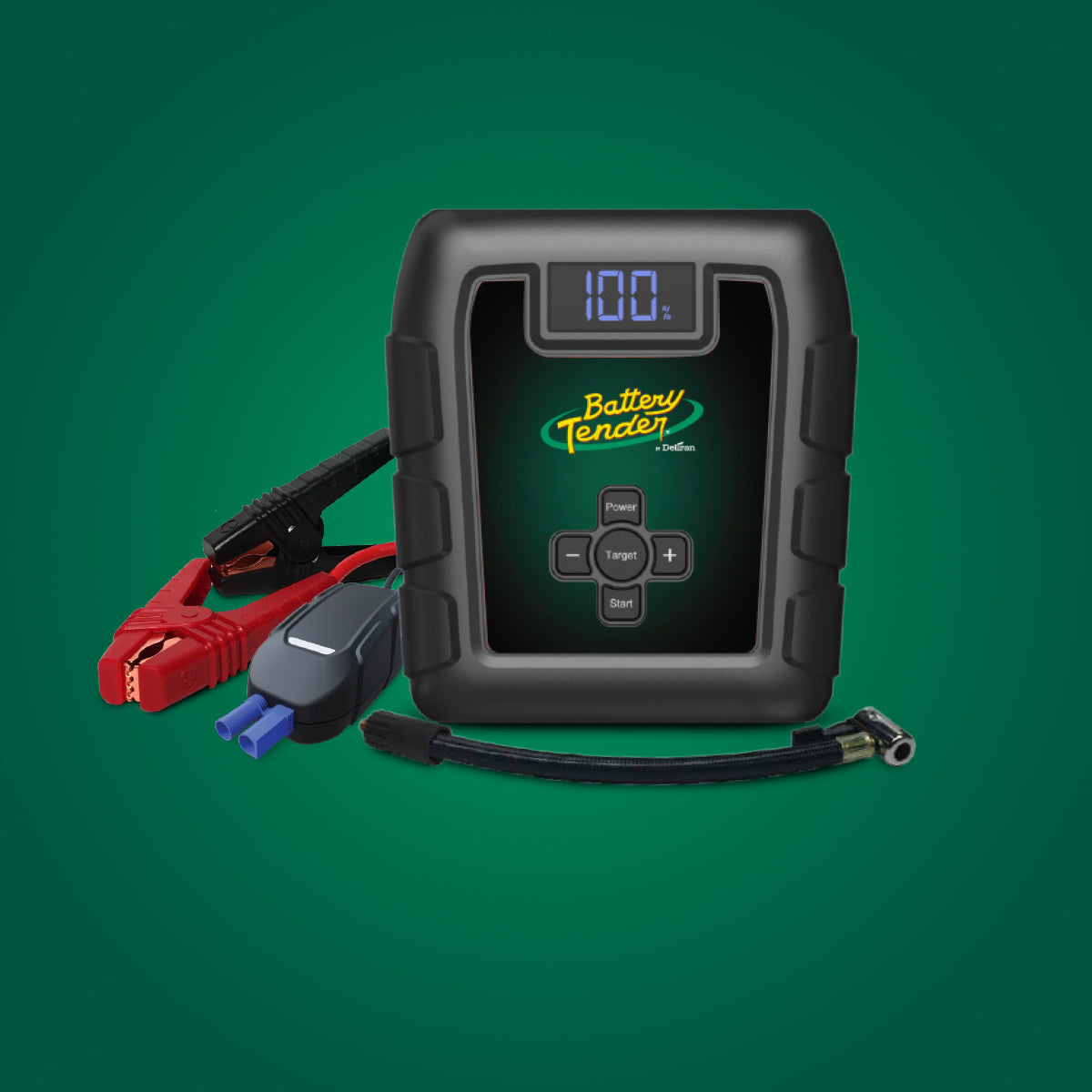
Even with a rigorous maintenance protocol, emergencies occur — a driver skips the connection step, a battery reaches end-of-life between audits, or a vehicle sits through an unexpected extended shutdown. Every fleet should maintain at least one portable jump starter for rapid recovery without waiting for roadside service.
The Battery Tender Charge N Start 4120 combines a 4A ISM charger with a 1,200-amp jump starter, making it both a maintenance tool and an emergency response device. The 4A charger recovers a 60 Ah battery from 50% depth of discharge in approximately 7.5 hours — calculated as (60 Ah × 0.50) ÷ 4A = 7.5 hours — while the jump-start function handles engines up to 6.0L gas and 4.0L diesel.
Battery Tender Charge N Start 4120 (4A Charger + 1,200A Jump Starter)
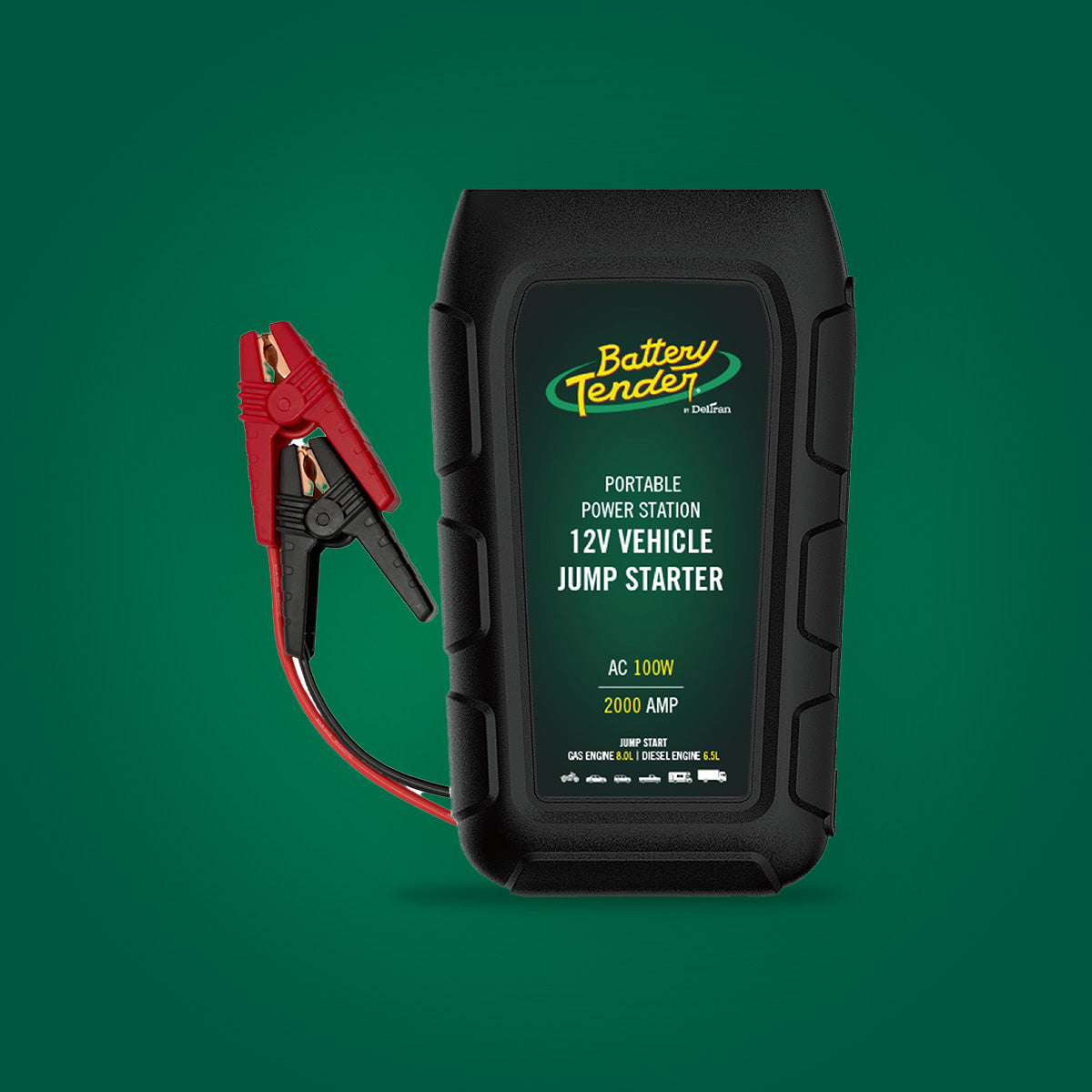
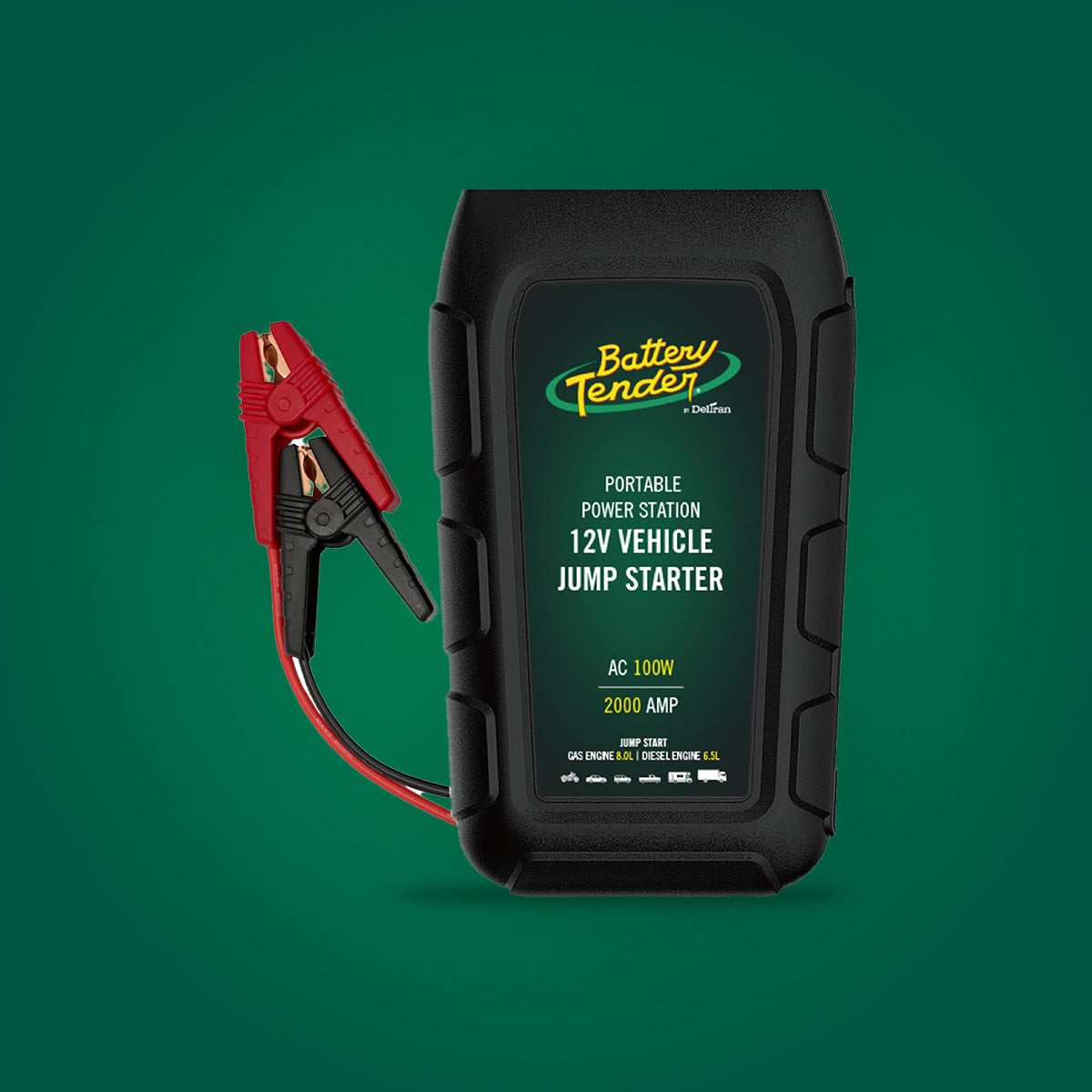
For fleets with larger trucks and diesel vehicles, the Battery Tender 2000A Jump Starter delivers 2,000 peak amps from a 16,000 mAh lithium-ion pack, capable of starting 8.0L gas and 6.5L diesel engines up to 50 times on a single charge.
Battery Tender 2000A Jump Starter
Frequently Asked Questions
Can Battery Tender chargers be left connected to fleet vehicles indefinitely?
Yes. ISM 4-stage charging automatically transitions to Float Maintenance once the battery reaches full charge, delivering only brief demand-responsive pulses when voltage drops. This design eliminates overcharge risk, making Battery Tender chargers safe for weeks, months, or even year-round connection to idle fleet vehicles without technician supervision.
How many fleet vehicles can a single multi-bank charger maintain?
Battery Tender multi-bank chargers maintain 2, 5, or 10 vehicles simultaneously from a single unit. Each bank operates with independent ISM, so one deeply discharged battery does not affect the charging of other connected vehicles. The Battery Tender 10-Bank charger covers 10 vehicles at a per-vehicle equipment cost of approximately $85.
What is the difference between a trickle charger and a smart charger for fleet use?
A trickle charger delivers constant current regardless of battery state, creating overcharge risk if left connected — a serious liability in unattended fleet environments. A smart charger using ISM technology monitors battery voltage continuously and adjusts output through four stages, including Absorption (which dissolves sulfate crystals) and Float Maintenance (which prevents overcharge). Only smart chargers are safe for unsupervised fleet deployment.
Does the Battery Tender Junior include temperature compensation for outdoor fleet use?
No. Battery Tender Junior models do not include temperature compensation. For fleet vehicles stored outdoors or in unheated facilities where ambient temperature varies significantly, the Battery Tender Plus with built-in temperature compensation is the recommended choice. Temperature compensation adjusts charge voltage automatically based on ambient conditions, preventing undercharge in cold weather and overcharge in heat.
Conclusion
Fleet battery maintenance for reducing dead batteries across vehicles is not a one-time fix — it is an operational discipline built on smart charging technology, documented protocols, and consistent compliance. ISM 4-stage charging from Battery Tender prevents the sulfation and chronic undercharge that cause the vast majority of premature fleet battery failures. Combined with quick-connect harnesses, quarterly audits, and a connection-on-arrival policy, a properly equipped fleet can extend battery life to 5+ years and virtually eliminate no-start incidents.
Explore the full lineup of fleet-ready chargers, multi-bank units, and jump starters at the Battery Tender battery charger collection.
Last updated: 2026