



A deep cycle RV battery powers your rig's "house" side — lights, water pump, fridge, and outlets — delivering steady current over hours, and it's built to be drained and recharged repeatedly. It's separate from the chassis starting battery that cranks the engine, and it needs different care to last.
How many batteries and what size?
Many RVs run a bank of two or more 12V (or paired 6V) deep cycle batteries wired for more capacity. Size the bank to your amp-hour needs: how much you draw overnight before recharging. A multi-bank charger keeps each battery independently healthy — see MultiBank Power Solutions.
Lead-acid vs. LiFePO4 for RVs
Flooded and AGM batteries are affordable and proven. LiFePO4 costs more upfront but delivers far more usable capacity, half the weight, and thousands of cycles — which is why many full-timers upgrade. LiFePO4 requires a charger/converter with a lithium profile.
Charging on the road and in storage
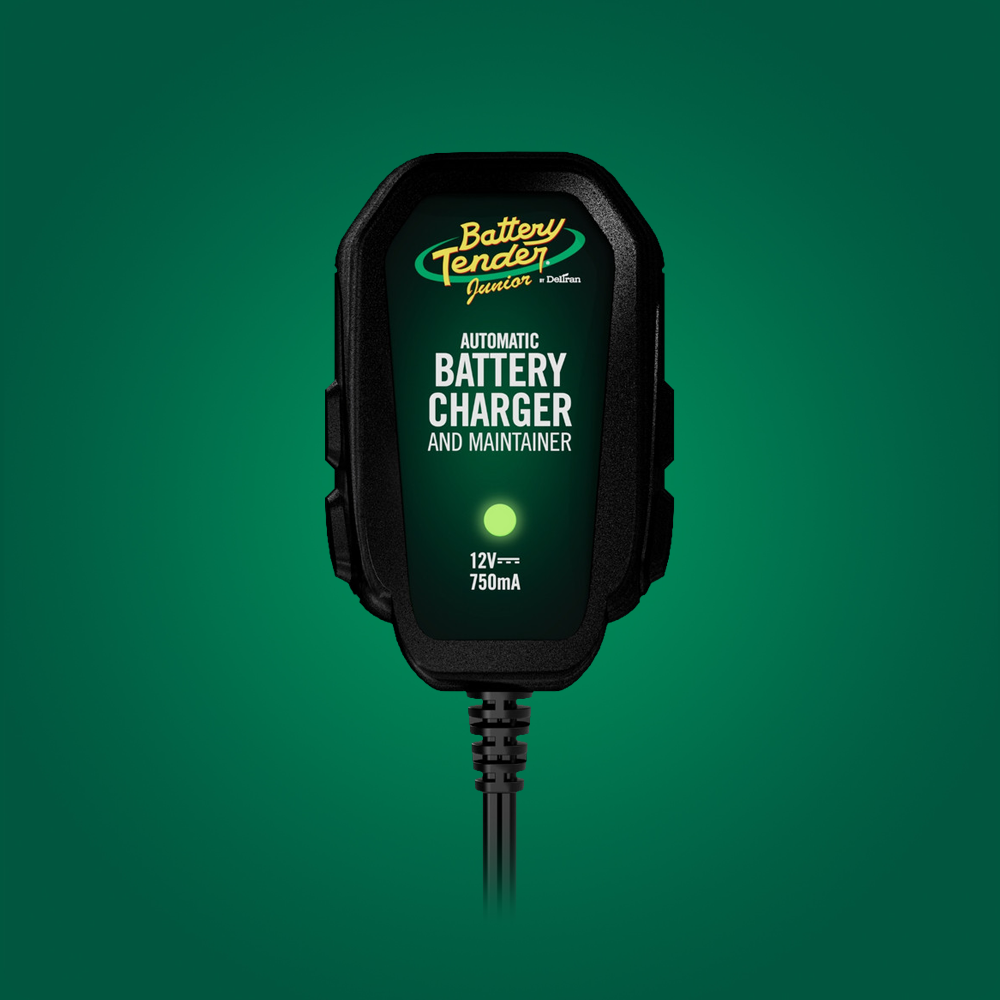
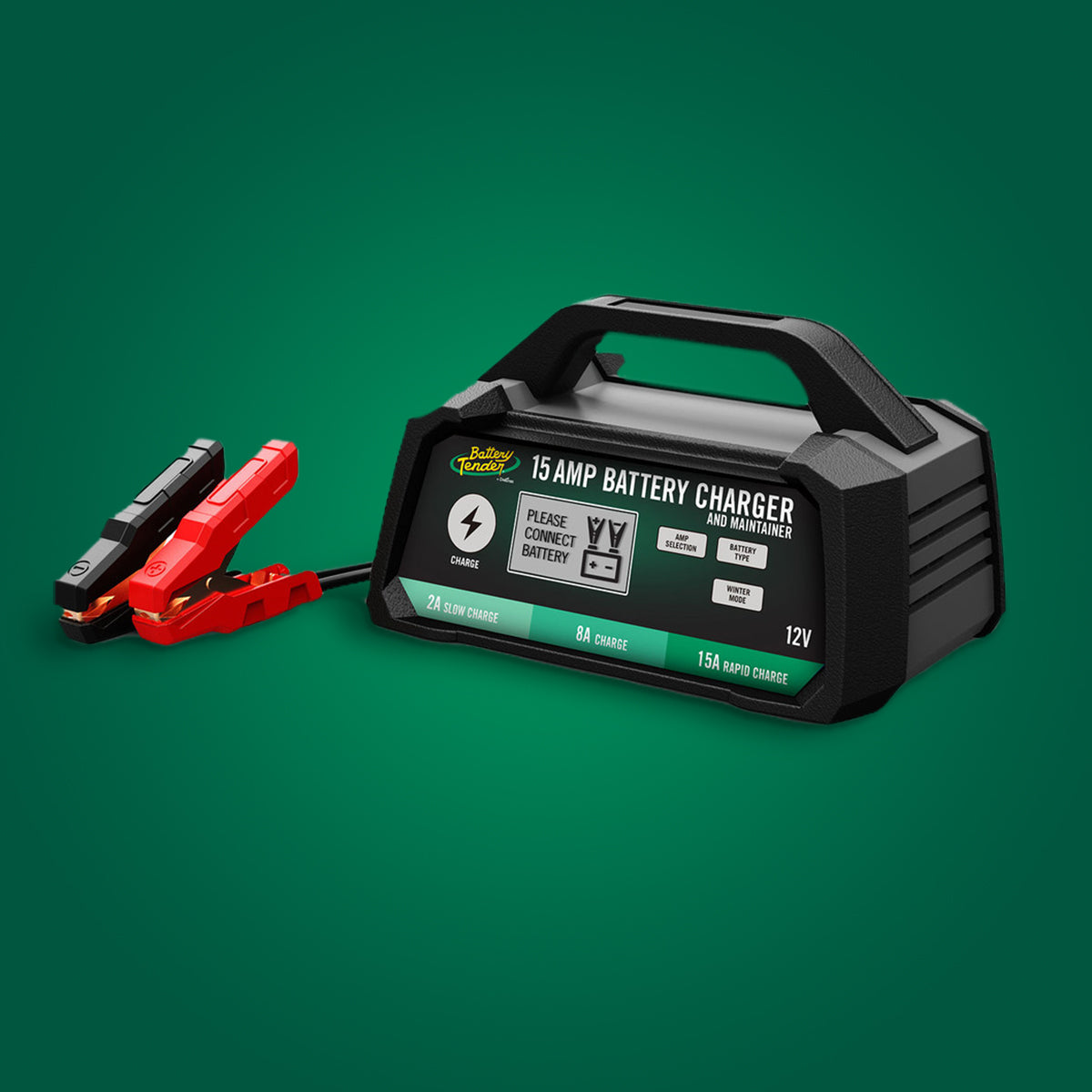
Your RV's converter charges the house bank while on shore power, but many older converters undercharge and leave batteries chronically low, causing sulfation. A Battery Tender® smart charger with true multi-stage charging and automatic float restores and then maintains the bank. In storage, keep it connected to a smart maintainer or a solar maintainer so the batteries never sit discharged.
Winter storage checklist
- Fully charge the bank.
- Disconnect or minimize parasitic loads.
- Connect a smart maintainer (AC or solar) for the off-season.
- Store lead-acid batteries somewhere that won't freeze when discharged.
Recommended Battery Tender® products
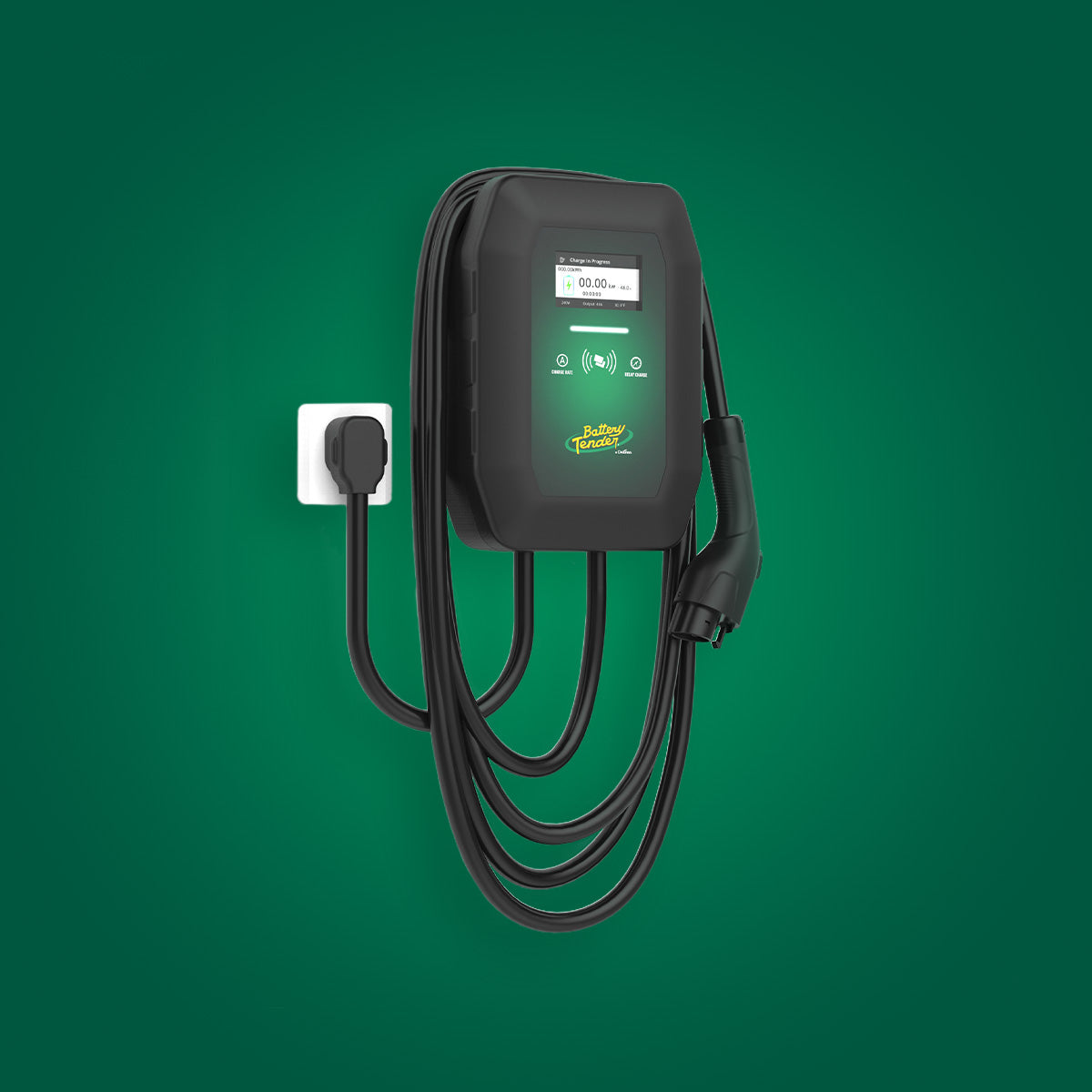
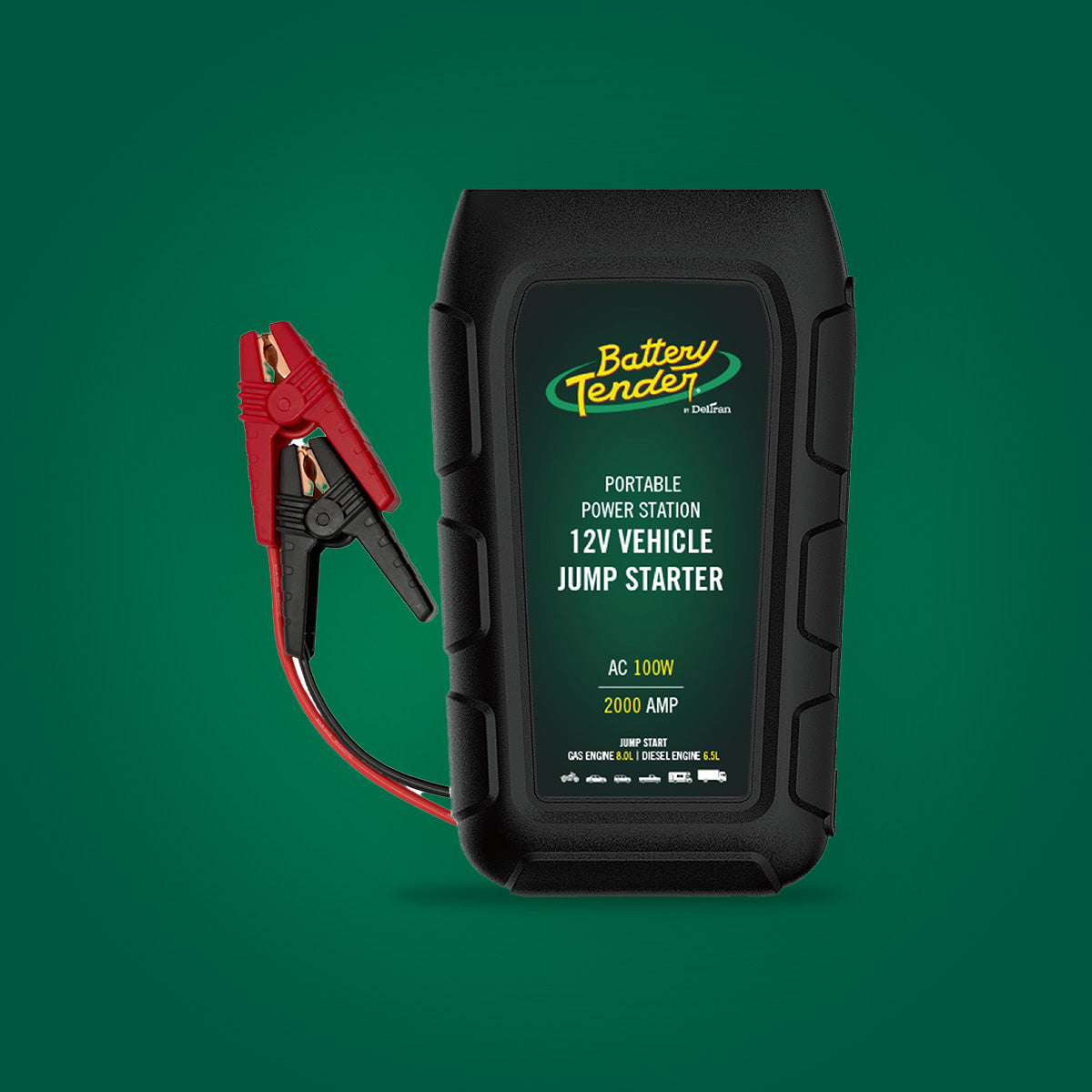
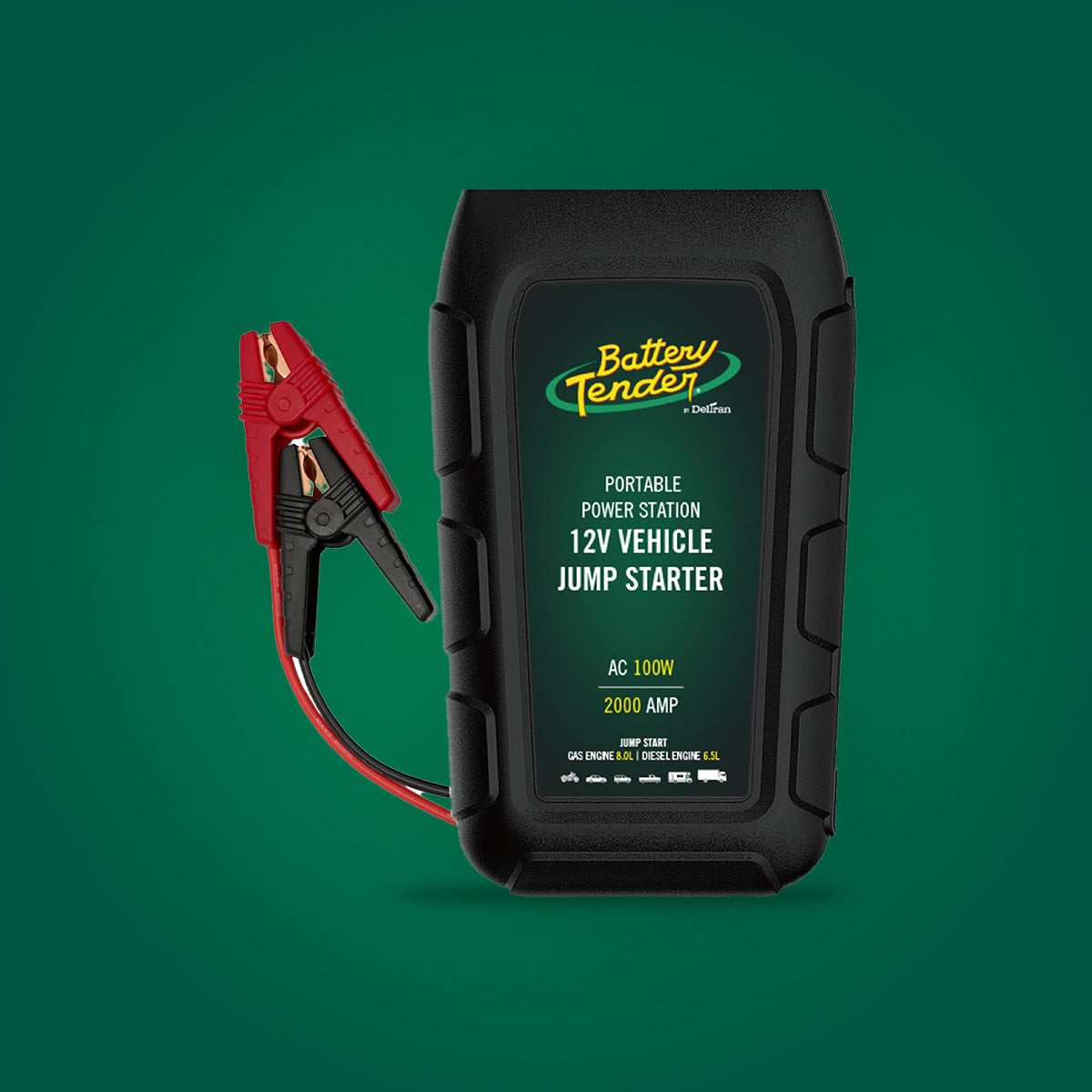
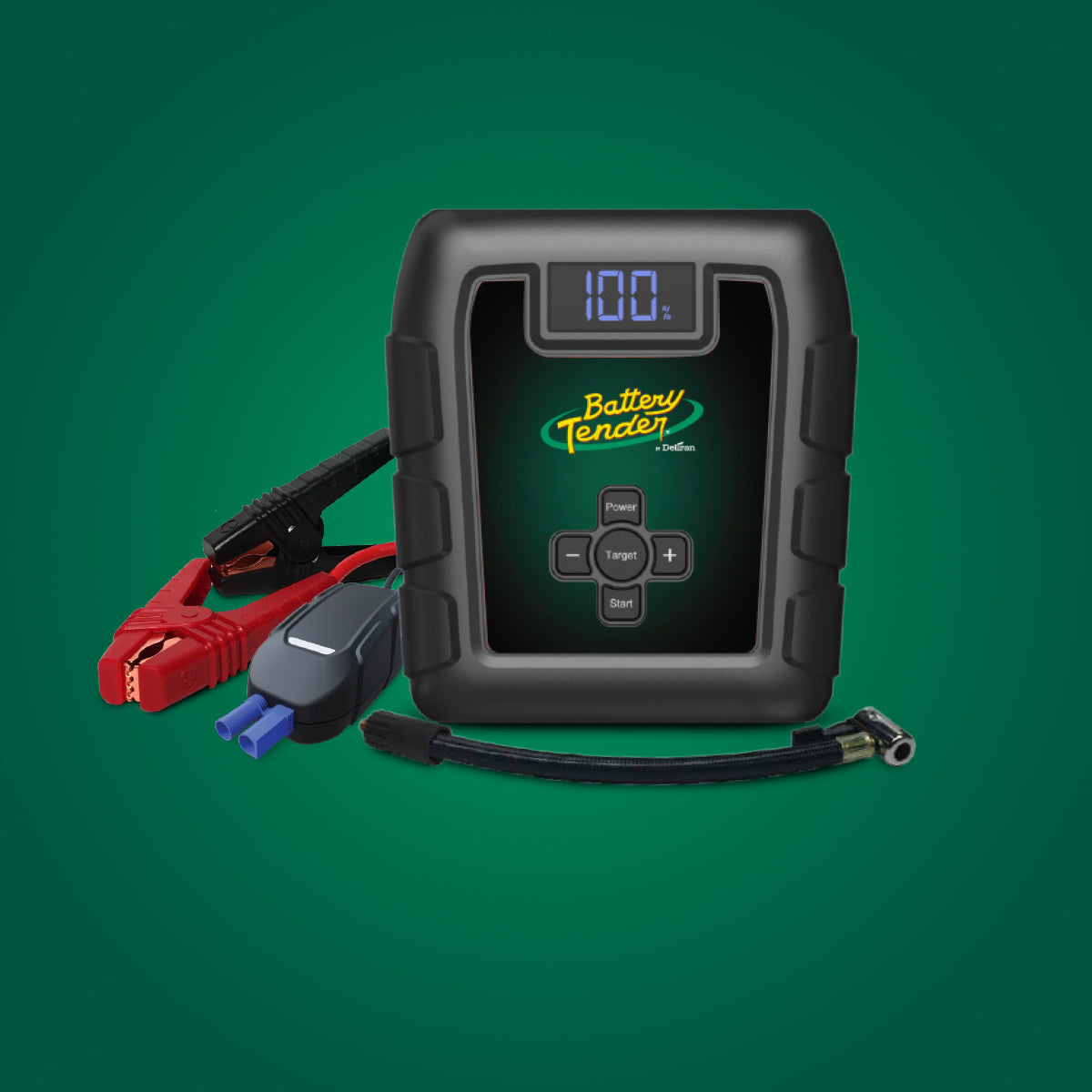
MultiBank Power Solutions for the house bank, Battery Chargers for single-battery smart charging, and a 1500 Amp Lithium Jump Starter for the chassis battery. New to deep cycle batteries? Read deep cycle batteries explained.
Frequently asked questions
How long does a deep cycle RV battery last?
AGM/flooded: 3–6 years; LiFePO4: often 8–10+ years with proper charging.
Can I leave my RV plugged in to keep batteries charged?
Only if the converter/charger has a smart float mode — many older converters overcharge or undercharge. A dedicated smart maintainer is safer for long storage.
Should I upgrade my RV to lithium?
LiFePO4 gives more usable capacity and lighter weight, but you must confirm your charger/converter has a lithium profile.
How do I store RV batteries for winter?
Charge fully, disconnect loads, connect a smart or solar maintainer, and keep lead-acid batteries from freezing.
