


Battery Charger for Lithium Batteries: 3 Checks First (2026)
A battery charger for lithium batteries must match the pack's voltage and offer a lithium-specific charge profile. A lead-acid profile can trip the battery management system (BMS) or stress the cells. Check three things before plugging in: system voltage, supported chemistry, and the battery's charge-temperature limit.
The Battery Tender® brand pioneered smart charging in 1989, and Battery Tender chargers now range from 750mA maintainers to multi-bank marine units. This guide covers the compatibility checks, sizing math, and storage steps for pairing a charger with LiFePO4 and other lithium packs. It also shows where Battery Tender products fit in a garage that runs both lithium and lead-acid batteries.
Key Takeaways
- Verify three things first: pack voltage, charger chemistry mode, and the BMS charge limits.
- A 12V LiFePO4 pack charges at roughly 14.2–14.6V, so a 6V or 24V charger is the wrong output.
- Size charge current at 10–20% of the amp-hour rating, and use (Ah × depth of discharge) ÷ amps for charge time.
- Fixed-current trickle charging has no place on lithium. Smart, multi-stage charging is safer on every chemistry.
- Do not charge lithium below 32°F (0°C) unless the battery maker approves it.
What Makes a Battery Charger for Lithium Batteries Different?
A battery charger for lithium batteries differs from a lead-acid unit in its charge profile, its voltage limits, and how it ends a charge cycle. Lithium iron phosphate (LiFePO4) is now common in motorcycle, marine, powersports, and RV batteries, so charger choice matters more than ever.
A LiFePO4 cell has a nominal 3.2V. A 12V pack therefore uses four cells in series for 12.8V nominal and charges to about 14.2–14.6V. Lead-acid batteries lose roughly 15–20% of input energy as heat and gassing, while LiFePO4 accepts current at 95% efficiency or better. Lithium also tolerates little overcharge, so the charger must stop at the correct voltage.
Every quality lithium battery includes a BMS. It is the last line of defense, not a substitute for a correct charger. Its typical jobs:
- Cutting off charge when any cell exceeds its voltage limit
- Disconnecting the load when cells drop too low
- Limiting current during charge and discharge
- Blocking charge when the pack is too cold or too hot
- Balancing cells so the pack stays even
How to Match a Battery Charger for Lithium Batteries to Your Pack
Run three checks (voltage, chemistry profile, and temperature and current limits) before connecting any charger to a lithium pack. Skipping one is how most lithium charging problems start.
- Check system voltage. Read the battery label. The charger output must equal the pack's nominal class (12V, 24V, 36V, or 48V).
- Check the chemistry mode. The charger must list lithium or LiFePO4 on its label, product page, or manual. "AGM" or "GEL" settings do not count.
- Check the limits. Find the maximum charge current and minimum charge temperature on the battery datasheet. The charger must stay under both.
Measure resting voltage with a multimeter first. The How to Test Your Car Battery at Home: 5-Step Multimeter Guide (2026) walks through the readings. A fully charged 12V LiFePO4 battery rests near 13.3–13.6V, while a reading near 0V usually means the BMS has shut the pack off.
| Pack Voltage Class | Cells in Series | Nominal Voltage | Typical Full-Charge Voltage |
|---|---|---|---|
| 12V | 4 | 12.8V | 14.2–14.6V |
| 24V | 8 | 25.6V | 28.4–29.2V |
| 36V | 12 | 38.4V | 42.6–43.8V |
| 48V | 16 | 51.2V | 56.8–58.4V |
What Charging Current Does a Lithium Battery Need?
Most LiFePO4 batteries charge well at 10–20% of their amp-hour rating, so a 30Ah battery pairs with a 3–6A charger. Never exceed the maximum charge current on the battery datasheet.
Charge time follows a simple formula: (battery Ah × depth of discharge) ÷ charger amps. A 100Ah battery at 80% discharge needs 80Ah back. A 10A charger delivers that in about 8 hours, and charging losses add a little more.
| Battery Capacity | Typical Use | Suggested Charge Current | Example Time (Math) |
|---|---|---|---|
| 5–10Ah | Motorcycle, ATV, mower | 0.75–1A | 10Ah at 50% = 5Ah ÷ 1A = 5 hours |
| 20–30Ah | Lawn tractor, small boat | 3–4A | 30Ah at 50% = 15Ah ÷ 4A ≈ 3.75 hours |
| 40–60Ah | Truck auxiliary, trolling motor | 4–10A | 60Ah at 50% = 30Ah ÷ 10A = 3 hours |
| 100Ah | RV house, marine house | 10A | 100Ah at 80% = 80Ah ÷ 10A = 8 hours |
| 200Ah | RV, solar storage | 10A or more | 200Ah at 80% = 160Ah ÷ 10A = 16 hours |
A small charger is fine for maintenance, but it takes longer to recover a drained battery. A charger that is too large for the pack will hit the BMS current limit and may trigger a shutdown. When in doubt, choose the lower current.
Why Smart Charging Beats Trickle Charging on Any Chemistry
A smart charger monitors the battery and adjusts its output, while a conventional trickle charger delivers fixed current regardless of battery state. That fixed current is the worst match for lithium, because nothing on the charger stops current when the cells are full.
Battery Tender chargers use Infinite Sequential Monitoring (ISM), a proprietary four-stage process:
- Initialization: tests the battery and applies gentle current to judge its condition.
- Bulk Charge: delivers full rated current until the battery reaches about 80% state of charge.
- Absorption: holds voltage constant while current tapers.
- Float Maintenance: applies charge only as needed to hold full charge.
For lead-acid batteries, ISM helps prevent the sulfation that shortens battery life. Battery Tender brand guidance credits ISM maintenance with extending typical lead-acid life from 2–3 years to 5 years or more. Lithium does not sulfate, so the benefit there is controlled charging and a safe stopping point. Always select the lithium setting on a multi-chemistry charger.
Temperature Limits for Lithium Charging
Most LiFePO4 batteries specify a minimum charging temperature of 32°F (0°C), and many BMS units block charging below it. A shed or unheated garage in January can fall below that limit overnight. Bring the battery indoors to warm up before connecting a charger.
Temperature compensation adjusts charge voltage to ambient conditions. It matters most for lead-acid batteries stored in extreme heat or cold, so check the product manual to confirm how your model handles temperature.
Which Battery Tender Chargers Fit a Mixed Lead-Acid and Lithium Setup?
The right Battery Tender charger depends on battery size, voltage, and chemistry. Many owners now run lithium in the motorcycle and mower and lead-acid in the truck, boat, or classic car. Confirm lithium support on each product page or manual before connecting any charger to a lithium pack.
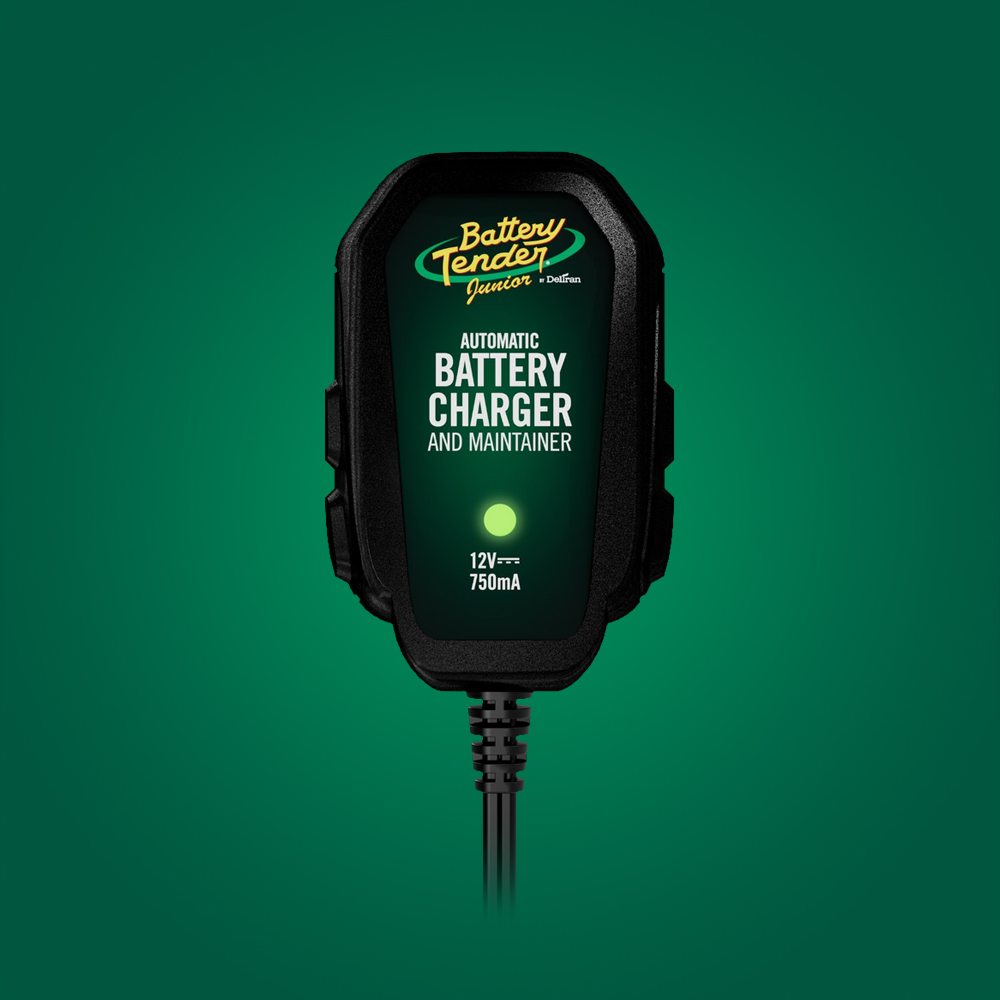
Battery Tender Power Tender® 4 Amp: Primary Pick for 20–40Ah Batteries
The 4A output equals 10–20% of a 20–40Ah battery, and the 12V/6V selection covers classic 6V cars and modern 12V AGM or GEL batteries. A 40Ah AGM at 50% discharge needs 20Ah, which is about 5 hours at 4A. If lithium is not listed on the product page, reserve it for the lead-acid batteries in the garage.
Battery Tender Power Tender 4 Amp 12V/6V Battery Charger and Maintainer
Battery Tender Power Tender 10 Amp Multi-Chemistry: For 100Ah Banks
A 100Ah RV or marine house battery needs about 10A for a practical charge time: 80Ah ÷ 10A = 8 hours. The multi-chemistry design suits owners who may upgrade from lead-acid to lithium later. Select the lithium mode, and confirm the setting in the manual.
Battery Tender Power Tender 10 Amp Multi-Chemistry 12V Battery Charger and Maintainer
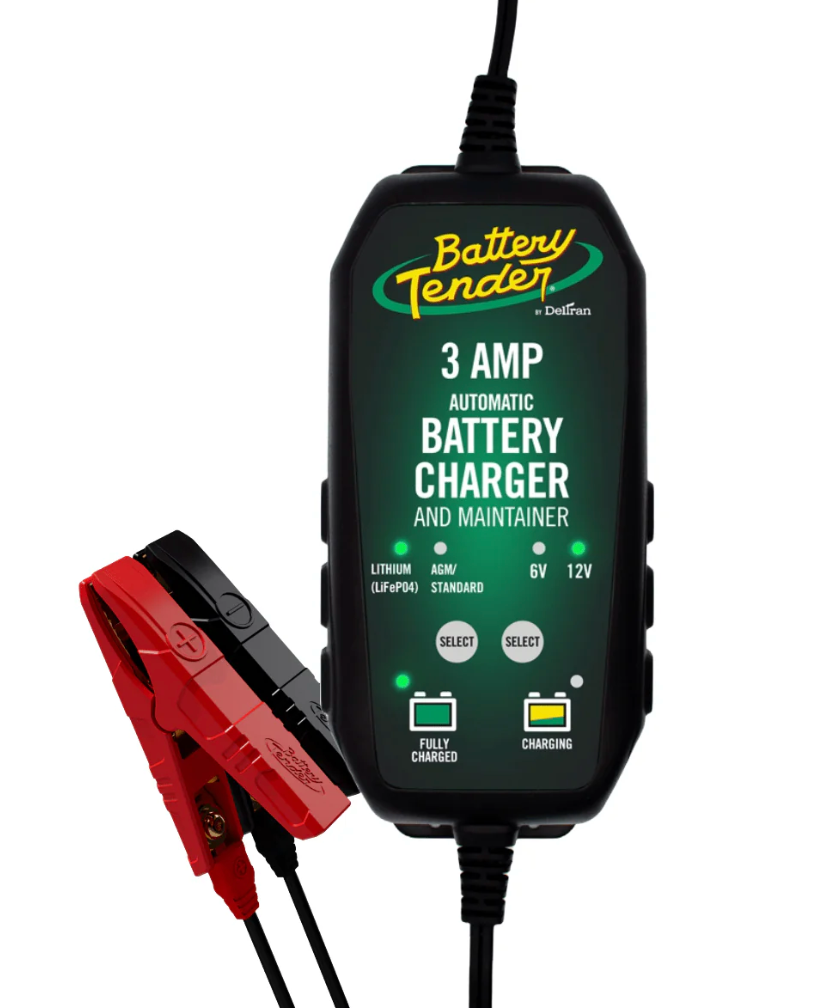
Battery Tender Power Tender 3 Amp: For 12–30Ah Batteries
The 3A output suits small packs where a 10A unit would be oversized. A 30Ah battery at 50% discharge needs 15Ah, which takes about 5 hours at 3A. The 6V/12V switch also covers older equipment. For seasonal mower schedules, see the Lawn Mower Battery Tender Charger Guide: All-Season Starts (2026).
Battery Tender Power Tender 3 Amp 12V/6V Battery Charger and Maintainer
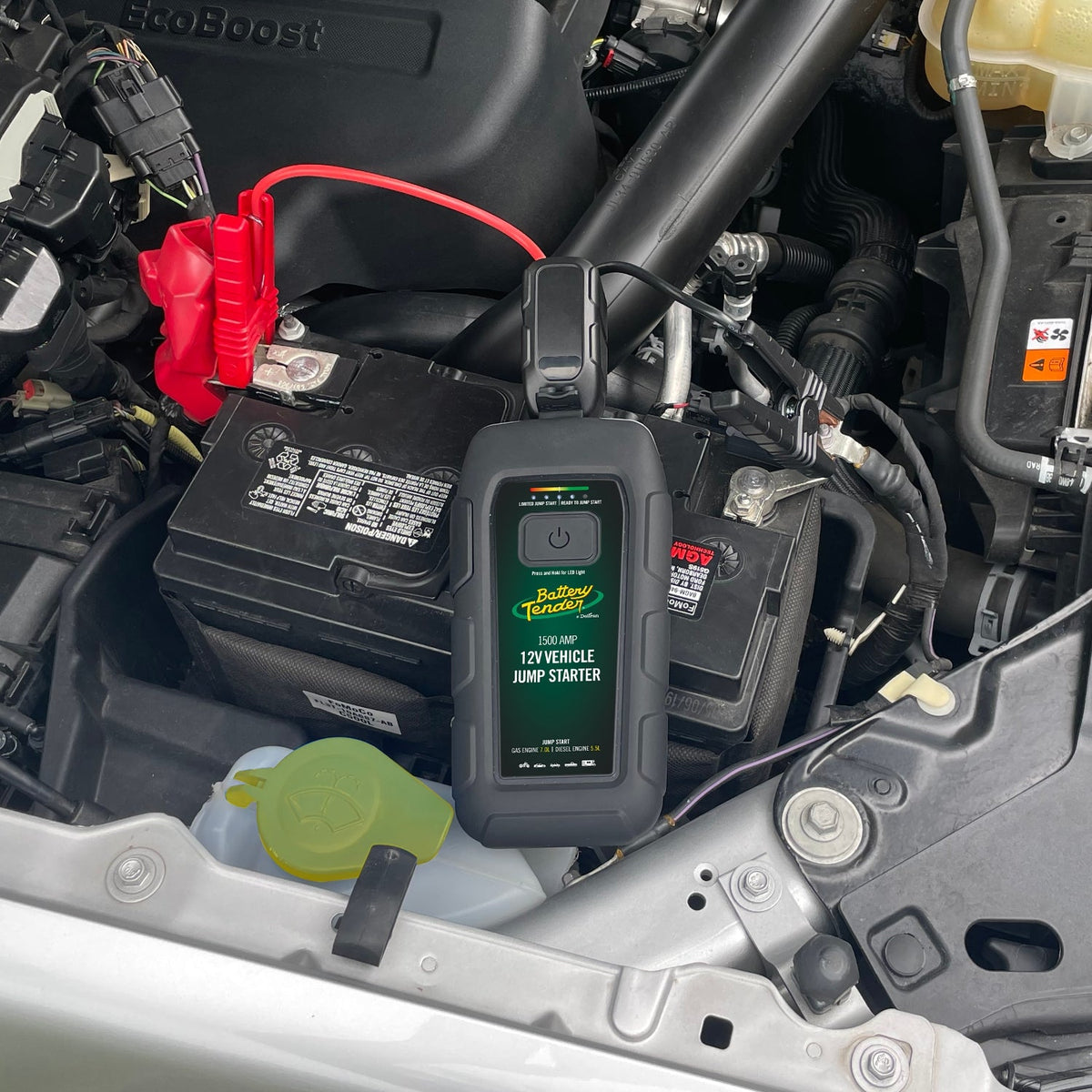
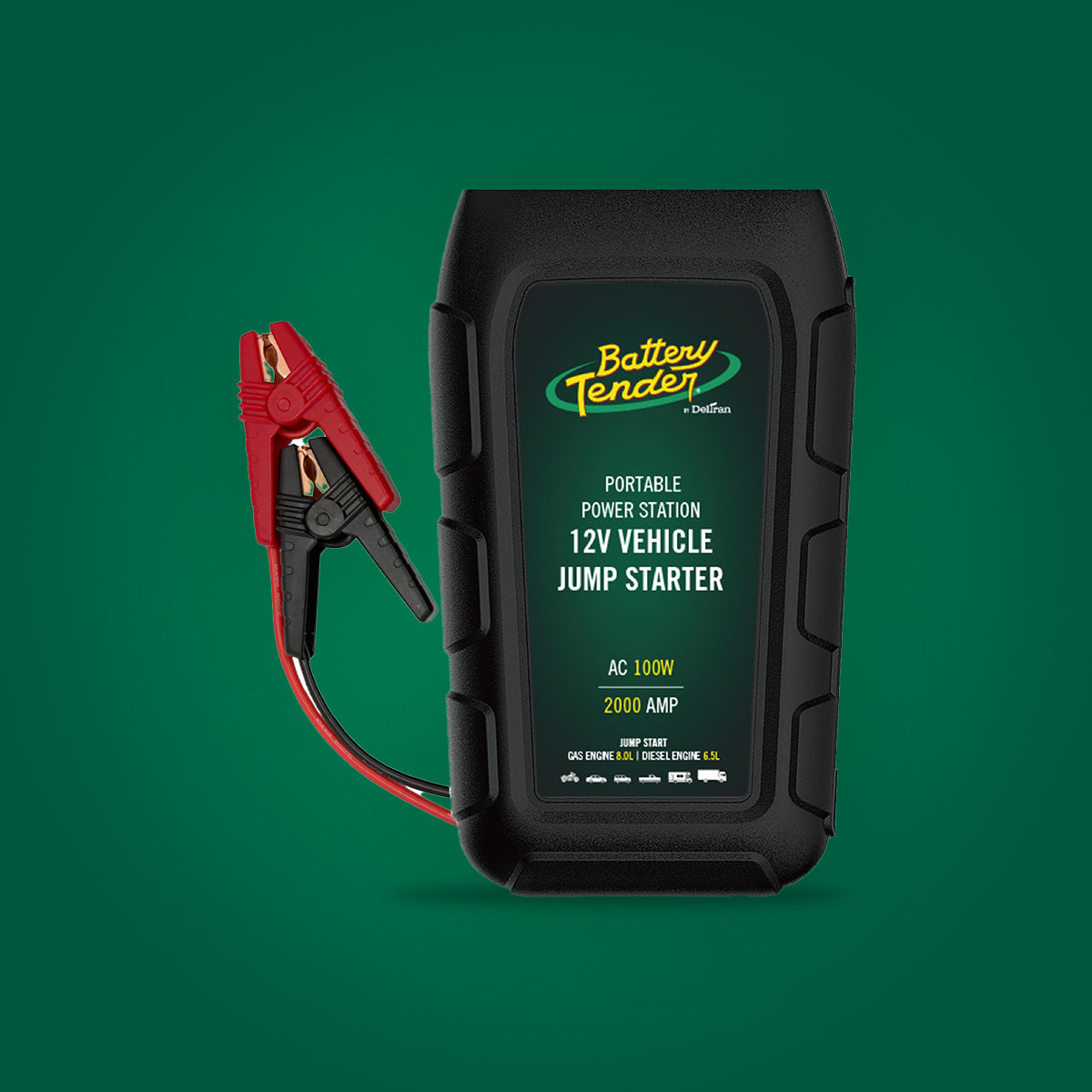
Battery Tender Jump N Start 600 Amp: Backup for Small Lithium Batteries
Small lithium batteries carry little reserve, and one left drained over winter can leave a motorcycle or mower stuck. The 600A unit suits motorcycles and small engines (4.0L gas, 2.0L diesel) and has a 6,400 mAh pack. It can start an engine, but it will not recover a battery stuck in BMS protection.
Battery Tender Jump N Start 600 Amp Lithium Jump Starter
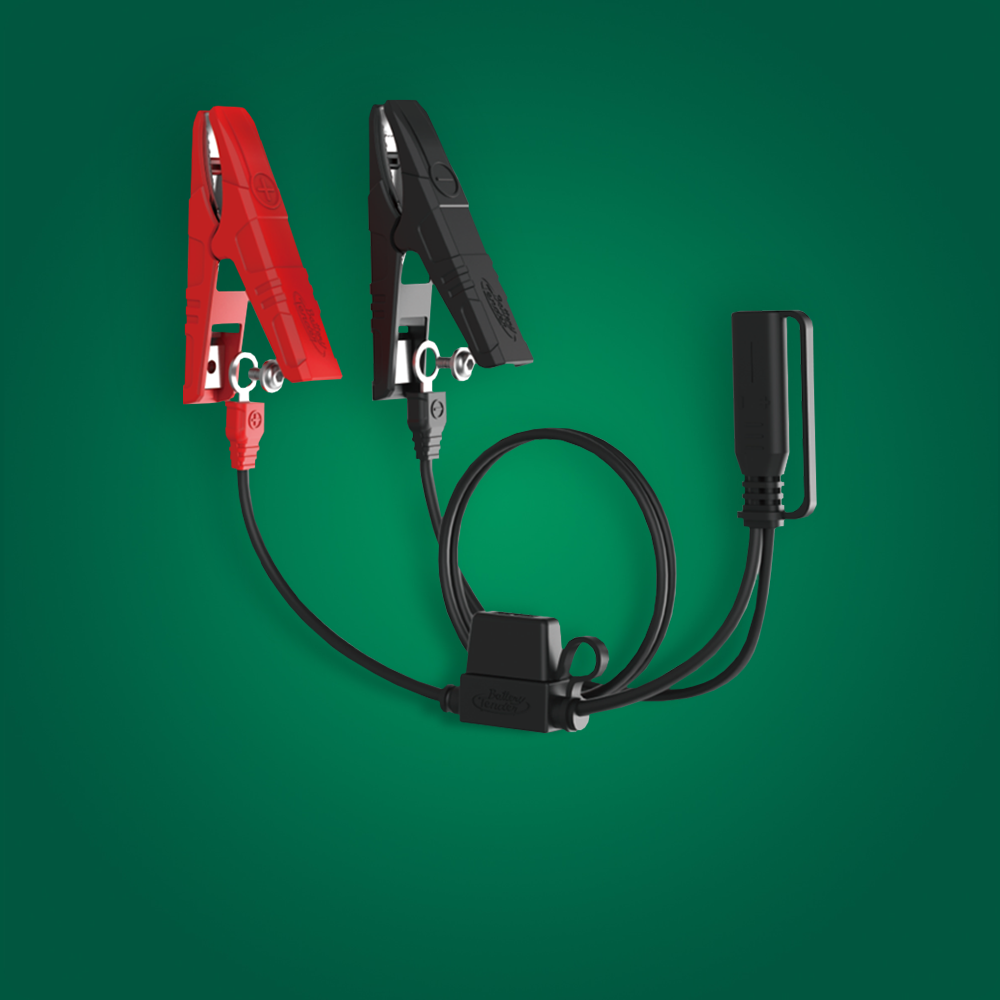
Smart Alligator Clips: For Larger Jump Starters
These clips fit the 800, 1000, 1500, and 2000 amp jump starters, so they suit owners who step up to a larger unit for an RV or truck. The 600 amp starter uses its own clip set, so match clips to the starter model.
Smart Alligator Clips for Jump Starters - 800, 1000, 1500, & 2000 AMP
How to Connect a Charger to a Lithium Battery
- Warm the battery. Confirm it is above 32°F (0°C).
- Check the charger setting. Select the lithium mode before connecting.
- Connect the clamps. Attach positive first, then negative, with the charger unplugged.
- Plug in and watch. Confirm the charger starts and reaches full charge.
- Disconnect and store. Follow the battery maker's storage guidance.
Frequently Asked Questions
Can I use a regular lead-acid battery charger on a lithium battery?
Sometimes, but only if the charger has a lithium or LiFePO4 mode, or the lithium battery maker explicitly approves its charge profile. Lead-acid profiles use desulfation and equalization voltages that can exceed what a lithium battery's battery management system accepts, causing shutdowns or cell stress. Check the charger's listed chemistries and the battery datasheet before connecting.
What voltage does a charger need for a 12V LiFePO4 battery?
A 12V LiFePO4 battery has four cells in series, so it charges at about 14.2–14.6V and rests near 13.3–13.6V when full. A charger for 12V lithium must be a 12V unit with a lithium profile; a 6V or 24V charger is the wrong match. Always compare the charger's output to the battery's stated maximum charge voltage.
Is it safe to leave a lithium battery on a charger all winter?
Yes, if the charger has a lithium profile that terminates the charge and only restarts when needed, or if the battery maker approves it. Lithium batteries do not need a continuous float charge, and many are stored at roughly 50–80% charge. Follow the battery maker's storage guidance, and keep the pack above freezing.
Why won't my charger start on a dead lithium battery?
Many chargers must detect a minimum battery voltage before they start. A lithium battery whose battery management system has shut off for low voltage reads near 0V at the terminals, so the charger sees no battery. Some chargers include a wake-up or lithium mode; otherwise use the battery maker's recovery procedure.
How long does it take to charge a lithium battery?
Divide the amp-hours you need to replace by the charger's amps. A 30Ah LiFePO4 battery at 50% discharge needs 15Ah, so a 4A charger takes about 3.75 hours; a 1A charger takes 15 hours. Add 10% for charging losses, and expect the final stretch to run slower.
Conclusion
Choosing a battery charger for lithium batteries comes down to three checks: pack voltage, a lithium-capable charge profile, and the battery's temperature and current limits. Add the sizing math (Ah × depth of discharge ÷ amps), and the charger choice becomes simple. Keep lead-acid batteries on a smart, multi-stage charger, and keep a jump starter on the shelf for backup.
Next step: read the label on your battery, write down its voltage and amp-hours, then compare it against the Battery Tender battery chargers collection to find a model that lists your chemistry.