


48 Volt Battery Charger Guide: Choosing the Right Charger for Golf Carts, Industrial Vehicles, and Energy Storage (2026)
A 48 volt battery charger delivers precisely regulated power to multi-battery systems found in golf carts, forklifts, electric utility vehicles, and off-grid energy storage banks. Unlike standard 12V automotive chargers, 48V chargers must manage higher system voltages — typically produced by four 12V batteries wired in series, six 8V batteries in series, or a single 48V lithium-iron-phosphate (LiFePO4) pack — while preventing overcharging, undercharging, and the sulfation that destroys lead-acid cells prematurely. Battery Tender® pioneered smart charging technology with Infinite Sequential Monitoring (ISM), a proprietary 4-stage process that automatically adapts output based on real-time battery condition, making it safe to leave connected indefinitely without risk of overcharge damage.
Selecting the wrong 48 volt battery charger can reduce battery bank lifespan from an expected 5–7 years down to just 2–3 years. This guide explains exactly how 48V systems work, what separates smart charging from outdated trickle charging, how to calculate charging times for common battery configurations, and which Battery Tender products deliver the safest, most efficient charge for every 48V application. Whether managing a personal golf cart, a commercial fleet, or a residential solar storage system, the information below provides the technical foundation needed to make the right decision in 2026.
How Does a 48 Volt Battery System Work?
A 48 volt battery system combines multiple lower-voltage batteries wired in series to achieve the required total voltage. The most common configurations include four 12V batteries (4 × 12V = 48V), six 8V batteries (6 × 8V = 48V), and eight 6V batteries (8 × 6V = 48V). Each configuration produces 48V nominal, but the amp-hour (Ah) capacity depends on the individual battery ratings. For example, four 12V 100Ah batteries wired in series produce a 48V 100Ah system — the voltage adds while the Ah capacity remains constant.
Single-unit 48V lithium-ion and LiFePO4 packs are becoming increasingly mainstream in golf carts and solar energy storage, eliminating the complexity of series wiring. Regardless of configuration, every 48V system requires a charger specifically designed for 48V nominal voltage ranges. A standard 12V charger connected to a 48V bank cannot deliver adequate voltage to reach full charge and may damage both the charger and the batteries. Conversely, mismatched voltage output from an unregulated charger can push individual cells beyond safe limits, causing thermal runaway in lithium chemistries or boil-off in flooded lead-acid cells.
The charging voltage for a 48V lead-acid system typically peaks between 56.4V and 58.8V during the absorption stage, depending on battery chemistry (flooded, AGM, or GEL). Lithium 48V systems require even more precise voltage regulation — usually 54.4V to 58.4V for LiFePO4. These tight tolerances make smart charging technology essential rather than optional.
Why a Smart 48 Volt Battery Charger Outperforms Trickle Chargers
Smart charging eliminates the single biggest cause of premature 48V battery failure: overcharging. Traditional trickle chargers deliver a constant current regardless of battery state of charge. When a 48V bank reaches full charge, a trickle charger continues pushing current into the cells, causing electrolyte loss in flooded batteries, plate corrosion in AGM cells, and dangerous heat buildup in lithium packs. According to the Battery Council International (BCI), overcharging reduces lead-acid battery life by 30–50% depending on frequency and duration.
ISM technology from Battery Tender solves this problem through a 4-stage process. Stage 1 (Initialization) tests the battery, applying gentle current to determine its condition and readiness to accept a charge. Stage 2 (Bulk Charge) delivers full rated current at constant output until the battery reaches approximately 80% state of charge. Stage 3 (Absorption) holds voltage constant while tapering current, dissolving sulfate crystals that accumulate on lead plates during discharge and storage. Stage 4 (Float Maintenance) applies demand-responsive charge pulses only when voltage drops below a set threshold, keeping the battery at 100% without overcharging.
This ISM process extends battery bank lifespan from the typical 2–3 years experienced with trickle chargers to 5 or more years of reliable service. For a 48V golf cart battery bank costing $800–$1,500 to replace, that longevity difference represents hundreds of dollars in avoided replacement costs per vehicle.
What Applications Require a 48 Volt Battery Charger?
Golf carts represent the largest consumer market for 48V charging. Manufacturers including Club Car (DS, Precedent, and Tempo models from 1995 onward), E-Z-GO (TXT and RXV), and Yamaha (G29/Drive and Drive2) all use 48V battery systems. Each manufacturer uses a unique DC charge plug connector, making compatibility a critical consideration when selecting a charger.
Industrial and commercial applications including electric forklifts, scissor lifts, automated guided vehicles (AGVs), and floor scrubbers also operate on 48V systems. These vehicles frequently run multiple shifts per day, making charging efficiency and battery longevity directly tied to operational costs. A fleet of 20 forklifts with improperly maintained 48V batteries can incur $30,000–$60,000 in premature battery replacements over a 3-year period.
Residential and commercial solar energy storage increasingly uses 48V battery banks to store excess photovoltaic output. The 48V nominal voltage reduces current (and therefore resistive losses) compared to 12V or 24V storage systems, improving overall system efficiency. Off-grid and backup power installations with 48V banks need chargers that can integrate with solar charge controllers while maintaining proper float maintenance during extended low-production periods.
How to Calculate 48V Battery Charging Time
Charging time for any battery system follows a straightforward formula: (Battery Ah × Depth of Discharge) ÷ Charger Amps = Approximate Hours. For a 48V golf cart system using six 8V 150Ah batteries discharged to 50%, the calculation is: (150Ah × 0.50) ÷ 15A charger output = 5.0 hours. This estimates bulk charge time; the absorption stage typically adds 1–2 additional hours as current tapers, bringing total charge time to approximately 6–7 hours.
Higher-amperage chargers reduce charging time but must remain within the battery manufacturer's recommended charge rate, usually expressed as a percentage of the battery's Ah capacity. Most lead-acid batteries specify a maximum charge rate of 20–25% of C20 capacity. For a 150Ah battery, that means a maximum charge current of 30–37.5A. Exceeding this rate generates excessive heat, accelerates water loss, and can warp plates. Lithium batteries typically accept higher charge rates — up to 0.5C or even 1C — but precise limits depend on the specific cell chemistry and BMS (Battery Management System) configuration.
Temperature also affects charging time and safety. Lead-acid batteries charge most efficiently between 50°F and 86°F (10°C–30°C). Below 32°F (0°C), charge acceptance drops significantly, and chemical reactions slow. Chargers with temperature compensation automatically adjust voltage output based on ambient temperature, preventing undercharging in cold conditions and overcharging in hot environments.
Choosing the Right Battery Tender 48V Charging Solution
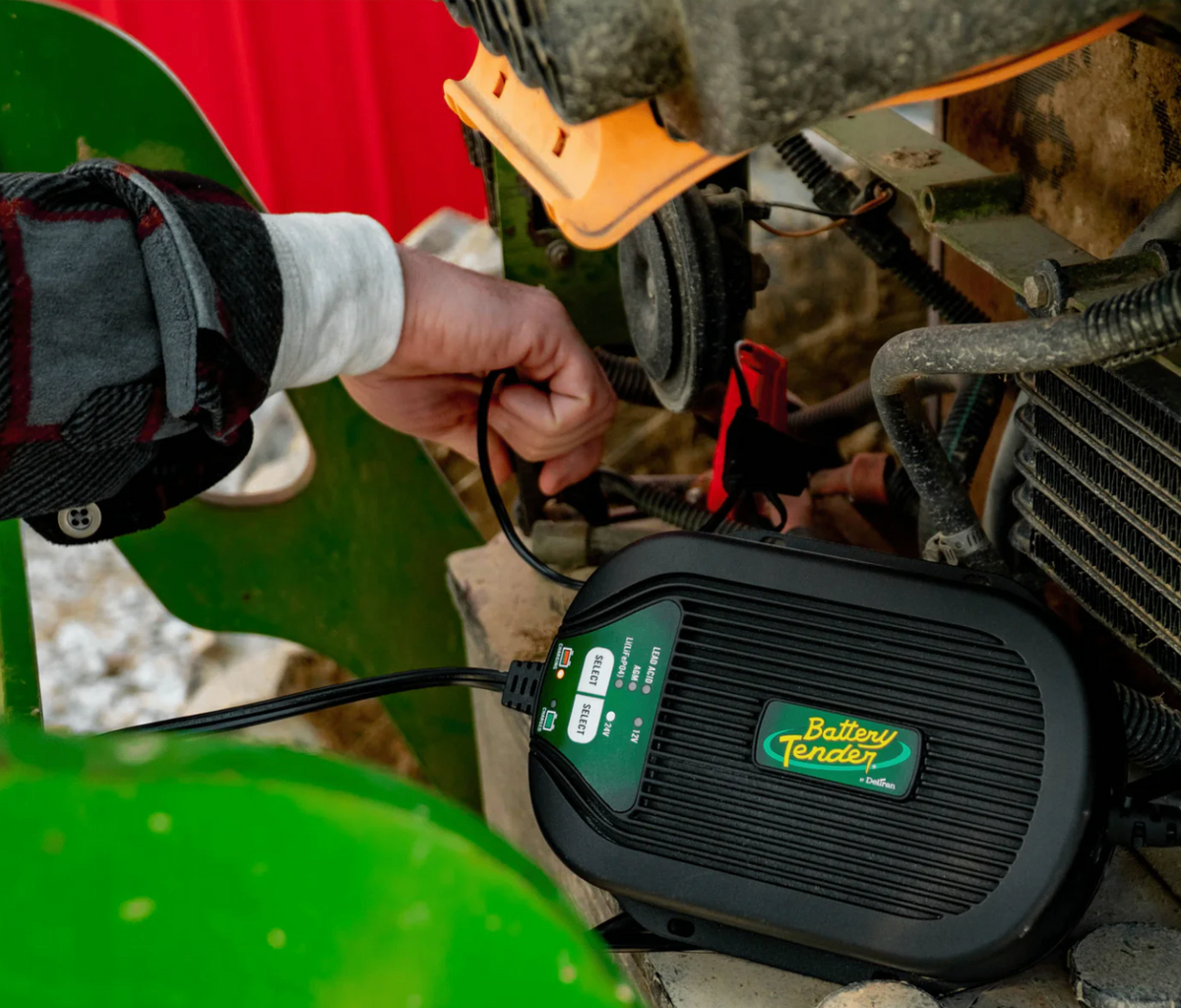
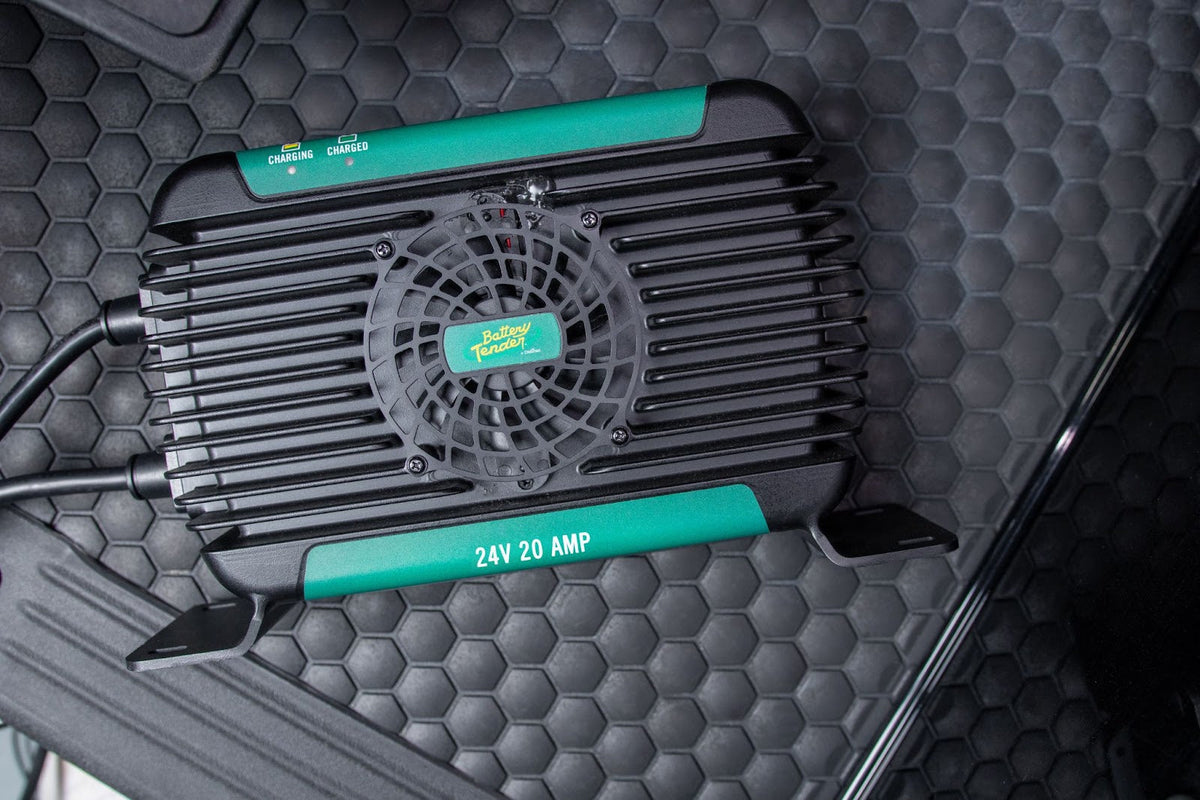
Battery Tender offers purpose-built 48V charging solutions through the Battery Tender PowerPlus line. The Battery Tender PowerPlus 48V delivers 15A of ISM-regulated output in an IP68-rated enclosure, making it suitable for indoor and outdoor installation. The IP68 rating means the unit is sealed against dust ingress and can withstand continuous water immersion — critical for golf cart charging stations exposed to rain, sprinkler systems, and washdown environments.
The Battery Tender PowerPlus 48V charges all common 48V battery chemistries including flooded lead-acid, AGM, GEL, and lithium. For a standard 150Ah golf cart battery bank at 50% depth of discharge, expected charge time is approximately 5 hours for bulk charging plus 1–2 hours for absorption — returning the cart to full service in under 7 hours overnight. Temperature compensation adjusts voltage output automatically, protecting batteries in unheated garages during winter and sun-exposed parking areas in summer.
This is the dedicated 48V charger for individual golf carts, utility vehicles, and energy storage systems that need reliable ISM charging in a single, permanently mountable unit.
Battery Tender PowerPlus 48V 15A Smart Charger
48V Golf Cart Charging: DC Plug Accessories and Compatibility
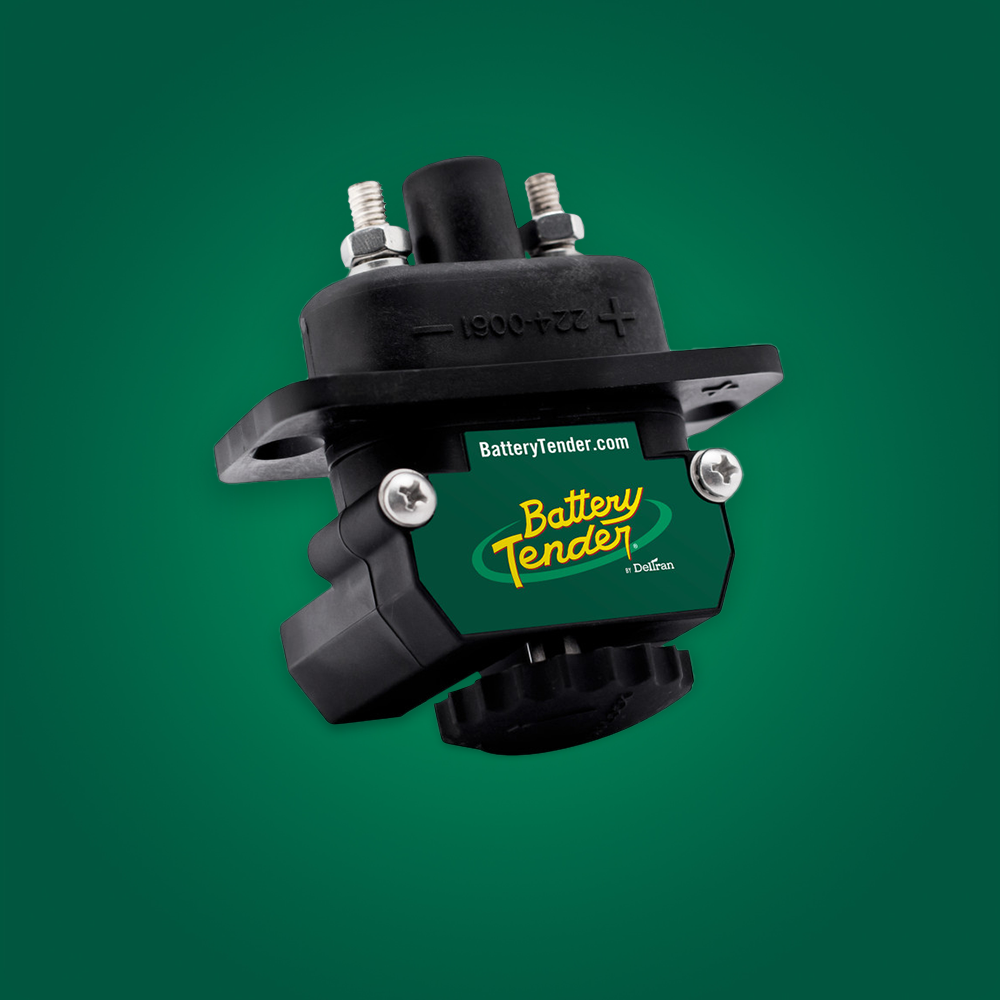
Golf carts use manufacturer-specific DC charge connectors, and matching the correct plug to the cart is essential. Battery Tender offers dedicated DC plug accessory cables that connect directly to each manufacturer's charge receptacle, allowing the Battery Tender PowerPlus 48V charger to integrate seamlessly without modifications.
For Club Car DS and Precedent models (1995–2013), the Battery Tender 48V DC Plug Accessory Cable provides a direct connection to the factory charge receptacle. E-Z-GO TXT and RXV carts use a 3-pin triangle handle connector, covered by a separate dedicated cable. Yamaha G19, G22, and G29 models use a MAC-style connector with its own matching cable. Each accessory cable is priced at $49.95, and selecting the correct one ensures safe polarity-matched charging every time.
Battery Tender 48V DC Plug Accessory Cable — Club Car DS/Precedent
Battery Tender 48V DC Plug Accessory Cable — E-Z-GO TXT/RXV
Battery Tender 48V DC Plug Accessory Cable — Yamaha G19/G22/G29
Fleet and Multi-Vehicle 48 Volt Battery Charger Strategies
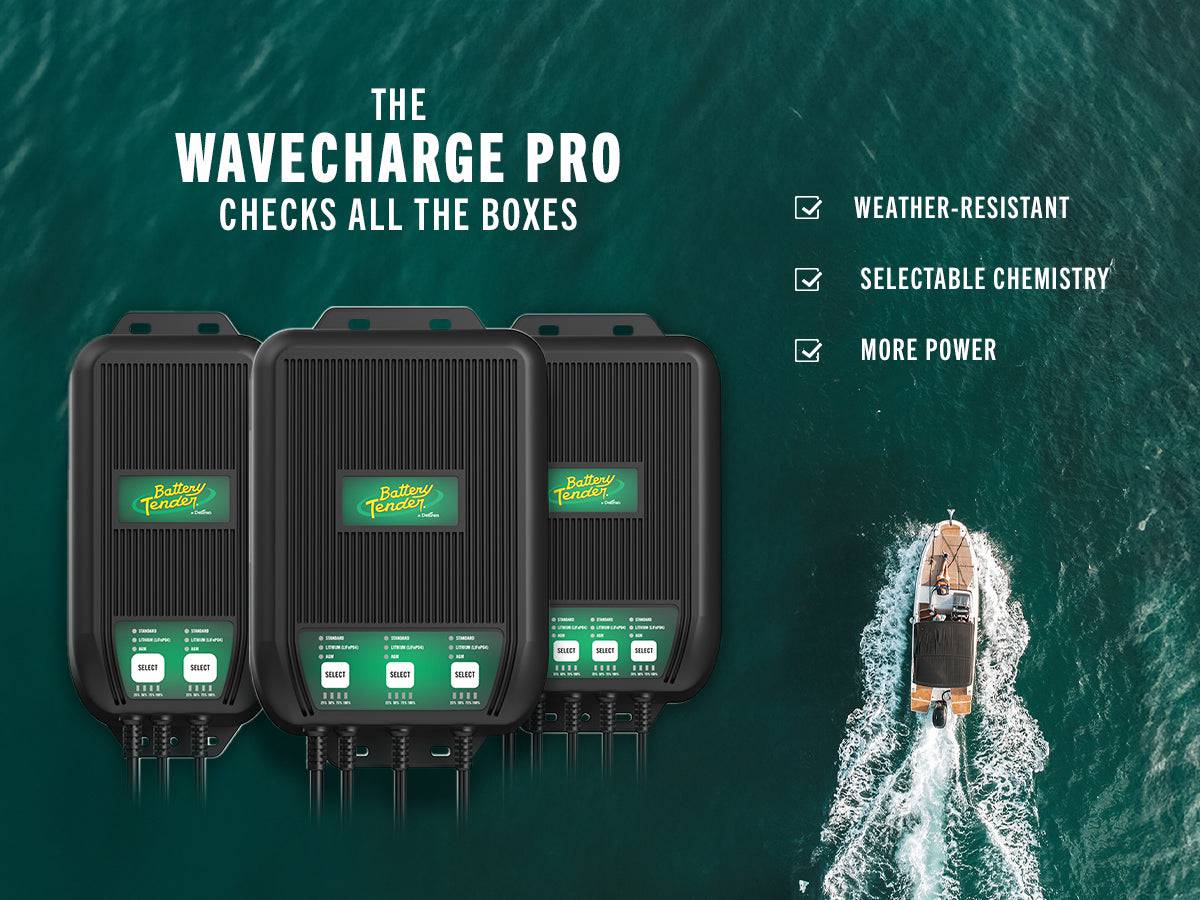
Golf course operations, resort properties, and industrial warehouses managing multiple 48V vehicles face a different challenge: charging 10, 20, or 50+ vehicles efficiently without dedicated high-amperage infrastructure for each unit. The Battery Tender 10-Bank charger provides a scalable solution for fleets that also maintain 12V or 6V support vehicles, utility carts, and equipment alongside 48V assets. Each of the 10 independent banks delivers 4A of ISM-regulated charging with selectable 6V/12V output, allowing a single wall-mounted unit to maintain up to 10 individual batteries simultaneously.
For dedicated 48V fleet charging, multiple Battery Tender PowerPlus 48V units can be installed in a centralized charging station. The IP68 rating allows outdoor installation under covered parking structures without additional weatherproofing. Each unit operates independently, so a failure in one charger does not affect the rest of the fleet. This distributed approach costs less than centralized high-amperage charging systems while providing per-vehicle ISM protection that extends battery bank lifespan across the entire fleet.
Battery Tender 10-Bank 6V/12V 4A Selectable Battery Charger
Maintaining 48V Batteries During Seasonal Storage
Golf carts and utility vehicles in northern climates often sit unused for 4–6 months during winter. Without proper maintenance charging, a 48V lead-acid battery bank self-discharges at approximately 3–5% per month at 68°F (20°C) and faster in warmer storage environments. After 3 months of neglect, a fully charged bank can drop to 85–90% state of charge — deep enough for sulfation to begin forming permanent crystals on the lead plates.
Connecting a Battery Tender PowerPlus 48V charger during the entire storage period eliminates this risk. The ISM float maintenance stage monitors voltage continuously and applies brief charge pulses only when the bank's voltage drops below threshold. This demand-responsive approach uses minimal electricity — typically less than $2–$3 over an entire winter — while keeping all cells at 100% state of charge. When spring arrives, the cart is ready for immediate use with no recovery charging required and no sulfation damage accumulated.
For individual 12V batteries removed from a 48V bank for off-season maintenance, the Battery Tender Plus 12V 1.25A provides ISM charging with temperature compensation and carries an industry-leading 10-year warranty. This approach works well when batteries need individual equalization charging or when storage space requires the bank to be disassembled.
Battery Tender Plus 12V 1.25A Battery Charger
Frequently Asked Questions
Can a 12V charger be used on a 48 volt battery system?
No. A 12V charger cannot produce sufficient voltage to charge a 48V battery bank wired in series. The charger would see the 48V bank as an open circuit or high-resistance load and either shut down or deliver inadequate current. However, a 12V charger like the Battery Tender Plus can charge individual 12V batteries after they are disconnected from the series string, which is useful for equalization and off-season storage maintenance.
How long does it take to fully charge a 48V golf cart battery bank?
Charging time depends on battery capacity and depth of discharge. Using the formula (Ah × depth of discharge) ÷ charger amps, a 150Ah battery bank at 50% discharge charged at 15A requires approximately 5 hours for bulk charging plus 1–2 hours for the absorption stage, totaling 6–7 hours. A completely depleted bank takes longer — approximately 10–12 hours at 15A for a 150Ah system.
Is it safe to leave a 48 volt battery charger connected all the time?
With a smart charger using ISM technology, yes. The float maintenance stage delivers charge pulses only when battery voltage drops below a set threshold, preventing overcharging. Traditional trickle chargers should never be left connected indefinitely because constant current delivery causes electrolyte boil-off, plate damage, and potential thermal hazards. Battery Tender chargers with ISM are designed for safe indefinite connection.
What is the difference between a 48V lead-acid and 48V lithium golf cart charger?
Lead-acid 48V systems require charge voltages between 56.4V and 58.8V, while lithium (LiFePO4) 48V systems typically need 54.4V–58.4V with tighter voltage regulation. Lithium batteries also accept higher charge rates and do not require the equalization charging sometimes needed for lead-acid. The Battery Tender PowerPlus 48V supports both chemistries with selectable profiles, ensuring the correct voltage curve is applied automatically.
Conclusion
A properly matched 48 volt battery charger with smart charging technology is the single most important investment for protecting golf cart battery banks, industrial vehicle power systems, and off-grid energy storage installations. ISM 4-stage charging from Battery Tender eliminates overcharge damage, reverses early sulfation, and extends battery lifespan from 2–3 years to 5 or more years — saving hundreds to thousands of dollars in replacement costs. Whether managing a single golf cart or an entire fleet, the Battery Tender PowerPlus 48V delivers the precision, durability, and chemistry flexibility that 48V systems demand in 2026.
Explore the complete lineup of Battery Tender charging solutions for golf carts, industrial vehicles, and multi-battery systems at the Battery Tender Golf Cart charging page.
Last updated: June 2026