


EV 12V Auxiliary Battery Maintenance: The Complete Guide for Electric Vehicle Owners
Your electric vehicle may run on a 400V or 800V traction pack, but a humble 12V auxiliary battery is what actually wakes it up every morning. EV 12V auxiliary battery maintenance is one of the most overlooked aspects of electric vehicle ownership—and one of the most consequential. When that small battery fails, the sophisticated high-voltage system underneath the floor becomes completely inaccessible, leaving you stranded regardless of how much charge your main pack holds. This guide explains why EV 12V batteries fail faster than most owners expect, how to recognize early warning signs, and exactly how to maintain them using the right equipment.
Why Every Electric Vehicle Carries a 12V Auxiliary Battery
The physics of electric vehicles make a dedicated 12V battery unavoidable. High-voltage traction packs operate at voltages between 200V and 900V depending on the platform—far beyond what door locks, instrument clusters, onboard computers, HVAC blowers, and safety systems can safely accept. Rather than engineer individual step-down converters for every low-power accessory, automakers install a single DC-DC converter that steps traction pack voltage down to 12V and feeds a conventional auxiliary battery.
That arrangement creates an elegant system, but also a critical dependency. The main high-voltage contactors—the heavy-duty relays that physically connect the traction pack to the motor controller—are actuated by 12V solenoids. If the auxiliary battery cannot supply enough voltage to energize those contactors, the vehicle cannot draw a single watt from its main pack. No matter how fully charged the traction battery is, the car will not move, the screen will not light, and the doors may not even respond to the key fob.
This is not a design flaw. It is a deliberate safety architecture. But it does mean that 12V auxiliary battery health is a foundational requirement for EV operation, not an afterthought.
How EV 12V Batteries Differ From Traditional Automotive Batteries
Understanding why EV 12V batteries need specific maintenance requires understanding how they differ from conventional vehicle batteries. In a gasoline-powered car, the alternator runs continuously whenever the engine is running, keeping the 12V battery topped off automatically during every drive. EV owners do not have that luxury.
In an electric vehicle, the DC-DC converter charges the 12V auxiliary battery only when the vehicle is in Ready mode—actively powered on and preparing to drive or actively driving. When the vehicle is parked, locked, and sitting in a garage, the DC-DC converter is typically offline. The 12V battery is on its own, slowly draining under the continuous load of the vehicle's always-on computers, cellular modules, proximity sensors, and anti-theft systems.
Most modern EVs draw between 20 and 80 milliamps of continuous parasitic current while parked. Over a week without any charging input, that drain can pull a 40 Ah AGM battery from full charge to a voltage level low enough to trigger a no-start condition. Over several weeks of inactivity, that same battery can reach a deeply discharged state that causes permanent capacity loss.
Compounding the problem is battery sizing. EV manufacturers typically install compact AGM batteries in the 30 to 50 Ah range—smaller than what most gasoline vehicles carry—because the DC-DC converter is expected to handle most of the charging responsibility. That smaller capacity means less buffer against extended discharge events.
Common Causes of EV 12V Auxiliary Battery Failure
Several distinct failure patterns appear repeatedly in EV 12V battery failures, and recognizing them helps owners take preventive action before a roadside situation develops.
Extended parking without Ready mode activation. Any time a vehicle sits for more than three to five days without being powered on, the 12V battery is losing charge with no replenishment. This is the single most common cause of premature 12V failure in electric vehicles.
Scheduled pre-conditioning. Many EV owners configure their vehicles to pre-heat or pre-cool the cabin before departure, using traction pack energy. What many do not realize is that climate pre-conditioning also draws 12V power for the HVAC control systems, blower, and electronics—even while the vehicle is parked and the traction pack is handling the bulk of the load.
Software update cycles. Over-the-air updates keep EV software current, but they often run overnight while the vehicle is parked. These updates can hold the vehicle's computers in an active state for hours, increasing parasitic draw on the 12V battery significantly.
Cold weather acceleration. AGM batteries lose a meaningful percentage of their capacity at low temperatures. An EV parked outdoors in sub-freezing conditions combines a weakened battery with elevated parasitic loads from the battery thermal management system, creating conditions for rapid discharge.
Age and repeated partial discharge cycles. Repeated cycles of partial discharge and incomplete recharge—which is exactly what the stop-start pattern of EV ownership creates—accelerate sulfation and plate degradation in lead-acid AGM batteries. Most EV 12V batteries show significant capacity degradation by three to four years of service.
Warning Signs Your EV 12V Battery Needs Attention
Electric vehicles are generally good at monitoring their own 12V battery status, but the warnings are easy to miss or misinterpret. Watch for these indicators before they become no-start events.
Sluggish or delayed touchscreen response when first entering the vehicle is often the earliest detectable sign of 12V battery weakness. When the vehicle issues a low 12V battery warning through the instrument cluster or companion app, that warning deserves immediate action—not a mental note for later. Intermittent key fob failures, particularly in cold weather, frequently trace back to a 12V battery that cannot maintain adequate voltage under load. Any instance where the vehicle fails to enter Ready mode on the first attempt is a strong indicator that the 12V system needs evaluation.
Selecting the Right Charger for EV 12V Auxiliary Battery Maintenance
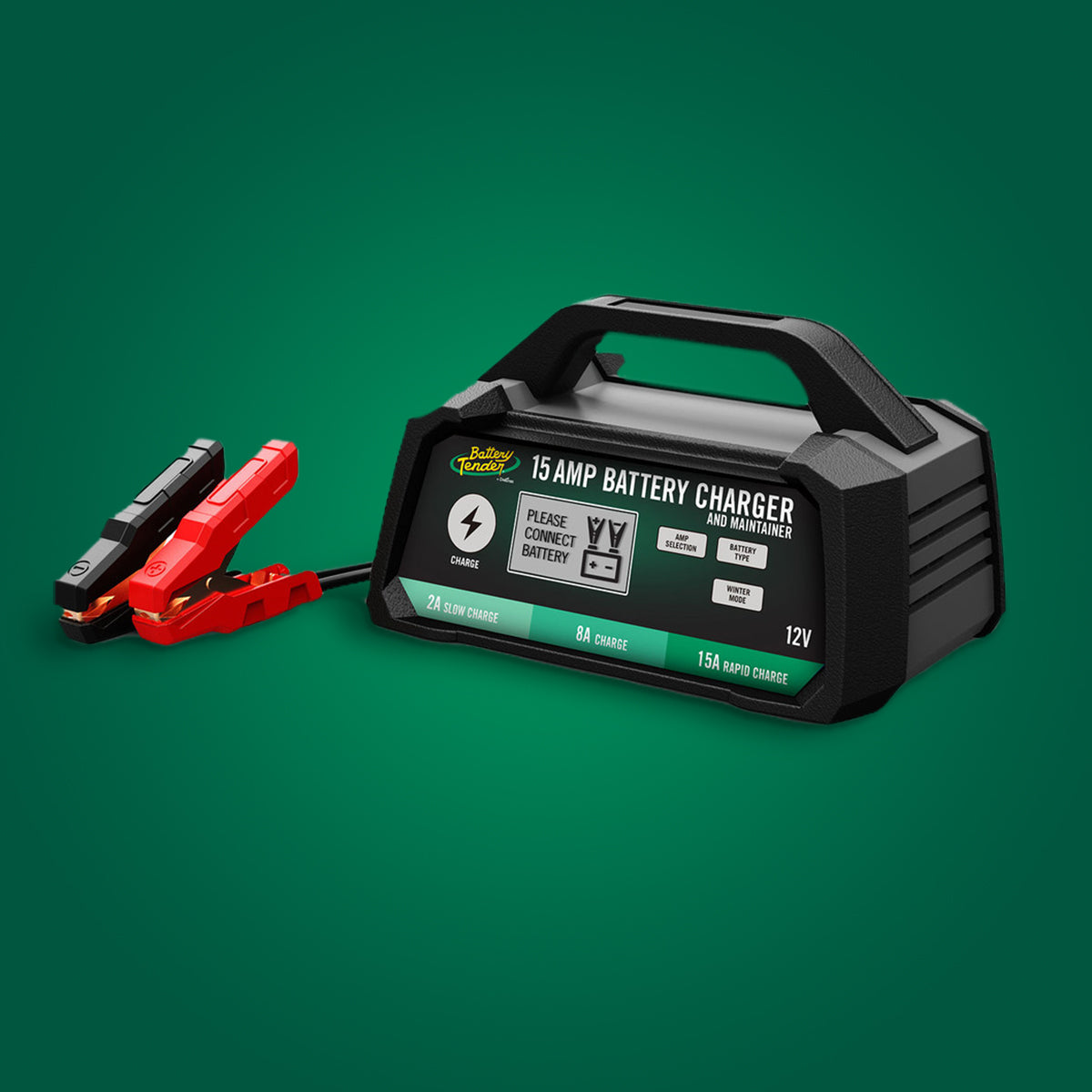
The most effective tool for preventing EV 12V battery failures is a quality automatic battery maintainer connected during any parking period longer than three days. Not every charger is appropriate for every EV battery chemistry, so selection matters.
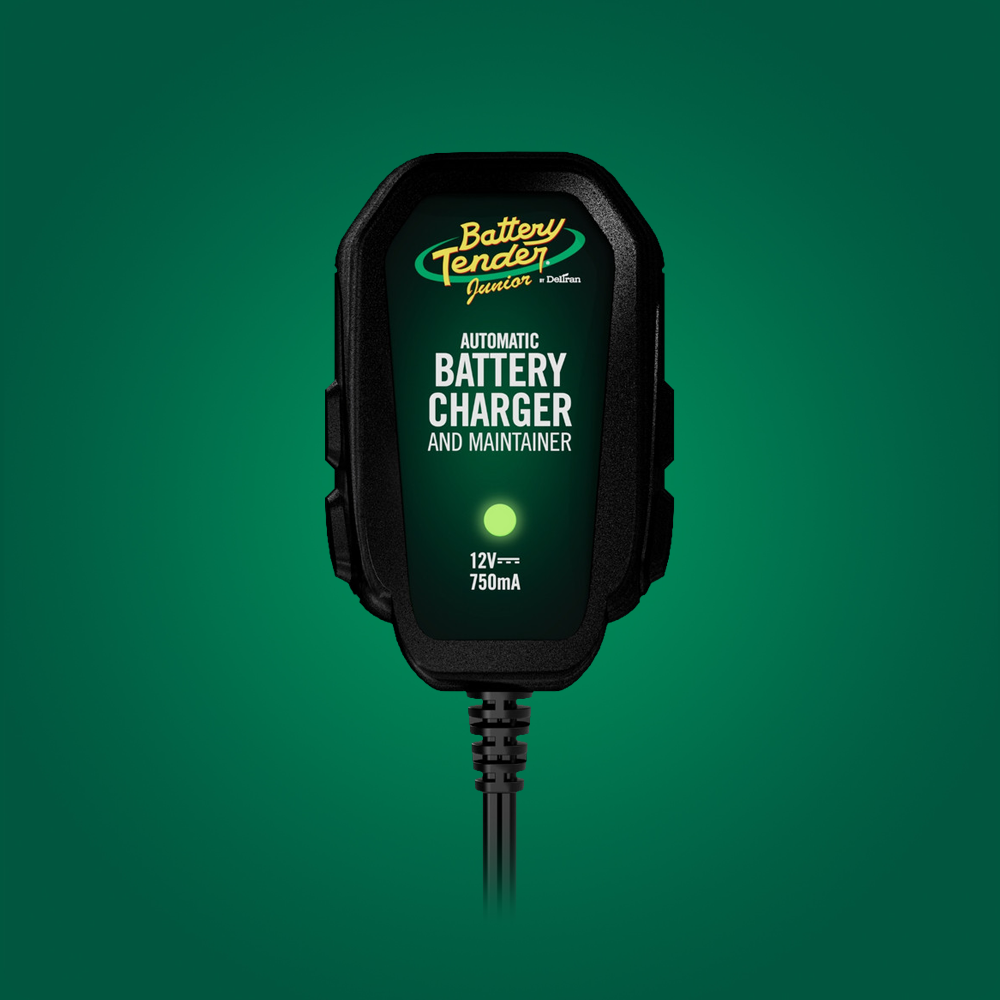
The majority of EVs on the road today—including most models from Ford, General Motors, Hyundai, Kia, Rivian, and Volkswagen—use AGM lead-acid batteries in the 12V auxiliary position. The Battery Tender® Junior 800mA is an excellent match for these compact AGM batteries. Its automatic maintenance mode holds the battery at full charge indefinitely without overcharging, making it ideal for vehicles that sit unused for days or weeks at a time.
For owners who maintain multiple vehicles or want faster reconditioning capability for a battery that has already experienced deep discharge, the Battery Tender® Plus 1.25 Amp provides additional output current while maintaining the same intelligent multi-stage charging that protects sensitive AGM batteries.
Tesla has been transitioning its vehicles from AGM to lithium iron phosphate (LiFePO4) 12V auxiliary batteries in recent production years. These lithium batteries require a charger with a dedicated lithium charging profile to avoid overcharging or improper balancing. The Battery Tender® 12V Lithium Battery Charger is purpose-built for LiFePO4 chemistry and provides the precise voltage and termination characteristics these batteries require. Using a standard lead-acid charger profile on a lithium 12V battery risks overcharging and can degrade the battery prematurely.
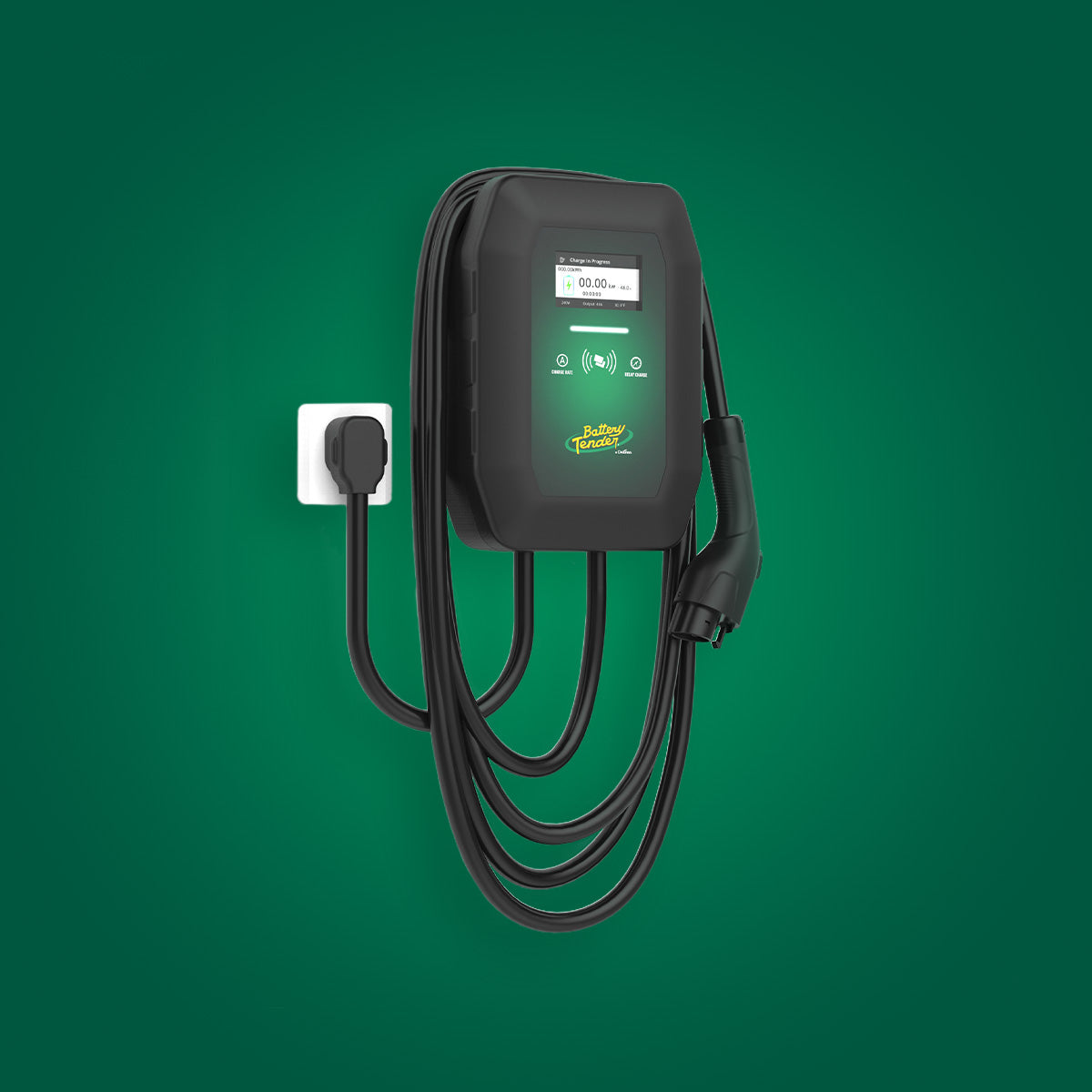
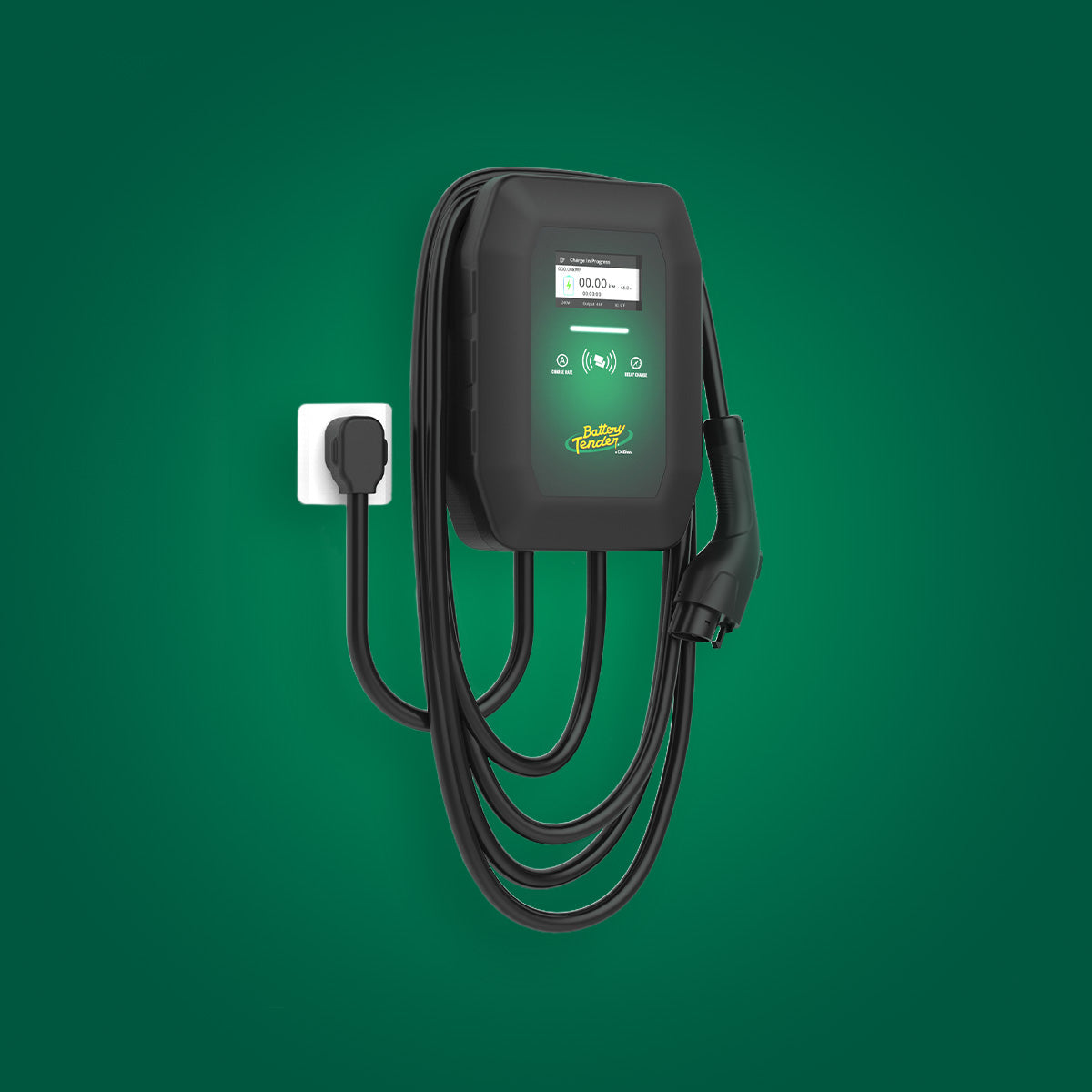
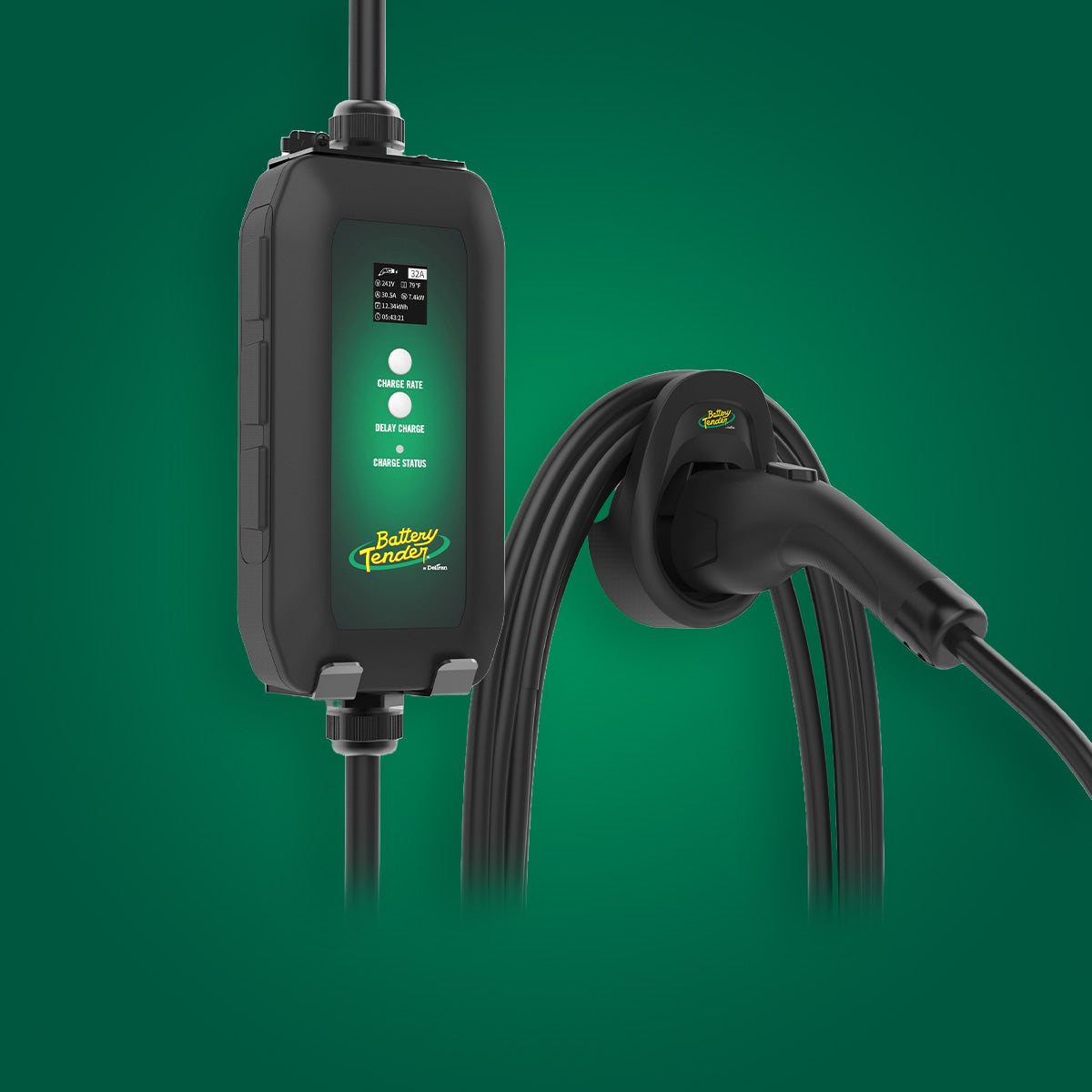
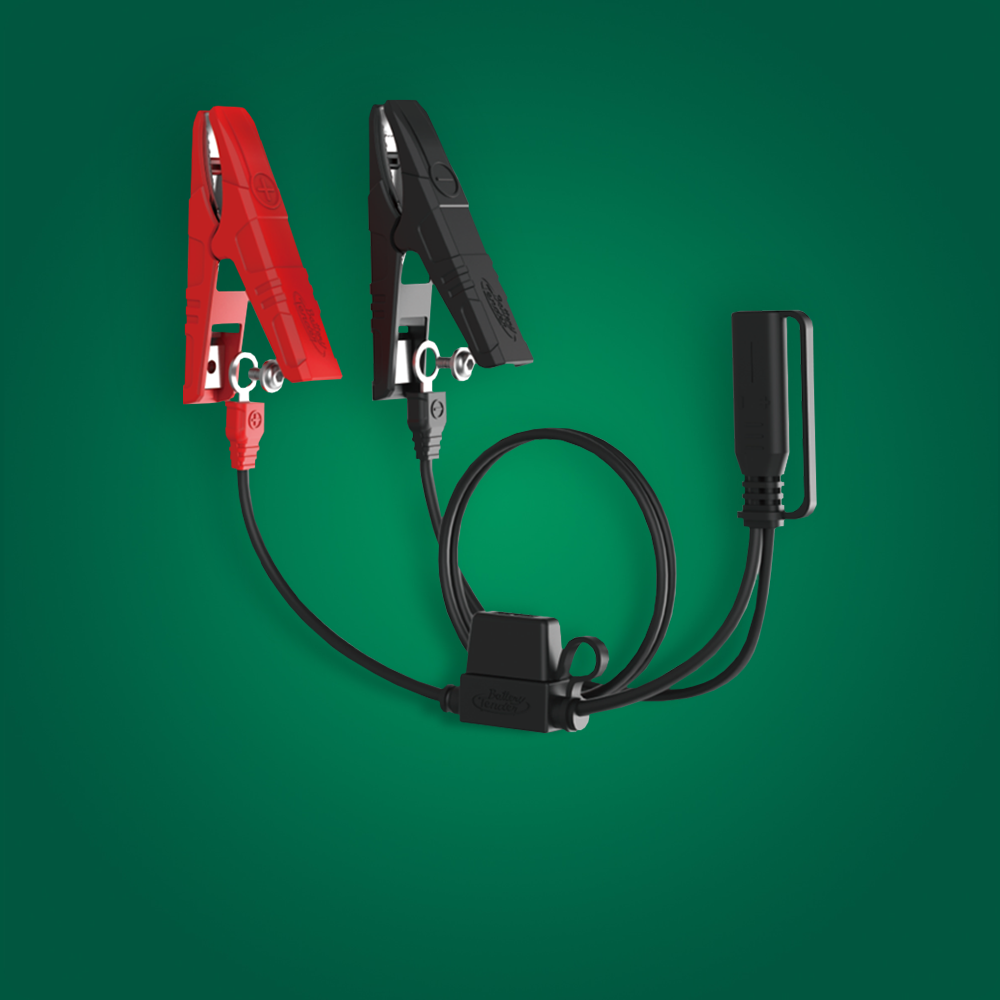
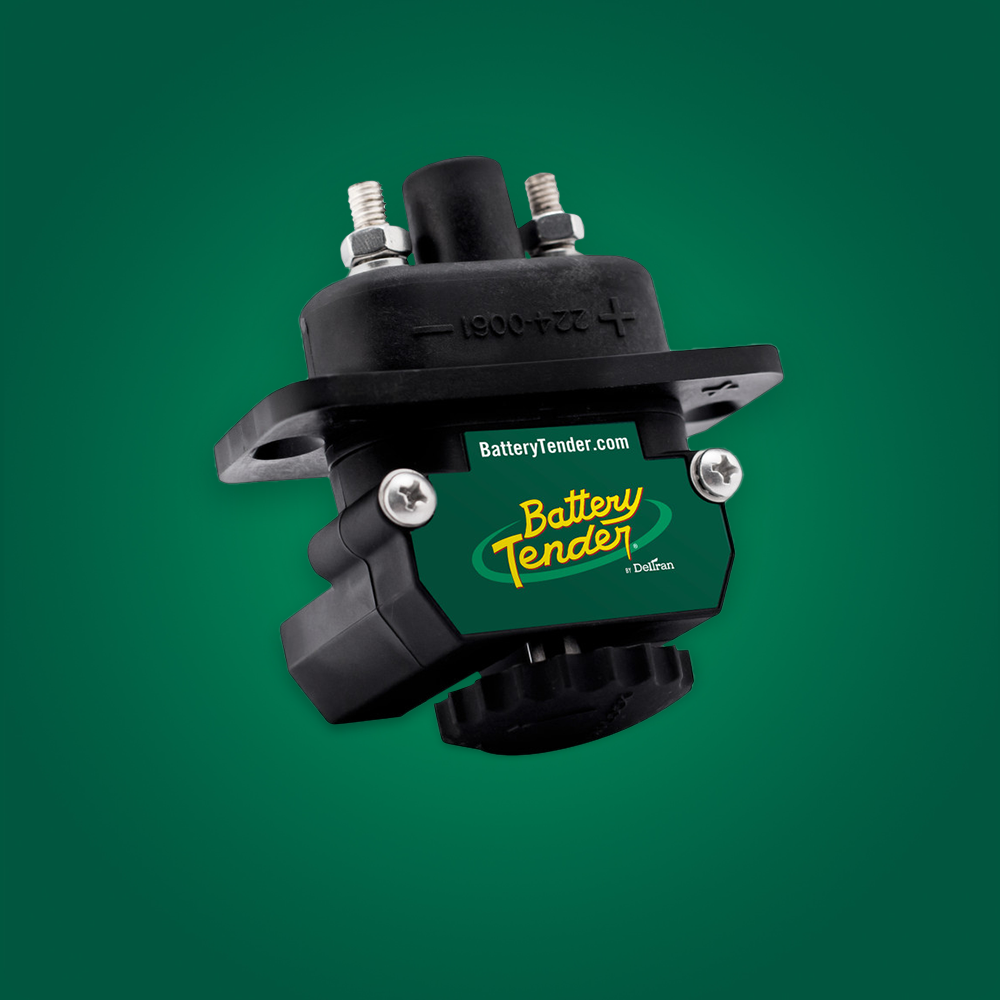
For EV owners who want maximum convenience and flexibility, the Battery Tender® EV Charging Solutions page covers the full product line, including options with ring terminal harnesses that allow permanent installation for easy maintainer connection without opening the hood every time.
How to Maintain Your EV 12V Auxiliary Battery Properly
Establishing a consistent maintenance routine eliminates the vast majority of EV 12V failure events. The process is straightforward once the right equipment is in place.
For any vehicle that will sit parked for more than three days, connect a Battery Tender® maintainer before leaving it. Most EVs provide 12V access through a dedicated underhood service port or directly at the battery terminals. Consult the vehicle owner's manual for the correct connection point—some manufacturers specify a ground connection point other than the battery negative terminal to avoid interference with onboard electronics.
If the vehicle is stored seasonally, long-term maintenance connection is strongly recommended. A quality automatic maintainer left connected throughout a storage period will hold the battery at full charge, prevent sulfation in AGM batteries, and ensure the vehicle starts immediately when the storage period ends.
For batteries that have already experienced a deep discharge event, allow the charger to complete a full reconditioning cycle before returning the vehicle to service. Many Battery Tender® models include a desulfation or reconditioning mode that can partially recover capacity from a battery that has been deeply discharged—often restoring enough performance to extend service life significantly.
Replace the 12V auxiliary battery proactively at four years of service or at the first sign of significant capacity loss, whichever comes first. The cost of a replacement battery is trivial compared to the cost of a tow, a missed appointment, or a service visit to diagnose what is ultimately a battery that should have been replaced on schedule.
Recovering from a Dead EV 12V Battery
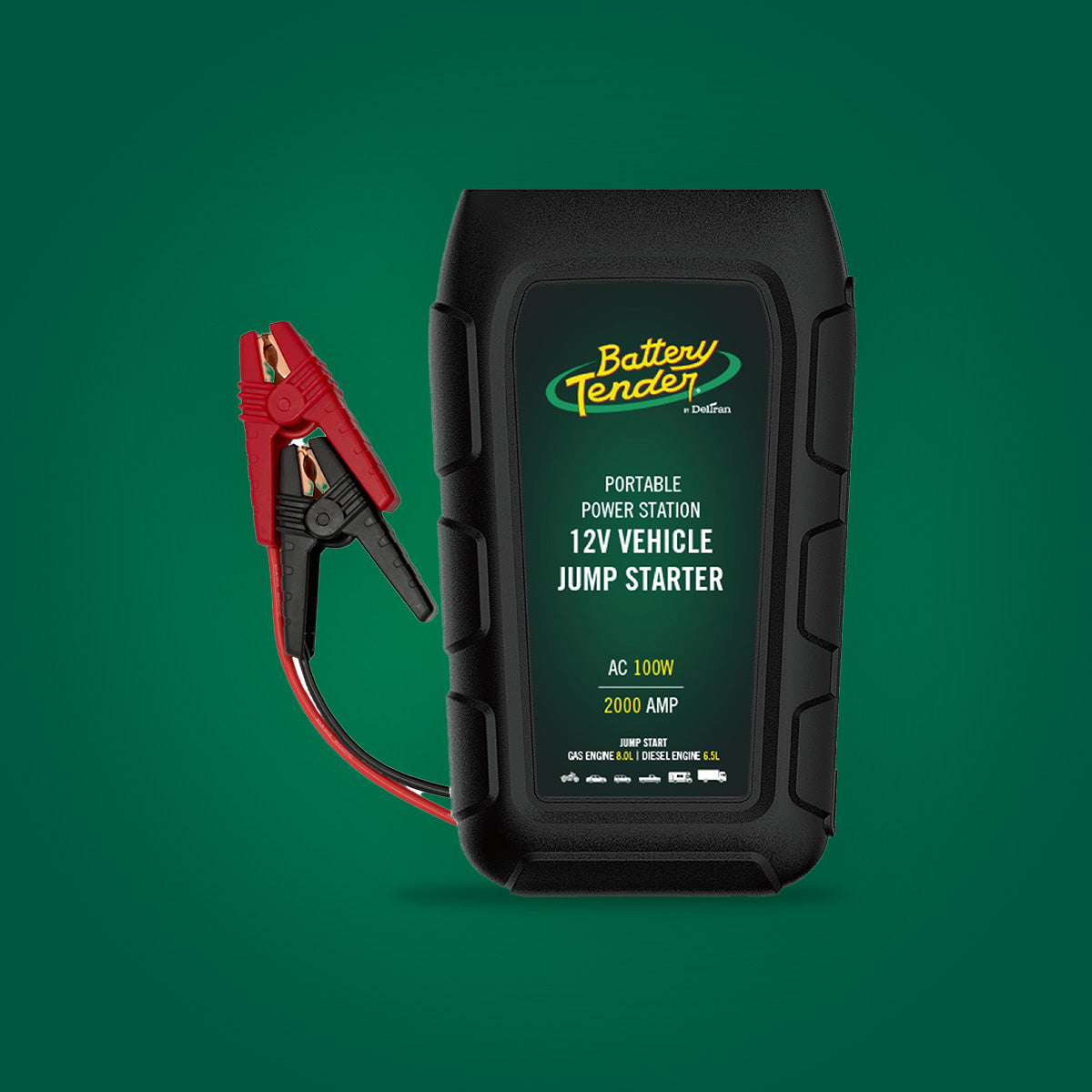
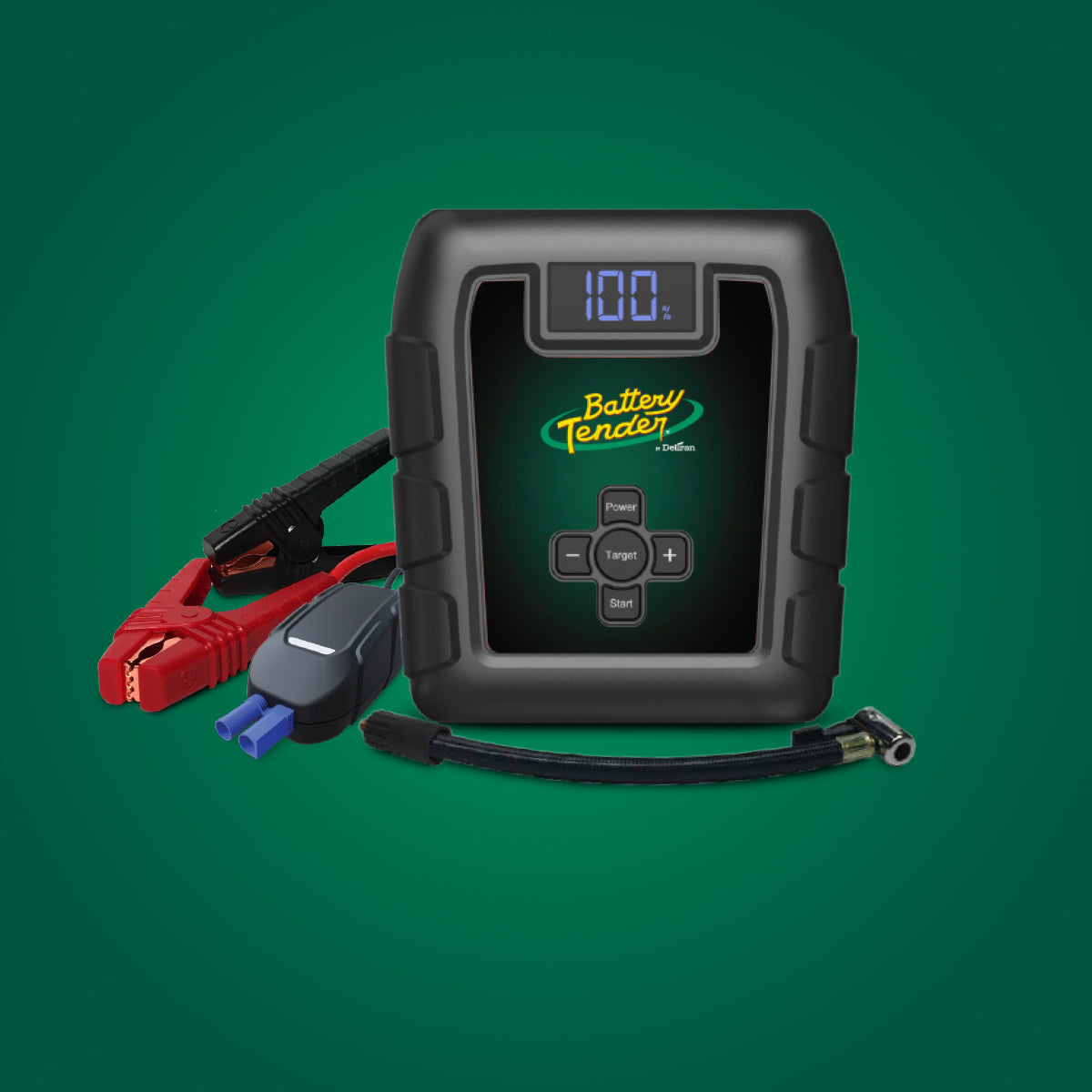
When an EV 12V battery has already failed completely, recovery is straightforward but requires understanding the vehicle's specific jump-start architecture. Unlike gasoline vehicles, most EVs should not be jump-started from another vehicle in the conventional sense. The preferred recovery method is connecting a portable jump starter or a running charger directly to the auxiliary battery terminals, allowing the 12V system to recover enough voltage to energize the contactors, at which point the DC-DC converter takes over and continues charging.
Most EV manufacturers publish specific jump-start instructions in the owner's manual, and these should be followed precisely. Some models require a brief charge period before the vehicle will enter Ready mode rather than immediately responding to a jump. Once Ready mode is activated, drive the vehicle or leave it in Ready mode for at least twenty minutes to allow the DC-DC converter to recharge the auxiliary battery before shutting down again.
If the battery required a jump start to recover, connect a Battery Tender® maintainer as soon as the vehicle is parked and allow a full charge cycle to complete. A battery that has been deeply discharged is significantly more vulnerable to subsequent failure until it has been fully recharged and its capacity verified.
Frequently Asked Questions About EV 12V Auxiliary Battery Maintenance
How often does an EV 12V auxiliary battery need to be replaced?
Most EV manufacturers suggest four to five years as a typical service interval for the 12V auxiliary battery, but real-world longevity depends heavily on usage patterns and maintenance. Vehicles that frequently sit unused without a maintainer connected often experience failure in as little as two to three years. Vehicles with consistent maintenance and no deep discharge events commonly reach five to six years of reliable service.
Can I use any 12V battery charger on my EV's auxiliary battery?
The charger must match the battery chemistry. AGM batteries require a charger with an AGM-compatible charging profile. Lithium iron phosphate batteries—now used by Tesla and beginning to appear in other brands—require a lithium-specific charger. Using an incorrect charger can damage the battery and, in the case of lithium batteries, create safety risks. Battery Tender® offers purpose-built chargers for both chemistries.
Will plugging in my EV for traction charging also maintain the 12V battery?
Most EVs do keep the DC-DC converter active during traction charging to top off the 12V battery. However, this behavior varies by manufacturer and software version. Some vehicles limit DC-DC converter operation during charging to reduce heat. Relying on traction charging as the sole 12V maintenance strategy is not recommended for vehicles that sit for extended periods. A dedicated 12V maintainer is more reliable and causes less thermal cycling of the DC-DC converter.
Is the 12V auxiliary battery in an EV the same as in a gasoline vehicle?
The battery chemistry—typically AGM lead-acid—is often similar, but EV auxiliary batteries are generally smaller in capacity and are subjected to a different charge and discharge pattern than batteries in gasoline vehicles. This different usage pattern makes proactive maintenance even more important for EV auxiliary batteries than for their gasoline-vehicle equivalents.
What happens if I ignore 12V maintenance warning lights?
Ignoring 12V battery warnings typically results in a no-start event within days to weeks. Because the 12V battery controls the contactors that connect the traction pack, the vehicle will be completely inoperable—touchscreen dark, doors potentially unresponsive to the key fob, and unable to enter Ready mode—regardless of traction pack charge level. Roadside assistance or a tow will be required.
Conclusion
EV 12V auxiliary battery maintenance is not optional—it is a fundamental requirement for reliable electric vehicle operation. The combination of parasitic electronic loads, infrequent Ready mode activation during extended parking, and compact battery sizing makes EV auxiliary batteries significantly more vulnerable to premature failure than most owners anticipate. The solution is simple: connect a Battery Tender® maintainer whenever the vehicle will sit unused for more than three days, match the charger to the battery chemistry, and replace the battery proactively before failure leaves you stranded. A small investment in the right maintenance equipment protects the much larger investment parked in your garage.
Related guides: Tesla Model 3 and Model Y Battery Maintenance: Auxiliary System Guide · Ford F-150 Lightning Battery Maintenance: EV Truck Owner's Guide · More EV charging guides