
La pesca de lobina en torneos exige un nivel de confiabilidad eléctrica que la navegación recreativa no requiere. En la mañana de un torneo, tienes un tiempo limitado para salir al agua y empezar a pescar; una batería de motor de arrastre descargada o una falla en el sistema electrónico no es un inconveniente, es un DNF (Did Not Finish) antes de que las líneas se lancen. El pescador que termina un día completo de torneo con el mismo rendimiento electrónico a las 5 PM que a las 7 AM tiene una ventaja sistemática sobre los competidores cuyas baterías se agotan por la tarde.
Battery Tender® atiende a pescadores de torneo, desde circuitos regionales de lobina hasta la serie Bassmaster Opens, y el sistema de carga marina WaveCharge Pro está diseñado específicamente para los sistemas eléctricos de alta demanda y multibatería que llevan las embarcaciones de lobina de nivel de torneo. Esta guía cubre el diseño del sistema, la selección de la batería, la estrategia de carga y los hábitos de mantenimiento que separan los sistemas confiables de los que fallan en el peor momento posible.
Comprensión de la carga eléctrica de la embarcación de lobina para torneos
Una embarcación moderna de lobina para torneos utiliza un conjunto de componentes electrónicos que habrían sido inimaginables hace 20 años. Una configuración completa podría incluir:
| Componente electrónico | Consumo de corriente típico |
|---|---|
| Motor de arrastre de proa (36V, alta velocidad) | 50-80A a plena potencia |
| Motor de arrastre a velocidad moderada | 15-30A |
| Sonda principal / sonar de barrido lateral | 2-4A |
| Sonar secundario de visión frontal | 3-6A |
| Tercera sonda / GPS ploter | 1-3A |
| Luces subacuáticas (LED) | 5-15A |
| Bomba de aireación / vivero | 4-8A |
| Radio VHF (transmitiendo) | 5-6A |
| Bomba de sentina (automática) | 3-5A cuando está activa |
Un pescador de torneo que utiliza el motor de arrastre a velocidad moderada durante 8 horas mientras opera el conjunto completo de componentes electrónicos puede consumir fácilmente entre 300 y 500 amperios-hora en un día de torneo. Esta realidad impulsa las decisiones sobre el tamaño del banco de baterías que distinguen a los sistemas competitivos.
Arquitectura del sistema de baterías para embarcaciones de lobina de torneo
Batería de arranque: Mantenla dedicada
La única función de la batería de arranque es arrancar el motor fueraborda. Cruzar ese banco con cargas de electrónica o motor de arrastre, incluso ocasionalmente, corre el riesgo de agotarla por debajo del umbral de arranque confiable en la mañana de un torneo. Dedica la batería de arranque exclusivamente al arranque, protégela con un aislador de calidad o un interruptor de circuito dual, y déjala en paz.
Elige una batería marina de arranque AGM de Grupo 24 o Grupo 27 con una clasificación CCA que supere en al menos un 20% los requisitos de tu motor fueraborda. La reserva está ahí para mañanas frías, largas esperas entre arranques y como seguro cuando la batería envejece un poco.
Batería de electrónica: La clave a menudo olvidada
Muchos pescadores de torneo alimentan su equipo de graficación y accesorios desde la batería de arranque o desde el banco del motor de arrastre, lo que compromete el rendimiento. Los componentes electrónicos consumen una corriente modesta pero continua, y necesitan un voltaje estable para funcionar con la máxima precisión. Una batería de ciclo profundo dedicada del Grupo 24 o Grupo 27 para la electrónica proporciona un voltaje limpio y estable a tu sistema de graficación durante todo el día del torneo sin que las fuertes cargas del motor de arrastre lo afecten.
Banco de baterías del motor de arrastre: Dimensionado para todo el día
Para sistemas de 36V (tres baterías de 12V en serie) o sistemas de 24V (dos baterías de 12V en serie), la selección de la batería debe tener en cuenta el tiempo de funcionamiento completo del día con una reserva significativa. Trabaje a la inversa de su uso:
- Calcula tus horas de arrastre diarias (normalmente de 6 a 9 horas para un día de torneo).
- Calcula tu velocidad promedio del motor como un porcentaje de la potencia máxima (típicamente del 30 al 50% en la mayoría de las condiciones).
- Calcula los amperios-hora aproximados: para un sistema de 36V a un 40% de velocidad, aproximadamente 25A x 8 horas = 200 Ah del banco.
- Selecciona la capacidad de la batería con un 25% de reserva: 200 Ah necesarios significan 250+ Ah de capacidad del banco.
Para un sistema de 36V que requiere más de 250 Ah, tres baterías AGM de ciclo profundo del Grupo 31 de 100 Ah en serie proporcionan la capacidad mientras mantienen el banco manejable. Los pescadores en embarcaciones más grandes que compiten en días de torneo más largos pueden usar baterías del Grupo 31 o Grupo 8D para una capacidad máxima.
Carga del sistema de torneo: Sin compromisos
Un sistema con cuatro, cinco o seis baterías no se puede mantener conectando un solo cargador y moviéndolo. La carga simultánea e independiente de cada batería en el sistema, cada una recibiendo su propio ciclo de carga ISM completo de 4 etapas, es la única forma de garantizar que cada batería comience la mañana del torneo a plena capacidad.
WaveCharge Pro: Carga marina de nivel de torneo
La serie WaveCharge Pro representa el nivel profesional de la línea de cargadores marinos de Battery Tender. Con 10 amperios por banco, en comparación con 3 amperios por banco en la serie WaveCharge estándar, la serie Pro puede recargar completamente una batería de 100 Ah significativamente descargada en 8-10 horas, lo que hace que sea práctico restaurar completamente el sistema durante la noche entre días de torneo. Cada banco funciona de forma totalmente independiente, por lo que una batería más descargada recibe atención de carga completa independientemente del estado de otros bancos.
- Cargador WaveCharge Pro de 2 bancos 12V, 20 AMP - para sistemas con hasta dos baterías
- Cargador WaveCharge Pro de 3 bancos 12V, 30 AMP - para sistemas de tres baterías (motor de arrastre de 24V + arranque + electrónica)
- Cargador WaveCharge Pro de 4 bancos 12V, 40 AMP - para sistemas de torneo de cuatro baterías
La clasificación de impermeabilidad IP68 de WaveCharge Pro, que ofrece protección contra la inmersión total, proporciona confianza en el duro entorno marino de los compartimentos de almacenamiento de las embarcaciones de pesca que regularmente están expuestos a salpicaduras, lluvia y condensación. También puede obtener más información sobre la tecnología de carga ISM de Battery Tender.
Protocolo de batería para el día del torneo
La noche anterior al torneo
- Conecta el WaveCharge Pro a todos los bancos inmediatamente al regresar del día de práctica.
- Verifica que todas las luces indicadoras del banco muestren el estado de carga correcto.
- Permite una carga completa durante la noche; llegar a la rampa con las baterías al 100% comienza el día con la máxima ventaja.
- Comprueba el funcionamiento de la bomba de aireación, del vivero y de la bomba de sentina para asegurarte de que todas las cargas se hayan tenido en cuenta al dimensionar tu banco de baterías.
Mañana del torneo
- Desconecta el cargador en la rampa y confirma el voltaje en reposo de cada banco antes de zarpar.
- Las baterías de arranque deben marcar 12,6 V o más.
- Los bancos de ciclo profundo deben marcar 12,6 V o más.
- Cualquier banco por debajo de 12,4 V está descargado; investiga la conexión del cargador de la noche anterior.
En el agua
- Vigila las unidades electrónicas en busca de cualquier advertencia de voltaje; la mayoría de los sonares modernos muestran el voltaje de suministro.
- Gestiona la velocidad del motor de arrastre en función de las condiciones; el arrastre a alta velocidad (70-80% de potencia) agota las baterías 2-3 veces más rápido que la pesca a velocidad moderada.
- Conoce la reserva de tu sistema: un banco de 250 Ah con un 50% de descarga tiene 125 Ah restantes; ajusta la estrategia en consecuencia.
Arranque de emergencia para pescadores de torneos
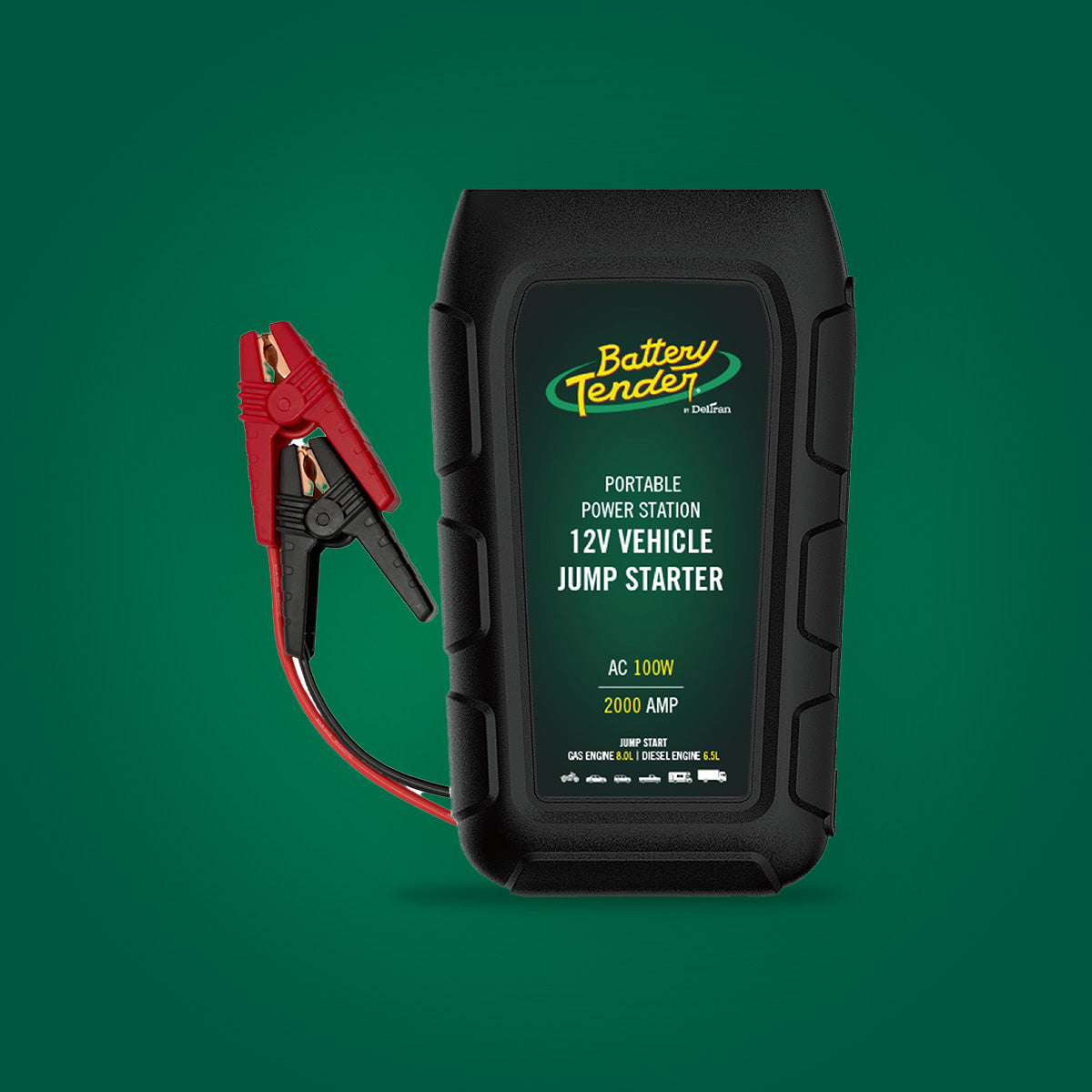
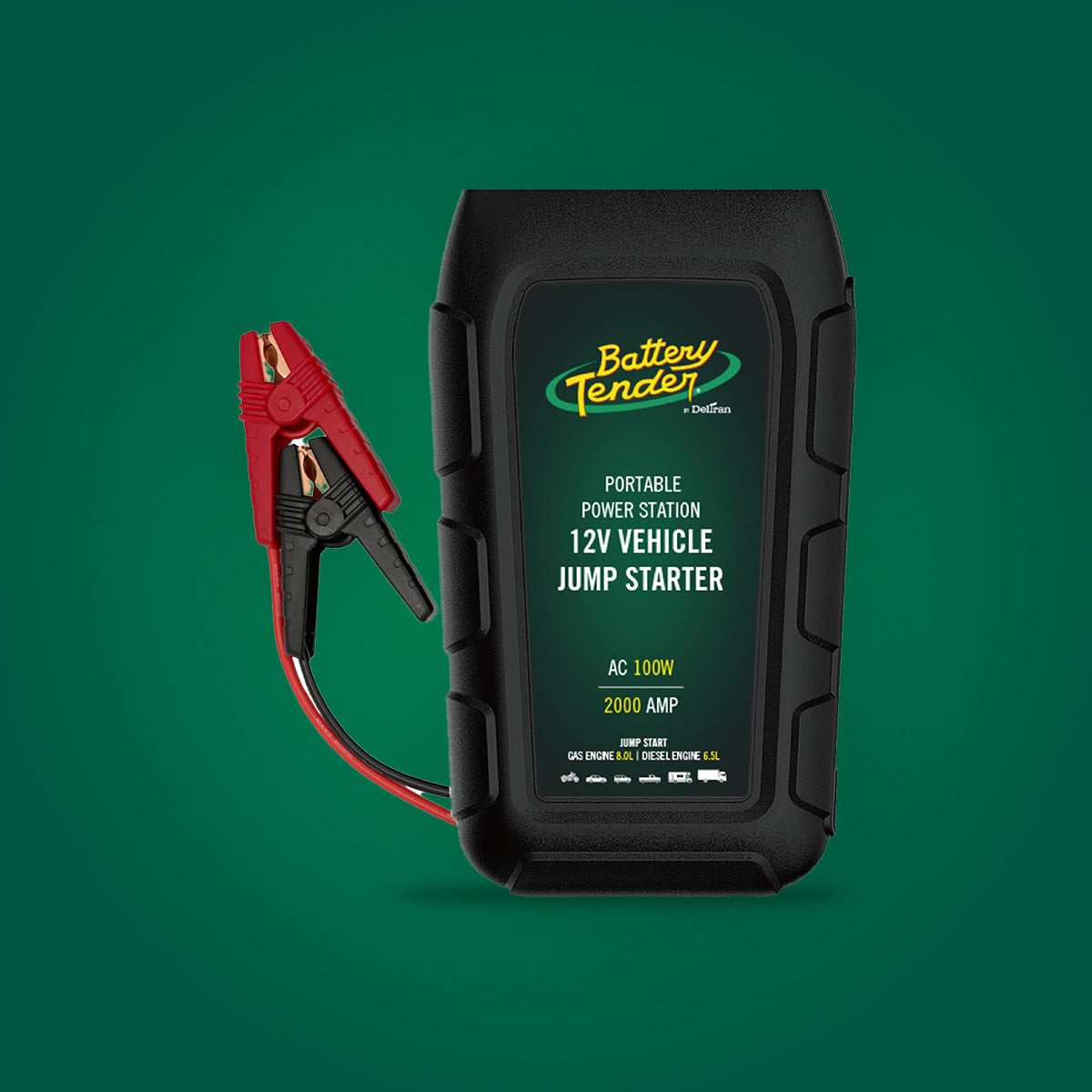
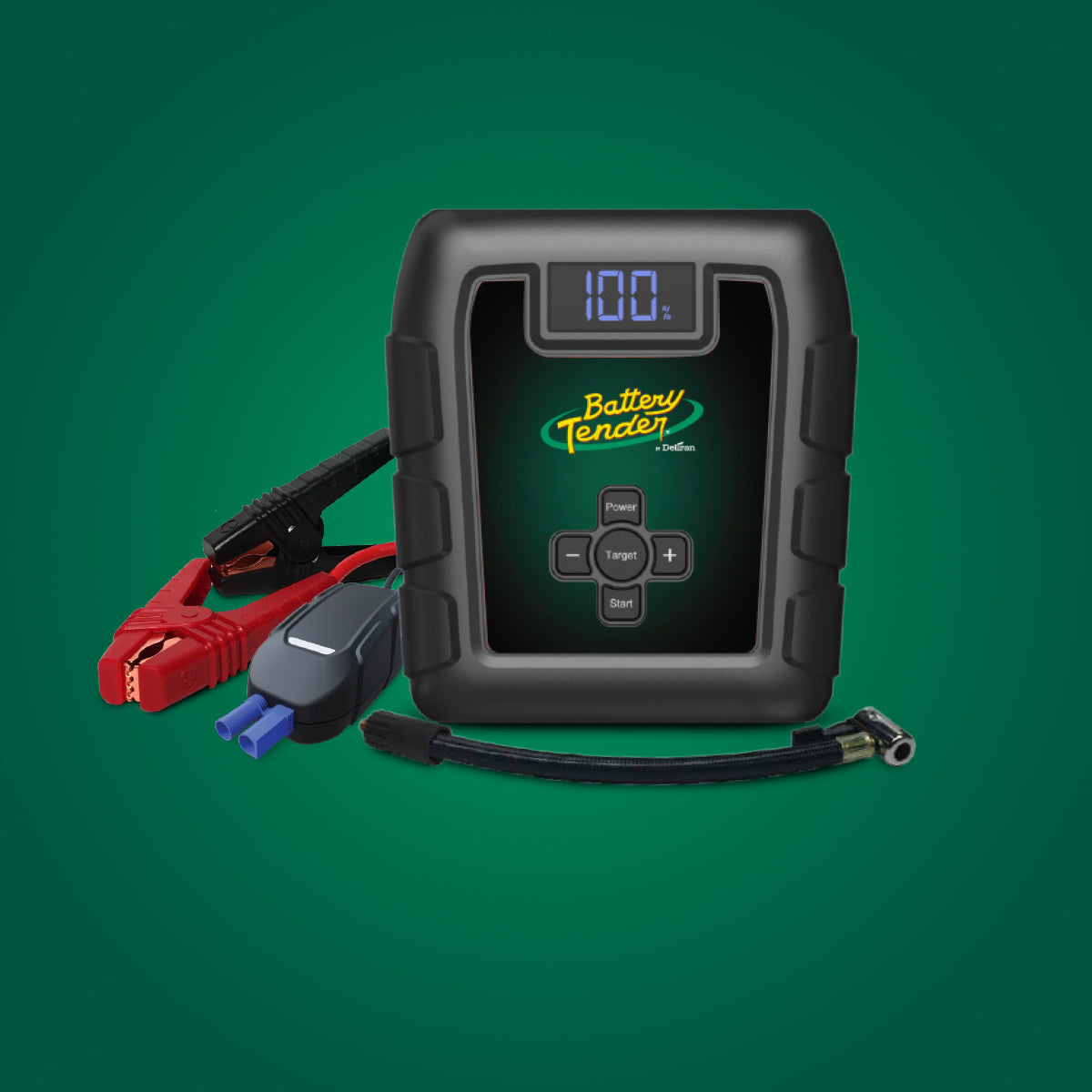
Incluso con un sistema perfectamente mantenido, situaciones inesperadas pueden dejar a un pescador varado en el agua: un consumo parasitario olvidado que drena la batería de arranque durante la noche o una falla eléctrica imprevista. Un arrancador de litio compacto es lo suficientemente ligero para la bolsa del barco y lo suficientemente potente para arrancar cualquier motor fueraborda de barco de lobina.
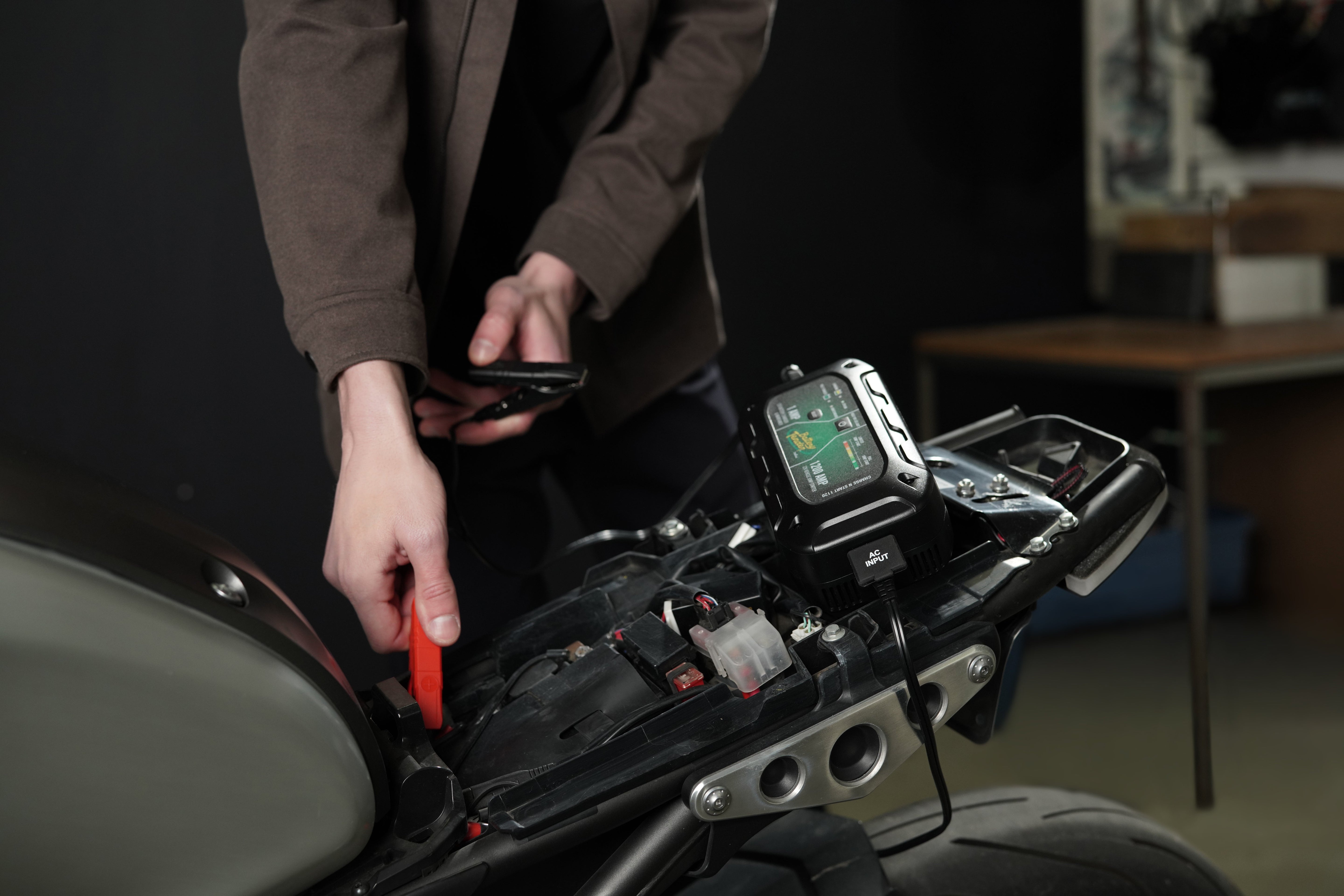
El Charge N Start ofrece la máxima tranquilidad para el día del torneo: mantiene las baterías a través de la función de cargador y gestiona el arranque de emergencia a través de la función de arrancador. Un solo dispositivo cubre tanto la necesidad de mantenimiento previo al torneo como la emergencia en el agua.
Explora el Charge N Start 4120 - Cargador de batería de 4 AMP + Arrancador de 1200 AMP (SKU: 030-7020-WH) para el mantenimiento en el muelle el día del torneo y como respaldo de emergencia.
Preguntas frecuentes
¿Cuántas baterías necesito para una embarcación de lobina de torneo?
Una configuración completa de torneo suele incluir una batería de arranque dedicada, una batería para la electrónica y de dos a tres baterías para el motor de arrastre para un sistema de 36 V (tres baterías en serie). Es común en la pesca de torneo competitiva un recuento total de cuatro a cinco baterías en el sistema.
¿Debo usar baterías de litio en mi embarcación de torneo?
Las baterías de ciclo profundo de litio (LiFePO4) ofrecen un ahorro de peso y un voltaje constante a través de un ciclo de descarga más profundo, ventajas significativas para los pescadores de torneos serios. Sin embargo, requieren cargadores específicos para litio y una inversión inicial significativamente mayor ($400-700 por batería frente a $150-250 para AGM de calidad). Los cargadores de Battery Tender con química seleccionable manejan tanto AGM como litio, lo que hace que su sistema de carga sea a prueba de futuro para una actualización de litio. Para más contexto, consulte esta comparación de química de baterías.
¿Cómo sé si mi banco de motor de arrastre se está agotando?
Los motores de arrastre modernos muestran el estado de la batería en la unidad principal o en el control remoto inalámbrico. Observe si las lecturas de voltaje comienzan a caer por debajo de 11.5 V por batería de 12 V en un banco en serie, lo que indica un agotamiento significativo. Los gráficos multifunción modernos con monitoreo de voltaje también proporcionan una advertencia temprana.
¿Puedo usar el alternador de mi motor fueraborda para cargar el banco del motor de arrastre?
El alternador del motor fueraborda carga la batería de arranque de manera eficiente. Cargar el banco de baterías de ciclo profundo del motor de arrastre desde el alternador requiere un aislador o relé combinador apropiado y añade un tiempo de funcionamiento significativo del motor. El enfoque más eficiente para el uso en torneos es un cargador a bordo especialmente diseñado, como el WaveCharge Pro, conectado en el muelle durante la noche.
Conclusión
El éxito en los torneos exige sistemas eléctricos confiables y completamente cargados desde el primer lance hasta el pesaje final. La combinación de baterías AGM de ciclo profundo de tamaño adecuado, circuitos dedicados para cada función y la carga multibanco independiente WaveCharge Pro brinda a los pescadores de torneo la base eléctrica para competir con confianza, sabiendo que su electrónica estará en óptimas condiciones, su motor de arrastre tendrá potencia y su batería de arranque encenderá el motor fueraborda en todo momento.
Explore la línea completa de cargadores de baterías marinas, incluida la serie WaveCharge Pro para pescadores de torneos.