

Portable Jump Starter Roadside Kit: Build a Ready Plan (2026)
A portable jump starter is a lithium battery pack with smart clamps that starts a dead engine without a second vehicle. The right one is sized to engine displacement, stored where temperatures stay moderate, and recharged on a schedule so it works the day the battery fails.
Most guides cover how to use a jump pack. Few cover what happens before the emergency: which size to carry, where to keep it, and how to keep it charged. Battery Tender® has built chargers and jump starters around that readiness problem since pioneering smart charging in 1989. This guide builds a complete roadside plan around a portable jump starter, with numbers you can act on today. Last updated: 2026.
Key Takeaways
- Match the portable jump starter to engine size: 600A for powersports, 1,000–1,200A for passenger vehicles, 1,500A for large gas trucks, and 2,000A for diesel.
- Battery Tender Charge N Start combines a smart charger and a lithium jump starter, so the pack stays ready and the car battery gets a proper recharge.
- Keep the pack out of extreme heat. Lithium cells tolerate cold better than lead-acid, but a sealed cabin in summer is the real threat.
- Recheck charge every three months and after every use.
- A jump start gets the engine running. It does not fully recharge the battery, so follow every jump with a charger.
What Belongs in a Portable Jump Starter Roadside Kit?
A complete kit holds five items: the jump pack, a way to recharge it, a tire inflator, basic safety gear, and a written reference. The pack alone solves one failure. The rest solve the failures that follow.
- Jump pack: sized to the largest engine you own (see the sizing table below).
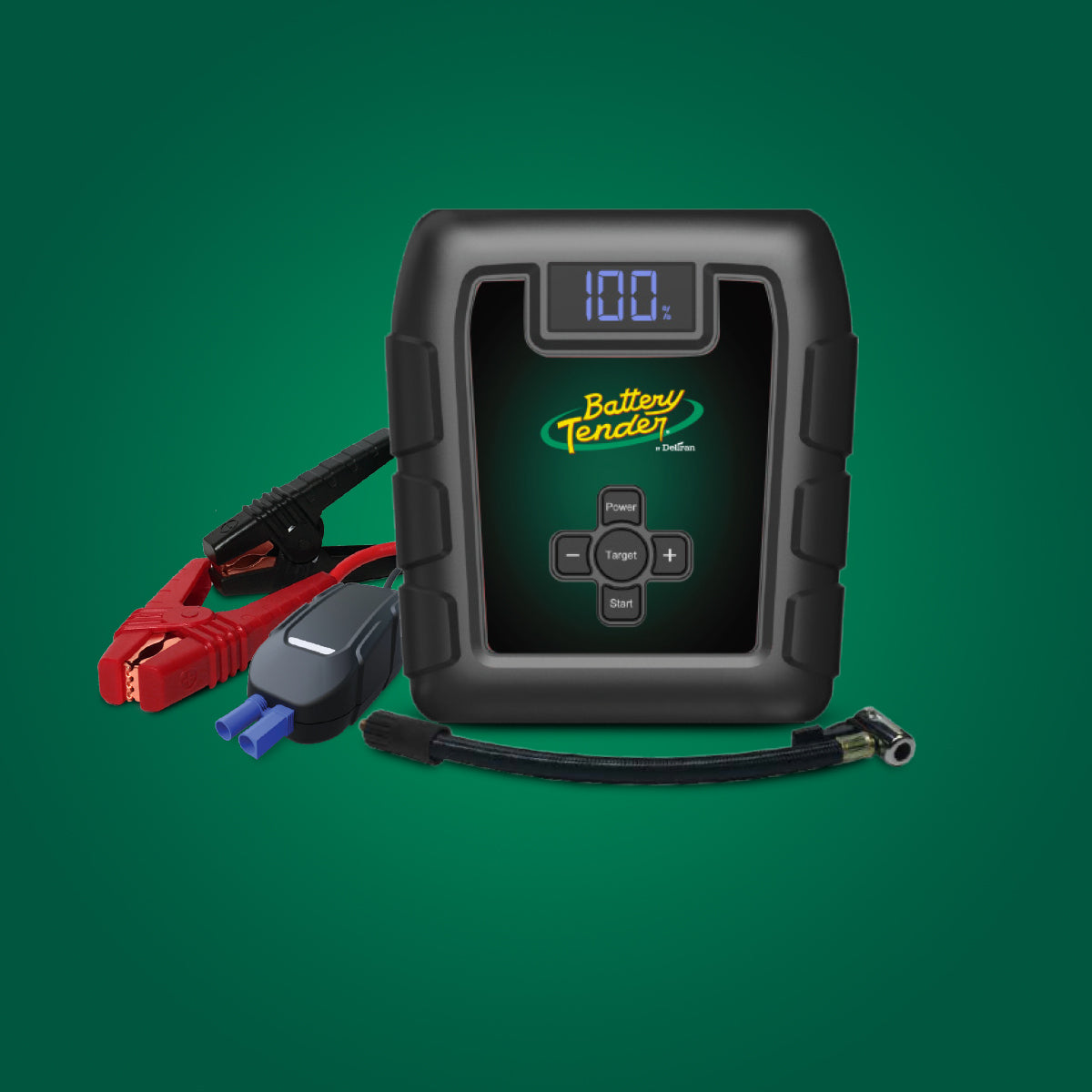
- Tire inflator: a flat tire strands drivers as often as a dead battery. Some packs include a 140 PSI inflator.
- Gloves and a flashlight: battery terminals often sit in tight, dark engine bays.
- Charging cable and wall adapter: kept in the glovebox, not the garage.
- Printed instruction card: a household member who has never used the pack can follow it under stress.
The last item is the most overlooked. One pack often serves several drivers, and a laminated card with the five steps in the emergency routine below removes guesswork.
Which Portable Jump Starter Size Fits Your Vehicle?
Size the portable jump starter to the largest engine it must start, not the average one. Diesel engines draw far more cranking current than gas engines of the same displacement. Cold weather raises the demand further. For a deeper side-by-side, see the portable jump starter comparison of 600A vs 800A vs 1500A vs 2000A.
| Vehicle or Engine | Recommended Pack | Rated Engine Size (Gas / Diesel) | Notes |
|---|---|---|---|
| Motorcycles, ATVs, small engines | 600A jump starter | Up to 4.0L / 2.0L | 6,400 mAh, compact enough for a saddlebag |
| Compact cars, tire emergencies | 800A with inflator | Up to 4.0L / 2.0L | Includes a 140 PSI inflator |
| Sedans, crossovers | Battery Tender Charge N Start 1100 (1,000A) | Up to 5.0L / 3.0L | 1A charger built in |
| Mid-size SUVs, boats | Battery Tender Charge N Start 1120 (1,200A) | Up to 6.0L / 4.0L | 1A charger built in |
| Trucks, RVs | Battery Tender Charge N Start 4120 (1,200A) | Up to 6.0L / 4.0L | 4A charger for faster recovery |
| Large gas trucks | 1500A jump starter | Up to 7.0L / 5.5L | 12,000 mAh, about 40 starts per charge |
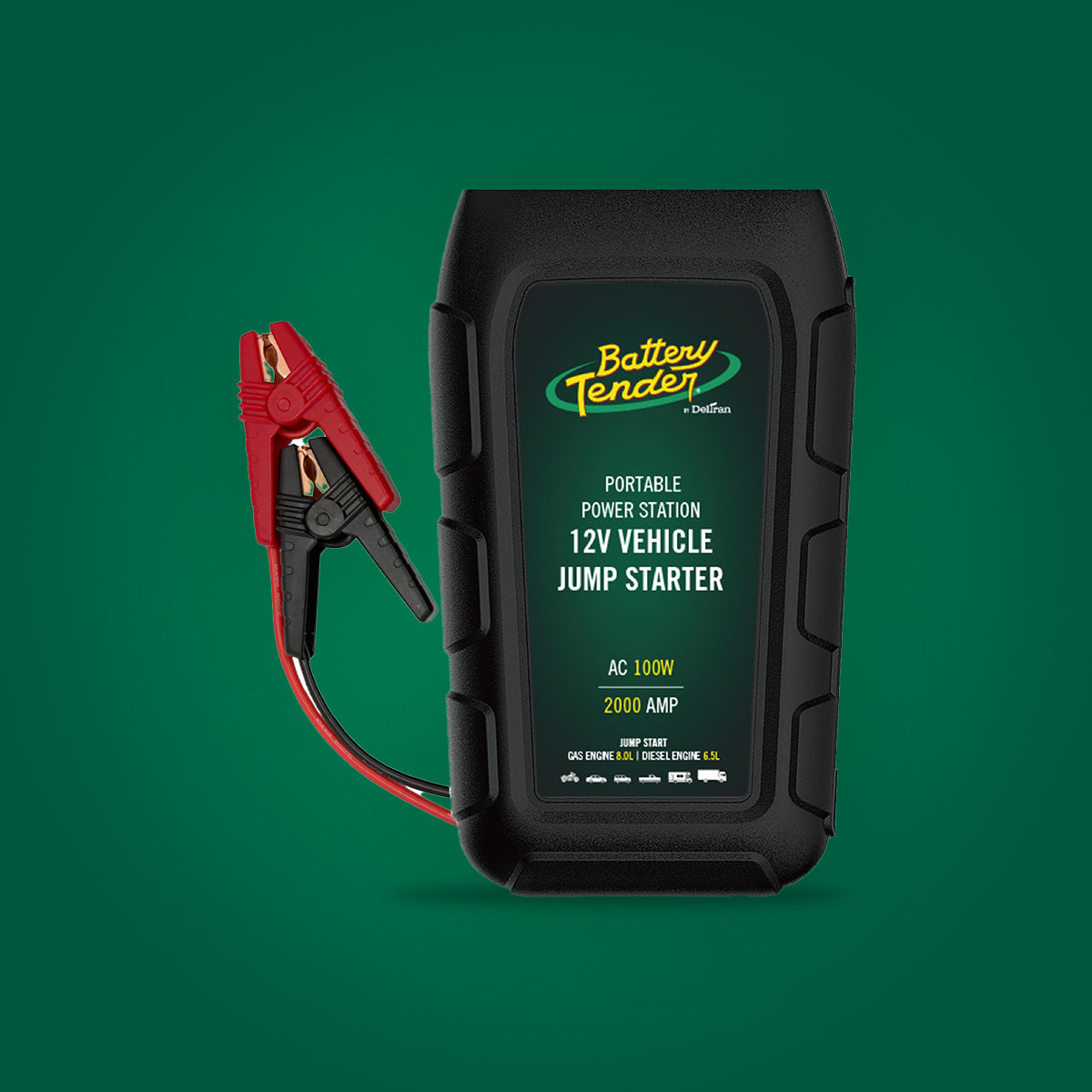
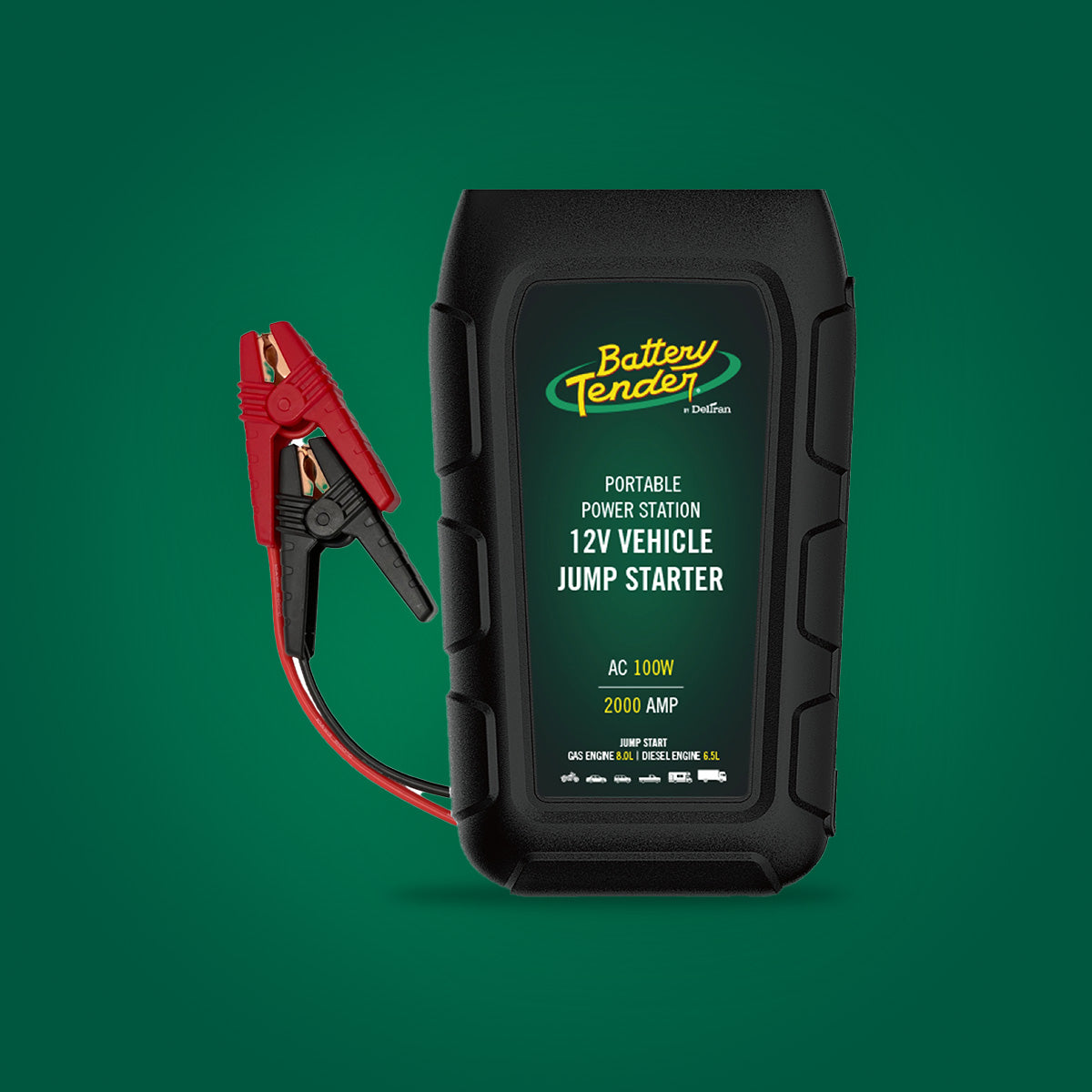
| Diesel trucks, heavy equipment | 2000A jump starter | Up to 8.0L / 6.5L | 16,000 mAh, about 50 starts per charge |
Oversizing costs little and undersizing costs a failed start. A 1,500A pack starts a small car without strain. A 600A pack will not reliably start a diesel pickup on a 15°F morning.
Why Is Battery Tender Charge N Start the Smart Upgrade From a Standalone Portable Jump Starter?
Battery Tender Charge N Start is a 2-in-1 unit: a smart charger plus a lithium-ion jump starter. A standalone portable jump starter only solves the emergency. Battery Tender Charge N Start also fixes the cause, because the charger section recharges the car battery and keeps it maintained.
The jump pack inside is lithium-ion, not lead-acid. It is compact, performs well in cold weather, and holds charge for months. The charger section handles all 12V chemistries: standard, AGM, GEL, and lithium. Two proprietary features protect the whole system:
- Charge N Store: float maintenance that keeps the internal pack topped up while the unit sits plugged in.
- SafeGuard: anti-backfeed circuit protection for safer connections.
Pick the model by vehicle. Battery Tender Charge N Start 1100 pairs a 1A charger with 1,000A of jump power. Battery Tender Charge N Start 1120 raises that to 1,200A. Battery Tender Charge N Start 4120 adds a 4A charger with 1,200A, which suits trucks and RVs where the battery is larger and recovery time matters.
Where Should You Store a Portable Jump Starter?
Store the pack in the passenger cabin or trunk, away from direct sun, and bring it indoors during heat waves. Heat degrades lithium cells faster than cold does. The pack is built for the glovebox, not for a dashboard in July.
Heat: The Real Risk
A parked car in summer sun can climb well past 130°F inside. Sustained heat shortens lithium cell life and can trigger the pack's own protection circuits. Follow the storage range printed in the manual. In hot climates, a shaded trunk or under-seat spot beats the glovebox, and a short walk indoors each week beats both.
Cold: A Smaller Problem
Lithium packs deliver strong output in cold weather and weigh a fraction of what bulky lead-acid boosters do. Cold still reduces the available capacity of any battery, and a frozen pack should warm to cabin temperature before charging. For winter-specific tactics, the portable jump starter guide on how to jumpstart a battery covers the procedure in detail.
Mounting and Securing
Keep the pack in its case so clamps cannot short against loose metal. Do not let it slide around the cargo area. A small hard case or utility bag prevents damage and keeps the cables untangled.
How Do You Keep a Portable Jump Starter Ready All Year?
Recharge it every three months and after every use. A pack that sits dead in a trunk is only dead weight. Lithium packs hold charge for months, but self-discharge continues and cold or heat accelerates it.
| Trigger | Action |
|---|---|
| Every 3 months | Check the charge indicator and top up to full |
| After every jump | Recharge the pack before returning it to the vehicle |
| Before a long trip | Test the indicator and confirm clamps and cables are intact |
| Before winter and summer | Inspect for swelling, cracks, or damaged clamps |
Swelling, a hot case during charging, or a pack that will not hold charge means retire it. Do not attempt to open or repair a lithium pack.
Recharge the Car Battery, Too
A jump start leaves the car battery partly discharged, and a short drive will not restore it. Use the formula: (battery Ah × depth of discharge) ÷ charger amps = approximate hours. A 50Ah battery at 50% discharge holds 25Ah to replace. A 1A charger needs about 25 hours. A 4A charger needs about 6.3 hours.
Battery Tender chargers use Infinite Sequential Monitoring (ISM), a four-stage process: Initialization, Bulk Charge, Absorption, and Float Maintenance. The Float Maintenance stage delivers charge only when voltage drops, so the charger can stay connected indefinitely. Conventional trickle chargers apply constant current regardless of battery state, which risks overcharge.
What Is the Emergency Routine With a Portable Jump Starter?
Follow five steps and the whole job takes about five minutes. Always read the pack manual first, since clamp behavior and indicator lights vary by model.
- Park safely. Turn off the ignition, lights, and accessories. Set the parking brake.
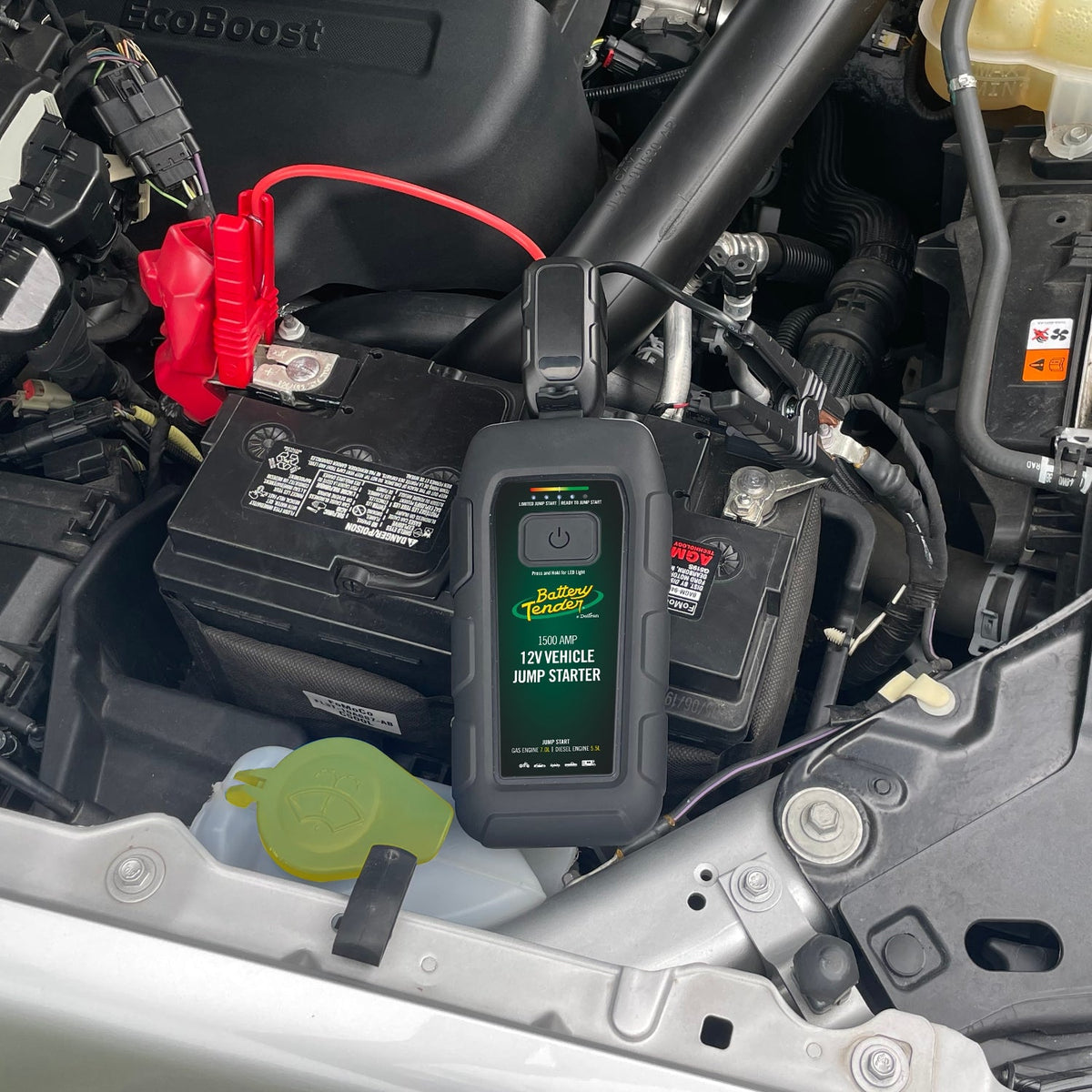
- Connect the clamps. Red to the positive terminal, black to the negative terminal or an unpainted metal ground point on the engine block.
- Power the pack on. Confirm the indicator shows a safe connection. Spark-proof clamps and reverse polarity protection block unsafe contact.
- Start the engine. Crank for no more than five seconds. If it does not start, wait 30 seconds and try again.
- Disconnect in reverse order. Remove black first, then red, and power the pack off.
Riders and powersports owners need a pack that fits where a full-size unit will not. The 800A bundle below includes a tire inflator and a ring terminal cable, which suits a motorcycle or ATV owner who may face either a dead battery or a flat tire on the trail. The ring terminal cable can stay attached to the battery for faster connection, and pairing the bundle with a Battery Tender maintainer during storage keeps the bike battery healthy between emergencies.
For drivers who want an air compressor in a larger pack, the best car jump starter with air compressor buying guide compares the options.
Frequently Asked Questions
How long does a portable jump starter hold its charge?
A lithium portable jump starter typically holds usable charge for several months in storage. Heat and cold speed up self-discharge, so check the indicator every three months and top the pack up after every use. A pack left untouched for a year may be too low to start an engine.
Can a portable jump starter be left in a hot car?
Brief exposure is fine, but sustained heat shortens lithium cell life. Cabin temperatures in direct summer sun can exceed 130°F. Store the pack in a shaded trunk or under a seat, follow the temperature range in the manual, and bring it indoors during extended heat waves.
What size portable jump starter do I need?
Match the pack to your largest engine. Use 600A for motorcycles and small engines, 1,000–1,200A for most passenger vehicles, and 1,500A for larger gas trucks. Choose 2,000A for diesel trucks. Cold weather and larger engines demand more cranking current, so sizing up is the safer choice.
Is a portable jump starter safe for modern car electronics?
Yes, when the pack has built-in protections. Spark-proof clamps, reverse polarity protection, and short circuit protection are standard on quality lithium packs and guard against voltage spikes and wrong connections. Always connect clamps in the correct order, and consult the vehicle manual if it lists specific jump points.
Should I charge the car battery after using a portable jump starter?
Yes. A jump start gets the engine running but does not restore the battery to full charge, and a short drive will not either. Connect a smart charger or Battery Tender Charge N Start unit afterward. A deeply discharged battery left partially charged will fail again, often within days.
Conclusion
A portable jump starter works only if it is the right size, stored sensibly, and charged when the emergency arrives. Build the kit now: pick the pack by engine size, add an inflator and a printed instruction card, set a three-month recharge reminder, and choose a Battery Tender Charge N Start model when a single unit should both jump the engine and recharge the battery. Your next step is to browse the full Battery Tender jump starter collection and match a pack to your vehicle today.