


Boat Battery Guide: Choosing a Marine Battery Charger (2026)
A boat battery reaches its full service life only when its charger suits the marine environment. Saltwater, constant vibration, and gasoline vapor call for a sealed, ignition-protected, multi-bank charger, not a basic automotive unit. A Battery Tender® WaveCharge Pro charger combines IP68 sealing with UL marine ignition protection for engine room installation.
Most boat battery advice covers how to charge or store a battery. This guide covers the conditions around the battery: corrosion, heat, vapor, and moisture. These conditions decide whether a charger is safe to install and whether the battery survives past its third season.
Key Takeaways
- A boat battery fails from corrosion, heat, vibration, and undercharging more often than from age alone.
- Gasoline engine compartments need ignition-protected electrical components. Choose a charger with UL marine ignition protection for those spaces.
- IP67 handles splash and brief immersion. IP68 is the right rating for engine rooms and bilge-adjacent mounting.
- Size each charger bank to its battery: at 10A per bank, a half-drained 100Ah battery recharges in about 5 hours, compared with about 17 hours at 3A.
- Marine-grade wiring, fusing near the battery, and GFCI-protected shore power matter as much as the charger itself.
What Makes a Boat Battery Different From a Car Battery?
A boat battery is built for deep discharge, vibration, and long idle periods, while a car battery mostly delivers short, high-current starts and recharges daily. That difference changes how the battery should be charged.
Boats usually carry three battery roles:
- Starting (cranking): thin plates, high cold cranking amps, shallow discharge.
- Deep-cycle (house, trolling): thick plates, built to discharge 50% repeatedly.
- Dual-purpose: a compromise for smaller boats with one battery.
Chemistry varies as well. Flooded, AGM, gel, and lithium all appear on boats in 2026, and lithium is now mainstream in marine use. Each chemistry has its own charge voltage profile, so the charger must match. A fully charged 12V lead-acid boat battery rests at about 12.6 to 12.8V, and about 12.2V means roughly 50% charge.
Most boats also run several batteries from one dock outlet. A multi-bank charger gives each battery its own charge cycle. Battery Tender multi-bank chargers use Infinite Sequential Monitoring (ISM), a four-stage process (Initialization, Bulk Charge, Absorption, and Float Maintenance) that runs independently on every bank. A deeply discharged trolling battery never forces extra current into a full starting battery.
How Do Saltwater and Vibration Shorten Boat Battery Life?
Saltwater shortens boat battery life by corroding terminals and creating conductive leakage paths, while vibration loosens connections and damages internal plates. Both problems start small and grow quietly.
Salt film on a battery top conducts electricity, so a slow current drain runs from post to post even when everything is off. Corroded lugs add resistance, which starves the battery during charging and cranking. The charger then reads a false voltage at the connection and may end the charge early.
Vibration works differently. Flooded batteries can shed active material from the plates when pounded by waves. AGM and gel batteries resist this better. Loose terminals are the most common vibration failure on any chemistry.
Heat compounds the damage. A commonly cited rule of thumb says lead-acid battery life roughly halves for every 15°F above 77°F. A closed engine room in July can run well past 100°F. Temperature compensation adjusts charge voltage to real conditions. Battery Tender WaveCharge chargers use it to lower charge voltage in a hot compartment and raise it in a cold one.
Corrosion-prevention checklist
- Use tinned marine-grade copper wire, not bare copper.
- Seal crimped lugs with adhesive-lined heat-shrink tubing.
- Torque terminals to the battery maker's specification, and recheck after the first month.
- Coat clean terminals with dielectric grease or a terminal protectant.
- Rinse and dry the battery tray each spring.
Why Does Fuel Vapor Make Charger Ratings Matter?
Fuel vapor makes charger ratings matter because gasoline vapor is heavier than air, collects in bilges and engine compartments, and ignites from a single small spark. A charger inside that space must not be able to ignite it.
Federal regulation (33 CFR 183.410) requires electrical components in gasoline engine compartments and fuel tank spaces to be ignition protected. Flooded batteries add a second hazard: they release hydrogen while charging. A marine charger belongs in a ventilated location, away from fuel fittings.
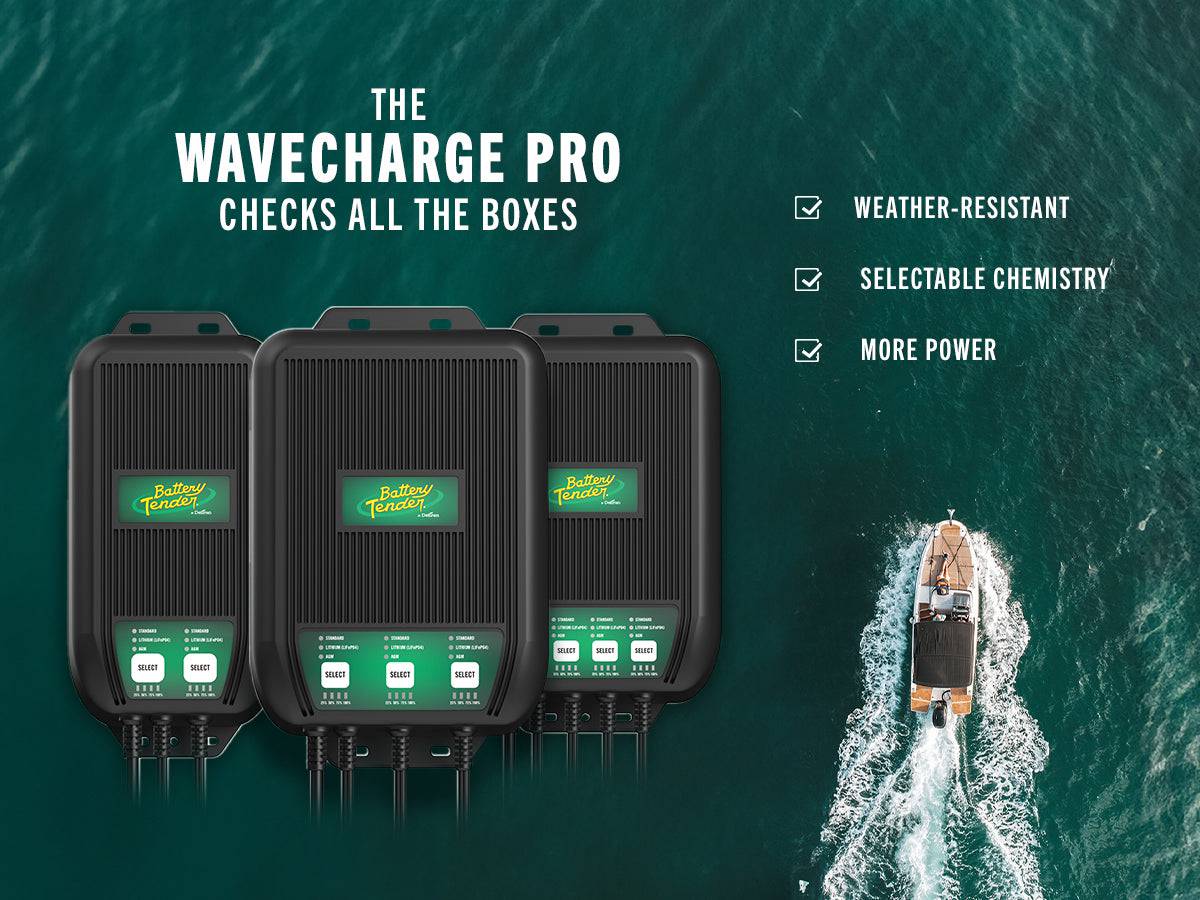
The Battery Tender WaveCharge Pro line addresses both hazards. It carries UL marine ignition protection, so it is rated for use in fuel-vapor environments and engine rooms. It is also IP68 sealed against dust and continuous immersion, and its construction resists saltwater corrosion. By comparison, the standard Battery Tender WaveCharge line is IP67, which covers splash and brief immersion. That suits a dry helm compartment, not a bilge-adjacent engine room.
A twin-engine boat with four separate batteries (two starting, one house, one windlass or thruster) is a good example. All four sit near the engines, so the charger must tolerate that space.
The Battery Tender WaveCharge Pro 4-Bank 12V 40 Amp charger fits this setup because it delivers 10A to each bank and carries both IP68 sealing and ignition protection for the engine room.
Battery Tender WaveCharge Pro 4-Bank 12V 40 Amp Battery Charger and Maintainer
How to Size a Charger for Your Boat Battery
Size a charger by the battery's amp-hours, its depth of discharge, and the amps each bank delivers. The formula is (battery Ah × depth of discharge) ÷ charger amps = approximate hours.
Example: a 100Ah battery at 50% discharge needs 50Ah returned. At 3A per bank, that is 50 ÷ 3 ≈ 17 hours. At 10A per bank, it is 50 ÷ 10 = 5 hours. Real times run longer because current tapers during the Absorption stage.
| Boat setup | Batteries | Recommended charger | Output per bank | 100Ah at 50% discharge |
|---|---|---|---|---|
| Pontoon or runabout, dry compartment | Up to 4 (50 to 100Ah each) | Battery Tender WaveCharge 4-Bank 12 Amp | 3A | About 17 hours |
| Bass boat: starter plus two trolling batteries | 3 (one cranking, two deep-cycle) | Battery Tender WaveCharge Pro 3-Bank 30 Amp | 10A | About 5 hours |
| Twin-engine offshore boat, engine room mount | 4 (100 to 200Ah each) | Battery Tender WaveCharge Pro 4-Bank 40 Amp | 10A | About 5 hours |
The Battery Tender WaveCharge 4-Bank 12V 12 Amp charger suits a pontoon or runabout that sits at a slip every weekend. It gives each of four batteries 3A of independent ISM charging. A 17-hour recharge fits easily between weekend trips, and ISM Float Maintenance then holds every battery at full charge during the week.
Battery Tender WaveCharge 4-Bank 12V 12 Amp Battery Charger and Maintainer
A bass boat with one cranking battery and two trolling batteries needs more output, because trolling batteries get drained hard each day. The Battery Tender WaveCharge Pro 3-Bank 12V 30 Amp charger delivers 10A to each bank, so deep-cycle batteries recover in hours, not a full day. For a deeper walk-through of three-battery layouts, see the Boat 3 Bank Battery Tender Charger: Setup and Sizing Guide (2026).
Battery Tender WaveCharge Pro 3-Bank 12V 30 Amp Battery Charger and Maintainer
Check chemistry compatibility on the product page before pairing any charger with a lithium boat battery. The charge profile must match the battery maker's requirements.
How to Install an On-Board Charger Safely
Install a marine charger by mounting it in a ventilated spot above the bilge waterline, fusing each positive lead near its battery, and powering it from GFCI-protected shore power. Follow these steps in order:
- Pick the location. Choose a vertical bulkhead above the bilge waterline, with airflow and cable reach to every battery. Keep it away from fuel fittings unless the charger is ignition protected.
- Disconnect power. Unplug shore power and remove the negative lead from each battery.
- Mount the charger. Use stainless fasteners and leave clearance around the case for heat to escape.
- Run output leads. Route each bank's leads to its own battery. Use a fuse or breaker within 7 inches of each positive terminal, consistent with ABYC E-11 guidance, and follow the charger manual for fuse rating.
- Make sealed connections. Crimp tinned lugs, add adhesive heat-shrink, and keep connections out of standing water.
- Connect AC power. Use a GFCI-protected marine shore power circuit. If the outlet is far from the charger, a weatherproof 14-gauge extension keeps the run safe and neat.
- Verify. Reconnect the batteries, power the charger, and confirm each bank's status light. After 24 hours, a rested 12V lead-acid battery should read 12.6V or higher.
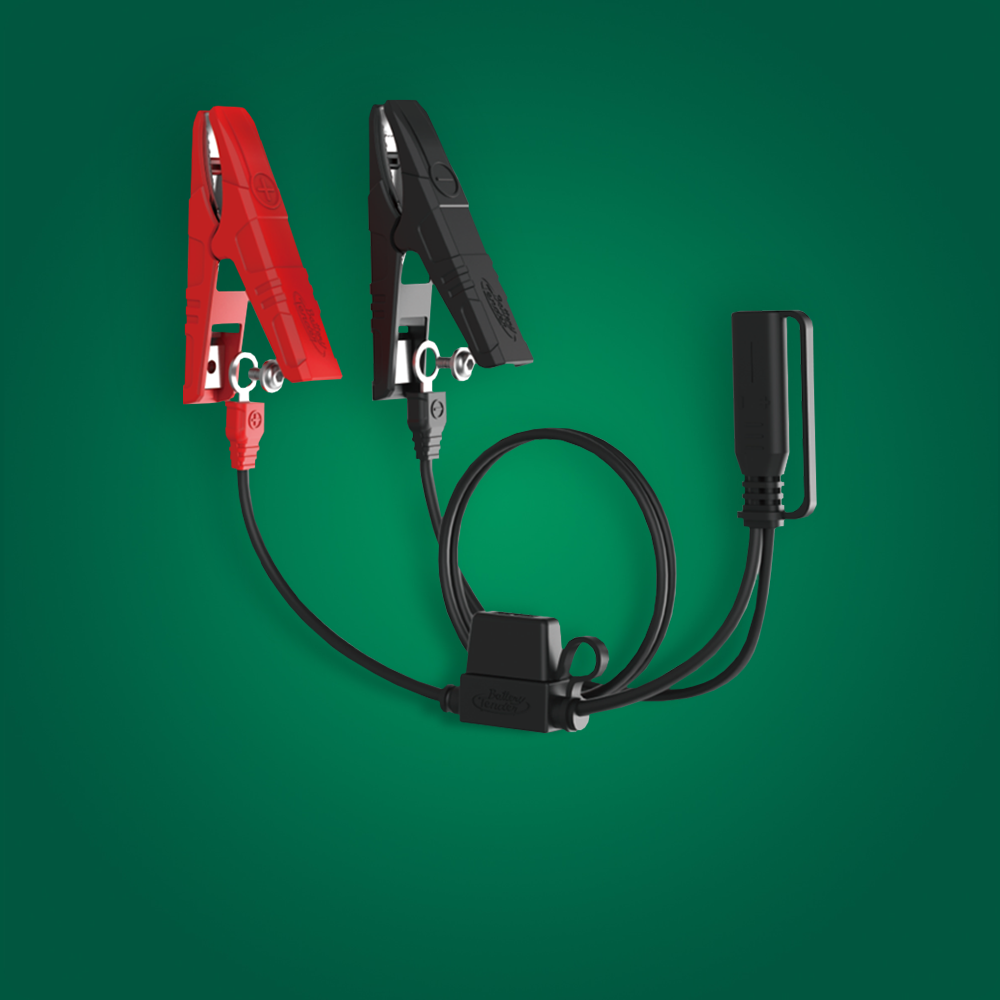
Step 6 matters for Battery Tender WaveCharge Pro installs where the charger sits in the engine room and the shore cord reaches from the helm. The Battery Tender WaveCharge 10ft Marine Extension Cable is 14-gauge and weatherproof, so the AC run does not become the weak link.
Battery Tender WaveCharge 10ft Marine Extension Cable
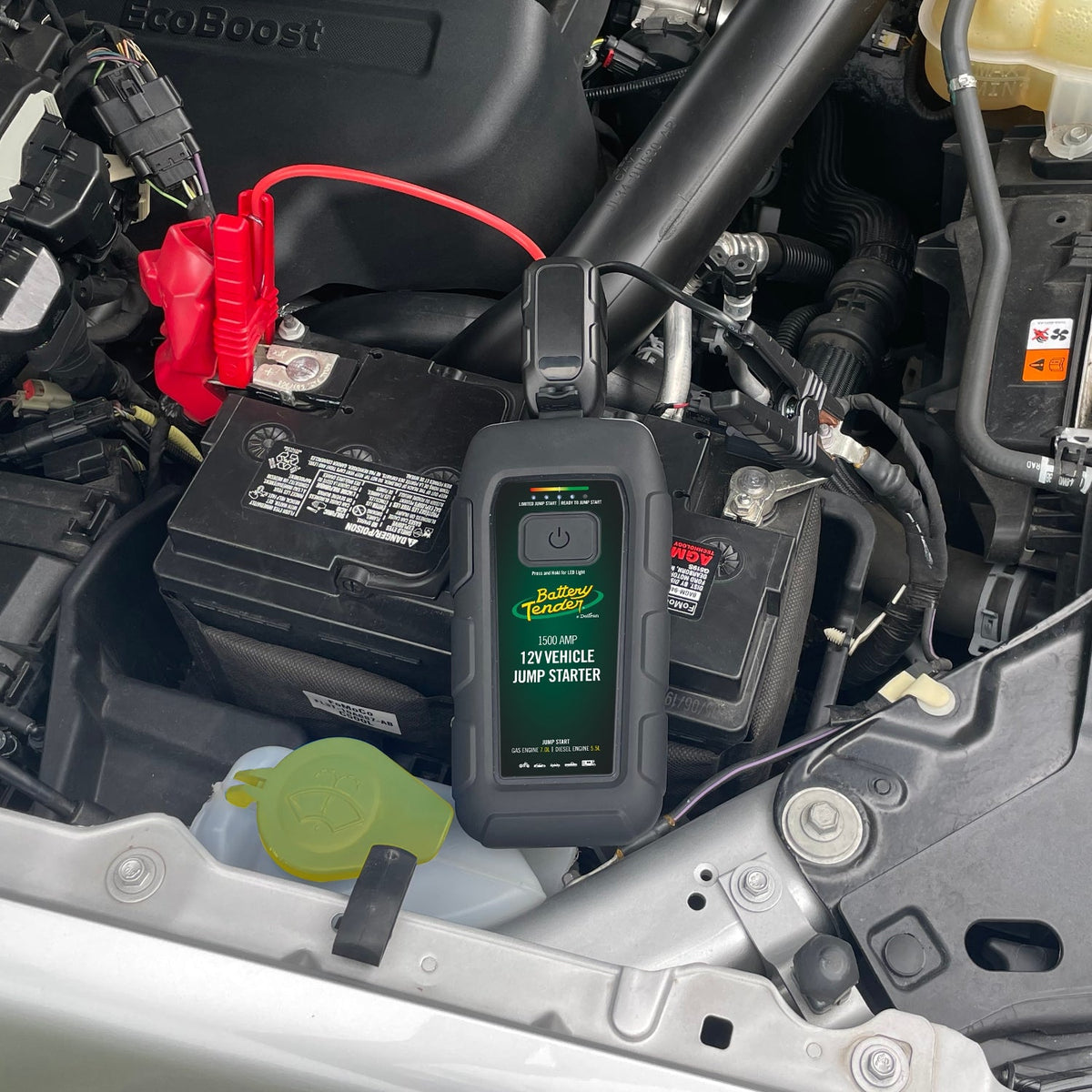
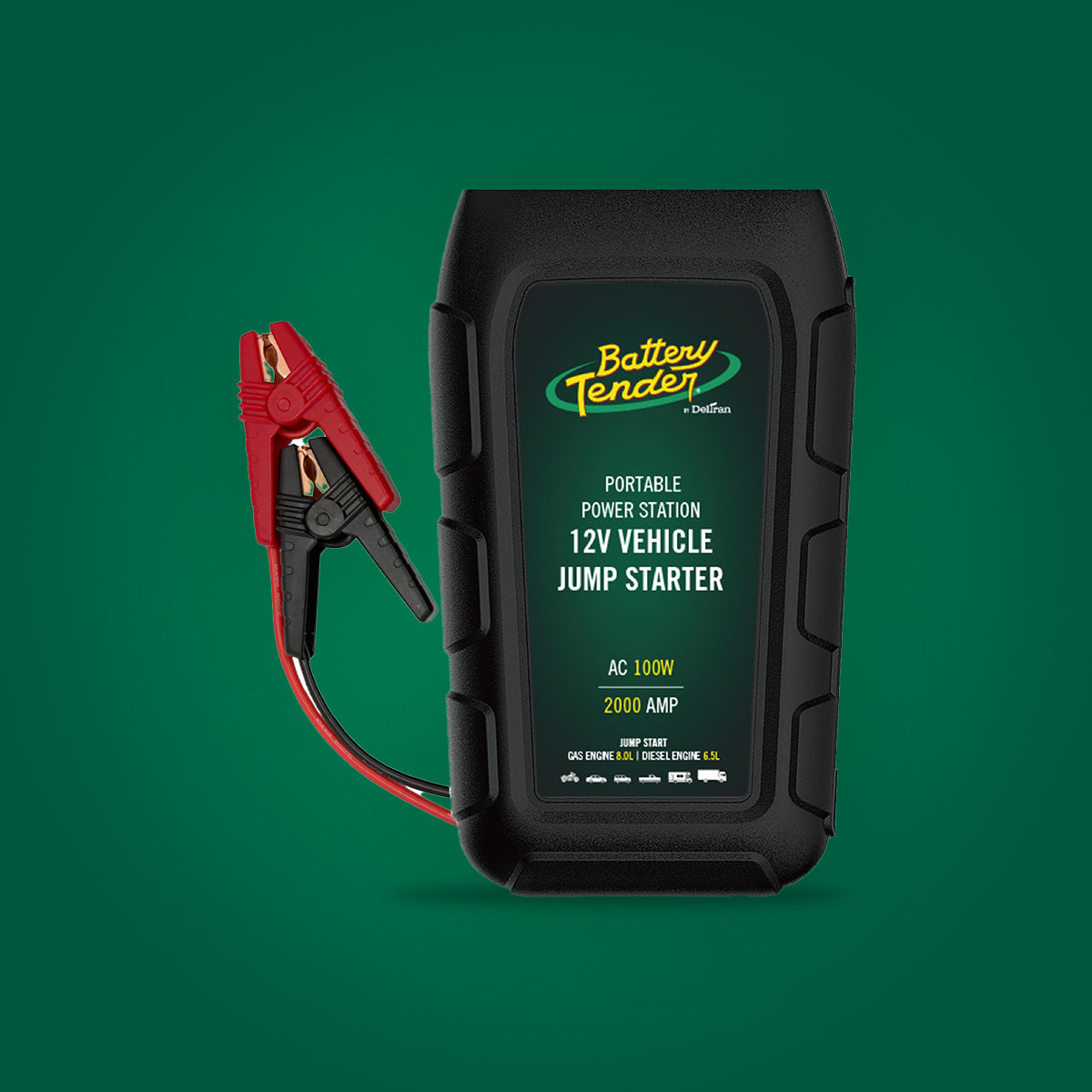
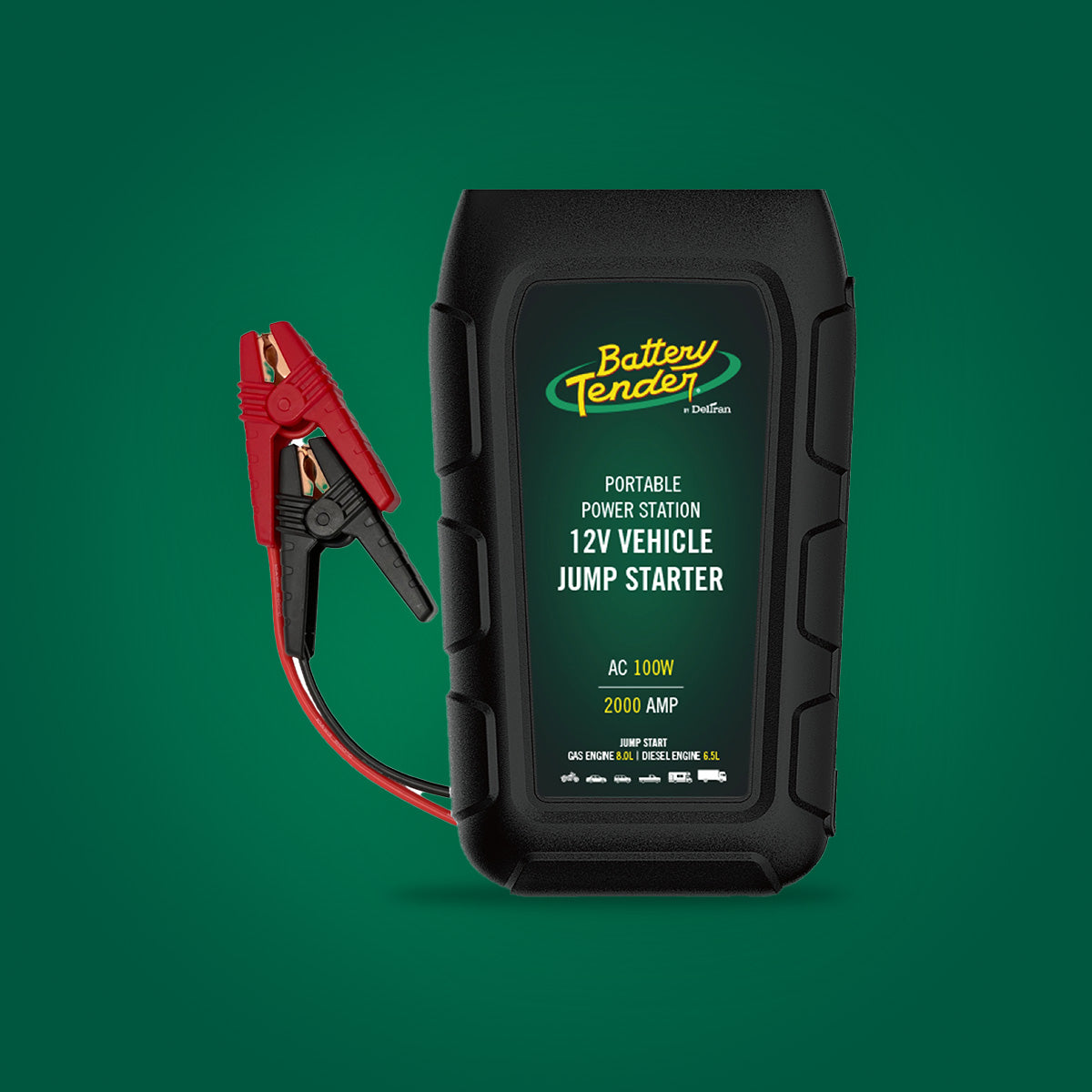
No charger replaces an emergency plan. A dock-charged battery can still fail from a bad connection or a long layup. For larger gas engines up to 8.0L and diesels up to 6.5L, the Battery Tender Jump N Start 2000 Amp Lithium Jump Starter gives the crew a self-contained way to restart without borrowing a second boat's battery. Store it in a dry bag and top it off every few months.
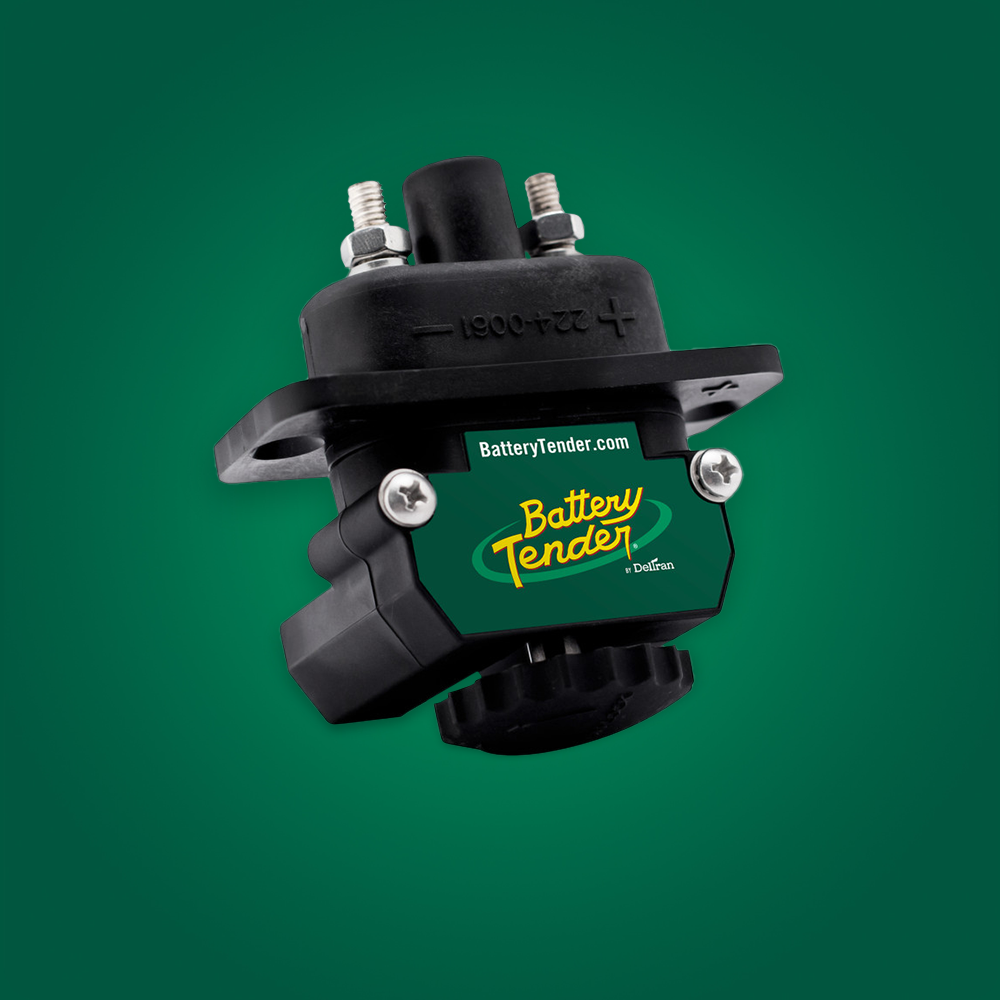
Battery Tender Jump N Start 2000 Amp Lithium Jump Starter
For off-season shutdown, see Boat Battery Winter Storage with Battery Tender WaveCharge Marine Chargers (2026).
Frequently Asked Questions
How long does a boat battery last?
A well-maintained lead-acid boat battery commonly lasts three to five years. Neglect shortens that to one or two seasons. Heat, deep discharge, and sitting uncharged cause most early failures. Lithium batteries generally last longer. A multi-bank smart charger that holds each battery at full charge is the most effective way to reach the upper end of that range.
Can I leave a marine charger connected to my boat battery all season?
Yes, if the charger uses a demand-responsive maintenance stage. Battery Tender ISM technology delivers charge pulses only when voltage drops, so it is safe for indefinite connection. Use GFCI-protected shore power, keep the charger ventilated, and inspect cables and terminals monthly for corrosion or chafing.
What voltage means my boat battery needs charging?
For a 12V lead-acid boat battery at rest, 12.6 to 12.8V is full. About 12.2V is roughly 50% charged, and 12.0V or lower is deeply discharged and risks sulfation. Measure after the battery has rested for several hours, with the engine and loads off, for an accurate reading.
Do I need a waterproof charger for my boat battery?
It depends on where the charger mounts. An IP67 charger handles splash and brief immersion in a dry helm compartment. For an engine room, bilge, or any space with fuel vapor, choose a charger with IP68 sealing and UL marine ignition protection, such as the Battery Tender WaveCharge Pro line.
Conclusion
Protecting a boat battery means treating the environment as seriously as the battery itself. Control corrosion, match the charger's sealing and ignition rating to where it mounts, size each bank to its battery, and use sealed marine-grade connections.
Next step: count your batteries, note their amp-hours, and decide whether the charger will sit in a dry compartment or an engine room. Then browse the Battery Tender marine charger collection to match a charger to your boat.