


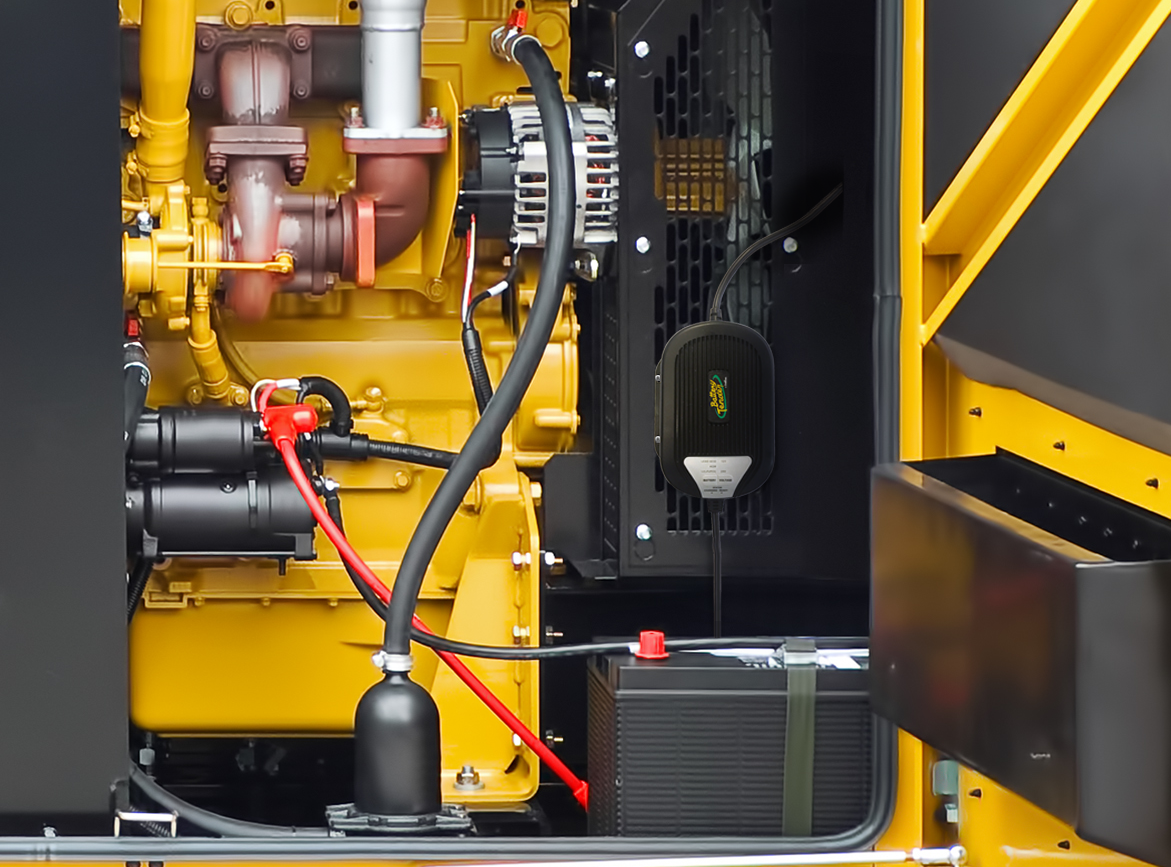
Farm Equipment Battery Charger Guide: Tractors to Combines (2026)
This farm equipment battery charger guide comes down to three numbers: battery amp-hours, system voltage, and idle time. Match a smart charger such as the Battery Tender® PowerPlus 12V or a Battery Tender Power Tender charger to those numbers, and the tractor, combine, or sprayer starts on the first crank after months in the shed.
Farm batteries live a harder life than road-vehicle batteries. They sit for months between planting and harvest, they are exposed to vibration, dust, and unheated sheds, and they are large enough that a household-style charger barely moves them. This guide sizes chargers by machine, explains how smart charging protects big batteries, and gives a setup routine for the barn or the field.
Key Takeaways
- Size the charger to the battery: roughly 10 to 25 percent of amp-hour capacity for recovery, and 1 to 2 amps for months of maintenance.
- A charger with Infinite Sequential Monitoring (ISM) runs a four-stage process and can stay connected all winter. A conventional trickle charger delivers constant current and can overcharge.
- Large tractors and combines with 100 to 200 Ah banks need a high-output unit such as the Battery Tender PowerPlus 12V (26A).
- Use weatherproof, heavy-gauge extension cable in barns and sheds. Household cord drops voltage and creates a moisture hazard.
- Maintained batteries commonly last 5+ years instead of 2 to 3, because consistent smart charging prevents sulfation.
Why Farm Equipment Batteries Die Between Seasons
Farm batteries die because they sit partly discharged for months, which lets lead sulfate harden on the plates. A fully charged 12V lead-acid battery rests at 12.6 to 12.8 volts. Below about 12.4 volts (roughly 75 percent state of charge), sulfation starts, and every week spent below that level makes the damage harder to reverse.
Three things drain farm batteries while the machine sits. Self-discharge takes about 3 to 5 percent of capacity per month at 77°F, and more in warm sheds. Parasitic loads such as clocks, monitors, GPS units, and telematics modules commonly pull 20 to 50 mA. At 25 mA, that is about 18 Ah per month, which is nearly a fifth of a 100 Ah battery.
Cold adds a second problem. A battery at 0°F delivers only about half the cranking power it has at 80°F, while a cold diesel engine needs far more power to turn over. A battery that was marginal in October is often dead in March. Keeping it near full charge all winter is the cheapest protection a farm has.
Farm Equipment Battery Charger Guide: Sizing by Machine
Size the charger by battery capacity and by how fast the machine must be ready. The formula is (battery Ah × depth of discharge) ÷ charger amps = approximate hours. Add about 20 percent for the absorption stage.
| Equipment | Typical Battery | Suggested Charger | Approx. Time from 50% Discharged |
|---|---|---|---|
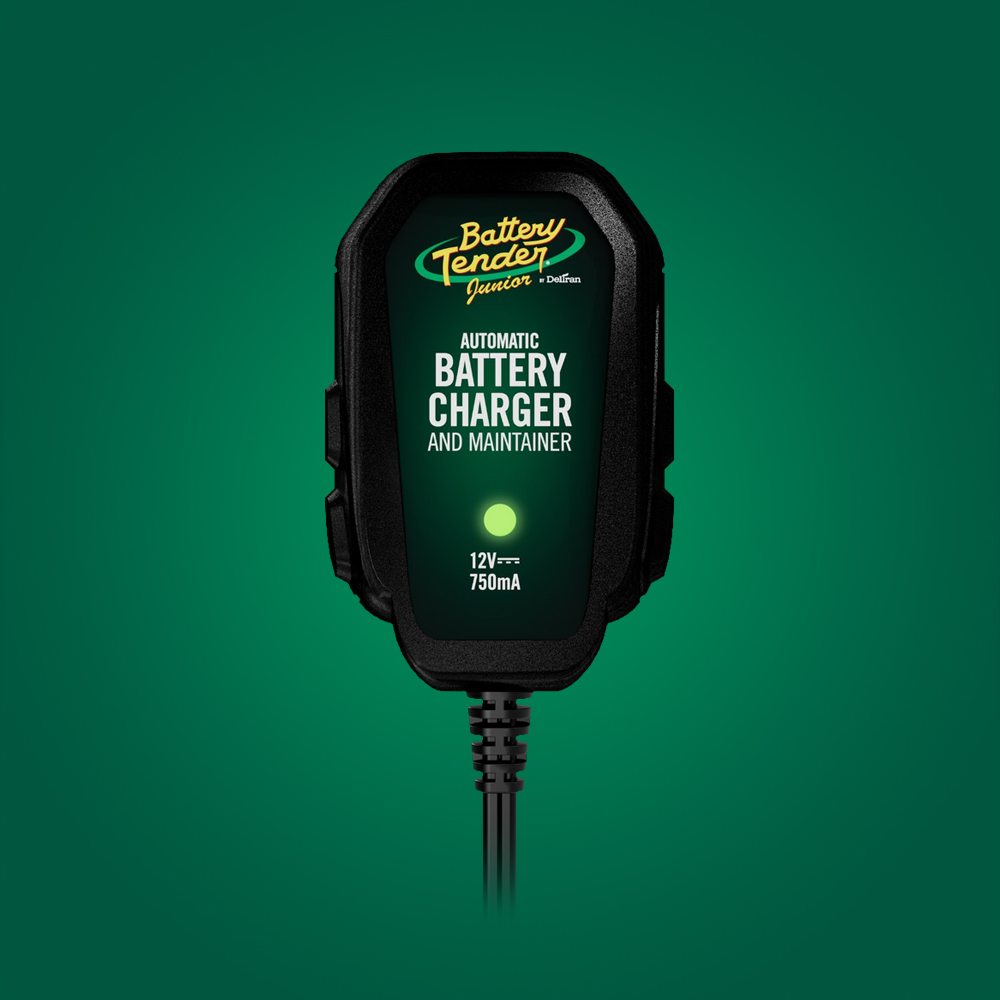
| ATV, UTV, garden tractor | 12V, 14–35 Ah | Battery Tender Plus (1.25A) | About 10 hours at 25 Ah |
| Irrigation pump or grain-dryer controller | 12V, 35–55 Ah | Battery Tender Power Tender 8A/2A on the 2A setting | About 11 hours at 45 Ah |
| Compact tractor | 12V, 50–75 Ah (Group 24/26) | Battery Tender Power Tender 8A/2A | About 3.75 hours at 60 Ah |
| Utility tractor (75–100 hp) | 12V, 90–110 Ah (Group 31) | Battery Tender Power Tender 15/8/2 | About 3.3 hours at 100 Ah |
| Combine, large row-crop tractor | Two 12V, 150–200 Ah each (4D/8D) | Battery Tender PowerPlus 12V (26A) | About 3.4 hours per 175 Ah battery |
Rules of Thumb for Farm Battery Banks
- Recovery charging: pick a charger delivering 10 to 25 percent of battery Ah. A 100 Ah battery pairs well with 10 to 25 amps.
- Seasonal maintenance: 1 to 2 amps is enough for any size once the battery is full, and a smart charger drops to that level on its own.
- Series banks: batteries wired in series for 24V systems must be charged on a charger matched to the full bank voltage. Parallel 12V banks should be disconnected and charged one battery at a time.
- Small-engine and ATV batteries under 35 Ah are covered in the Motorcycle Battery Charger Guide, since the same chargers apply.
ISM Smart Charging vs. Conventional Trickle Chargers in Farm Conditions
ISM smart charging reads the battery and adjusts through four stages, while a conventional trickle charger pushes constant current regardless of battery state. Battery Tender pioneered smart charging in 1989, and Infinite Sequential Monitoring (ISM) is the process behind every Battery Tender charger.
- Initialization: tests the battery and applies gentle current to judge its condition.
- Bulk Charge: delivers full rated current until the battery reaches about 80 percent state of charge.
- Absorption: holds voltage constant while current tapers, which completes the charge and helps dissolve sulfate crystals.
- Float Maintenance: supplies charge only when voltage drops, so the battery stays full without overcharging.
This matters on farms because the machine may sit connected from November to April. A conventional trickle charger keeps pushing current into a full battery, which heats it, boils off electrolyte, and warps plates. A Battery Tender charger with ISM is safe for indefinite connection. Combined with sulfation prevention, that is how maintained batteries move from a typical 2 to 3 year life to 5 years or more.
Temperature Matters in Unheated Sheds
Sheds swing from 10°F in January to 100°F in July. Temperature compensation raises charge voltage in the cold and lowers it in the heat. Battery Tender chargers such as the Battery Tender Plus include it, so they are a good choice for sheds with big temperature swings.
Matching Battery Tender Chargers to Farm Jobs
Combines and Large Tractors
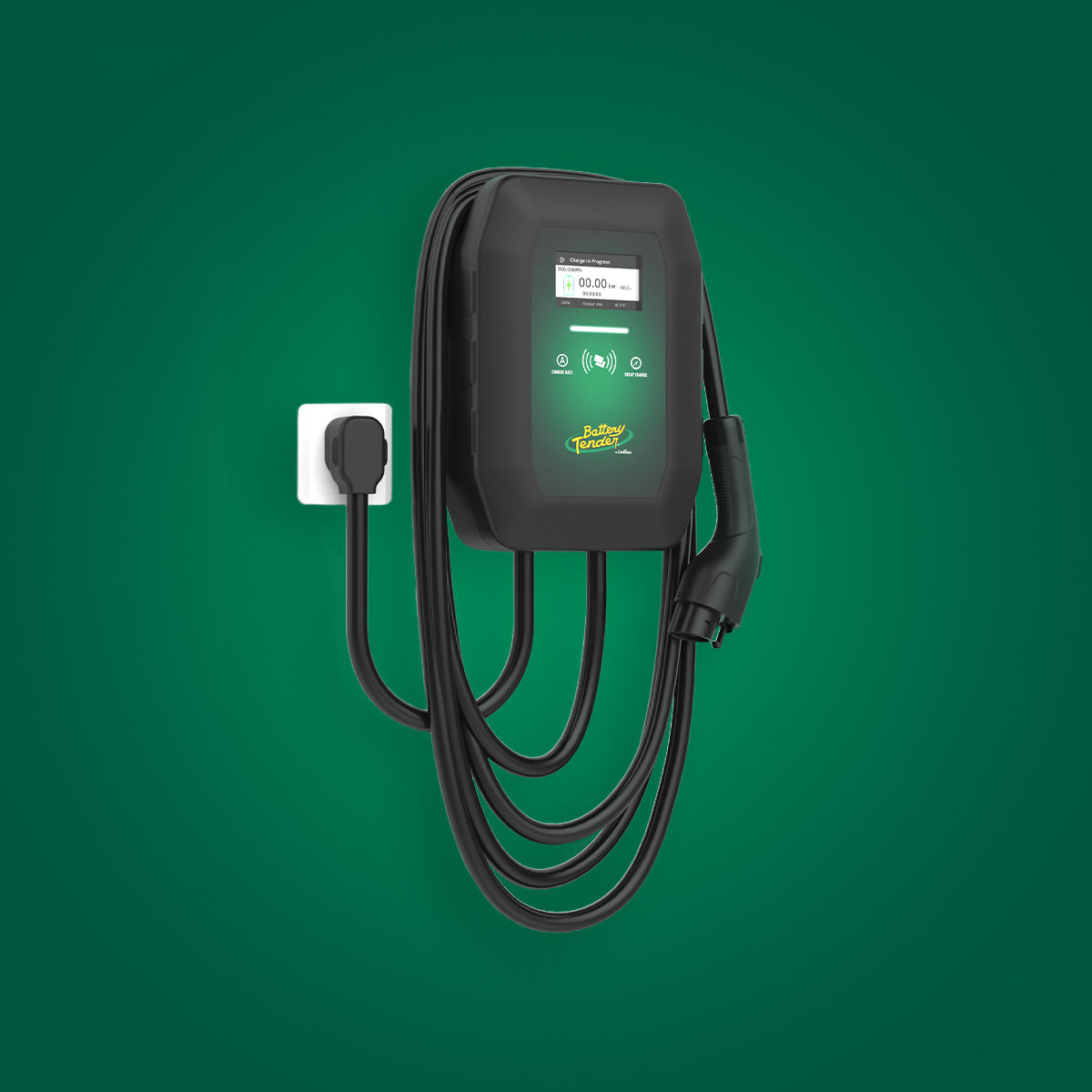
For 150 to 200 Ah banks, the Battery Tender PowerPlus 12V delivers 26 amps in a sealed IP68 chassis. That output takes a 175 Ah battery from 50 percent to full in roughly 3.4 hours, plus absorption, which suits a harvest schedule where the machine must run the next morning. The IP68 housing tolerates dust and washdown spray in a working shop.
Battery Tender PowerPlus 12V 26 Amp Battery Charger and Maintainer
Utility Tractors and Mixed Fleets
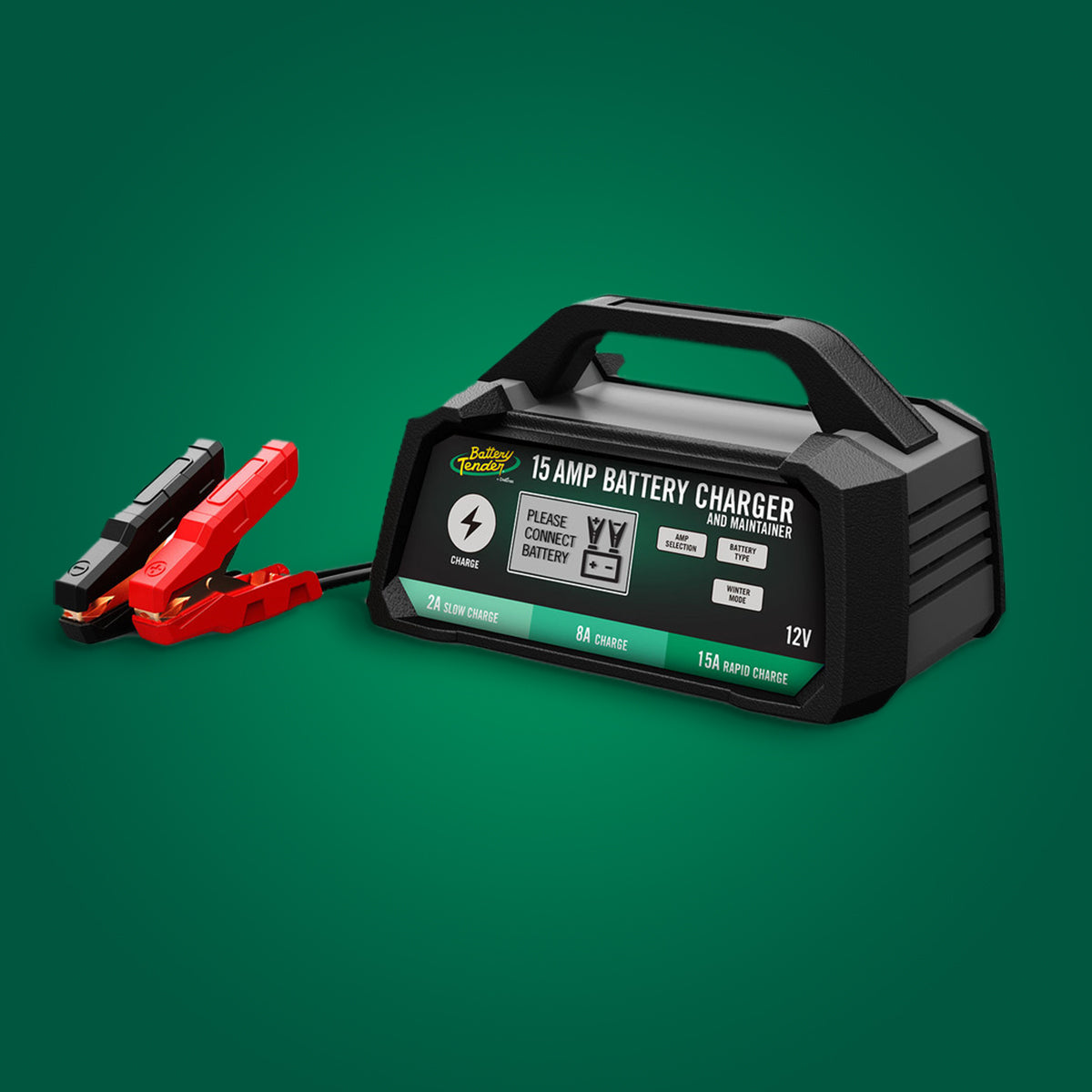
One machine often serves many batteries, and the Battery Tender Power Tender 15/8/2 covers them. Use 15 amps to recover a Group 31 battery in about 3.3 hours, 8 amps for a 60 Ah compact-tractor battery, and 2 amps for winter maintenance. The display shows charge progress at a glance, so there is no guesswork.
Battery Tender Power Tender 15/8/2 Amp 12V Battery Charger and Maintainer
Compact Tractors, Pumps, and Controllers
The Battery Tender Power Tender 8A/2A fits 35 to 75 Ah batteries. Use the 8-amp setting to bring a worn-down compact-tractor battery back in under four hours. Then switch to the 2-amp setting for a pump or grain-dryer controller that sits all winter.
Battery Tender Power Tender 8 Amp/2 Amp 12V Battery Charger and Maintainer
Reaching the Machine in the Field
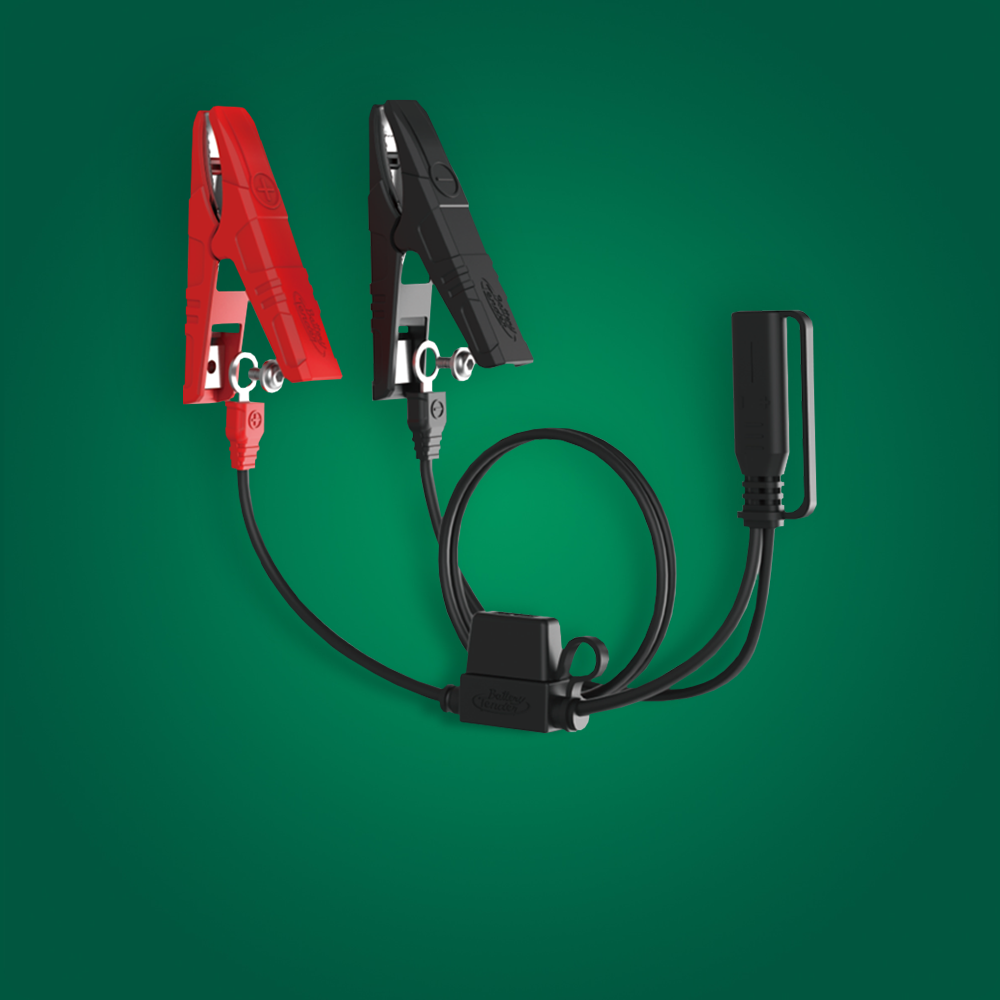
Farm equipment rarely parks next to an outlet. The 5-foot weatherproof, 14-gauge extension cable for the Battery Tender PowerPlus line keeps the charger on a dry wall while the leads reach the battery box on a combine or sprayer.
Battery Tender PowerPlus 5ft Extension Cable
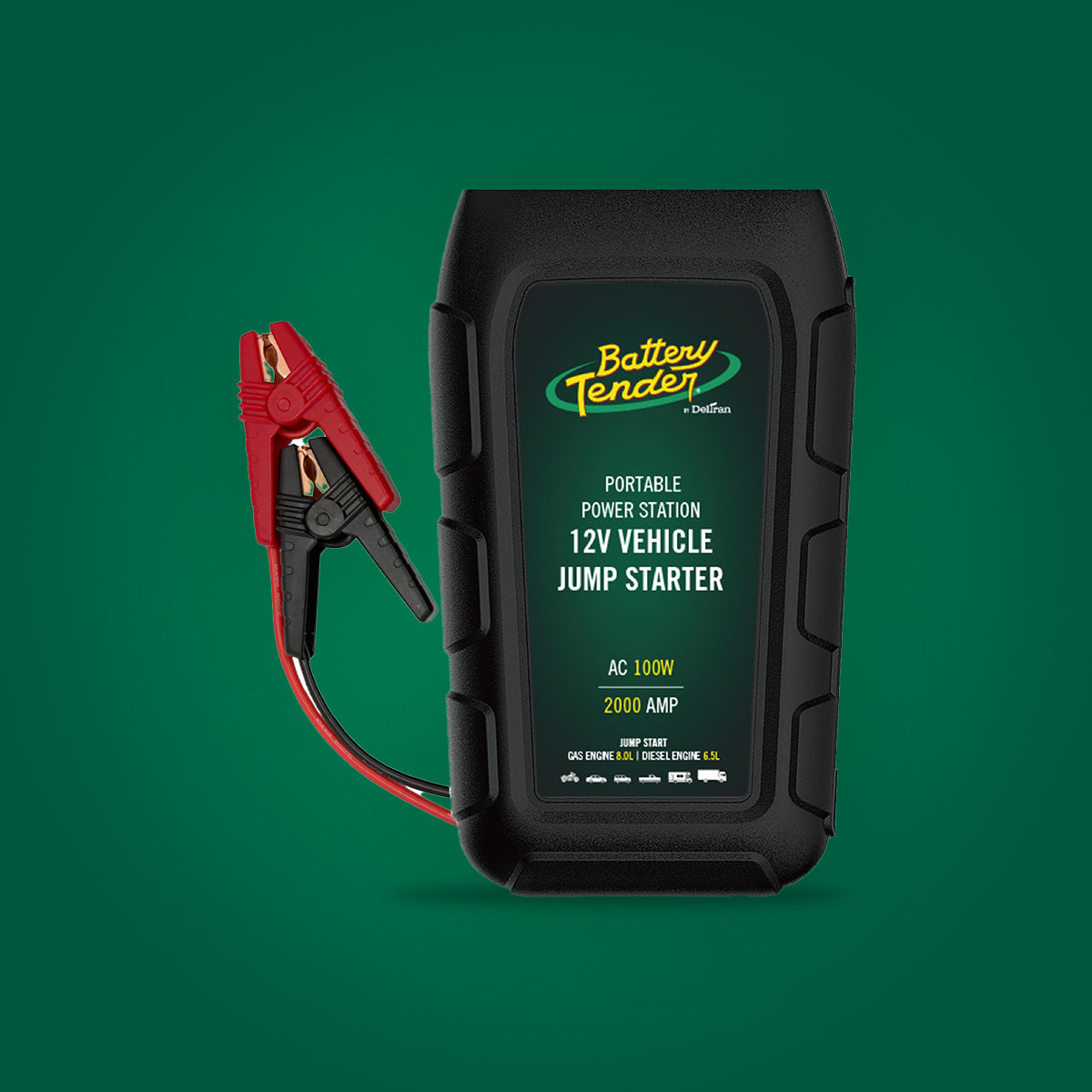
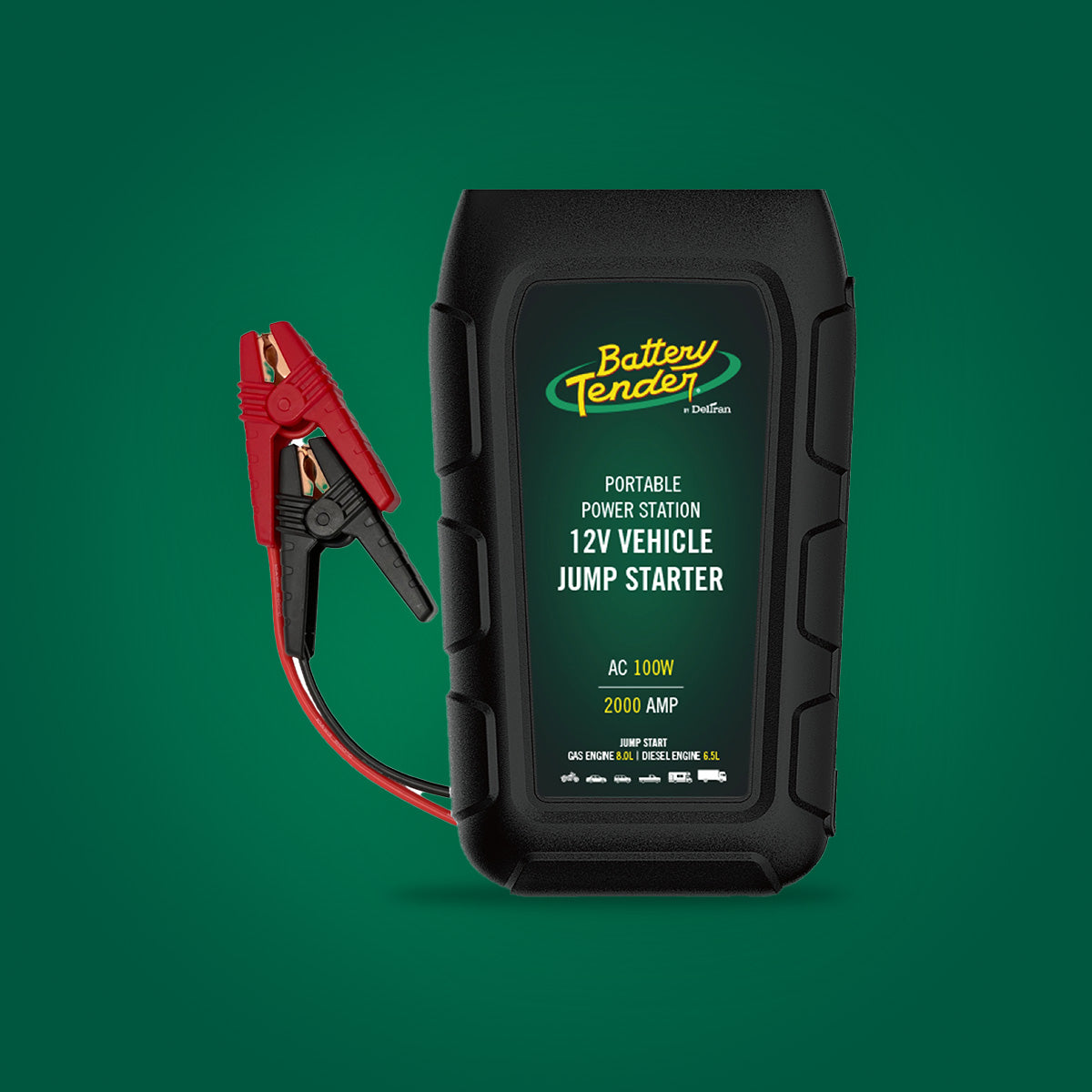
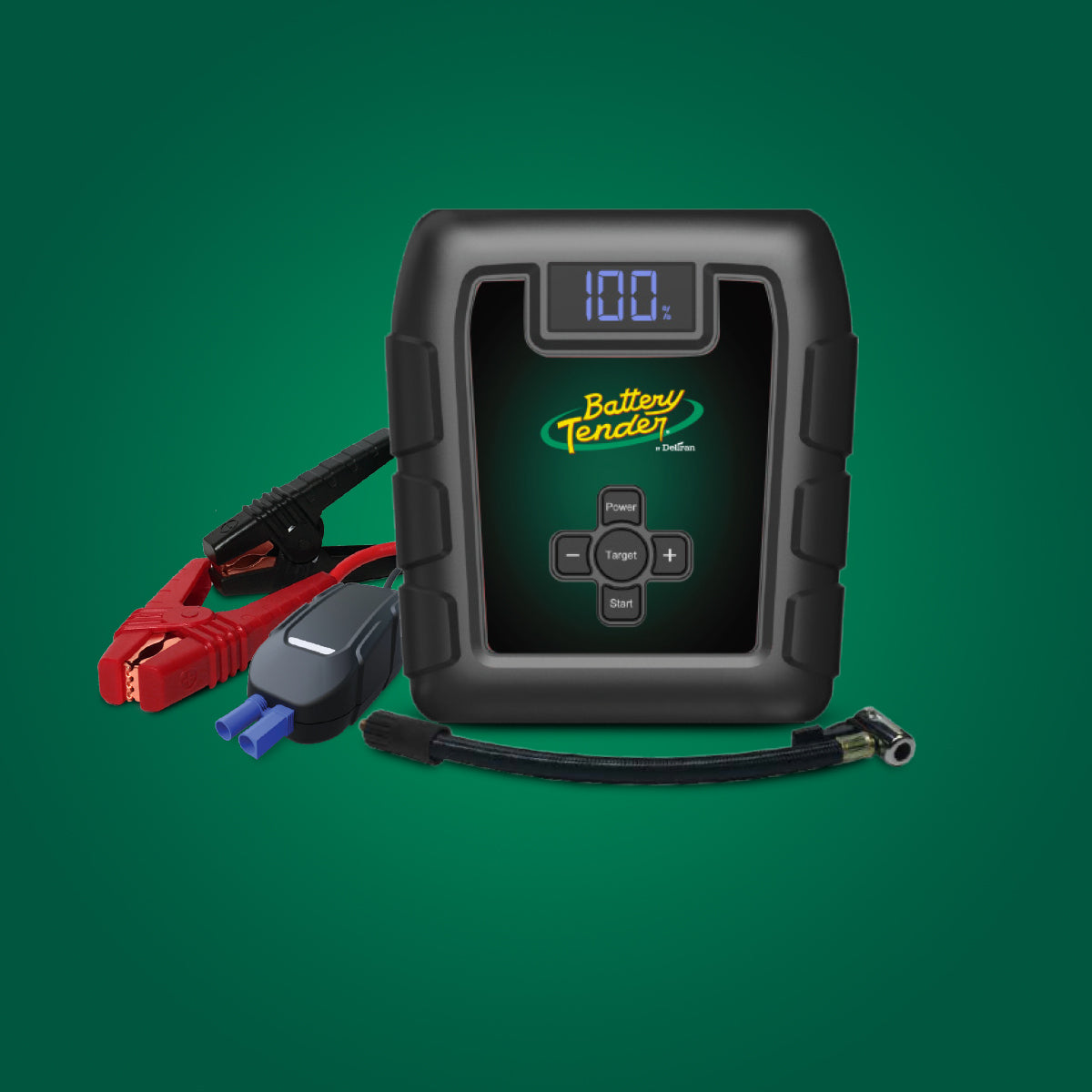
For ATVs and utility pickups, the Battery Tender Charge N Start 4120 pairs a 4-amp battery charger with a 1,200-amp jump starter, covering routine charging and dead-battery emergencies in one unit. A side-by-side breakdown of the full range is in the Battery Tender product comparison.
Farm Equipment Battery Charger Setup: Barn and Field Steps
Connect the charger with the AC cord unplugged, and follow the same sequence every time. Fuel vapor, wet floors, and hydrogen gas from charging batteries make order of operations a safety issue, not a preference.
- Check the battery. Look for cracks, bulging, or leaks. Do not charge a frozen or damaged battery.
- Clean the terminals. Remove corrosion with a baking soda and water solution and a wire brush.
- Confirm the voltage. Verify 12V or 24V and the chemistry setting if the charger offers one.
- Connect the leads. Red to positive first, then black to a clean bare-metal chassis ground on the frame, away from the battery and fuel lines. On a battery removed from the machine, connect black directly to the negative terminal.
- Route the cable. Keep cords off wet floors and away from moving parts. Use a weatherproof extension rated for outdoor use.
- Plug in last. Use a GFCI-protected outlet, then confirm the charger enters Initialization.
- Leave it connected. ISM moves to Float Maintenance automatically, so the unit can stay on until spring.
Safety Checklist
- Charge in a ventilated space with no sparks, open flame, or smoking nearby.
- Wear eye protection when handling lead-acid batteries.
- Unplug the charger before disconnecting the leads.
- Do not use a household extension cord for long runs, since voltage drop and moisture are both hazards.
- Disconnect the clamps before welding on the machine.
Frequently Asked Questions
What size battery charger do I need for a tractor?
Match the charger to battery amp-hours. A compact tractor with a 50 to 75 Ah battery works well with an 8-amp unit, and a utility tractor with a Group 31 battery of about 100 Ah suits 15 amps. For winter maintenance, a 1 to 2 amp setting is enough for any size.
Can I leave a smart charger on my tractor battery all winter?
Yes. A Battery Tender charger using ISM drops to Float Maintenance once the battery is full and sends current only when voltage falls. That makes it safe to leave connected for months. A conventional trickle charger can overcharge, so it should not be left on unattended.
How long does it take to charge a dead combine battery?
Use the formula (Ah × depth of discharge) ÷ charger amps. A 175 Ah battery at 50 percent discharge on a 26-amp charger takes about 3.4 hours, or roughly 4 hours with absorption. Check each battery separately if the machine uses a parallel bank.
Do I need to disconnect farm equipment batteries before charging?
For maintenance charging, usually not. A smart charger can stay connected to a battery that is wired into the machine. For recovery charging on parallel banks or 24V systems, disconnect the batteries and charge each one separately so the charger sees a single battery voltage.
Does cold weather hurt farm equipment batteries?
Yes. At 0°F a battery delivers about half the cranking power it has at 80°F, while cold engines need more power to start. A discharged battery can freeze at higher temperatures than a full one. Keeping it near full charge with a temperature-compensating charger is the most reliable protection.
Conclusion
A good farm equipment battery charger guide reduces to a simple routine: size the charger to battery Ah, run ISM-based smart charging, and keep the machine connected between seasons. A 26-amp Battery Tender PowerPlus charger for large banks, a Battery Tender Power Tender 15/8/2 or 8A/2A charger for tractors, and a weatherproof extension cable cover most farm shops.
Next step: count the batteries on the farm, note each Ah rating and voltage, and compare them to the sizing table above. Then browse the full Battery Tender charger collection to choose the right model for each machine.