

Motorcycle Battery Charger Guide: Year-Round Riding Power (2026)
A motorcycle battery charger does more than rescue a dead battery — it actively prevents one from dying in the first place. Battery Tender® pioneered smart charging technology in 1989, introducing Infinite Sequential Monitoring (ISM) to deliver demand-responsive charging that keeps motorcycle batteries at full capacity whether a bike sits for a weekend or an entire off-season. Unlike basic trickle chargers that push constant current regardless of battery state, an ISM-equipped charger reads voltage continuously and adjusts output, making it safe for indefinite connection without the risk of overcharging or boiling electrolyte.
Most riders already know that seasonal storage kills batteries. But what fewer riders understand is how daily riding habits, short commutes, and parasitic electrical draws create a slow drain that degrades battery health even during peak riding season. This guide examines exactly how a motorcycle battery charger protects battery investment year-round — not just during winter — and breaks down the charging math, connection methods, and product sizing that apply to every type of motorcycle from 125cc commuters to fully loaded touring rigs.
Why Do Motorcycle Batteries Die Between Rides?
A motorcycle battery loses charge between rides because of parasitic draw — the continuous low-level current consumed by clocks, alarm systems, ECU memory, and GPS modules even when the ignition is off. A typical modern motorcycle draws 3–10 milliamps at rest. On a common 12Ah AGM battery, a 5mA parasitic draw depletes approximately 0.12Ah per day, which translates to a 10% state-of-charge loss in roughly 10 days without riding. After 30 days of inactivity, that same battery sits below 70% charge — the threshold where lead-acid sulfation begins accelerating.
Short rides compound the problem. A motorcycle alternator (technically a stator and regulator/rectifier system) typically outputs 200–400 watts. At 14V charging voltage, that equates to roughly 14–28 amps of output capacity. However, when headlights, fuel injection, ignition, and heated grips are running, available charging current for the battery drops significantly. A 15-minute commute may return only 2–3Ah to a battery that lost 5Ah overnight from parasitic draw plus the energy consumed by the starter motor during cranking. Over successive short-ride days, the battery enters a deficit cycle that no amount of riding corrects.
This is why a dedicated motorcycle battery charger matters during riding season — not just during storage. Connecting a smart charger after every ride, or at least once per week, interrupts the deficit cycle and maintains the battery at or near 100% state of charge. According to research published by the Battery Council International (BCI), lead-acid batteries maintained above 75% state of charge last 3–5 times longer than those regularly discharged below 50%.
How ISM Technology Protects a Motorcycle Battery
ISM technology separates a smart motorcycle battery charger from a basic wall-plug trickle charger. The ISM process operates in four distinct stages, each calibrated to battery condition in real time.
- Stage 1 — Initialization: The charger applies a gentle test current to evaluate battery voltage, internal resistance, and overall condition before committing full charge current. A severely depleted or damaged battery triggers fault indicators at this stage, preventing unsafe charging.
- Stage 2 — Bulk Charge (Constant Current): Full rated amperage flows into the battery until it reaches approximately 80% state of charge. For a 750mA charger connected to a 12Ah battery at 50% depth of discharge, this stage lasts approximately 8 hours: (12Ah × 0.50) ÷ 0.75A = 8 hours.
- Stage 3 — Absorption (Constant Voltage): The charger holds voltage constant at 14.4–14.7V while current tapers gradually. This stage dissolves sulfate crystals that form on lead plates during discharge, restoring active material and full capacity.
- Stage 4 — Maintenance (Float): Once the battery reaches 100%, the charger drops to a demand-responsive mode. It delivers charge pulses only when voltage dips below a set threshold, keeping the battery full without overcharging. This stage can continue indefinitely — weeks, months, or a full off-season — with zero risk of electrolyte loss or plate damage.
Trickle chargers skip the Absorption stage entirely. Float-only chargers apply constant voltage without the precise current tapering of Stage 3. Neither approach dissolves sulfation as effectively as ISM, and neither responds dynamically to temperature or load changes the way Battery Tender chargers do.
What Size Motorcycle Battery Charger Do You Actually Need?
Charger sizing for motorcycles depends on battery capacity (measured in amp-hours) and how quickly recovery is needed. The general rule: a charger rated at 10–15% of battery capacity provides the safest, most thorough charge without stressing thin-plate motorcycle batteries.
| Battery Capacity | Recommended Charger Output | Full Charge Time (50% Depleted) | Typical Bike Type |
|---|---|---|---|
| 4–9Ah | 750mA | 3–6 hours | Scooters, 125–300cc bikes |
| 10–18Ah | 750mA–1.25A | 4–12 hours | Sport bikes, standards, cruisers |
| 18–30Ah | 1.25A | 7–12 hours | Touring bikes, large cruisers, sidecars |
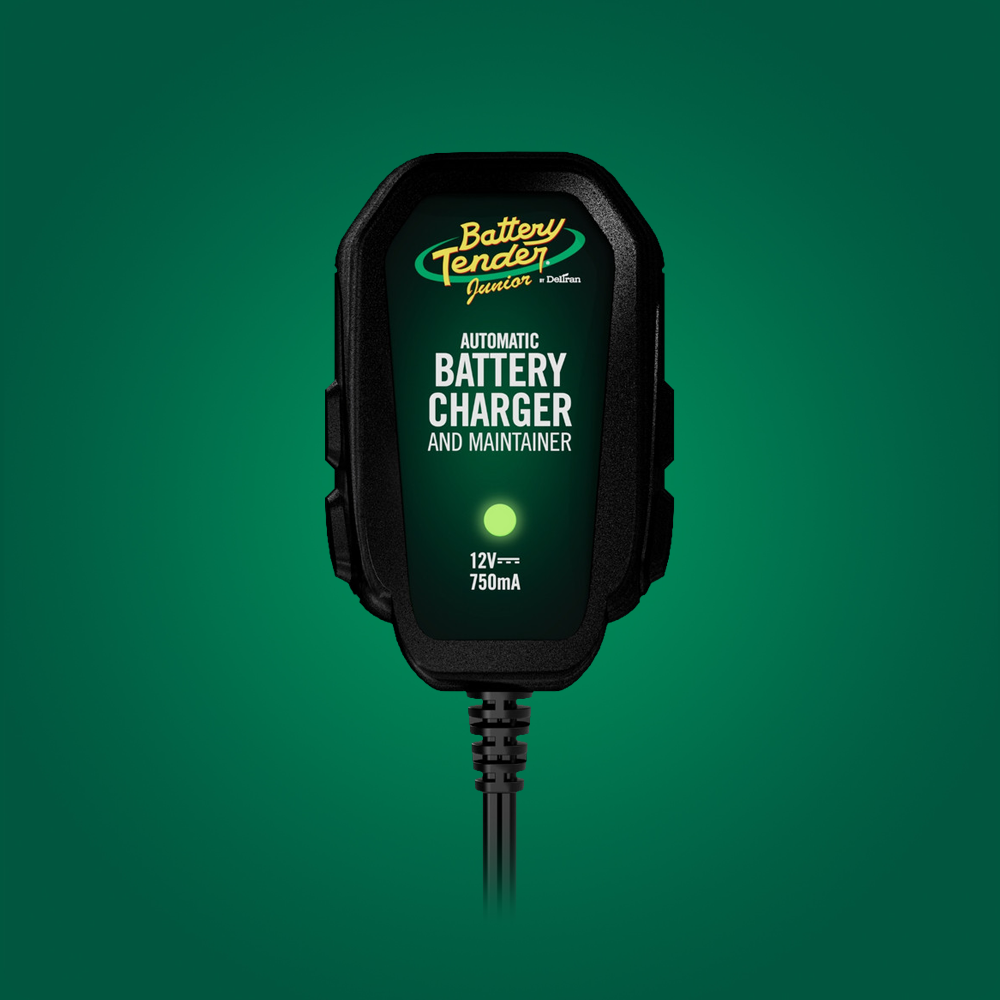
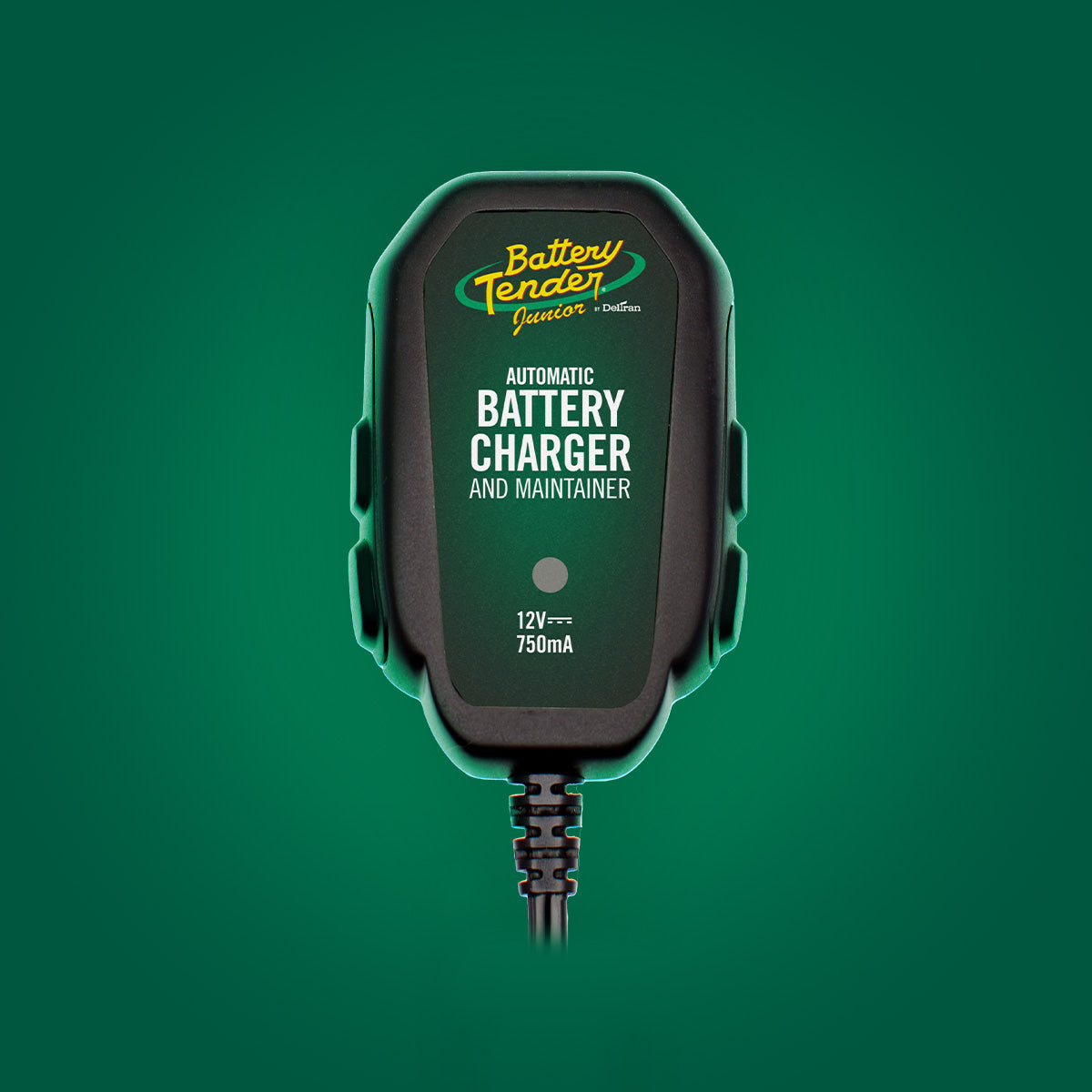
For the majority of motorcycles with standard lead-acid or AGM batteries in the 7–14Ah range, a 750mA charger provides the ideal balance of safe charge rate and overnight recovery. The Battery Tender Junior delivers exactly 750mA at 12V, handling batteries from 2Ah to 30Ah. It remains the single best-selling motorcycle battery charger in its class, backed by a 5-year warranty.
Battery Tender Junior 12V 750mA Battery Charger
Riders with lithium (LiFePO4) motorcycle batteries need a charger with selectable chemistry modes. Lithium batteries require a different charge voltage profile — typically 14.2–14.6V with a hard cutoff rather than the gradual taper used for lead-acid. Applying a standard lead-acid charge algorithm to a lithium battery risks overcharging. The Battery Tender Junior 1A Selectable solves this with a single button toggle between lead-acid and lithium profiles, delivering 1A of output for faster recovery while maintaining chemistry-specific voltage limits.
Battery Tender Junior 1A Selectable Lead-Acid/Lithium Battery Charger
How to Connect a Motorcycle Battery Charger for Daily and Seasonal Use
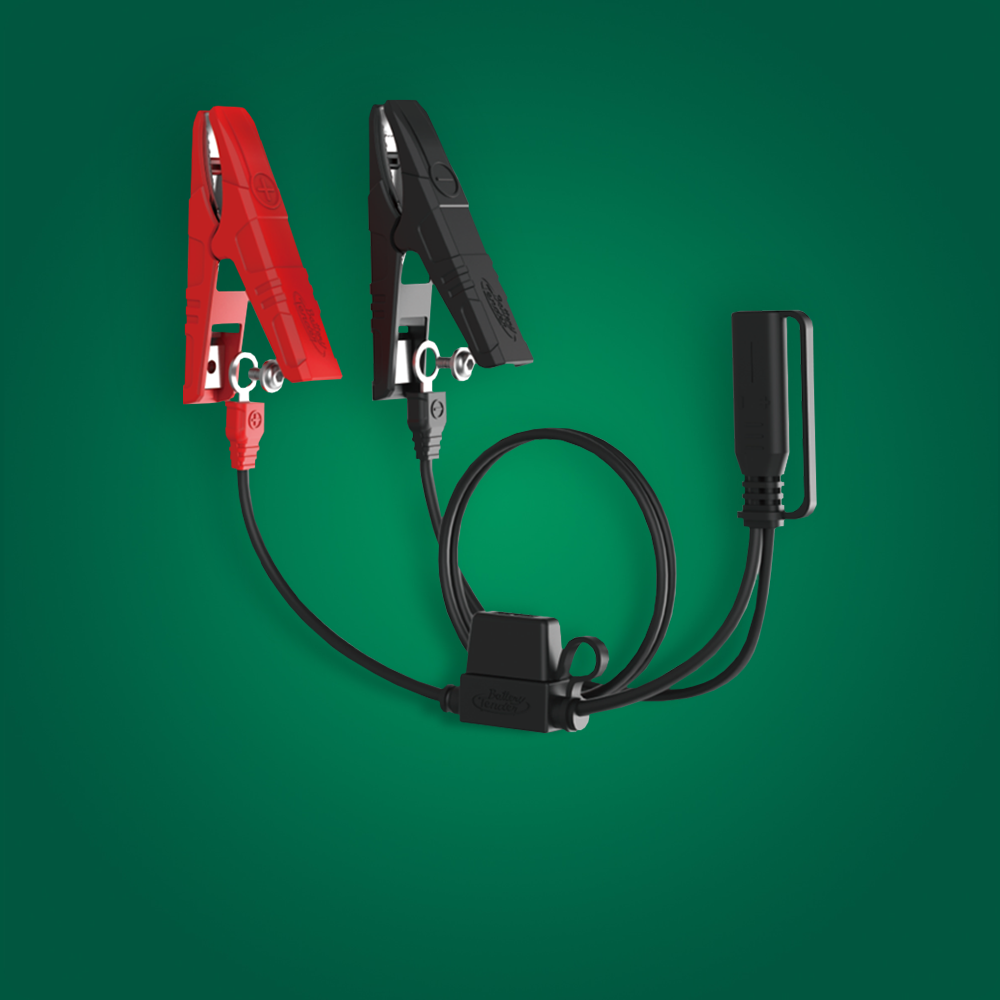
Every Battery Tender charger ships with two connection methods: alligator clips for temporary use and a ring terminal harness for permanent installation. For riders who plan to charge regularly — which should be every rider — the ring terminal harness is the superior option.
Permanent Ring Terminal Installation (Recommended)
- Disconnect the negative (–) terminal before working on any battery connections. This prevents short circuits through the frame.
- Attach the ring terminals directly to the battery posts — red ring to positive (+), black ring to negative (–). Tighten terminal bolts to manufacturer torque specifications (typically 50–70 inch-pounds for motorcycle batteries per SAE J537).
- Reconnect the negative terminal. Route the quick-disconnect SAE plug through the seat gap, frame channel, or side panel so it remains accessible when the seat is reinstalled.
- To charge: Plug the charger output cable into the SAE connector. The charger begins ISM cycling automatically — no buttons, no settings (on standard lead-acid models).
- To ride: Unplug the SAE connector and tuck it under the seat. The ring terminals remain permanently installed and draw zero current when disconnected from the charger.
This setup reduces daily charge connection to a 3-second plug-in. Riders who install ring terminals report dramatically better compliance with regular charging because the barrier to connecting drops to near zero.
Seasonal Storage Protocol
For extended storage (30+ days), connect the motorcycle battery charger and leave it attached for the entire duration. ISM Stage 4 maintenance mode monitors voltage continuously and pulses charge only as needed. There is no timer to set, no need to disconnect weekly, and no risk of overcharging. A Battery Tender charger connected in November stays connected through March with zero intervention required. When spring arrives, the battery sits at 100% state of charge, ready for immediate starting.
Important note about temperature compensation: Nearly all Battery Tender chargers include temperature compensation to adjust for charging in extreme heat or cold. For motorcycles stored in unheated garages where winter temperatures routinely drop below 32°F (0°C), the Battery Tender Plus 1.25A provides the most accurate charge voltage in cold environments and carries a 10-year warranty.
Battery Tender Plus 12V 1.25A Battery Charger
What Happens When a Motorcycle Battery Charger Is Not Used
Without a maintenance charger, a motorcycle battery follows a predictable degradation curve. Sulfation — the crystallization of lead sulfate on battery plates — begins within 2 weeks of sitting below 80% charge. Soft sulfation at this stage is reversible through the ISM Absorption stage. After 30–60 days below 75% charge, crystals harden into permanent sulfation that no charger can fully reverse.
The financial impact is measurable. A quality AGM motorcycle battery costs $80–$180. A Battery Tender Junior costs $44.95 and lasts years. Without a charger, most riders replace batteries every 2–3 years. With consistent ISM maintenance, battery lifespan extends to 4–6 years or more. The charger pays for itself within the first avoided replacement.
Beyond cost, a dead battery at the start of riding season means lost ride days. Sulfated batteries may accept a charge but deliver reduced cranking amps, leading to slow cranking, failed starts in cool morning temperatures, and unreliable performance that erodes rider confidence in the electrical system.
When You Need More Than a Motorcycle Battery Charger Alone
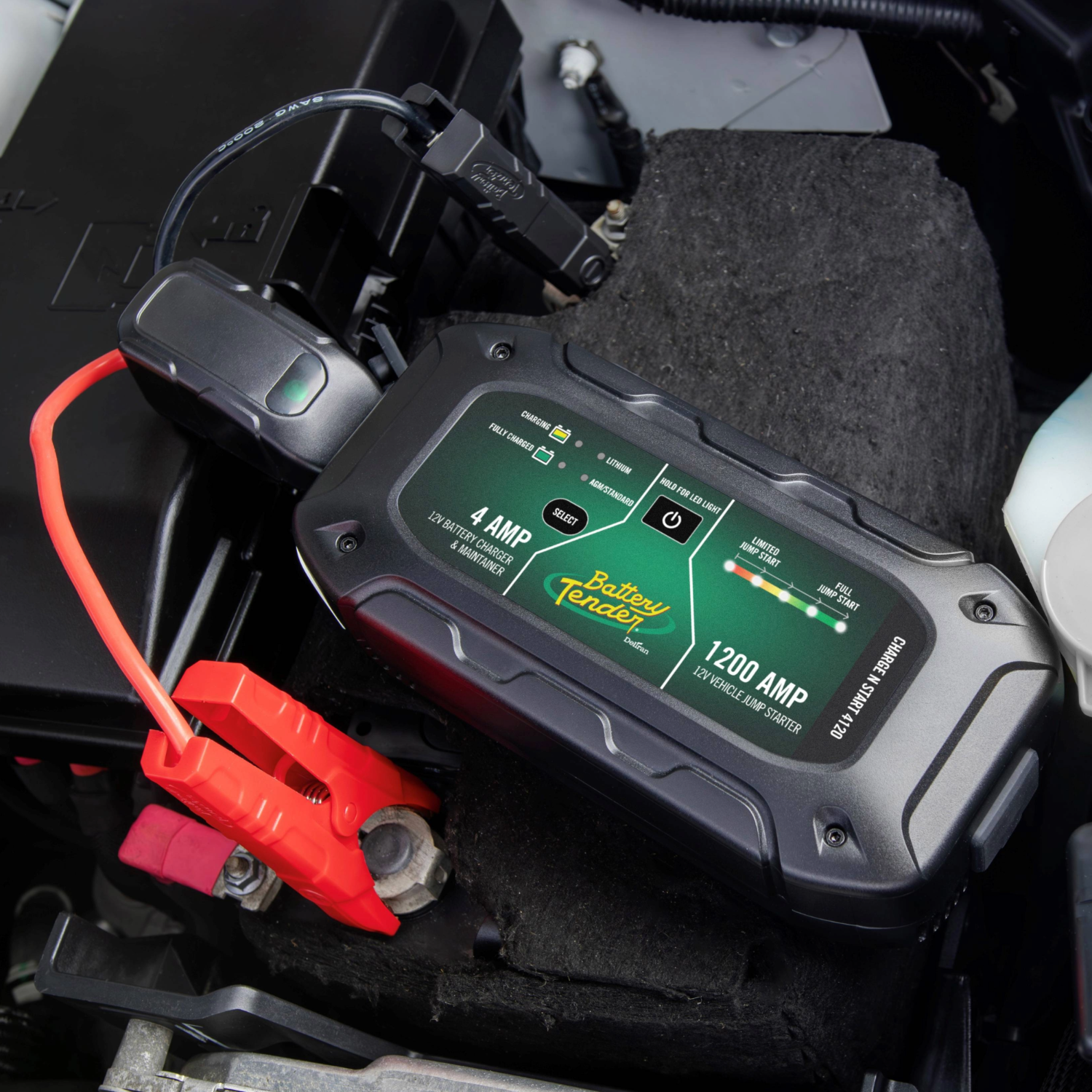
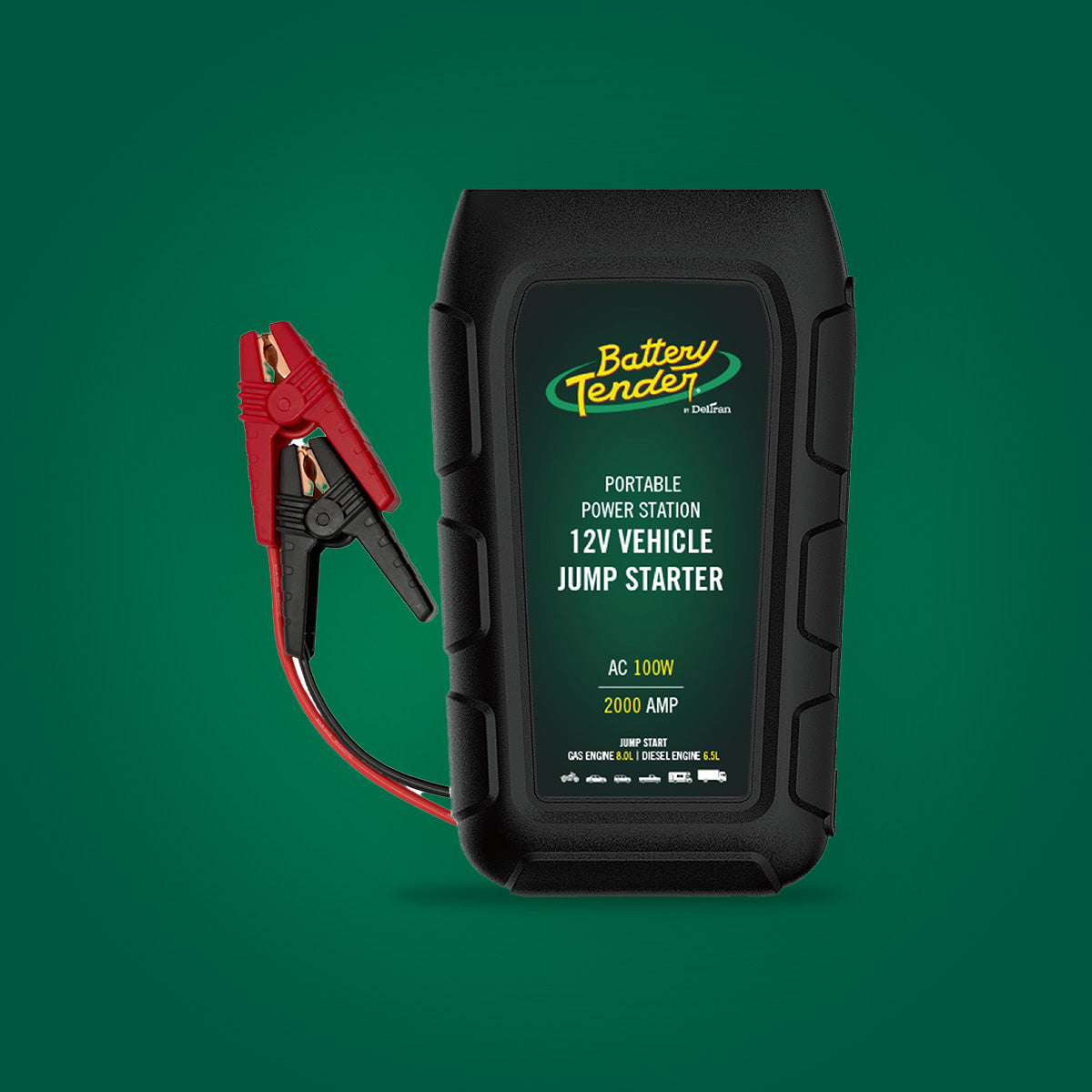
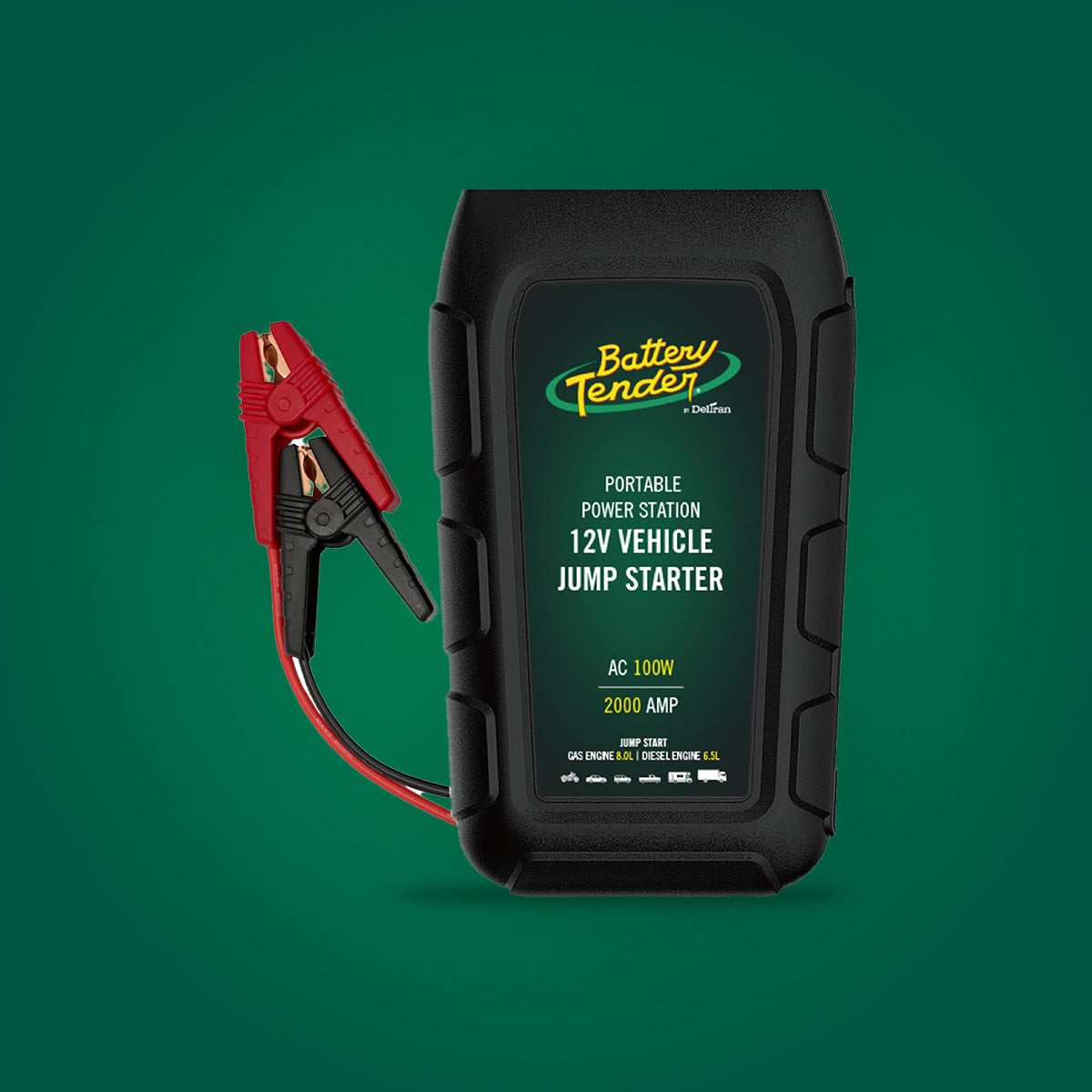
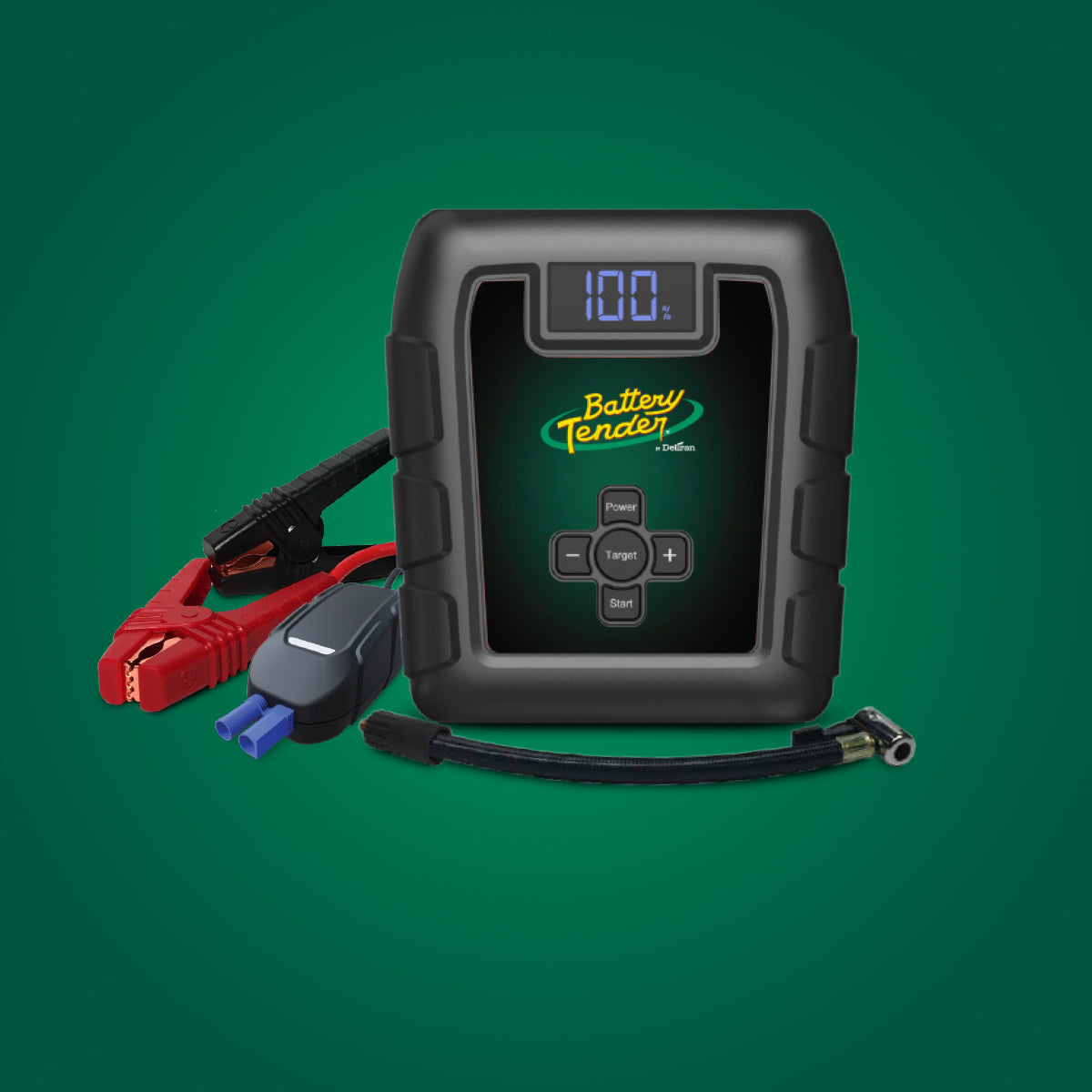
A dedicated charger handles maintenance and recovery. But riders who tour remote areas, attend rallies, or simply want insurance against the unexpected benefit from a combined charger and jump starter unit. The Battery Tender Charge N Start 1100 integrates a 1A ISM charger with a 1,000-amp lithium-ion jump starter in a single portable unit. The internal lithium-ion battery pack uses proprietary Charge N Store technology to maintain its own charge during storage and SafeGuard anti-backfeed circuitry to protect both the unit and the motorcycle battery during jump-start events.
The 1A charger section handles all 12V battery chemistries — standard lead-acid, AGM, GEL, and lithium — while the 1,000A jump capability starts engines up to 5.0L gas or 3.0L diesel displacement. For motorcycles, that jump capacity is more than sufficient for any engine size, with substantial headroom. The Charge N Start 1100 fits in a saddlebag or tail bag and weighs under 3 pounds, making it practical for touring and rally use.
Battery Tender Charge N Start 1100 — 1A Charger + 1,000A Jump Starter
Frequently Asked Questions
Can I leave a motorcycle battery charger connected all winter?
Yes, if the charger uses ISM technology. Battery Tender chargers switch to a demand-responsive maintenance mode (Stage 4) once the battery reaches full charge. This mode delivers short charge pulses only when voltage drops below a set threshold, making indefinite connection safe for months without any risk of overcharging, boiling electrolyte, or damaging plates. No timer or manual disconnection is needed.
What is the difference between a motorcycle battery charger and a trickle charger?
A trickle charger delivers constant current regardless of battery state, which risks overcharging if left connected. A smart motorcycle battery charger like the Battery Tender Junior uses ISM 4-stage charging that automatically reduces and eventually stops current delivery when the battery is full. Trickle chargers require manual monitoring. ISM chargers do not. This distinction determines whether a charger can be safely left unattended for long-term storage.
Do I need a special charger for a lithium motorcycle battery?
Yes. Lithium (LiFePO4) motorcycle batteries require a different charge voltage profile than lead-acid or AGM batteries. Applying a standard lead-acid charging algorithm to a lithium battery can cause overcharging and damage. The Battery Tender Junior 1A Selectable offers a dedicated lithium mode that adjusts voltage cutoff and charge termination to match LiFePO4 chemistry requirements safely.
How long does it take to charge a motorcycle battery from dead?
Charging time depends on battery capacity and charger amperage. Use the formula: (battery Ah × depth of discharge) ÷ charger amps = approximate hours. A completely dead 12Ah battery on a 750mA charger requires approximately 16 hours: (12Ah × 1.0) ÷ 0.75A = 16 hours. A 1.25A charger reduces that same recovery to roughly 9.6 hours. Overnight charging handles most scenarios.
Conclusion
A motorcycle battery charger is not a seasonal accessory — it is a year-round tool that prevents the parasitic drain, sulfation, and charge deficit cycling that shorten battery life during both riding season and storage. ISM technology from Battery Tender eliminates the guesswork by automating every stage of the charging process, from initial diagnosis through indefinite maintenance. Whether the bike sits for two days or six months, a connected Battery Tender charger delivers the exact current the battery needs and nothing more.
Explore the complete lineup of powersports charging solutions — from the Junior for daily garage maintenance to the Charge N Start for portable jump-start capability — at the Battery Tender Powersports page.