

Jumper Box vs. Maintainer: Portable Jump Starter Guide (2026)
A jumper box is a portable lithium jump starter that restarts a dead 12V battery without a second vehicle. It solves the emergency, not the cause, so pair it with a smart maintainer that keeps the battery healthy between starts.
Most jumper box guides stop at how to connect the clamps. This one starts earlier: why the battery failed, which tool fixes which problem, and how to keep both the battery and the jumper box ready. Battery Tender® has built smart chargers since 1989, and that experience shapes the advice here. A jump gets the engine running, but a battery that keeps going flat needs maintenance, not another jump.
Key Takeaways
- A jumper box delivers a one-time burst of 600A to 2,000A to crank an engine. It does not repair or recondition the battery.
- Repeated deep discharge causes sulfation, which is the most common reason batteries die at 2 to 3 years instead of 5 or more.
- Match the jumper box to engine size: 600A covers up to a 4.0L gas engine, and 2,000A covers up to 8.0L gas or 6.5L diesel.
- Battery Tender Infinite Sequential Monitoring (ISM) technology manages the battery through four stages, so a Battery Tender charger is safe to leave connected indefinitely. Conventional trickle chargers are not.
- Recharge a stored jumper box every 90 days and keep it out of hot vehicles.
What Is a Jumper Box and How Does It Work?
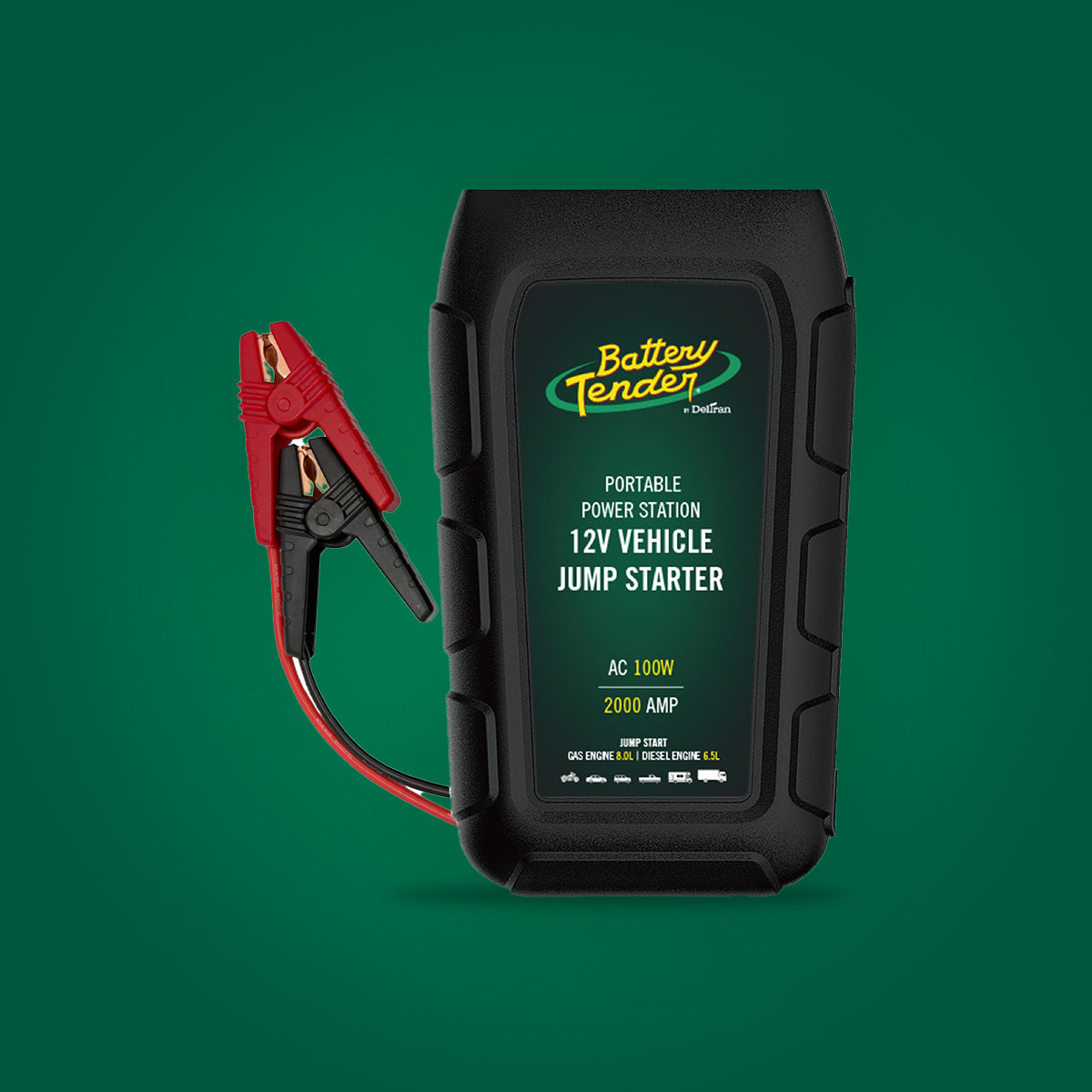
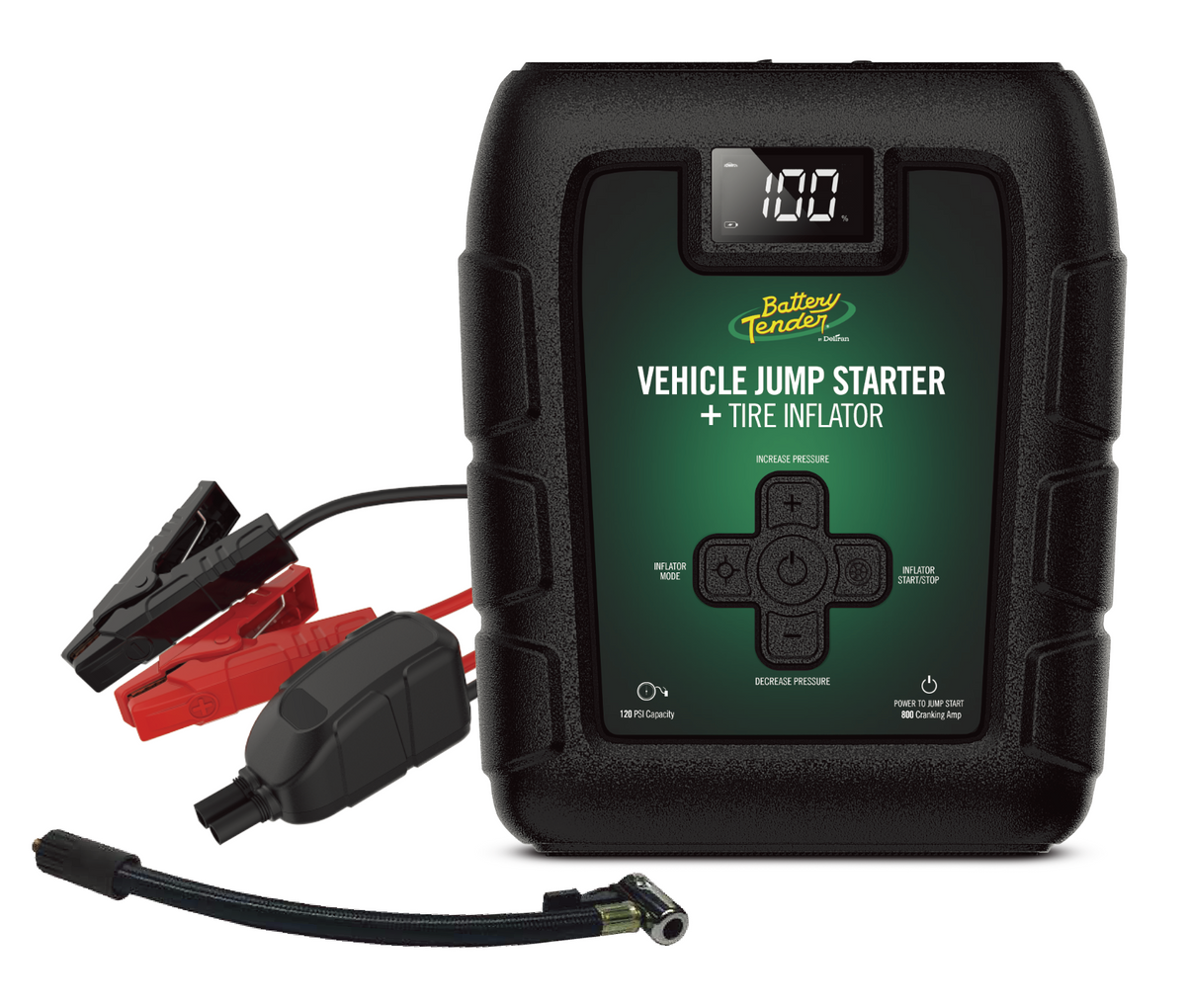
A jumper box is a self-contained battery pack with heavy-gauge cables and clamps that sends a short, high-current pulse into a dead battery's circuit so the starter motor can turn. The engine's alternator then takes over, so the box only has to supply a few seconds of current.
Lithium Cells and the Battery Management System
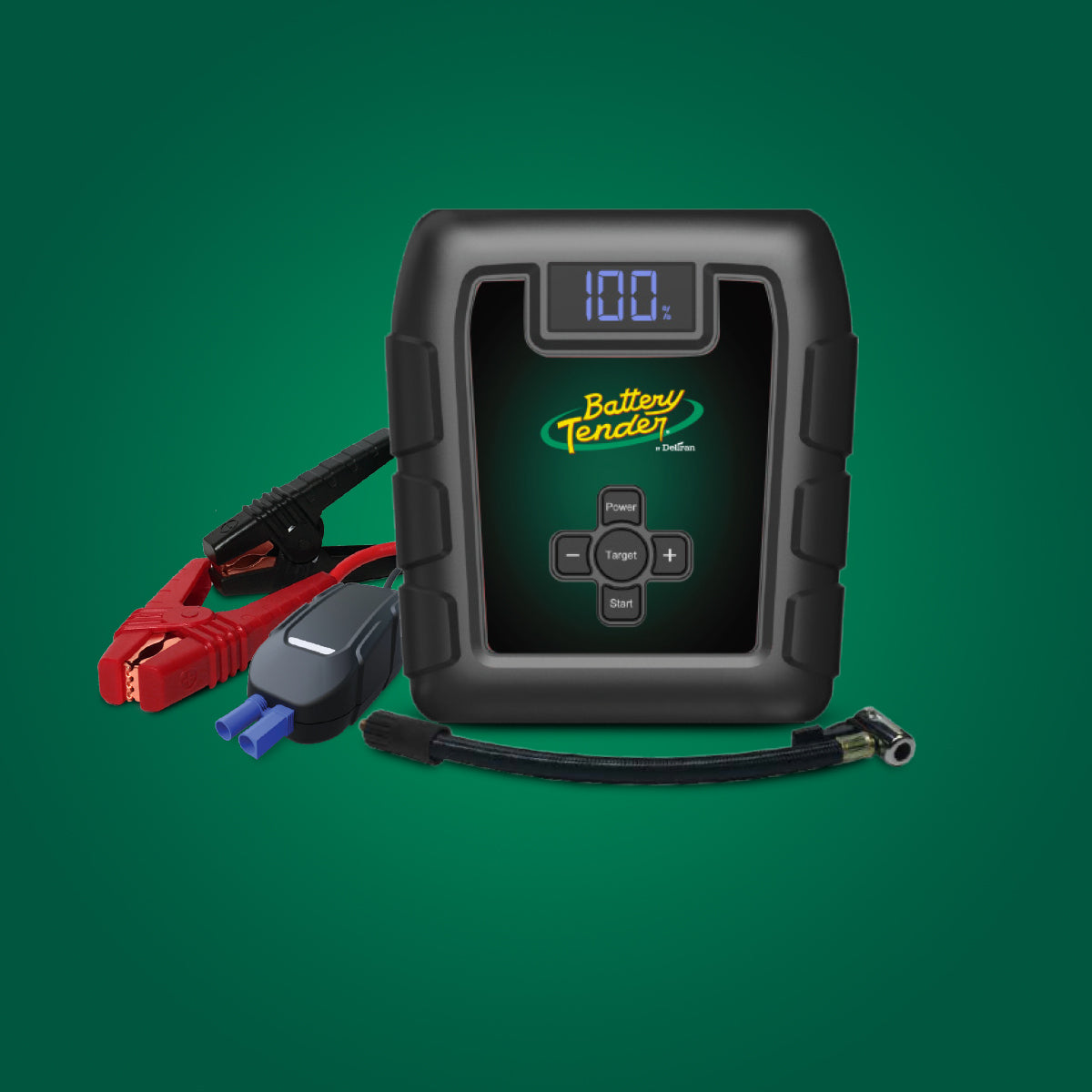
Modern jumper boxes use lithium cells instead of the bulky lead-acid packs of older units. Lithium delivers high current from a small, light case, and a built-in battery management system guards against overheating, short circuits, and over-discharge. A 2,000A unit with a 16,000 mAh pack weighs far less than a lead-acid box of similar output and fits in a glove compartment.
Clamps and Built-In Protections
Smart clamps add reverse-polarity protection. If the red and black clamps are swapped, the box refuses to send current instead of sparking. That matters in the dark, in the rain, or with cold hands. Check clamp teeth for corrosion and cable insulation for cracks before every season.
Why Your Battery Died in the First Place
Batteries rarely die without warning. A dead battery usually traces back to slow discharge, sulfation, or a parasitic drain. Jumping the car without fixing the cause sets up the next failure.
| Cause | What Happens | Jumper Box Helps? | Real Fix |
|---|---|---|---|
| Sulfation | Lead sulfate crystals harden on the plates when a battery sits below full charge | Starts the engine only | ISM smart maintenance |
| Parasitic drain | Alarms, modules, and trackers pull 25 to 75 mA with the key off | Yes, once | Maintainer during storage |
| Short trips | The alternator never replaces the energy the starter used | Yes, once | Periodic full charge |
| Cold weather | Cranking demand rises while battery capacity drops | Yes | Maintainer with temperature compensation |
| Age | Plates have shed active material | Temporary | Replace the battery |
Sulfation is the quiet killer. A lead-acid battery left below about 12.4V starts forming crystals within days, and each deep discharge leaves some of them behind. Over time they cut capacity and cranking power. Keeping a battery fully charged with ISM maintenance helps extend typical battery life from 2 to 3 years to 5 years or more.
Jumper Box vs. Battery Maintainer: Which One Do You Need?
You need both. A jumper box is emergency equipment for the moment a battery fails. A maintainer is preventive equipment that keeps the battery from failing. They are not substitutes.
- Jumper box: portable, used once per emergency, needs recharging every 90 days in storage.
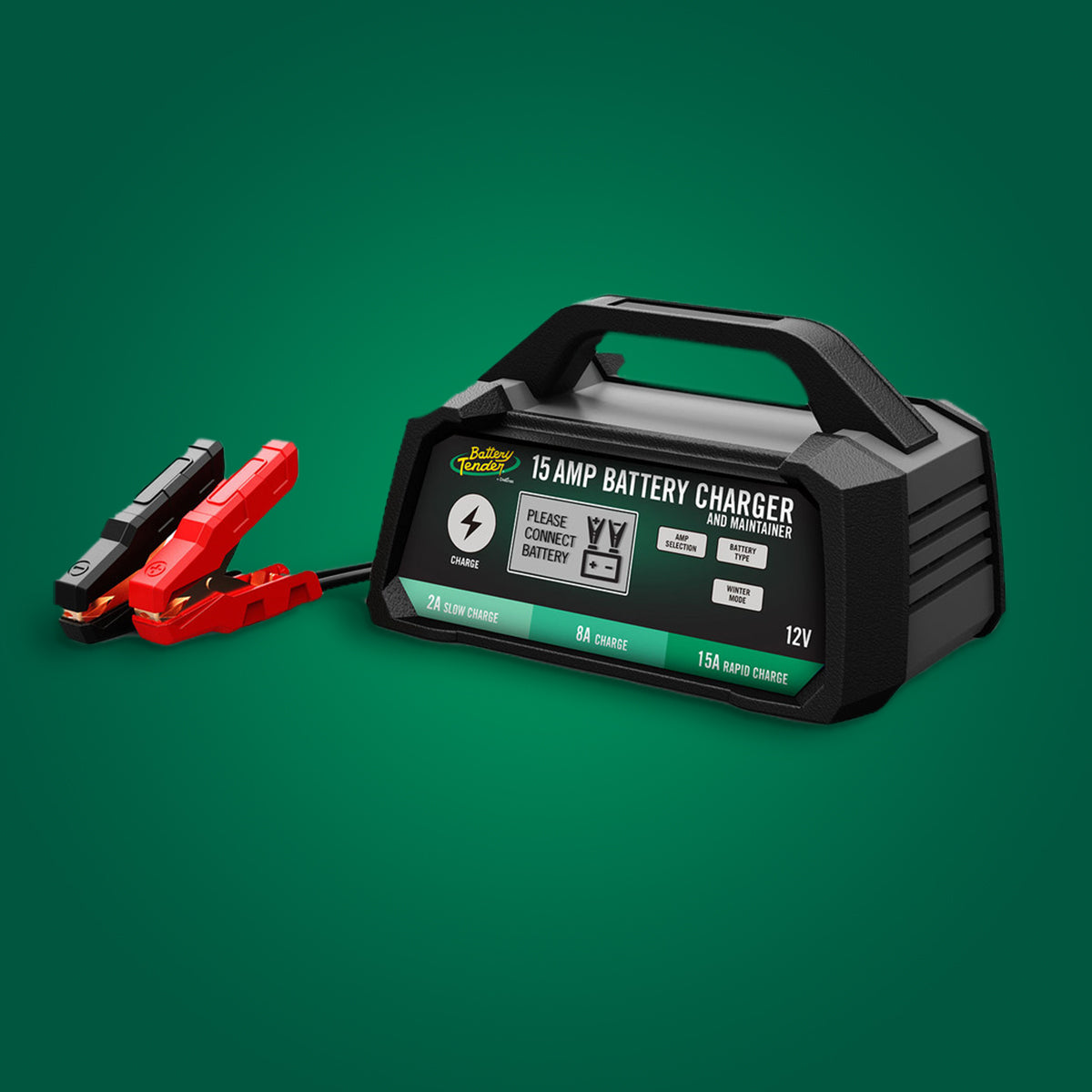
- Maintainer: plugged into a wall outlet, connected for weeks or months, and keeps the battery at full charge automatically.
- Combination unit: the Battery Tender Charge N Start line pairs a 1A or 4A smart charger with a lithium-ion jump pack in one housing, with 1,000A to 1,200A of jump power.
The Battery Tender Charge N Start models include Charge N Store, which maintains the internal lithium-ion pack, and SafeGuard, which protects against backfeed. The charger section handles standard, AGM, GEL, and lithium 12V batteries. The Battery Tender Charge N Start 1100 suits powersports and compact cars, the 1120 suits mid-size cars, SUVs, and boats, and the 4120 suits trucks and RVs.
How to Choose the Right Jumper Box Size
Choose a jumper box by engine displacement and fuel type. Diesel engines need more current than gas engines of the same size because of higher compression.
| Jump Starter | Capacity | Max Gas Engine | Max Diesel Engine |
|---|---|---|---|
| Battery Tender Jump N Start 600A | 6,400 mAh | 4.0L | 2.0L |
| Battery Tender Jump N Start 1500A | 12,000 mAh | 7.0L | 5.5L |
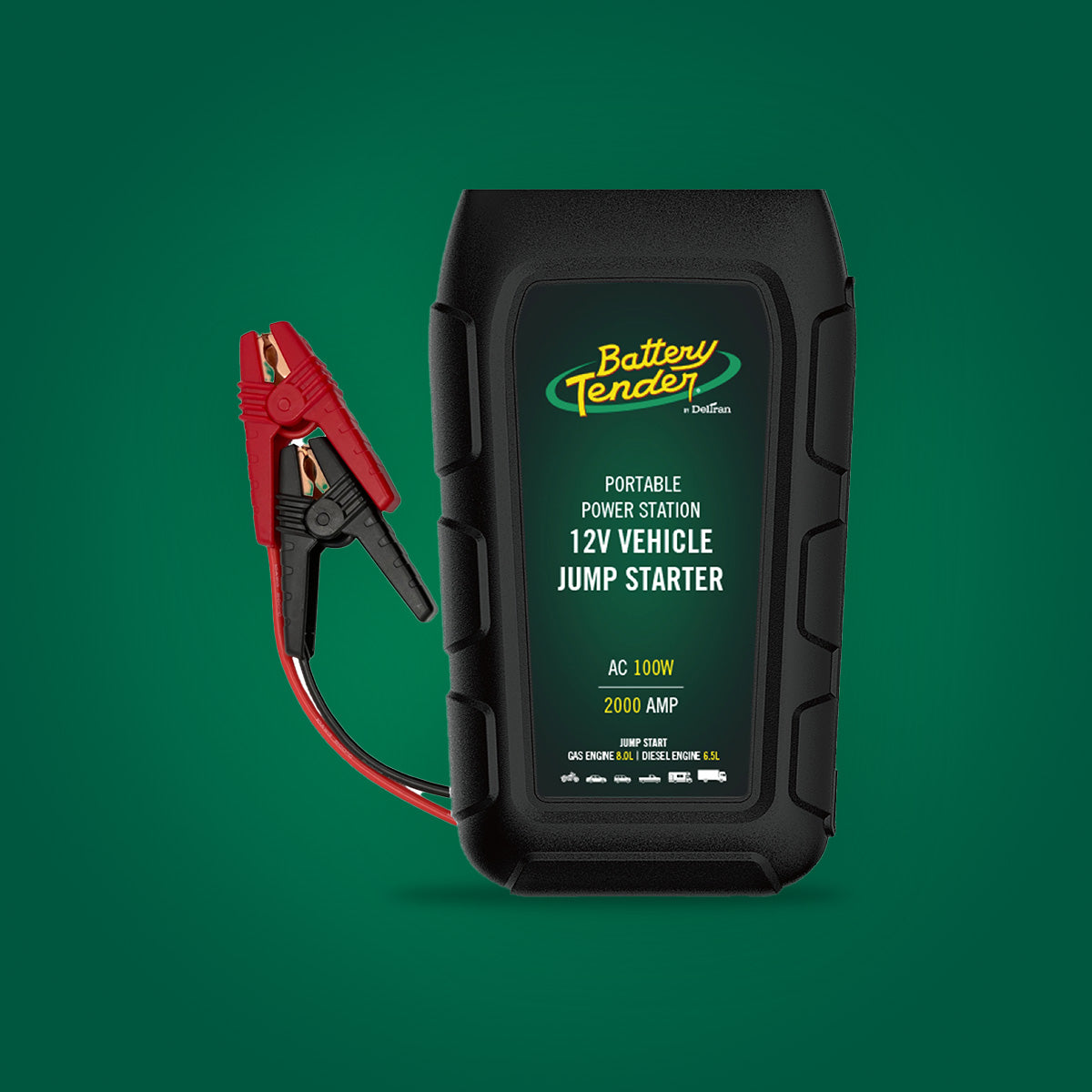
| Battery Tender Jump N Start 2000A | 16,000 mAh | 8.0L | 6.5L |
Size up when in doubt. A larger jumper box does not harm a small engine, since the starter draws only what it needs. An undersized one may fail on a cold morning, which is exactly when the jump is needed. For a full breakdown of portable jump starter basics, see the Battery Jumper Box Guide.
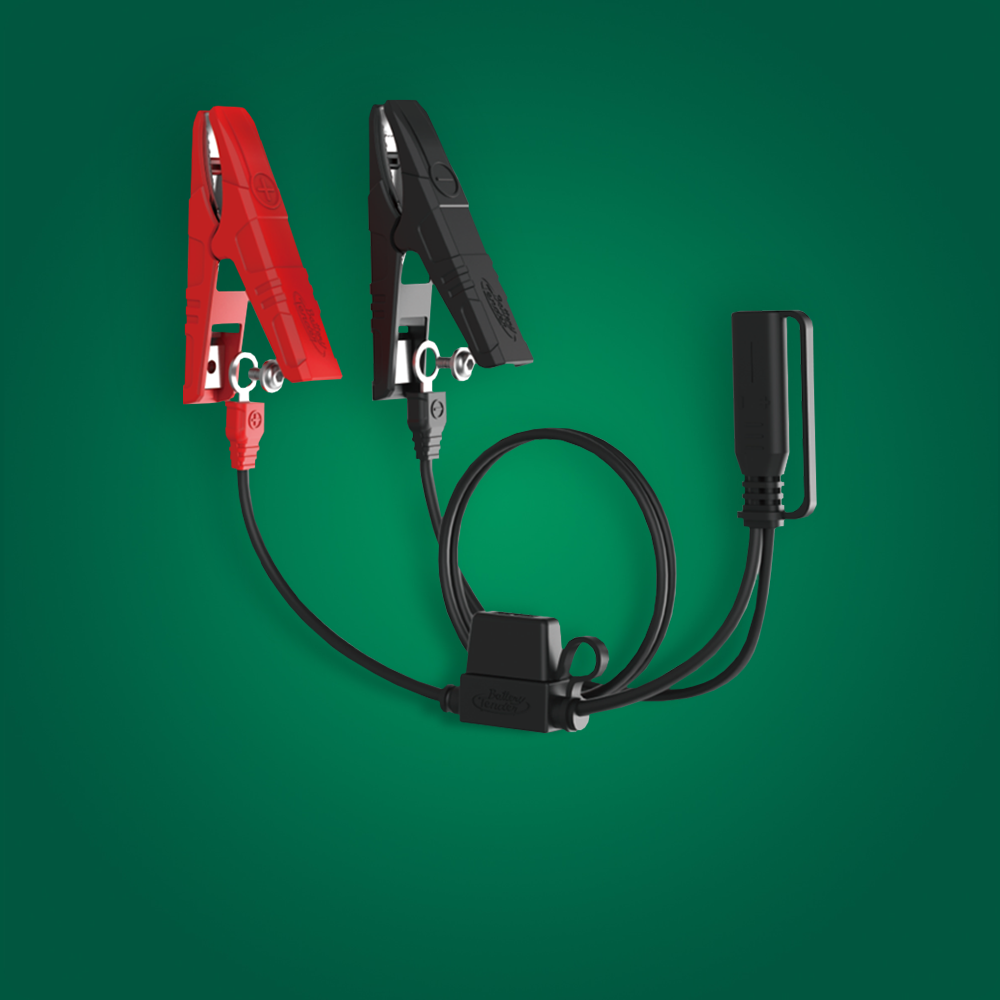
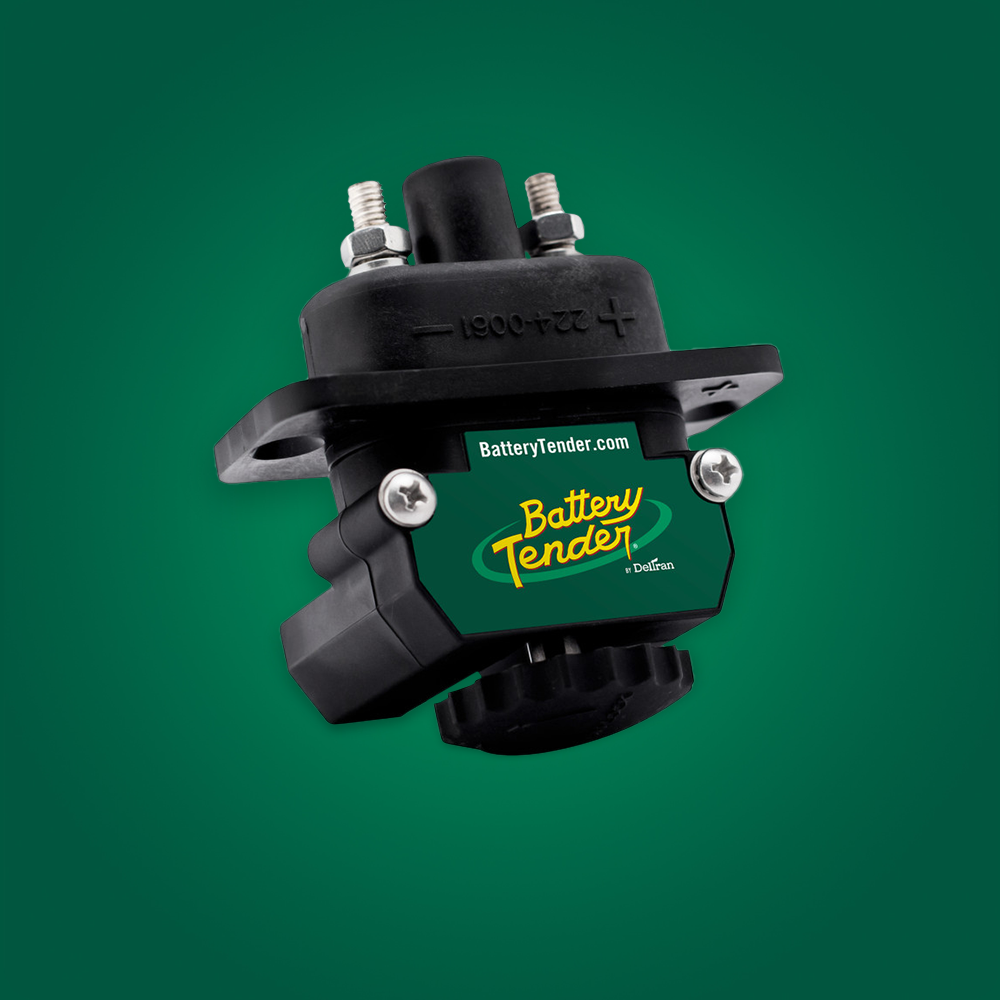
For trucks, large SUVs, ATVs, side-by-sides, and motorcycles kept in a garage, the 2,000A bundle covers nearly any engine. The included ring terminal cable can stay on the battery permanently, so the jumper box connects in seconds without hunting for a clean ground in a crowded engine bay.
Battery Tender Jump N Start Motorcycle & Powersports Bundle (2000 Amps)
How to Use a Jumper Box Safely, Step by Step
Use a jumper box with the ignition off and the box fully charged. Follow the steps in order, because connection order protects against sparks near the battery.
- Read the manual and check the charge. Confirm the jumper box shows at least 50 percent, or the level the manufacturer specifies.
- Turn everything off. Shut off the ignition, lights, radio, and climate control in the dead vehicle.
- Connect red to positive. Clamp the red cable to the positive (+) battery terminal.
- Connect black to ground. Clamp the black cable to bare, unpainted metal on the engine block or frame, away from the battery and fuel lines. With smart clamps and an accessible battery, the negative terminal is acceptable if the manual permits it.
- Power on the jumper box. Wait for the ready indicator, usually 5 to 30 seconds.
- Start the engine. Crank for no more than 5 seconds. If it does not start, wait 60 seconds before trying again.
- Disconnect in reverse. Remove the black clamp first, then the red, and power the box off.
Let the engine run at least 20 to 30 minutes, or drive the vehicle, so the alternator can restore charge. If the vehicle will not start after two attempts, stop. The problem may be the starter, a fuse, or a fully failed battery, and more cranking only heats the cables.
How ISM Prevents the Next Dead Battery
After the jump, the battery still needs a full charge, and a smart maintainer is the safest way to deliver it. ISM is the four-stage process used in Battery Tender chargers. It tests the battery, charges it, and then holds it at full charge without overcharging.
- Stage 1, Initialization: tests the battery and applies gentle current to judge its condition.
- Stage 2, Bulk Charge: delivers full rated current until the battery reaches about 80 percent.
- Stage 3, Absorption: holds voltage constant while current tapers, completing the charge and helping limit sulfation.
- Stage 4, Float Maintenance: sends charge pulses only when voltage drops.
A conventional trickle charger pushes constant current regardless of battery state. Left connected for weeks, it can overcharge, boil off electrolyte, and warp plates. A Battery Tender charger with ISM can stay connected indefinitely without that risk, because it charges only when the battery needs it.
Choosing a Maintainer by Battery Size
| Battery Type | Capacity | Suggested Battery Tender Charger |
|---|---|---|
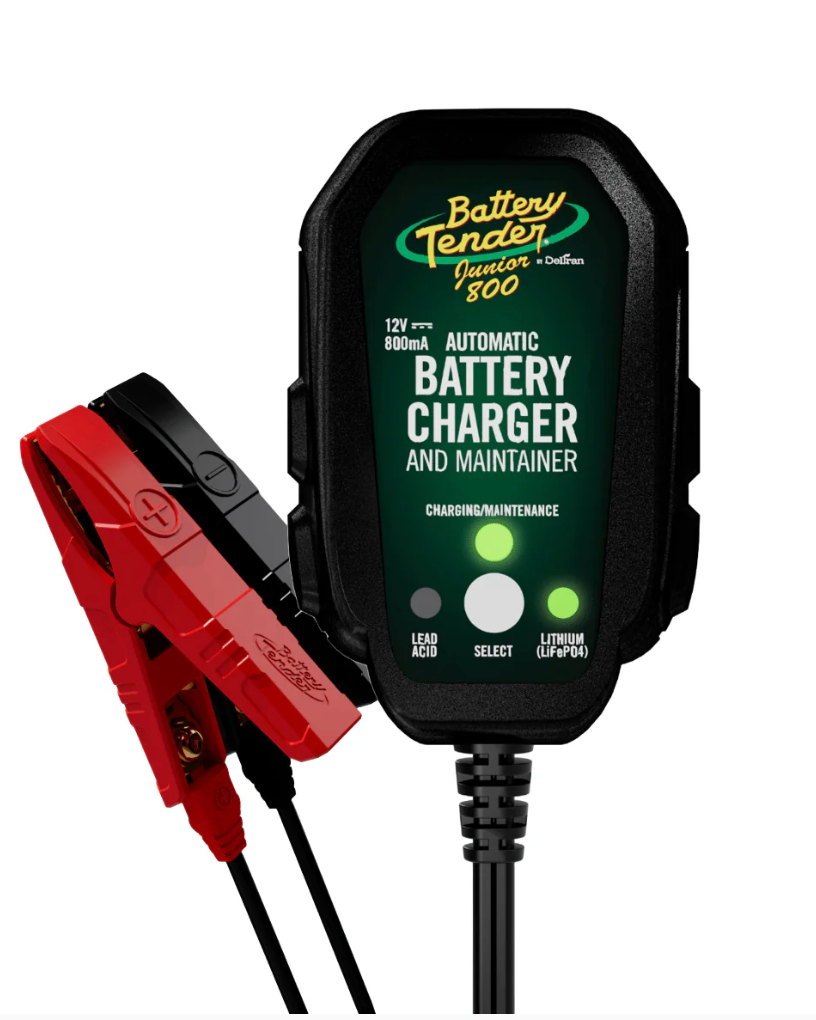
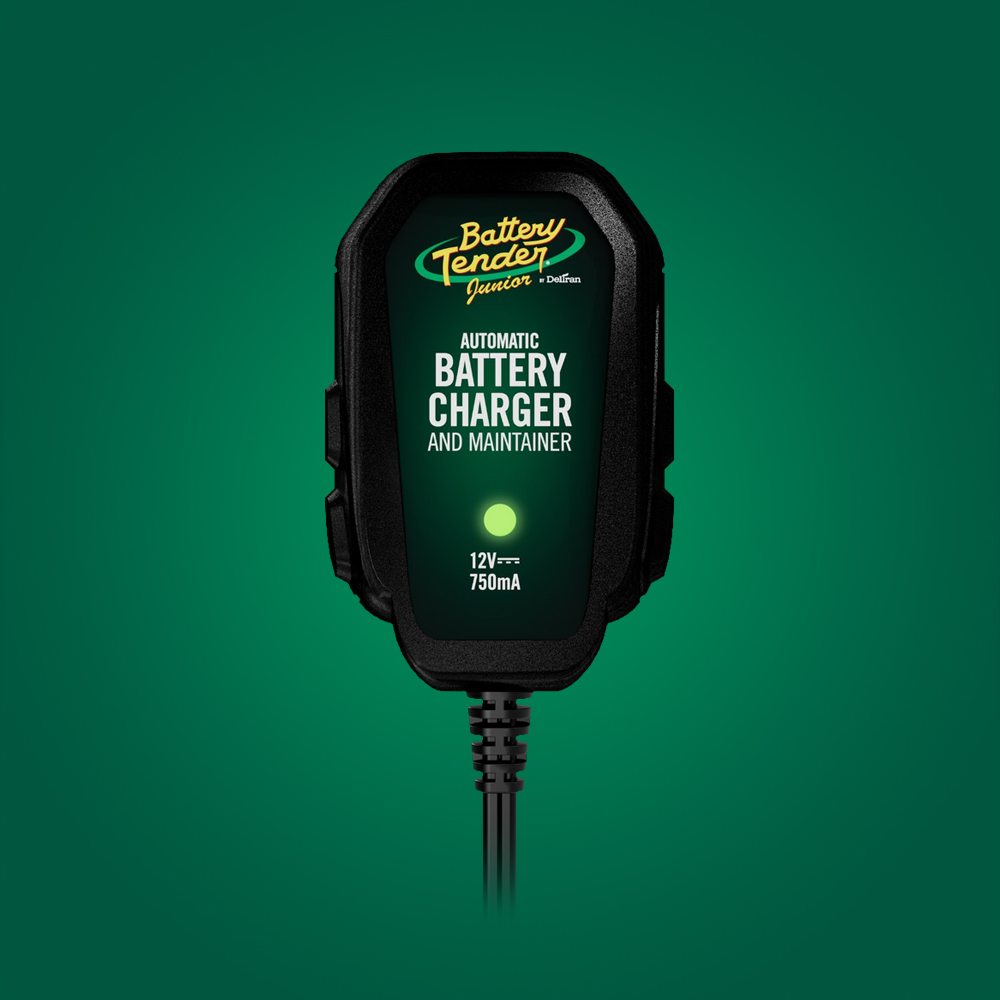
| Motorcycle, ATV, lawn tractor | 2 to 30Ah | Battery Tender Junior |
| Cars, motorcycles, classic cars | 14 to 80Ah | Battery Tender Plus |
| Trucks, RVs, heavy daily drivers | Larger 12V batteries | Battery Tender Charge N Start 4120 (4A) |
Charging time follows a simple formula: (battery Ah × depth of discharge) ÷ charger amps. A 50Ah car battery that is 50 percent discharged holds 25Ah to replace. A 1.25A Battery Tender Plus needs roughly 20 hours (25 ÷ 1.25), and a 4A charger needs about 6 hours (25 ÷ 4). Real times run slightly longer because of absorption and efficiency losses.
Battery Tender Plus includes temperature compensation, which adjusts charging voltage in cold garages and hot sheds, and carries a 10-year warranty. Battery Tender Junior is built for smaller powersports batteries from 2 to 30Ah and carries a 5-year warranty.
Keeping Your Jumper Box Ready
A jumper box is only useful if it is charged when the emergency hits. Lithium packs lose a small amount of charge each month, and heat speeds the loss.
- Recharge it every 90 days and after every use.
- Store it between 32°F and 100°F when possible, and never leave it in a closed car during a summer heat wave.
- In freezing weather, keep it in the cabin or garage. Cold temporarily reduces lithium output.
- Inspect the clamps and cables twice a year for corrosion and cracks.
- Keep the manual and a printed copy of the steps in the case.
Compare more models in the Battery Tender Jump N Start guide.
Frequently Asked Questions
What is a jumper box?
A jumper box is a portable lithium battery pack with built-in cables and clamps that jump-starts a vehicle with a dead 12V battery. It supplies a short burst of high current, typically 600A to 2,000A, so the starter can turn the engine without a second vehicle or an outlet.
How long does a jumper box hold its charge?
A lithium jumper box typically holds a usable charge for several months in storage, but self-discharge is faster in heat. Recharge it every 90 days, and always after use, so it is ready in an emergency. Check the indicator before long trips or winter.
Can a jumper box charge a dead battery?
No. A jumper box delivers only enough current to start the engine, and the alternator then does the recharging. A deeply discharged battery needs a proper charger, ideally one with ISM technology, to restore full capacity safely and reduce sulfation.
Is it safe to leave a jumper box connected to the battery?
No. Disconnect the jumper box as soon as the engine is running. It is designed for short use, not continuous connection. Leave a smart maintainer, not a jump pack, connected for long-term storage, because ISM adapts to the battery's state and does not overcharge.
What size jumper box do I need?
Match it to your engine. A 600A unit handles up to a 4.0L gas or 2.0L diesel engine, 1,500A handles up to 7.0L gas or 5.5L diesel, and 2,000A handles up to 8.0L gas or 6.5L diesel. Choose the larger size if you are between two.
Conclusion
A jumper box is the right tool for the moment a battery fails, but it is only half the answer. Dead batteries trace back to sulfation, parasitic drain, short trips, and cold, and a smart ISM maintainer prevents all of those. Keep a properly sized jumper box in the vehicle, recharge it every 90 days, and connect a Battery Tender charger whenever the vehicle sits. Next step: check your battery size and engine displacement against the tables above, then browse the Battery Tender battery charger collection to choose the maintainer that fits.