


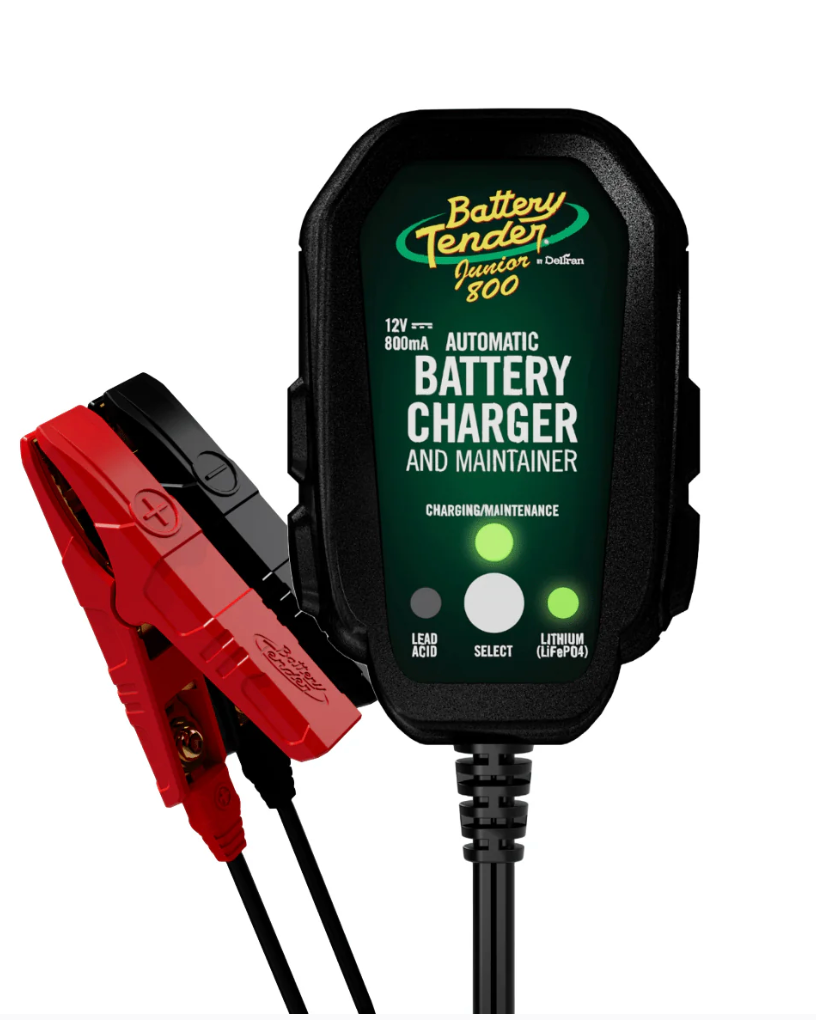
Charger Battery Guide: What Happens at Each Charging Stage (2026)
A charger battery pairing works when the charger matches the battery's voltage, chemistry, and amp-hour (Ah) size, then adjusts its output as the battery fills. A smart charger moves through defined stages and drops to a low maintenance current. A basic trickle charger pushes the same current no matter what and can overcharge the battery.
Battery Tender® pioneered smart charging in 1989, and Battery Tender chargers rely on Infinite Sequential Monitoring (ISM), a four-stage process that tests, charges, and then maintains the battery. This guide explains what the charger and battery actually do to each other at every stage, how to read voltage to check your work, and how to size and connect a charger so the battery lasts.
Key Takeaways
- A smart charger measures the battery first, then charges in four stages: Initialization, Bulk, Absorption, and Float Maintenance.
- Resting voltage tells you the state of charge: about 12.6–12.8V is full, and about 12.0V is roughly 25%.
- Trickle chargers deliver constant current regardless of battery state, which risks overcharge and plate damage.
- Size the charger with this formula: (Ah × depth of discharge) ÷ charger amps = approximate hours.
- Preventing sulfation with a maintenance-stage charger often stretches battery life from 2–3 years to 5 years or more.
How Does a Charger Battery Connection Work?
A charger pushes current into a battery by holding its output voltage slightly above the battery's own voltage. Current flows from higher to lower voltage, so the gap between the two controls how fast the battery charges.
A 12V lead-acid battery rests at about 12.6–12.8V when full. A charger must rise above that, typically to around 14.4V for flooded and AGM batteries, to force current into the plates. The charger battery relationship is a negotiation: the closer the battery gets to full, the smaller that voltage gap should become.
A basic charger never negotiates. It holds one output and lets the battery take whatever it takes. A smart charger reads the battery's response and changes current and voltage on its own.
What Happens at Each Stage of Smart Charger Battery Charging?
Four stages run in sequence, and each one solves a different problem. Battery Tender ISM technology handles every transition automatically, so all you do is connect the charger.
Stage 1: Initialization
The charger tests the battery before delivering real current. It applies a gentle current to find out whether the battery is deeply discharged, healthy, or too far gone to accept a charge. This protects both the battery and the charger from a bad connection or a failed cell.
Stage 2: Bulk (Constant Current)
The charger delivers its full rated current until the battery reaches roughly 80% state of charge. A 4A charger sends 4A here. Most of the energy goes in during this stage, and the battery stays cool as long as the current fits its size.
Stage 3: Absorption (Constant Voltage)
Voltage holds steady while current tapers off as the battery fills the last 20%. This slow stage also helps dissolve the sulfate crystals that form on plates in a partly discharged battery. Skipping it leaves the battery stuck at about 80–85% and invites sulfation.
Stage 4: Float Maintenance
The charger watches voltage and delivers small pulses only when the battery drops. This is why an ISM charger is safe to leave connected indefinitely: a full battery gets nothing it does not need. Months of winter storage cost the battery almost nothing.
How Do You Read Battery Voltage Before You Charge?
Resting voltage, measured with a multimeter after the battery sits unused for at least four hours, shows the state of charge within about 10%. Check it before connecting any charger so you know the starting point.
| Resting Voltage (12V Lead-Acid) | Approx. State of Charge | What It Means |
|---|---|---|
| 12.6–12.8V | 100% | Full. Maintenance only. |
| 12.4V | 75% | Healthy, top off soon. |
| 12.2V | 50% | Charge now. Sulfation begins if left. |
| 12.0V | 25% | Deeply discharged. Needs a full charge cycle. |
| Below 11.8V | Near 0% | Possible damage. Test after charging. |
Lithium batteries rest at different voltages and hold them flat for most of the discharge curve, so this table applies to lead-acid only. If a battery will not hold 12.4V or higher a day after a full charge, run the steps in the 5-step multimeter battery test guide to see whether the battery or the charger battery setup is the problem.
Why Do Trickle Chargers Damage a Battery?
A conventional trickle charger delivers constant current regardless of battery state, so a full battery keeps receiving current it cannot store. That excess current converts to heat and gas, which dries out flooded batteries and warps plates in AGM batteries.
Float chargers are safer but still limited. They use constant voltage only, with no Absorption stage, so charging is slower and the battery often never fully recovers from deep discharge.
| Feature | Trickle Charger | Float Charger | ISM Smart Charger |
|---|---|---|---|
| Output method | Constant current | Constant voltage only | Four-stage sequence |
| Tests the battery first | No | No | Yes (Initialization) |
| Absorption stage | No | No | Yes |
| Overcharge risk | High | Low | None in normal use |
| Safe for indefinite connection | No | Usually | Yes |
Temperature Changes the Math
Cold batteries need higher charging voltage, and hot batteries need lower. Battery Tender chargers with temperature compensation adjust output automatically for garage and shed conditions. A charger without it can undercharge in a 20°F shed or overcharge in a 100°F one.
Which Charger Battery Pairing Fits Your Setup?
The right charger battery match depends on Ah, voltage, and how often the battery gets drained. Use the formula (Ah × depth of discharge) ÷ charger amps to estimate hours.
| Battery | Capacity | Depth of Discharge | Charger | Approx. Hours |
|---|---|---|---|---|
| Motorcycle | 12Ah | 50% | 1A | 6 hours |
| Lawn tractor | 30Ah | 50% | 1A | 15 hours |
| Lawn tractor | 30Ah | 50% | 4A | 3.75 hours |
| Car or SUV | 50Ah | 50% | 4A | 6.25 hours |
| Deep-cycle | 100Ah | 50% | 4A | 12.5 hours |
Add roughly 20% to each figure for the Absorption taper. A 4A charger is a poor choice for a battery under about 14Ah. A 1A unit on a 100Ah bank takes days.
Battery Tender Weather Resistant 1 Amp: Small Batteries in Open or Damp Spaces
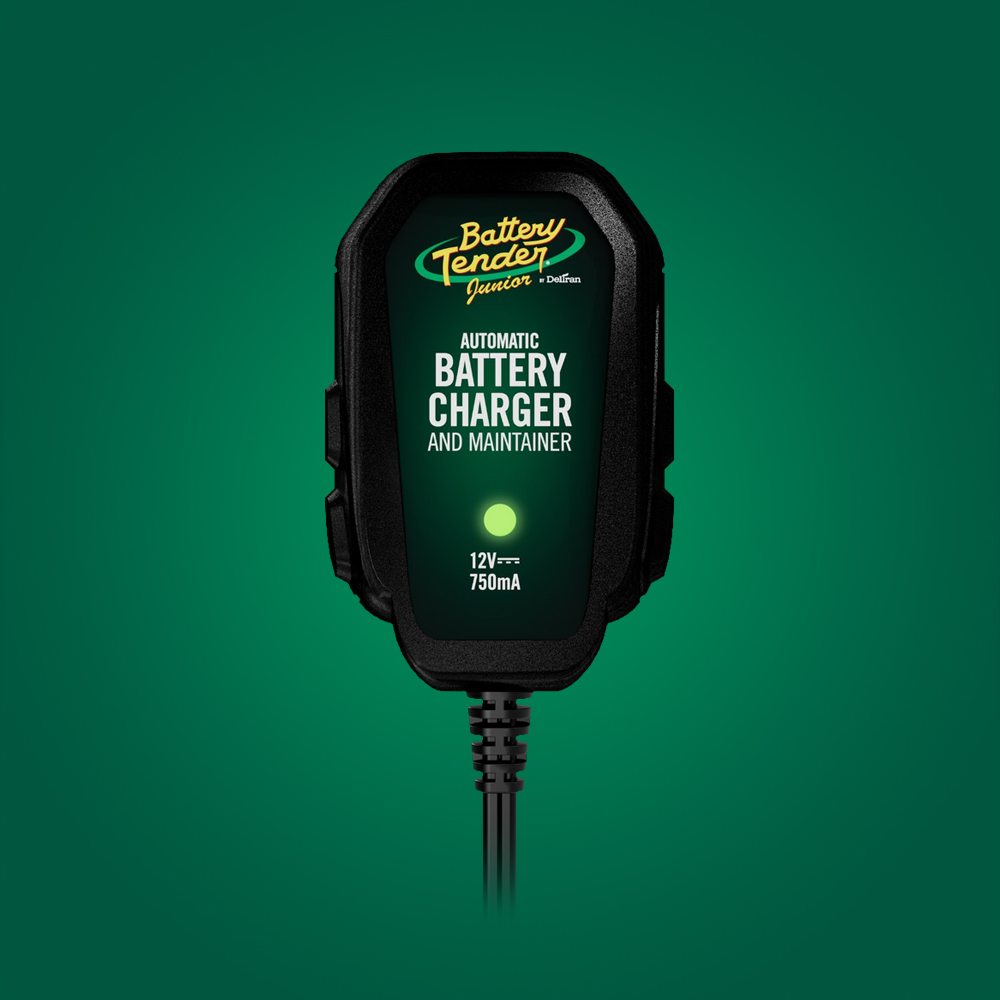
A 1A charger fits batteries from about 2Ah to 30Ah, such as motorcycles, ATVs, lawn tractors, and snowblowers stored in unheated sheds or open porches. The Battery Tender Weather Resistant 1 Amp charger handles moisture and dust that would shorten the life of a standard indoor unit. Check the label for chemistry compatibility before connecting a lithium battery.
Battery Tender Weather Resistant 1 AMP 12V Battery Charger
Battery Tender Power Tender 4 Amp: Larger or Frequently Drained Batteries
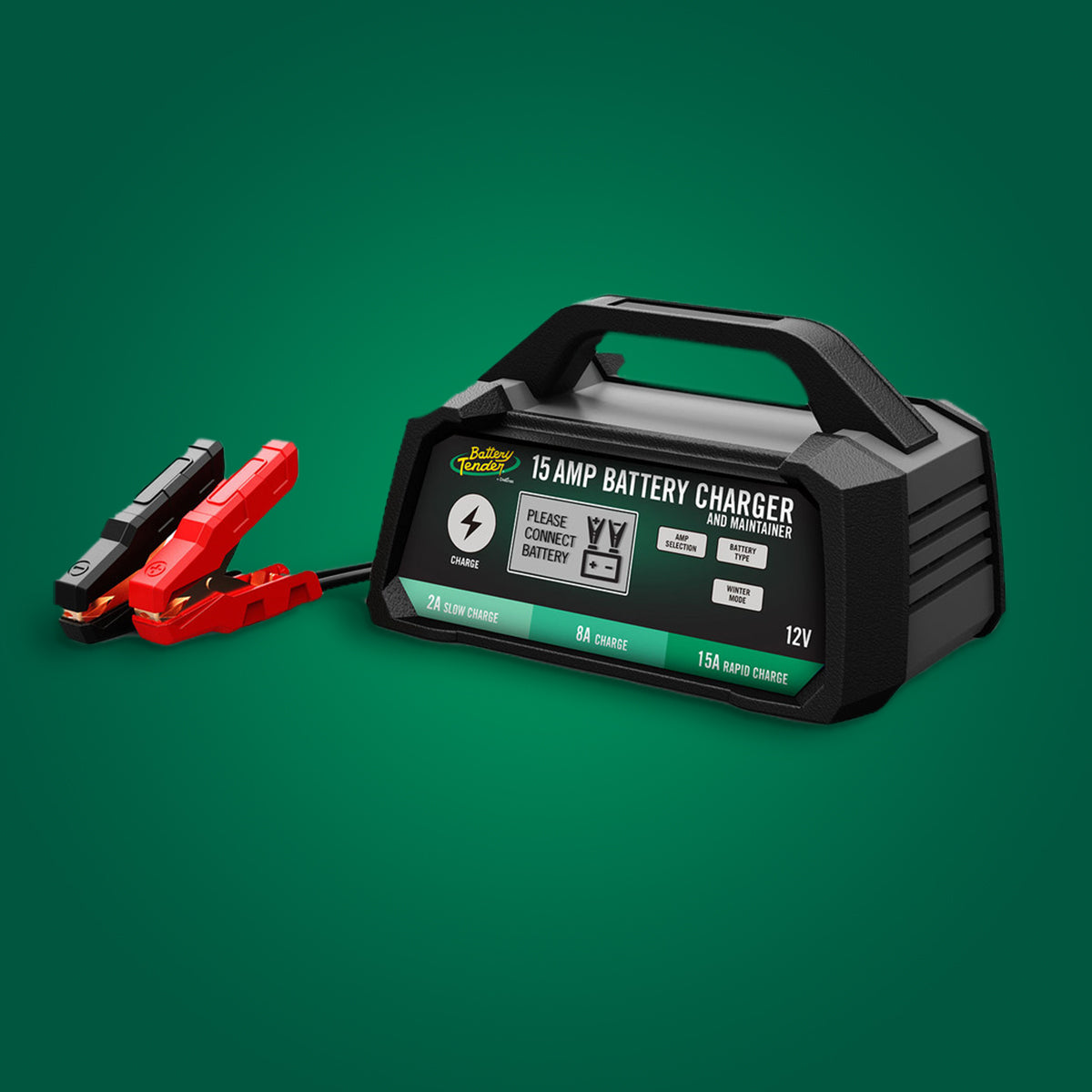
A 4A unit suits car, truck, boat, and RV starting batteries in the 40–100Ah range, plus batteries that get drained regularly. The Battery Tender Power Tender 4 Amp charger recovers a 50Ah car battery from 50% in about 6 hours, versus more than 24 hours on a 1A unit. Its switchable 12V/6V output also covers classic vehicles with 6V systems.
Battery Tender Power Tender 4 Amp 12V/6V Battery Charger and Maintainer
Battery Tender Charge N Start 1120 Bundle: Charger Plus Emergency Start
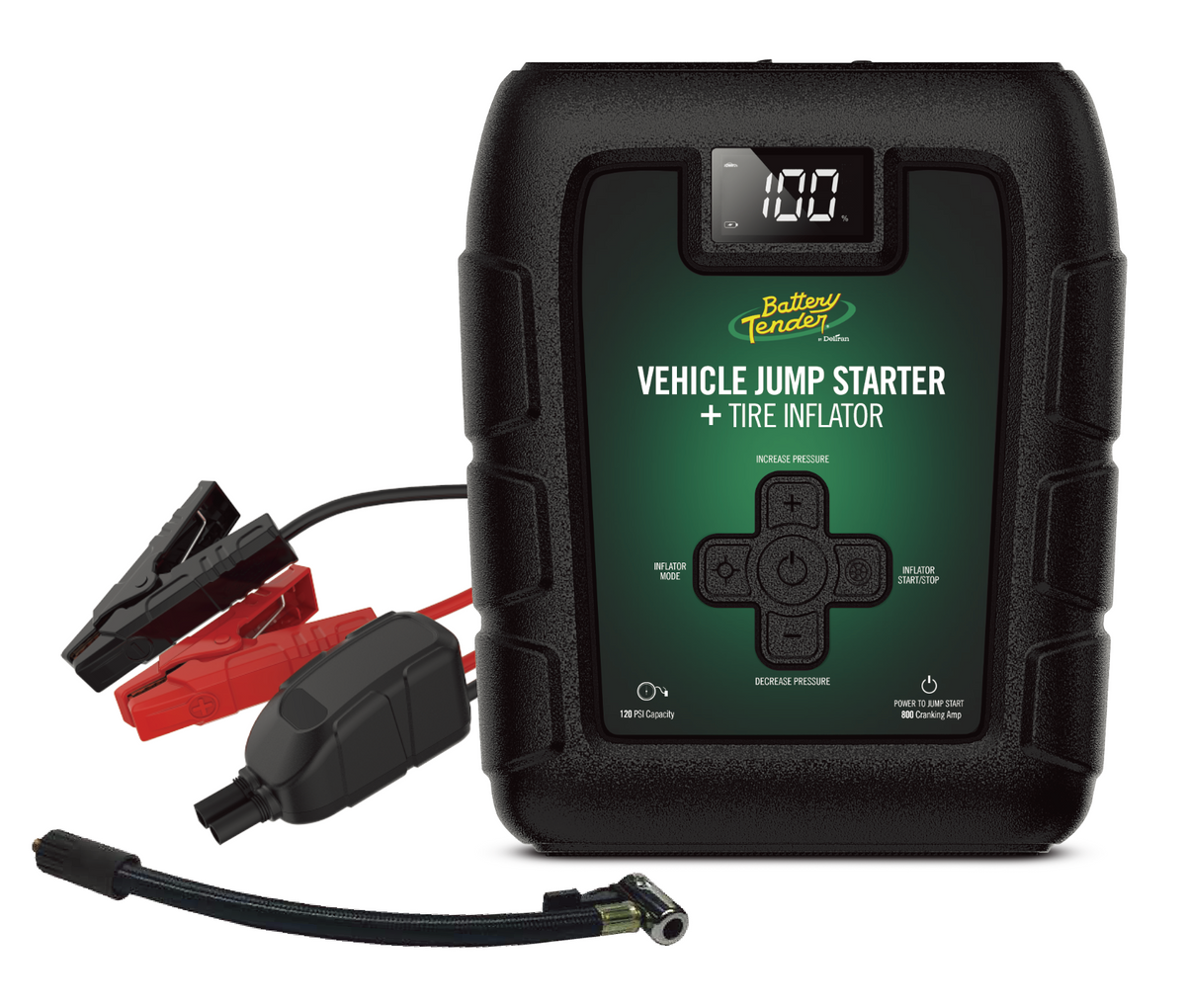
A maintainer prevents dead batteries, but sometimes a battery dies anyway, especially on a bike parked for months. The Battery Tender Charge N Start 1120 bundle combines a 1A charger with a 1,200A lithium-ion jump starter rated for engines up to 6.0L gas or 4.0L diesel. The Charge N Store feature maintains the internal pack, and SafeGuard protects against backfeed. The charger section charges all 12V chemistries: standard, AGM, GEL, and lithium.
Battery Tender Charge N Start 1120 Bundle (1 AMP Charging & 1200 AMP Jump Starting)
Battery Tender Alligator Clip and Ring Terminal Combo: Faster, Safer Connections
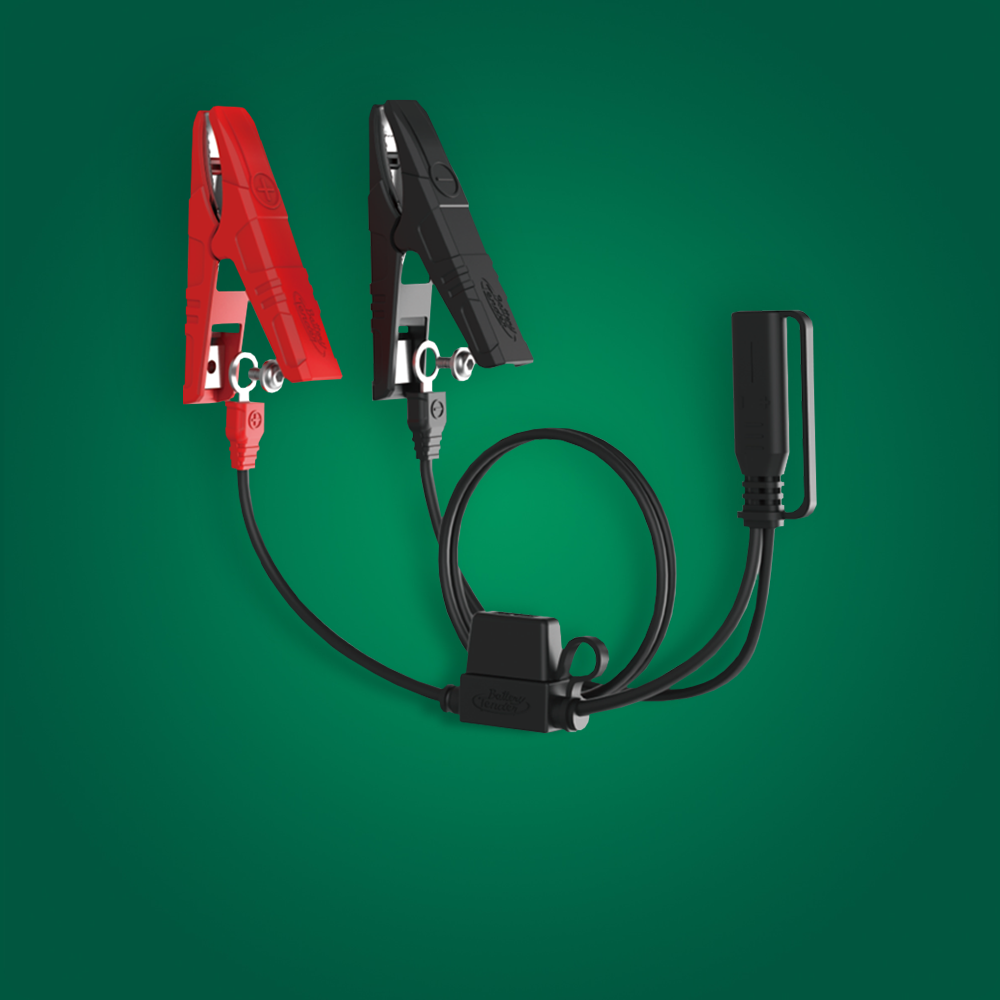
Reaching under a seat or hood every time invites reversed polarity and loose clamps. The Battery Tender Alligator Clip and Ring Terminal Combo gives you ring terminals bolted to the battery for permanent use, plus clips for occasional use on a second vehicle. Connect once and plug in the charger in seconds.
Battery Tender Alligator Clip and Ring Terminal Combo
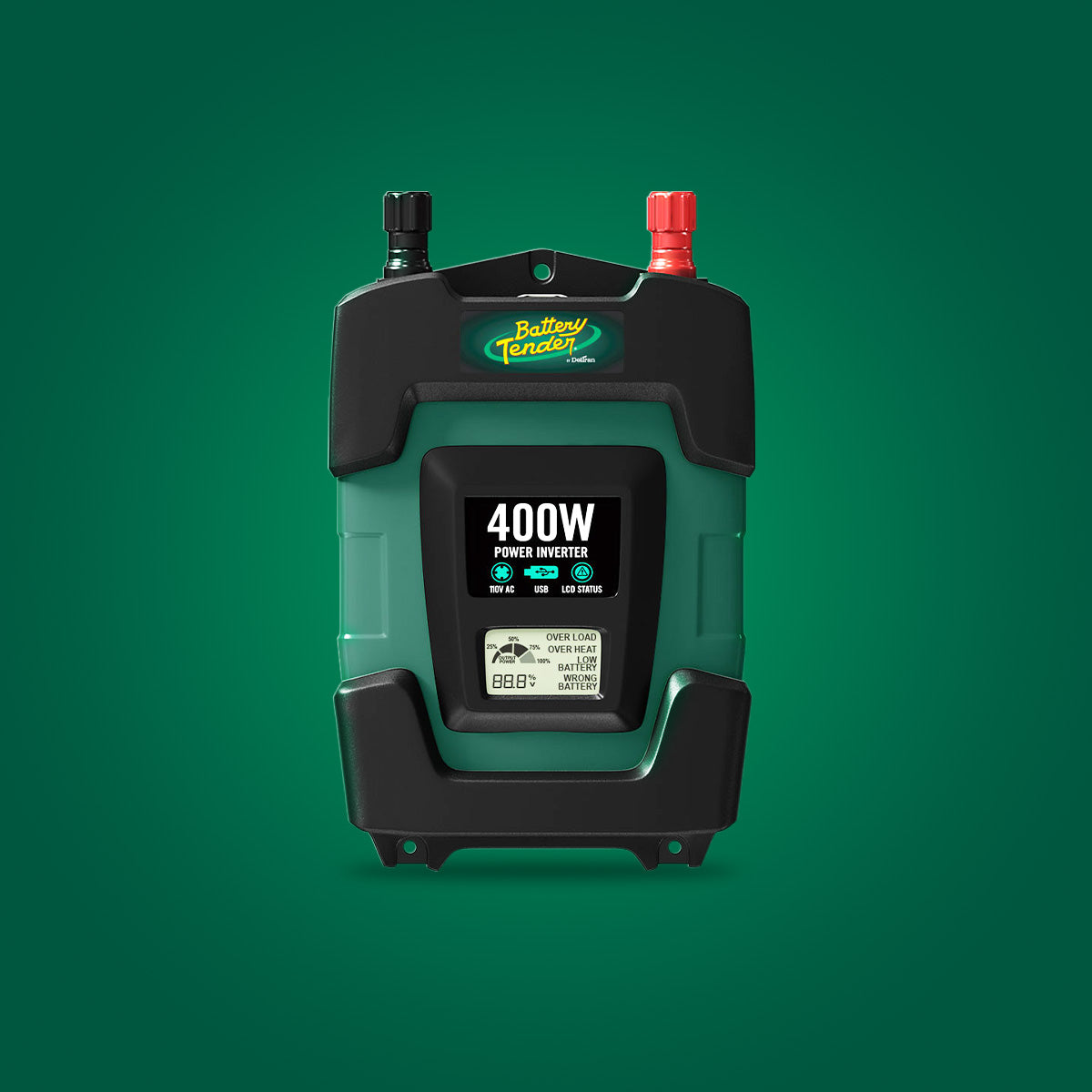
Battery Tender Power Inverter 400 Watt: Charging Away From an Outlet
Remote campsites and job sites often lack a wall outlet. The Battery Tender Power Inverter 400 Watt converts 12V DC to 120V AC, enough to run a 4A charger, which draws roughly 70 watts, from a vehicle with the engine running. The trade-off is that an inverter on a healthy running vehicle only moves energy from one battery to another. It is not a substitute for a wall outlet during long storage, and it should never run from a vehicle with the engine off.
Battery Tender Power Inverter 400 Watt 12V
How Do You Connect a Charger Battery Setup Safely?
Connect the charger to the battery before plugging into AC power, and disconnect in the reverse order. This sequence prevents sparks near battery gases. Work in a ventilated area, away from flames or heat.
- Check the battery. Look for cracks, leaks, or swelling. Do not charge a damaged battery.
- Match voltage and chemistry. Confirm 6V, 12V, or lithium settings on the charger.
- Clean the terminals. Remove corrosion with a baking soda and water paste, then dry.
- Connect red to positive, black to negative. A vehicle-mounted battery can take the black clamp on bare chassis metal instead.
- Plug the charger into AC power. Watch the indicator lights as the charger moves through its stages.
- Leave it connected. A Battery Tender charger with ISM shifts to Float Maintenance when the battery is full, so it can stay connected for months.
For other battery types around the property, the cart charger guide covers matching voltage and chemistry on multi-battery packs. Safe charging also means a limit: a charger cannot revive a battery with a shorted cell, and a battery older than 4–5 years may fail regardless of charging quality.
Frequently Asked Questions
What is a charger battery?
A charger battery is the paired system of a charger and the battery it serves. The charger must match the battery's voltage, chemistry, and amp-hour capacity. A smart charger monitors the battery and adjusts current in stages, while a basic one delivers constant output and risks overcharging.
How long does it take to charge a car battery?
Use (Ah × depth of discharge) ÷ charger amps. A 50Ah battery at 50% discharge on a 4A charger takes about 6.25 hours, plus roughly 20% more for the Absorption taper. A 1A charger would take over 25 hours for the same battery, so match amps to battery size.
Can a charger overcharge a battery?
A conventional trickle charger can, because it delivers constant current regardless of battery state. A smart charger using ISM does not: after Absorption, it drops to Float Maintenance and delivers pulses only when voltage falls. That is why it is safe to leave connected indefinitely for winter storage.
What voltage should a fully charged 12V battery read?
A fully charged 12V lead-acid battery reads about 12.6–12.8V after resting at least four hours. While charging, the reading will be higher, typically around 14.4V. If resting voltage falls below 12.4V within a day of full charge, test the battery for internal damage or sulfation.
Can I leave a charger connected to a battery all winter?
Yes, if the charger is a smart maintainer using a four-stage process. It tests the battery, charges it, and then sends small pulses only when needed. Do not do this with a trickle charger, which can dry out the battery over weeks of constant current.
Conclusion
A good charger battery pairing comes down to three checks: match voltage and chemistry, size amps to the battery's Ah, and choose a charger that tests, charges, and then maintains instead of pushing constant current. Do those, and the battery avoids the sulfation and overcharge damage that shorten most batteries to 2–3 years.
Next step: measure your battery's resting voltage today, then compare it against the sizing table above and choose a charger from the Battery Tender battery charger collection.